
Non-fiction
- Italian American: Red Sauce Classics and New Essentials: A Cookbook
![Italian American: Red Sauce Classics and New Essentials: A Cookbook cover image]()

Italian American: Red Sauce Classics and New Essentials: A Cookbook
$35.00IACP AWARD FINALIST • Reimagine Italian-American cooking, with more than 125 recipes rich with flavor and nostalgia from the celebrated husband-and-wife chef team of Michelin-starred Don Angie in New York City.
“Every bit of warmth and hospitality that you feel when you walk into Don Angie pours out of every page of this magical book.”—Michael Symon
ONE OF THE BEST COOKBOOKS OF THE YEAR: New York Post, Minneapolis Star Tribune, Food52, Epicurious, Taste of Home
The words “red sauce” alone conjure images of an Italian-American table full of antipasti, both hot and cold, whisked off to make room for decadent baked pastas topped with molten cheese, all before a procession of chicken parm or pork chops all pizzaiola—and we haven’t even gotten to dessert. It’s old-school cooking beloved by many and imbued with a deep sense of family.
In Italian American, Angie Rito and Scott Tacinelli, the chefs of critically acclaimed Don Angie in New York City’s West Village, reinvigorate the genre with a modern point of view that proudly straddles the line between Italian and American. They present family classics passed down through generations side-by-side with creative spins and riffs inspired by influences both old and new. These comforting dishes feel familiar but are far from expected, including their signature pinwheel lasagna, ribs glazed with orange and Campari, saucy shrimp parm meatballs, and a cheesy, bubbling gratin of broccoli rabe and sharp provolone.
Full of family history and recipes that will inspire a new generation, Italian American provides an essential, spirited introduction to an unforgettable way of cooking.
- Flamboyants: The Queer Harlem Renaissance I Wish I'd Known
![Book cover image]()

Flamboyants: The Queer Harlem Renaissance I Wish I'd Known
by George M. Johnson and Charly Palmer
$18.99From the New York Times–bestselling author of All Boys Aren’t Blue comes an empowering set of essays about Black and Queer icons from the Harlem Renaissance.
In Flamboyants, George M. Johnson celebrates writers, performers, and activists from 1920s Black America whose sexualities have been obscured throughout history. Through 14 essays, Johnson reveals how American culture has been shaped by icons who are both Black and Queer – and whose stories deserve to be celebrated in their entirety.
Interspersed with personal narrative, powerful poetry, and illustrations by award-winning illustrator Charly Palmer, Flamboyants looks to the past for understanding as to how Black and Queer culture has defined the present and will continue to impact the future. With candid prose and an unflinching lens towards truth and hope, George M. Johnson brings young adult readers an inspiring collection of biographies that will encourage teens today to be unabashed in their layered identities.
- The Black Joy Project
![The Black Joy Project]()

The Black Joy Project
by Kleaver Cruz
Sold outThis special, totally singular, nearly uncomp-able book is a LITERARY *and* VISUAL love letter to the role of joy in Black life — giving a full, 360-degree picture of how Black people resist oppression and thrive.
(The book is to be savored in the read and in the aesthetics.)
“Unlike happiness, joy is a lasting state that can be sustained even when everything is not the way we want it to be.” — bell hooks
Black Joy is everywhere. From the bustling streets of Lagos to hip-hop blasting through apartment windows in the Bronx. From the wide-open coastal desert of Namibia to the lush slopes of the Blue Mountains of Jamaica. From the thriving tradition of Candomblé in Bahia to the innovative and trendsetting styles of Soweto, and beyond, Black Joy is present in every place that Black people exist.
Too often, though, Blackness gets represented with pain, suffering and violence. Yet what is always in the mix—what is always constant, no matter the historical atrocity or systemic injustice—is Black Joy. Amplifying Black Joy is not about dismissing or creating an “alternative” narrative that ignores the realities of collective hurt. Rather, it is about holding the hurt, in tension with the joy, because that is how Black people around the world actually live. Joy deserves more credit for the self-preservation and survival of Black communities than it tends to get.
Enter The Black Joy Project.
Created by educator and activist Kleaver Cruz, The Black Joy Project is a digital and real-world affirmation that Black Joy is a source of healing, resistance, and regeneration, for Black people of all backgrounds and identities. The book expands on a simple question at the root of the project: “What does Black Joy mean to you?” Cruz’s powerful treatise on the subject, combined with stunning, vibrant images of Black Joy in everyday life, present a necessary, perspective-shifting work. Each page of The Black Joy Project is a reprieve for the spirit and, in capturing life across the diaspora, offers an opportunity to do what Black Joy does best: reimagine new ways of being.
- The Education of Black People: Ten Critiques, 1906-1960
![The Education of Black People: Ten Critiques, 1906-1960]()
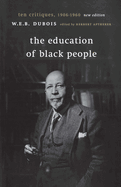
The Education of Black People: Ten Critiques, 1906-1960
$18.00Undoubtedly the most influential black intellectual of the twentieth century and one of America's finest historians, W.E.B. DuBois knew that the liberation of the African American people required liberal education and not vocational training. He saw education as a process of teaching certain timeless values: moderation, an avoidance of luxury, a concern for courtesy, a capacity to endure, a nurturing love for beauty. At the same time, DuBois saw education as fundamentally subversive. This was as much a function of the well-established role of educationfrom Plato forwardas the realities of the social order under which he lived. He insistently calls for great energy and initiative; for African Americans controlling their own lives and for continued experimentation and innovation, while keeping education's fundamentally radical nature in view.
Though containing speeches written nearly one-hundred years ago, and on a subject that has seen more stormy debate and demagoguery than almost any other in recent history, The Education of Black People approaches education with a timelessness and timeliness, at once rooted in classical thought that reflects a remarkably fresh and contemporary relevance. - Rock My Soul: Black People and Self-Esteem by bell hooks
![Rock My Soul: Black People and Self-Esteem by bell hooks]()
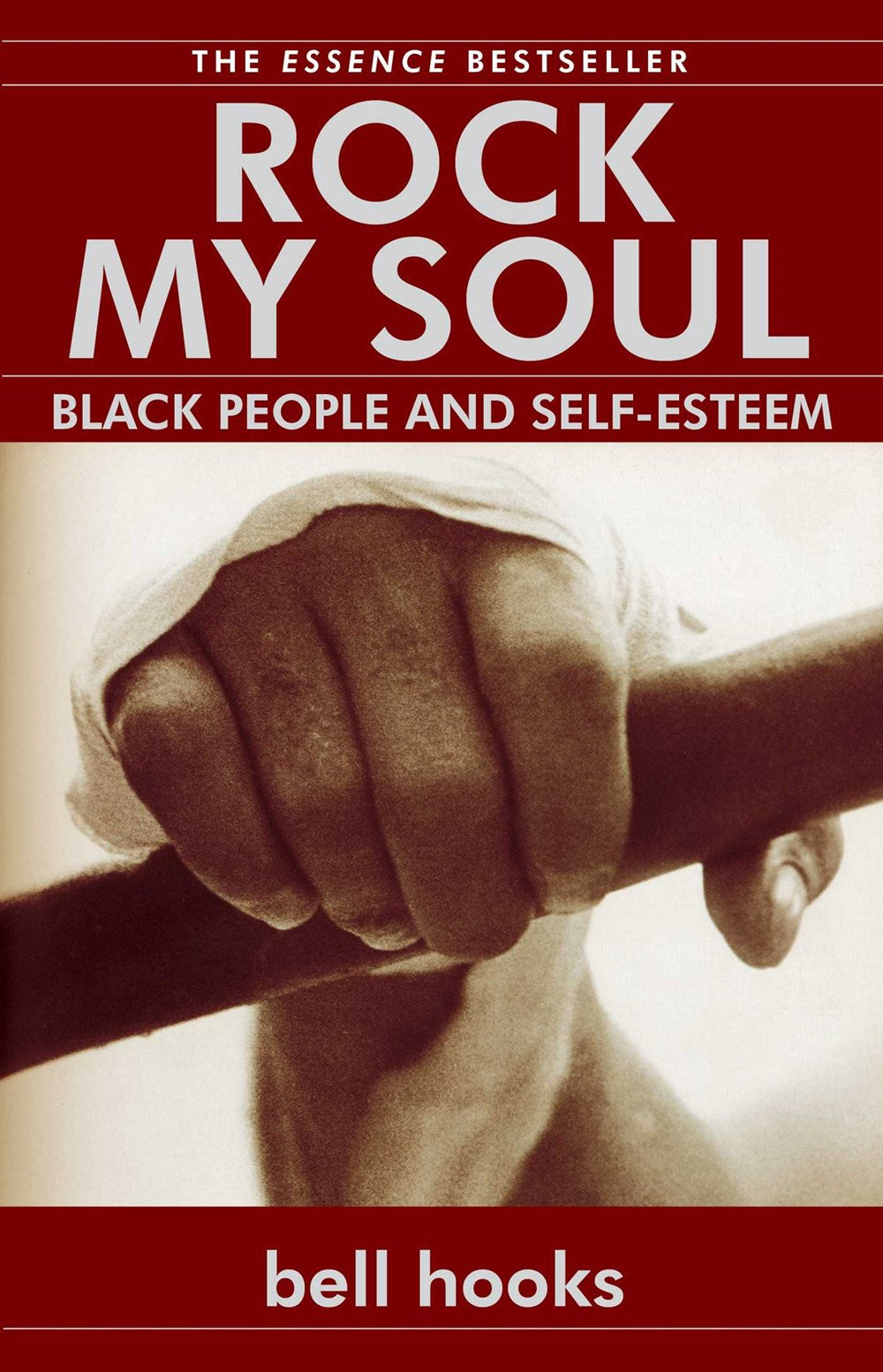
Rock My Soul: Black People and Self-Esteem by bell hooks
by bell hooks
Sold outWorld-renowned scholar and visionary bell hooks takes an in-depth look at one of the most critical issues facing African Americans: a collective wounded self-esteem that has prevailed from slavery to the present day.
Why do so many African-Americans—whether privileged or poor, urban or suburban, young or old—live in a state of chronic anxiety, fear, and shame? Rock My Soul: Black People and Self-Esteem breaks through collective denial and dares to tell this truth—that crippling low self-esteem has reached epidemic proportions in our lives and in our diverse communities. With visionary insight, hooks exposes the underlying reality that it has been difficult—if not impossible—for our nation to create a culture that promotes and sustains healthy self-esteem. Without self-esteem people begin to lose their sense of agency. They feel powerless. They feel they can only be victims. The need for self-esteem never goes away. But it is never too late for any of us to acquire the healthy self-esteem that is needed for a fulfilling life.
hooks gets to the heart and soul of the African-American identity crisis, offering critical insight and hard-won wisdom about what it takes to heal the scars of the past, promote and maintain self-esteem, and lay down the roots for a grounded community with a prosperous future. She examines the way historical movements for racial uplift fail to sustain our quest for self-esteem.
Moving beyond a discussion of race, she identifies diverse barriers keeping us from well-being: the trauma of abandonment, constant shaming, and the loss of personal integrity. In highlighting the role of desegregation, education, the absence of progressive parenting, spiritual crisis, or fundamental breakdowns in communication between black women and men, bell hooks identifies mental health as the new revolutionary frontier—and provides guidance for healing within the black community. - African American Fraternities and Sororities: The Legacy and the Vision
![African American Fraternities and Sororities: The Legacy and the Vision]()
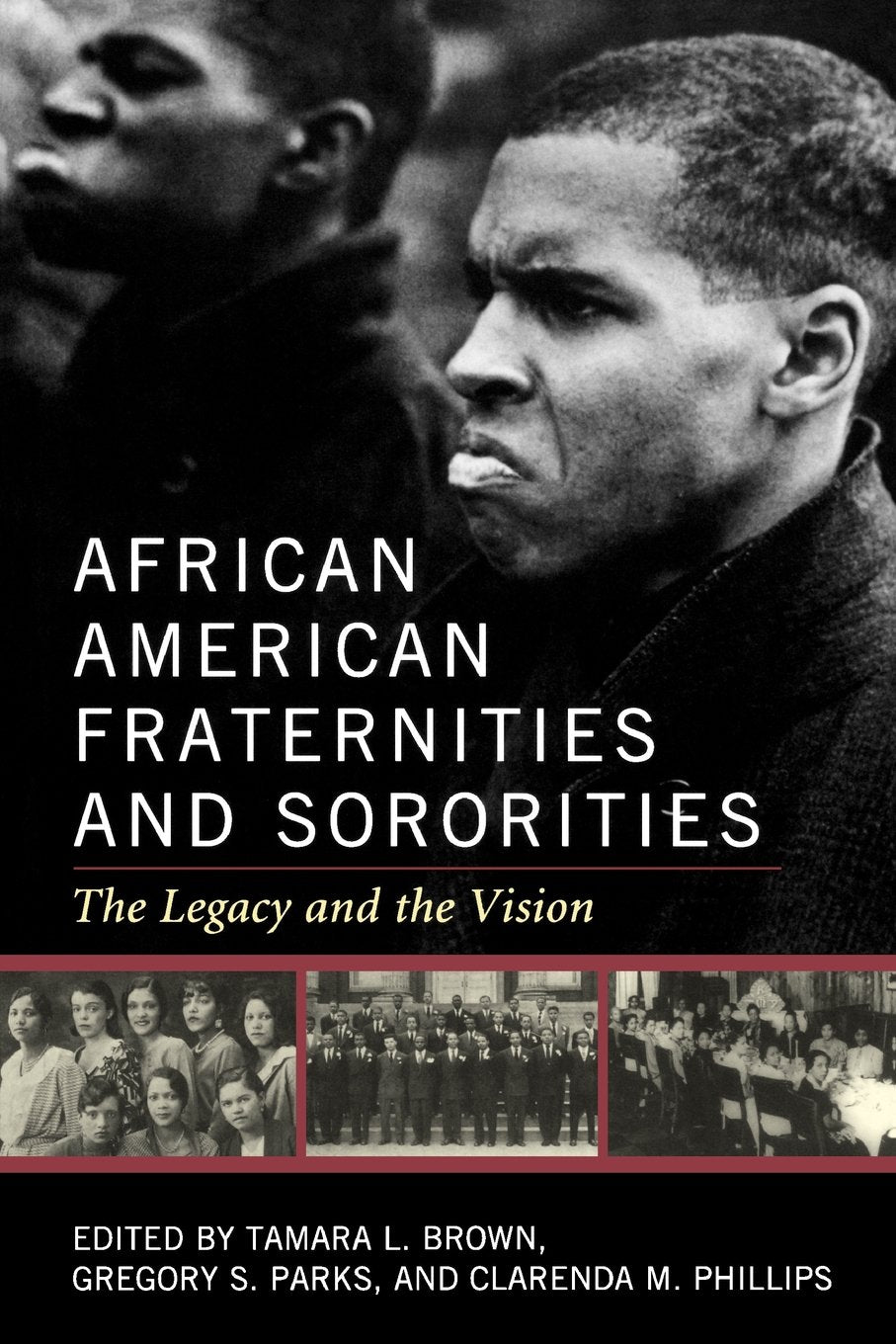
African American Fraternities and Sororities: The Legacy and the Vision
by Tamara L. Brown
$29.95*This book is not currently on our shelves and will ship in 5-10 business days. Please see FAQs for more information.
African American Fraternities and Sororities: The Legacy and the Vision explores the rich past and bright future of the nine Black Greek-Letter organizations that make up the National Pan-Hellenic Council. In the long tradition of African American benevolent and secret societies, intercollegiate African American fraternities and sororities have strong traditions of fostering brotherhood and sisterhood among their members, exerting considerable influence in the African American community, and being on the forefront of civic action, community service, and philanthropy. Dr. Martin Luther King Jr., Toni Morrison, Arthur Ashe, Carol Moseley Braun, Bill Cosby, Sarah Vaughan, George Washington Carver, Hattie McDaniel , and Bobby Rush are among the many trailblazing members of these organizations. The rolls of African American fraternities and sororities serve as a veritable who's who among African American leadership in the United States and abroad. African American Fraternities and Sororities places the history of these organizations in context, linking them to other movements and organizations that predated them and tying their history to one of the most important eras of United States history―the Civil Rights struggle. African American Fraternities and Sororities explores various cultural aspects of these organizations such as auxilliary groups, branding, calls, stepping, and the unique role of African American sororities. It also explores such contemporary issues as sexual aggression and alcohol use, college adjustment, and pledging, and provides a critique of Spike Lee's film School Daze, the only major motion picture to portray African American fraternities and sororities as a central theme. The year 2006 will mark the centennial anniversary of the intercollegiate African American fraternity and sorority movement. Yet, to date, little scholarly attention has been paid to these organizations and the men and women who founded and perpetuated them. African American Fraternities and Sororities reveals the vital social and political functions of these organizations and places them within the history of not only the African American community but the nation as a whole.
- Angela Davis: An Autobiography
![Angela Davis: An Autobiography]()
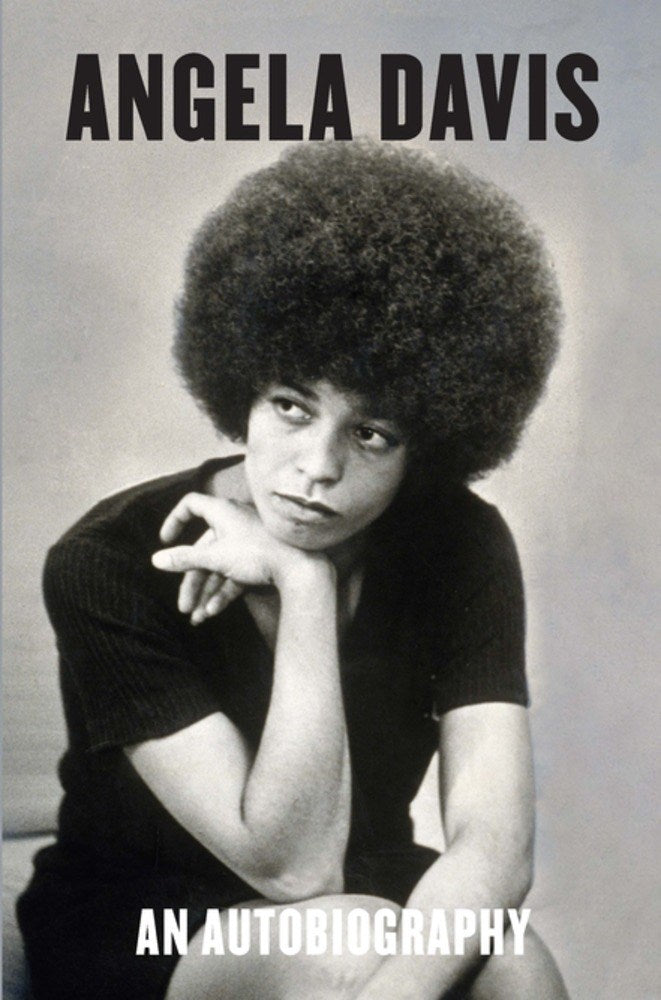
Angela Davis: An Autobiography
by Angela Y. Davis
$22.95This beautiful new edition of Angela Davis’s classic Autobiography features an expansive new introduction by the author.
“I am excited to be publishing this new edition of my autobiography with Haymarket Books at a time when so many are making collective demands for radical change and are seeking a deeper understanding of the social movements of the past.” —Angela Y. Davis
Angela Davis has been a political activist at the cutting edge of the Black Liberation, feminist, queer, and prison abolitionist movements for more than 50 years. First published and edited by Toni Morrison in 1974, An Autobiography is a powerful and commanding account of her early years in struggle. Davis describes her journey from a childhood on Dynamite Hill in Birmingham, Alabama, to one of the most significant political trials of the century: from her political activity in a New York high school to her work with the U.S. Communist Party, the Black Panther Party, and the Soledad Brothers; and from the faculty of the Philosophy Department at UCLA to the FBI's list of the Ten Most Wanted Fugitives. Told with warmth, brilliance, humor and conviction, Angela Davis’s autobiography is a classic account of a life in struggle with echoes in our own time. - The Crunk Feminist Collection
![The Crunk Feminist Collection]()

The Crunk Feminist Collection
edited by Brittney C. Cooper, Susana M. Morris, & Robin M. Boylorn
$24.95Essays on hip-hop feminism featuring relevant, real conversations about how race and gender politics intersect with pop culture and current events.
For the Crunk Feminist Collective, their academic day jobs were lacking in conversations they actually wanted—relevant, real conversations about how race and gender politics intersect with pop culture and current events. To address this void, they started a blog that turned into a widespread movement. The Collective's writings foster dialogue about activist methods, intersectionality, and sisterhood. And the writers' personal identities—as black women; as sisters, daughters, and lovers; and as television watchers, sports fans, and music lovers—are never far from the discussion at hand.
These essays explore "Sex and Power in the Black Church," discuss how "Clair Huxtable is Dead," list "Five Ways Talib Kweli Can Become a Better Ally to Women in Hip Hop," and dwell on "Dating with a Doctorate (She Got a Big Ego?)." Self-described as "critical homegirls," the authors tackle life stuck between loving hip hop and ratchet culture while hating patriarchy, misogyny, and sexism.
- MAY 2026: Non-Fiction Book Club - May 19 @ 7 PM
![MAY 2026: Non-Fiction Book Club - May 19 @ 7 PM]()

MAY 2026: Non-Fiction Book Club - May 19 @ 7 PM
Sold outWe're meeting to discuss The Conjuring of America by Lindsey Stewart!
BOOK CLUB MEETING DEETS
When: Tuesday, May 19 @ 7PM CST
Where: Kindred Stories (2310 Elgin St, Houston, TX 77004)
How: RSVP ONLY to let us know you plan to attend! Support the Non-Fiction Book Club by purchasing a copy of the book from Kindred Stories here!
ABOUT THE CONJURING OF AMERICA
The Conjuring of America tells the epic story of conjure women, who, through a mix of spiritual beliefs, herbal rituals, and therapeutic remedies gave rise to the rich tapestry of American culture we see today. Feminist philosopher, Lindsey Stewart, tells the stories of Negro Mammies of slavery; the Voodoo Queens and Blues Women of Reconstruction; and the Granny Midwives and textile weavers of the Jim Crow era. These women, in secrecy and subterfuge, courageously and devotedly continued their practices and worship for centuries and passed down their traditions.
Emerging first in the American South during slavery, these women were thrust into the heart of national conflicts over generations of African American life. They combined ancestral magic and hyperlocal resources to respond to Black struggles in real time, forging a secret well of health and power hidden to their oppressors. As a result, conjure informs our lives in ways remarkable and ordinary—from traditional medicines that informed the creation of Vicks VapoRub and the rise of Aunt Jemima’s Pancake Mix, to the original magic of Disney’s The Little Mermaid (2023), and the true origins of the all-American classic blue jean.
From the moment enslaved Africans first arrived on these shores, conjure was heavily regulated and even outlawed. Now, Stewart uncovers new contours of American history, sourcing letters from the enslaved, dispatches from the lore of Oshun and other African mystics. The Conjuring of America is a love letter to the real magic Black women used, their magic Black women, their herbs, food, textiles, song, and dance, used to sow rebellion, freedom, and hope. - The Quiet Coup: Neoliberalism and the Looting of America
![The Quiet Coup: Neoliberalism and the Looting of America cover image]()

The Quiet Coup: Neoliberalism and the Looting of America
Mehrsa Baradaran
from $21.99"[A]ccessible and intellectually rich…Essential reading to understand the economic state of the nation." ―Kirkus Reviews (starred review)
The celebrated legal scholar and author of The Color of Money reveals how neoliberals rigged American law, creating widespread distrust, inequality, and injustice.
With the nation lurching from one crisis to the next, many Americans believe that something fundamental has gone wrong. Why aren’t college graduates able to achieve financial security? Why is government completely inept in the face of natural disasters? And why do pundits tell us that the economy is strong even though the majority of Americans can barely make ends meet? In The Quiet Coup, Mehrsa Baradaran, one of our leading public intellectuals, argues that the system is in fact rigged toward the powerful, though it wasn’t the work of evil puppet masters behind the curtain. Rather, the rigging was carried out by hundreds of (mostly) law-abiding lawyers, judges, regulators, policy makers, and lobbyists. Adherents of a market-centered doctrine called neoliberalism, these individuals, over the course of decades, worked to transform the nation―and succeeded.
They did so by changing the law in unseen ways. Tracing this largely unknown history from the late 1960s to the present, Baradaran demonstrates that far from yielding fewer laws and regulations, neoliberalism has in fact always meant more―and more complex―laws. Those laws have uniformly benefited the wealthy. From the work of a young Alan Greenspan in creating "Black Capitalism," to Supreme Court Justice Lewis Powell’s efforts to unshackle big money donors, to the establishment of the "Law and Economics" approach to legal interpretation―in which judges render opinions based on the principles of right-wing economics―Baradaran narrates the key moments in the slow-moving coup that was, and is, neoliberalism. Shifting our focus away from presidents and national policy, she tells the story of how this nation’s laws came to favor the few against the many, threatening the integrity of the market and the state.
Some have claimed that the neoliberal era is behind us. Baradaran shows that such thinking is misguided. Neoliberalism is a failed economic idea―it doesn’t, in fact, create more wealth or more freedom. But it has been successful nevertheless, by seizing the courts and enabling our age of crypto fraud, financial instability, and accelerating inequality. An original account of the forces that have brought us to this dangerous moment in American history, The Quiet Coup reshapes our understanding of the recent past and lights a path toward a better future.
- Fela: Music Is the Weapon
![Book cover image]()

Fela: Music Is the Weapon
Jibola Fagbamiye and Conor McCreery
Sold outA vivid and explosive graphic novel about the life and times of the legendary Fela Kuti - the Pan-African frontman, multi-instrumentalist, sociopolitical powerhouse, and father of Afrobeat.
- Anxiety: A Philosophical Guide
![Book cover image]()

Anxiety: A Philosophical Guide
Samir Chopra
$16.95How philosophy can teach us to be less anxious about being anxious by understanding that it’s an essential part of being human
Today, anxiety is usually thought of as a pathology, the most diagnosed and medicated of all psychological disorders. But anxiety isn’t always or only a medical condition. Indeed, many philosophers argue that anxiety is a normal, even essential, part of being human, and that coming to terms with this fact is potentially transformative, allowing us to live more meaningful lives by giving us a richer understanding of ourselves. In Anxiety, Samir Chopra explores valuable insights about anxiety offered by ancient and modern philosophies—Buddhism, existentialism, psychoanalysis, and critical theory. Blending memoir and philosophy, he also tells how serious anxiety has affected his own life—and how philosophy has helped him cope with it.
Chopra shows that many philosophers—including the Buddha, Kierkegaard, Nietzsche, Freud, and Heidegger—have viewed anxiety as an inevitable human response to existence: to be is to be anxious. Drawing on Karl Marx and Herbert Marcuse, Chopra examines how poverty and other material conditions can make anxiety worse, but he emphasizes that not even the rich can escape it. Nor can the medicated. Inseparable from the human condition, anxiety is indispensable for grasping it. Philosophy may not be able to cure anxiety but, by leading us to greater self-knowledge and self-acceptance, it may be able to make us less anxious about being anxious.
Personal, poignant, and hopeful, Anxiety is a book for anyone who is curious about rethinking anxiety and learning why it might be a source not only of suffering but of insight.
- The Risk It Takes to Bloom: On Life and Liberation
![The Risk It Takes to Bloom: On Life and Liberation]()
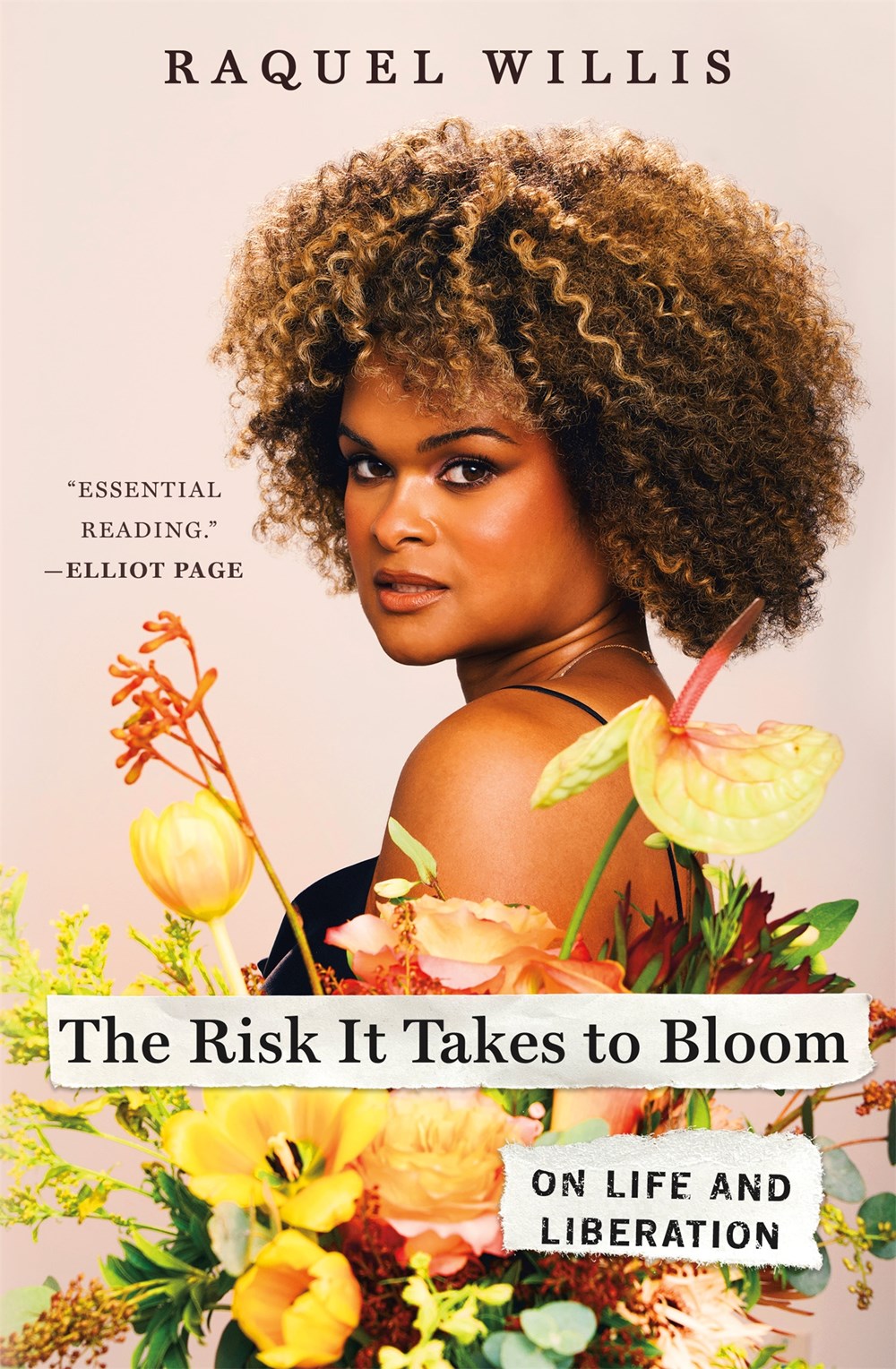
The Risk It Takes to Bloom: On Life and Liberation
by Raquel Willis
$20.00A passionate, powerful memoir by a trailblazing Black transgender activist, tracing her life of transformation and her work towards collective liberation.
Born in Augusta, Georgia, to Black Catholic parents, Raquel spent years feeling isolated, even within a loving, close-knit family. There was little access to understanding what it meant to be queer and transgender. It wasn’t until she went to the University of Georgia that she found the LGBTQ+ community, fell in love, and explored her gender for the first time. But the unexpected death of her father forced her to examine her relationship with herself and those she loved. These years of grief, misunderstanding, and hard-won epiphanies seeped into the soil of her life, serving as fertilizer for growth and allowing her to bloom within.
Upon graduation, Raquel entered a career in journalism against the backdrop of the burgeoning Movement for Black Lives, intersectional feminism going mainstream, and unprecedented visibility of the trans community. After hiding her identity as a newspaper reporter, her increasing awareness of the epidemic of violence plaguing trans women of color and the heightened suicide of trans teens inspired her to come out publicly. Within just a few short years of community organizing in Atlanta, Oakland, and New York, Raquel emerged as one of the most formidable Black trans activists in history.
In The Risk It Takes to Bloom, Raquel Willis recounts the possibility of transformation after tragedy, and how complex moments can push us all to take necessary risks and bloom toward collective liberation. - Black Writers of the Founding Era: A Library of America Anthology
![Black Writers of the Founding Era: A Library of America Anthology]()
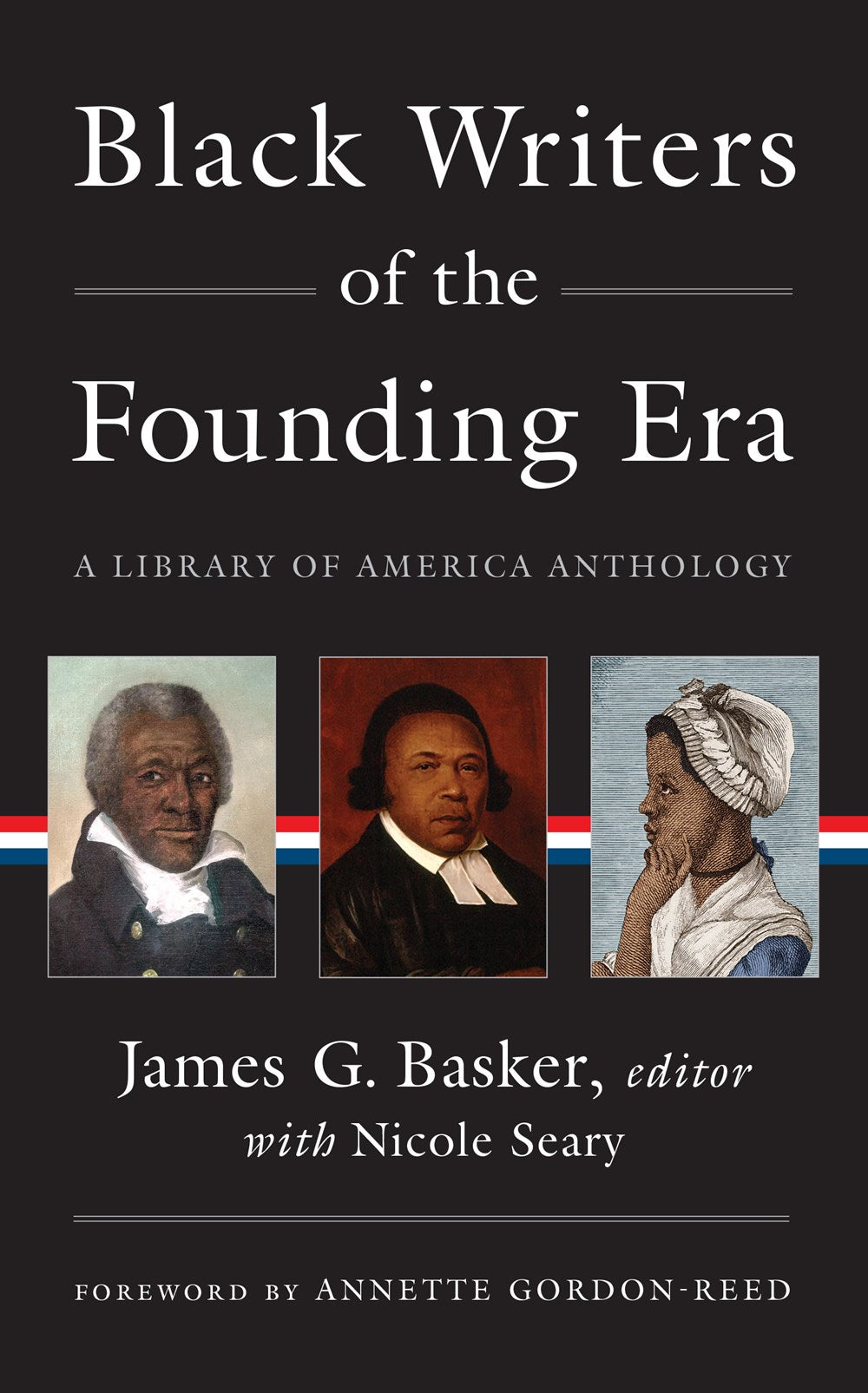
Black Writers of the Founding Era: A Library of America Anthology
edited by James G. Basker
$40.00A radical new vision of the nation's founding era and a major act of historical recovery
Featuring more than 120 writers, this groundbreaking anthology reveals the astonishing richness and diversity of Black experience in the turbulent decades of the American Revolution
Black Writers of the Founding Era is the most comprehensive anthology ever published of Black writing from the turbulent decades surrounding the birth of the United States. An unprecedented archive of historical sources––including more than 200 poems, letters, sermons, newspaper advertisements, slave narratives, testimonies of faith and religious conversion, criminal confessions, court transcripts, travel accounts, private journals, wills, petitions for freedom, even dreams, by over 100 authors––it is a collection that reveals the surprising richness and diversity of Black experience in the new nation.
Here are writers both enslaved and free, loyalist and patriot, female and male, northern and southern; soldiers, seamen, and veterans; painters, poets, accountants, orators, scientists, community organizers, preachers, restaurateurs and cooks, hairdressers, criminals, carpenters, and many more. Along with long-famous works like Phillis Wheatley’s poems and Benjamin Banneker’s astonishing mathematical and scientific puzzles are dozens of first-person narratives offering little-known Black perspectives on the events of the times, like the Boston Massacre and the death of George Washington.
From their bold and eloquent contributions to public debates about the meanings of the revolution and the values of the new nation–– writings that dramatize the many ways in which protest, activism, and community organizing have been integral to the Black American experience from the beginning––to their intimate thoughts preserved in private diaries and letters, some unseen to the present day, the words of the many writers gathered here will indelibly alter our understandings of American history.
A foreword by Annette Gordon-Reed and an introduction by James G. Basker, along with introductory headnotes and explanatory notes drawing on cutting edge scholarship, illuminate these writers’ works and to situate them in their historical contexts.
A 16-page color photo insert presents portraits of some of the writers included and images of the original manuscripts, broadside, and books in which their words have been preserved. - Our Migrant Souls: A Meditation on Race and the Meanings and Myths of “Latino”
![Our Migrant Souls: A Meditation on Race and the Meanings and Myths of “Latino”]()
Our Migrant Souls: A Meditation on Race and the Meanings and Myths of “Latino”
by Héctor Tobar
$19.00A new book by the Pulitzer Prize–winning writer about the twenty-first-century Latino experience and identity.
"Latino" is the most open-ended and loosely defined of the major race categories in the United States. Our Migrant Souls: A Meditation on Race and the Meanings and Myths of "Latino" assembles the Pulitzer Prize winner Héctor Tobar's personal experiences as the son of Guatemalan immigrants and the stories told to him by his Latinx students to offer a spirited rebuke to racist ideas about Latino people. Our Migrant Souls decodes the meaning of "Latino" as a racial and ethnic identity in the modern United States, and seeks to give voice to the angst and anger of young Latino people who have seen latinidad transformed into hateful tropes about "illegals" and have faced insults, harassment, and division based on white insecurities and economic exploitation.
Investigating topics that include the US-Mexico border "wall," Frida Kahlo, urban segregation, gangs, queer Latino utopias, and the emergence of the cartel genre in TV and film, Tobar journeys across the country to expose something truer about the meaning of "Latino" in the twenty-first century.
- Ordinary Notes
![Ordinary Notes]()
Ordinary Notes
by Christina Sharpe
$23.00The critically acclaimed author of In the Wake, "Christina Sharpe is a brilliant thinker who attends unflinchingly to the brutality of our current arrangements . . . and yet always finds a way to beauty and possibility" (Saidiya Hartman).
A singular achievement, Ordinary Notes explores profound questions about loss and the shapes of Black life that emerge in the wake. In a series of 248 notes that gather meaning as we read them, Christina Sharpe skillfully weaves artifacts from the past—public ones alongside others that are poignantly personal—with present realities and possible futures, intricately constructing an immersive portrait of everyday Black existence. The themes and tones that echo through these pages, sometimes about language, beauty, memory; sometimes about history, art, photography, and literature—always attend, with exquisite care, to the ordinary-extraordinary dimensions of Black life.
At the heart of Ordinary Notes is the indelible presence of the author’s mother, Ida Wright Sharpe. “I learned to see in my mother’s house,” writes Sharpe. “I learned how not to see in my mother’s house . . . My mother gifted me a love of beauty, a love of words.” Using these gifts and other ways of seeing, Sharpe steadily summons a chorus of voices and experiences to the page. She practices an aesthetic of "beauty as a method,” collects entries from a community of thinkers toward a “Dictionary of Untranslatable Blackness,” and rigorously examines sites of memory and memorial. And in the process, she forges a brilliant new literary form, as multivalent as the ways of Black being it traces. - Black in Latin America
![Black in Latin America]()
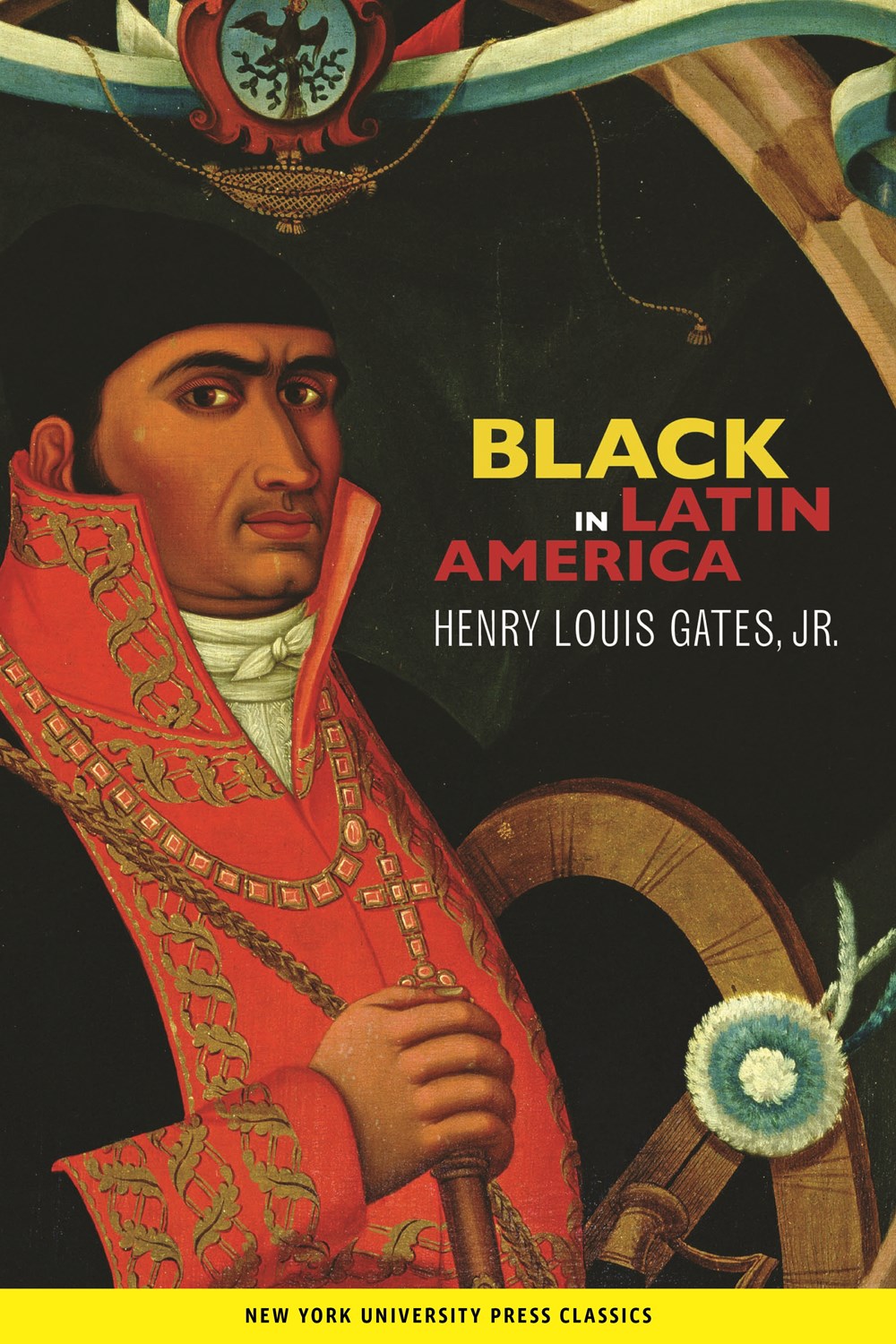
Black in Latin America
by Henry Louis Gates Jr.
$34.00The history of how six Latin American countries acknowledge—or deny—their African past
12.5 million Africans were shipped to the New World during the Middle Passage. While just over 11.0 million survived the arduous journey, only about 450,000 of them arrived in the United States. The rest—over ten and a half million—were taken to the Caribbean and Latin America. This astonishing fact changes our entire picture of the history of slavery in the Western hemisphere, and of its lasting cultural impact. These millions of Africans created new and vibrant cultures, magnificently compelling syntheses of various African, English, French, Portuguese, and Spanish influences.
Despite their great numbers, the cultural and social worlds that they created remain largely unknown to most Americans, except for certain popular, cross-over musical forms. So Henry Louis Gates, Jr. set out on a quest to discover how Latin Americans of African descent live now, and how the countries acknowledge—or deny—their African past; how the fact of race and African ancestry play themselves out in the multicultural worlds of the Caribbean and Latin America. Starting with the slave experience and extending to the present, Gates unveils the history of the African presence in six Latin American countries—Brazil, Cuba, the Dominican Republic, Haiti, Mexico, and Peru—through art, music, cuisine, dance, politics, and religion, but also the very palpable presence of anti-black racism that has sometimes sought to keep the black cultural presence from view.
In Brazil, he delves behind the façade of Carnaval to discover how this ‘rainbow nation’ is waking up to its legacy as the world’s largest slave economy.
In Cuba, he finds out how the culture, religion, politics and music of this island is inextricably linked to the huge amount of slave labor imported to produce its enormously profitable 19th century sugar industry, and how race and racism have fared since Fidel Castro’s Communist revolution in 1959.
In Haiti, he tells the story of the birth of the first-ever black republic, and finds out how the slaves’s hard fought liberation over Napoleon Bonaparte’s French Empire became a double-edged sword.
In Mexico and Peru, he explores the almost unknown history of the significant numbers of black people—far greater than the number brought to the United States—brought to these countries as early as the sixteenth and seventeenth centuries, and the worlds of culture that their descendants have created in Vera Cruz on the Gulf of Mexico, the Costa Chica region on the Pacific, and in and around Lima, Peru.
Professor Gates’ journey becomes ours as we are introduced to the faces and voices of the descendants of the Africans who created these worlds. He shows both the similarities and distinctions between these cultures, and how the New World manifestations are rooted in, but distinct from, their African antecedents. “Black in Latin America” is the third instalment of Gates’s documentary trilogy on the Black Experience in Africa, the United States, and in Latin America. In America Behind the Color Line, Professor Gates examined the fortunes of the black population of modern-day America. In Wonders of the African World, he embarked upon a series of journeys to reveal the history of African culture. Now, he brings that quest full-circle in an effort to discover how Africa and Europe combined to create the vibrant cultures of Latin America, with a rich legacy of thoughtful, articulate subjects whose stories are astonishingly moving and irresistibly compelling. - Black Life Matter: Blackness, Religion, and the Subject
![Black Life Matter: Blackness, Religion, and the Subject]()
Black Life Matter: Blackness, Religion, and the Subject
by Biko Mandela Gray
$24.95In Black Life Matter, Biko Mandela Gray offers a philosophical eulogy for Aiyana Stanley-Jones, Tamir Rice, Alton Sterling, and Sandra Bland that attests to their irreducible significance in the face of unremitting police brutality. Gray employs a theoretical method he calls “sitting with”—a philosophical practice of care that seeks to defend the dead and the living. He shows that the police that killed Stanley-Jones and Rice reduced them to their bodies in ways that turn black lives into tools that the state uses to justify its violence and existence. He outlines how Bland’s arrest and death reveal the affective resonances of blackness, and he contends that Sterling’s physical movement and speech before he was killed point to black flesh as unruly living matter that exceeds the constraints of the black body. These four black lives, Gray demonstrates, were more than the brutal violence enacted against them; they speak to a mode of life that cannot be fully captured by the brutal logics of antiblackness.
Review
"Black Life Matter is a powerful and moving book, a challenge and a rejoinder to white western philosophy, a deep thinking from black and flesh. This book becomes more urgent and more necessary with each passing day." -- Christina Sharpe, author of ― In the Wake: On Blackness and Being
"Over the last three decades, there has been a kind of unspoken rift between black religion and black studies. In this powerful book, Biko Mandela Gray strongly contributes to bridging that gap, exemplifying recent interest in Black Lives Matter and black religion. Black Life Matter is timely and thought provoking." -- Joseph R. Winters, author of ― Hope Draped in Black: Race, Melancholy, and the Agony of ProgressAbout the Author
Biko Mandela Gray is Assistant Professor of Religion at Syracuse University and coeditor of The Religion of White Rage: White Workers, Religious Fervor, and the Myth of Black Racial Progress. - The Source of Self-Regard: Selected Essays, Speeches, and Meditations
![The Source of Self-Regard: Selected Essays, Speeches, and Meditations]()
The Source of Self-Regard: Selected Essays, Speeches, and Meditations
by Toni Morrison
$19.00NATIONAL BESTSELLER • Here is the Nobel Prize winner in her own words: a rich gathering of her most important essays and speeches, spanning four decades that "speaks to today’s social and political moment as directly as this morning’s headlines” (NPR).
These pages give us her searing prayer for the dead of 9/11, her Nobel lecture on the power of language, her searching meditation on Martin Luther King Jr., her heart-wrenching eulogy for James Baldwin. She looks deeply into the fault lines of culture and freedom: the foreigner, female empowerment, the press, money, “black matter(s),” human rights, the artist in society, the Afro-American presence in American literature. And she turns her incisive critical eye to her own work (The Bluest Eye, Sula, Tar Baby, Jazz, Beloved,Paradise) and that of others.
An essential collection from an essential writer, The Source of Self-Regard shines with the literary elegance, intellectual prowess, spiritual depth, and moral compass that have made Toni Morrison our most cherished and enduring voice. - Just Us: An American Conversation
![Just Us: An American Conversation]()
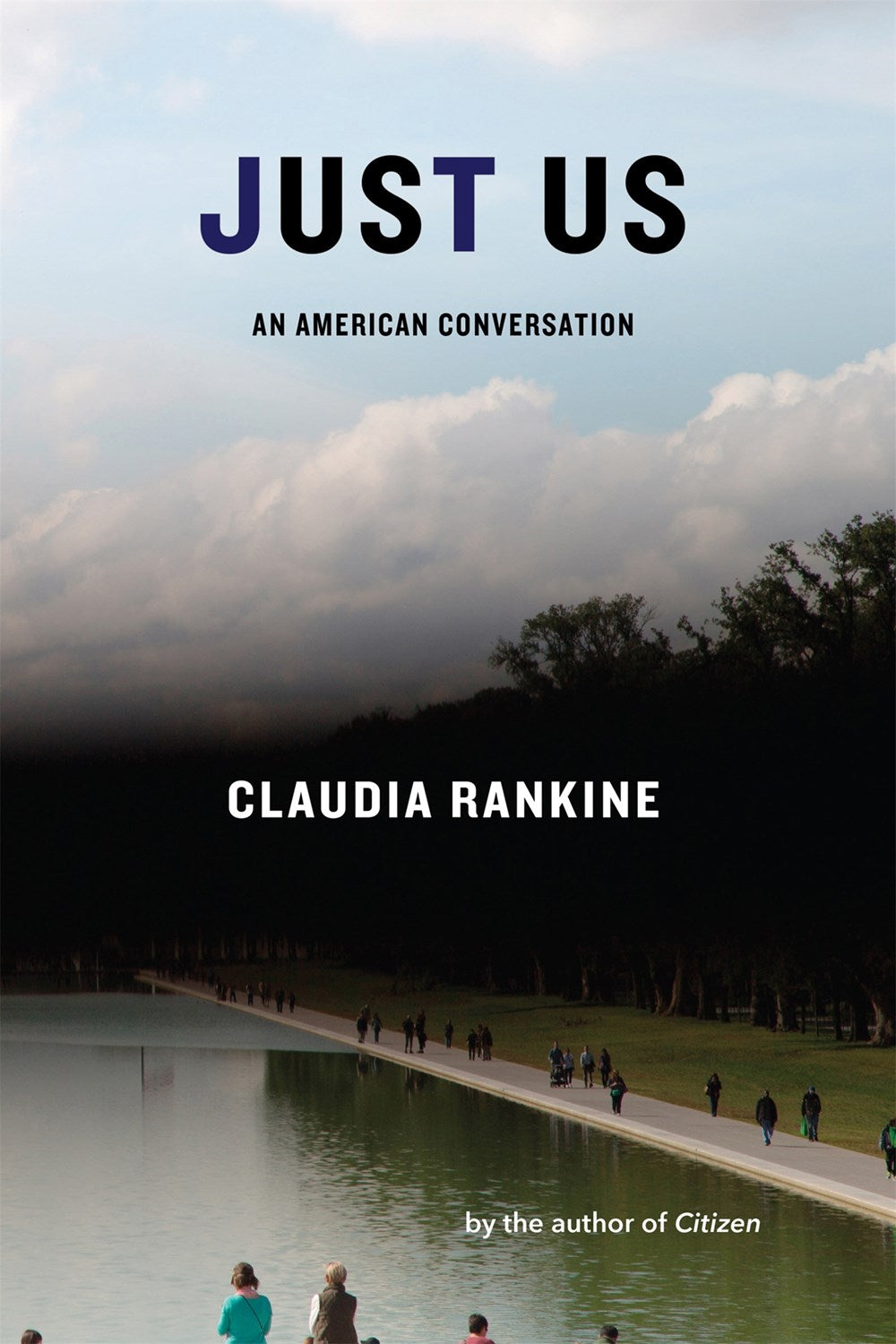
Just Us: An American Conversation
by Claudia Rankine
$20.00*ships in 7 - 10 business days*
In Just Us, Claudia Rankine invites us into a necessary conversation about Whiteness in America. What would it take for us to breach the silence, guilt, and violence that arise from addressing Whiteness for what it is? What are the consequences if we keep avoiding this conversation? What might it look like if we step into it? “I learned early that being right pales next to staying in the room,” she writes.
This brilliant assembly of essays, poems, documents, and images disrupts the false comfort of our culture’s liminal and private spaces―the airport, the theater, the dinner party, the voting booth―where neutrality and politeness deflect true engagement in our shared problems. Rankine makes unprecedented art out of the actual voices and rebuttals of others: White men responding to, and with, their White male privilege; a friend clarifying her unexpected behavior at a play; and women on the street expressing the political currency of dyeing their hair blond, all running alongside fact-checked notes and commentary that complement Rankine’s own text, complicating notions of authority and who gets the last word. Funny, vulnerable, and prescient, Just Us is Rankine’s most intimate and urgent book, a crucial call to challenge our vexed reality. - Wild Women Don't Wear No Blues
![Wild Women Don't Wear No Blues]()
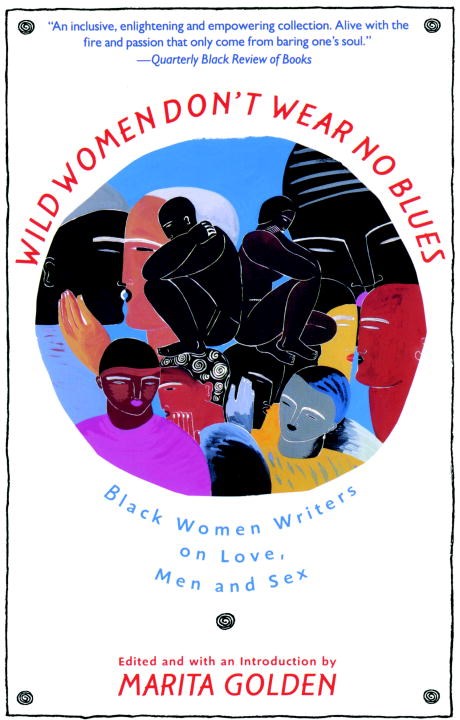
Wild Women Don't Wear No Blues
by Marita Golden
$15.95*ships in 7 - 10 days*
Bringing together fourteen African-American women, Marita Golden has compiled saucy and spicy essays that serve as an exploration into the contemporary black female psyche. Ranging in style from Audre Lorde's classic polemic on eroticism to Miriam DeCosta Willis's deeply moving essay on her husband's last years, "every single one of these essays is terrific." -- The Washington Post
- Life Doesn't Frighten Me (25th Anniversary Edition)
![Life Doesn't Frighten Me (25th Anniversary Edition)]()
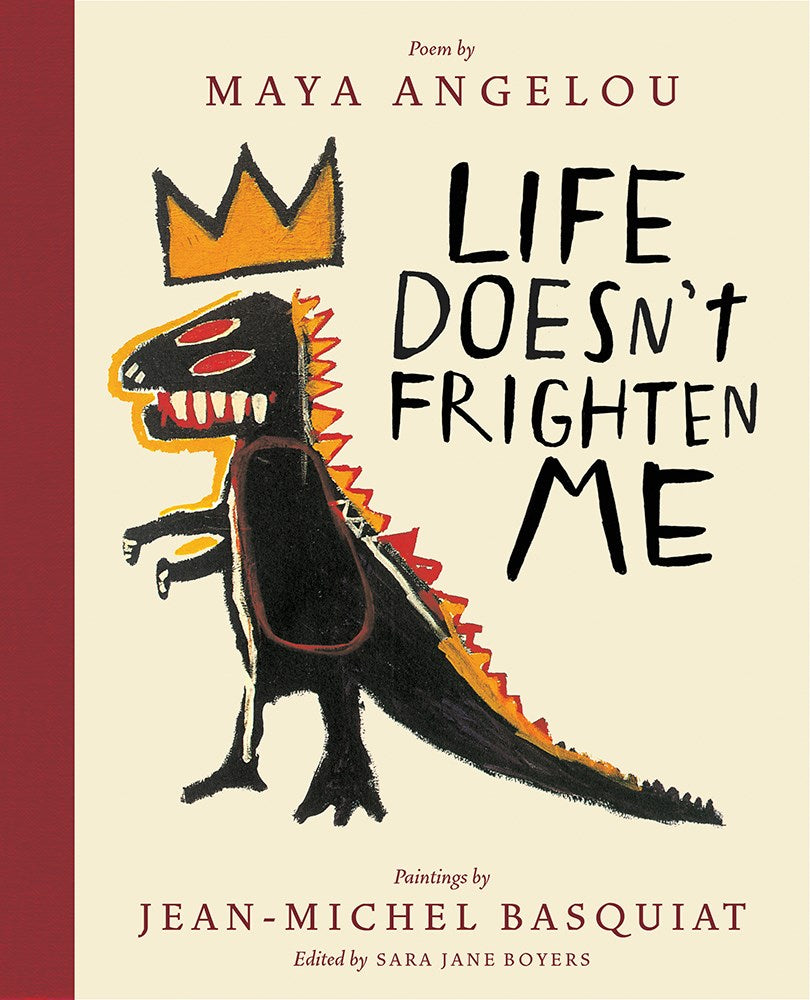
Life Doesn't Frighten Me (25th Anniversary Edition)
by Maya Angelou
Sold outMaya Angelou’s poetry pairs with Jean-Michel Basquiat’s paintings to create this gorgeous celebration
Maya Angelou’s unforgettable poem is matched with the daring art of Jean-Michel Basquiat in this powerful ode to courage
Shadows on the wall
Noises down the hall
Life doesn't frighten me at all
Maya Angelou's brave, defiant poem celebrates the courage within each of us, young and old. From the scary thought of panthers in the park to the unsettling scene of a new classroom, fearsome images are summoned and dispelled by the power of faith in ourselves.
Angelou's strong words are matched by the daring vision of artist Jean-Michel Basquiat, whose childlike style reveals the powerful emotions and fanciful imaginings of childhood. Together, Angelou's words and Basquiat's paintings create a place where every child, indeed every person, may experience his or her own fearlessness.
This brilliant introduction to poetry and contemporary art features brief biographies of Angelou and Basquiat and an afterword from the editor. A selected bibliography of Angelou's books and a selected museum listing of Basquiat's works open the door to further inspiration through the fine arts. - Destruction of Black Civilization: Great Issues of a Race From 4500 B.C. to 2000 A.D.
![Destruction of Black Civilization: Great Issues of a Race From 4500 B.C. to 2000 A.D.]()

Destruction of Black Civilization: Great Issues of a Race From 4500 B.C. to 2000 A.D.
by Chancellor Williams
Sold outThe Destruction of Black Civilization took Chancellor Williams sixteen years of research and field study to compile. The book, which was to serve as a reinterpretation of the history of the African race, was intended to be "a general rebellion against the subtle message from even the most 'liberal' white authors (and their Negro disciples): 'You belong to a race of nobodies. You have no worthwhile history to point to with pride.'" The book was written at a time when many black students, educators, and scholars were starting to piece together the connection between the way their history was taught and the way they were perceived by others and by themselves. They began to question assumptions made about their history and took it upon themselves to create a new body of historical research. The book is premised on the question: "If the Blacks were among the very first builders of civilization and their land the birthplace of civilization, what has happened to them that has left them since then, at the bottom of world society, precisely what happened? The Caucasian answer is simple and well-known: The Blacks have always been at the bottom." Williams instead contends that many elements--nature, imperialism, and stolen legacies-- have aided in the destruction of the black civilization.
The Destruction of Black Civilization is revelatory and revolutionary because it offers a new approach to the research, teaching, and study of African history by shifting the main focus from the history of Arabs and Europeans in Africa to the Africans themselves, offering instead "a history of blacks that is a history of blacks. Because only from history can we learn what our strengths were and, especially, in what particular aspect we are weak and vulnerable. Our history can then become at once the foundation and guiding light for united efforts in serious[ly] planning what we should be about now." It was part of the evolution of the black revolution that took place in the 1970s, as the focus shifted from politics to matters of the mind.
- Killing the Black Body: Race, Reproduction, and the Meaning of Liberty
![Killing the Black Body: Race, Reproduction, and the Meaning of Liberty]()
Killing the Black Body: Race, Reproduction, and the Meaning of Liberty
by Dorothy Roberts
$18.00*ships in 7-10 business days*
In 1997, the image of the “Welfare Queen” dominated white America’s perceptions of Black women. Legislation was being proposed to deny benefits to children born to welfare mothers and to require insertion of birth-control implants as a condition of receiving aid. Meanwhile, a booming fertility industry was catering primarily to infertile white couples.
Dorothy Roberts’s landmark book, Killing the Black Body, made a powerful entrance into the national conversation of the era, exposing America’s systemic abuse of Black women’s bodies, from slave masters’ economic stake in bonded women’s fertility to government programs that coerced thousands of poor Black women into being sterilized as late as the 1970s. These abuses point not only to the degradation of Black motherhood, but to the exclusion of Black women’s reproductive needs from the feminist agenda. Killing the Black Body turns twenty next year and is as relevant today as it was upon publication. In our current moment of Black Lives Matter, Between the World and Me, and authors like Chimamanda Ngozi Adichie and Roxane Gay speaking out about feminism and race, Killing the Black Body offers a vision of reproductive freedom that respects each and every American. - APRIL 2026: Non-Fiction Book Club - April 21 @ 7 PM
![APRIL 2026: Non-Fiction Book Club - April 21 @ 7 PM]()

APRIL 2026: Non-Fiction Book Club - April 21 @ 7 PM
$0.00We're meeting to discuss The Will To Change by Bell Hooks!
BOOK CLUB MEETING DEETS
When: Tuesday, April 21 @ 7PM CST
Where: Kindred Stories (2310 Elgin St, Houston, TX 77004)
How: RSVP ONLY to let us know you plan to attend! Support the Non-Fiction Book Club by purchasing a copy of the book from Kindred Stories here!
ABOUT THE WILL TO CHANGE
Everyone needs to love and be loved - even men. But to know love, men must be able to look at the ways that patriarchal culture keeps them from knowing themselves, from being in touch with their feelings, from loving.
In The Will to Change, bell hooks gets to the heart of the matter and shows men how to express the emotions that are a fundamental part of who they are—whatever their age, marital status, ethnicity, or sexual orientation. But toxic masculinity punishes those fundamental emotions, and it’s so deeply ingrained in our society that it’s hard for men to not comply—but hooks wants to help change that.
With trademark candor and fierce intelligence, hooks addresses the most common concerns of men, such as fear of intimacy and loss of their patriarchal place in society, in new and challenging ways. She believes men can find the way to spiritual unity by getting back in touch with the emotionally open part of themselves—and lay claim to the rich and rewarding inner lives that have historically been the exclusive province of women. A brave and astonishing work, The Will to Change is designed to help men reclaim the best part of themselves.
- Unmasking AI: My Mission to Protect What Is Human in a World of Machines
![Unmasking AI: My Mission to Protect What Is Human in a World of Machines cover image]()

Unmasking AI: My Mission to Protect What Is Human in a World of Machines
$22.00NATIONAL BESTSELLER • “The conscience of the AI revolution” (Fortune) explains how we’ve arrived at an era of AI harms and oppression, and what we can do to avoid its pitfalls.
“AI is not coming, it’s here. If we answer the beautiful call inside these pages, we can decide who we are going to be and how we’re going to use technology in service of what it means to be fully human.”—Brené Brown, #1 New York Times bestselling author of Dare to Lead
A LOS ANGELES TIMES BEST BOOK OF THE YEAR • Shortlisted for the Inc. Non-Obvious Book Award
To most of us, it seems like recent developments in artificial intelligence emerged out of nowhere to pose unprecedented threats to humankind. But to Dr. Joy Buolamwini, who has been at the forefront of AI research, this moment has been a long time in the making.
After tinkering with robotics as a high school student in Memphis and then developing mobile apps in Zambia as a Fulbright fellow, Buolamwini followed her lifelong passion for computer science, engineering, and art to MIT in 2015. As a graduate student at the “Future Factory,” she did groundbreaking research that exposed widespread racial and gender bias in AI services from tech giants across the world.
Unmasking AI goes beyond the headlines about existential risks produced by Big Tech. It is the remarkable story of how Buolamwini uncovered what she calls “the coded gaze”—the evidence of encoded discrimination and exclusion in tech products—and how she galvanized the movement to prevent AI harms by founding the Algorithmic Justice League. Applying an intersectional lens to both the tech industry and the research sector, she shows how racism, sexism, colorism, and ableism can overlap and render broad swaths of humanity “excoded” and therefore vulnerable in a world rapidly adopting AI tools. Computers, she reminds us, are reflections of both the aspirations and the limitations of the people who create them.
Encouraging experts and non-experts alike to join this fight, Buolamwini writes, “The rising frontier for civil rights will require algorithmic justice. AI should be for the people and by the people, not just the privileged few.”
- Misbehaving at the Crossroads: Essays & Writings
![Misbehaving at the Crossroads: Essays & Writings cover image]()

Misbehaving at the Crossroads: Essays & Writings
Honoree Fanonne Jeffers
$19.99The New York Times-bestselling, National Book Award-nominated author of The Love Songs of W.E.B. Du Bois and The Age of Phillis makes her nonfiction debut with this personal and thought-provoking work that explores the journeys and possibilities of Black women throughout American history and in contemporary times.
Honorée Fanonne Jeffers is at a crossroads.
Traditional African/Black American cultures present the crossroads as a place of simultaneous difficulty and possibility. In contemporary times, Kimberlé Crenshaw coined the phrase “intersectionality” to explain the unique position of Black women in America. In many ways, they are at a third crossroads: attempting to fit into notions of femininity and respectability primarily assigned to White women, while inventing improvisational strategies to combat oppression.
In Misbehaving at the Crossroads, Jeffers explores the emotional and historical tensions in Black women’s public lives and her own private life. She charts voyages of Black girlhood to womanhood and the currents buffeting these journeys, including the difficulties of racially gendered oppression, the challenges of documenting Black women’s ancestry; the adultification of Black girls; the irony of Black female respectability politics; the origins of Womanism/Black feminism; and resistance to White supremacy and patriarchy. As Jeffers shows with empathy and wisdom, naming difficult historical truths represents both Blues and transcendence, a crossroads that speaks.
Necessary and sharply observed, provocative and humane, and full of the insight and brilliance that has characterized her poetry and fiction, Misbehaving at the Crossroads illustrates the life of one extraordinary Black woman—and her extraordinary foremothers.
- Why We Went Extinct: An Illustrated Encyclopedia of the Species That Just Didn't Make It
![Book cover image]()

Why We Went Extinct: An Illustrated Encyclopedia of the Species That Just Didn't Make It
by Tadaaki Imaizumi and others
Sold outSince life first arose on Earth, nearly all dinosaurs, mammals, insects, and birds that have ever existed have gone extinct. In this voicy, full-color illustrated encyclopedia, hear from the animals themselves what happened to them!
If your species happens to be alive right now, you should feel very lucky.
You probably know about the downfall of the dinosaurs and how the dodo bird met its doom. But you might not have heard about the other weird and wonderful creatures throughout the eons that just didn’t make it.
But that doesn’t mean all these stories are sad; extinction is just a part of the long, long history of life on Earth. And some of the ways these species died out are actually pretty silly . . .
In this fully illustrated encyclopedia, you’ll hear from the creatures who have faced extinction throughout the years—and learn what survival of the fittest means for those on evolution’s bad side.
Nearly a million copies sold in Japan!
- Black Trans Feminism
![Black Trans Feminism]()
Black Trans Feminism
by Marquis Bey
$28.95Marquis Bey offers a meditation on blackness and gender nonnormativity in ways that recalibrate traditional understandings of each, conceiving of black trans feminism as a politics grounded in fugitivity and the subversion of power.
In Black Trans Feminism Marquis Bey offers a meditation on blackness and gender nonnormativity in ways that recalibrate traditional understandings of each. Theorizing black trans feminism from the vantages of abolition and gender radicality, Bey articulates blackness as a mutiny against racializing categorizations; transness as a nonpredetermined, wayward, and deregulated movement that works toward gender’s destruction; and black feminism as an epistemological method to fracture hegemonic modes of racialized gender. In readings of the essays, interviews, and poems of Alexis Pauline Gumbs, jayy dodd, and Venus Di’Khadijah Selenite, Bey turns black trans feminism away from a politics of gendered embodiment and toward a conception of it as a politics grounded in fugitivity and the subversion of power. Together, blackness and transness actualize themselves as on the run from gender. In this way, Bey presents black trans feminism as a mode of enacting the wholesale dismantling of the world we have been given. - Black Disability Politics
![Black Disability Politics]()
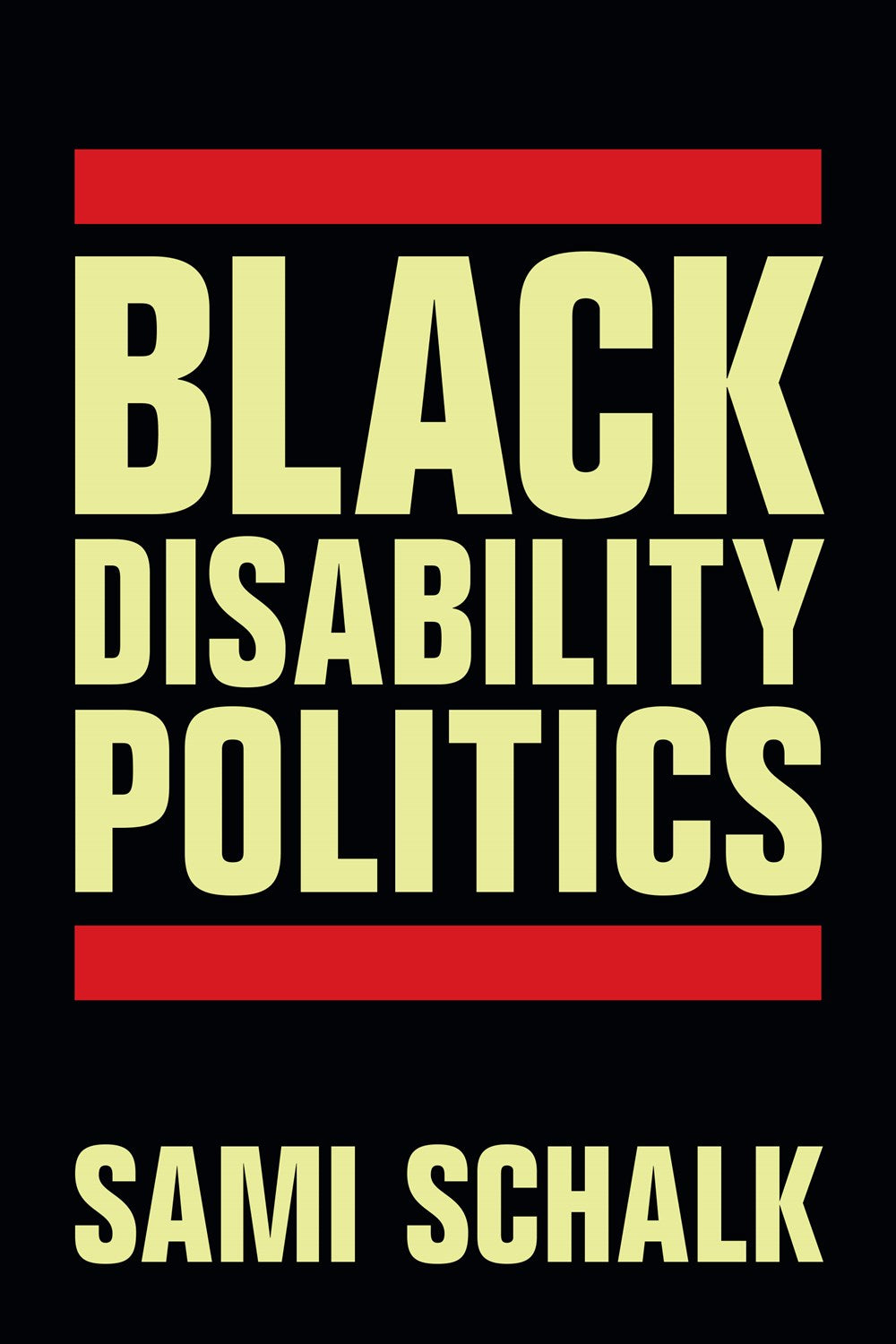
Black Disability Politics
by Sami Schalk
Sold outDrawing on the archives of the Black Panther Party and the National Black Women’s Health Project, Sami Schalk explores how issues of disability have been and continue to be central to Black activism from the 1970s to the present.
In Black Disability Politics Sami Schalk explores how issues of disability have been and continue to be central to Black activism from the 1970s to the present. Schalk shows how Black people have long engaged with disability as a political issue deeply tied to race and racism. She points out that this work has not been recognized as part of the legacy of disability justice and liberation because Black disability politics differ in language and approach from the mainstream white-dominant disability rights movement. Drawing on the archives of the Black Panther Party and the National Black Women’s Health Project alongside interviews with contemporary Black disabled cultural workers, Schalk identifies common qualities of Black disability politics, including the need to ground public health initiatives in the experience and expertise of marginalized disabled people so that they can work in antiracist, feminist, and anti-ableist ways. Prioritizing an understanding of disability within the context of white supremacy, Schalk demonstrates that the work of Black disability politics not only exists but is essential to the future of Black liberation movements. - Art as Social Action: An Introduction to the Principles and Practices of Teaching Social Practice Art
![Art as Social Action: An Introduction to the Principles and Practices of Teaching Social Practice Art]()
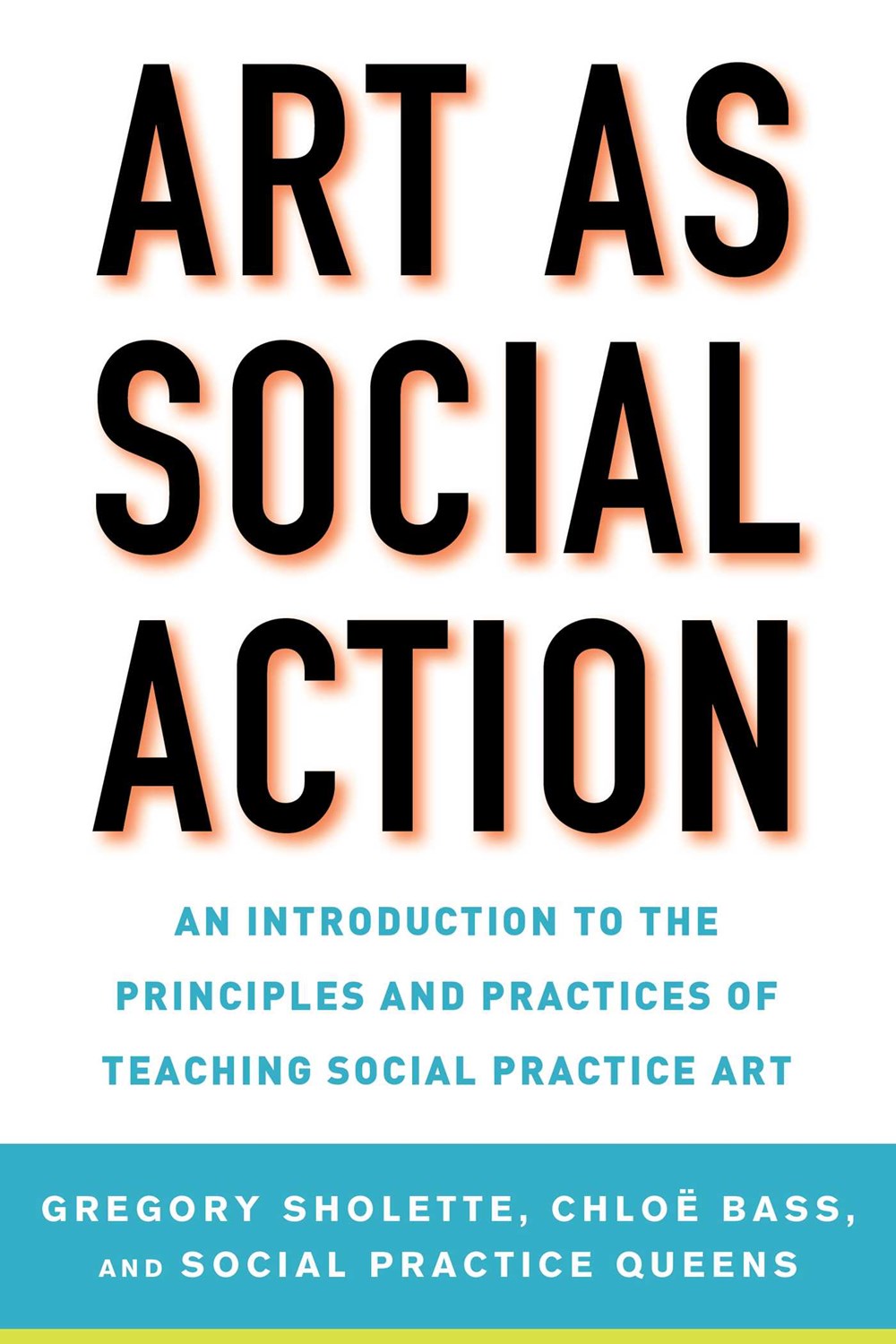
Art as Social Action: An Introduction to the Principles and Practices of Teaching Social Practice Art
by Gregory Sholette, Chloë Bass. & Social Practice Queens
$24.99"Art as Social Action . . . is an essential guide to deepening social art practices and teaching them to students." —Laura Raicovich, president and executive director, Queens Museum
Art as Social Action is both a general introduction to and an illustrated, practical textbook for the field of social practice, an art medium that has been gaining popularity in the public sphere. With content arranged thematically around such topics as direct action, alternative organizing, urban imaginaries, anti-bias work, and collective learning, among others, Art as Social Action is a comprehensive manual for teachers about how to teach art as social practice.Along with a series of introductions by leading social practice artists in the field, valuable lesson plans offer examples of pedagogical projects for instructors at both college and high school levels with contributions written by prominent social practice artists, teachers, and thinkers, including:
- Mary Jane Jacob
- Maureen Connor
- Brian Rosa
- Pablo Helguera
- Jen de los Reyes
- Jeanne van Heeswick
- Jaishri Abichandani
- Loraine Leeson
- Ala Plastica
- Daniel Tucker
- Fiona Whelan
- Bo Zheng
- Dipti Desai
- Noah Fischer
Lesson plans also reflect the ongoing pedagogical and art action work of Social Practice Queens (SPQ), a unique partnership between Queens College CUNY and the Queens Museum. - Orishas, Goddesses, and Voodoo Queens: The Divine Feminine in the African Religious Traditions
![Orishas, Goddesses, and Voodoo Queens: The Divine Feminine in the African Religious Traditions]()
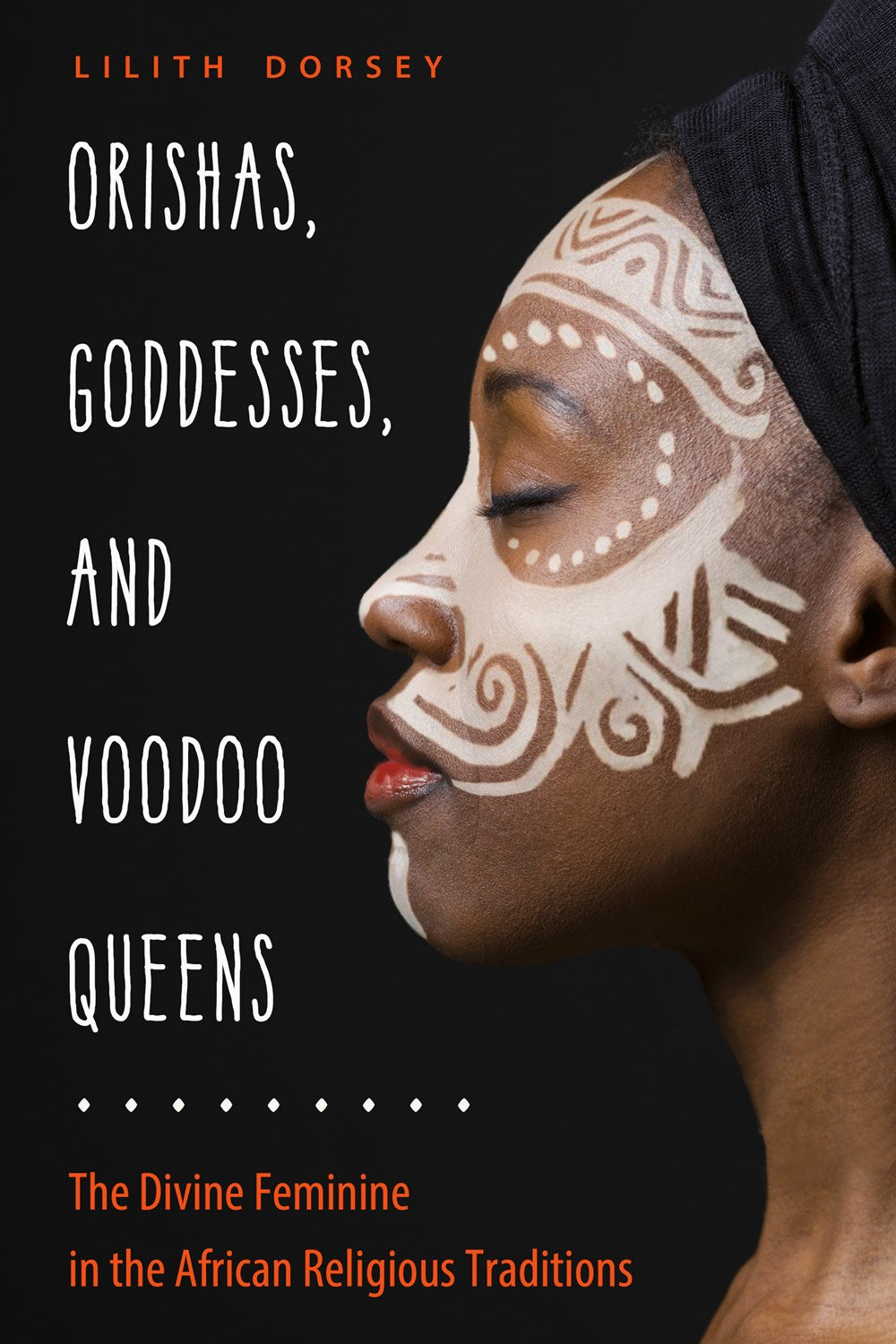
Orishas, Goddesses, and Voodoo Queens: The Divine Feminine in the African Religious Traditions
by Lilith Dorsey
$16.95*Ships in 7-10 business days*
An inspiring exploration of the goddesses of the West African spiritual traditions and their role in shaping Yoruba (Ifa), Santeria, Haitian Vodoun, and New Orleans Voodoo.
Throughout Africa and beyond in the diaspora caused by the slave trade, the divine feminine was revered in the forms of goddesses like the ancient Nana Buluku, water spirits like Yemaya, Oshun, and Mami Wata, and the warrior Oya. The power of these goddesses and spirit beings has taken root in the West. New Orleans, for example, is the home of Marie Laveau, who used her magical powers to become the “Voodoo Queen” of New Orleans.
Orishas, Goddesses, and Voodoo Queens shows you how to celebrate and cultivate the traits of these goddesses, drawing upon their strengths to empower your own life. In addition to offering a guided tour of the key goddesses of the African religious traditions, the book offers magical spells, rituals, potions, astrological correspondences, sacred offerings, and much more to help guide you on your own transformational journey.


Stay Informed. We're building a community committed to celebrating Black authors + artisans. Subscribe to keep up with all things Kindred Stories.