
Social Justice
- Pleasure Activism
![Pleasure Activism]()
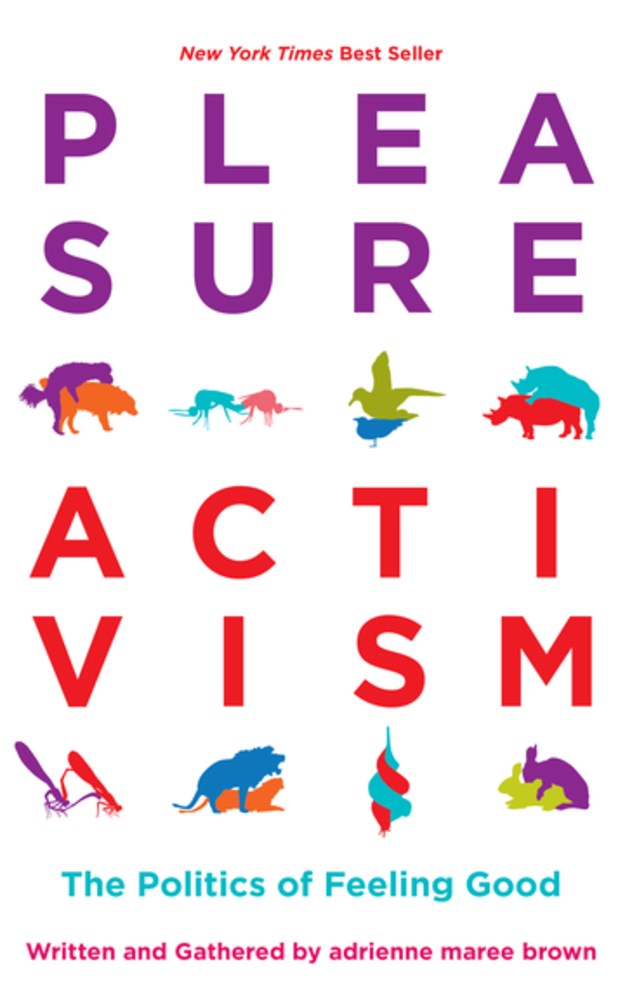
Pleasure Activism
by Adrienne Maree Brown
Sold outNo more self-denial. Politics should be a resounding, erotic "yes," not another deadening "no."
How do we make social justice the most pleasurable human experience? How can we awaken within ourselves desires that make it impossible to settle for anything less than a fulfilling life? Author and editor Adrienne Maree Brown finds the answer in something she calls “pleasure activism,” a politics of healing and happiness that explodes the dour myth that changing the world is just another form of work. Drawing on the black feminist tradition, she challenges us to rethink the ground rules of activism. Her mindset-altering essays are interwoven with conversations and insights from other feminist thinkers, including Audre Lorde, Joan Morgan, Cara Page, Sonya Renee Taylor, and Alexis Pauline Gumbs. Together they cover a wide array of subjects—from sex work to climate change, from race and gender to sex and drugs—building new narratives about how politics can feel good and how what feels good always has a complex politics of its own.
Building on the success of her popular Emergent Strategy, brown launches a new series of the same name with this volume, bringing readers books that explore experimental, expansive, and innovative ways to meet the challenges that face our world today. Books that find the opportunity in every crisis!
- The Will to Change: Men, Masculinity, and Love
![The Will to Change: Men, Masculinity, and Love cover image]()

The Will to Change: Men, Masculinity, and Love
bell hooks
$19.00Everyone needs to love and be loved - even men. But to know love, men must be able to look at the ways that patriarchal culture keeps them from knowing themselves, from being in touch with their feelings, from loving.
In The Will to Change, bell hooks gets to the heart of the matter and shows men how to express the emotions that are a fundamental part of who they are—whatever their age, marital status, ethnicity, or sexual orientation. But toxic masculinity punishes those fundamental emotions, and it’s so deeply ingrained in our society that it’s hard for men to not comply—but hooks wants to help change that.
With trademark candor and fierce intelligence, hooks addresses the most common concerns of men, such as fear of intimacy and loss of their patriarchal place in society, in new and challenging ways. She believes men can find the way to spiritual unity by getting back in touch with the emotionally open part of themselves—and lay claim to the rich and rewarding inner lives that have historically been the exclusive province of women. A brave and astonishing work, The Will to Change is designed to help men reclaim the best part of themselves.
- Imagination: A Manifesto
![Imagination: A Manifesto]()
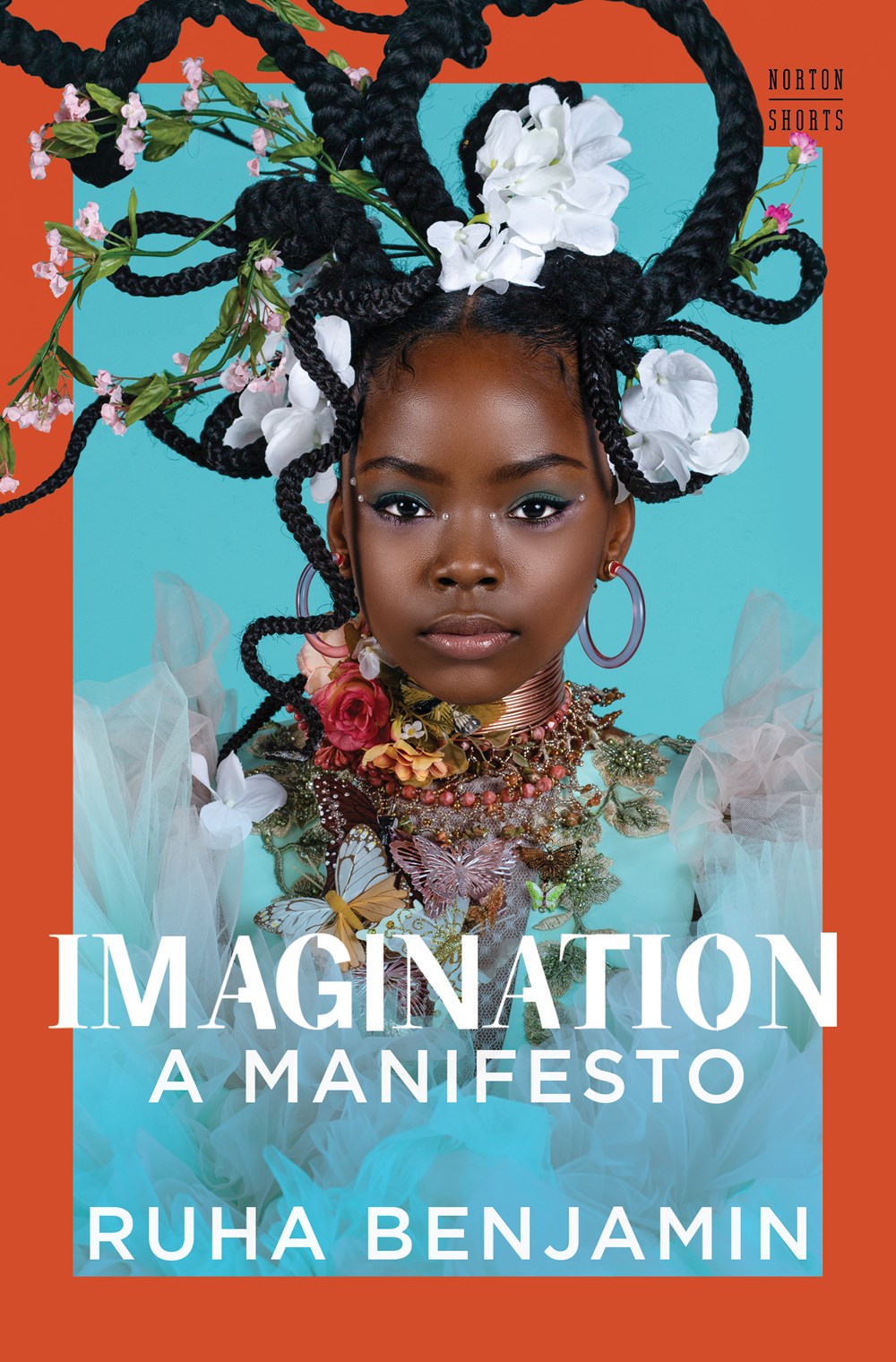
Imagination: A Manifesto
by Ruha Benjamin
$12.00In this revelatory work, Ruha Benjamin calls on us to take imagination seriously as a site of struggle and a place of possibility for reshaping the future.
A world without prisons? Ridiculous. Schools that foster the genius of every child? Impossible. Work that doesn’t strangle the life out of people? Naive. A society where everyone has food, shelter, love? In your dreams. Exactly. Ruha Benjamin, Princeton University professor, insists that imagination isn’t a luxury. It is a vital resource and powerful tool for collective liberation.
Imagination: A Manifesto is her proclamation that we have the power to use our imaginations to challenge systems of oppression and to create a world in which everyone can thrive. But obstacles abound. We have inherited destructive ideas that trap us inside a dominant imagination. Consider how racism, sexism, and classism make hierarchies, exploitation, and violence seem natural and inevitable—but all emerged from the human imagination.
The most effective way to disrupt these deadly systems is to do so collectively. Benjamin highlights the educators, artists, activists, and many others who are refuting powerful narratives that justify the status quo, crafting new stories that reflect our interconnection, and offering creative approaches to seemingly intractable problems.
Imagination: A Manifesto offers visionary examples and tactics to push beyond the constraints of what we think, and are told, is possible. This book is for anyone who is ready to take to heart Toni Morrison’s instruction: “Dream a little before you think.”
- Let This Radicalize You : Organizing and the Revolution of Reciprocal Care
![Let This Radicalize You : Organizing and the Revolution of Reciprocal Care]()
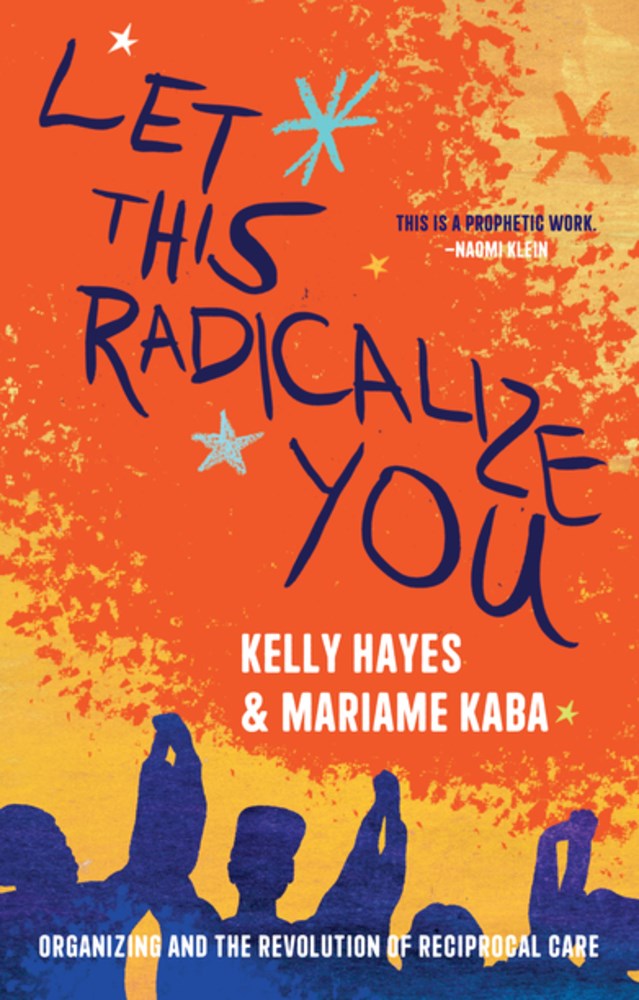
Let This Radicalize You : Organizing and the Revolution of Reciprocal Care
by Mariame Kaba
$17.95What fuels and sustains activism and organizing when it feels like our worlds are collapsing? Let This Radicalize You is a practical and imaginative resource for activists and organizers building power in an era of destabilization and catastrophe.
Longtime organizers and movement educators Mariame Kaba and Kelly Hayes examine some of the political lessons of the COVID-19 pandemic, including the convergence of mass protest and mass formations of mutual aid, and consider what this confluence of power can teach us about a future that will require mass acts of care, rescue and defense, in the face of both state violence and environmental disaster.
The book is intended to aid and empower activists and organizers as they attempt to map their own journeys through the work of justice-making. It includes insights from a spectrum of experienced organizers, including Sharon Lungo, Carlos Saavedra, Ejeris Dixon, Barbara Ransby, and Ruth Wilson Gilmore about some of the difficult and joyous lessons they have learned in their work. - Except for Palestine: The Limits of Progressive Politics
![Except for Palestine: The Limits of Progressive Politics]()
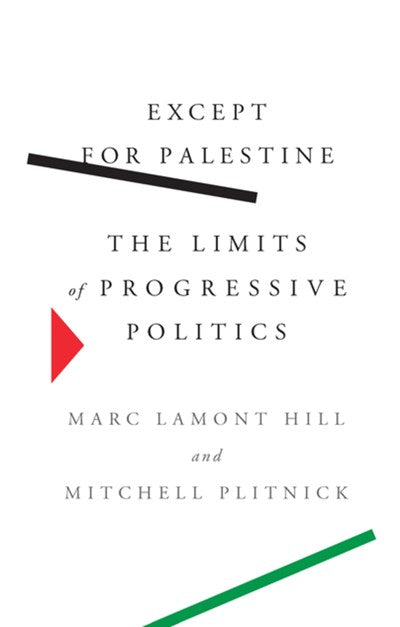
Except for Palestine: The Limits of Progressive Politics
by Marc Lamont Hill and Mitchell Plitnick
$17.99A bold call for the American Left to extend their politics to the issues of Israel-Palestine, from a New York Times bestselling author and an expert on U.S. policy in the region
In this major work of daring criticism and analysis, scholar and political commentator Marc Lamont Hill and Israel-Palestine expert Mitchell Plitnick spotlight how holding fast to one-sided and unwaveringly pro-Israel policies reflects the truth-bending grip of authoritarianism on both Israel and the United States. Except for Palestine deftly argues that progressives and liberals who oppose regressive policies on immigration, racial justice, gender equality, LGBTQ rights, and other issues must extend these core principles to the oppression of Palestinians. In doing so, the authors take seriously the political concerns and well-being of both Israelis and Palestinians, demonstrating the extent to which U.S. policy has made peace harder to attain. They also unravel the conflation of advocacy for Palestinian rights with anti-Semitism and hatred of Israel.
Hill and Plitnick provide a timely and essential intervention by examining multiple dimensions of the Israeli-Palestinian conversation, including Israel's growing disdain for democracy, the effects of occupation on Palestine, the siege of Gaza, diminishing American funding for Palestinian relief, and the campaign to stigmatize any critique of Israeli occupation. Except for Palestine is a searing polemic and a cri de coeur for elected officials, activists, and everyday citizens alike to align their beliefs and politics with their values.
- The Intersectional Environmentalist
![The Intersectional Environmentalist]()
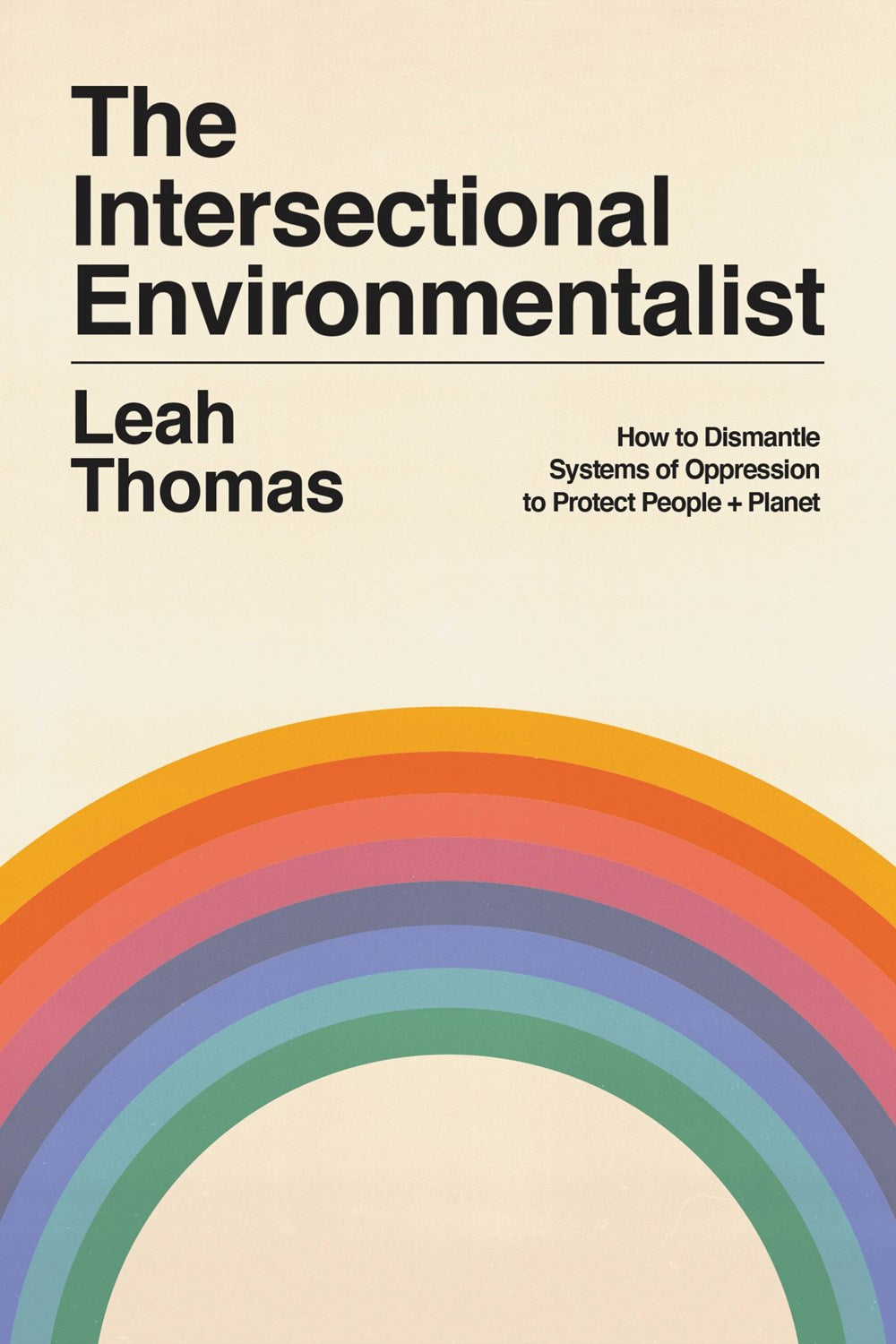
The Intersectional Environmentalist
by Leah Thomas
$27.00A primer on intersectional environmentalism aimed at educating the next generation of activists on how to create meaningful, inclusive, and sustainable change.
The Intersectional Environmentalist is an introduction to the intersection between environmentalism, racism, and privilege, and an acknowledgment of the fundamental truth that we cannot save the planet without uplifting the voices of its people -- especially those most often unheard. Written by Leah Thomas, a prominent voice in the field and the activist who coined the term "Intersectional Environmentalism," this book is simultaneously a call to action, a guide to instigating change for all, and a pledge to work towards the empowerment of all people and the betterment of the planet.
In The Intersectional Environmentalist, Thomas shows how not only are Black, Indigenous and people of color unequally and unfairly impacted by environmental injustices, but she argues that the fight for the planet lies in tandem to the fight for civil rights; and in fact, that one cannot exist without the other. An essential read, this book addresses the most pressing issues that the people and our planet face, examines and dismantles privilege, and looks to the future as the voice of a movement that will define a generation.
- Freedom Is a Constant Struggle: Ferguson, Palestine, and the Foundations of a Movement
![Freedom Is a Constant Struggle: Ferguson, Palestine, and the Foundations of a Movement]()
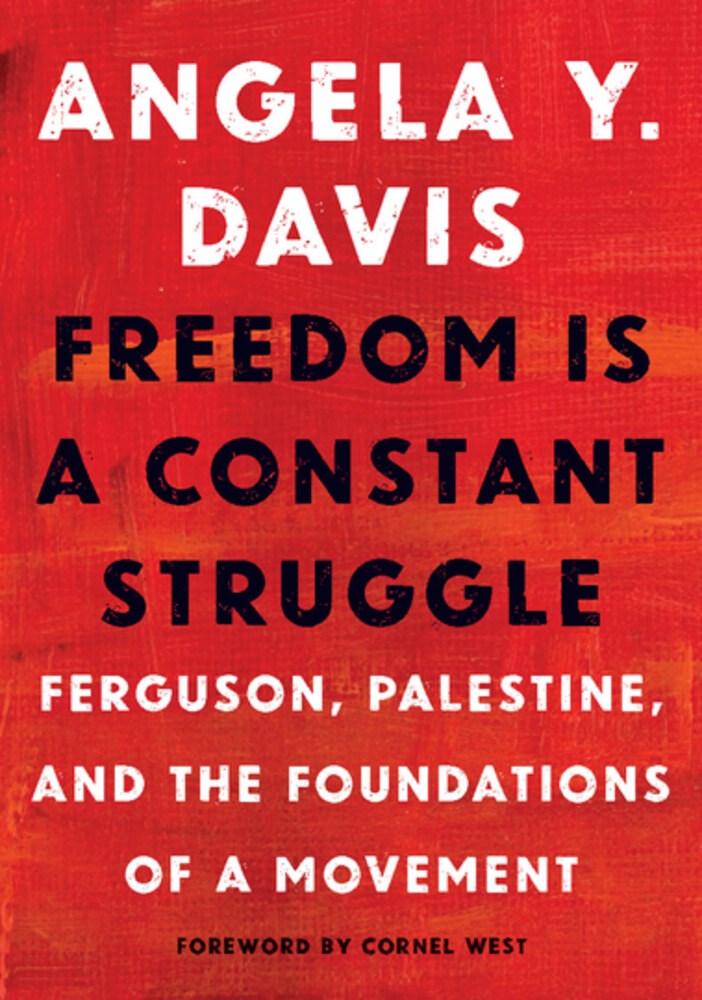
Freedom Is a Constant Struggle: Ferguson, Palestine, and the Foundations of a Movement
by Angela Y. Davis
$15.95Activist, teacher, author and icon of the Black Power movement Angela Davis talks Ferguson, Palestine, and prison abolition.
In these newly collected essays, interviews, and speeches, world-renowned activist and scholar Angela Y. Davis illuminates the connections between struggles against state violence and oppression throughout history and around the world.
Reflecting on the importance of black feminism, intersectionality, and prison abolitionism for today's struggles, Davis discusses the legacies of previous liberation struggles, from the Black Freedom Movement to the South African anti-Apartheid movement. She highlights connections and analyzes today's struggles against state terror, from Ferguson to Palestine.
Facing a world of outrageous injustice, Davis challenges us to imagine and build the movement for human liberation. And in doing so, she reminds us that "Freedom is a constant struggle." - All the Black Girls Are Activists: A Fourth Wave Womanist Pursuit of Dreams as Radical Resistance
![All the Black Girls Are Activists: A Fourth Wave Womanist Pursuit of Dreams as Radical Resistance]()
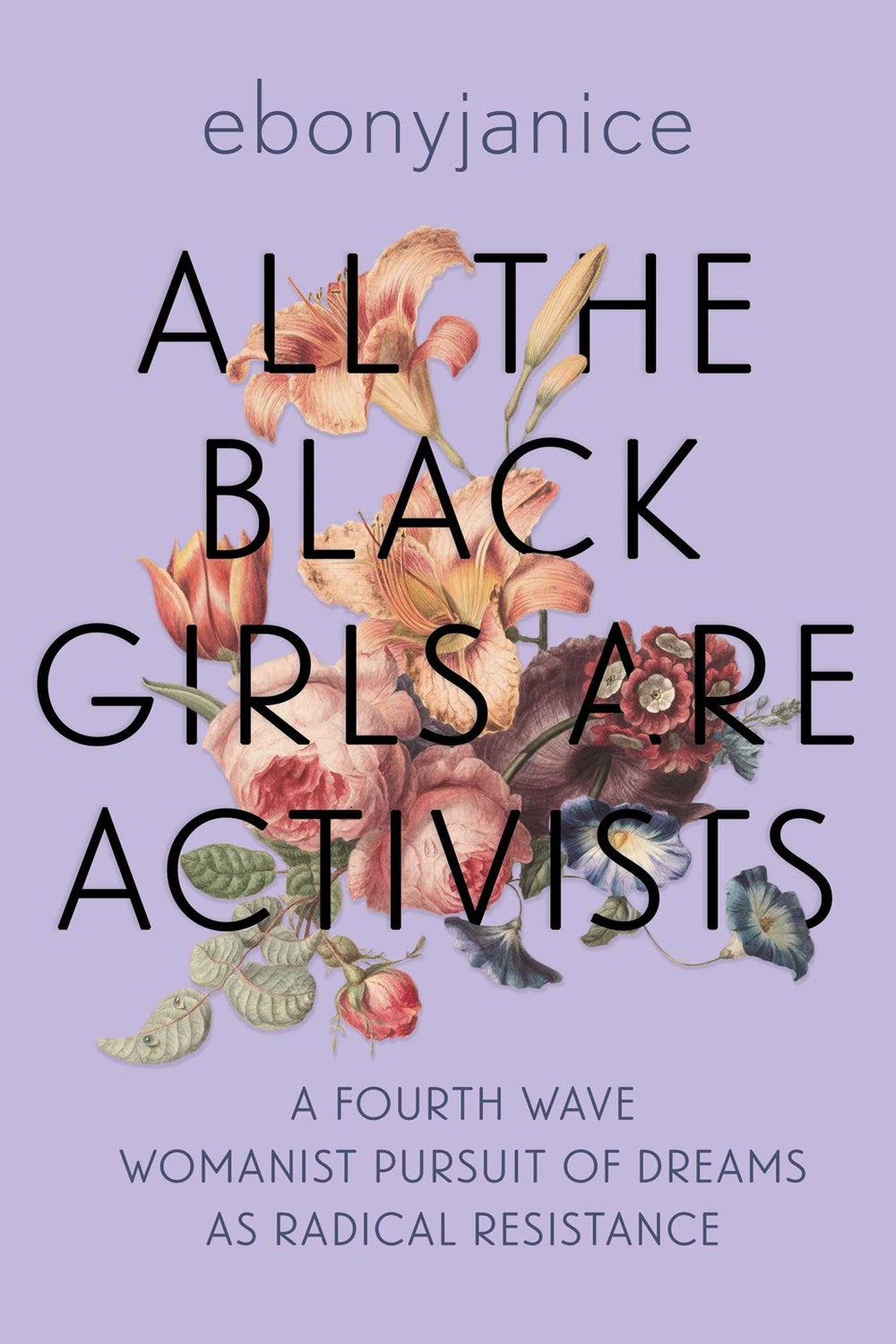
All the Black Girls Are Activists: A Fourth Wave Womanist Pursuit of Dreams as Radical Resistance
by Ebony Janice Moore
$16.99“Who would black women get to be if we did not have to create from a place of resistance?”
Hip Hop Womanist writer and theologian EbonyJanice’s book of essays center a fourth wave of Womanism, dreaming, the pursuit of softness, ancestral reverence, and radical wholeness as tools of liberation.
All The Black Girls Are Activists is a love letter to Black girls and Black women, asking and attempting to offer some answers to “Who would black women get to be if we did not have to create from a place of resistance?” by naming Black women’s wellness, wholeness, and survival as the radical revolution we have been waiting for.
About the Author: EbonyJanice is a dynamic lecturer, transformational speaker, passionate multi-faith preacher, and creative focused on Decolonizing Authority, Hip Hop Scholarship, Womanism as a Political and Spiritual/Religious tool for Liberation, Blackness as Religion, Dialogue as central to professional development and personal growth, and Women and Gender Studies focused on black girlhood.
EbonyJanice holds a B.A. in Cultural Anthropology and Political Science and a Master of Arts in Social Change with a concentration in Spiritual Leadership, Womanist Theology, and Racial Justice. She is the founder of Black Girl Mixtape, a multi-platform safe think-space centering the intellectual and creative authority of black women in the form of a lecture series, an online learning institute, and a creative collaborative.
EbonyJanice is also the founder of Dream Yourself Free, a Spiritual Mentoring project focused on black women's healing, dreaming, ease, play, and wholeness as their activism and resistance work. - Just Help!: How to Build a Better World
![Just Help!: How to Build a Better World cover image]()

Just Help!: How to Build a Better World
$18.99From the author of the #1 New York Times bestseller Just Ask! comes a fun and meaningful story about making the world--and your community--better, one action at a time, that asks the question: Who will you help today?
Every night when Sonia goes to bed, Mami asks her the same question: How did you help today? And since Sonia wants to help her community, just like her Mami does, she always makes sure she has a good answer to Mami's question.
In a story inspired by her own family's desire to help others, Supreme Court Justice Sonia Sotomayor takes young readers on a journey through a neighborhood where kids and adults, activists and bus drivers, friends and strangers all help one another to build a better world for themselves and their community.
With art by award-winning illustrator Angela Dominguez, this book shows how we can all help make the world a better place each and every day.
Praise for Just Help!:
"Generosity proves contagious in this personal portrait of community service by Supreme Court Justice Sotomayor." --Publishers Weekly"For use in civics units or in lessons on being a good neighbor, this provides wonderful encouragement to show that children can help in big and small ways." --School Library Journal
- On Witness and Respair: Essays
![On Witness and Respair: Essays cover image]()

On Witness and Respair: Essays
$29.00The collected creative nonfiction of a singular American writer, Jesmyn Ward, including widely shared classics, three never-before-published speeches, and an introductory essay.
Respair (noun, obsolete), fresh hope after despair.
From the two-time National Book Award winner and New York Times bestselling author Jesmyn Ward, this collection of essays documents more than a decade of work in the life of a singular writer often lauded as “the heir apparent to Toni Morrison” (LitHub). Beginning with her upbringing in a multigenerational household in rural Mississippi, the cradle of both her youth and her gift for storytelling, Ward brings her keen wisdom and hauntingly lyrical prose to a range of topics, following in her grandmother Dorothy’s footsteps when she promises always to “Tell it straight. Tell it all.”
True to her word, in these pages Ward contemplates the writers and novels of her youth and adulthood—the transformative power of discovering Octavia Butler as a twenty-something, the mirror that Richard Wright’s novels held up to her own childhood, and of course, her lifelong love for Toni Morrison. Ward ruminates on her approach to both fiction and life, reflecting on the power of the novel, how to raise a Black son in an era of rising divisiveness and cruelty, as well as her own personal tragedies—including the titular essay of the collection, which tells the story of her partner’s sudden death on the eve of the COVID-19 epidemic. Every bit as piercing and moving as her fiction, On Witness and Respair is a testament to Ward’s powers as “one of America’s finest living writers” (San Francisco Chronicle) and is a monument to hope, beauty, and personal and collective resilience.
- In Hush to Harbor: Black Sanctuary from Slavery to Trump's America
![In Hush to Harbor: Black Sanctuary from Slavery to Trump's America cover image]()

In Hush to Harbor: Black Sanctuary from Slavery to Trump's America
$27.95Black communities in America have a long history of constructing sanctuaries amid oppression, from the secret hush harbors of slavery to the digital refuges created in response to the resurgence of white supremacist violence in the Trump era. These havens have offered places to grieve and to gather, to imagine freedom when the world denied it, and to practice care and resistance in the face of constant danger. They remind us that even in the darkest moments, Black people have made space to grieve, rest, heal, strategize, and imagine new futures.
In Hush to Harbor traces this enduring sanctuary-making through both historical memory and contemporary expression from the legacy of Freedmen’s Towns and Green Books for Motorists in the Jim Crow era as testaments to Black mobility and mutual protection to present-day digital activism and grassroots organizing that reimagine safety in the public sphere.
Blending literary criticism, cultural history, and ethnography, Scott demonstrates that sanctuary is not merely a place of retreat but a political and spiritual practice that calls forth a collective act of making space when none is offered. In Hush to Harbor offers not just a chronicle of survival but a blueprint for sustaining Black refuge in a time of urgent need, redefining what it means to be safe in a nation that has never guaranteed safety for Black life.
- Black Girls Gardening: Empowering Stories and Garden Wisdom for Healing and Flourishing in Nature
![Book cover image]()

Black Girls Gardening: Empowering Stories and Garden Wisdom for Healing and Flourishing in Nature
Amber Grossman
$26.95A visual celebration of Black women and their gardens, filled with inspiration, stories, and the healing magic of gardening, based on the popular Instagram account BlackGirlsGardening.
Through first-person narratives and arresting photography, this unique gardening book profiles women who demonstrate how a gardening practice has the power to heal, empower, educate, and connect. Thirty-one compelling personal stories about creating backyard, flower, and vegetable gardens, participating in community gardens, and gardening with kids are included. Sidebars offer advice on composting, pest control, must-have tools, greenhouse gardens, and more.
In a beautiful, chunky package that can be read cover to cover or displayed on a coffee table, Black Girls Gardening makes a lovely gift for aspiring and practicing Black women gardeners, first-time homeowners, parents who garden with their kids, and women of all ages who enjoy sinking their hands into the soil.
GARDENING AS EMPOWERMENT: With stories on starting a garden from seed, building your own vegetable and flower beds, growing your own food, connecting with a community, and showing your kids the power and joy that come from these experiences, this uplifting book demonstrates how gardening empowers women and green thumbs of all ages and levels.
HEALTH BENEFITS: Gardening is good for you, and it’s a lifelong hobby! Spending time outside is an excellent way to relieve stress and anxiety, and gardening is an accessible and increasingly common pastime that provides respite from our indoor, online, sedentary lives. This book celebrates gardens as a sanctuary, a source of solace and joy, and a place for self-discovery and connection.
CELEBRATES DIVERSITY: This uniquely inspiring nature and gardening book highlights stories from Black, biracial, and multiracial women, an underrepresented audience in mainstream gardening, nature, and outdoor media.
Perfect for:
* Self-care gift or self-purchase for Black women, ages 18 - 50+
* Gift-giving for Mother’s Day, birthday, housewarming, or retirement
* Women gardeners and aspiring green thumbs
* Garden admirers and nature enthusiasts
* First-time homeowners who want to plant a garden
* Followers of @BlackGirlsGardening
* Fans of Nature Swagger, Wild at Home, My Beautiful Black Hair, She Explores - Black Capitalists: A Blueprint for What Is Possible
![Black Capitalists: A Blueprint for What Is Possible cover image]()

Black Capitalists: A Blueprint for What Is Possible
Rachel Laryea PhD
$30.00A groundbreaking look at how Black visionaries—from Wall Street to Lagos and beyond—are reimagining capitalism to benefit the needs of Black people and, ultimately, everyone.
“Black Capitalists is a dive into the history of how money is made and our attitudes about wealth. A must read.”—Vanessa Williams, singer, actress, author, producer, and former Miss America
To many, the term “Black Capitalists” is oxymoronic. Black people were the labor force that built the infrastructure of American capitalism through the violent enforcement of legalized slavery, so they cannot, and should not, aspire to be the beneficiaries of it. But Wall Street professional and Yale-educated anthropologist Dr. Rachel Laryea poses a provocative question: What if there was a way to thrive within capitalism without diminishing someone else’s life chances through exploitative practices? There is—and Black Capitalists are showing us how.
Told through Dr. Laryea's own compelling narrative—growing up the child of a single mother who immigrated to the United States from Ghana and rose to the Ivy League and on Wall Street—with original on-the-ground reporting and rigorous historical analysis, Black Capitalists challenges readers to reconsider who gets to be the beneficiary of capitalism and reckons with the responsibility that comes with using the tools of our imperfect economic system to advance social good.
Dr. Laryea reveals in detail how race profoundly shapes the way we participate in capitalism—and how understanding these differences can guide us toward a more inclusive and equitable future. From newly minted undergraduates who find themselves working twenty-hour days to prove their worth on Wall Street to Nigerian startup founders working to build global credit scores, spanning the streets of Accra to the boardrooms of Goldman Sachs, Black Capitalists’ stories and analysis of innovators who are as ambitious as they are altruistic demonstrate the resilience, creativity, and ingenuity of Black people who have long been excluded from the full benefits of the American economic system. At its core, Black Capitalists shows a more productive, and more inclusive, way forward.
- Black Bourgeoisie: The Book That Brought the Shock of Self-Revelation to Middle-Class Blacks in America
![Black Bourgeoisie: The Book That Brought the Shock of Self-Revelation to Middle-Class Blacks in America cover image]()

Black Bourgeoisie: The Book That Brought the Shock of Self-Revelation to Middle-Class Blacks in America
$19.99A classic analysis of the Black middle class studies its origin and development, accentuating its behavior, attitudes, and values during the 1940s and 1950s.
When it was first published in 1957, E. Franklin Frazier’s Black Bourgeoisie was simultaneously reviled and revered—revered for its skillful dissection of one of America’s most complex communities, reviled for daring to cast a critical eye on a section of black society that had achieved the trappings of the white, bourgeois ideal.
The author traces the evolution of this enigmatic class from the segregated South to the post-war boom in the integrated North, showing how, along the road to what seemed like prosperity and progress, middle-class blacks actually lost their roots to the traditional black world while never achieving acknowledgment from the white sector. The result, concluded Frazier, is an anomalous bourgeois class with no identity, built on self-sustaining myths of black business and society, silently undermined by a collective, debilitating inferiority complex.
- Original Sins: The (Mis)education of Black and Native Children and the Construction of American Racism
![Book cover image]()

Original Sins: The (Mis)education of Black and Native Children and the Construction of American Racism
Eve L. Ewing
Sold outWhy don’t our schools work? Eve L. Ewing tackles this question from a new angle: What if they’re actually doing what they were built to do? She argues that instead of being the great equalizer, America’s classrooms were designed to do the opposite: to maintain the nation’s inequalities. It’s a task at which they excel.
“This book will transform the way you see this country.”—Michelle Alexander, author of The New Jim Crow
If all children could just get an education, the logic goes, they would have the same opportunities later in life. But this historical tour de force makes it clear that the opposite is true: The U.S. school system has played an instrumental role in creating and upholding racial hierarchies, preparing children to expect unequal treatment throughout their lives.
In Original Sins, Ewing demonstrates that our schools were designed to propagate the idea of white intellectual superiority, to “civilize” Native students and to prepare Black students for menial labor. Education was not an afterthought for the Founding Fathers; it was envisioned by Thomas Jefferson as an institution that would fortify the country’s racial hierarchy. Ewing argues that these dynamics persist in a curriculum that continues to minimize the horrors of American history. The most insidious aspects of this system fall below the radar in the forms of standardized testing, academic tracking, disciplinary policies, and uneven access to resources.
By demonstrating that it’s in the DNA of American schools to serve as an effective and underacknowledged mechanism maintaining inequality in this country today, Ewing makes the case that we need a profound reevaluation of what schools are supposed to do, and for whom. This book will change the way people understand the place we send our children for eight hours a day. - Chain of Ideas: The Origins of Our Authoritarian Age
![Chain of Ideas: The Origins of Our Authoritarian Age cover image]()

Chain of Ideas: The Origins of Our Authoritarian Age
Ibram X. Kendi
$35.00The National Book Award-winning historian of Stamped from the Beginning charts how “great replacement theory” has moved from the margins to become the most dominant political theory of our time—and what we can do to safeguard democracy from this insidious threat.
Recall the words chanted in Charlottesville, Virginia, but heard around the world: “You will not replace us!” Recall the string of mass shooters around the world—in Oslo and Christchurch, Buffalo, El Paso, and Pittsburgh—who claimed their crimes were a defense against “White genocide.” Recall business and media figures cultivating anxiety and furor over demographic change. These incidents only scratch the surface of this ascendant idea: Popular and ruling politicians in every region of the world have been expressing some version of great replacement theory, eroding democratic norms in the name of preventing demographic change and restoring national greatness.
What is great replacement theory? Variations on the theory have existed for centuries, but it was given this name by a French novelist in 2011 who believed Black and Brown immigrants were “invading” Europe, brought by shadowy elites to “replace” Europe’s White population. From there, politicians and theorists—whether in the United States or the United Kingdom, Germany or Chile, Hungary or Australia—repackaged the conspiracy as a story of “globalists” welcoming “migrant criminals” and diversity initiatives to take away the jobs, cultures, electoral power, and the very lives of White people. Over time, great replacement theory has expanded the threat to include citizens, men, Jews, Christians, heterosexuals, and ethnic majorities in countries as distinct as Russia, El Salvador, Brazil, Italy, and India. All are targeted with the message that they are under an existential attack that only a strongman can prevent.
In our fast-shifting political landscape, most people are unfamiliar with this theory’s origins and its spread, which isn’t a coincidence. In Chain of Ideas, international bestselling author Ibram X. Kendi uses exacting and clear prose to uncover the roots of great replacement theory and its various mutations around the world. It is an unsettling but indispensable global history of how great replacement theory brought humanity into this authoritarian age—and how we can free ourselves from it. - The End of Love: Racism, Sexism, and the Death of Romance
![Book cover image]()

The End of Love: Racism, Sexism, and the Death of Romance
Sabrina Strings
$18.95From Playboy to Jay-Z, the racial origins of toxic masculinity and its impact on women, especially Black and “insufficiently white” women
More men than ever are refusing loving partnerships and commitment, and instead seeking out “situationships.” When these men deign to articulate what they are looking for in a steady partner, they’ll often rely on superficial norms of attractiveness rooted in whiteness and anti-Blackness.
Connecting the past to the present, sociologist Sabrina Strings argues that following the Civil Rights movement and the integration of women during the Second Wave Feminist movement, men aimed to hold on to their power by withholding love and commitment, a basic tenet of white supremacy and male domination, that served to manipulate all women. From pornography to hip hop, women—especially Black and “insufficiently white” women—were presented as gold diggers, props for masturbation, and side-pieces.
Using historical research, personal stories, and critical analysis, Strings argues that the result is fuccboism, the latest incarnation of toxic masculinity. This work shows that men are not innately “toxic.” Nor do they hate love, commitment, or sex. Instead, men across race have been working a new code to effectively deny loving partnerships to women who are not pliant, slim, and white as a new mode of male domination.
- The Contemporary Black Church: The New Dynamics of African American Religion (Religion and Social Transformation, 17)
![Book cover image]()

The Contemporary Black Church: The New Dynamics of African American Religion (Religion and Social Transformation, 17)
by Jason E. Shelton
$32.00Charts the changing dynamics of religion and spirituality among African Americans
Recent decades have ushered in a profound transformation within the American religious landscape, characterized by an explosion of religious diversification and individualism as well as a rising number of “nones.” The Contemporary Black Church makes the case that the story of this changing religious landscape needs to be told incorporating more data as it applies specifically to African Americans.
Jason E. Shelton draws from survey data as well as interviews with individuals from a wide variety of religious backgrounds to argue that social reforms and the resulting freedoms have paved the way for a pronounced diversification among African Americans in matters of faith. Many African Americans have switched denominational affiliations within the Black Church, others now adhere to historically White traditions, and a record number of African Americans have left organized religion altogether in recent decades. These changing demographics and affiliations are having a real and measurable effect on American politics, particularly as members of the historic Black Church are much more likely than those of other faiths to vote and to strongly support government policies aimed at bridging the racial divide.
Though not the first work to note that African Americans are not monolithic in their religious affiliation, or to argue that there is a trend toward secularism in Black America, this book is the first to substantiate these claims with extensive empirical data, charting these changing dynamics and their ramifications for American society and politics.
- Viral Justice: How We Grow the World We Want
![Viral Justice: How We Grow the World We Want cover image]()

Viral Justice: How We Grow the World We Want
Ruha Benjamin
Sold outFrom the author of Race After Technology, an inspiring vision of how we can build a more just world—one small change at a time
“A true gift to our movements for justice.”—Michelle Alexander, author of The New Jim Crow
Long before the pandemic, Ruha Benjamin was doing groundbreaking research on race, technology, and justice, focusing on big, structural changes. But the twin plagues of COVID-19 and anti-Black police violence inspired her to rethink the importance of small, individual actions. Part memoir, part manifesto, Viral Justice is a sweeping and deeply personal exploration of how we can transform society through the choices we make every day.
Vividly recounting her personal experiences and those of her family, Benjamin shows how seemingly minor decisions and habits could spread virally and have exponentially positive effects. She recounts her father’s premature death, illuminating the devastating impact of the chronic stress of racism, but she also introduces us to community organizers who are fostering mutual aid and collective healing. Through her brother’s experience with the criminal justice system, we see the trauma caused by policing practices and mass imprisonment, but we also witness family members finding strength as they come together to demand justice for their loved ones. And while her own challenges as a young mother reveal the vast inequities of our healthcare system, Benjamin also describes how the support of doulas and midwives can keep Black mothers and babies alive and well.
Born of a stubborn hopefulness, Viral Justice offers a passionate, inspiring, and practical vision of how small changes can add up to large ones, transforming our relationships and communities and helping us build a more just and joyful world.
- Black Fatigue, Second Edition: How Racism Erodes the Mind, Body, and Spirit
![Black Fatigue, Second Edition: How Racism Erodes the Mind, Body, and Spirit cover image]()

Black Fatigue, Second Edition: How Racism Erodes the Mind, Body, and Spirit
$22.95The pioneering book that exposed the intergenerational health impacts of systemic racism is back—with 50 percent new content to meet the demands of our post-2020 reality.
This updated edition delivers urgent tools for survival, including four new chapters, updated research, case studies, and real-world examples.
Black people are exhausted. The toll of living within systems designed to exclude them devastates minds, bodies, and spirits. Award-winning diversity, equity, and inclusion leader Mary-Frances Winters—now joined by Mareisha Winters Reese—addresses this ongoing crisis with an urgent update to her bestselling book.
Winters and Reese incorporate new data, fresh case studies, and expanded tools to reflect today’s realities. This edition, with 50 percent new content, includes the following:
* Four new chapters on current challenges facing Black communities
* Updated research on racism’s health impacts in a post-COVID world
* New stories and case studies that illuminate lived experience
* Updated models reflecting today’s most relevant findingsWith unflinching honesty and a practical lens, Winters and Reese document the enduring toll of “living while Black” while also equipping readers with strategies for personal healing and organizational transformation. The research is current, the case studies are real, and the tools are designed to create lasting systemic change.
- Ejaculate Responsibly: A Whole New Way to Think About Abortion
![Ejaculate Responsibly: A Whole New Way to Think About Abortion cover image]()

Ejaculate Responsibly: A Whole New Way to Think About Abortion
Gabrielle Stanley Blair
$14.99THE NEW YORK TIMES BESTSELLER
In Ejaculate Responsibly, Gabrielle Blair offers a provocative reframing of the abortion issue in post-Roe America.
In a series of 28 brief arguments, Blair deftly makes the case for moving the abortion debate away from controlling and legislating women’s bodies and instead directs the focus on men’s lack of accountability in preventing unwanted pregnancies.
Highly readable, accessible, funny, and unflinching, Blair builds her argument by walking readers through the basics of fertility (men are 50 times more fertile than women), the unfair burden placed on women when it comes to preventing pregnancy (90% of the birth control market is for women), the wrongheaded stigmas around birth control for men (condoms make sex less pleasurable, vasectomies are scary and emasculating), and the counterintuitive reality that men, who are fertile 100% of the time, take little to no responsibility for preventing pregnancy.
The result is a compelling and convincing case for placing the responsibility—and burden—of preventing unwanted pregnancies away from women and onto men.
- At the Vanguard: Making and Saving History at Historically Black Colleges and Universities
![At the Vanguard: Making and Saving History at Historically Black Colleges and Universities cover image]()

At the Vanguard: Making and Saving History at Historically Black Colleges and Universities
Sold outThe first volume in a major new series offering a compelling glimpse into the transformative and revolutionary world of HBCUs, that reveals the complex stories that their collections tell us.
This book, featuring objects from the museums and archives at five HBCUs—Jackson State, Tuskegee, Florida A&M, Clark Atlanta, and Texas Southern Universities—attests to the aesthetic value of African American cultural production on university campuses, the persistent development and expansion of HBCU academic programs, and the impact of student-led activism on campuses and throughout surrounding communities. Organized into four main sections, focusing on the partner institutions, arts, academics, and activism, this remarkable assembly of images will inspire readers to engage with, reflect on, and examine the unforgettable stories they represent.
The museums and archives at the five HBCUs featured tell unique stories, from detailed community histories and accounts of civil-rights era activism to premiere collections of African American art. Together, these institutions paint a powerful and multifaceted picture of African American academia and beyond.
This multi-volume series of publications stemming from the work of NMAAHC’s HBCU History and Culture Access Consortium (HCAC), is a companion publication to the exhibition that will travel to each participating institution from September 2025.
- America, U.S.A.: How Race Shadows the Nation's Anniversaries
![America, U.S.A.: How Race Shadows the Nation's Anniversaries cover image]()

America, U.S.A.: How Race Shadows the Nation's Anniversaries
$31.00The New York Times bestselling author of Begin Again confronts America’s unfinished story in this blistering reassessment of race, freedom, and the myths that bind us.
Celebrated public intellectual Eddie S. Glaude, Jr. presents a groundbreaking analysis of the vicious cycles of American history and the country’s enduring refusal to face its true nature—especially at the moments when national anniversaries steer us back toward the mythology meant to disguise the truth.
America, U.S.A., deliberately formulated and beautifully written, details a heart-wrenching exploration of America’s legacy. It is a magnificently complex combination of lessons and voices—from W.E.B. DuBois and John Dos Passos to Herman Melville and Martin Luther King, Jr.—that, together, paint a sprawling and honest tableau of the United States, its complicated past, and ever more tenuous future. Glaude’s is a powerful voice of conscience in our tumultuous world. He pulls no punches, calling on us to interrogate our conceptions of innocence and freedom and the stories we tell ourselves about our past and present.
Centered around the major celebrations of America’s milestone birthdays across 250 years of history, the book offers a riveting look at the battles over who has a stake in writing the American story. Devastatingly candid, profoundly moving, and deeply reflective, America, U.S.A. is a shining meditation on how we must reckon with a grim past in order to strive for the better angels of our future.
- Loving Corrections (Emergent Strategy Series, 12)
![Book cover image]()

Loving Corrections (Emergent Strategy Series, 12)
by adrienne maree brown
Sold outNew York Times-bestselling author adrienne maree brown knows we need each other more than ever, and offers “loving corrections”: a roadmap towards collective power, righting wrongs, and true belonging
This selection of prescient, compassionate essays explores patterns we engage in that are rooted in limited thinking. Through a lens of “loving correction” rather than mere critique, author adrienne maree brown helps us reimagine how to hold ourselves, our loved ones, and our communities accountable by setting clear boundaries, engaging in reflection, and nurturing honest relationships.
Loving Corrections is divided into two sections, with the first portion featuring new essays including “A Word for White People” and “Relinquishing the Patriarchy” and writing on topics like moving from fragility to fortitude, disability, and navigating critique within activist communities. The second section expands and updates pieces from brown's popular monthly column “Murmurations” in YES! Magazine that explore accountability—within oneself and community—with depth, inventiveness, and empathy.
Along with allowing us more authentic access to ourselves and to each other, the “corrections” in the book’s title are intended to explore and break identity-based patterns including white supremacy, fragility, patriarchy, and ableism. brown also offers practical guidance on how to apologize and be accountable from our nuanced positions of power, history, and resources.
Building on her previous work—especially Holding Change and We Will Not Cancel Us—brown reminds us how much we need each other: "It is only through relationship that we learn how to be, understand our impact on others and explore small shifts that may yield remarkable collective change."
- Lies about Black People: How to Combat Racist Stereotypes and Why It Matters
![Lies about Black People: How to Combat Racist Stereotypes and Why It Matters cover image]()

Lies about Black People: How to Combat Racist Stereotypes and Why It Matters
$22.95Bold, unflinching, and urgent—a pioneering guide to dismantling racist stereotypes and creating real change.
From Black Lives Matter to the stark inequities exposed by COVID-19, America's history of racial bias demands a new approach to understanding and action. Award-winning diversity expert Dr. Omekongo Dibinga reveals how even seemingly "innocent" stereotypes are rooted in hatred and continue to harm Black communities today.
In Lies About Black People: How to Combat Racist Stereotypes and Why It Matters, Dr. Dibinga combines powerful personal narratives, historical context, and contemporary analysis to expose the real-world impact of racist myths. Through intimate interviews, compelling research, and interactive exercises, readers will:
* Identify and confront their own hidden biases
* Master essential vocabulary for meaningful discussions about race
* Learn concrete ways to use privilege as a force for positive change
* Understand how common stereotypes—from "natural athletic ability" to "can't swim"—perpetuate systemic racismThis transformative guide goes beyond theory to provide practical tools for lasting change. Whether you're beginning your journey in anti-racism work or seeking deeper insights for advocacy, Dr. Dibinga offers a clear path forward.
"Dr. Dibinga is his generation's Dr. Carter G. Woodson... [it] rises above the banalities of lies and racist platitudes that have existed for centuries. I predict it will be read and studied for generations to come." —Joe Madison, "The Black Eagle" on SiriusXM Urban View
Perfect for:
- Educators and diversity professionals
- Corporate leaders and team managers
- Anyone committed to creating a more equitable society
- Book clubs and community discussion groups - Black Apocalypse: Afrofuturism at the End of the World (American Studies Now: Critical Histories of the Present) (Volume 16)
![Black Apocalypse: Afrofuturism at the End of the World (American Studies Now: Critical Histories of the Present) (Volume 16) cover image]()

Black Apocalypse: Afrofuturism at the End of the World (American Studies Now: Critical Histories of the Present) (Volume 16)
Tavia Nyong'o
$18.95Juxtaposing the world-building of afrofuturism and the world-negating of afropessimism to show how both movements have offered us critical resources of hope.
Science fiction imagines aliens and global crises as world-unifying events, both a threat and promise for the future. Black Apocalypse is an introduction to the past and present of black engagement with speculative futures. From Octavia Butler to W.E.B. Du Bois to Sun Ra, Tavia Nyong’o shows that the end of the world is crucial to afrofuturism and reframes the binary of afropessimism and afrofuturism to explore their similarities.
Interweaving black trans, queer, and feminist theories, Nyong'o examines the social, technological, and existential threats facing our species and reflects on shifting anxieties and hopes for the future. Exploring the apocalypse in movies, art, literature, and music, this book considers the endless afterlives of slavery and inequality and revives the radical black imagination to envision the future of blackness. Black Apocalypse argues that black aesthetics take us to the edge of this world and into the next. - Black Girls and How We Fail Them
![Black Girls and How We Fail Them cover image]()

Black Girls and How We Fail Them
Aria S. Halliday
$22.00From hip-hop moguls and political candidates to talk radio and critically acclaimed films, society communicates that Black girls don’t matter and their girlhood is not safe. Alarming statistics on physical and sexual abuse, for instance, reveal the harm Black girls face, yet Black girls’ representation in media still heavily relies on our seeing their abuse as an important factor in others’ development. In this provocative new book, Aria S. Halliday asserts that the growth of diverse representation in media since 2008 has coincided with an increase in the hatred of Black girls.
Halliday uses her astute expertise as a scholar of popular culture, feminist theory, and Black girlhood to expose how we have been complicit in the depiction of Black girls as unwanted and disposable while letting Black girls fend for themselves. She indicts the way media mistreats celebrity Black girls like Malia and Sasha Obama as well as fictional Black girls in popular shows and films like A Wrinkle in Time. Our society’s inability to see or understand Black girls as girls makes us culpable in their abuse. In Black Girls and How We Fail Them, a revelatory book for political analysts, hip-hop lovers, pop culture junkies, and parents, Halliday provides the critical perspective we need to create a world that supports, affirms, and loves Black girls. Our future depends on it.
- Healing While Black: Ancient Wisdom, Modern Psychology & the Science of Healing
![Healing While Black: Ancient Wisdom, Modern Psychology & the Science of Healing cover image]()

Healing While Black: Ancient Wisdom, Modern Psychology & the Science of Healing
$29.98A groundbreaking guide to understanding-and transforming-the psychological impact of being Black in America.
Despite centuries of systemic trauma, Black communities continue to demonstrate unmatched resilience, creativity, and strength. Yet the emotional burden of navigating race, identity, and survival in modern America remains one of the most overlooked public health issues of our time.
Healing While Black offers a compelling, research-informed look at how trauma shows up-and how to heal from it. Combining modern psychology, historical analysis, and culturally grounded practices, this book provides a practical roadmap for improving mental health, building resilience, and strengthening overall well-being.
Inside, readers will learn:
* How generational trauma affects the brain, body, and behavior
*
* The psychological effects of racism and systemic inequity
*
* Evidence-based tools for emotional regulation and stress recovery
*
* Culturally relevant healing practices backed by science
*
* How to transform personal healing into empowerment and legacy
*Engaging, accessible, and deeply relevant, this book is designed for individuals, families, educators, therapists, and organizations committed to supporting Black mental health.
Whether you're looking to understand your own healing, support a loved one, or build healthier communities, this book delivers clear insights and actionable strategies for long-lasting change.
This work reminds you of one truth: Healing is your birthright - and reclaiming it is revolutionary.
- The Isis Yssis Papers: The Keys to the Colors
![The Isis Yssis Papers: The Keys to the Colors cover image]()

The Isis Yssis Papers: The Keys to the Colors
Sold outDuring the course of the struggle of African people against European racism, brutality and domination, many innovative thinkers have risen from our ranks. The greatest and most courageous scholars have devoted their lives to the pursuit of an explanation for the virtually inherent animosity most white people appear to have toward people of color. Unlike her predecessors, Dr. Frances Cress Welsing, a brilliant, Washington D.C. psychiatrist has rejected conventional notions about the origin and perpetuation of racism. Dr. Welsing's theories, lectures and scientific papers have provoked controversy for over twenty years. Now the compilation of her work in [this book] is destined to change the course of history.
- The Racial Wealth Gap: A Brief History (A Norton Short)
![The Racial Wealth Gap: A Brief History (A Norton Short) cover image]()

The Racial Wealth Gap: A Brief History (A Norton Short)
$24.00A concise history that uncovers the roots of this most pernicious American divide and makes an urgent call for reparations.
Why has the racial wealth gap between the median white households and median Black households remained stagnant over the past century, never narrowing below six to one? Leading expert on race and financial equality Mehrsa Baradaran attempts to answer this question in this sweeping yet accessible history. She shows how decades of the laws rooted in white supremacy―from slavery and the broken Reconstruction-era promise of “40 acres and a mule,” to the racist policies of the Jim Crow and New Deal eras―have restricted Black access to capital, credit, homeownership, and other mechanisms of wealth creation while subsidizing the rising economic fortunes of white families.
In The Racial Wealth Gap, Baradaran outlines two tectonic forces that have driven apart the economic fortunes of white and Black families: wealth creation for white Americans, who have been systematically receiving financial subsidies in the century and a half since emancipation, and wealth destruction for Black Americans―either by vigilante violence or by official means, such as allowing Black banks to collapse or building highways through segregated Black communities. These forces, combined with the racist notion that Black communities fail to rise because of their own moral, intellectual, or economic shortcomings, have kept Black families behind their white counterparts, despite decades of civil rights activism and national economic growth―a deep injustice that can only be achieved through reparations.
An infuriating and compelling read, The Racial Wealth Gap offers a devastating analysis of one of America’s most pressing systemic issues.
1 chart
- Empire of AI: Dreams and Nightmares in Sam Altman's OpenAI
![Empire of AI: Dreams and Nightmares in Sam Altman's OpenAI cover image]()

Empire of AI: Dreams and Nightmares in Sam Altman's OpenAI
Sold outFrom a brilliant longtime AI insider with intimate access to the world of Sam Altman's OpenAI from the beginning, an eye-opening account of arguably the most fateful tech arms race in history, reshaping the planet in real time, from the cockpit of the company that is driving the frenzy
When AI expert and investigative journalist Karen Hao first began covering OpenAI in 2019, she thought they were the good guys. Founded as a nonprofit with safety enshrined as its core mission, the organization was meant, its leader Sam Altman told us, to act as a check against more purely mercantile, and potentially dangerous, forces. What could go wrong?
Over time, Hao began to wrestle ever more deeply with that question. Increasingly, she realized that the core truth of this massively disruptive sector is that its vision of success requires an almost unprecedented amount of resources: the “compute” power of high-end chips and the processing capacity to create massive large language models, the sheer volume of data that needs to be amassed at scale, the humans “cleaning up” that data for sweatshop wages throughout the Global South, and a truly alarming spike in the usage of energy and water underlying it all. The truth is that we have entered a new and ominous age of empire: only a small handful of globally scaled companies can even enter the field of play. At the head of the pack with its ChatGPT breakthrough, how would OpenAI resist such temptations?
Spoiler alert: it didn’t. Armed with Microsoft’s billions, OpenAI is setting a breakneck pace, chased by a small group of the most valuable companies in human history—toward what end, not even they can define. All this time, Hao has maintained her deep sourcing within the company and the industry, and so she was in intimate contact with the story that shocked the entire tech industry—Altman’s sudden firing and triumphant return. The behind-the-scenes story of what happened, told here in full for the first time, is revelatory of who the people controlling this technology really are. But this isn’t just the story of a single company, however fascinating it is. The g forces pressing down on the people of OpenAI are deforming the judgment of everyone else too—as such forces do. Naked power finds the ideology to cloak itself; no one thinks they’re the bad guy. But in the meantime, as Hao shows through intrepid reporting on the ground around the world, the enormous wheels of extraction grind on. By drawing on the viewpoints of Silicon Valley engineers, Kenyan data laborers, and Chilean water activists, Hao presents the fullest picture of AI and its impact we’ve seen to date, alongside a trenchant analysis of where things are headed. An astonishing eyewitness view from both up in the command capsule of the new economy and down where the real suffering happens, Empire of AI pierces the veil of the industry defining our era.
- Dismantling the Master's Clock: On Race, Space, and Time
![Dismantling the Master's Clock: On Race, Space, and Time cover image]()

Dismantling the Master's Clock: On Race, Space, and Time
Rasheedah Phillips
$25.00A radical new treatise on time, quantum physics, and racial justice from world-renowned artist and advocate Rasheedah Phillips of Black Quantum Futurism.
Why do some processes—like aging, birth, and car crashes—occur in only one direction in time, when by the fundamental symmetry of the universe, we should experience time both forward and backward? Our dominant perception of time owes more to Western history and social order than to a fact of nature, argues writer Rasheedah Phillips, delving into Black and Afrodiasporic conceptions of time, where the past, present, and future interact in more numerous constellations.
Phillips unfolds the history of time and its legacy of racial oppression, from colonial exploration and the plantation system to the establishment of Daylight Savings. Yet Black communities have long subverted space-time through such tools of resistance as Juneteenth, tenant organizing, ritual, and time travel. What could Black liberation look like if the past were as changeable as the future?
Drawing on philosophy, archival research, quantum physics, and Phillips’s own art practice and work on housing policy, Dismantling the Master’s Clock expands the horizons of what can be imagined and, ultimately, achieved.


Stay Informed. We're building a community committed to celebrating Black authors + artisans. Subscribe to keep up with all things Kindred Stories.