
Social Justice
- Colorism: The Politics of Skin Tone and How We Get Free
![Colorism: The Politics of Skin Tone and How We Get Free cover image]()

Colorism: The Politics of Skin Tone and How We Get Free
$18.99The essential primer on colorism, and how each of us has a role in dismantling skin tone bias.
Racism is easy to spot these days; we know its script, its favorite media tropes, its legislative tactics, and how it makes us feel. But there is another societal ill hiding in racism’s shadow: colorism. Colorism is a social hierarchy that favors people with lighter skin tones and stigmatizes people with darker skin tones. More than a debate on social media about who’s most attractive, colorism frays the fabric of our homes and communities and jeopardizes the lives and livelihoods of individuals most impacted. Dr. Sarah L. Webb’s Colorism arrives as a fresh perspective on how we move toward a world free from harmful stigma and discord—a more liberated, more loving world.
In Colorism, Dr. Sarah shows us how colorism goes unrecognized by most even as it contours our every day lives. She leads us through cultural myths, client testimonies and her own personal stories to demonstrate colorism’s global stronghold on communities of color and white communities alike. She dissects how dating and pop culture can be hotbeds of discrimination. And she lifts the veil on how colorism can determine our access to education, work, social services, and politics. Soulfully told and richly informational, Colorism rounds out with revisions we can all make to show up for one another. After all, bias may be based on what’s on the outside, but true healing starts from within. - How it Feels to be Colored Me (American Roots)
![How it Feels to be Colored Me (American Roots) cover image]()

How it Feels to be Colored Me (American Roots)
Sold outHow It Feels To Be Colored Me by Florida native Zora Neale Hurston was originally published in The World Tomorrow in May 1928. In this autobiographical piece about her own color, Hurston reflects on her early childhood in an all-black Florida town and her first experiences in life feeling different. In this beautiful piece, Hurston largely focuses on the similarities we all share and on her own self-identity in the face of difference. Through it all, I remain myself. This short work is part of Applewood’s American Roots series, tactile mementos of American passions by some of America’s most famous writers and thinkers.
- Revolutionaries to Race Leaders: Black Power and the Making of African American Politics
![Revolutionaries to Race Leaders: Black Power and the Making of African American Politics cover image]()

Revolutionaries to Race Leaders: Black Power and the Making of African American Politics
$23.00The Black Power movement represented a key turning point in American politics. Disenchanted by the hollow progress of federal desegregation during the 1960s, many black citizens and leaders across the United States demanded meaningful self-determination. The popular movement they created was marked by a vigorous artistic renaissance, militant political action, and fierce ideological debate.
Exploring the major political and intellectual currents from the Black Power era to the present, Cedric Johnson reveals how black political life gradually conformed to liberal democratic capitalism and how the movement’s most radical aims—the rejection of white aesthetic standards, redefinition of black identity, solidarity with the Third World, and anticapitalist revolution—were gradually eclipsed by more moderate aspirations. Although Black Power activists transformed the face of American government, Johnson contends that the evolution of the movement as a form of ethnic politics restricted the struggle for social justice to the world of formal politics.
Johnson offers a compelling and theoretically sophisticated critique of the rhetoric and strategies that emerged in this period. Drawing on extensive archival research, he reinterprets the place of key intellectual figures, such as Harold Cruse and Amiri Baraka, and influential organizations, including the African Liberation Support Committee, the National Black Political Assembly, and the National Black Independent Political Party in postsegregation black politics, while at the same time identifying the contradictions of Black Power radicalism itself.
Documenting the historical retreat from radical, democratic struggle, Revolutionaries to Race Leaders ultimately calls for the renewal of popular struggle and class-conscious politics.
Cedric Johnson is assistant professor of political science at Hobart and William Smith Colleges.
- Dear America: Notes Of An Undocumented Citizen
![Dear America: Notes Of An Undocumented Citizen cover image]()

Dear America: Notes Of An Undocumented Citizen
$18.99Pulitzer-Prize winning journalist Jose Antonio Vargas, called “the most famous undocumented immigrant in America,” tackles one of the defining issues of our time in this explosive and deeply personal call to arms.
“This is not a book about the politics of immigration. This book––at its core––is not about immigration at all. This book is about homelessness, not in a traditional sense, but in the unsettled, unmoored psychological state that undocumented immigrants like myself find ourselves in. This book is about lying and being forced to lie to get by; about passing as an American and as a contributing citizen; about families, keeping them together, and having to make new ones when you can’t. This book is about constantly hiding from the government and, in the process, hiding from ourselves. This book is about what it means to not have a home.
After 25 years of living illegally in a country that does not consider me one of its own, this book is the closest thing I have to freedom.”
―Jose Antonio Vargas, from Dear America
- Currencies of Cruelty: Slavery, Freak Shows, and the Performance Archive: 10
![Currencies of Cruelty: Slavery, Freak Shows, and the Performance Archive: 10 cover image]()

Currencies of Cruelty: Slavery, Freak Shows, and the Performance Archive: 10
$30.00Uncovers a haunting yet vital record of bodies commodified, archived, and performed Currencies of Cruelty is a bold and incisive reconsideration of the relationship between enslavement, disability, and performance in 19th- and early 20th-century America. Danielle Bainbridge traces how the transition from slavery to legal freedom became entangled with the spectacle of the freak show stage, where disabled and racialized performers - often denied traditional labor opportunities - became highly lucrative attractions. At the heart of this powerful study are conjoined twins Millie Christine McKoy, born into slavery and later emancipated, and the so-called "original Siamese Twins," Chang and Eng Bunker, who navigated the freak show circuit not only as performers but also as enslavers. Their stories reveal how archival practices surrounding enslavement and performance labor worked in tandem, creating a system where unfree and newly freed bodies were simultaneously valued and devalued-exploited for their spectacle yet rendered abject within traditional labor economies. Blending historical analysis with innovative archival theory, Currencies of Cruelty challenges conventional narratives of labor, freedom, and human worth. Bainbridge introduces the concept of the "future perfect" archive-one that anticipates what will have been rather than merely recording the past-offering a radical new way to engage with histories of enslavement, disability, and performance. A gripping exploration of race, commerce, and bodily spectacle, this book sheds crucial light on how histories of subjugation continue to shape our understanding of value and visibility today.
- Finding God in All the Black Places: Sacred Imaginings in Black Popular Culture
![Finding God in All the Black Places: Sacred Imaginings in Black Popular Culture cover image]()

Finding God in All the Black Places: Sacred Imaginings in Black Popular Culture
Sold outThis book is also freely available online as an open-access digital edition:
https://manifold.ecds.emory.edu/projects/finding-god-in-all-the-black-places
(https://dhjhkxawhe8q4.cloudfront.net/rup-wp-v2/wp-content/uploads/2025/01/28132142/9781978839809.pdf)
In Finding God in All the Black Places, Beretta E. Smith-Shomade contends that Black spirituality and Black church religiosity are the critical crux of Black popular culture. She argues that cultural, community, and social support live within the Black church and that spirit, art, and progress are deeply entwined and seal this connection. Including the work of artists such as Mary J. Blige, D’Angelo, Erykah Badu, Prince, Spike Lee, and Oprah Winfrey, the book examines contemporary Black television, film, music and digital culture to demonstrate the role, impact, and dominance of spirituality and religion in Black popular culture. Smith-Shomade believes that acknowledging and comprehending the foundations of Black spirituality and Black church religiosity within Black popular culture provide a way for viewers, listeners, and users not only to endure but also to revitalize.
- The Undocumented Americans
![The Undocumented Americans cover image]()

The Undocumented Americans
$20.00NATIONAL BOOK AWARD FINALIST • One of the first undocumented immigrants to graduate from Harvard reveals the hidden lives of her fellow undocumented Americans in this deeply personal and groundbreaking portrait of a nation.
“Karla’s book sheds light on people’s personal experiences and allows their stories to be told and their voices to be heard.”—Selena Gomez
FINALIST FOR THE NBCC JOHN LEONARD AWARD • NAMED A BEST BOOK OF THE YEAR BY THE LOS ANGELES TIMES, THE NEW YORK TIMES BOOK REVIEW, NPR, THE NEW YORK PUBLIC LIBRARY, BOOK RIOT, LIBRARY JOURNAL, AND TIME
Writer Karla Cornejo Villavicencio was on DACA when she decided to write about being undocumented for the first time using her own name. It was right after the election of 2016, the day she realized the story she’d tried to steer clear of was the only one she wanted to tell. So she wrote her immigration lawyer’s phone number on her hand in Sharpie and embarked on a trip across the country to tell the stories of her fellow undocumented immigrants—and to find the hidden key to her own.
Looking beyond the flashpoints of the border or the activism of the DREAMers, Cornejo Villavicencio explores the lives of the undocumented—and the mysteries of her own life. She finds the singular, effervescent characters across the nation often reduced in the media to political pawns or nameless laborers. The stories she tells are not deferential or naively inspirational but show the love, magic, heartbreak, insanity, and vulgarity that infuse the day-to-day lives of her subjects.
In New York, we meet the undocumented workers who were recruited into the federally funded Ground Zero cleanup after 9/11. In Miami, we enter the ubiquitous botanicas, which offer medicinal herbs and potions to those whose status blocks them from any other healthcare options. In Flint, Michigan, we learn of demands for state ID in order to receive life-saving clean water. In Connecticut, Cornejo Villavicencio, childless by choice, finds family in two teenage girls whose father is in sanctuary. And through it all we see the author grappling with the biggest questions of love, duty, family, and survival.
In her incandescent, relentlessly probing voice, Karla Cornejo Villavicencio combines sensitive reporting and powerful personal narratives to bring to light remarkable stories of resilience, madness, and death. Through these stories we come to understand what it truly means to be a stray. An expendable. A hero. An American. - Liberating Abortion: Claiming Our History, Sharing Our Stories, and Building the Reproductive Future We Deserve
![Liberating Abortion: Claiming Our History, Sharing Our Stories, and Building the Reproductive Future We Deserve cover image]()

Liberating Abortion: Claiming Our History, Sharing Our Stories, and Building the Reproductive Future We Deserve
Renee Bracey Sherman
$19.99A galvanizing history of abortion recentering people of color to put forth a timely argument that we must liberate abortion for all.
People of color have been having abortions since the dawn of time, yet our access is continuously under attack. In Liberating Abortion, award-winning abortion activist Renee Bracey Sherman and journalist Regina Mahone illustrate the long racist history that brought us to this moment, uncover the hidden figures who set the foundation that activists and storytellers are building on today, and explain how abortion has been and remains essential to the health of our communities.
Liberating Abortion will take you back to the basics of sex education, detailing the traditions of abortion over centuries while examining how society makes us feel about our experiences. You’ll find rigorous research, never-before-heard stories, and eye-opening interviews with more than fifty people of color who’ve had abortions, including activists, actresses, television writers, politicians, and two Black members of Jane, the Chicago feminist service that provided abortions before Roe.
With poignant storytelling and precise analysis, Liberating Abortion will change how you think about abortion forever.
- As We Have Always Done: Indigenous Freedom through Radical Resistance (Indigenous Americas)
![As We Have Always Done: Indigenous Freedom through Radical Resistance (Indigenous Americas) cover image]()

As We Have Always Done: Indigenous Freedom through Radical Resistance (Indigenous Americas)
Leanne Betasamosake Simpson
$18.95Winner: Native American and Indigenous Studies Association's Best Subsequent Book 2017
Honorable Mention: Labriola Center American Indian National Book Award 2017Across North America, Indigenous acts of resistance have in recent years opposed the removal of federal protections for forests and waterways in Indigenous lands, halted the expansion of tar sands extraction and the pipeline construction at Standing Rock, and demanded justice for murdered and missing Indigenous women. In As We Have Always Done, Leanne Betasamosake Simpson locates Indigenous political resurgence as a practice rooted in uniquely Indigenous theorizing, writing, organizing, and thinking.
Indigenous resistance is a radical rejection of contemporary colonialism focused around the refusal of the dispossession of both Indigenous bodies and land. Simpson makes clear that its goal can no longer be cultural resurgence as a mechanism for inclusion in a multicultural mosaic. Instead, she calls for unapologetic, place-based Indigenous alternatives to the destructive logics of the settler colonial state, including heteropatriarchy, white supremacy, and capitalist exploitation.
- Africans to Spanish America: Expanding the Diaspora (New Black Studies Series)
![Africans to Spanish America: Expanding the Diaspora (New Black Studies Series) cover image]()

Africans to Spanish America: Expanding the Diaspora (New Black Studies Series)
Sherwin K. Bryant
$30.00Africans to Spanish America expands the Diaspora framework that has shaped much of the recent scholarship on Africans in the Americas to include Mexico, Peru, Ecuador, and Cuba, exploring the connections and disjunctures between colonial Latin America and the African Diaspora in the Spanish empires. While a majority of the research on the colonial Diaspora focuses on the Caribbean and Brazil, analysis of the regions of Mexico and the Andes opens up new questions of community formation that incorporated Spanish legal strategies in secular and ecclesiastical institutions as well as articulations of multiple African identities. Editors Sherwin K. Bryant, Rachel Sarah O'Toole, and Ben Vinson III arrange the volume around three themes: identity construction in the Americas; the struggle by enslaved and free people to present themselves as civilized, Christian, and resistant to slavery; and issues of cultural exclusion and inclusion. Across these broad themes, contributors offer probing and detailed studies of the place and roles of people of African descent in the complex realities of colonial Spanish America.
Contributors are Joan C. Bristol, Nancy E. van Deusen, Leo J. Garofalo, Herbert S. Klein, Charles Beatty-Medina, Karen Y. Morrison, Rachel Sarah O'Toole, Frank "Trey" Proctor III, and Michele Reid-Vazquez.
- Black Ephemera: The Crisis and Challenge of the Musical Archive
![Black Ephemera: The Crisis and Challenge of the Musical Archive cover image]()

Black Ephemera: The Crisis and Challenge of the Musical Archive
Mark Anthony Neal
$30.00PROSE Award- Music and Performing Arts Category Winner
A framework for understanding the deep archive of Black performance in the digital era
In an era of Big Data and algorithms, our easy access to the archive of contemporary and historical Blackness is unprecedented. That iterations of Black visual art, such as Bert Williams’s 1916 silent film short “A Natural Born Gambler” or the performances of Josephine Baker from the 1920s, are merely a quick YouTube search away has transformed how scholars teach and research Black performance.
While Black Ephemera celebrates this new access, it also questions the crisis and the challenge of the Black musical archive in a moment when Black American culture has become a global export. Using music and sound as its primary texts, Black Ephemera argues that the cultural DNA of Black America has become obscured in the transformation from analog to digital. Through a cross-reading of the relationship between the digital era and culture produced in the pre-digital era, Neal argues that Black music has itself been reduced to ephemera, at best, and at worst to the background sounds of the continued exploitation and commodification of Black culture. The crisis and challenges of Black archives are not simply questions of knowledge, but of how knowledge moves and manifests itself within Blackness that is obscure, ephemeral, fugitive, precarious, fluid, and increasingly digital.
Black Ephemera is a reminder that for every great leap forward there is a necessary return to the archive. Through this work, Neal offers a new framework for thinking about Black culture in the digital world.
- My Selma: True Stories of a Southern Childhood at the Height of the Civil Rights Movement
![My Selma: True Stories of a Southern Childhood at the Height of the Civil Rights Movement]()
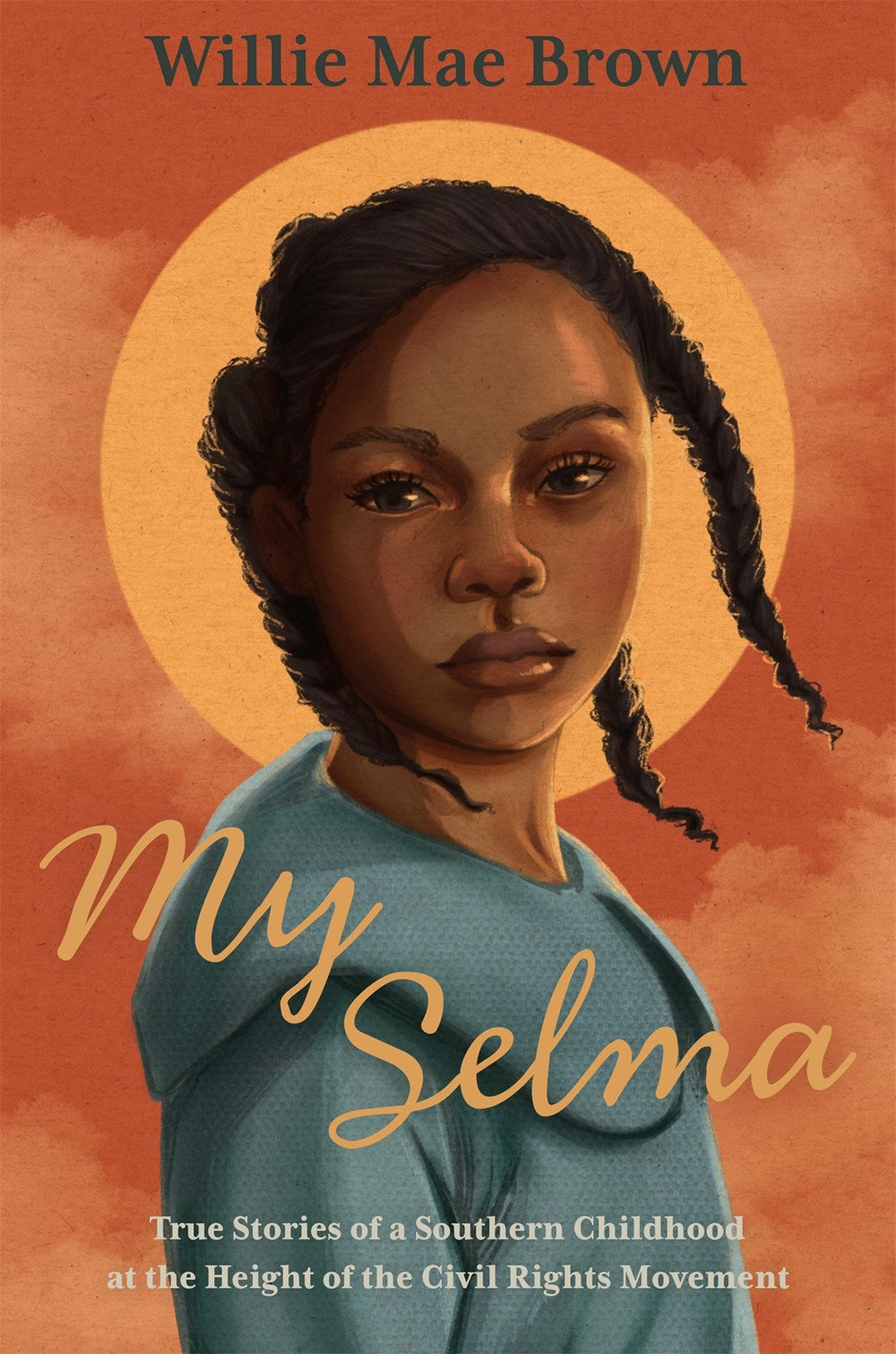
My Selma: True Stories of a Southern Childhood at the Height of the Civil Rights Movement
by Willie Mae Brown
Sold out*ships in 7-10 business days
A stirring memoir of growing up Black in a town at the epicenter of the fight for freedom, equality, and human rights.
Combining family stories of the everyday and the extraordinary as seen through the eyes of her twelve-year-old self, Willie Mae Brown gives readers an unforgettable portrayal of her coming-of-age in a fractured town at the crossroads of history. Selma's pivotal role in the civil rights movement forms an inescapable backdrop in this collection of stories. In one, Willie Mae takes it upon herself to offer summer babysitting services to a glamorous single white mother—a secret she keeps from her father that unravels with shocking results. In another, Willie Mae reluctantly joins her mother at a church rally, and is forever changed after hearing Martin Luther King Jr. deliver a defiant speech. My Selma! captures the voice and vision of a perspicacious, impetuous, resourceful young person who gives us a loving portrayal of her hometown while also delivering a no-holds-barred indictment of the time and place.
- Our Minds Were Always Free: A History of How Black Brilliance Was Exploited―and the Fight to Retake Control
![Our Minds Were Always Free: A History of How Black Brilliance Was Exploited―and the Fight to Retake Control cover image]()

Our Minds Were Always Free: A History of How Black Brilliance Was Exploited―and the Fight to Retake Control
$29.00An exploration of how African American innovators and artists—whose impact and financial value in American music, movies, and TV is disproportionately greater than their numbers—have fought for and often won the rights to own and benefit from their own work.
When we think about the things that have barred success for African Americans, intellectual property law is hardly the first thing that comes to mind, if we even think of it all. We certainly don’t think of it as the launching pad for building generational wealth in the Black community, so it follows that we don’t see our favorite pop stars as revolutionary race warriors.
African American artists have finally, belatedly, come to be the owners of their art and beneficiaries of the money their art makes, after centuries of producing life-changing art. There were hundreds and thousands of Bessie Smiths before we ever got Beyoncé or Kendrick Lamar.
Lisa E. Davis, one of the foremost entertainment attorneys in the country, traces the epic journey Black Americans have been on, from being claimed as property to claiming the benefits of intellectual property. As she notes, “Under slavery, our minds were always free, but there was no profit from what our minds created.”
Beginning in the 18th century with the drafting of the Constitution and ending in the 21st century with a warning about the role technology will play in creative industries, Our Minds Were Always Free tells the story of the indelible legacy of Black American genius and the struggle to receive the credit and the profit that they deserved.
- What If We Get It Right?: Visions of Climate Futures
![What If We Get It Right?: Visions of Climate Futures]()

What If We Get It Right?: Visions of Climate Futures
$24.00NEW YORK TIMES BESTSELLER • “With a thoughtfully curated series of essays, poetry, and conversations, the brilliant scientist and climate expert Ayana Elizabeth Johnson has assembled a group of dynamic people who are willing to imagine what seems impossible, and articulate those visions with enthusiastic clarity.”—Roxane Gay
Our climate future is not yet written. What if we act as if we love the future?
A SMITHSONIAN BEST BOOK OF THE YEAR
Sometimes the bravest thing we can do while facing an existential crisis is imagine life on the other side. This provocative and joyous book maps an inspiring landscape of possible climate futures.
Through clear-eyed essays and vibrant conversations, infused with data, poetry, and art, Ayana Elizabeth Johnson guides us through solutions and possibilities at the nexus of science, policy, culture, and justice. Visionary farmers and financiers, architects and advocates, help us conjure a flourishing future, one worth the effort it will take—from every one of us, with whatever we have to offer—to create.
If you haven’t yet been able to picture a transformed and replenished world—or to see yourself, your loved ones, and your community in it—this book is for you. If you haven’t yet found your role in shaping this new world or you’re not sure how we can actually get there, this book is for you.
With grace, humor, and humanity, Johnson invites readers to ask and answer this ultimate question together: What if we get it right?
On possibility and transformation with:
Paola Antonelli • Xiye Bastida • Jade Begay • Wendell Berry • Régine Clément • Steve Connell • Erica Deeman • Abigail Dillen • Brian Donahue • Jean Flemma • Kelly Sims Gallagher • Rhiana Gunn-Wright • Olalekan Jeyifous • Corley Kenna • Bryan C. Lee Jr. • Franklin Leonard • Adam McKay • Bill McKibben • Kate Marvel • Samantha Montano • Kate Orff • Leah Penniman • Marge Piercy • Colette Pichon Battle • Kendra Pierre-Louis • Judith D. Schwartz • Jigar Shah • Ayisha Siddiqa • Bren Smith • Oana Stănescu • Mustafa Suleyman • Jacqueline Woodson - Integrated: How American Schools Failed Black Children
![Integrated: How American Schools Failed Black Children cover image]()

Integrated: How American Schools Failed Black Children
$19.00A NEW YORK PUBLIC LIBRARY BEST BOOK OF THE YEAR • A powerful, incisive reckoning with the impacts of school desegregation that traces four generations of the author’s family to show how the implementation of integration decimated Black school systems and did much of the Black community a disservice
"Rooks deftly sketches this lamentable, sobering history."—The Atlantic
On May 17, 1954, Brown v. Board of Education determined that racial segregation in schools was unconstitutional. Heralded as a massive victory for civil rights, the decision’s goal was to give Black children equitable access to educational opportunities and clear a path to a better future. Yet in the years following the ruling, schools in predominantly Black neighborhoods were shuttered or saw their funding dwindle; Black educators were fired en masse; and Black children faced discrimination and violence from white peers and educators as they joined resource-rich schools that were reticent to accept the new students.
Award-winning scholar Noliwe Rooks weaves together sociological data, cultural history, and personal records to challenge the idea that integration was a boon for Black children. At once assiduously researched and deeply engaging, Integrated tells the story of how education has remained both a tool for community progress and a seemingly inscrutable cultural puzzle. Rooks’s deft hand turns the story of integration’s past and future on its head and shows how we may better understand and support generations of students to come.
- The Overseer Class: A Manifesto
![The Overseer Class: A Manifesto cover image]()

The Overseer Class: A Manifesto
$32.00The author of the critically acclaimed The Viral Underclass (one of Kirkus Reviews best books of 2022) is back with The Overseer Class, which explores what happens when members of historically minoritized groups are selected for high-visibility positions of power within existing institutions—but under the conditions of a kind of Faustian bargain.
Our society places so much weight and attention on those who become the first or only of their identifying group that we miss one of the inherent issues in that model. This book is about the kinds of compromises made by a small but influential group of people from minoritized groups in the United States as they have entered segregated institutions in highly visible positions. People in the overseer class wield enormous institutional power, even necropolitical power over who lives and who dies; it’s just that their power is predicated upon repressing other people who look (or speak/have sex/come from places) like them.
The most obvious contemporary overseer is the Black police officer. The Overseer Class begins with this quote from James Baldwin from 1967:
“The poor, of whatever color, do not trust the law and certainly have no reason to, and God knows we didn't. ‘If you must call a cop,’ we said in those days, ‘for God's sake, make sure it's a white one.’ We did not feel that the cops were protecting us, for we knew too much about the reasons for the kinds of crimes committed in the ghetto; but we feared black cops even more than white cops, because the black cop had to work so much harder--on your head--to prove to himself and his colleagues that he was not like all the other n******.”
But this dynamic does not only exist within law enforcement, it exists in many different spheres and The Overseer Class explores what it looks like in mass media, universities, corporate America, the military, and government. A powerful current and local example of this quandary can be seen right here in the ongoing saga of New York's Mayor Adams. At the end of the day, The Overseer Class aims not only to educate us and start this discussion but to provide a framework for challenging that dynamic. It is a weighty topic but one that Dr. Thrasher is well-equipped to handle. - Postcolonial Melancholia (The Wellek Library Lectures)
![Postcolonial Melancholia (The Wellek Library Lectures) cover image]()

Postcolonial Melancholia (The Wellek Library Lectures)
$24.95In an effort to deny the ongoing effect of colonialism and imperialism on contemporary political life, the death knell for a multicultural society has been sounded from all sides. That's the provocative argument Paul Gilroy makes in this unorthodox defense of the multiculture. Gilroy's searing analyses of race, politics, and culture have always remained attentive to the material conditions of black people and the ways in which blacks have defaced the "clean edifice of white supremacy." In Postcolonial Melancholia, he continues the conversation he began in the landmark study of race and nation 'There Ain't No Black in the Union Jack' by once again departing from conventional wisdom to examine―and defend―multiculturalism within the context of the post-9/11 "politics of security."
This book adapts the concept of melancholia from its Freudian origins and applies it not to individual grief but to the social pathology of neoimperialist politics. The melancholic reactions that have obstructed the process of working through the legacy of colonialism are implicated not only in hostility and violence directed at blacks, immigrants, and aliens but in an inability to value the ordinary, unruly multiculture that has evolved organically and unnoticed in urban centers. Drawing on the seminal discussions of race begun by Frantz Fanon, W. E. B. DuBois, and George Orwell, Gilroy crafts a nuanced argument with far-reaching implications. Ultimately, Postcolonial Melancholia goes beyond the idea of mere tolerance to propose that it is possible to celebrate the multiculture and live with otherness without becoming anxious, fearful, or violent.
- Insurgent Visions: Feminism, Justice, Solidarity (a John Hope Franklin Center Book)
![Insurgent Visions: Feminism, Justice, Solidarity (a John Hope Franklin Center Book) cover image]()

Insurgent Visions: Feminism, Justice, Solidarity (a John Hope Franklin Center Book)
$28.95In a current era marked by carceral logics, authoritarianism, and white supremacy, there has never been a greater need for the tools and inspiration that radical feminism provides. In Insurgent Visions, Chandra Talpade Mohanty explores methods of anticapitalist resistance to radically transform everyday life. She presents insurgent feminism—a theory and praxis with which to contest and replace the practices of violence grounded in racialized gender relations. Insurgent feminism unsettles existing power structures in order to enact new relationships and forge new subjectivities, epistemologies, and communities. Drawing on organizing efforts in the US-Mexico borderlands, Palestine/Israel, and Kashmir, as well as on abolitionist and Dalit feminisms, Mohanty contends that the knowledge that emerges from the experiences of marginalized groups who are struggling for economic, racial, and social justice is key for imagining feminist futures. She also turns to the neoliberal landscape of higher education in the United States and the difficulties of instituting transformative antiracist and anti-imperialist feminist knowledge building. Mapping new challenges for radical praxis, Mohanty reconfigures feminist studies while offering a model for decolonial cross-border organizing and solidarity.
- Essential Labor: Mothering as Social Change
![Essential Labor: Mothering as Social Change cover image]()

Essential Labor: Mothering as Social Change
Angela Garbes
$18.99NATIONAL BESTSELLER
“Angela Garbes has given us the definitive explanation for something we all share: the sense that something is not right about our society’s treatment of parenting. Essential Labor is a beautifully written, painstakingly researched, and courageously personal book. Garbes reveals the way systems exploit caregiving and shows us how the essential work of mothering can fix not just family life, but society. A timely and unforgettable book.”—Heather McGhee, New York Times bestselling author of The Sum of Us
From the acclaimed author of Like a Mother comes a reflection on the state of caregiving in America, and an exploration of mothering as a means of social change.
The Covid-19 pandemic shed fresh light on a long-overlooked truth: mothering is among the only essential work humans do. In response to the increasing weight placed on mothers and caregivers—and the lack of a social safety net to support them—writer Angela Garbes found herself pondering a vital question: How, under our current circumstances that leave us lonely, exhausted, and financially strained, might we demand more from American family life?
In Essential Labor, Garbes explores assumptions about care, work, and deservedness, offering a deeply personal and rigorously reported look at what mothering is, and can be. A first-generation Filipino-American, Garbes shares the perspective of her family's complicated relationship to care work, placing mothering in a global context—the invisible economic engine that has been historically demanded of women of color.
Garbes contends that while the labor of raising children is devalued in America, the act of mothering offers the radical potential to create a more equitable society. In Essential Labor, Garbes reframes the physically and mentally draining work of meeting a child's bodily and emotional needs as opportunities to find meaning, to nurture a deeper sense of self, pleasure, and belonging. This is highly skilled labor, work that impacts society at its most foundational level.
Part galvanizing manifesto, part poignant narrative, Essential Labor is a beautifully rendered reflection on care that reminds us of the irrefutable power and beauty of mothering.
- Black Performance Theory
![Black Performance Theory cover image]()

Black Performance Theory
Thomas F. DeFrantz
$34.95Black performance theory is a rich interdisciplinary area of study and critical method. This collection of new essays by some of its pioneering thinkers—many of whom are performers—demonstrates the breadth, depth, innovation, and critical value of black performance theory. Considering how blackness is imagined in and through performance, the contributors address topics including flight as a persistent theme in African American aesthetics, the circulation of minstrel tropes in Liverpool and in Afro-Mexican settlements in Oaxaca, and the reach of hip-hop politics as people around the world embrace the music and dance. They examine the work of contemporary choreographers Ronald K. Brown and Reggie Wilson, the ways that African American playwrights translated the theatricality of lynching to the stage, the ecstatic music of Little Richard, and Michael Jackson's performance in the documentary This Is It. The collection includes several essays that exemplify the performative capacity of writing, as well as discussion of a project that re-creates seminal hip-hop album covers through tableaux vivants. Whether deliberating on the tragic mulatta, the trickster figure Anansi, or the sonic futurism of Nina Simone and Adrienne Kennedy, the essays in this collection signal the vast untapped critical and creative resources of black performance theory.
Contributors. Melissa Blanco Borelli, Daphne A. Brooks, Soyica Diggs Colbert, Thomas F. DeFrantz, Nadine George-Graves, Anita Gonzalez, Rickerby Hinds, Jason King, D. Soyini Madison, Koritha Mitchell, Tavia Nyong'o, Carl Paris, Anna B. Scott, Wendy S. Walters, Hershini Bhana Young
- Flyboy in the Buttermilk: Essays on Contemporary America
![Flyboy in the Buttermilk: Essays on Contemporary America]()

Flyboy in the Buttermilk: Essays on Contemporary America
Greg Tate
$18.00A reissue of Greg Tate's classic, out-of-print collection of essays, with a new introduction by Hanif Abdurraqib and a new foreword by Questlove.
From one of the most original, creative, and provocative culture critics comes an eye-opening collection of essays and tales about American music and culture.
Under the guise of writing about a single subject, Greg Tate’s essays in Flyboy in the Buttermilk branch out from his usual and explore social, pop cultural, political, and economic subjects. Taking on a wide diversity of topics―from the rise of hip-hop; the art of Jean-Michel Basquiat; the music of Miles Davis, James Brown, Jimi Hendrix, Bad Brains, and many others; to the crisis of the Black intellectual and the irony of the GOP recruiting Black Americans― Tate writes in a brave and distinctive voice that is angry, joyous, anxious, and funny.
In every piece of this collection, Tate offers informed insight into where America is going and why.
- Encounter on the Seine: Essays (James Baldwin Centennial)
![Encounter on the Seine: Essays (James Baldwin Centennial) cover image]()

Encounter on the Seine: Essays (James Baldwin Centennial)
James Baldwin
$20.00*Use discount code SALE at checkout for 30% *
"James Baldwin was born for truth. It called upon him to tell it on the mountains, to preach it in Harlem, to sing it on the Left Bank in Paris. . . . He was a giant." — Maya Angelou
This collectible edition celebrates James Baldwin’s 100th-year anniversary, delving into his years in France and Switzerland
Originally published in Notes of a Native Son, the essays, "Encounter on the Seine: Black Meets Brown," "A Question of Identity," "Equal in Paris," and "Stranger in the Village" will appeal to readers interested in Baldwin's observations as a Black man overseas.
During his transformative time in Europe, Baldwin uncovers what it means to be American, immersing the reader in his life as a foreigner, his troubling encounter with a Parisian prison, and his unprecedented arrival to a tiny Swiss village.
This final collection in the Baldwin centennial anniversary series raises issues of identity, belonging, nationhood, and race within a global context. Encounter on the Seine: Essays showcases Baldwin’s strengths as a storyteller, revealing how his years in Paris transformed his understanding of American identity.
- Shadow Of The Panther: Huey Newton And The Price Of Black Power In America
![Shadow Of The Panther: Huey Newton And The Price Of Black Power In America cover image]()

Shadow Of The Panther: Huey Newton And The Price Of Black Power In America
Hugh Pearson
Sold outThe first complete and balanced history of the Black Panther Party--powerful and provocative
"Until The Shadow of the Panther there have been no serious book-length attempts to examine the Panthers' history and to evaluate their significance. . . . A Notable Book of the Year."--New York Times Book Review (front page)
"A keenly observed, often brilliant, Panther-busting book. . . . Pearson nevertheless portrays the Panthers' rise as an understandable reaction against . . . white chauvinism."--Los Angeles Times Book Review
"This book will awaken profound misgivings--about gun-barrel rhetoric, about armed rebellion, about the ambiguities of justice."--The New Yorker
"A bracing experience . . . Pearson has been able to present enough hard evidence to draw a chilling portrait of Murder Incorporated in revolutionary dress."--New York Newsday
"Pearson . . . set out to write a very different book about his boyhood hero [Huey Newton] but didn't blink at the truth . . . honest and compelling judgment."--Detroit News
- Pasifika Black: Oceania, Anti-colonialism, and the African World
![Pasifika Black: Oceania, Anti-colonialism, and the African World]()

Pasifika Black: Oceania, Anti-colonialism, and the African World
by Quito Swan
$27.00Oceania is a vast sea of islands, large scale political struggles and immensely significant historical phenomena. Pasifika Black is a compelling history of understudied anti-colonial movements in this region, exploring how indigenous Oceanic activists intentionally forged international connections with the African world in their fights for liberation.
Drawing from research conducted across Fiji, Australia, Vanuatu, Papua New Guinea, Britain, and the United States, Quito Swan shows how liberation struggles in Oceania actively engaged Black internationalism in their diverse battles against colonial rule. Pasifika Black features as its protagonists Oceania's many playwrights, organizers, religious leaders, scholars, Black Power advocates, musicians, environmental justice activists, feminists, and revolutionaries who carried the banners of Black liberation across the globe. It puts artists like Aboriginal poet Oodgeroo Noonuccal and her 1976 call for a Black Pacific into an extended conversation with Nigeria’s Wole Soyinka, the Nuclear Free and Independent Pacific’s Amelia Rokotuivuna, Samoa’s Albert Wendt, African American anthropologist Angela Gilliam, the NAACP’s Roy Wilkins, West Papua’s Ben Tanggahma, New Caledonia’s Déwé Gorodey, and Polynesian Panther Will ‘Ilolahia. In so doing, Swan displays the links Oceanic activists consciously and painstakingly formed in order to connect Black metropoles across the Atlantic, Pacific, and Indian Oceans. - Talking About Abolition: A Police-Free World is Possible
![Talking About Abolition: A Police-Free World is Possible cover image]()

Talking About Abolition: A Police-Free World is Possible
Sonali Kolhatkar
$16.95Powerful interviews with scholars, organizers, and activists who are leading the movement to end policing and prison.
Award-winning journalist Kolhatkar presents a visionary outlook for a future rooted in liberation, freedom, and justice.
Abolitionist thinkers have been envisioning police-free communities for decades, but only in the aftershock of the racial justice uprisings of 2020 have their radical ideas entered into mainstream discourse. In Talking About Abolition, award-winning journalist Sonali Kolhatkar presents an inspiring collection of her conversations with scholars, movement figures, and activists who are leading the movement to end policing and prisons. From articulating the best counter-arguments to pervasive “copaganda,” to exposing the moral bankruptcy of reformism, each conversation connects the dots between past and present while imagining a collective future rooted in liberation, freedom, and justice.
Featuring interviews with Alicia Garza, Ruth Wilson Gilmore, Leah Penniman, Gina Dent, Cat Brooks, Andrea Ritchie, Eunisses Hernandez, Noelle Hanrahan, Ivette Alé-Ferlito, Melina Abdullah, Reina Sultan, and Dylan Rodriguez, and with an introduction by Robin D. G. Kelley.
- Summer of Our Discontent: The Age of Certainty and the Demise of Discourse
![Summer of Our Discontent: The Age of Certainty and the Demise of Discourse cover image]()

Summer of Our Discontent: The Age of Certainty and the Demise of Discourse
Thomas Chatterton Williams
$30.00An incisive, culturally observant analysis of the evolving mores, manners and taboos of social justice (“anti-racist”) orthodoxy, which has profoundly influenced how we think about diversity and freedom of expression, often with complex or paradoxical consequences.
In this provocative book, Thomas Chatterton Williams, one of the most revered and reviled social commentators of our time, paints a clear and detailed picture of the ideas and events that have paved the way for the dramatic paradigm shift in social justice that has taken place over the past few years. Taking aim at the ideology of critical race theory, the rise of an oppressive social media, the fall from Obama to Trump, and the twinned crises of COVID-19 and the murder of George Floyd, Williams documents the extent to which this transition has altered media, artistic creativity, education, employment, policing, and, most profoundly, the ambient language and culture we use to make sense of our lives.
Williams also decries how liberalism—the very foundation of an open and vibrant society—is in existential crisis, under assault from both the right and the left, especially in our predominantly networked, Internet-driven monoculture.
Sure to be highly controversial, Summer of Our Discontent is a compelling look at our place in a radically changing world.
- Black Macho and the Myth of the Superwoman (Feminist Classics)
![Black Macho and the Myth of the Superwoman (Feminist Classics) cover image]()

Black Macho and the Myth of the Superwoman (Feminist Classics)
$21.95A classic and controversial critique of sexism in the black nationalist movement, this “landmark black feminist text” is essential reading for those engaged in discussions about feminism and race politics (Ms.)
Originally published in 1978, Black Macho and the Myth of the Superwoman caused a storm of controversy. Michele Wallace blasted the masculine biases of the black politics that emerged from the sixties. She described how women remained marginalized by the patriarchal culture of Black Power, demonstrating the ways in which a genuine female subjectivity was blocked by the traditional myths of black womanhood.
With a foreword that examines the debate the book has sparked between intellectuals and political leaders, as well as what has—and, crucially, has not—changed over the last four decades, Black Macho and the Myth of the Superwoman continues to be deeply relevant to current feminist debates and black theory today. - Slavery and Capitalism: A New Marxist History
![Slavery and Capitalism: A New Marxist History cover image]()

Slavery and Capitalism: A New Marxist History
$32.95The first systematic Marxist account of the capitalist character of Atlantic slavery.
Karl Marx’s writings on enslavement and labor have fallen out of favor among historians, but David McNally injects new life into them. Slavery and Capitalism gives the first systematic Marxist account of the capitalist character of Atlantic slavery—using colonial travel literature, planter records and diaries, and slave narratives—to support the provocative claim for enslaved labor in the plantation system as capitalist commodity production.
Weaving together history, political economy, and radical abolitionism, McNally demonstrates that plantation slaves formed a modern working class. Unlike those scholars who insist that enslaved people were too sensible to set their sights on liberty, he highlights the self-activity of enslaved people fighting for their freedom and reframes their resistance as labor struggles over production and reproduction, with significant implications for US and Atlantic history and for understanding the roots of racial capitalism. - Black Muslim Freedom Dreams: Islamic Education, Pan-Africanism, and Collective Care
![Black Muslim Freedom Dreams: Islamic Education, Pan-Africanism, and Collective Care cover image]()

Black Muslim Freedom Dreams: Islamic Education, Pan-Africanism, and Collective Care
$30.00Explores three generations of Black American Muslims pursuing education and liberation beyond the borders of the United States
Since the 1970s, hundreds of Black American Muslims in the Tijani Sufi order have sought refuge in a new world that would nurture their racial, religious and gendered identities away from anti-Black and anti-Muslim racism in the United States. This new world is in Medina Baye, a city in Senegal that is the headquarters of a pan-African Sufi movement with tens of millions of members in Africa alone.
Drawing on a decade and a half of ethnographic engagement, Black Muslim Freedom Dreams explores the Islamic educational opportunities created for and by Black American Muslims in Medina Baye, chronicling the dreams, sacrifices, struggles, and joys of young people and parents who live, learn, and strive for liberation between the United States and Senegal. The volume traces their journeys between these two worlds, zooming in to vividly portray everyday Black American and West African religious life, and zooming out to map the sociopolitical landscapes, educational conditions and Islamic and pan-African ideologies that shape believers' perspectives.
Black Muslim Freedom Dreams argues that Black Muslims’ experiences of Islamic education and pan-African exchange are oriented towards collective care – a radical way of being and belonging through which believers journey on the path towards Allah’s love by caring for one another and addressing the material inequities that constrain their communities. This notion disrupts narratives of religion that are limited to systems of personal belief, showcasing instead how their educational experiences foster a collective responsibility and solidarity. The book offers a compelling account of how Black Muslims engage with transnational religious and racial networks to build liberatory communities beyond the United States.
- Black Crip Modern: Race, Gender, and the Roots of Disability Consciousness
![Black Crip Modern: Race, Gender, and the Roots of Disability Consciousness cover image]()

Black Crip Modern: Race, Gender, and the Roots of Disability Consciousness
$30.00Asserts how Black artists and activists developed a disability consciousness in response to racialized disabling experiences in the early to mid-twentieth century
Black Crip Modern uncovers how early twentieth-century Black writers, artists, and activists laid the groundwork for modern disability consciousness. Under Jim Crow, Black disabled citizens were excluded from social services and medical reforms, even as racist violence, carceral surveillance, eugenic logic, and exploitative labor conditions deepened disabling experiences. Through literature, film, photography, and personal testimony, Black modernists registered these compounded injustices and articulated new ways of thinking about illness, impairment, and care.
Engaging the work of figures such as Zora Neale Hurston, Claude McKay, Wallace Thurman, Pauli Murray, Langston Hughes and Marita Bonner, Jess Waggoner traces how Black cultural production challenged both white supremacy and ableist ideals of progress. In their writing, Waggoner finds an early “Black crip modern” consciousness―one that rejected eugenic reform, critiqued racialized caregiving hierarchies, and envisioned collective care grounded in feminist and anti-carceral principles.
In conversation with contemporary disability justice movements, Black Crip Modern reveals how Black thinkers and artists forged a disability politics before it was formally named. By assembling these overlooked histories of Black ill and disabled life, Waggoner reframes the foundations of disability studies and insists that Black cultural production has always been central to the struggle for bodily autonomy, access, and justice.
- The Contemporary Black Church: The New Dynamics of African American Religion (Religion and Social Transformation)
![The Contemporary Black Church: The New Dynamics of African American Religion (Religion and Social Transformation) cover image]()

The Contemporary Black Church: The New Dynamics of African American Religion (Religion and Social Transformation)
$19.95Honorable Mention, 2026 Distinguished Book Award, given by the American Sociological Association, Sociology of Religion Section
Charts the changing dynamics of religion and spirituality among African Americans
Recent decades have ushered in a profound transformation within the American religious landscape, characterized by an explosion of religious diversification and individualism as well as a rising number of “nones.” The Contemporary Black Church makes the case that the story of this changing religious landscape needs to be told incorporating more data as it applies specifically to African Americans.
Jason E. Shelton draws from survey data as well as interviews with individuals from a wide variety of religious backgrounds to argue that social reforms and the resulting freedoms have paved the way for a pronounced diversification among African Americans in matters of faith. Many African Americans have switched denominational affiliations within the Black Church, others now adhere to historically White traditions, and a record number of African Americans have left organized religion altogether in recent decades. These changing demographics and affiliations are having a real and measurable effect on American politics, particularly as members of the historic Black Church are much more likely than those of other faiths to vote and to strongly support government policies aimed at bridging the racial divide.
Though not the first work to note that African Americans are not monolithic in their religious affiliation, or to argue that there is a trend toward secularism in Black America, this book is the first to substantiate these claims with extensive empirical data, charting these changing dynamics and their ramifications for American society and politics.
- Centering Families of Color: A Reimagination of Family Law (Families, Law, and Society)
![Centering Families of Color: A Reimagination of Family Law (Families, Law, and Society) cover image]()

Centering Families of Color: A Reimagination of Family Law (Families, Law, and Society)
$35.00Centers families of color in family law, revealing their pivotal role in shaping justice, equality, and social change and how their perspectives reframe the scope of family law
Centering Families of Color argues for the reframing of how we define “family law.” Centering the voices and perspectives of families of color, it expands and contextualizes how the law functions in relation to families. It exposes the impact of structural inequalities as they differentially and hierarchically impact families. This groundbreaking volume thus reorients how we think of family law, offering the experiences of families of color as critical to both the diagnoses and solutions for structural inequality.
While conventional treatment of families of color marginalizes their role socially and politically as add-ons, this volume centers them as essential. Leading scholars across disciplinary groups unearth and expose the hidden norms of family law, identify the critical history of how the law impacts families of color, and detail their dynamic contributions to social transformation. Families of color offer affirmative, resilient strategies for social justice and reform.
At a time of diversity among families and dramatic changes in the pattern of life, this volume provides a critical examination of the legal structures that impact families from the much-needed perspective of families of color. Centering Families of Color showcases how families of color are central to understanding what family is and how families interact with the law.


Stay Informed. We're building a community committed to celebrating Black authors + artisans. Subscribe to keep up with all things Kindred Stories.