
Non-fiction
- Wake: The Hidden History of Women-Led Slave Revolts
![Wake: The Hidden History of Women-Led Slave Revolts]()
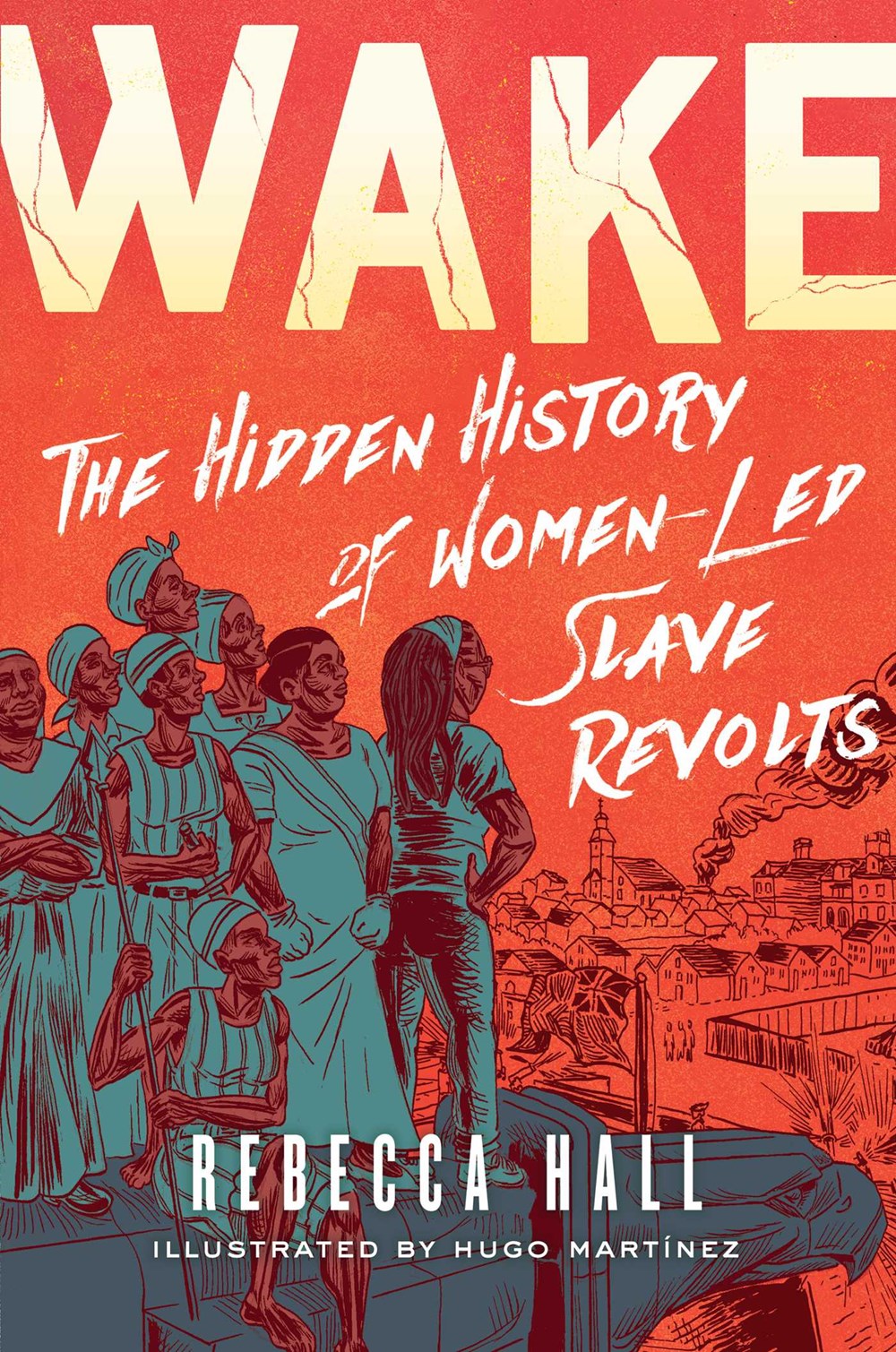
Wake: The Hidden History of Women-Led Slave Revolts
by Rebecca Hall
Sold out*ships in 7 - 10 business days*
Women warriors planned and led slave revolts on slave ships during the Middle Passage. They fought their enslavers throughout the Americas. And then they were erased from history.
Wake tells the story of Dr. Rebecca Hall, a historian, granddaughter of slaves, and a woman haunted by the legacy of slavery. The accepted history of slave revolts has always told her that enslaved women took a back seat. But Rebecca decides to look deeper, and her journey takes her through old court records, slave ship captain’s logs, crumbling correspondence, and even the forensic evidence from the bones of enslaved women from the “negro burying ground” uncovered in Manhattan. She finds women warriors everywhere.
- Sister Outsider: Essays and Speeches
![Sister Outsider: Essays and Speeches]()

Sister Outsider: Essays and Speeches
by Audre Lorde
$28.00Hardcover
Presenting the essential writings of black lesbian poet and feminist writer Audre Lorde, Sister Outsider celebrates an influential voice in twentieth-century literature, with a foreword by Mahogany L. Browne.
In this charged collection of fifteen essays and speeches, Lorde takes on sexism, racism, ageism, homophobia, and class, and propounds social difference as a vehicle for action and change. Her prose is incisive, unflinching, and lyrical, reflecting struggle but ultimately offering messages of hope.
- The Perilous Fight
![The Perilous Fight cover image]()

The Perilous Fight
$32.50The defining and uncompromising memoir from Super Bowl quarterback and renowned Civil Right activist, Colin Kaepernick.
On September 1, 2016, Colin Kaepernick took a knee during the national anthem, but the world has never fully understood the whole story. Not the "why." Not what it cost. Not what it took to become the man who was ready for that moment.
That story begins in Turlock, California, where Kaepernick, a Black kid adopted into a white family, spent his earliest years navigating an identity the world around him didn't always know how to hold. Everything that connected him to who he truly was--his Blackness, his culture, his sense of self--was met with resistance. Sports became his refuge and his proving ground. On the field, his talent could not be questioned, minimized, or taken from him. It was the one space that was entirely his. And what that space produced was extraordinary: a quarterback whose arm and instincts would carry him to the Super Bowl and into the history books.
But success brought with it an education he hadn't anticipated. He began to see the NFL not just as a league, but as a mirror of American capitalism, of racial exploitation, of a country that celebrated Black entertainment and criminalized Black lives in the same breath. He had been reading: Malcolm X. Muhammad Ali. Huey P. Newton. Angela Davis. He had been watching. And what he saw in the NFL, in Turlock, in the repeated, unpunished killing of Black and Brown Americans by the very systems claiming to protect them, converged into an undeniable truth: this was not someone else's fight. It was his. It is ours.
When Kaepernick knelt, he was not acting on impulse. He was acting on years of becoming, of absorbing, reckoning, and refusing to look away. In response, the NFL blackballed him, the country revealed its true self, and the man who had spent his whole life earning his place chose, deliberately, to risk all of it for something larger than himself.
But in the ten years since he took a knee, the questions his protest raised about race, power, identity, and the courage it takes to fight for a more equitable world have not gone away. They are the questions of our time. They are the questions this book answers.
In THE PERILOUS FIGHT, Kaepernick delivers his story with the same unflinching conviction that defined the moment the world watched. Equal parts memoir and manifesto, it traces the off-the-field battles that turned a single act of protest into a movement that changed American sports and culture forever. This is the story of a man who became someone the moment demanded. It is a story about identity, sacrifice, and the cost of courage. And it is, ultimately, a story about all of us and the future we are still fighting to build.
- Honor Thy Mother: How to Grieve, Heal, and Make Peace with Your Mother Wounds
![Honor Thy Mother: How to Grieve, Heal, and Make Peace with Your Mother Wounds cover image]()

Honor Thy Mother: How to Grieve, Heal, and Make Peace with Your Mother Wounds
$26.00A compassionate guide to navigating generational mother wounds and strained relationships with mothers, helping you grieve and move forward in healing through biblical wisdom and practical strategies—from the bestselling author of Church Girl.
Whether you seek to improve your relationship with your mother, recover from past hurts, or simply be a mother who doesn't deeply wound your own child, Honor Thy Mother is your companion on this courageous journey of healing your heart, finding true peace, and drawing closer to God.
Dr. Sarita T. Lyons serves as an honest and compassionate guide, showing you how to confront the difficulties between your idealized mother and reality, shedding light on various mother archetypes, helping you grieve the mother you wish you’d had, and more.
Full of biblical wisdom, hope, and practical advice, this book empowers you to recognize and address your unique maternal challenges. With actionable strategies, like owning your experience, engaging in therapy, practicing spiritual disciplines, building community support, committing to peace, and identifying a spiritual mother, along with discussion questions, journal prompts, and ways to move toward a realistic plan for restoration, you'll find the tools you need to start your journey and learn what it really means to honor your mother. Dr. Lyons offers a path to healing and peace and will ultimately help you bring you the freedom and blessings you long for.
- Healing While Black: Ancient Wisdom, Modern Psychology & the Science of Healing
![Healing While Black: Ancient Wisdom, Modern Psychology & the Science of Healing cover image]()

Healing While Black: Ancient Wisdom, Modern Psychology & the Science of Healing
$29.98A groundbreaking guide to understanding-and transforming-the psychological impact of being Black in America.
Despite centuries of systemic trauma, Black communities continue to demonstrate unmatched resilience, creativity, and strength. Yet the emotional burden of navigating race, identity, and survival in modern America remains one of the most overlooked public health issues of our time.
Healing While Black offers a compelling, research-informed look at how trauma shows up-and how to heal from it. Combining modern psychology, historical analysis, and culturally grounded practices, this book provides a practical roadmap for improving mental health, building resilience, and strengthening overall well-being.
Inside, readers will learn:
* How generational trauma affects the brain, body, and behavior
*
* The psychological effects of racism and systemic inequity
*
* Evidence-based tools for emotional regulation and stress recovery
*
* Culturally relevant healing practices backed by science
*
* How to transform personal healing into empowerment and legacy
*Engaging, accessible, and deeply relevant, this book is designed for individuals, families, educators, therapists, and organizations committed to supporting Black mental health.
Whether you're looking to understand your own healing, support a loved one, or build healthier communities, this book delivers clear insights and actionable strategies for long-lasting change.
This work reminds you of one truth: Healing is your birthright - and reclaiming it is revolutionary.
- The Isis Yssis Papers: The Keys to the Colors
![The Isis Yssis Papers: The Keys to the Colors cover image]()

The Isis Yssis Papers: The Keys to the Colors
Sold outDuring the course of the struggle of African people against European racism, brutality and domination, many innovative thinkers have risen from our ranks. The greatest and most courageous scholars have devoted their lives to the pursuit of an explanation for the virtually inherent animosity most white people appear to have toward people of color. Unlike her predecessors, Dr. Frances Cress Welsing, a brilliant, Washington D.C. psychiatrist has rejected conventional notions about the origin and perpetuation of racism. Dr. Welsing's theories, lectures and scientific papers have provoked controversy for over twenty years. Now the compilation of her work in [this book] is destined to change the course of history.
- Troubled Lands: Stories of Mexico and Cuba as Translated by Langston Hughes
![Troubled Lands: Stories of Mexico and Cuba as Translated by Langston Hughes cover image]()

Troubled Lands: Stories of Mexico and Cuba as Translated by Langston Hughes
Sold outA landmark book—the first complete publication of Langston Hughes’s translations of thirty-three stories by eighteen Mexican and Cuban writers
In late 1934, Langston Hughes, already established as a leading voice of literary Black America, traveled to Mexico City, where he stayed for more than five months and began translating short fiction by prominent Mexican and Cuban writers. These stories, as he wrote to a friend, explore “the revolutions and uprisings, sugar cane, Negroes, Indians, corrupt generals, [and] American imperialists,” and are “mostly all left stories, because practically all the writers down here are left these days.” But when Hughes proposed publishing the stories as a book, to be titled Troubled Lands, his agent discouraged him from further pursuing the project and it remained unpublished, until now, with only a handful of the translations making their way into contemporary magazines. This volume presents Hughes’s translations of these stories together for the first time as he originally envisioned. Edited by Ricardo Wilson, the book also features an introduction and brief biographies of the included writers.
Troubled Lands features thirty-three stories by eighteen writers, including Rafael Felipe Muñoz, Nellie Campobello, Lino Novás Calvo, Luis Felipe Rodríguez, Germán List Arzubide, Pablo de la Torriente-Brau, and Juan de la Cabada. The collection depicts Mexico in the wake of its revolution and Cuba in the years between the brutal regimes of Machado and Batista.
Hughes was a noted translator of poetry, but his commitment to translating fiction is less well known. Troubled Lands provides a window into this important dimension of his work and illuminates his deep interest in Mexico and Cuba.
- The Greatest
![The Greatest cover image]()

The Greatest
Sold outThe Greatest brings together nearly 100 photographs of Muhammad Ali at the height of his career by Chris Smith.
The images are accompanied by Smith’s memories of his time spent with Ali from the early days of his career until his final years before retirement. In 1964 Chris Smith was in the US to photograph The Beatles on their first tour of the country. After photographing the band he headed down to Miami to photograph Cassius Clay, as he was then known, training at the 5th Street Gym. Smith was curious about the athlete who was starting to become influential in the world of boxing. Fortuitously, he was in gym when the doors opened and, much to everyone's surprise, in walked The Beatles.
- The Racial Wealth Gap: A Brief History (A Norton Short)
![The Racial Wealth Gap: A Brief History (A Norton Short) cover image]()

The Racial Wealth Gap: A Brief History (A Norton Short)
$24.00A concise history that uncovers the roots of this most pernicious American divide and makes an urgent call for reparations.
Why has the racial wealth gap between the median white households and median Black households remained stagnant over the past century, never narrowing below six to one? Leading expert on race and financial equality Mehrsa Baradaran attempts to answer this question in this sweeping yet accessible history. She shows how decades of the laws rooted in white supremacy―from slavery and the broken Reconstruction-era promise of “40 acres and a mule,” to the racist policies of the Jim Crow and New Deal eras―have restricted Black access to capital, credit, homeownership, and other mechanisms of wealth creation while subsidizing the rising economic fortunes of white families.
In The Racial Wealth Gap, Baradaran outlines two tectonic forces that have driven apart the economic fortunes of white and Black families: wealth creation for white Americans, who have been systematically receiving financial subsidies in the century and a half since emancipation, and wealth destruction for Black Americans―either by vigilante violence or by official means, such as allowing Black banks to collapse or building highways through segregated Black communities. These forces, combined with the racist notion that Black communities fail to rise because of their own moral, intellectual, or economic shortcomings, have kept Black families behind their white counterparts, despite decades of civil rights activism and national economic growth―a deep injustice that can only be achieved through reparations.
An infuriating and compelling read, The Racial Wealth Gap offers a devastating analysis of one of America’s most pressing systemic issues.
1 chart
- Black Magic: Religion and the African American Conjuring Tradition
![Black Magic: Religion and the African American Conjuring Tradition cover image]()

Black Magic: Religion and the African American Conjuring Tradition
Sold outBlack Magic looks at the origins, meaning, and uses of Conjure―the African American tradition of healing and harming that evolved from African, European, and American elements―from the slavery period to well into the twentieth century. Illuminating a world that is dimly understood by both scholars and the general public, Yvonne P. Chireau describes Conjure and other related traditions, such as Hoodoo and Rootworking, in a beautifully written, richly detailed history that presents the voices and experiences of African Americans and shows how magic has informed their culture. Focusing on the relationship between Conjure and Christianity, Chireau shows how these seemingly contradictory traditions have worked together in a complex and complementary fashion to provide spiritual empowerment for African Americans, both slave and free, living in white America.
As she explores the role of Conjure for African Americans and looks at the transformations of Conjure over time, Chireau also rewrites the dichotomy between magic and religion. With its groundbreaking analysis of an often misunderstood tradition, this book adds an important perspective to our understanding of the myriad dimensions of human spirituality.
- Hoodoo Medicine: Gullah Herbal Remedies
![Hoodoo Medicine: Gullah Herbal Remedies cover image]()

Hoodoo Medicine: Gullah Herbal Remedies
$15.00Hoodoo Medicine is a unique record of nearly lost African-American folk culture. It documents herbal medicines used for centuries, from the 1600s until recent decades, by the slaves and later their freed descendants, in the South Carolina Sea Islands. The Sea Island people, also called the Gullah, were unusually isolated from other slave groups by the creeks and marshes of the Low Country. They maintained strong African influences on their speech, social customs, and beliefs, long after other American blacks had lost this connection. Likewise, their folk medicine mixed medicines that originated in Africa with cures learned from the American Indians and European settlers. Hoodoo Medicine is a window into Gullah traditions, which in recent years have been threatened by the migration of families, the invasion of the Sea Islands by suburban developers, and the gradual death of the elder generation. More than that, it captures folk practices that lasted longer in the Sea Islands than elsewhere, but were once widespread throughout African-American communities of the South.
- Empire of AI: Dreams and Nightmares in Sam Altman's OpenAI
![Empire of AI: Dreams and Nightmares in Sam Altman's OpenAI cover image]()

Empire of AI: Dreams and Nightmares in Sam Altman's OpenAI
Sold outFrom a brilliant longtime AI insider with intimate access to the world of Sam Altman's OpenAI from the beginning, an eye-opening account of arguably the most fateful tech arms race in history, reshaping the planet in real time, from the cockpit of the company that is driving the frenzy
When AI expert and investigative journalist Karen Hao first began covering OpenAI in 2019, she thought they were the good guys. Founded as a nonprofit with safety enshrined as its core mission, the organization was meant, its leader Sam Altman told us, to act as a check against more purely mercantile, and potentially dangerous, forces. What could go wrong?
Over time, Hao began to wrestle ever more deeply with that question. Increasingly, she realized that the core truth of this massively disruptive sector is that its vision of success requires an almost unprecedented amount of resources: the “compute” power of high-end chips and the processing capacity to create massive large language models, the sheer volume of data that needs to be amassed at scale, the humans “cleaning up” that data for sweatshop wages throughout the Global South, and a truly alarming spike in the usage of energy and water underlying it all. The truth is that we have entered a new and ominous age of empire: only a small handful of globally scaled companies can even enter the field of play. At the head of the pack with its ChatGPT breakthrough, how would OpenAI resist such temptations?
Spoiler alert: it didn’t. Armed with Microsoft’s billions, OpenAI is setting a breakneck pace, chased by a small group of the most valuable companies in human history—toward what end, not even they can define. All this time, Hao has maintained her deep sourcing within the company and the industry, and so she was in intimate contact with the story that shocked the entire tech industry—Altman’s sudden firing and triumphant return. The behind-the-scenes story of what happened, told here in full for the first time, is revelatory of who the people controlling this technology really are. But this isn’t just the story of a single company, however fascinating it is. The g forces pressing down on the people of OpenAI are deforming the judgment of everyone else too—as such forces do. Naked power finds the ideology to cloak itself; no one thinks they’re the bad guy. But in the meantime, as Hao shows through intrepid reporting on the ground around the world, the enormous wheels of extraction grind on. By drawing on the viewpoints of Silicon Valley engineers, Kenyan data laborers, and Chilean water activists, Hao presents the fullest picture of AI and its impact we’ve seen to date, alongside a trenchant analysis of where things are headed. An astonishing eyewitness view from both up in the command capsule of the new economy and down where the real suffering happens, Empire of AI pierces the veil of the industry defining our era.
- André Leon Talley: Style is Forever
![André Leon Talley: Style is Forever cover image]()

André Leon Talley: Style is Forever
Paula Wallace
Sold outA visual celebration of André Leon Talley’s life that centers his personal style as a lens on his contributions to fashion history.
This lavish volume reflects on the life of André Leon Talley and his impactful ascent to the height of global fashion. Many of Talley’s most iconic looks—from his suits and straw Breton boater in Paris of the late seventies to the opulent custom capes and coats he made famous—are newly photographed and presented alongside archival imagery.
From his days as Diana Vreeland’s apprentice at the Metropolitan Museum of Art, to Andy Warhol’s Factory and Interview Magazine, to Paris bureau chief for Women’s Wear Daily, to positions at W, The New York Times, Ebony, and Vogue, where he served as the magazine’s first African American creative director, Talley’s exuberant personality and voice guided thousands through the glamorous world of high fashion.
Essays, stories, and memories from industry luminaries who experienced his singular character reflect on a legacy in fashion spanning more than four decades. A posthumous commemoration of Talley, this celebratory volume offers a rare view into his world, the people who shared it, and the creation of one of the most iconic figures in fashion history.
- Dismantling the Master's Clock: On Race, Space, and Time
![Dismantling the Master's Clock: On Race, Space, and Time cover image]()

Dismantling the Master's Clock: On Race, Space, and Time
Rasheedah Phillips
$25.00A radical new treatise on time, quantum physics, and racial justice from world-renowned artist and advocate Rasheedah Phillips of Black Quantum Futurism.
Why do some processes—like aging, birth, and car crashes—occur in only one direction in time, when by the fundamental symmetry of the universe, we should experience time both forward and backward? Our dominant perception of time owes more to Western history and social order than to a fact of nature, argues writer Rasheedah Phillips, delving into Black and Afrodiasporic conceptions of time, where the past, present, and future interact in more numerous constellations.
Phillips unfolds the history of time and its legacy of racial oppression, from colonial exploration and the plantation system to the establishment of Daylight Savings. Yet Black communities have long subverted space-time through such tools of resistance as Juneteenth, tenant organizing, ritual, and time travel. What could Black liberation look like if the past were as changeable as the future?
Drawing on philosophy, archival research, quantum physics, and Phillips’s own art practice and work on housing policy, Dismantling the Master’s Clock expands the horizons of what can be imagined and, ultimately, achieved.
- Fresh Banana Leaves: Healing Indigenous Landscapes through Indigenous Science
![Fresh Banana Leaves: Healing Indigenous Landscapes through Indigenous Science cover image]()

Fresh Banana Leaves: Healing Indigenous Landscapes through Indigenous Science
Jessica Hernandez Ph.D.
$20.95A 2022 Los Angeles Times Book Prize Finalist in Science & Technology
An Indigenous environmental scientist breaks down why western conservationism isn't working--and offers Indigenous models informed by case studies, personal stories, and family histories that center the voices of Latin American women and land protectors.
Despite the undeniable fact that Indigenous communities are among the most affected by climate devastation, Indigenous science is nowhere to be found in mainstream environmental policy or discourse. And while holistic land, water, and forest management practices born from millennia of Indigenous knowledge systems have much to teach all of us, Indigenous science has long been ignored, otherized, or perceived as "soft"--the product of a systematic, centuries-long campaign of racism, colonialism, extractive capitalism, and delegitimization.
Here, Jessica Hernandez--Maya Ch'orti' and Zapotec environmental scientist and founder of environmental agency Piña Soul--introduces and contextualizes Indigenous environmental knowledge and proposes a vision of land stewardship that heals rather than displaces, that generates rather than destroys. She breaks down the failures of western-defined conservatism and shares alternatives, citing the restoration work of urban Indigenous people in Seattle; her family's fight against ecoterrorism in Latin America; and holistic land management approaches of Indigenous groups across the continent.
Through case studies, historical overviews, and stories that center the voices and lived experiences of Indigenous Latin American women and land protectors, Hernandez makes the case that if we're to recover the health of our planet--for everyone--we need to stop the eco-colonialism ravaging Indigenous lands and restore our relationship with Earth to one of harmony and respect.
- Bibliotherapy in the Bronx
![Bibliotherapy in the Bronx cover image]()

Bibliotherapy in the Bronx
Emely Rumble LCSW
Sold outDiscover how a love of books can foster community, understanding, and personal growth.
Bibliotherapy in The Bronx by Emely Rumble, LCSW, is a groundbreaking exploration of the healing power of literature in the lives of marginalized communities. Drawing from her personal and professional experiences, Rumble masterfully intertwines storytelling with therapeutic insights to reveal how reading can be a potent tool for self-discovery, emotional transformation, and social change.
In this transformative work, Rumble offers readers an intimate glimpse into her journey as a psychotherapist in the Bronx, where she has spent over 14 years using books to help clients navigate complex emotions, heal from trauma, and find their voices. Through vivid anecdotes and real-world case studies, she demonstrates how literature can serve as a bridge between personal pain and collective healing.
Rich with practical tips, reflective exercises, and book recommendations, Bibliotherapy in The Bronx is a valuable resource for anyone interested in the power of words to change lives. Whether you're a therapist, educator, bibliophile, or simply someone seeking deeper understanding and growth, this book offers a compassionate, culturally affirming guide to the transformative potential of storytelling.
Rumble's work is a testament to the enduring power of books to heal, empower, and liberate. In a time when the world feels increasingly divided, Bibliotherapy in The Bronx reminds us that the stories we tell—and the stories we read—can unite us in our shared humanity.
- James Baldwin : Collected Essays : Notes of a Native Son / Nobody Knows My Name / The Fire Next Time / No Name in the Street / The Devil Finds Work / Other Essays (Library of America)
![James Baldwin : Collected Essays : Notes of a Native Son / Nobody Knows My Name / The Fire Next Time / No Name in the Street / The Devil Finds Work / Other Essays (Library of America) cover image]()

James Baldwin : Collected Essays : Notes of a Native Son / Nobody Knows My Name / The Fire Next Time / No Name in the Street / The Devil Finds Work / Other Essays (Library of America)
James Baldwin
Sold outToni Morrison's definitive edition of James Baldwin's incomparable nonfiction.
Contains all the major essays collections in their entirety, plus 36 uncollected essays.
James Baldwin was a uniquely prophetic voice in American letters. His brilliant and provocative essays made him the literary voice of the Civil Rights Era, and they continue to speak with powerful urgency to us today, whether in the swirling debate over the Black Lives Matter movement or in the words of Raoul Peck's documentary "I Am Not Your Negro." Edited by Nobel laureate Toni Morrison, the Library of America's Collected Essays is the most comprehensive gathering of Baldwin's nonfiction ever published.
With burning passion and jabbing, epigrammatic wit, Baldwin fearlessly articulated issues of race and democracy and American identity in such famous essays as "The Harlem Ghetto," "Everybody's Protest Novel," "Many Thousands Gone," and "Stranger in the Village." Here are the complete texts of his early landmark collections, Notes of a Native Son (1955) and Nobody Knows My Name (1961), which established him as an essential intellectual voice of his time, fusing in unique fashion the personal, the literary, and the political.
The classic The Fire Next Time (1963), perhaps the most influential of his writings, is his most penetrating analysis of America's racial divide and an impassioned call to "end the racial nightmare...and change the history of the world." The later volumes No Name in the Street (1972) and The Devil Finds Work (1976) chart his continuing response to the social and political turbulence of his era and include his remarkable works of film criticism. A further 36 essays—nine of them previously uncollected—include some of Baldwin's earliest published writings, as well as revealing later insights into the language of Shakespeare, the poetry of Langston Hughes, and the music of Earl Hines.
LIBRARY OF AMERICA is an independent nonprofit cultural organization founded in 1979 to preserve our nation’s literary heritage by publishing, and keeping permanently in print, America’s best and most significant writing. The Library of America series includes more than 300 volumes to date, authoritative editions that average 1,000 pages in length, feature cloth covers, sewn bindings, and ribbon markers, and are printed on premium acid-free paper that will last for centuries.
- Sapiens [Tenth Anniversary Ed]: A Brief History of Humankind
![Book cover image]()

Sapiens [Tenth Anniversary Ed]: A Brief History of Humankind
Yuval Noah Harari
$27.99One hundred thousand years ago, at least six human species inhabited the earth. Today there is just one. Us. Homo sapiens. How did our species succeed in the battle for dominance? Why did our foraging ancestors come together to create cities and kingdoms? How did we come to believe in gods, nations, and human rights; to trust money, books, and laws; and to be enslaved by bureaucracy, timetables, and consumerism? And what will our world be like in the millennia to come?
In Sapiens, Professor Yuval Noah Harari spans the whole of human history, from the very first humans to walk the earth to the radical—and sometimes devastating—breakthroughs of the Cognitive, Agricultural, and Scientific Revolutions. Drawing on insights from biology, anthropology, paleontology, and economics, and incorporating full-color illustrations throughout the text, he explores how the currents of history have shaped our human societies, the animals and plants around us, and even our personalities. Can we ever free our behavior from the legacy of our ancestors? And what, if anything, can we do to influence the course of the centuries to come?
Bold, wide-ranging, and provocative, Sapiens integrates history and science to challenge everything we thought we knew about being human: our thoughts, our actions, our heritage . . . and our future.
- Malcolm X: The FBI File
![Malcolm X: The FBI File cover image]()

Malcolm X: The FBI File
$16.95The FBI has made possible a reassembling of the history of Malcolm X that goes beyond any previous research. From the opening of his file in March of 1953 to his assassination in 1965, the story of Malcolm X’s political life is a gripping one.
Shortly after he was released from a Boston prison in 1953, the FBI watched every move Malcolm X made. Their files on him totaled more than 3,600 pages, covering every facet of his life. Viewing the file as a source of information about the ideological development and political significance of Malcolm X, historian Clayborne Carson examines Malcolm’s relationship to other African-American leaders and institutions in order to define more clearly Malcolm’s place in modern history.
With its sobering scrutiny of the FBI and the national policing strategies of the 1950s and 1960s, Malcolm X: The FBI File is one of a kind: never before has there been so much material on the assassination of Malcolm X in one conclusive volume.
- History Teaches Us to Resist: How Progressive Movements Have Succeeded in Challenging Times
![History Teaches Us to Resist: How Progressive Movements Have Succeeded in Challenging Times cover image]()

History Teaches Us to Resist: How Progressive Movements Have Succeeded in Challenging Times
Mary Frances Berry
Sold outHistorian and civil rights activist proves how progressive movements can flourish even in conservative times.
Despair and mourning after the election of an antagonistic or polarizing president, such as Donald Trump, is part of the push-pull of American politics. But in this incisive book, historian Mary Frances Berry shows that resistance to presidential administrations has led to positive change and the defeat of outrageous proposals, even in challenging times. Noting that all presidents, including ones considered progressive, sometimes require massive organization to affect policy decisions, Berry cites Indigenous peoples’ protests against the Dakota pipeline during Barack Obama’s administration as a modern example of successful resistance built on earlier actions.
Beginning with Franklin D. Roosevelt, Berry discusses that president’s refusal to prevent race discrimination in the defense industry during World War II and the subsequent March on Washington movement. She analyzes Lyndon Johnson, the war in Vietnam, and the antiwar movement and then examines Ronald Reagan’s two terms, which offer stories of opposition to reactionary policies, such as ignoring the AIDS crisis and retreating on racial progress, to show how resistance can succeed.
The prochoice protests during the George H. W. Bush administration and the opposition to Bill Clinton’s “Don’t Ask, Don’t Tell” policy, as well as his budget cuts and welfare reform, are also discussed, as are protests against the war in Iraq and the Patriot Act during George W. Bush’s presidency. Throughout these varied examples, Berry underscores that even when resistance doesn’t achieve all the goals of a particular movement, it often plants a seed that comes to fruition later.
Berry also shares experiences from her six decades as an activist in various movements, including protesting the Vietnam War and advocating for the Free South Africa and civil rights movements, which provides an additional layer of insight from someone who was there. And as a result of having served in five presidential administrations, Berry brings an insider’s knowledge of government.
History Teaches Us to Resist is an essential book for our times which attests to the power of resistance. It proves to us through myriad historical examples that protest is an essential ingredient of politics, and that progressive movements can and will flourish, even in perilous times.
- Born to Serve: A History of Texas Southern University (Volume 14) (Race and Culture in the American West Series)
![Book cover image]()

Born to Serve: A History of Texas Southern University (Volume 14) (Race and Culture in the American West Series)
Merline Pitre
Sold outTexas Southern University is often said to have been “conceived in sin.” Located in Houston, the school was established in 1947 as an “emergency” state-supported university for African Americans, to prevent the integration of the University of Texas. Born to Serve is the first book to tell the full history of TSU, from its founding, through the many varied and defining challenges it faced, to its emergence as a first-rate university that counts Barbara Jordon, Mickey Leland, and Michael Strahan among its graduates.
Merline Pitre frames TSU’s history within that of higher education for African Americans in Texas, from Reconstruction to the lawsuit that gave the school its start. The case, Sweatt v. Painter, involved student Heman Marion Sweatt, who was denied entry to the University of Texas Law School because he was black. Pitre traces the tortuous measures by which Texas legislators tried to meet a provision of the state’s constitution that called for the establishment and maintenance of a “branch university for the instruction of colored youths of the State.” When the U.S. Supreme Court ruled in 1950 that the UT Law School’s efforts to remain segregated violated the U.S. Constitution, the future of the institution that would become Texas Southern University in 1951 looked doubtful.
In its early years the university persevered in the face of state neglect and underfunding and the threat of merger. Born to Serve describes the efforts, both humble and heroic, that faculty and staff undertook to educate students and turn TSU into the thriving institution it is today: a major metropolitan university serving students of all races and ethnicities from across the country and throughout the world.
Launched during the early civil rights movement, TSU has a history unique among historically black colleges and universities, most of which were established immediately after the Civil War. Born to Serve adds a critical chapter to the history of education and integration in the United States.
- Talking to the Dead: Religion, Music, and Lived Memory among Gullah/Geechee Women
![Book cover image]()

Talking to the Dead: Religion, Music, and Lived Memory among Gullah/Geechee Women
LeRhonda S. Manigault-Bryant
$28.95Talking to the Dead is an ethnography of seven Gullah/Geechee women from the South Carolina lowcountry. These women communicate with their ancestors through dreams, prayer, and visions and traditional crafts and customs, such as storytelling, basket making, and ecstatic singing in their churches. Like other Gullah/Geechee women of the South Carolina and Georgia coasts, these women, through their active communication with the deceased, make choices and receive guidance about how to live out their faith and engage with the living. LeRhonda S. Manigault-Bryant emphasizes that this communication affirms the women's spiritual faith-which seamlessly integrates Christian and folk traditions-and reinforces their position as powerful culture keepers within Gullah/Geechee society. By looking in depth at this long-standing spiritual practice, Manigault-Bryant highlights the subversive ingenuity that lowcountry inhabitants use to thrive spiritually and to maintain a sense of continuity with the past.
- Forty Million Dollar Slaves: The Rise, Fall, and Redemption of the Black Athlete
![Book cover image]()
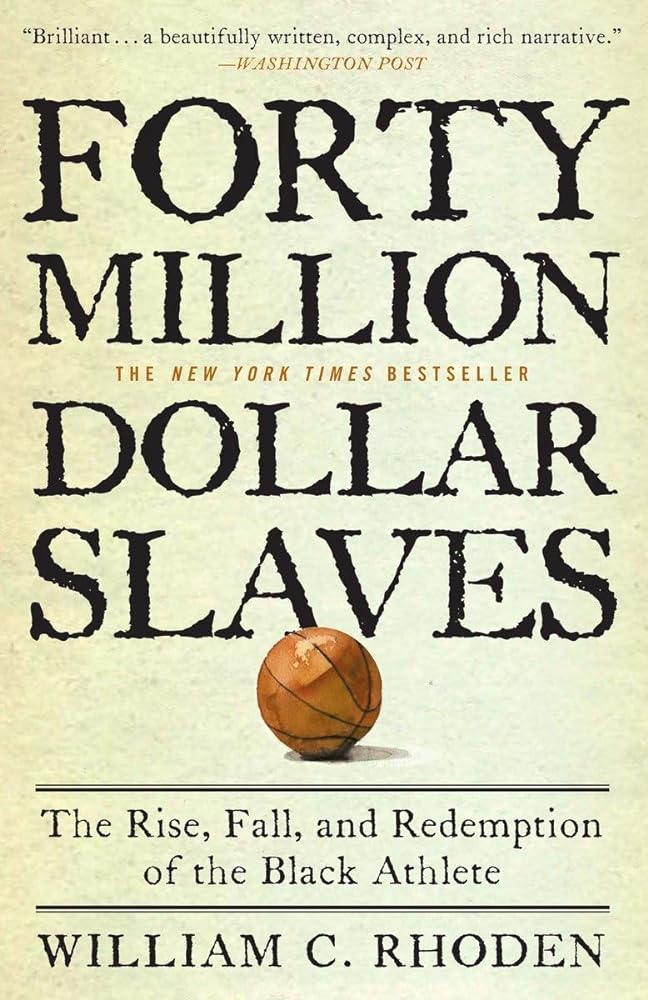
Forty Million Dollar Slaves: The Rise, Fall, and Redemption of the Black Athlete
$17.00*Ships/ready for pick-up in 7-10 business days*
NEW YORK TIMES BESTSELLER • “An explosive and absorbing discussion of race, politics, and the history of American sports.”—Ebony
From Jackie Robinson to Muhammad Ali and Arthur Ashe, African American athletes have been at the center of modern culture, their on-the-field heroics admired and stratospheric earnings envied. But for all their money, fame, and achievement, says New York Times columnist William C. Rhoden, black athletes still find themselves on the periphery of true power in the multibillion-dollar industry their talent built.Provocative and controversial, Rhoden’s $40 Million Slaves weaves a compelling narrative of black athletes in the United States, from the plantation to their beginnings in nineteenth-century boxing rings to the history-making accomplishments of notable figures such as Jesse Owens, Althea Gibson, and Willie Mays. Rhoden reveals that black athletes’ “evolution” has merely been a journey from literal plantations—where sports were introduced as diversions to quell revolutionary stirrings—to today’s figurative ones, in the form of collegiate and professional sports programs. He details the “conveyor belt” that brings kids from inner cities and small towns to big-time programs, where they’re cut off from their roots and exploited by team owners, sports agents, and the media. He also sets his sights on athletes like Michael Jordan, who he says have abdicated their responsibility to the community with an apathy that borders on treason.
The power black athletes have today is as limited as when masters forced their slaves to race and fight. The primary difference is, today’s shackles are invisible.
Praise for Forty Million Dollar Slaves
“A provocative, passionate, important, and disturbing book.”—The New York Times Book Review
“Brilliant . . . a beautifully written, complex, and rich narrative.”—Washington Post Book World
“A powerful call for more black athletes to give back to their communities.”—Los Angeles Times - Stokely: A Life
![Book cover image]()
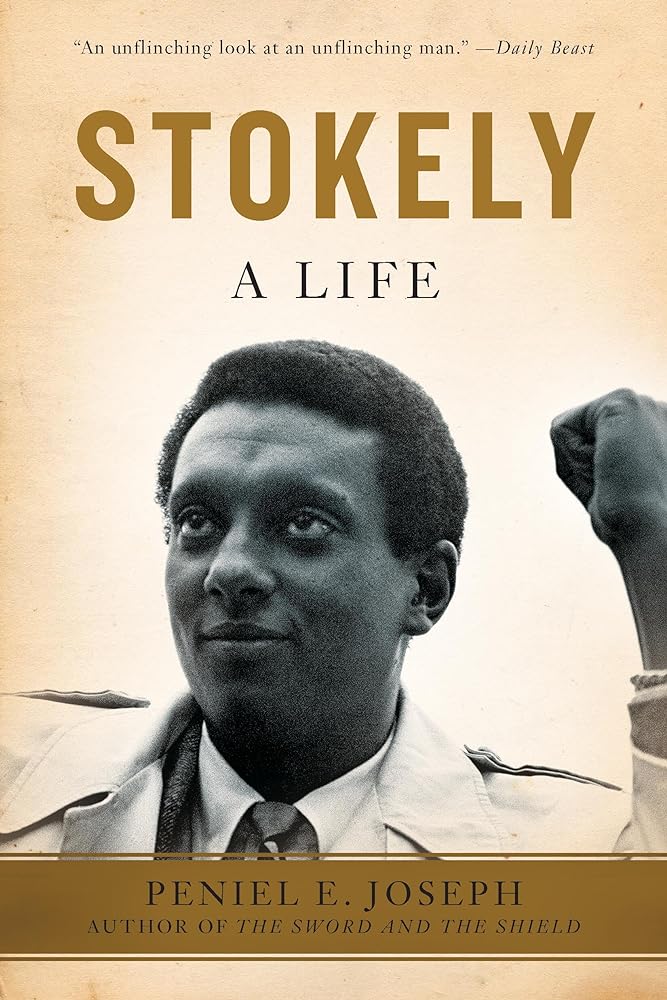
Stokely: A Life
Peniel E. Joseph
Sold outFrom the author of The Sword and the Shield, this definitive biography of the Black Power activist Stokely Carmichael offers "an unflinching look at an unflinching man" (Daily Beast).
Stokely Carmichael, the charismatic and controversial Black activist, stepped onto the pages of history when he called for "Black Power" during a speech one Mississippi night in 1966. A firebrand who straddled both the American civil rights and Black Power movements, Carmichael would stand for the rest of his life at the center of the storm he had unleashed. In Stokely, preeminent civil rights scholar Peniel E. Joseph presents a groundbreaking biography of Carmichael, using his life as a prism through which to view the transformative African American freedom struggles of the twentieth century.
A nuanced and authoritative portrait, Stokely captures the life of the man whose uncompromising vision defined political radicalism and provoked a national reckoning on race and democracy.
- Blackdom, New Mexico: The Significance of the Afro-Frontier, 1900–1930
![Blackdom, New Mexico: The Significance of the Afro-Frontier, 1900–1930]()
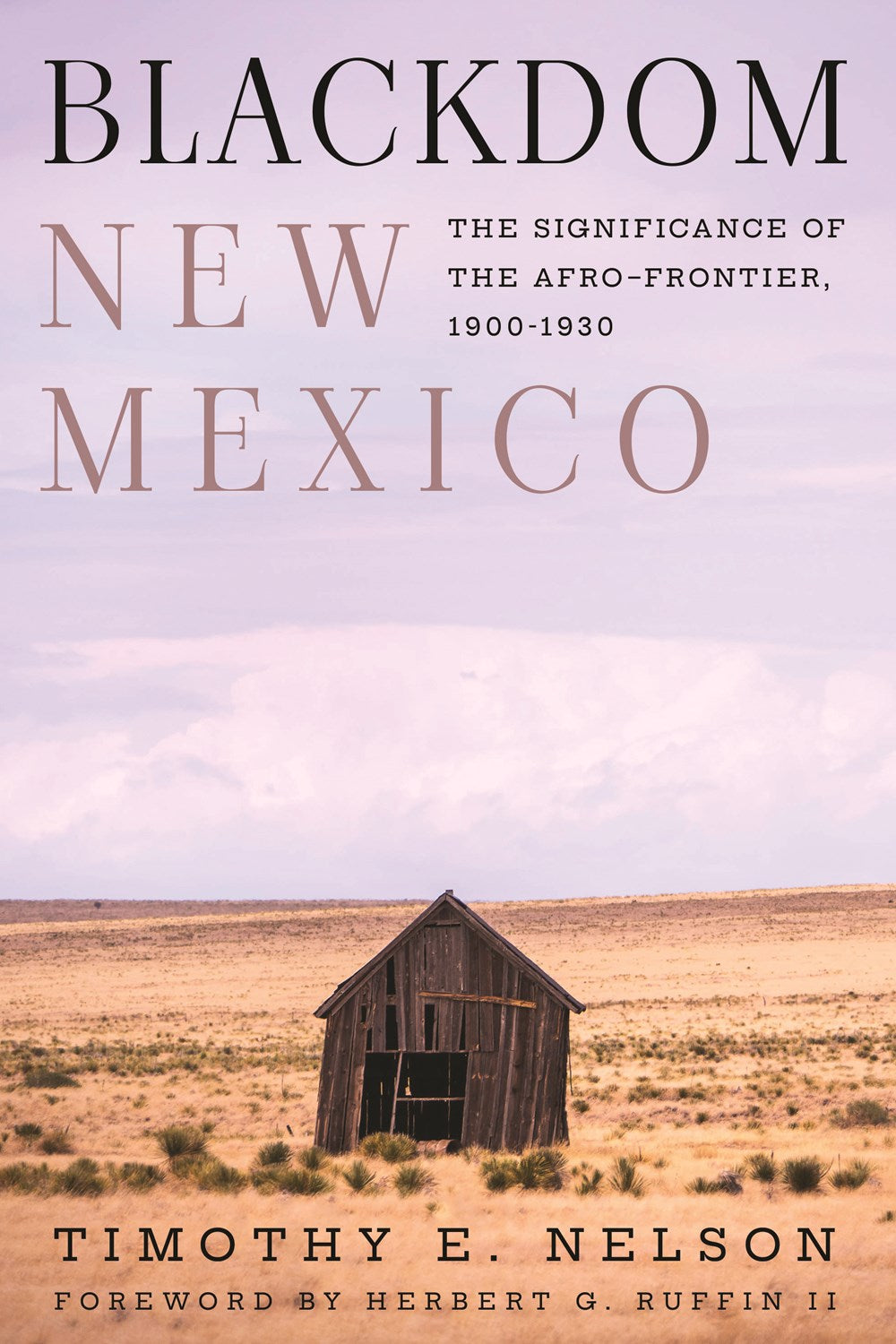
Blackdom, New Mexico: The Significance of the Afro-Frontier, 1900–1930
by Timothy E. Nelson
$26.95Blackdom, New Mexico, was a township that lasted aboutthirty years. In this book, Timothy E. Nelson situates the township’s storywhere it belongs: along the continuum of settlement in Mexico’s Northern Frontier.Dr. Nelson illuminates the set of conscious efforts that helped Black pioneersdevelop Blackdom Township into a frontier boomtown.
“Blackdom” started as an inherited idea of a nineteenth-centuryAfrotopia. The idea of creating a Blackdom was refined within Blackinstitutions as part of the perpetual movement of Black Colonization. In 1903,thirteen Black men, encouraged by the 1896 Plessy decision, formed the BlackdomTownsite Company and set out to make Blackdom a real place in New Mexico, wherethey were outside the reach of Jim Crow laws.
Many believed that Blackdom was simply abandoned. However,new evidence shows that the scheme to build generational wealth continued toexist throughout the twentieth century in other forms. During Blackdom’s boomtimes,in December 1919, Blackdom Oil Company shifted town business from aregenerative agricultural community to a more extractive model. Nelson hasuncovered new primary source materials that suggest for Blackdom a newlydiscovered third decade. This story has never been fully told or contextualizeduntil now.
Reoriented to Mexico’s “northern frontier,” oneobserves Black ministers, Black military personnel, and Black freemasons whocolonized as part of the transmogrification of Indigenous spaces into theAmerican West. Nelson’s concept of the Afro-Frontier evokes a “Turnerian West,”but it is also fruitfully understood as a Weberian “Borderland.” Its history highlightsa brief period and space that nurtured Black cowboy culture. While Blackdom’scivic presence was not lengthy, its significance—and that of the Afro-Frontier—isan important window in the history of Afrotopias, Black Consciousness, and thenotion of an American West. - But Some of Us Are Brave: Black Women's Studies
![But Some of Us Are Brave: Black Women's Studies]()
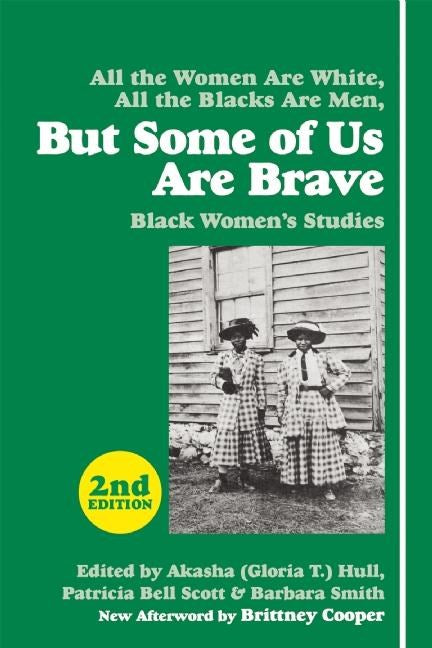
But Some of Us Are Brave: Black Women's Studies
edited by Akasha (Gloria T.) Hull, Patricia Bell-Scott, & Barbara Smith
$24.95Published in 1982, But Some of Us Are Brave was the first-ever Black women's studies reader and a foundational text of contemporary feminism.
Featuring writing from eminent scholars, activists, teachers, and writers, such as the Combahee River Collective and Alice Walker, All the Women Are White, All the Blacks Are Men, But Some of Us Are Bravechallenges the absence of Black feminist thought in women’s studies, confronts racism, and investigates the mythology surrounding Black women in the social sciences.
As the first comprehensive collection of Black feminist scholarship, But Some of Us Are Brave was recognized by Audre Lorde as “the beginning of a new era, where the ‘women’ in women’s studies will no longer mean ‘white.’”
Coeditors Akasha (Gloria T.) Hull, Patricia Bell-Scott, and Barbara Smith are authors and former women's studies professors. Brittney C. Cooper is a professor of Women's and Gender Studies and Africana Studies at Rutgers University. She is the author of several books, including Eloquent Rage, named by Emma Watson as an Our Shared Shelf read for November/December 2018.
- We Want to Do More Than Survive: Abolitionist Teaching and the Pursuit of Educational Freedom by Bettina L. Love
![We Want to Do More Than Survive: Abolitionist Teaching and the Pursuit of Educational Freedom by Bettina L. Love]()
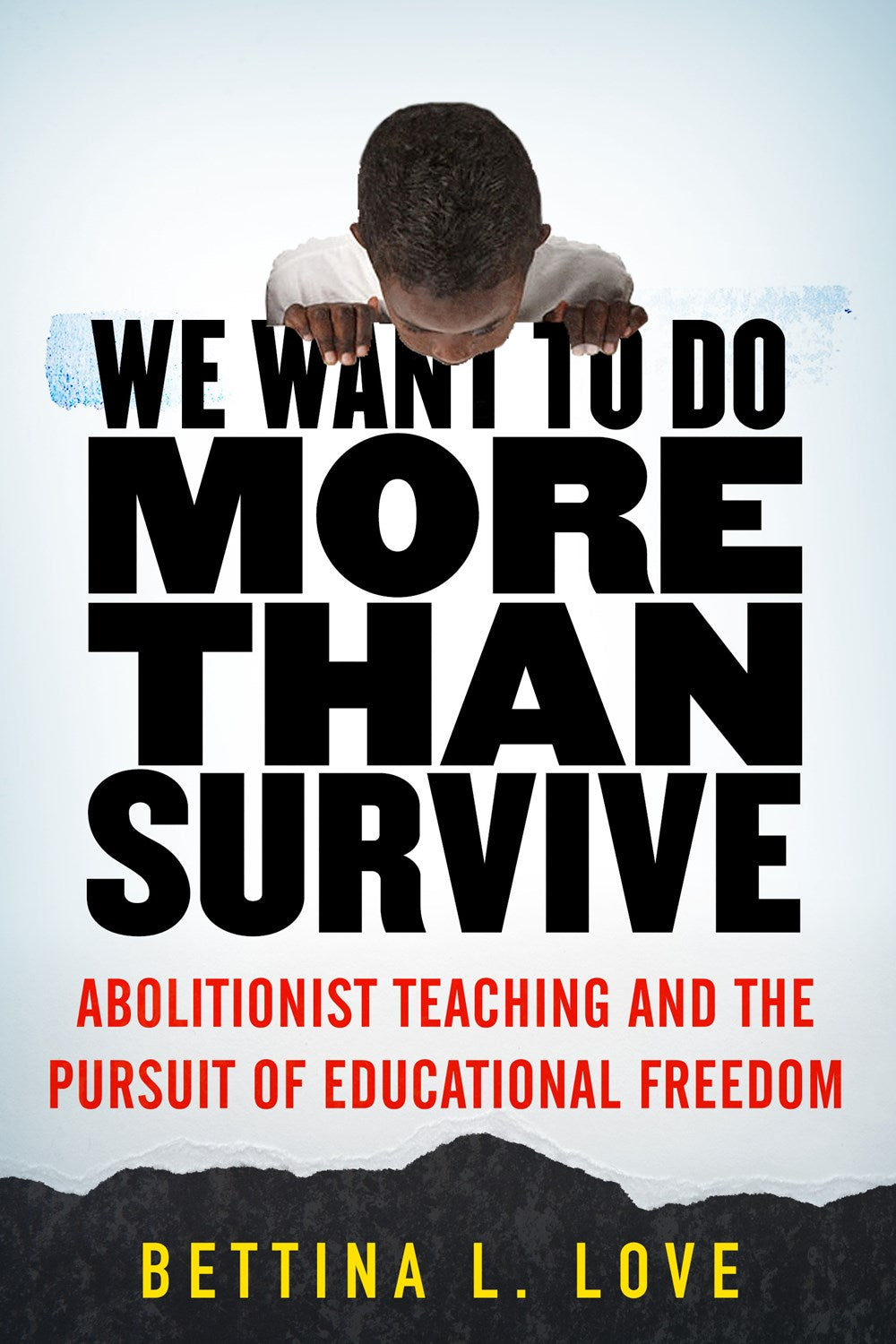
We Want to Do More Than Survive: Abolitionist Teaching and the Pursuit of Educational Freedom by Bettina L. Love
$17.95Drawing on personal stories, research, and historical events, an esteemed educator offers a vision of educational justice inspired by the rebellious spirit and methods of abolitionists.
Drawing on her life’s work of teaching and researching in urban schools, Bettina Love persuasively argues that educators must teach students about racial violence, oppression, and how to make sustainable change in their communities through radical civic initiatives and movements. She argues that the US educational system is maintained by and profits from the suffering of children of color. Instead of trying to repair a flawed system, educational reformers offer survival tactics in the forms of test-taking skills, acronyms, grit labs, and character education, which Love calls the educational survival complex.
To dismantle the educational survival complex and to achieve educational freedom—not merely reform—teachers, parents, and community leaders must approach education with the imagination, determination, boldness, and urgency of an abolitionist. Following in the tradition of activists like Ella Baker, Bayard Rustin, and Fannie Lou Hamer, We Want to Do More Than Survive introduces an alternative to traditional modes of educational reform and expands our ideas of civic engagement and intersectional justice. - Working Cures: Healing, Health, and Power on Southern Slave Plantations
![Working Cures: Healing, Health, and Power on Southern Slave Plantations]()

Working Cures: Healing, Health, and Power on Southern Slave Plantations
by Sharla M. Fett
$42.50Exploring the charged topic of black health under slavery, Sharla Fett reveals how herbalism, conjuring, midwifery, and other African American healing practices became arts of resistance in the antebellum South.
Working Cures : Healing, Health, and Power on Southern Slave Plantations
Exploring the charged topic of black health under slavery, Sharla Fett reveals how herbalism, conjuring, midwifery, and other African American healing practices became arts of resistance in the antebellum South.
Fett shows how enslaved men and women drew on African precedents to develop a view of health and healing that was distinctly at odds with slaveholders' property concerns. While white slaveowners narrowly defined slave health in terms of "soundness" for labor, slaves embraced a relational view of health that was intimately tied to religion and community. African American healing practices thus not only restored the body but also provided a formidable weapon against white objectification of black health.
Enslaved women played a particularly important role in plantation health culture: they made medicines, cared for the sick, and served as midwives in both black and white households. Their labor as health workers not only proved essential to plantation production but also gave them a basis of authority within enslaved communities. Not surprisingly, conflicts frequently arose between slave doctoring women and the whites who attempted to supervise their work, as did conflicts related to feigned illness, poisoning threats, and African-based religious practices. By examining the deeply contentious dynamics of plantation healing, Fett sheds new light on the broader power relations of antebellum American slavery. - Black Country Music: Listening for Revolutions
![Black Country Music: Listening for Revolutions]()
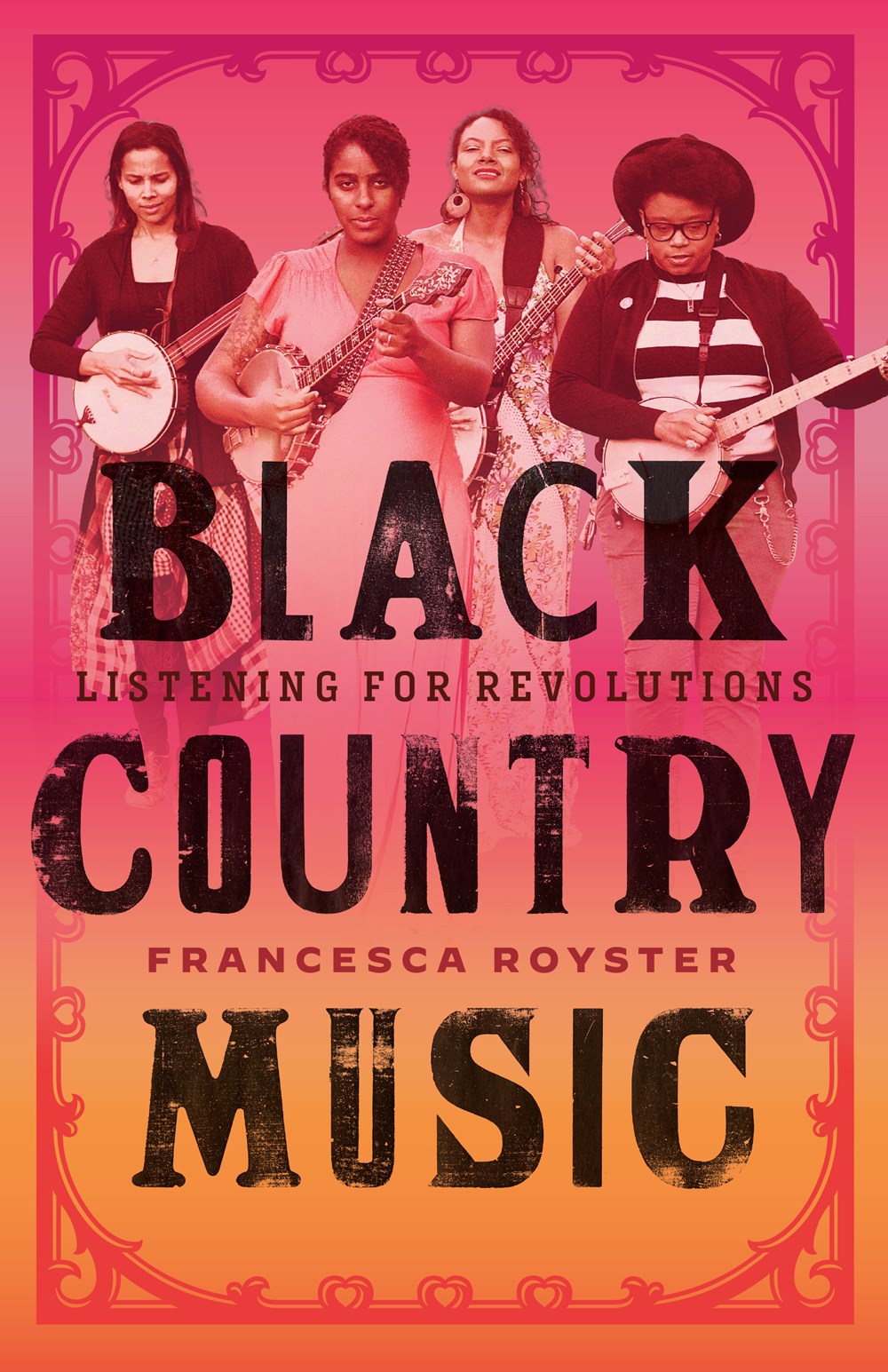
Black Country Music: Listening for Revolutions
by Francesca T. Royster
$24.95Black Country Music tells the story of how Black musicians have changed the country music landscape and brought light to Black creativity and innovation. After a century of racist whitewashing, country music is finally reckoning with its relationship to Black people. In this timely work—the first book on Black country music by a Black writer—Francesca Royster uncovers the Black performers and fans, including herself, who are exploring the pleasures and possibilities of the genre.
Informed by queer theory and Black feminist scholarship, Royster’s book elucidates the roots of the current moment found in records like Tina Turner’s first solo album, Tina Turns the Country On! She reckons with Black “bros” Charley Pride and Darius Rucker, then chases ghosts into the future with Valerie June. Indeed, it is the imagination of Royster and her artists that make this music so exciting for a genre that has long been obsessed with the past. The futures conjured by June and others can be melancholy, and are not free of racism, but by centering Black folk Royster begins to understand what her daughter hears in the banjo music of Our Native Daughters and the trap beat of Lil Nas X’s “Old Town Road.” A Black person claiming country music may still feel a bit like a queer person coming out, but, collectively, Black artists and fans are changing what country music looks and sounds like—and who gets to love it.
- Black Enough: Stories of Being Young & Black in America
![Black Enough: Stories of Being Young & Black in America]()
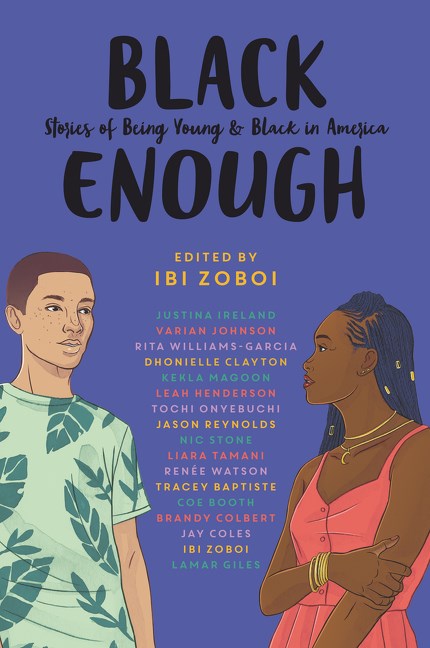
Black Enough: Stories of Being Young & Black in America
edited by Ibi Zoboi
Sold out*ships in 7-10 business days
A tour-de-force collection of stories about the Black experience, by award-winning, bestselling, and emerging African American YA authors.
Black is... two sisters navigating their relationship at summer camp in Portland, Oregon as written by Renée Watson.
Black is… Jason Reynolds writing about three guys walking back from the community pool talking about nothing and everything.
Black is… Nic Stone’s bougie debutante dating a boy her momma would never approve of.
Black is …two girls kissing in Justina Ireland’s story set in Maryland.
Black is urban and rural, wealthy and poor, mixed race, immigrants, and more—because there are countless ways to be Black enough.
Edited by National Book Award finalist Ibi Zoboi, this is an essential collection of captivating stories about what it’s like to be young and Black in America.
Contributors:
Justina Ireland
Varian Johnson
Rita Williams-Garcia
Dhonielle Clayton
Kekla Magoon
Leah Henderson
Tochi Onyebuchi
Jason Reynolds
Nic Stone
Liara Tamani
Renée Watson
Tracey Baptiste
Coe Booth
Brandy Colbert
Jay Coles
Ibi Zoboi
Lamar Giles
- New Growth: The Art and Texture of Black Hair
![New Growth: The Art and Texture of Black Hair]()
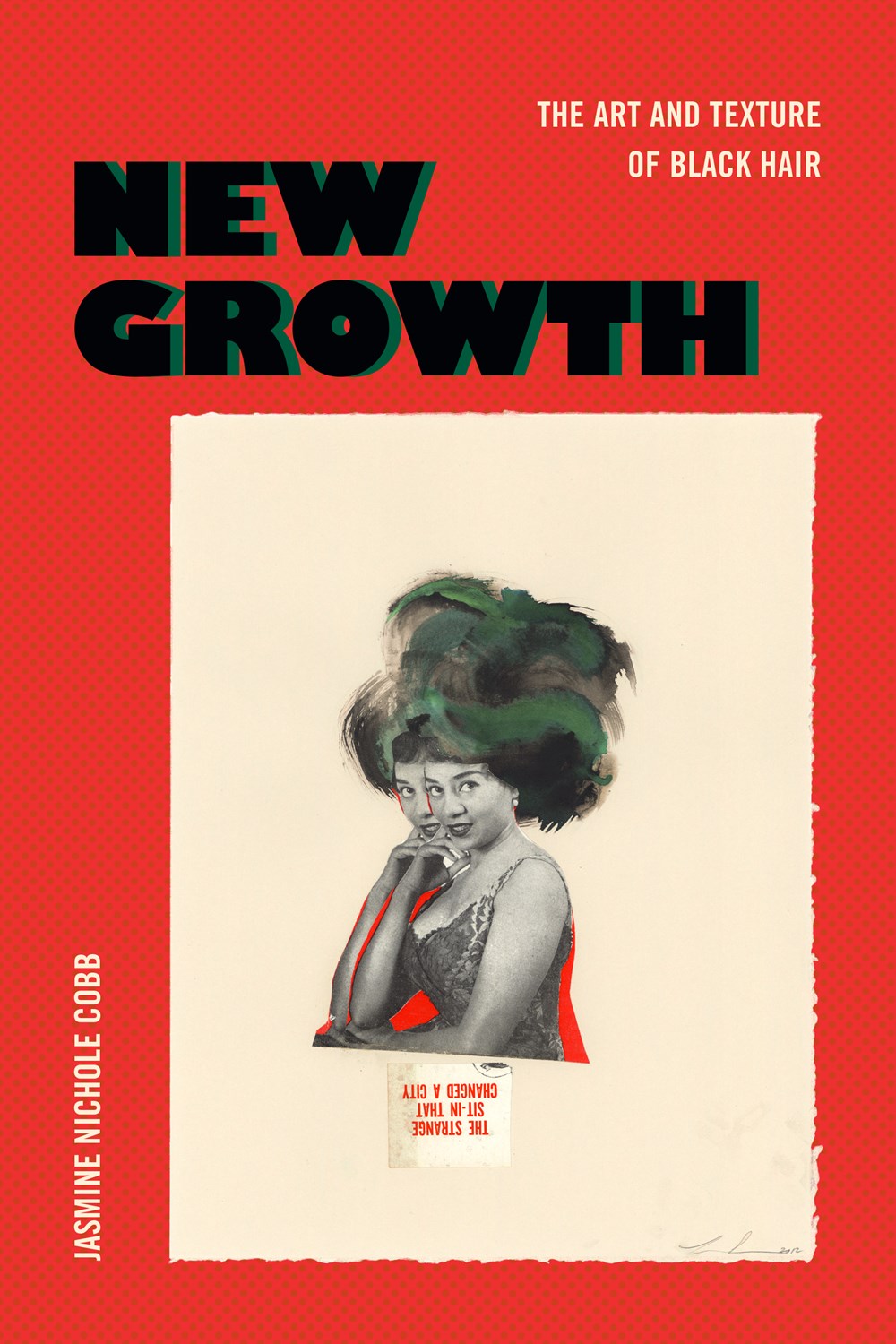
New Growth: The Art and Texture of Black Hair
by Jasmine Nichole Cobb
$25.95Through close readings of slave narratives, scrapbooks, travel illustration, documentary film and photography, as well as collage, craft, and sculpture, Jasmine Nichole Cobb explores Black hair as a visual material through which to reimagine the sensual experience of Blackness.
From Frederick Douglass to Angela Davis, “natural hair” has been associated with the Black freedom struggle. In New Growth Jasmine Nichole Cobb traces the history of Afro-textured coiffure, exploring it as a visual material through which to reimagine the sensual experience of Blackness. Through close readings of slave narratives, scrapbooks, travel illustration, documentary film and photography, as well as collage, craft, and sculpture, from the nineteenth century to the present, Cobb shows how the racial distinctions ascribed to people of African descent become simultaneously visible and tactile. Whether examining Soul Train’s and Ebony’s promotion of the Afro hairstyle alongside cosmetics or how artists such as Alison Saar and Lorna Simpson underscore the construction of Blackness through the representation of hair, Cobb foregrounds the inseparability of Black hair’s look and feel. Demonstrating that Blackness is palpable through appearance and feeling, Cobb reveals the various ways that people of African descent forge new relationships to the body, public space, and visual culture through the embrace of Black hair. - A Taste for Brown Sugar: Black Women in Pornography
![A Taste for Brown Sugar: Black Women in Pornography]()
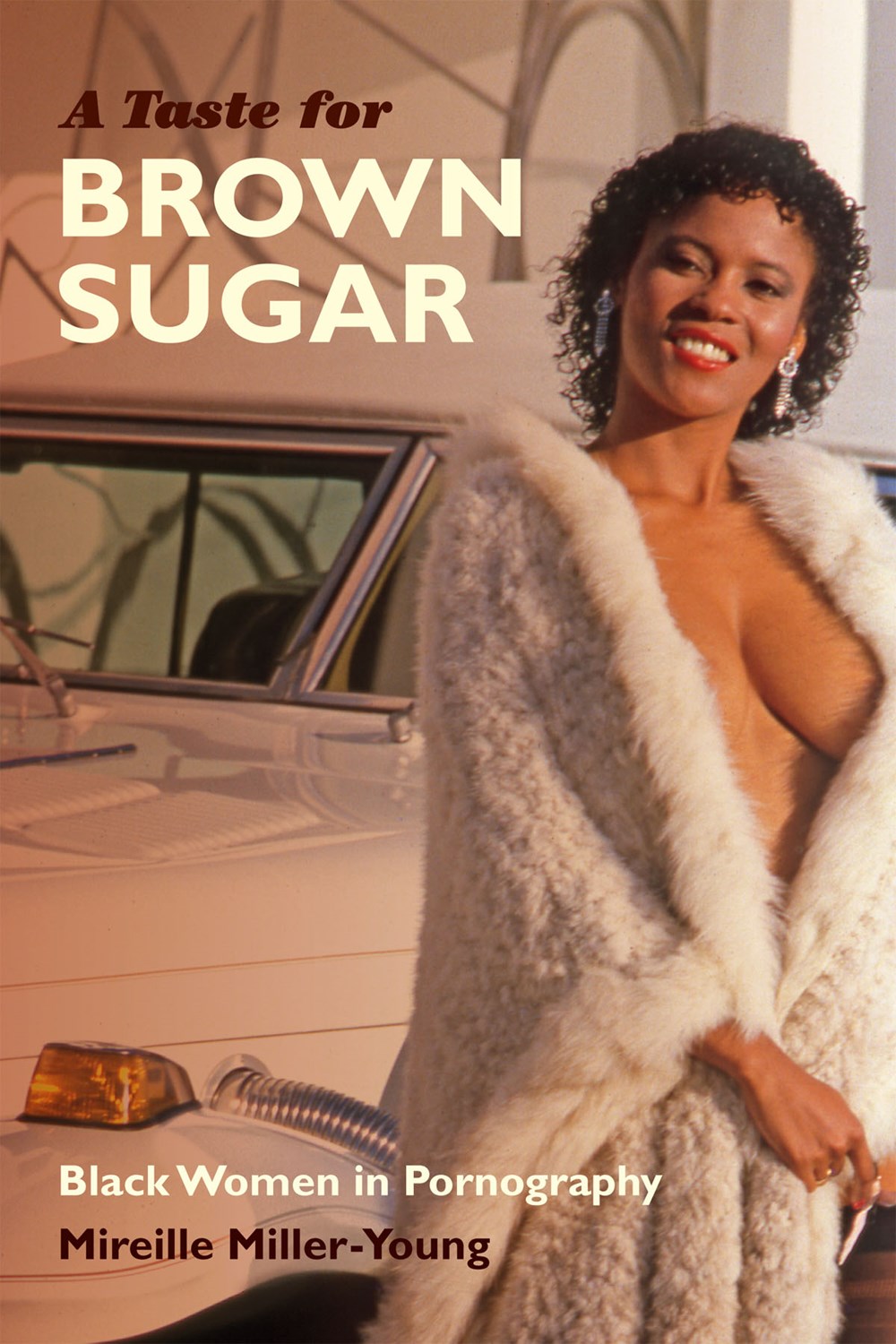
A Taste for Brown Sugar: Black Women in Pornography
by Mireille Miller-Young
$30.95Based on extensive archival and ethnographic research on dozens of women who have worked in adult entertainment since the 1980s, A Taste for Brown Sugar boldly takes on representations of black women’s sexuality in the porn industry.
A Taste for Brown Sugar boldly takes on representations of black women's sexuality in the porn industry. It is based on Mireille Miller-Young's extensive archival research and her interviews with dozens of women who have worked in the adult entertainment industry since the 1980s. The women share their thoughts about desire and eroticism, black women's sexuality and representation, and ambition and the need to make ends meet. Miller-Young documents their interventions into the complicated history of black women's sexuality, looking at individual choices, however small—a costume, a gesture, an improvised line—as small acts of resistance, of what she calls "illicit eroticism." Building on the work of other black feminist theorists, and contributing to the field of sex work studies, she seeks to expand discussion of black women's sexuality to include their eroticism and desires, as well as their participation and representation in the adult entertainment industry. Miller-Young wants the voices of black women sex workers heard, and the decisions they make, albeit often within material and industrial constraints, recognized as their own.


Stay Informed. We're building a community committed to celebrating Black authors + artisans. Subscribe to keep up with all things Kindred Stories.