
Search results: 115 results for “toni morrison”
Not finding what you're looking for? Check out our shop on bookshop.org to order and still support us ♥
115 results
-
JANUARY 2025: Adult Fiction Book Club - January 30 @ 7PM
![JANUARY 2025: Adult Fiction Book Club - January 30 @ 7PM]()

JANUARY 2025: Adult Fiction Book Club - January 30 @ 7PM
Sold outBOOK CLUB MEETING DEETS
When: Thursday, January 30 @ 7 PM CST
Where: Kindred Stories (2304 Stuart Street, HTX, 77004)
How: RSVP ONLY to let us know you plan to attend and RSVP WITH BOOK to purchase your book and support Fiction Book Club!
ABOUT SONG OF SOLOMON
Milkman Dead was born shortly after a neighborhood eccentric hurled himself off a rooftop in a vain attempt at flight. For the rest of his life he, too, will be trying to fly. As Morrison follows Milkman from his rustbelt city to the place of his family’s origins, she introduces an entire cast of strivers and seeresses, liars and assassins, the inhabitants of a fully realized Black world.
-
Being Property Once Myself: Blackness and the End of Man
![Being Property Once Myself: Blackness and the End of Man]()
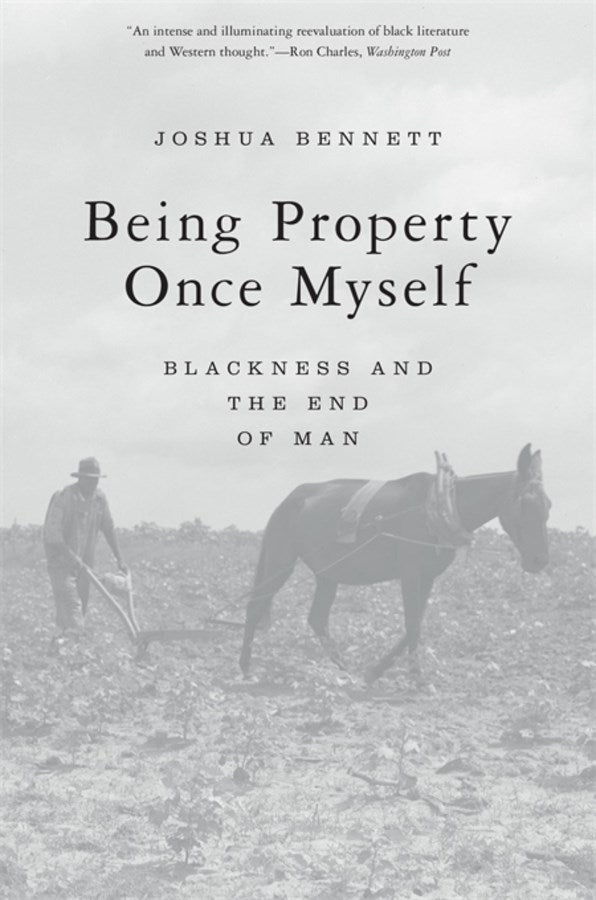
Being Property Once Myself: Blackness and the End of Man
by Joshua Bennett
Sold out*Ships in 7-10 Business Days*
For much of American history, Black people have been conceived and legally defined as nonpersons, a subgenre of the human. In Being Property Once Myself, prize-winning poet Joshua Bennett shows that Blackness has long acted as the caesura between human and nonhuman and delves into the literary imagination and ethical concerns that have emerged from this experience. Each chapter tracks a specific animal―the rat, the cock, the mule, the dog, the shark―in the works of Richard Wright, Toni Morrison, Zora Neale Hurston, Jesmyn Ward, and Robert Hayden. The plantation, the wilderness, the kitchenette overrun with pests, the valuation and sale of animals and enslaved people―all place Black and animal life in fraught proximity.
Bennett suggests that animals are deployed to assert a theory of Black sociality and to combat dominant claims about the limits of personhood. And he turns to the Black radical tradition to challenge the pervasiveness of anti-Blackness in discourses surrounding the environment and animals. Being Property Once Myself is an incisive work of literary criticism and a groundbreaking articulation of undertheorized notions of dehumanization and the Anthropocene. -
I Wish I Knew This Earlier: Lessons on Love
![I Wish I Knew This Earlier: Lessons on Love]()
I Wish I Knew This Earlier: Lessons on Love
by Toni Tone
Sold outWe’ve all been on promising dates that left us feeling worse in the long run, suffered from breakups we might have mishandled, or stayed in relationships which should have worked but didn’t. So what are we missing?
Don’t panic! Toni Tone is here to give the big sister advice we all need: discovering what we want from a connection, flourishing through heartbreak, and learning the vital importance of difficult conversations for growth and self-respect. Speaking from a place of experience and empathy, she talks through the value of intuition, asking questions, and taking responsibility for the choices we make, offering practical, simple advice to improve any relationship, and insight into our own behaviors.
From comfort zones and goal setting to healthy boundaries and keeping yourself centered, Toni offers the loving, healing and authentic common sense lessons that aren’t so common.
It may just change your life. -
IN PERSON EVENT: MEET & GREET with Glory Edim- December 5 at 6:30PM
![IN PERSON EVENT: MEET & GREET with Glory Edim- December 5 at 6:30PM]()

IN PERSON EVENT: MEET & GREET with Glory Edim- December 5 at 6:30PM
Sold outJoin us as we celebrate the paperback release of On Girlhood with Glory Edim, founder of the Well Read Black Girl.EVENT DEETS:
When: December 5 at 630 PM
Where: Kindred Stories (2304 Stuart Street, HTX 77004)
How: RSVP for your time with Glory. Please purchase On Girlhood if you have not to support our programming.
About The Book
Proudly introducing the Well-Read Black Girl Library Series, On Girlhood is a lovingly curated anthology celebrating short fiction from such luminaries as Rita Dove, Alice Walker, Toni Morrison, and more.
Featuring stories by: Jamaica Kincaid, Toni Morrison, Dorothy West, Rita Dove, Camille Acker, Toni Cade Bambara, Amina Gautier, Alexia Arthurs, Dana Johnson, Alice Walker, Gwendolyn Brooks, Edwidge Danticat, Shay Youngblood, Paule Marshall, and Zora Neale Hurston.
“When you look over your own library, who do you see?” asks Well-Read Black Girl founder Glory Edim in this lovingly curated anthology. Bringing together an array of “unforgettable, and resonant coming-of-age stories” (Nicole Dennis-Benn), Edim continues her life’s work to brighten and enrich American reading lives through the work of both canonical and contemporary Black authors—from Jamaica Kincaid and Toni Morrison to Dana Johnson and Alexia Arthurs. Divided into four themes—Innocence, Belonging, Love, and Self-Discovery—On Girlhood features fierce young protagonists who contend with trials that shape who they are and what they will become. At times heartbreaking and hilarious, the stories within push past flat stereotypes and powerfully convey the beauty of Black girlhood, resulting in an indispensable compendium for every home library.
About The Author
Glory Edim is the founder of Well-Read Black Girl, a podcast and digital literacy platform that celebrates the uniqueness of Black literature and sisterhood. She edited the Well-Read Black Girl anthology, which was nominated for an NAACP Image Award and named a best book of the year by Library Journal. Her latest book On Girlhood is a collection of groundbreaking short stories that explore the thin yet imperative line between Black girlhood and womanhood. The winner of the Innovator's Award from the Los Angeles Times Book Prizes, Edim worked as a cultural practitioner for over ten years and serves on the board of Baldwin for the Arts. She resides in Washington D.C. with her son, Zikomo.
-
James Baldwin : Collected Essays : Notes of a Native Son / Nobody Knows My Name / The Fire Next Time / No Name in the Street / The Devil Finds Work / Other Essays (Library of America)
![James Baldwin : Collected Essays : Notes of a Native Son / Nobody Knows My Name / The Fire Next Time / No Name in the Street / The Devil Finds Work / Other Essays (Library of America) cover image]()

James Baldwin : Collected Essays : Notes of a Native Son / Nobody Knows My Name / The Fire Next Time / No Name in the Street / The Devil Finds Work / Other Essays (Library of America)
James Baldwin
Sold outToni Morrison's definitive edition of James Baldwin's incomparable nonfiction.
Contains all the major essays collections in their entirety, plus 36 uncollected essays.
James Baldwin was a uniquely prophetic voice in American letters. His brilliant and provocative essays made him the literary voice of the Civil Rights Era, and they continue to speak with powerful urgency to us today, whether in the swirling debate over the Black Lives Matter movement or in the words of Raoul Peck's documentary "I Am Not Your Negro." Edited by Nobel laureate Toni Morrison, the Library of America's Collected Essays is the most comprehensive gathering of Baldwin's nonfiction ever published.
With burning passion and jabbing, epigrammatic wit, Baldwin fearlessly articulated issues of race and democracy and American identity in such famous essays as "The Harlem Ghetto," "Everybody's Protest Novel," "Many Thousands Gone," and "Stranger in the Village." Here are the complete texts of his early landmark collections, Notes of a Native Son (1955) and Nobody Knows My Name (1961), which established him as an essential intellectual voice of his time, fusing in unique fashion the personal, the literary, and the political.
The classic The Fire Next Time (1963), perhaps the most influential of his writings, is his most penetrating analysis of America's racial divide and an impassioned call to "end the racial nightmare...and change the history of the world." The later volumes No Name in the Street (1972) and The Devil Finds Work (1976) chart his continuing response to the social and political turbulence of his era and include his remarkable works of film criticism. A further 36 essays—nine of them previously uncollected—include some of Baldwin's earliest published writings, as well as revealing later insights into the language of Shakespeare, the poetry of Langston Hughes, and the music of Earl Hines.
LIBRARY OF AMERICA is an independent nonprofit cultural organization founded in 1979 to preserve our nation’s literary heritage by publishing, and keeping permanently in print, America’s best and most significant writing. The Library of America series includes more than 300 volumes to date, authoritative editions that average 1,000 pages in length, feature cloth covers, sewn bindings, and ribbon markers, and are printed on premium acid-free paper that will last for centuries.
-
The Harlem Book of the Dead
![The Harlem Book of the Dead cover image]()

The Harlem Book of the Dead
Sold outAvailable for the first time since 1978, The Harlem Book of the Dead showcases James Van Der Zee's unflinching creative vision
Originally published in 1978, The Harlem Book of the Dead is a haunting and beautiful document of Black funerary traditions in Harlem, capturing the community's mourning rituals through the lens of one of the Harlem Renaissance's most celebrated photographers. The publication is the most complete record of Van Der Zee's funerary photographs, featuring over three dozen portraits by the artist, who meticulously composed the setting and the subjects before using his renowned darkroom and retouching skills to superimpose celestial figures, poetry, biblical scenes or portraits onto the images to compensate for lack of adornments, such as flowers, or to fulfill the requests of his subjects or their families.
These portraits are complemented and captioned by poems from Owen Dodson and a wide-ranging interview with Van Der Zee by the sculptor and filmmaker Camille Billops, who conceptualized and edited the publication. This facsimile edition reproduces the printing and specifications of the 1978 publication. The original foreword by Toni Morrison is included, and accompanied by a newly commissioned afterword by Karla FC Holloway, author of the canonical Passed On (2001).
James Van Der Zee (1886–1983) began working as a photographer in 1915, and by the following year had opened his photography studio on West 135th Street in Harlem. His images of Black New Yorkers, together with celebrities such as Langston Hughes, Joe Louis and Marcus Garvey, form an indelible corpus of images of the Harlem Renaissance. -
Corregidora
![Corregidora]()
Corregidora
by Gayl Jones
Sold out*Ships in 7-10 business days*
The new edition of an American masterpiece, this is the harrowing story of Ursa Corregidora, a blues singer in the early 20th century forced to confront the inherited trauma of slavery.
A literary classic that remains vital to our understanding of the past, Corregidora is Gayl Jones’s powerful debut novel, examining womanhood, sexuality, and the psychological residue of slavery. Jones masterfully tells the story of Ursa, a Kentucky blues singer, who, in the wake of a tragic loss, confronts her maternal history and the legacy of Corregidora, the Brazilian slave master who fathered both her mother and grandmother. Consumed and haunted by her hatred of the man who irrevocably shaped her life and the lives of her family, Ursa Corregidora must come to terms with a past that is never too distant from the present.
Selected, edited, and first edited by Toni Morrison, it is “the most brutally honest and painful revelation of what has occurred, and is occurring, in the souls of Black men and women,” (James Baldwin) and “a tale as American as Mount Rushmore and as murky as the Florida swamps.” (Maya Angelou). -
The Dark Delight of Being Strange: Black Stories of Freedom
![The Dark Delight of Being Strange: Black Stories of Freedom cover image]()

The Dark Delight of Being Strange: Black Stories of Freedom
James B. Haile III
Sold outWinner, 2025 Hugh J. Silverman Book Prize, Association for Philosophy and Literature
Finalist, 2025 PEN Open Book Award, PEN America
An ambitious genre-crossing exploration of Black speculative imagination, The Dark Delight of Being Strange combines fiction, historical accounts, and philosophical prose to unveil the extraordinary and the surreal in everyday Black life.
In a series of stories and essays, James B. Haile, III, traces how Black speculative fiction responds to enslavement, racism, colonialism, and capitalism and how it reveals a life beyond social and political alienation. He reenvisions Black technologies of freedom through Henry Box Brown’s famed escape from slavery in a wooden crate, fashions an anticolonial “hollow earth theory” from the works of H. G. Wells and Jules Verne, and considers the octopus and its ability to camouflage itself as a model for Black survival strategies, among others. Looking at Black life through the lens of speculative fiction, this book transports readers to alternative worlds and spaces while remaining squarely rooted in present-day struggles. In so doing, it rethinks historical and contemporary Black experiences as well as figures such as Harriet Tubman, Frederick Douglass, Booker T. Washington, W. E. B. Du Bois, Henry Dumas, and Toni Morrison.
Offering new ways to grasp the meanings and implications of Black freedom, The Dark Delight of Being Strange invites us to reimagine history and memory, time and space, our identities and ourselves.
-
Let Us Descend
![Let Us Descend]()
Let Us Descend
by Jesmyn Ward
Sold outFrom Jesmyn Ward—the two-time National Book Award winner, youngest winner of the Library of Congress Prize for Fiction, and MacArthur Fellow—comes a haunting masterpiece, sure to be an instant classic, about an enslaved girl in the years before the Civil War.
“‘Let us descend,’ the poet now began, ‘and enter this blind world.’” —Inferno, Dante Alighieri
Let Us Descend is a reimagining of American slavery, as beautifully rendered as it is heart-wrenching. Searching, harrowing, replete with transcendent love, the novel is a journey from the rice fields of the Carolinas to the slave markets of New Orleans and into the fearsome heart of a Louisiana sugar plantation.
Annis, sold south by the white enslaver who fathered her, is the reader’s guide through this hellscape. As she struggles through the miles-long march, Annis turns inward, seeking comfort from memories of her mother and stories of her African warrior grandmother. Throughout, she opens herself to a world beyond this world, one teeming with spirits: of earth and water, of myth and history; spirits who nurture and give, and those who manipulate and take. While Ward leads readers through the descent, this, her fourth novel, is ultimately a story of rebirth and reclamation.
From one of the most singularly brilliant and beloved writers of her generation, this miracle of a novel inscribes Black American grief and joy into the very land—the rich but unforgiving forests, swamps, and rivers of the American South. Let Us Descend is Jesmyn Ward’s most magnificent novel yet, a masterwork for the ages. -
Tenderheaded: A Comb-Bending Collection of Hair Stories (Revised)
![Tenderheaded: A Comb-Bending Collection of Hair Stories (Revised)]()
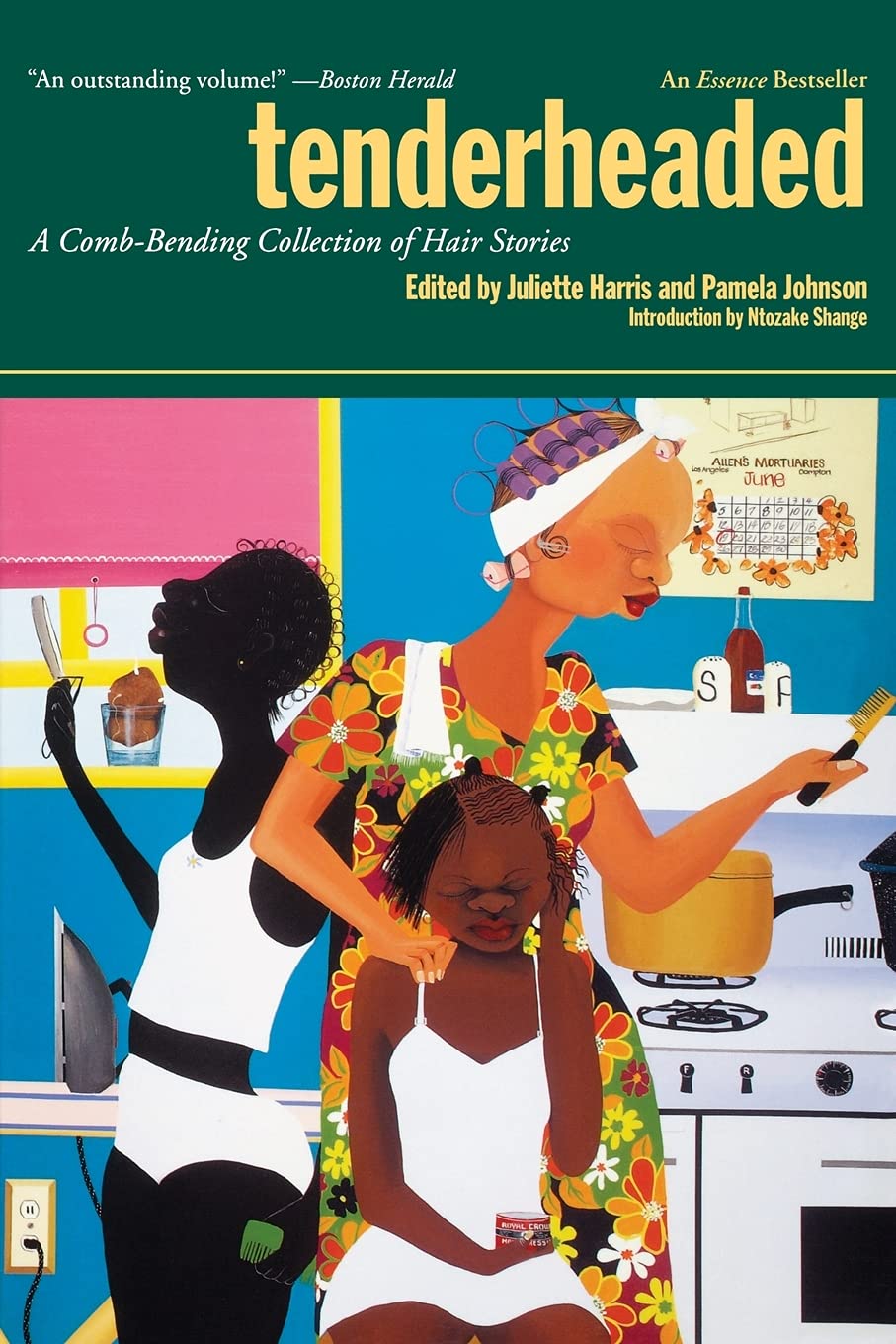
Tenderheaded: A Comb-Bending Collection of Hair Stories (Revised)
edited by Pamela Johnson & Juliette Harris
Sold out*ships in 7 - 10 business days*
In this “outstanding volume” (Boston Herald) that “ought to be at the top of everyone’s must-read list” (Essence), Black women and men evocatively explore what could make a smart woman ignore doctor’s orders; what could get a hardworking employee fired from her job; what could get a black woman in hot water with her white boyfriend? In a word: hair.
In a society where beauty standards can be difficult if not downright unobtainable for many Black women, the issue of hair is a major one. Now, in this evocative and fascinating collection of essays, poems, excerpts, and more, Tenderheaded speaks to the personal, political, and cultural meaning of Black hair.
From A’Leila Perry Bundles, the great-granddaughter of hair care pioneer Madam C.J. Walker celebrating her ancestor’s legacy, to an art historian exploring the moving ways in which Black hair has been used to express Yoruba spirituality, to renowned activist Angela Davis questioning how her message of revolution got reduced to a hairstyle, Tenderheaded is as rich and diverse as the children of the African diaspora.
With works from authors including Toni Morrison, Alice Walker, bell hooks, Henry Louis Gates Jr., and more, this “remarkable array of writings and images” (Publishers Weekly) will stay with you long after you turn the final page. -
How to Carry Water: Selected Poems of Lucille Clifton
![How to Carry Water: Selected Poems of Lucille Clifton]()
How to Carry Water: Selected Poems of Lucille Clifton
edited by Aracelis Girmay
Sold outSelected poems from celebrated poet Lucille Clifton’s 50-year career selected by Whiting Award-winning poet Aracelis Girmay. How to Carry Water: Selected Poems of Lucille Clifton celebrates both familiar and lesser-known works by one of America’s most beloved poets, including 10 newly discovered poems that have never been collected.
These poems celebrating black womanhood and resilience shimmer with intellect, insight, humor, and joy, all in Clifton’s characteristic style—a voice that the late Toni Morrison described as “seductive with the simplicity of an atom, which is to say highly complex, explosive underneath an apparent quietude.” Selected and introduced by award-winning poet Aracelis Girmay, this volume of Clifton’s poetry is simultaneously timeless and fitting for today’s tumultuous moment.
-
The Delectable Negro: Human Consumption and Homoeroticism within US Slave Culture
![The Delectable Negro: Human Consumption and Homoeroticism within US Slave Culture]()

The Delectable Negro: Human Consumption and Homoeroticism within US Slave Culture
by Vincent Woodard
Sold outWinner of the 2015 LGBT Studies Award presented by the Lambda Literary Foundation
Unearths connections between homoeroticism, cannibalism, and cultures of consumption in the context of American literature and US slave culture that has largely been ignored until now
Scholars of US and transatlantic slavery have largely ignored or dismissed accusations that Black Americans were cannibalized. Vincent Woodard takes the enslaved person’s claims of human consumption seriously, focusing on both the literal starvation of the slave and the tropes of cannibalism on the part of the slaveholder, and further draws attention to the ways in which Blacks experienced their consumption as a fundamentally homoerotic occurrence. The Delectable Negro explores these connections between homoeroticism, cannibalism, and cultures of consumption in the context of American literature and US slave culture.
Utilizing many staples of African American literature and culture, such as the slave narratives of Olaudah Equiano, Harriet Jacobs, and Frederick Douglass, as well as other less circulated materials like James L. Smith’s slave narrative, runaway slave advertisements, and numerous articles from Black newspapers published in the nineteenth century, Woodard traces the racial assumptions, political aspirations, gender codes, and philosophical frameworks that dictated both European and white American arousal towards Black males and hunger for Black male flesh. Woodard uses these texts to unpack how slaves struggled not only against social consumption, but also against endemic mechanisms of starvation and hunger designed to break them. He concludes with an examination of the controversial chain gang oral sex scene in Toni Morrison’s Beloved, suggesting that even at the end of the twentieth and beginning of the twenty-first century, we are still at a loss for language with which to describe Black male hunger within a plantation culture of consumption.


Stay Informed. We're building a community committed to celebrating Black authors + artisans. Subscribe to keep up with all things Kindred Stories.