
Search results: 127 results for “toni morrison”
Not finding what you're looking for? Check out our shop on bookshop.org to order and still support us ♥
127 results
-
Otherworldly Mothering: The Maternal Grammar of Black Women’s Writing, 1970–1990
![Otherworldly Mothering: The Maternal Grammar of Black Women’s Writing, 1970–1990 cover image]()

Otherworldly Mothering: The Maternal Grammar of Black Women’s Writing, 1970–1990
Marika Ceschia
Sold outOtherworldly Mothering argues that literary works by Toni Morrison, Gloria Naylor, Paule Marshall, Audre Lorde, and Toni Cade Bambara reimagine subjectivity in processual and relational terms through a rewriting of maternal praxis, a technique that unveils the historical continuities between antebellum and neoliberal America. By refiguring materials drawn from the tradition of slave narratives, Black women’s literature of the 1970s and 1980s often conjures maternal otherworlds where it is possible to engage alternative modes of being.
In conversation with the work of Hortense Spillers, Sylvia Wynter, and Saidiya Hartman, Marika Ceschia analyzes how Black women writers find in the maternal a means of creatively reenvisioning the figure of the human. Morrison’s Song of Solomon, Naylor’s Linden Hills, Marshall’s Praisesong for the Widow, Lorde’s Zami, and Bambara’s The Salt Eaters each change the strictures that dictate how the human is performed. As these texts show, maternal praxis can have a transformative ontological effect: confronting the toll exerted by centuries of racial violence, these writers reclaim the maternal as a site of subject formation.
Otherworldly Mothering reassesses canonical works of twentieth-century Black women’s literature alongside theoretical debates around the ontology of the human, antiblackness, and Black motherhood. Ceschia proposes a reappraisal of maternal praxis that challenges neoliberal discourse and questions recent critical turns toward Afropessimism and posthumanism.
-
Black Women Writers at Work
![Black Women Writers at Work]()
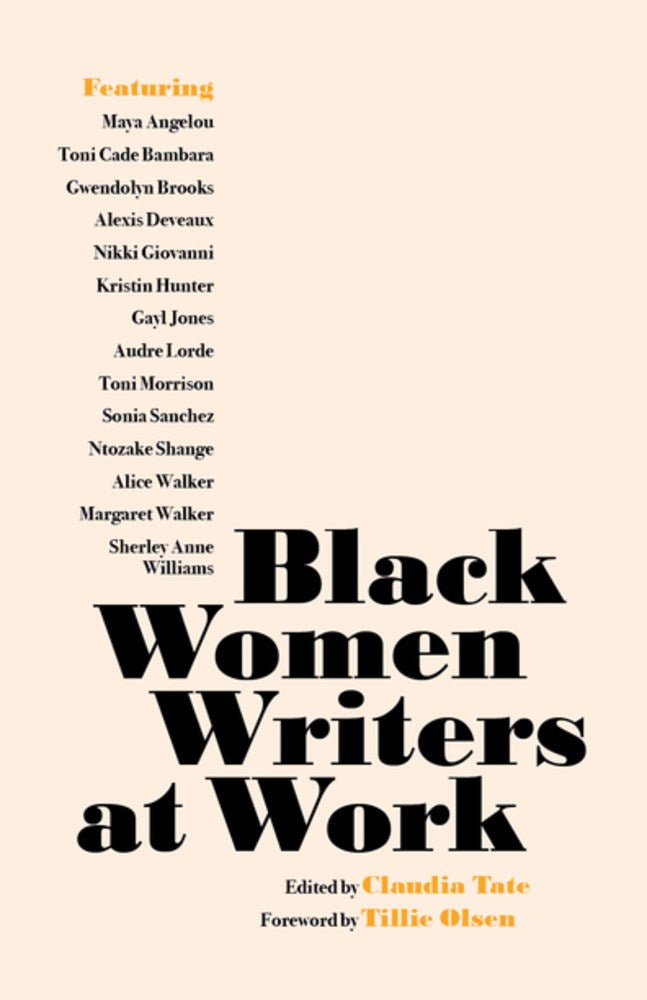
Black Women Writers at Work
by Claudia Tate
Sold outA critical collection of conversations with Toni Morrison, Alice Walker, Gayl Jones and other Black women writers that changed the scope of Black literature in the 20th century and beyond.
“Black women writers and critics are acting on the old adage that one must speak for oneself if one wishes to be heard.” —Claudia Tate, from the introduction
Long out of print, Black Women Writers at Work is a vital contribution to Black literature in the 20th century.Through candid interviews with Maya Angelou, Toni Cade Bambara, Gwendolyn Brooks, Alexis De Veaux, Nikki Giovanni, Kristin Hunter, Gayl Jones, Audre Lorde, Toni Morrison, Sonia Sanchez, Ntozake Shange, Alice Walker, Margaret Walker, and Sherley Anne Williams, the book highlights the practices and critical linkages between the work and lived experiences of Black women writers whose work laid the foundation for many who have come after.
Responding to questions about why and for whom they write, and how they perceive their responsibility to their work, to others, and to society, the featured playwrights, poets, novelists, and essayists provide a window into the connections between their lives and their art.
Finally available for a new generation, this classic work has an urgent message for readers and writers today. -
Those Bones Are Not My Child: A Novel
![Those Bones Are Not My Child: A Novel]()

Those Bones Are Not My Child: A Novel
by Toni Cade Bambara
Sold outONE OF TIME MAGAZINE'S 100 BEST MYSTERY AND THRILLER BOOKS OF ALL TIME • This suspenseful novel portrays a community--and a family--under siege, during the shocking string of murders of black children in Atlanta in the early 1980s.
Written over a span of twelve years, and edited by Toni Morrison, who calls Those Bones Are Not My Child the author's magnum opus, Toni Cade Bambara's last novel leaves us with an enduring and revelatory chronicle of an American nightmare.
Having elected its first black mayor in 1980, Atlanta projected an image of political progressiveness and prosperity. But between September 1979 and June 1981, more than forty black children were kidnapped, sexually assaulted, and brutally murdered throughout "The City Too Busy to Hate." Zala Spencer, a mother of three, is barely surviving on the margins of a flourishing economy when she awakens on July 20, 1980 to find her teenage son Sonny missing. As hours turn into days, Zala realizes that Sonny is among the many cases of missing children just beginning to attract national attention. Growing increasingly disillusioned with the authorities, who respond to Sonny's disappearance with cold indifference, Zala and her estranged husband embark on a desperate search. Through the eyes of a family seized by anguish and terror, we watch a city roiling with political, racial, and class tensions. -
JANUARY 2025: Adult Fiction Book Club - January 30 @ 7PM
![JANUARY 2025: Adult Fiction Book Club - January 30 @ 7PM]()

JANUARY 2025: Adult Fiction Book Club - January 30 @ 7PM
Sold outBOOK CLUB MEETING DEETS
When: Thursday, January 30 @ 7 PM CST
Where: Kindred Stories (2304 Stuart Street, HTX, 77004)
How: RSVP ONLY to let us know you plan to attend and RSVP WITH BOOK to purchase your book and support Fiction Book Club!
ABOUT SONG OF SOLOMON
Milkman Dead was born shortly after a neighborhood eccentric hurled himself off a rooftop in a vain attempt at flight. For the rest of his life he, too, will be trying to fly. As Morrison follows Milkman from his rustbelt city to the place of his family’s origins, she introduces an entire cast of strivers and seeresses, liars and assassins, the inhabitants of a fully realized Black world.
-
The Romare Bearden Reader
![The Romare Bearden Reader cover image]()

The Romare Bearden Reader
Robert G. O'Meally
Sold outThe Romare Bearden Reader brings together a collection of new essays and canonical writings by novelists, poets, historians, critics, and playwrights. The contributors, who include Toni Morrison, Ralph Ellison, August Wilson, Farah Jasmine Griffin, and Kobena Mercer, contextualize Bearden's life and career within the history of modern art, examine the influence of jazz and literature on his work, trace his impact on twentieth-century African American culture, and outline his art's political dimensions. Others focus on specific pieces, such as A Black Odyssey, or the ways in which Bearden used collage to understand African American identity. The Reader also includes Bearden's most important writings, which grant readers insight into his aesthetic values and practices and share his desire to tell what it means to be black in America. Put simply, The Romare Bearden Reader is an indispensable volume on one of the giants of twentieth-century American art.
Contributors. Elizabeth Alexander, Romare Bearden, Mary Lee Corlett, Rachel DeLue, David C. Driskell, Brent Hayes Edwards, Ralph Ellison, Henri Ghent, Farah Jasmine Griffin, Harry Henderson, Kobena Mercer, Toni Morrison, Albert Murray, Robert G. O’Meally, Richard Powell, Richard Price, Sally Price, Myron Schwartzman, Robert Burns Stepto, Calvin Tomkins, John Edgar Wideman, August Wilson
-
Corregidora
![Corregidora]()
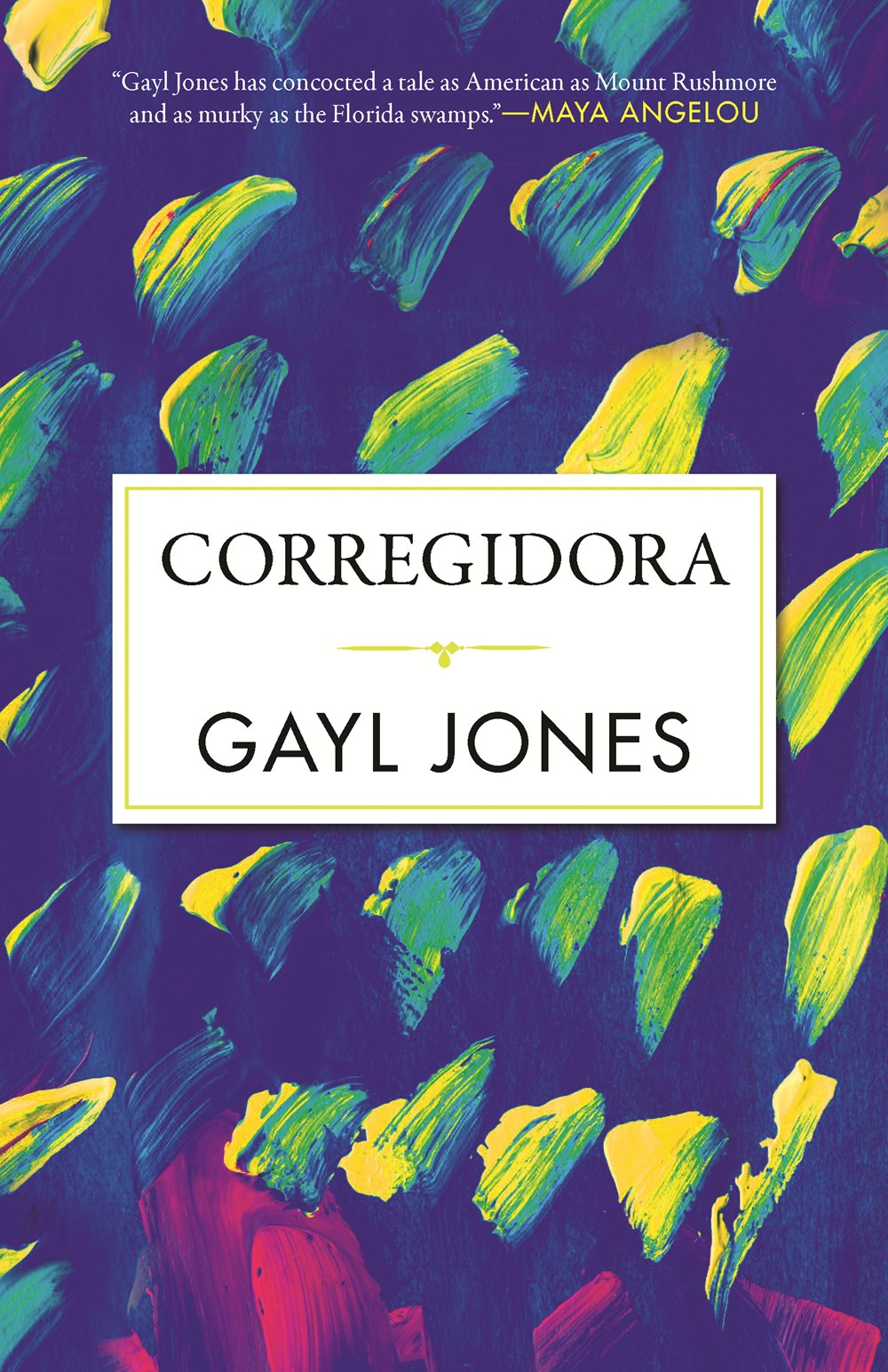
Corregidora
by Gayl Jones
Sold out*Ships in 7-10 business days*
The new edition of an American masterpiece, this is the harrowing story of Ursa Corregidora, a blues singer in the early 20th century forced to confront the inherited trauma of slavery.
A literary classic that remains vital to our understanding of the past, Corregidora is Gayl Jones’s powerful debut novel, examining womanhood, sexuality, and the psychological residue of slavery. Jones masterfully tells the story of Ursa, a Kentucky blues singer, who, in the wake of a tragic loss, confronts her maternal history and the legacy of Corregidora, the Brazilian slave master who fathered both her mother and grandmother. Consumed and haunted by her hatred of the man who irrevocably shaped her life and the lives of her family, Ursa Corregidora must come to terms with a past that is never too distant from the present.
Selected, edited, and first edited by Toni Morrison, it is “the most brutally honest and painful revelation of what has occurred, and is occurring, in the souls of Black men and women,” (James Baldwin) and “a tale as American as Mount Rushmore and as murky as the Florida swamps.” (Maya Angelou). -
Being Property Once Myself: Blackness and the End of Man
![Being Property Once Myself: Blackness and the End of Man]()
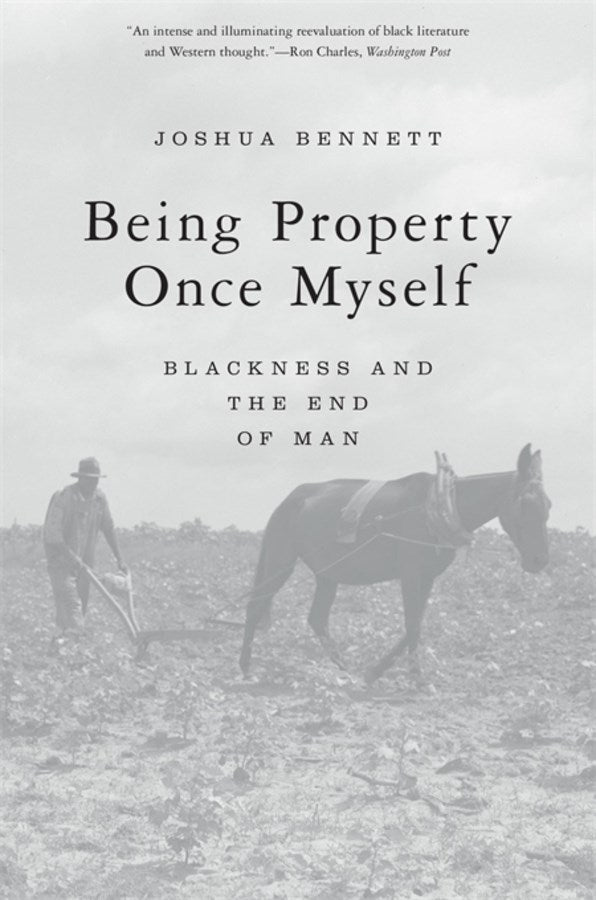
Being Property Once Myself: Blackness and the End of Man
by Joshua Bennett
Sold out*Ships in 7-10 Business Days*
For much of American history, Black people have been conceived and legally defined as nonpersons, a subgenre of the human. In Being Property Once Myself, prize-winning poet Joshua Bennett shows that Blackness has long acted as the caesura between human and nonhuman and delves into the literary imagination and ethical concerns that have emerged from this experience. Each chapter tracks a specific animal―the rat, the cock, the mule, the dog, the shark―in the works of Richard Wright, Toni Morrison, Zora Neale Hurston, Jesmyn Ward, and Robert Hayden. The plantation, the wilderness, the kitchenette overrun with pests, the valuation and sale of animals and enslaved people―all place Black and animal life in fraught proximity.
Bennett suggests that animals are deployed to assert a theory of Black sociality and to combat dominant claims about the limits of personhood. And he turns to the Black radical tradition to challenge the pervasiveness of anti-Blackness in discourses surrounding the environment and animals. Being Property Once Myself is an incisive work of literary criticism and a groundbreaking articulation of undertheorized notions of dehumanization and the Anthropocene. -
The Harlem Book of the Dead
![The Harlem Book of the Dead cover image]()

The Harlem Book of the Dead
Sold outAvailable for the first time since 1978, The Harlem Book of the Dead showcases James Van Der Zee's unflinching creative vision
Originally published in 1978, The Harlem Book of the Dead is a haunting and beautiful document of Black funerary traditions in Harlem, capturing the community's mourning rituals through the lens of one of the Harlem Renaissance's most celebrated photographers. The publication is the most complete record of Van Der Zee's funerary photographs, featuring over three dozen portraits by the artist, who meticulously composed the setting and the subjects before using his renowned darkroom and retouching skills to superimpose celestial figures, poetry, biblical scenes or portraits onto the images to compensate for lack of adornments, such as flowers, or to fulfill the requests of his subjects or their families.
These portraits are complemented and captioned by poems from Owen Dodson and a wide-ranging interview with Van Der Zee by the sculptor and filmmaker Camille Billops, who conceptualized and edited the publication. This facsimile edition reproduces the printing and specifications of the 1978 publication. The original foreword by Toni Morrison is included, and accompanied by a newly commissioned afterword by Karla FC Holloway, author of the canonical Passed On (2001).
James Van Der Zee (1886–1983) began working as a photographer in 1915, and by the following year had opened his photography studio on West 135th Street in Harlem. His images of Black New Yorkers, together with celebrities such as Langston Hughes, Joe Louis and Marcus Garvey, form an indelible corpus of images of the Harlem Renaissance. -
IN PERSON EVENT: MEET & GREET with Glory Edim- December 5 at 6:30PM
![IN PERSON EVENT: MEET & GREET with Glory Edim- December 5 at 6:30PM]()

IN PERSON EVENT: MEET & GREET with Glory Edim- December 5 at 6:30PM
Sold outJoin us as we celebrate the paperback release of On Girlhood with Glory Edim, founder of the Well Read Black Girl.EVENT DEETS:
When: December 5 at 630 PM
Where: Kindred Stories (2304 Stuart Street, HTX 77004)
How: RSVP for your time with Glory. Please purchase On Girlhood if you have not to support our programming.
About The Book
Proudly introducing the Well-Read Black Girl Library Series, On Girlhood is a lovingly curated anthology celebrating short fiction from such luminaries as Rita Dove, Alice Walker, Toni Morrison, and more.
Featuring stories by: Jamaica Kincaid, Toni Morrison, Dorothy West, Rita Dove, Camille Acker, Toni Cade Bambara, Amina Gautier, Alexia Arthurs, Dana Johnson, Alice Walker, Gwendolyn Brooks, Edwidge Danticat, Shay Youngblood, Paule Marshall, and Zora Neale Hurston.
“When you look over your own library, who do you see?” asks Well-Read Black Girl founder Glory Edim in this lovingly curated anthology. Bringing together an array of “unforgettable, and resonant coming-of-age stories” (Nicole Dennis-Benn), Edim continues her life’s work to brighten and enrich American reading lives through the work of both canonical and contemporary Black authors—from Jamaica Kincaid and Toni Morrison to Dana Johnson and Alexia Arthurs. Divided into four themes—Innocence, Belonging, Love, and Self-Discovery—On Girlhood features fierce young protagonists who contend with trials that shape who they are and what they will become. At times heartbreaking and hilarious, the stories within push past flat stereotypes and powerfully convey the beauty of Black girlhood, resulting in an indispensable compendium for every home library.
About The Author
Glory Edim is the founder of Well-Read Black Girl, a podcast and digital literacy platform that celebrates the uniqueness of Black literature and sisterhood. She edited the Well-Read Black Girl anthology, which was nominated for an NAACP Image Award and named a best book of the year by Library Journal. Her latest book On Girlhood is a collection of groundbreaking short stories that explore the thin yet imperative line between Black girlhood and womanhood. The winner of the Innovator's Award from the Los Angeles Times Book Prizes, Edim worked as a cultural practitioner for over ten years and serves on the board of Baldwin for the Arts. She resides in Washington D.C. with her son, Zikomo.
-
Tenderheaded: A Comb-Bending Collection of Hair Stories (Revised)
![Tenderheaded: A Comb-Bending Collection of Hair Stories (Revised)]()
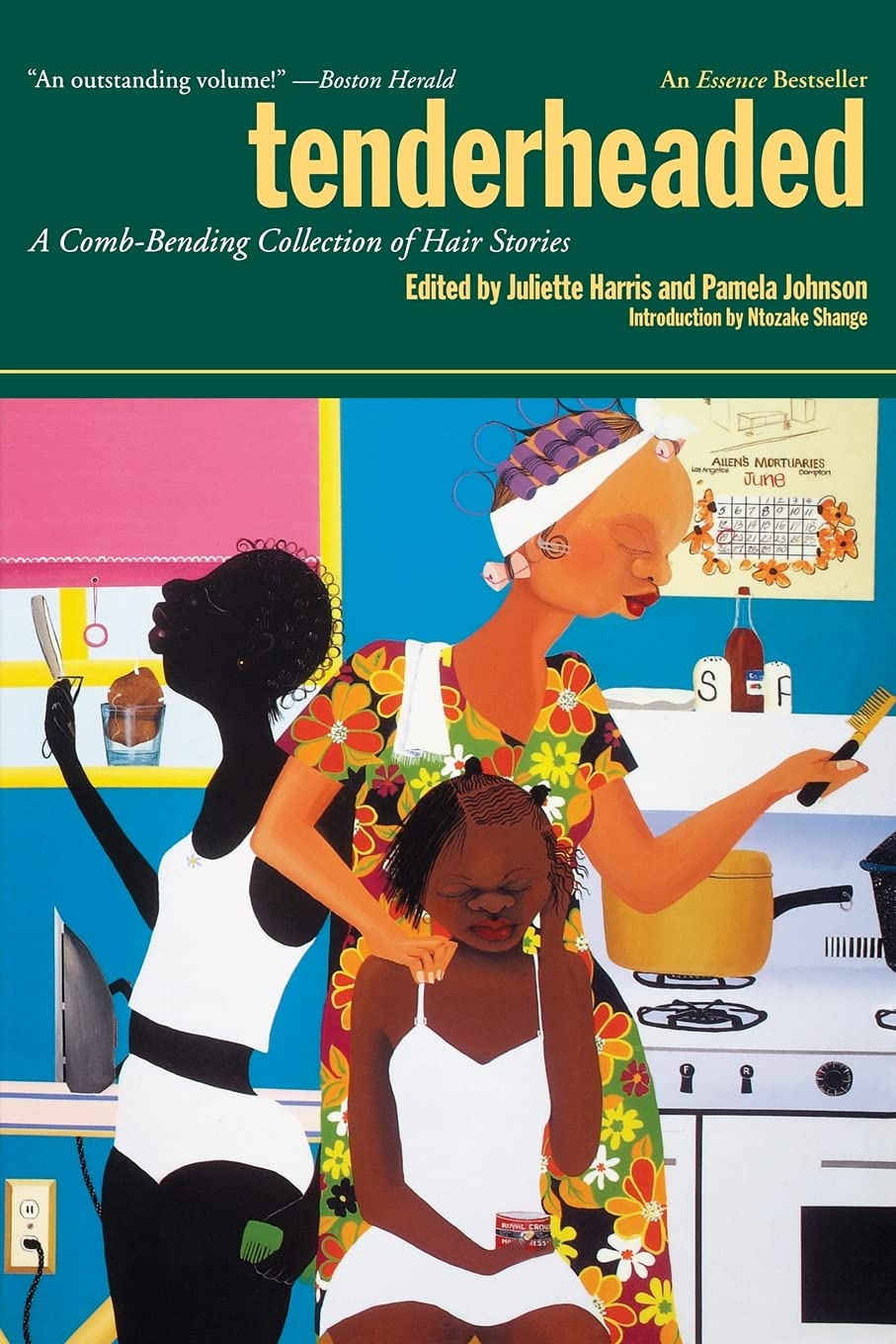
Tenderheaded: A Comb-Bending Collection of Hair Stories (Revised)
edited by Pamela Johnson & Juliette Harris
Sold out*ships in 7 - 10 business days*
In this “outstanding volume” (Boston Herald) that “ought to be at the top of everyone’s must-read list” (Essence), Black women and men evocatively explore what could make a smart woman ignore doctor’s orders; what could get a hardworking employee fired from her job; what could get a black woman in hot water with her white boyfriend? In a word: hair.
In a society where beauty standards can be difficult if not downright unobtainable for many Black women, the issue of hair is a major one. Now, in this evocative and fascinating collection of essays, poems, excerpts, and more, Tenderheaded speaks to the personal, political, and cultural meaning of Black hair.
From A’Leila Perry Bundles, the great-granddaughter of hair care pioneer Madam C.J. Walker celebrating her ancestor’s legacy, to an art historian exploring the moving ways in which Black hair has been used to express Yoruba spirituality, to renowned activist Angela Davis questioning how her message of revolution got reduced to a hairstyle, Tenderheaded is as rich and diverse as the children of the African diaspora.
With works from authors including Toni Morrison, Alice Walker, bell hooks, Henry Louis Gates Jr., and more, this “remarkable array of writings and images” (Publishers Weekly) will stay with you long after you turn the final page. -
Things Fall Apart (Everyman's Library)
![Things Fall Apart (Everyman's Library) cover image]()

Things Fall Apart (Everyman's Library)
Sold outThe most widely read book in modern African literature tells two overlapping, intertwining stories, both of which center around a fearless Igbo warrior in Nigeria in the late 1800s, before and after the European colonization of the continent.
“African literature is incomplete and unthinkable without the works of Chinua Achebe.” —Toni Morrison
The first of these stories traces Okonkwo's fall from grace with the tribal world in which he lives, and in its classical purity of line and economical beauty it provides us with a powerful fable about the immemorial conflict between the individual and society. The second story, which is as modern as the first is ancient, and which elevates the book to a tragic plane, concerns the clash of cultures and the destruction of Okonkwo's world through the arrival of aggressive, proselytizing European missionaries. These twin dramas are perfectly harmonized, and they are modulated by an awareness capable of encompassing at once the life of nature, human history, and the mysterious compulsions of the soul. THINGS FALL APART is the most illuminating and permanent monument we have to the modern African experience as seen from within.
Nominated as one of America’s best-loved novels by PBS’s The Great American Read.
-
The Delectable Negro: Human Consumption and Homoeroticism within US Slave Culture
![The Delectable Negro: Human Consumption and Homoeroticism within US Slave Culture]()
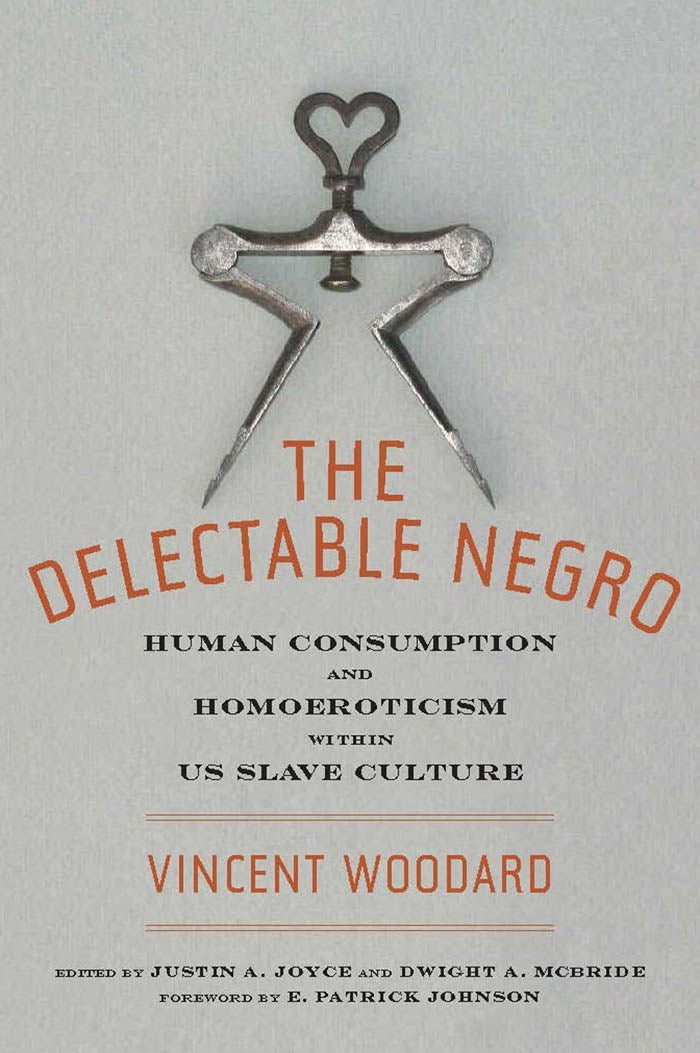
The Delectable Negro: Human Consumption and Homoeroticism within US Slave Culture
by Vincent Woodard
Sold outWinner of the 2015 LGBT Studies Award presented by the Lambda Literary Foundation
Unearths connections between homoeroticism, cannibalism, and cultures of consumption in the context of American literature and US slave culture that has largely been ignored until now
Scholars of US and transatlantic slavery have largely ignored or dismissed accusations that Black Americans were cannibalized. Vincent Woodard takes the enslaved person’s claims of human consumption seriously, focusing on both the literal starvation of the slave and the tropes of cannibalism on the part of the slaveholder, and further draws attention to the ways in which Blacks experienced their consumption as a fundamentally homoerotic occurrence. The Delectable Negro explores these connections between homoeroticism, cannibalism, and cultures of consumption in the context of American literature and US slave culture.
Utilizing many staples of African American literature and culture, such as the slave narratives of Olaudah Equiano, Harriet Jacobs, and Frederick Douglass, as well as other less circulated materials like James L. Smith’s slave narrative, runaway slave advertisements, and numerous articles from Black newspapers published in the nineteenth century, Woodard traces the racial assumptions, political aspirations, gender codes, and philosophical frameworks that dictated both European and white American arousal towards Black males and hunger for Black male flesh. Woodard uses these texts to unpack how slaves struggled not only against social consumption, but also against endemic mechanisms of starvation and hunger designed to break them. He concludes with an examination of the controversial chain gang oral sex scene in Toni Morrison’s Beloved, suggesting that even at the end of the twentieth and beginning of the twenty-first century, we are still at a loss for language with which to describe Black male hunger within a plantation culture of consumption.


Stay Informed. We're building a community committed to celebrating Black authors + artisans. Subscribe to keep up with all things Kindred Stories.