
Literary Criticism
- On Morrison
![On Morrison cover image]()

On Morrison
Namwali Serpell
$32.00An illuminating, electrifying exploration of the work of Toni Morrison by an award-winning novelist and Harvard professor
Toni Morrison, Nobel Laureate and one of our most beloved writers, has inspired generations of readers. But her artistic genius is often overshadowed by her monumental public persona, perhaps because, as Namwali Serpell puts it, “she is our only truly canonical black, female writer—and her work is highly complex.” In On Morrison, Serpell brings her unique experience as both an award-winning writer and professor who teaches a course on Morrison to illuminate her masterful experiments with literary form.
This is Morrison as you’ve never encountered her before, a journey through her oeuvre—her fiction and criticism, as well as her lesser-known dramatic works and poetry—with contextual guidance, archival discoveries, and original close readings. At once accessible and uncompromisingly rigorous, On Morrison is a primer not only on how to read one of the most significant American authors of all time, but also on how to read great works of literature in general. This dialogue on the page between two black women artist-readers is stylish, edifying, and thrilling in its scope and intelligence.
- Language as Liberation: Reflections on the American Canon
![Language as Liberation: Reflections on the American Canon cover image]()

Language as Liberation: Reflections on the American Canon
$32.00Nobel Laureate and Pulitzer Prize-winning author of Beloved, Toni Morrison, investigates Black characters in the American literary canon and the way they shaped the nation’s collective unconscious
In a dazzling series of lectures from her tenure as a professor at Princeton University, Toni Morrison interrogates America’s most famous works and authors, drawing a direct line from the Black bodies that built the nation to the Black characters that many of the country’s canonical white writers imagined in their work. Morrison sees these fictions as a form of creation and projection, arguing that they helped manufacture American racial identity – these “Africanist” presences are “the shadow that makes light possible,” as Morrison writes, and the reflections of the authors’ own deepest fears, insecurities, and longings.
With profound erudition and wit, Morrison breaks wide open the American conception of race with energetic, enlivening readings of the nation’s canon, revealing that our liberation from these diminishing notions comes through language. “How,” Morrison wonders, “could one speak of profit, of economy, of labor, or progress, of suffragism, or Christianity, of the frontier, of the formation of new states, the acquisition of new lands … of practically anything a new nation concerns itself with – without having as a referent, at the heart of the discourse or defining its edges, the presence of Africans and/or their descendants?”
To read these lectures, collected here for the first time, is to encounter Morrison, not just the writer but also the teacher, in the most profound and subversive way yet. With a foreword from her son, Ford Morrison, and an introduction from her Princeton comparative literature colleague, Claudia Brodsky, Language as Liberation is a revelatory collection that promises to redefine the American canon.
- Good Woman: A Reckoning
![Good Woman: A Reckoning cover image]()

Good Woman: A Reckoning
$28.99A raw and lyrical exploration of the confining expectations of womanhood and, if we dare, what lies beyond those limitations--from a writer Roxane Gay calls "vibrant and thoughtful."
Gorgeous, badass, and practically waiting to pounce, Good Woman: A Reckoning is acclaimed essayist Savala Nolan's follow-up to her "standout collection" (New York Times Book Review) Don't Let It Get You Down.
A lifetime of playing by the rules of female social conditioning is not what it's cracked up to be for Nolan. The years of making herself smaller (literally and metaphorically); the sexual advances that led to more than she wanted; the bad marriage she fought like hell to keep; all the ways others questioned her identity or choices and she let it slide to keep the peace; her silence when requested; her body when desired--none of it worked. None of it protected her the way it was advertised to.
Nolan noticed the same was true for the women around her and the women in history she read about. Across time and location, they were raised to be agreeable and "good." Hyper-visible as sexual objects but invisible as full people. Living in a physical world created by men for men. Taking on the ultimate role of birth-giver and caretaker, yet seeing it remain an unsung act, even as it's a God-like endeavor. Only in midlife did Nolan begin to realize she was capable of living outside these cages of conditioning so slyly insidious that they're nearly invisible.
Good Woman elegantly probes the knotty conditions themselves, the costs of adhering to them, and what happens when one refuses to comply. The twelve stunning and unforgettable essays blend memoir, reportage, and history to create a collection that is alternately bold, brash, and explosive ... and ravishingly tender, sensual, and joyous. Nolan takes aim at big and old ideas, and she does not miss. Hers is a testimony to witness and to savor.
- Forgotten Readers: Recovering the Lost History of African American Literary Societies
![Forgotten Readers: Recovering the Lost History of African American Literary Societies]()
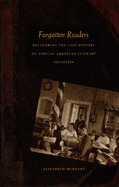
Forgotten Readers: Recovering the Lost History of African American Literary Societies
by Elizabeth McHenry
$39.95Over the past decade the popularity of black writers including E. Lynn Harris and Terry McMillan has been hailed as an indication that an active African American reading public has come into being. Yet this is not a new trend; there is a vibrant history of African American literacy, literary associations, and book clubs. Forgotten Readers reveals that neglected past, looking at the reading practices of free blacks in the antebellum north and among African Americans following the Civil War. It places the black upper and middle classes within American literary history, illustrating how they used reading and literary conversation as a means to assert their civic identities and intervene in the political and literary cultures of the United States from which they were otherwise excluded. Forgotten Readers expands our definition of literacy and urges us to think of literature as broadly as it was conceived of in the nineteenth century. Elizabeth McHenry delves into archival sources, including the records of past literary societies and the unpublished writings of their members. She examines particular literary associations, including the Saturday Nighters of Washington, D.C., whose members included Jean Toomer and Georgia Douglas Johnson. She shows how black literary societies developed, their relationship to the black press, and the ways that African American women's clubs--which flourished during the 1890s--encouraged literary activity. In an epilogue, McHenry connects this rich tradition of African American interest in books, reading, and literary conversation to contemporary literary phenomena such as Oprah Winfrey's book club.
- Troubled Lands: Stories of Mexico and Cuba as Translated by Langston Hughes
![Troubled Lands: Stories of Mexico and Cuba as Translated by Langston Hughes cover image]()

Troubled Lands: Stories of Mexico and Cuba as Translated by Langston Hughes
$26.95A landmark book—the first complete publication of Langston Hughes’s translations of thirty-three stories by eighteen Mexican and Cuban writers
In late 1934, Langston Hughes, already established as a leading voice of literary Black America, traveled to Mexico City, where he stayed for more than five months and began translating short fiction by prominent Mexican and Cuban writers. These stories, as he wrote to a friend, explore “the revolutions and uprisings, sugar cane, Negroes, Indians, corrupt generals, [and] American imperialists,” and are “mostly all left stories, because practically all the writers down here are left these days.” But when Hughes proposed publishing the stories as a book, to be titled Troubled Lands, his agent discouraged him from further pursuing the project and it remained unpublished, until now, with only a handful of the translations making their way into contemporary magazines. This volume presents Hughes’s translations of these stories together for the first time as he originally envisioned. Edited by Ricardo Wilson, the book also features an introduction and brief biographies of the included writers.
Troubled Lands features thirty-three stories by eighteen writers, including Rafael Felipe Muñoz, Nellie Campobello, Lino Novás Calvo, Luis Felipe Rodríguez, Germán List Arzubide, Pablo de la Torriente-Brau, and Juan de la Cabada. The collection depicts Mexico in the wake of its revolution and Cuba in the years between the brutal regimes of Machado and Batista.
Hughes was a noted translator of poetry, but his commitment to translating fiction is less well known. Troubled Lands provides a window into this important dimension of his work and illuminates his deep interest in Mexico and Cuba.
- Bibliotherapy in the Bronx
![Bibliotherapy in the Bronx cover image]()

Bibliotherapy in the Bronx
Emely Rumble LCSW
Sold outDiscover how a love of books can foster community, understanding, and personal growth.
Bibliotherapy in The Bronx by Emely Rumble, LCSW, is a groundbreaking exploration of the healing power of literature in the lives of marginalized communities. Drawing from her personal and professional experiences, Rumble masterfully intertwines storytelling with therapeutic insights to reveal how reading can be a potent tool for self-discovery, emotional transformation, and social change.
In this transformative work, Rumble offers readers an intimate glimpse into her journey as a psychotherapist in the Bronx, where she has spent over 14 years using books to help clients navigate complex emotions, heal from trauma, and find their voices. Through vivid anecdotes and real-world case studies, she demonstrates how literature can serve as a bridge between personal pain and collective healing.
Rich with practical tips, reflective exercises, and book recommendations, Bibliotherapy in The Bronx is a valuable resource for anyone interested in the power of words to change lives. Whether you're a therapist, educator, bibliophile, or simply someone seeking deeper understanding and growth, this book offers a compassionate, culturally affirming guide to the transformative potential of storytelling.
Rumble's work is a testament to the enduring power of books to heal, empower, and liberate. In a time when the world feels increasingly divided, Bibliotherapy in The Bronx reminds us that the stories we tell—and the stories we read—can unite us in our shared humanity.
- Writing Beyond Race
![Writing Beyond Race cover image]()

Writing Beyond Race
bell hooks
Sold outWhat are the conditions needed for our nation to bridge cultural and racial divides? By "writing beyond race," noted cultural critic bell hooks models the constructive ways scholars, activists, and readers can challenge and change systems of domination.
In the spirit of previous classics like Outlaw Culture and Reel to Real, this new collection of compelling essays interrogates contemporary cultural notions of race, gender, and class. From the films Precious and Crash to recent biographies of Malcolm X and Henrietta Lacks, hooks offers provocative insights into the way race is being talked about in this "post-racial" era.
- Let the Poets Govern: A Declaration of Freedom
![Let the Poets Govern: A Declaration of Freedom cover image]()

Let the Poets Govern: A Declaration of Freedom
Sold outIn this part-memoir, part-manifesto, an acclaimed poet interprets Black radical literary traditions to reimagine freedom through refusal.
“In these fierce yet tender pages, Camonghne Felix reveals how imagination can become a form of governance—an instrument for creating a world rooted in care, community, and radical possibility.”—Michelle Alexander, New York Times bestselling author of The New Jim Crow
Over the past decade, Camonghne Felix has been at the center of American politics, working in strategy, communications, and as a speechwriter. Throughout it all, she has maintained her unwavering belief in language’s foundational revolutionary potential, outside of its deployment for legislative and political ends. In this groundbreaking work of nonfiction, she argues that Black radical poetic traditions model an ethical code and overcome entrenched structures of patriarchy and paternalism, inventing a new form that examines the historical and legislative, and the personal and poetic.
Felix draws on stories from her life in campaigns and the decisions she has had to make: preparing speeches for candidates, responding to harassment, recruiting staff. She recounts her moving personal history—accompanying her mother, a lawyer, to court, and her father, a participant in the Grenadian revolution of 1983, to protests—as well as her coming-of-age being schooled in a wider tradition of Black radical thinkers, from Gwendolyn Brooks to Audre Lorde.
Through rupture, rhythm, and a refusal of politics as usual, Let the Poets Govern encourages us to hold ourselves to the standards of our highest ideals and embraces our shared humanity.
- Conversations with Kiese Laymon (Literary Conversations Series)
![Conversations with Kiese Laymon (Literary Conversations Series) cover image]()

Conversations with Kiese Laymon (Literary Conversations Series)
Sold outIn over a dozen interviews, Conversations with Kiese Laymon provides an in-depth look at author Kiese Laymon as an educator, creative writer, activist, family member, and Mississippian. Interviews capture surprising insights into Laymon’s life and craft. Within these pages, Laymon talks about his engagement with other writers, including Richard Wright, William Faulkner, and Eudora Welty. These revelations situate his memoir, Heavy, among other great Mississippi autobiographies and memoirs, such as Anne Moody’s Coming of Age in Mississippi, Welty’s One Writer’s Beginnings, Jesmyn Ward’s Men We Reaped, and Natasha Trethewey’s Memorial Drive. In other interviews, he discusses his obsession with revision and deftly fields questions about pop culture, politics, and Black masculinity, along with a host of other pressing contemporary issues.
As the first collection of its kind, Conversations with Kiese Laymon serves as the perfect introduction to studying Laymon. The cross section of interviews included reflects Laymon’s humility, while simultaneously celebrating his accomplishments. Most importantly, the interviews reflect his stature as a major American literary figure. With topics ranging from hip-hop and family to politics and everything in between, this volume provides an unfiltered look at the prolific Southern writer in his own words.
- The Dark Delight of Being Strange: Black Stories of Freedom
![The Dark Delight of Being Strange: Black Stories of Freedom cover image]()

The Dark Delight of Being Strange: Black Stories of Freedom
James B. Haile III
$26.00Winner, 2025 Hugh J. Silverman Book Prize, Association for Philosophy and Literature
Finalist, 2025 PEN Open Book Award, PEN America
An ambitious genre-crossing exploration of Black speculative imagination, The Dark Delight of Being Strange combines fiction, historical accounts, and philosophical prose to unveil the extraordinary and the surreal in everyday Black life.
In a series of stories and essays, James B. Haile, III, traces how Black speculative fiction responds to enslavement, racism, colonialism, and capitalism and how it reveals a life beyond social and political alienation. He reenvisions Black technologies of freedom through Henry Box Brown’s famed escape from slavery in a wooden crate, fashions an anticolonial “hollow earth theory” from the works of H. G. Wells and Jules Verne, and considers the octopus and its ability to camouflage itself as a model for Black survival strategies, among others. Looking at Black life through the lens of speculative fiction, this book transports readers to alternative worlds and spaces while remaining squarely rooted in present-day struggles. In so doing, it rethinks historical and contemporary Black experiences as well as figures such as Harriet Tubman, Frederick Douglass, Booker T. Washington, W. E. B. Du Bois, Henry Dumas, and Toni Morrison.
Offering new ways to grasp the meanings and implications of Black freedom, The Dark Delight of Being Strange invites us to reimagine history and memory, time and space, our identities and ourselves.
- Oshun, Lemonade, and Intertextuality: Afro-Atlantic Religion in Black Cultural Production
![Oshun, Lemonade, and Intertextuality: Afro-Atlantic Religion in Black Cultural Production cover image]()

Oshun, Lemonade, and Intertextuality: Afro-Atlantic Religion in Black Cultural Production
$30.00Exploring how Afro-Atlantic religion has been used to portray Black womanhood by writers and artists from Beyoncé to Ntozake Shange
In this book, Sheneese Thompson analyzes works of film and literature to explore how Afro-Atlantic religion intersects with themes of resilience in Black femininity and womanhood. Focusing on Beyoncé’s visual album Lemonade, Thompson examines iconography of the Yoruba goddess Oshun, represented by rivers, the color yellow, and other symbols. Thompson argues that Beyoncé’s tribute to Oshun creates a narrative of self-repossession amid external definitions, generational trauma, and emotional violence and draws connections to other works that feature similar religious references.
Oshun, “Lemonade,” and Intertextuality also explores Beyoncé’s album Black Is King, the television series She’s Gotta Have It, Julie Dash’s movie Daughters of the Dust, Ntozake Shange’s novel Sassafrass, Cypress & Indigo, and Jamaica Kincaid’s stories in At the Bottom of the River. These works highlight the significance of African traditional religions for the healing and transformation of their characters. Thompson discusses the ways in which Yoruba and Lucumí imagery and practices such as oríkì, or praise poetry, have long been incorporated into Black cultural texts such as these to tell stories of racial and gender-based injustices. In looking at Lemonade together with influential older texts created by Black women, Thompson establishes the use of Afro-Atlantic religion—to think through Black womanhood, to explore self-defined sexuality—as a central tenet of Black women’s literature, one that these artists and writers have brought to the global stage.
Publication of this work made possible by a Sustaining the Humanities through the American Rescue Plan grant from the National Endowment for the Humanities.
- African Spiritual Traditions in the Novels of Toni Morrison
![African Spiritual Traditions in the Novels of Toni Morrison cover image]()

African Spiritual Traditions in the Novels of Toni Morrison
Sold out"Makes a valuable contribution to the ever-widening field of Morrison studies by exploring the intricacies of Morrison's African references, giving critics the ability to make more informed readings of the novels."--Canadian Review of American Studies
"A study of African cosmology and epistemology in Morrison’s writings that draws on the academic author's experience in the Kongo and Yoruba traditions."--Chronicle Review
"Addresses a real need: a scholarly and ritually informed reading of spirituality in the work of a major African American author. No other work catalogues so thoroughly the grounding of Morrison’s work in African cosmogonies. Zauditu-Selassie's many readings of Ba Kongo and Yoruba spiritual presence in Morrison's work are incomparably detailed and generally convincing."--Keith Cartwright, University of North Florida
While others have studied the African spiritual ideas and values encoded in Morrison's work, African Spiritual Traditions in the Novels of Toni Morrison is the most comprehensive. In this volume, K. Zauditu-Selassie explores a wide range of complex concepts, including African deities, ancestral ideas, spiritual archetypes, mythic trope, and lyrical prose representing African spiritual continuities. She delves deeply into African spiritual traditions, clearly explaining the meanings of African cosmology and epistemology as manifest in Morrison’s novels.
Zauditu-Selassie is uniquely positioned to write this book, as she is not only a literary critic but also a practicing Obatala priest in the Yoruba spiritual tradition and a Mama Nganga in the Kongo spiritual system. The result is a comprehensive, tour-de-force critical investigation of such works as The Bluest Eye, Sula, Song of Solomon, Tar Baby, Paradise, Love, Beloved, and Jazz.
- The Queen of Swords
![The Queen of Swords cover image]()

The Queen of Swords
from $18.00*Pareback Release Date - 10/27/26*
In what was at first meant to be a short essay about the influential Mexican writer Elena Garro (1916-1988), Jazmina Barrera’s deep curiosity and exploration give us a singular portrait of a complex life.
Sifting through the writer’s archives at Princeton, Barrera is repeatedly thwarted in her attempt to fully know her subject. Traditional means of research—the correspondence, photos, and books—serve only to complicate and cloud the woman and her work.Who was Elena Garro, really?
She was a writer, a founder of “magical realism”, a dancer. A devotee to the tarot and theI Ching. A socialite and activist on behalf of indigenous Mexicans. She was a mother and a lover who repeatedly shook off (and cheated on) her manipulative husband, Nobel-laureate Octavio Paz. And above all, she wrote with simmering anger and glittering imagination.
The Queen of Swords is a portrait of a woman that also serves as an alternative history of Mexico City; a cry-out for justice; and an homage to the unknowable. It transcends mere biography, supplanting something tidy and authoritative for a sprawling experiment in understanding.
- Within the Circle: An Anthology of African American Literary Criticism from the Harlem Renaissance to the Present
![Within the Circle: An Anthology of African American Literary Criticism from the Harlem Renaissance to the Present cover image]()

Within the Circle: An Anthology of African American Literary Criticism from the Harlem Renaissance to the Present
Angelyn Mitchell
$39.95Within the Circle is the first anthology to present the entire spectrum of twentieth-century African American literary and cultural criticism. It begins with the Harlem Renaissance, continues through civil rights, the Black Arts Movement, and on into contemporary debates of poststructuralist and black feminist theory. Drawing on a quote from Frederick Douglass for the title of this book, Angelyn Mitchell explains in her introduction the importance for those "within the circle" of African American literature to examine their own works and to engage this critical canon.
The essays in this collection—many of which are not widely available today—either initiated or gave critical definition to specific periods or movements of African American literature. They address issues such as integration, separatism, political action, black nationalism, Afrocentricity, black feminism, as well as the role of art, the artist, the critic, and the audience. With selections from Langston Hughes, Sterling Brown, W. E. B. DuBois, Zora Neale Hurston, Richard Wright, James Baldwin, Toni Morrison, Barbara Smith, Alice Walker, Henry Louis Gates, Jr., and many others, this definitive collection provides a dynamic model of the cultural, ideological, historical, and aesthetic considerations in African American literature and literary criticism.
A major contribution to the study of African American literature, this volume will serve as a foundation for future work by students and scholars. Its importance will be recognized by all those interested in modern literary theory as well as general readers concerned with the African American experience.Selections by (partial list): Houston A. Baker, Jr., James Baldwin, Sterling Brown, Barbara Christian, W. E. B. DuBois, Ralph Ellison, LeRoi Jones, Sarah Webster Fabio, Henry Louis Gates, Jr., W. Lawrence Hogue, Langston Hughes, Zora Neale Hurston, Alain Locke, Deborah E. McDowell, Toni Morrison, J. Saunders Redding, George Schuyler, Barbara Smith, Valerie Smith, Hortense J. Spillers, Robert B. Stepto, Alice Walker, Margaret Walker, Mary Helen Washington, Richard Wright
- The Blue Period: Black Writing in the Early Cold War (Thinking Literature)
![The Blue Period: Black Writing in the Early Cold War (Thinking Literature) cover image]()

The Blue Period: Black Writing in the Early Cold War (Thinking Literature)
Jesse McCarthy
$25.00Addresses the political and aesthetic evolution of African American literature and its authors during the Cold War, an era McCarthy calls “the Blue Period.”
In the years after World War II, to be a black writer was to face a stark predicament. The contest between the Soviet Union and the United States was a global one—an ideological battle that dominated almost every aspect of the cultural agenda. On the one hand was the Soviet Union, espousing revolutionary communism that promised egalitarianism while being hostile to conceptions of personal freedom. On the other hand was the United States, a country steeped in racial prejudice and the policies of Jim Crow.
Black writers of this time were equally alienated from the left and the right, Jesse McCarthy argues, and they channeled that alienation into remarkable experiments in literary form. Embracing racial affect and interiority, they forged an aesthetic resistance premised on fierce dissent from both US racial liberalism and Soviet communism. From the end of World War II to the rise of the Black Power movement in the 1960s, authors such as Richard Wright, James Baldwin, Gwendolyn Brooks, and Paule Marshall defined a distinctive moment in American literary culture that McCarthy terms the Blue Period.
In McCarthy’s hands, this notion of the Blue Period provides a fresh critical framework that challenges long-held disciplinary and archival assumptions. Black writers in the early Cold War went underground, McCarthy argues, not to depoliticize or liberalize their work, but to make it more radical—keeping alive affective commitments for a future time.
- To Save and to Destroy: Writing as an Other (The Charles Eliot Norton Lectures)
![To Save and to Destroy: Writing as an Other (The Charles Eliot Norton Lectures) cover image]()

To Save and to Destroy: Writing as an Other (The Charles Eliot Norton Lectures)
Viet Thanh Nguyen
$26.95From the Pulitzer Prize–winning author of The Sympathizer (now an HBO series) comes a moving and unflinchingly personal meditation on the literary forms of otherness and a bold call for expansive political solidarity.
Born in war-ravaged Vietnam, Viet Nguyen arrived in the United States as a child refugee in 1975. The Nguyen family would soon move to San Jose, California, where the author grew up, attending UC Berkeley in the aftermath of the shocking murder of Vincent Chin, which shaped the political sensibilities of a new generation of Asian Americans.
The essays here, delivered originally as the prestigious Norton Lectures, proffer a new answer to a classic literary question: What does the outsider mean to literary writing? Over the course of six captivating and moving chapters, Nguyen explores the idea of being an outsider through lenses that are, by turns, literary, historical, political, and familial.
Each piece moves between writers who influenced Nguyen’s craft and weaves in the haunting story of his late mother’s mental illness. Nguyen unfolds the novels and nonfiction of Herman Melville, F. Scott Fitzgerald, Ralph Ellison, William Carlos Williams, and Maxine Hong Kingston, until aesthetic theories give way to pressing concerns raised by war and politics. What is a writer’s responsibility in a time of violence? Should we celebrate fiction that gives voice to the voiceless―or do we confront the forces that render millions voiceless in the first place? What are the burdens and pleasures of the “minor” writer in any society? Unsatisfied with the modest inclusion accorded to “model minorities” such as Asian Americans, Nguyen sets the agenda for a more radical and disquieting solidarity with those whose lives have been devastated by imperialism and forever wars.
- Watch Your Language: Visual and Literary Reflections on a Century of American Poetry
![Watch Your Language: Visual and Literary Reflections on a Century of American Poetry]()
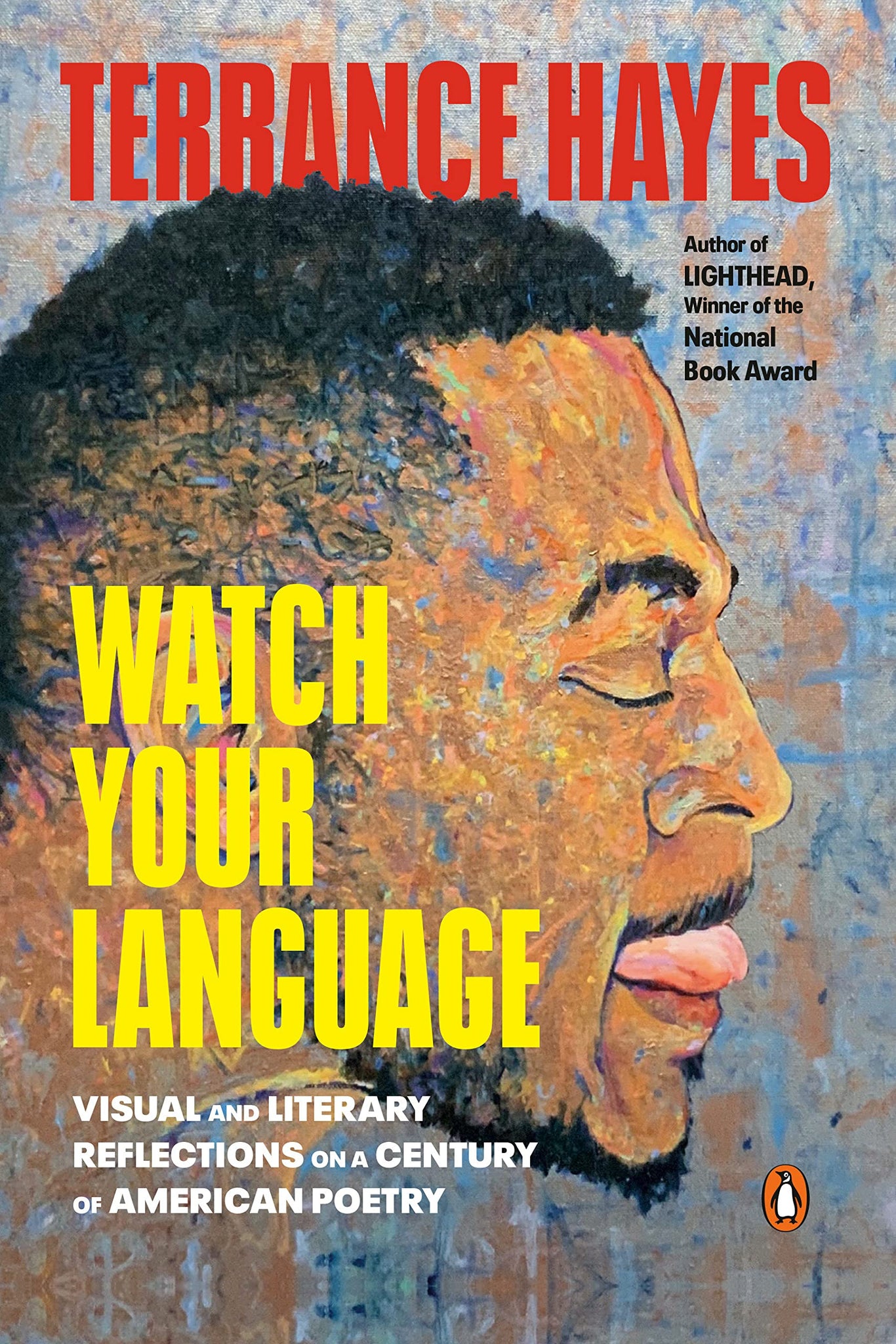
Watch Your Language: Visual and Literary Reflections on a Century of American Poetry
by Terrance Hayes
$20.00*ships in 7-10 business days*
From the National Book Award–winning author of Lighthead, Terrance Hayes, a fascinating collection of graphic reviews and illustrated prose addressing the last century of American poetry—to be published simultaneously with his latest poetry collection, So to Speak
Canonized, overlooked, and forgotten African American poets star in Terrance Hayes's brilliant contemplations of personal, canonical, and allegorical literary development. Proceeding from Toni Morrison's aim to expand the landscape of literary imagination in Playing in the Dark ("I want to draw a map, so to speak, of a critical geography"), Watch Your Language charts a lyrical geography of reading and influence in poetry. Illustrated micro-essays, graphic book reviews, biographical prose poems, and nonfiction sketches make reading an imaginative and critical act of watching your language. Hayes has made a kind of poetic guidebook with more questions than answers. "If you don't see suffering's potential as art, will it remain suffering?" he asks in one of the lively mock poetry exam questions of this musing, mercurial collection. Hayes's astonishing drawings and essays literally and figuratively map the acclaimed poet's routes, roots, and wanderings through the landscape of contemporary poetry. - Black Madness :: Mad Blackness
![Black Madness :: Mad Blackness cover image]()

Black Madness :: Mad Blackness
$24.95In Black Madness :: Mad Blackness Therí Alyce Pickens rethinks the relationship between Blackness and disability, unsettling the common theorization that they are mutually constitutive. Pickens shows how Black speculative and science fiction authors such as Octavia Butler, Nalo Hopkinson, and Tananarive Due craft new worlds that reimagine the intersection of Blackness and madness. These creative writer-theorists formulate new parameters for thinking through Blackness and madness. Pickens considers Butler's Fledgling as an archive of Black madness that demonstrates how race and ability shape subjectivity while constructing the building blocks for antiracist and anti-ableist futures. She examines how Hopkinson's Midnight Robber theorizes mad Blackness and how Due's African Immortals series contests dominant definitions of the human. The theorizations of race and disability that emerge from these works, Pickens demonstrates, challenge the paradigms of subjectivity that white supremacy and ableism enforce, thereby pointing to the potential for new forms of radical politics.
- Love, Activism, and the Respectable Life of Alice Dunbar-Nelson
![Love, Activism, and the Respectable Life of Alice Dunbar-Nelson cover image]()

Love, Activism, and the Respectable Life of Alice Dunbar-Nelson
Sold outFinalist: PROSE Awards for Excellence in Humanities 2023 - Biography and Autobiography
“A fascinating biography of a fascinating woman.” - Booklist, starred review
“This definitive look at a remarkable figure delivers the goods.” - Publishers Weekly, starred review
"A brilliant analysis." - Jericho Brown, Pulitzer Prize winner
Featured in Ms. Magazine's "Most Anticipated Reads for the Rest of Us 2022" (books by or about historically excluded groups)Born in New Orleans in 1875 to a mother who was formerly enslaved and a father of questionable identity, Alice Dunbar-Nelson was a pioneering activist, writer, suffragist, and educator. Until now, Dunbar-Nelson has largely been viewed only in relation to her abusive ex-husband, the poet Paul Laurence Dunbar. This is the first book-length look at this major figure in Black women's history, covering her life from the post-reconstruction era through the Harlem Renaissance.
Tara T. Green builds on Black feminist, sexuality, historical and cultural studies to create a literary biography that examines Dunbar-Nelson's life and legacy as a respectable activist – a woman who navigated complex challenges associated with resisting racism and sexism, and who defined her sexual identity and sexual agency within the confines of respectability politics. It's a book about the past, but it's also a book about the present that nods to the future.
- Black Buffalo Woman: An Introduction to the Poetry & Poetics of Lucille Clifton
![Book cover image]()

Black Buffalo Woman: An Introduction to the Poetry & Poetics of Lucille Clifton
by Kazim Ali
$23.00Use discount code: SALE to receive 30% off.
This long-awaited and much-needed volume shines new light on one of America’s most beloved, and profound, poets—Lucille Clifton.
Black Buffalo Woman is a deep, comprehensive dive into Clifton’s work through the eyes of celebrated poet and scholar, Kazim Ali.
Collecting chapters of Clifton’s early manuscripts, late drafts, and integrating her books of children’s literature, Ali’s meticulously researched volume provides a brilliant and fresh perspective on Clifton’s life and work.
Various chapters examine Clifton’s treatment of the body as a site of both joy and danger, spirituality, and an interrogation of American history, politics, and popular culture. The result of Ali’s scholarship and care highlights a dazzling array of Clifton’s poetic techniques and forms that will continue to inspire poets, readers, and Lucille Clifton fans—past, present and future—for decades to come.
- The Tears of the Black Man (Global African Voices)
![Book cover image]()
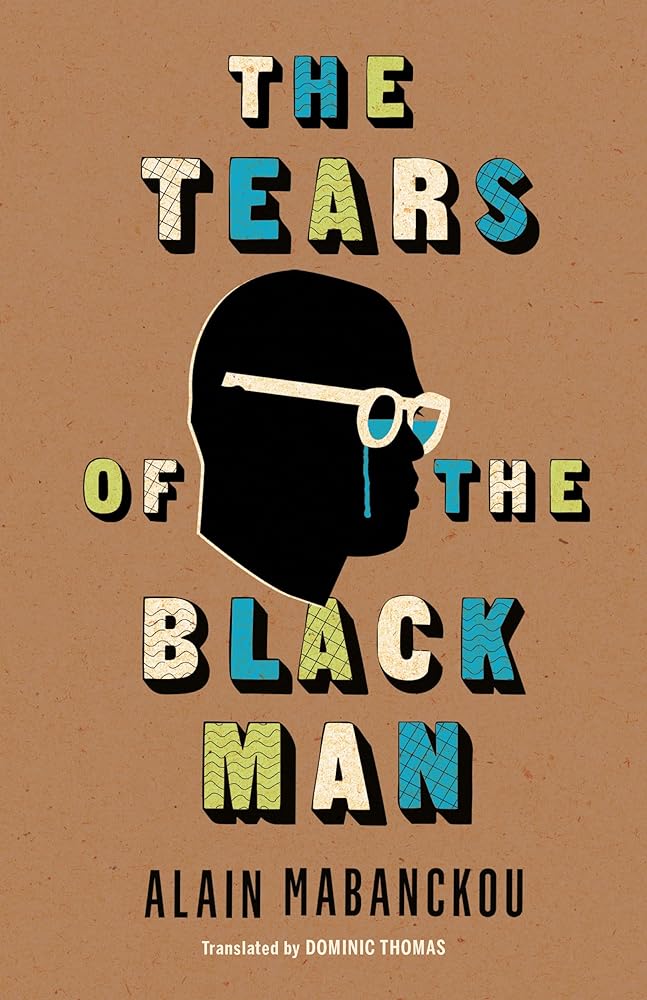
The Tears of the Black Man (Global African Voices)
$16.00*ship in 7-10 business days
In TheTears of the Black Man, award-winning author Alain Mabanckou explores what it means to be black in the world today. Mabanckou confronts the long and entangled history of Africa, France, and the United States as it has been shaped by slavery, colonialism, and their legacy today. Without ignoring the injustices and prejudice still facing blacks, he distances himself from resentment and victimhood, arguing that focusing too intenselyon the crimes of the past is limiting. Instead, it is time to ask: Now what? Embracing the challenges faced by ethnic minority communities today, The Tears of the Black Man looks to the future, choosing to believe that the history of Africa has yet to be written and seeking a path toward affirmation and reconciliation.


Stay Informed. We're building a community committed to celebrating Black authors + artisans. Subscribe to keep up with all things Kindred Stories.