
Search results: 628 results for “W.E.B. Du Bois Movement School for Abolition and Reconstruction”
Not finding what you're looking for? Check out our shop on bookshop.org to order and still support us ♥
628 results
-
Liberation Stories: Building Narrative Power for 21st-Century Social Movements
![Liberation Stories: Building Narrative Power for 21st-Century Social Movements cover image]()

Liberation Stories: Building Narrative Power for 21st-Century Social Movements
$34.99From an international cast of leading activist communicators, a timely and instructive handbook for telling stories that change the world
The twenty-first century has seen a profound shift in the global sociopolitical and economic landscape, shaped by seismic interventions ranging from the War on Terror to the COVID-19 pandemic. Between 2000 and 2024, social movements like Black Lives Matter, #MeToo, climate justice, the Fight for $15, Palestine liberation, health care for all, and queer and trans resistance have illuminated a new narrative—one rooted in an inclusive vision of society, driven by a newly politicized and radicalized generation. This shift did not happen by chance. Movement workers have meticulously crafted communications and narrative strategies, honing their political messaging and storytelling to seize narrative power in today’s struggles.
In Liberation Stories, today’s foremost progressive and leftist communicators, organizers, artists, journalists, and academics share their collective wisdom in one powerful volume. Featuring in-depth case studies of both contemporary and historical movements, Liberation Stories distills successful theories, strategies, and tactics for anyone wanting to understand—and participate in—the diverse initiatives currently shaping our society.
As far-right and conservative movements gain traction worldwide—attacking our books, our bodies, and our democracies—Liberation Stories emerges as a vital resource for constructing the world we envision, one story at a time.
-
Caste: The Origins of Our Discontents
![Caste: The Origins of Our Discontents]()

Caste: The Origins of Our Discontents
by Isabel Wilkerson
from $21.00Beyond race, class, or other factors, there is a powerful caste system that influences people’s lives and behavior and the nation’s fate. Linking the caste systems of America, India, and Nazi Germany, Wilkerson explores eight pillars that underlie caste systems across civilizations, including divine will, bloodlines, stigma, and more. Using riveting stories about people—including Martin Luther King, Jr., baseball’s Satchel Paige, a single father and his toddler son, Wilkerson herself, and many others—she shows the ways that the insidious undertow of caste is experienced every day. She documents how the Nazis studied the racial systems in America to plan their out-cast of the Jews; she discusses why the cruel logic of caste requires that there be a bottom rung for those in the middle to measure themselves against; she writes about the surprising health costs of caste, in depression and life expectancy, and the effects of this hierarchy on our culture and politics. Finally, she points forward to ways America can move beyond the artificial and destructive separations of human divisions, toward hope in our common humanity.
-
Pushout
![Pushout]()
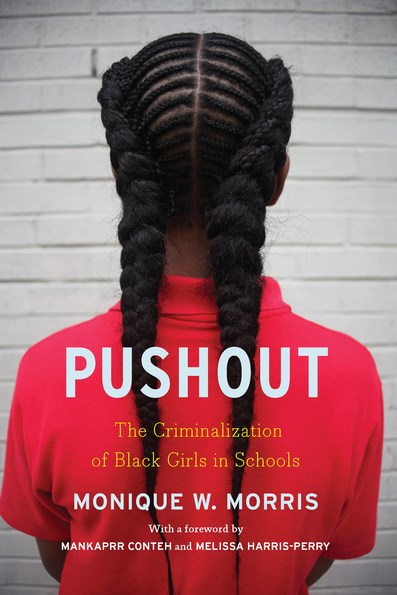
Pushout
by Monique Morris
$21.99The “powerful” (Michelle Alexander) exploration of the harsh and harmful experiences confronting Black girls in schools, and how we can instead orient schools toward their flourishing.
On the day fifteen-year-old Diamond from the Bay Area stopped going to school, she was expelled for lashing out at peers who constantly harassed and teased her for something everyone on the staff had missed: she was being trafficked for sex. After months on the run, she was arrested and sent to a detention center for violating a court order to attend school.
In a work that Lisa Delpit calls “imperative reading,” Monique W. Morris chronicles the experiences of Black girls across the country whose complex lives are misunderstood, highly judged—by teachers, administrators, and the justice system—and degraded by the very institutions charged with helping them flourish. Painting “a chilling picture of the plight of black girls and women today” (The Atlantic), Morris exposes a world of confined potential and supports the rising movement to challenge the policies, practices, and cultural illiteracy that push countless students out of school and into unhealthy, unstable, and often unsafe futures.
At a moment when Black girls are the fastest growing population in the juvenile justice system, Pushout is truly a book “for everyone who cares about children” (Washington Post).
Book cover photograph by Brittsense/brittsense.com.
-
No Land to Stand On: Notes from Detention
![No Land to Stand On: Notes from Detention cover image]()

No Land to Stand On: Notes from Detention
$27.99A revelatory and powerful testament of protest, courage, and imprisonment in America’s deportation regime
“Are you Mahmoud Khalil?” The question marked the start of a politically charged odyssey that took the Palestinian graduate student and legal resident from his pregnant wife and home in New York City, transported him across the country, and locked him up in a Louisiana detention camp under threat of deportation. His “crime”: exercising his right to free speech at Columbia University, where he emerged as a leading voice against the slaughter of Palestinians in Gaza. No Land to Stand On is his indelible account, the story of a man confronting the reality that he had become target number one for a lawless regime shredding basic rights.
Drawing on his prison diary and writing in vivid, page-turning detail, Mahmoud Khalil conjures the despair and cruelty of ICE detention, where prisoners can vanish overnight and visiting families risk their own deportation. There is humanity, too, in the men’s acts of care―their mutual help with documents, the prison cake they make after Mahmoud can only follow the birth of his son on the public payphone. In tandem, he tells the multi-generational story of a family expelled from Palestine to a Syrian refugee camp, of flight from Assad’s regime to Lebanon, of arrival in an America that promised permanence and protection, and of the enduring struggle for Palestine.
A work of courage and resistance, No Land to Stand On is a call to integrity, to staying true to one’s life’s mission, and to defending the inalienable right to safety, freedom, and a land to stand on.
-
My Grandmother's Hands: Racialized Trauma and the Pathway to Mending Our Hearts and Bodies
![My Grandmother's Hands: Racialized Trauma and the Pathway to Mending Our Hearts and Bodies]()
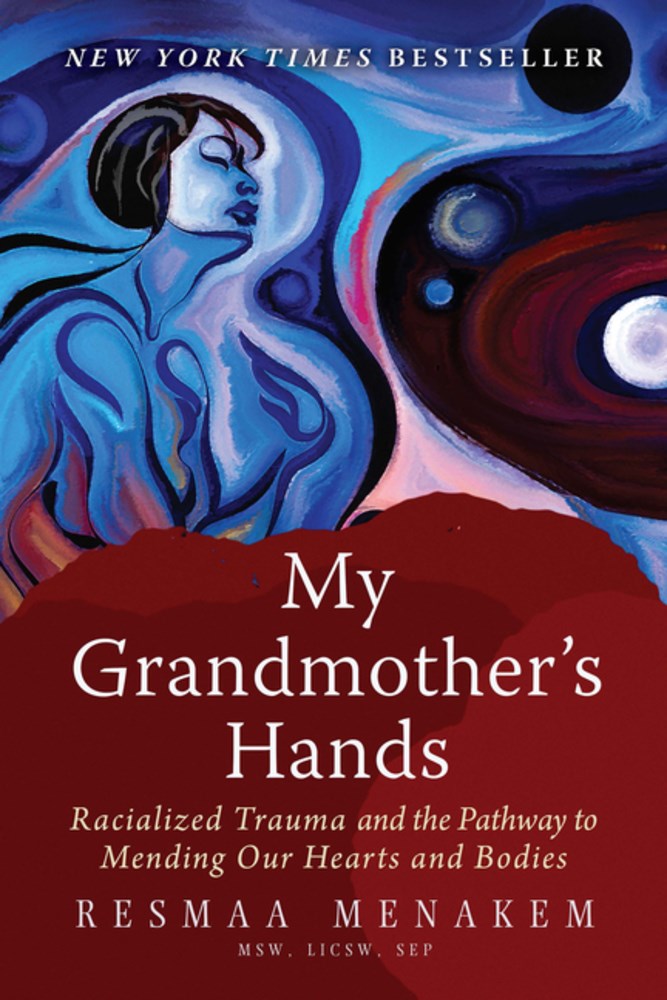
My Grandmother's Hands: Racialized Trauma and the Pathway to Mending Our Hearts and Bodies
by Resmaa Menakem
$17.95In this groundbreaking book, therapist Resmaa Menakem examines the damage caused by racism in America from the perspective of trauma and body-centered psychology.
The body is where our instincts reside and where we fight, flee, or freeze, and it endures the trauma inflicted by the ills that plague society. Menakem argues this destruction will continue until Americans learn to heal the generational anguish of white supremacy, which is deeply embedded in all our bodies. Our collective agony doesn't just affect African Americans. White Americans suffer their own secondary trauma as well. So do blue Americans—our police.
My Grandmother's Hands is a call to action for all of us to recognize that racism is not only about the head, but about the body, and introduces an alternative view of what we can do to grow beyond our entrenched racialized divide.
- Paves the way for a new, body-centered understanding of white supremacy—how it is literally in our blood and our nervous system.
- Offers a step-by-step healing process based on the latest neuroscience and somatic healing methods, in addition to incisive social commentary.
-
We Are Each Other's Liberation: Black and Asian Feminist Solidarities
![We Are Each Other's Liberation: Black and Asian Feminist Solidarities cover image]()

We Are Each Other's Liberation: Black and Asian Feminist Solidarities
$24.95A major anthology that illuminates historical and contemporary solidarities between Black and Asian feminists.
A collaborative project between Black Women Radicals and the Asian American Feminist Collective, We Are Each Other's Liberation envisions a cross-racial and internationalist politics that explicitly addresses solidarity between Black and Asian feminists. Bringing together organizers, artists, journalists, poets, novelists, and more, this collection introduces readers to new ways of understanding and reflecting on race and feminism.
Drawing out lessons from the revolutionary work of movement forebearers―including the Combahee River Collective, Claudia Jones, Grace Lee Boggs, Yuri Kochiyama, and Third World Women’s Alliance as well as struggles today―We Are Each Other’s Liberation offers an urgent call for the just future we might build together.
-
The Black Civil War Soldier: A Visual History of Conflict and Citizenship (NYU Series in Social and Cultural Analysis)
![The Black Civil War Soldier: A Visual History of Conflict and Citizenship (NYU Series in Social and Cultural Analysis) cover image]()

The Black Civil War Soldier: A Visual History of Conflict and Citizenship (NYU Series in Social and Cultural Analysis)
$25.00Longlist, National Book Awards 2021 for Nonfiction
A stunning collection of stoic portraits and intimate ephemera from the lives of Black Civil War soldiers
Though both the Union and Confederate armies excluded African American men from their initial calls to arms, many of the men who eventually served were black. Simultaneously, photography culture blossomed―marking the Civil War as the first conflict to be extensively documented through photographs. In The Black Civil War Soldier, Deb Willis explores the crucial role of photography in (re)telling and shaping African American narratives of the Civil War, pulling from a dynamic visual archive that has largely gone unacknowledged.
With over seventy images, The Black Civil War Soldier contains a huge breadth of primary and archival materials, many of which are rarely reproduced. The photographs are supplemented with handwritten captions, letters, and other personal materials; Willis not only dives into the lives of black Union soldiers, but also includes stories of other African Americans involved with the struggle―from left-behind family members to female spies. Willis thus compiles a captivating memoir of photographs and words and examines them together to address themes of love and longing; responsibility and fear; commitment and patriotism; and―most predominantly―African American resilience.
The Black Civil War Soldier offers a kaleidoscopic yet intimate portrait of the African American experience, from the beginning of the Civil War to 1900. Through her multimedia analysis, Willis acutely pinpoints the importance of African American communities in the development and prosecution of the war. The book shows how photography helped construct a national vision of blackness, war, and bondage, while unearthing the hidden histories of these black Civil War soldiers. In combating the erasure of this often overlooked history, Willis asks how these images might offer a more nuanced memory of African-American participation in the Civil War, and in doing so, points to individual and collective struggles for citizenship and remembrance.
-
Negro Building: Black Americans in the World of Fairs and Museums
![Negro Building: Black Americans in the World of Fairs and Museums cover image]()

Negro Building: Black Americans in the World of Fairs and Museums
Mabel O. Wilson
$34.95Focusing on Black Americans' participation in world’s fairs, Emancipation expositions, and early Black grassroots museums, Negro Building traces the evolution of Black public history from the Civil War through the civil rights movement of the 1960s. Mabel O. Wilson gives voice to the figures who conceived the curatorial content: Booker T. Washington, W. E. B. Du Bois, Ida B. Wells, A. Philip Randolph, Horace Cayton, and Margaret Burroughs. Originally published in 2012, the book reveals why the Black cities of Chicago and Detroit became the sites of major Black historical museums rather than the nation's capital, which would eventually become home for the Smithsonian's National Museum of African American History and Culture, which opened in 2016.
-
The Quiet Coup: Neoliberalism and the Looting of America
![The Quiet Coup: Neoliberalism and the Looting of America cover image]()

The Quiet Coup: Neoliberalism and the Looting of America
Mehrsa Baradaran
from $21.99"[A]ccessible and intellectually rich…Essential reading to understand the economic state of the nation." ―Kirkus Reviews (starred review)
The celebrated legal scholar and author of The Color of Money reveals how neoliberals rigged American law, creating widespread distrust, inequality, and injustice.
With the nation lurching from one crisis to the next, many Americans believe that something fundamental has gone wrong. Why aren’t college graduates able to achieve financial security? Why is government completely inept in the face of natural disasters? And why do pundits tell us that the economy is strong even though the majority of Americans can barely make ends meet? In The Quiet Coup, Mehrsa Baradaran, one of our leading public intellectuals, argues that the system is in fact rigged toward the powerful, though it wasn’t the work of evil puppet masters behind the curtain. Rather, the rigging was carried out by hundreds of (mostly) law-abiding lawyers, judges, regulators, policy makers, and lobbyists. Adherents of a market-centered doctrine called neoliberalism, these individuals, over the course of decades, worked to transform the nation―and succeeded.
They did so by changing the law in unseen ways. Tracing this largely unknown history from the late 1960s to the present, Baradaran demonstrates that far from yielding fewer laws and regulations, neoliberalism has in fact always meant more―and more complex―laws. Those laws have uniformly benefited the wealthy. From the work of a young Alan Greenspan in creating "Black Capitalism," to Supreme Court Justice Lewis Powell’s efforts to unshackle big money donors, to the establishment of the "Law and Economics" approach to legal interpretation―in which judges render opinions based on the principles of right-wing economics―Baradaran narrates the key moments in the slow-moving coup that was, and is, neoliberalism. Shifting our focus away from presidents and national policy, she tells the story of how this nation’s laws came to favor the few against the many, threatening the integrity of the market and the state.
Some have claimed that the neoliberal era is behind us. Baradaran shows that such thinking is misguided. Neoliberalism is a failed economic idea―it doesn’t, in fact, create more wealth or more freedom. But it has been successful nevertheless, by seizing the courts and enabling our age of crypto fraud, financial instability, and accelerating inequality. An original account of the forces that have brought us to this dangerous moment in American history, The Quiet Coup reshapes our understanding of the recent past and lights a path toward a better future.
-
Black AF History
![Black AF History]()

Black AF History
by Michael Harriot
from $19.99It should come as no surprise that the dominant narrative of American history is blighted with errors and oversights—after all, history books were written with the perspective of white men at the forefront. It could even be said that the historical devaluation and elimination of the experiences of Black people is as American as apple pie. Or rioting after football games. Or calling the cops on Black Americans for walking around their own neighborhoods, or listening to music, or bird-watching, or any other normal everyday activity.
-
Harriet Tubman, the Combahee River Raid, and Black Freedom during the Civil War
![Book cover image]()

Harriet Tubman, the Combahee River Raid, and Black Freedom during the Civil War
$41.99The story of the Combahee River Raid, one of Harriet Tubman's most extraordinary accomplishments, based on original documents and written by a descendant of one of the participants.
Most Americans know of Harriet Tubman's legendary life: escaping enslavement in 1849, she led more than 60 others out of bondage via the Underground Railroad, gave instructions on getting to freedom to scores more, and went on to live a lifetime fighting for change. Yet the many biographies, children's books, and films about Tubman omit a crucial chapter: during the Civil War, hired by the Union Army, she ventured into the heart of slave territory--Beaufort, South Carolina--to live, work, and gather intelligence for a daring raid up the Combahee River to attack the major plantations of Rice Country, the breadbasket of the Confederacy.
Edda L. Fields-Black--herself a descendent of one of the participants in the raid--shows how Tubman commanded a ring of spies, scouts, and pilots and participated in military expeditions behind Confederate lines. On June 2, 1863, Tubman and her crew piloted two regiments of Black US Army soldiers, the Second South Carolina Volunteers, and their white commanders up coastal South Carolina's Combahee River in three gunboats. In a matter of hours, they torched eight rice plantations and liberated 730 people, people whose Lowcountry Creole language and culture Tubman could not even understand. Black men who had liberated themselves from bondage on South Carolina's Sea Island cotton plantations after the Battle of Port Royal in November 1861 enlisted in the Second South Carolina Volunteers and risked their lives in the effort.
Using previous unexamined documents, including Tubman's US Civil War Pension File, bills of sale, wills, marriage settlements, and estate papers from planters' families, Fields-Black brings to life intergenerational, extended enslaved families, neighbors, praise-house members, and sweethearts forced to work in South Carolina's deadly tidal rice swamps, sold, and separated during the antebellum period. When Tubman and the gunboats arrived and blew their steam whistles, many of those people clambered aboard, sailed to freedom, and were eventually reunited with their families. The able-bodied Black men freed in the Combahee River Raid enlisted in the Second South Carolina Volunteers and fought behind Confederate lines for the freedom of others still enslaved not just in South Carolina but Georgia and Florida.
After the war, many returned to the same rice plantations from which they had escaped, purchased land, married, and buried each other. These formerly enslaved peoples on the Sea Island indigo and cotton plantations, together with those in the semi-urban port cities of Charleston, Beaufort, and Savannah, and on rice plantations in the coastal plains, created the distinctly American Gullah Geechee dialect, culture, and identity--perhaps the most significant legacy of Harriet Tubman's Combahee River Raid.
-
Working Cures: Healing, Health, and Power on Southern Slave Plantations
![Working Cures: Healing, Health, and Power on Southern Slave Plantations]()

Working Cures: Healing, Health, and Power on Southern Slave Plantations
by Sharla M. Fett
$44.95Exploring the charged topic of black health under slavery, Sharla Fett reveals how herbalism, conjuring, midwifery, and other African American healing practices became arts of resistance in the antebellum South.
Working Cures : Healing, Health, and Power on Southern Slave Plantations
Exploring the charged topic of black health under slavery, Sharla Fett reveals how herbalism, conjuring, midwifery, and other African American healing practices became arts of resistance in the antebellum South.
Fett shows how enslaved men and women drew on African precedents to develop a view of health and healing that was distinctly at odds with slaveholders' property concerns. While white slaveowners narrowly defined slave health in terms of "soundness" for labor, slaves embraced a relational view of health that was intimately tied to religion and community. African American healing practices thus not only restored the body but also provided a formidable weapon against white objectification of black health.
Enslaved women played a particularly important role in plantation health culture: they made medicines, cared for the sick, and served as midwives in both black and white households. Their labor as health workers not only proved essential to plantation production but also gave them a basis of authority within enslaved communities. Not surprisingly, conflicts frequently arose between slave doctoring women and the whites who attempted to supervise their work, as did conflicts related to feigned illness, poisoning threats, and African-based religious practices. By examining the deeply contentious dynamics of plantation healing, Fett sheds new light on the broader power relations of antebellum American slavery.


Stay Informed. We're building a community committed to celebrating Black authors + artisans. Subscribe to keep up with all things Kindred Stories.