
Search results: 627 results for “W.E.B. Du Bois Movement School for Abolition and Reconstruction”
Not finding what you're looking for? Check out our shop on bookshop.org to order and still support us ♥
627 results
-
Emmett J. Scott: Power Broker of the Tuskegee Machine (Afro-Texans)
![Emmett J. Scott: Power Broker of the Tuskegee Machine (Afro-Texans) cover image]()

Emmett J. Scott: Power Broker of the Tuskegee Machine (Afro-Texans)
Maceo C. Dailey Jr.
$45.00Reared in Houston (Freedmen’s Town), Texas, Emmett J. Scott was a journalist, newspaper editor, government official, author, and chief of staff, adviser, and ghostwriter to Booker T. Washington. Called “the power broker of the Tuskegee Machine,” Scott was a Renaissance man, scholar, and political fixer. However, his life has not received a full examination until now.
Built upon fifty years of research, Maceo C. Dailey’s Emmett J. Scott offers fascinating detail by describing Scott’s role in promoting the Tuskegee Institute. Before his 2015 death, Dailey had nearly singular access to the Scott papers at Morgan State University, which have been officially closed for decades. Readers will finally be exposed to Scott’s behind-the-scenes contributions to racial uplift and will see his influential role in advancing not only the Tuskegee Institute but also the Booker T. Washington agenda.
Editors Will Guzmán and David H. Jackson Jr. lend their own expertise in bringing Dailey’s lifetime project to fruition. Two-time Pulitzer Prize–winning historian David Levering Lewis, a close friend of Dailey’s, provides a timely foreword. Former Black Panther Party chairwoman Elaine Brown, Scott’s granddaughter, reflects on his impact and her relationship with the Scott family in the afterword.
Taken together, this work of biography is an impressive reference and an essential endeavor of recovery, one that restores to prominence the life and legacy of Emmett J. Scott.
-
Decolonizing Bodies: Stories of Embodied Resistance, Healing and Liberation
![Decolonizing Bodies: Stories of Embodied Resistance, Healing and Liberation cover image]()

Decolonizing Bodies: Stories of Embodied Resistance, Healing and Liberation
Carolyn Ureña
$29.95Decolonizing Bodies offers novel theorizations of how racial capitalism, colonialism, and heteropatriarchal violence erode the bodily schema and experiences of racialized and colonized populations, profoundly constraining their being in the world. The book invigorates embodiment studies by centering the experiences and struggles of Black, Indigenous, colonized, disabled, queer, and racialized subjects, showing how they live these displacements and disintegrations.
The volume powerfully demonstrates how racism and colonialism sediment in bodily and habitual registers that are active, ongoing, made and remade. Bodies, the contributors argue, powerfully register the impacts of colonial and racialized violence, but through practices of embodiment, they also digest, expel, and transform them. In centering non-normative subjective experiences and making space for different kinds of embodied knowledge, Decolonizing Bodies also takes a step toward decolonizing academic knowledge.
This exciting and urgent book offers readers new ways of imagining, choreographing and enacting the body. Beyond connecting distant geographies of harm, it celebrates polymorphous decolonial repertoires that record, creatively narrate, and heal.
-
Getting to Reparations: How Building a Different America Requires a Reckoning with Our Past
![Getting to Reparations: How Building a Different America Requires a Reckoning with Our Past cover image]()

Getting to Reparations: How Building a Different America Requires a Reckoning with Our Past
Dorothy A. Brown
$30.00A bold manifesto arguing that there is a clear precedent for paying reparations to atone for America’s original sin of slavery, offering a compelling legal strategy to achieve this goal—from the acclaimed author of The Whiteness of Wealth.
The idea of reparations is not a new or original one; it is one that is baked into American history.
When the District of Columbia Emancipation Act of 1862 went into effect, wealthy slaveowners like Margaret Barber were compensated for the loss of their enslaved workers. Barber received $9,000—an equivalent to $250,000 today. When a group of Italian immigrants were lynched in 1892, President Harrison compensated Italy a total of $25,000 for their deaths—an equivalent to almost $766,000 today. The Indian Claims Commission, an arm of the federal government, paid Indigenous Americans $818 million for underhandedly stealing their land in the eighteenth and nineteenth centuries—an equivalent to almost $350 billion today.
Dorothy A. Brown addresses the glaring question: if reparations can be achieved for others, why not for Black Americans? If lynching can be remedied for Italian immigrants, and slaveholders compensated for losses associated with abolition and emancipation, then the government’s failure to provide such remedies to Black communities harmed by similar violence, loss, and destruction is long overdue. The fight for reparations is truly a fight for the soul of America, to produce the country our founding fathers idealized but never achieved.
Getting to Reparations makes a logical and necessary case for reparations for Black Americans. It lays out a path as to how we might achieve this, built on the frameworks used throughout U.S. history by the government to pay restitution. It is now time to do the same for America's Black population.
-
Black Scare / Red Scare: Theorizing Capitalist Racism in the United States
![Black Scare / Red Scare: Theorizing Capitalist Racism in the United States]()
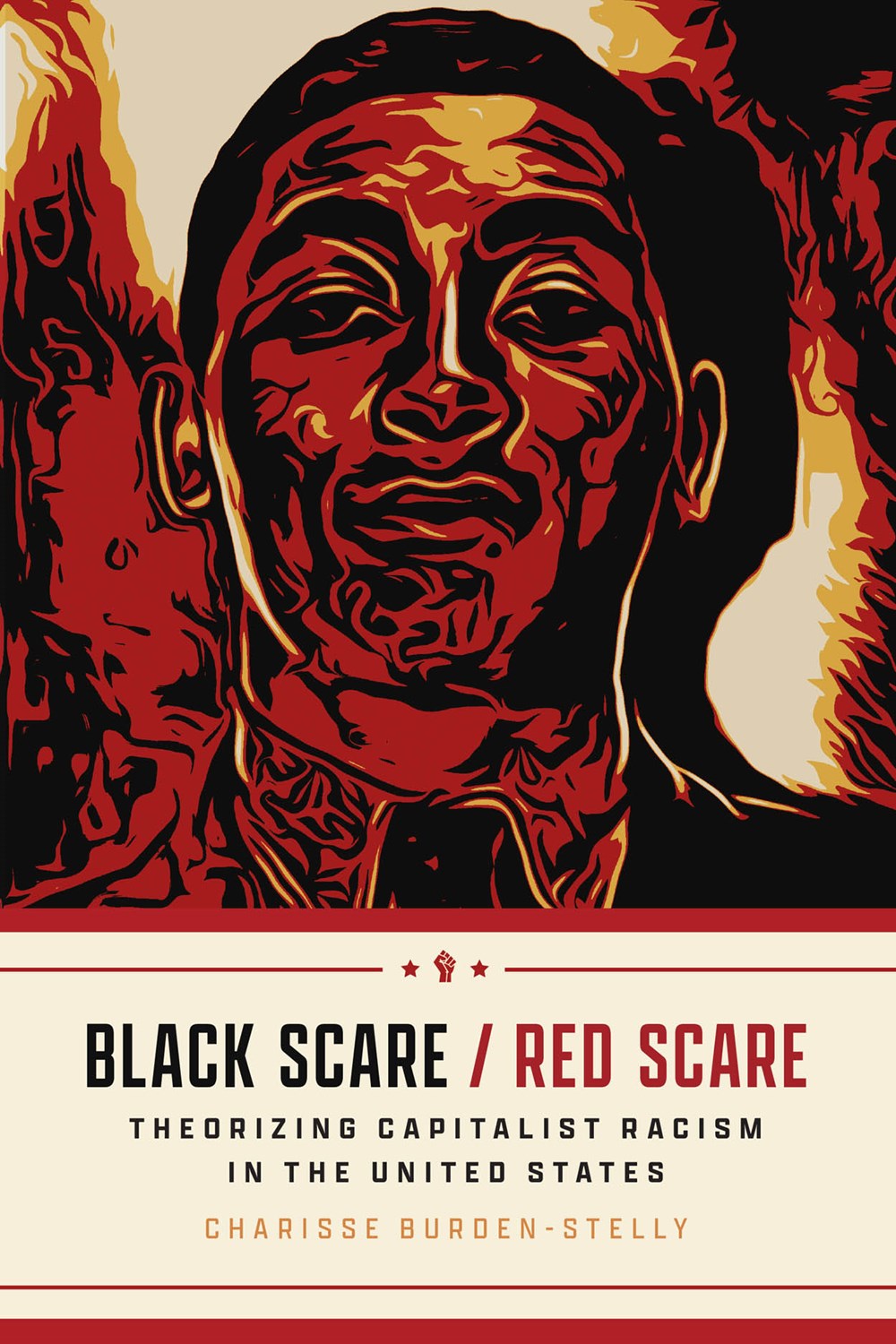
Black Scare / Red Scare: Theorizing Capitalist Racism in the United States
by Charisse Burden-Stelly
$26.00A radical explication of the ways anti-Black racial oppression has infused the US government’s anti-communist repression.
In the early twentieth century, two panics emerged in the United States. The Black Scare was rooted in white Americans’ fear of Black Nationalism and dread at what social, economic, and political equality of Black people might entail. The Red Scare, sparked by communist uprisings abroad and subversion at home, established anticapitalism as a force capable of infiltrating and disrupting the American order. In Black Scare / Red Scare, Charisse Burden-Stelly meticulously outlines the conjoined nature of these state-sanctioned panics, revealing how they unfolded together as the United States pursued capitalist domination. Antiradical repression, she shows, is inseparable from anti-Black oppression, and vice versa.
Beginning her account in 1917—the year of the Bolshevik Revolution, the East St. Louis Race Riot, and the Espionage Act—Burden-Stelly traces the long duration of these intertwined and mutually reinforcing phenomena. She theorizes two bases of the Black Scare / Red Scare: US Capitalist Racist Society, a racially hierarchical political economy built on exploitative labor relationships, and Wall Street Imperialism, the violent processes by which businesses and the US government structured domestic and foreign policies to consolidate capital and racial domination. In opposition, Radical Blackness embodied the government’s fear of both Black insurrection and Red instigation. The state’s actions and rhetoric therefore characterized Black anticapitalists as foreign, alien, and undesirable. This reactionary response led to an ideology that Burden-Stelly calls True Americanism, the belief that the best things about America were absolutely not Red and not Black, which were interchangeable threats.
Black Scare / Red Scare illuminates the anticommunist nature of the US and its governance, but also shines a light on a misunderstood tradition of struggle for Black liberation. Burden-Stelly highlights the Black anticapitalist organizers working within and alongside the international communist movement and analyzes the ways the Black Scare/Red Scare reverberates through ongoing suppression of Black radical activism today. Drawing on a range of administrative, legal, and archival sources, Burden-Stelly incorporates emancipatory ideas from several disciplines to uncover novel insights into Black political minorities and their legacy. -
We Refuse: A Forceful History of Black Resistance
![Book cover image]()

We Refuse: A Forceful History of Black Resistance
by Kellie Carter Jackson
$18.99A radical reframing of the past and present of Black resistance—both nonviolent and violent—to white supremacy
Black resistance to white supremacy is often reduced to a simple binary, between Dr. Martin Luther King Jr.’s nonviolence and Malcolm X’s “by any means necessary.” In We Refuse, historian Kellie Carter Jackson urges us to move past this false choice, offering an unflinching examination of the breadth of Black responses to white oppression, particularly those pioneered by Black women.
The dismissal of “Black violence” as an illegitimate form of resistance is itself a manifestation of white supremacy, a distraction from the insidious, unrelenting violence of structural racism. Force—from work stoppages and property destruction to armed revolt—has played a pivotal part in securing freedom and justice for Black people since the days of the American and Haitian Revolutions. But violence is only one tool among many. Carter Jackson examines other, no less vital tactics that have shaped the Black struggle, from the restorative power of finding joy in the face of suffering to the quiet strength of simply walking away.
Clear-eyed, impassioned, and ultimately hopeful, We Refuse offers a fundamental corrective to the historical record, a love letter to Black resilience, and a path toward liberation. -
Food Power Politics: The Food Story of the Mississippi Civil Rights Movement (Black Food Justice)
![Food Power Politics: The Food Story of the Mississippi Civil Rights Movement (Black Food Justice) cover image]()

Food Power Politics: The Food Story of the Mississippi Civil Rights Movement (Black Food Justice)
Bobby J. Smith II
$25.95This book unearths a food story buried deep within the soil of American civil rights history. Drawing on archival research, interviews, and oral histories, Bobby J. Smith II re-examines the Mississippi civil rights movement as a period when activists expanded the meaning of civil rights to address food as integral to sociopolitical and economic conditions. For decades, white economic and political actors used food as a weapon against Black sharecropping communities in the Yazoo-Mississippi Delta, but members of these communities collaborated with activists to transform food into a tool of resistance. Today, Black youth are building a food justice movement in the Delta to continue this story, grappling with inequalities that continue to shape their lives.
Drawing on multiple disciplines including critical food studies, Black studies, history, sociology, and southern studies, Smith makes critical connections between civil rights activism and present-day food justice activism in Black communities, revealing how power struggles over food empower them to envision Black food futures in which communities have the full autonomy and capacity to imagine, design, create, and sustain a self-sufficient local food system.
-
Picturing Black History: Photographs and Stories that Changed the World
![Book cover image]()

Picturing Black History: Photographs and Stories that Changed the World
by Daniela Edmeier, Damarius Johnson, Nicholas B. Breyfogle, and Steven Conn
$40.00A groundbreaking collection of photographs and essays that shed new light on the history of Black America, from the Picturing Black History project
Picturing Black History uncovers untold stories and rarely seen images of the Black experience, providing new context around culturally significant moments, as part of an ongoing collaborative effort between Getty Images, Origins: Current Events in Historical Perspective, and the History Departments at The Ohio State and Miami Universities.
Picturing Black History informs, educates, and inspires our current moment by exploring the past, blending the breadth and depth of Getty Images’s archives with the renowned expertise of Origins contributors and The Ohio State’s and Miami’s History Departments, including Daniela Edmeier, Damarius Johnson, Nicholas Breyfogle, and Steve Conn.
Created by a growing collective of professional historians, art historians, Black Studies scholars, and photographers, this book is full of rousing, vibrant essays paired with rarely seen photographs that expand our understanding of Black history. Showcasing Getty Images’s unmatched collection of photographs, Picturing Black History embraces the power of visual storytelling to relay little-known stories of oppression and resistance, perseverance and resilience, freedom, dreams, imagination, and joy within the United States and around the world.
In collecting these new photographic essays, this book furthers an ongoing dialogue on the significance of Black history and Black life, sharing new perspectives on the current status of prejudice and discrimination bias with a wider audience. Picturing Black History embraces the power of academic learning and scholarship to recontextualize and dispel prejudices, while uncovering, digitizing, and preserving new archival materials to amplify a more inclusive visual landscape.
-
Until the Last Yoke Is Broken: The Constitutional Vision of Frederick Douglass
![Until the Last Yoke Is Broken: The Constitutional Vision of Frederick Douglass cover image]()

Until the Last Yoke Is Broken: The Constitutional Vision of Frederick Douglass
$29.95A groundbreaking analysis of Frederick Douglass as constitutional theorist, showing how his vision, which prefigured today’s originalism, melded history and natural rights to address the evil of slavery.
In his celebrated address “What to the Slave is the Fourth of July?” Frederick Douglass denounced America’s hypocritical celebration of freedom. But he did not blame the nation’s founding document for enabling the evil of slavery. Rather, he proclaimed that “interpreted as it ought to be interpreted, the Constitution is a Glorious Liberty Document.”
This was no mere rhetorical flourish. Examining Douglass not just as an activist but as a legal and political theorist, Until the Last Yoke Is Broken reveals that his abolitionism was guided by rigorous constitutional interpretation. Reconstructing Douglass’s method from his speeches and writings, Bradley Rebeiro shows that his approach both anticipated and challenged aspects of contemporary originalism. Like today’s originalists, Douglass saw historical meaning as central to constitutional analysis. But unlike today’s originalism, Douglass’s goes beyond simply asking how the Constitution was understood at its ratification. Instead, Douglass insisted that whenever a constitutional provision is ambiguous, the interpreter must adopt whatever meaning best agrees with the natural rights affirmed in the Declaration of Independence.
Rebeiro also shows how Douglass balanced this constitutional vision with pragmatism during Reconstruction. When political tensions pitted the fate of black suffrage against women’s suffrage, Douglass set aside the theoretically pure for the politically possible; as soon as black suffrage was secured, he returned to advocating for universal voting rights. “It was mine to stand for the freedom of people of all colors,” Douglass wrote near the end of his life, “until in our land the last yoke was broken and the last bondsman was set free.”
-
Rest Is Resistance: A Manifesto
![Rest Is Resistance: A Manifesto]()

Rest Is Resistance: A Manifesto
by Tricia Hersey
$28.00Disrupt and push back against capitalism and white supremacy by connecting to the liberating power of rest, daydreaming, and naps as a foundation for healing and justice. Tricia Hersey, aka The Nap Bishop, encourages us to elevate rest as a form of resistance and a divine human right.
In Rest Is Resistance, Tricia Hersey, aka the Nap Bishop, casts an illuminating light on our troubled relationship with rest and how to imagine and dream our way to a future where rest is exalted. Our worth does not reside in how much we produce, especially not for a system that exploits and dehumanizes us. Rest, in its simplest form, becomes an act of resistance and a reclaiming of power because it asserts our most basic humanity. We are enough. The systems cannot have us. -
salvation
![salvation]()

salvation
by bell hooks
$19.00“A manual for fixing our culture…In writing that is elegant and penetratingly simple, [hooks] gives voice to some things we may know in our hearts but need an interpreter like her to process.”—Black Issues Book Review Written from both historical and cultural perspectives, Salvation takes an incisive look at the transformative power of love in the lives of African Americans. Whether talking about the legacy of slavery, relationships and marriage in Black life, the prose and poetry of Martin Luther King, Jr., James Baldwin, and Maya Angelou, the liberation movements of the 1950s, 60s, and 70s, or hip hop and gangsta rap culture, hooks lets us know what love’s got to do with it.
Combining the passionate politics of W.E.B. DuBois with fresh, contemporary insights, hooks brilliantly offers new visions that will heal our nation’s wounds from a culture of lovelessness. Her writings on love and its impact on race, class, family, history, and popular culture raise all the relevant issues. This is work that helps us heal. Salvation shows us how to create beloved American communities.
-
Slavery, Segregation, and the Second Founding of Rice University
![Slavery, Segregation, and the Second Founding of Rice University cover image]()

Slavery, Segregation, and the Second Founding of Rice University
$39.95During the first quarter of the twenty-first century, more than one hundred institutions of higher education in the United States launched projects to study and share their histories concerning slavery, segregation, and racial injustice. Slavery, Segregation, and the Second Founding of Rice University joins these wider efforts. Authored by award-winning historians Alexander X. Byrd and W. Caleb McDaniel, the book engages questions specific to Rice’s history as the last major private research university in the country to begin desegregation. Although Rice did not open its doors for classes until 1912, it was connected to the history of slavery through the life of its first founder and namesake, William Marsh Rice, whose fortune was deeply intertwined with the enslavement of Black people.
Byrd and McDaniel place the history of one of the nation’s most renowned universities within a longer and larger context, showing that desegregation required changes to Rice so fundamental that they amounted to a “second founding” of the school. Following the story from slavery through segregation to the second founding, they highlight pivotal points of intersection between the history of Black Houston and the history of Rice University, revealing the seldom acknowledged roles of Black students, Black communities, and HBCUs in creating change at and around Rice. Their study challenges readers to consider anew who counts as a university’s founder―a question relevant to ongoing discussions about statues, naming, and the history of higher education. They also reveal what higher education institutions do at their best: create new knowledge and forge solutions to trenchant social problems, thus providing guidance for those committed to doing the valuable work of the “second founding” at colleges and universities today.
-
We Do This 'Til We Free Us by Mariame Kaba
![We Do This 'Til We Free Us by Mariame Kaba]()

We Do This 'Til We Free Us by Mariame Kaba
$16.95“Organizing is both science and art. It is thinking through a vision, a strategy, and then figuring out who your targets are, always being concerned about power, always being concerned about how you’re going to actually build power in order to be able to push your issues, in order to be able to get the target to actually move in the way that you want to.”
What if social transformation and liberation isn’t about waiting for someone else to come along and save us? What if ordinary people have the power to collectively free ourselves? In this timely collection of essays and interviews, Mariame Kaba reflects on the deep work of abolition and transformative political struggle. With a foreword by Naomi Murakawa and chapters on seeking justice beyond the punishment system, transforming how we deal with harm and accountability, and finding hope in collective struggle for abolition, Kaba’s work is deeply rooted in the relentless belief that we can fundamentally change the world. As Kaba writes, “Nothing that we do that is worthwhile is done alone.”


Stay Informed. We're building a community committed to celebrating Black authors + artisans. Subscribe to keep up with all things Kindred Stories.