
Search results: 122 results for “national museum of african american history and culture”
Not finding what you're looking for? Check out our shop on bookshop.org to order and still support us ♥
122 results
-
Roll Call: Two Hundred Years of Black American Art
![Roll Call: Two Hundred Years of Black American Art cover image]()

Roll Call: Two Hundred Years of Black American Art
$54.95Substantial book is a unique exploration of a major collection of art by Black American and African American artists, comprising some 1,000 works by more than 200 individuals.
Over 55 years, a museum in the American South has built one of the nation’s most significant collections of Black American art. This new publication brings together every Black American artist represented in the Birmingham Museum of Art, spanning the early 19th century to the present day. The volume features over 250 artworks across various media—paintings, prints, photographs, sculpture, quilts and mixed-media works—by artists living and working both in Alabama and across the United States.
Artists featured include David Driskell, Jacob Lawrence, Romare Bearden, Robert S. Duncanson, Meta Vaux Warrick Fuller, Sister Gertrude Morgan, Jimmy Lee Sudduth, Mary Frances Whitfield, Trena Banks, Purvis Young, Glenn Ligon, Edmonia Lewis, Lorna Simpson, Chakaia Booker, Sam Gilliam, Kerry James Marshall, Joshua Johnson, Nick Cave, Elizabeth Catlett, Amalia Amaki and Carrie Mae Weems.
Publication accompanies an exhibition marking the Birmingham Museum of Art, AL's 75th Anniversary celebrations.
-
Soul of A Nation
![Soul of A Nation]()
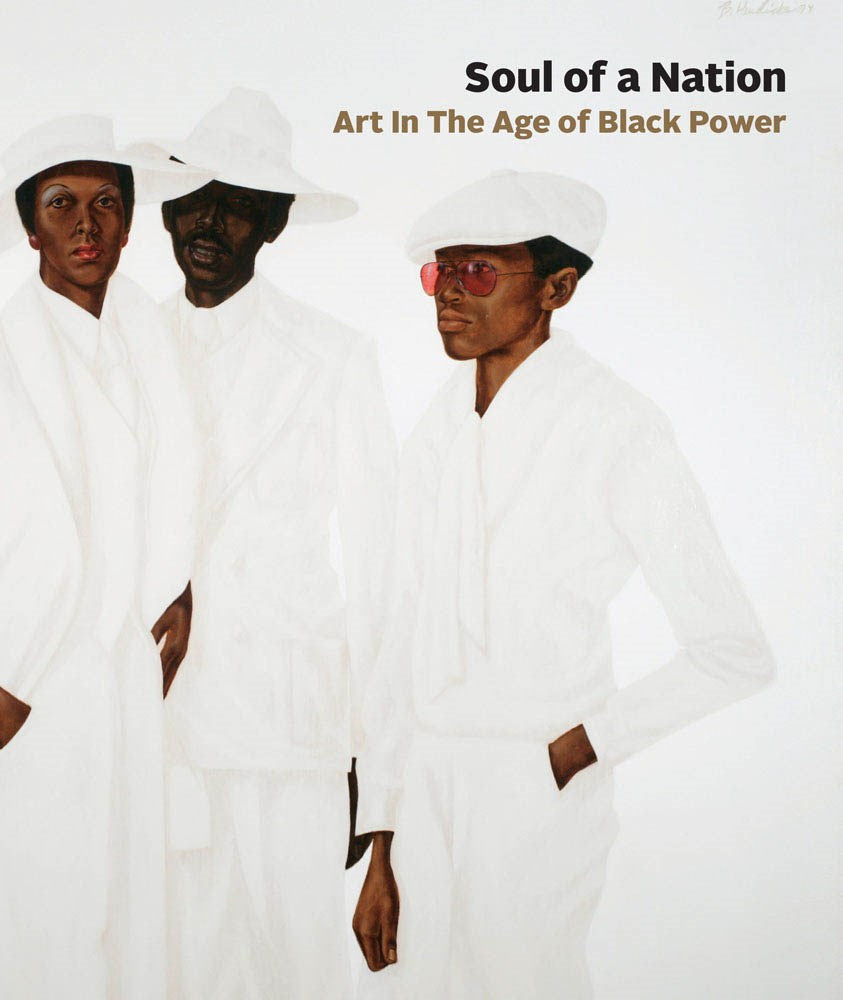
Soul of A Nation
by Edmund Gaither
$39.95*ships in 7 - 10 business days*
African American art in the era of Malcolm X and the Black Panthers
In the period of radical change that was 1963–83, young black artists at the beginning of their careers confronted difficult questions about art, politics and racial identity. How to make art that would stand as innovative, original, formally and materially complex, while also making work that reflected their concerns and experience as black Americans?
Soul of a Nation surveys this crucial period in American art history, bringing to light previously neglected histories of 20th-century black artists, including Sam Gilliam, Melvin Edwards, Jack Whitten, William T. Williams, Howardina Pindell, Romare Bearden, David Hammons, Barkley L. Hendricks, Senga Nengudi, Noah Purifoy, Faith Ringgold, Betye Saar, Charles White and Frank Bowling.
The book features substantial essays from Mark Godfrey and Zoe Whitley, writing on abstraction and figuration, respectively. It also explores the art-historical and social contexts with subjects ranging from black feminism, AfriCOBRA and other artist-run groups to the role of museums in the debates of the period and visual art’s relation to the Black Arts Movement. Over 170 artworks by these and many other artists of the era are illustrated in full color.
2017 marks the 50th anniversary of the first use of the term “black power” by student activist Stokely Carmichael; it will also be 50 years since the US Supreme Court overturned the prohibition of interracial marriage. At this turning point in the reassessment of African American art history, Soul of a Nation is a vital contribution to this timely subject.
-
Black Artists in America: From Civil Rights to the Bicentennial
![Black Artists in America: From Civil Rights to the Bicentennial cover image]()

Black Artists in America: From Civil Rights to the Bicentennial
Earnestine Lovelle Jenkins
$45.00The second book in a three-volume series on Black American artists, featuring work from the 1950s to the 1970s that responded to the cultural, political, and social concerns of the era
During the turbulent 1950s to 1970s, Black American artists, responding to increasing civil rights activism, challenged inequities in the art world. Artists created works that celebrated their racial identity, connected with Black audiences, and participated in the struggle for political, economic, and social equality. The establishment of artist collectives, such as Spiral, and museums devoted to Black art, including the Studio Museum in Harlem, alongside the emergence of art historians and critics such as David Driskell and Linda Goode Bryant, marked early steps to bring Black art into broader artistic discourse.
The book features 140 color illustrations of paintings, sculptures, and works on paper by such celebrated artists as Romare Bearden, Sam Gilliam, Jacob Lawrence, Norman Lewis, Howardena Pindell, and Alma Thomas, as well as by under-recognized artists. Essays provide an overview of the period and in-depth examinations of James A. Porter, an artist and art historian credited with establishing the field of African American art history, and Merton D. Simpson, an abstract painter, member of the Spiral group, and one of the most important dealers of African art in the United States.Published in association with the Dixon Gallery and Gardens
Exhibition Schedule:
Dixon Gallery and Gardens, Memphis
(October 22, 2023–January 14, 2024)
Crocker Art Museum, Sacramento
(February 4–May 19, 2024) -
The Education of Black People: Ten Critiques, 1906-1960
![The Education of Black People: Ten Critiques, 1906-1960]()
The Education of Black People: Ten Critiques, 1906-1960
$18.00Undoubtedly the most influential black intellectual of the twentieth century and one of America's finest historians, W.E.B. DuBois knew that the liberation of the African American people required liberal education and not vocational training. He saw education as a process of teaching certain timeless values: moderation, an avoidance of luxury, a concern for courtesy, a capacity to endure, a nurturing love for beauty. At the same time, DuBois saw education as fundamentally subversive. This was as much a function of the well-established role of educationfrom Plato forwardas the realities of the social order under which he lived. He insistently calls for great energy and initiative; for African Americans controlling their own lives and for continued experimentation and innovation, while keeping education's fundamentally radical nature in view.
Though containing speeches written nearly one-hundred years ago, and on a subject that has seen more stormy debate and demagoguery than almost any other in recent history, The Education of Black People approaches education with a timelessness and timeliness, at once rooted in classical thought that reflects a remarkably fresh and contemporary relevance. -
The Return of Black Nationalism and the Death of White Supremacy
![The Return of Black Nationalism and the Death of White Supremacy cover image]()

The Return of Black Nationalism and the Death of White Supremacy
Dr. Vincent Edward Oluwole Adejumo
$28.95The Return of Black Nationalism and the Death of White Supremacy delves into the dynamic history and powerful future of Black Nationalism in the United States. From the dark days of slavery to today's fight for equality, this compelling book uncovers the relentless struggle of African Americans against systemic white supremacy, a legacy embedded in the very foundation of the country.
Professor Vincent Adejumo takes readers on a fascinating journey through time, unraveling the rich history of Black Nationalism and its role as a steadfast defense against white supremacy. He shines a light on the remarkable individuals and leaders who have shaped Black American identity from the 1700s to the present, bringing their stories to life with vivid detail and insightful analysis.
Discover a different America through Adejumo's eyes, where the concept of 'Separate but Equal' is reinterpreted and the essence of Blackness is celebrated. This book not only explores the past but also connects it to today's economic and political landscape, revealing the lasting influence of Black Nationalism.
Whether you're a history enthusiast or a curious reader, The Return of Black Nationalism and the Death of White Supremacy offers a fresh perspective on American history, uncovering the unsung heroes and unexpected villains who have shaped the nation's journey. This is a must-read for anyone seeking to understand the profound impact of Black Nationalism on America's past, present, and future.
A compelling foreword by Dr. Adeyami Dossintroduces the book. Dozens of historical images complement this important story.
-
Collecting Black Studies: The Art of Material Culture at the University of Texas at Austin
![Collecting Black Studies: The Art of Material Culture at the University of Texas at Austin cover image]()

Collecting Black Studies: The Art of Material Culture at the University of Texas at Austin
Lise Ragbir
$50.00What began as an effort to prevent the neglect and potential loss of hundreds of African objects at the University of Texas at Austin has evolved into one of the most significant collections on campus. The art collections at Black Studies were born from the John L. Warfield Center for African and African American Studies’ Art and Archive Initiative, under the leadership of Cherise Smith, Omi L. Jones, and Edmund T. Gordon.
Today Black Studies at the University of Texas boasts approximately 900 objects from sub-Saharan Africa, over 200 contemporary works from African American and Afro-Caribbean artists, and more than 100 pieces jointly held with other collecting entities on campus, adding a diverse richness to the overall collections. Collecting Black Studies gathers and presents these holdings—including costumes, jewelry, paintings, sculptures, works on paper, and photography—and prominently features five Black artists whose work is particularly significant. Scholars and curators examine how John Biggers, Michael Ray Charles, Christina Coleman, Angelbert Metoyer, and Deborah Roberts—artists with deep relationships to Texas—contributed to the Black Studies collections, to art history, and to the culture of our state and beyond.
-
Kerry James Marshall: Mastry
![Kerry James Marshall: Mastry]()
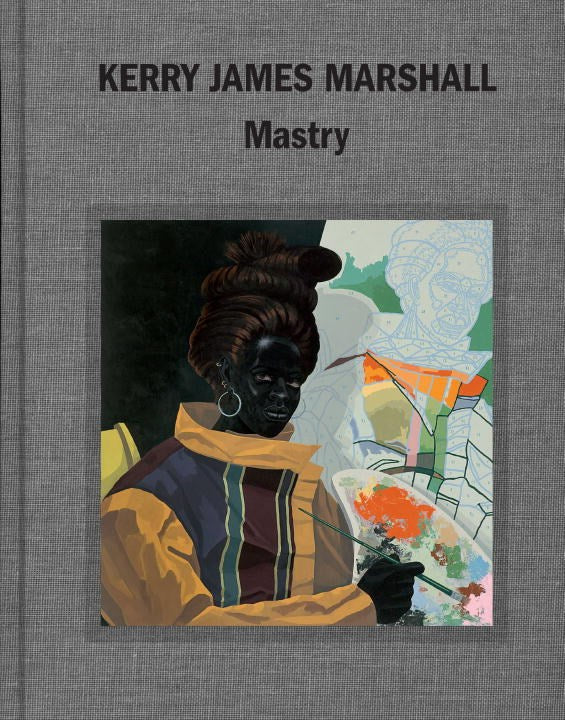
Kerry James Marshall: Mastry
$65.00*Ships in 7-10 business days*
The definitive monograph on contemporary African American painter Kerry James Marshall, accompanying a major traveling retrospective. This long-awaited volume celebrates the work of Kerry James Marshall, one of America’s greatest living painters. Born before the passage of the Civil Rights Act, in Birmingham, Alabama, and witness to the Watts riots in 1965, Marshall has long been an inspired and imaginative chronicler of the African American experience. Best known for large-scale interiors, landscapes, and portraits featuring powerful black figures, Marshall explores narratives of African American history from slave ships to the present and draws upon his deep knowledge of art history from the Renaissance to twentieth-century abstraction, as well as other sources such as the comic book and the muralist tradition. With luscious color and brushstrokes and highly detailed patterning, his direct and intimate scenes of black middle-class life conjure a wide range of emotions, resulting in powerful paintings that confront the position of African Americans throughout American history. Richly illustrated, this monumental book features essays by noted curators as well as the artist, and more than 100 paintings from throughout the artist’s career arranged thematically by subject: history painting; beauty, as expressed through the nude, portraiture, and self-portraiture; landscape; religion; and the politics of black nationalism.
-
Button - American History
![Button - American History]()
Button - American History
$3.00 -
Black in Latin America
![Black in Latin America]()
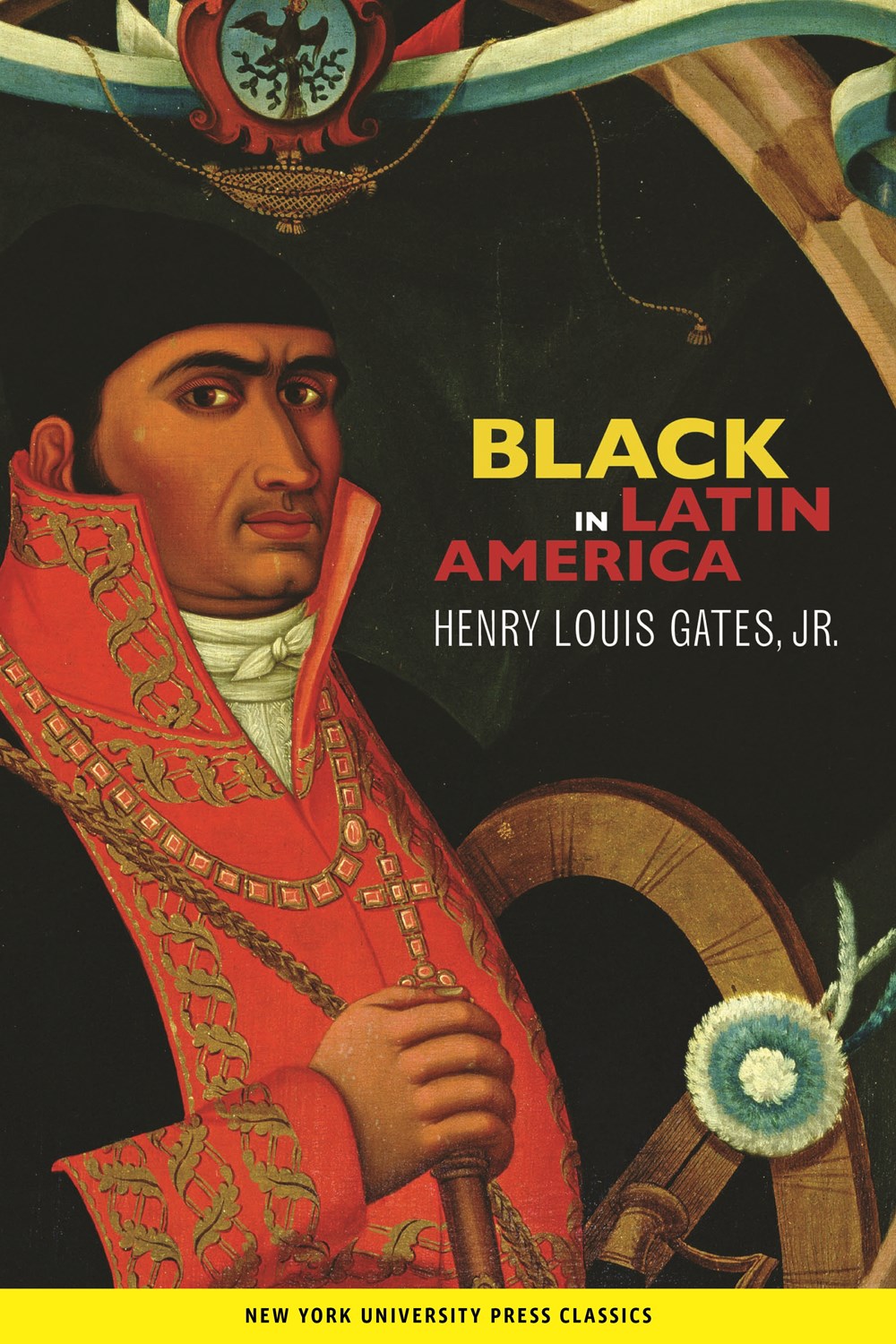
Black in Latin America
by Henry Louis Gates Jr.
$34.00The history of how six Latin American countries acknowledge—or deny—their African past
12.5 million Africans were shipped to the New World during the Middle Passage. While just over 11.0 million survived the arduous journey, only about 450,000 of them arrived in the United States. The rest—over ten and a half million—were taken to the Caribbean and Latin America. This astonishing fact changes our entire picture of the history of slavery in the Western hemisphere, and of its lasting cultural impact. These millions of Africans created new and vibrant cultures, magnificently compelling syntheses of various African, English, French, Portuguese, and Spanish influences.
Despite their great numbers, the cultural and social worlds that they created remain largely unknown to most Americans, except for certain popular, cross-over musical forms. So Henry Louis Gates, Jr. set out on a quest to discover how Latin Americans of African descent live now, and how the countries acknowledge—or deny—their African past; how the fact of race and African ancestry play themselves out in the multicultural worlds of the Caribbean and Latin America. Starting with the slave experience and extending to the present, Gates unveils the history of the African presence in six Latin American countries—Brazil, Cuba, the Dominican Republic, Haiti, Mexico, and Peru—through art, music, cuisine, dance, politics, and religion, but also the very palpable presence of anti-black racism that has sometimes sought to keep the black cultural presence from view.
In Brazil, he delves behind the façade of Carnaval to discover how this ‘rainbow nation’ is waking up to its legacy as the world’s largest slave economy.
In Cuba, he finds out how the culture, religion, politics and music of this island is inextricably linked to the huge amount of slave labor imported to produce its enormously profitable 19th century sugar industry, and how race and racism have fared since Fidel Castro’s Communist revolution in 1959.
In Haiti, he tells the story of the birth of the first-ever black republic, and finds out how the slaves’s hard fought liberation over Napoleon Bonaparte’s French Empire became a double-edged sword.
In Mexico and Peru, he explores the almost unknown history of the significant numbers of black people—far greater than the number brought to the United States—brought to these countries as early as the sixteenth and seventeenth centuries, and the worlds of culture that their descendants have created in Vera Cruz on the Gulf of Mexico, the Costa Chica region on the Pacific, and in and around Lima, Peru.
Professor Gates’ journey becomes ours as we are introduced to the faces and voices of the descendants of the Africans who created these worlds. He shows both the similarities and distinctions between these cultures, and how the New World manifestations are rooted in, but distinct from, their African antecedents. “Black in Latin America” is the third instalment of Gates’s documentary trilogy on the Black Experience in Africa, the United States, and in Latin America. In America Behind the Color Line, Professor Gates examined the fortunes of the black population of modern-day America. In Wonders of the African World, he embarked upon a series of journeys to reveal the history of African culture. Now, he brings that quest full-circle in an effort to discover how Africa and Europe combined to create the vibrant cultures of Latin America, with a rich legacy of thoughtful, articulate subjects whose stories are astonishingly moving and irresistibly compelling. -
Bisa Butler: Portraits
![Bisa Butler: Portraits cover image]()

Bisa Butler: Portraits
$40.00A beautifully illustrated look at the work of one of today’s most exciting artists
Bisa Butler (b. 1973) is an American artist who creates arresting and psychologically nuanced portraits composed entirely of vibrantly colored and patterned fabrics that she cuts, layers, and stitches together. Often depicting scenes from African American life and history, Butler invites viewers to invest in the lives of the people she represents while simultaneously expanding art-historical narratives about American quiltmaking. Situating her interdisciplinary work within the broader history of textiles, photography, and contemporary art, contributions by a group of scholars—and entries by the artist herself—illuminate Butler’s approach to color, use of African-print fabrics, and wide-ranging sources of inspiration. Offering an in-depth exploration of one of America’s most innovative contemporary artists, this volume will serve as a primary resource that both introduces Butler’s work and establishes a scholarly foundation for future research.
Distributed for the Art Institute of Chicago
Exhibition Schedule:
Katonah Museum of Art, New York
(March 15–October 4, 2020)
Art Institute of Chicago
(November 14, 2020–September 6, 2021) -
Redeem a Nation: The Century-Long Battle to Restore the Soul of America
![Redeem a Nation: The Century-Long Battle to Restore the Soul of America cover image]()

Redeem a Nation: The Century-Long Battle to Restore the Soul of America
$31.00We all feel it, the teetering toward a place in America from which there is no return. The battle to remain hopeful in spite of injustice after injustice. In this powerful story of one lawyer’s fight for his community, both justice and hope are redeemed.
The Greenwood neighborhood of North Tulsa was once a promised land for African Americans, deemed “Black Wall Street.” But on May 31, 1921, the deadliest race massacre in U.S. history sent Greenwood up in flames. At the time, Lessie Randle was just a child running to safety as bullets ricocheted around her. Almost a century later, lawyer Damario Solomon-Simmons knocks on her door asking if she’d be willing to run toward justice this time.
In Redeem a Nation, we follow Solomon-Simmons’s fight for justice, from the courtrooms of Tulsa to our nation’s capital, representing three centenarians: the last survivors of the Tulsa Race Massacre. Documenting a race against the calendar and the courts, Redeem a Nation grapples with the truth about corruption and disenfranchisement in America through this historic legal case for reparations and the deeply moving stories of survivors and descendants of the Massacre.
Yet this isn’t just a story of Tulsa. The community is a microcosm of the continued harm America inflicts through racial violence and economic injustice. The damage of generational poverty and loss of opportunity isn’t some relic of the past. It is happening right now. Redeem a Nation offers a way forward for communities across the nation through systemic change and community love. The Time is now to resist, repair, and redeem a land once promised.
“You think we can win?” Randle asked that day. This story is Solomon-Simmons’s answer.
-
Analogue Africa: Notes on the Anti-Colonial Imagination
![Analogue Africa: Notes on the Anti-Colonial Imagination cover image]()

Analogue Africa: Notes on the Anti-Colonial Imagination
$26.95A COLLECTION OF INCISIVE ESSAYS ABOUT AFRICAN ART, CULTURE AND THE CONTINENT’S STRUGGLE TO SHAKE OFF EUROPEAN RULE
Too many of our convictions about the fifty-four nations of Africa come from non-African sources. Western media often treat the continent as a simulacrum of Western anxieties. In contrast, Jeremy Harding focuses on specific historical episodes and cultural practices – cinema, art, ethnography and journalism – to steer us away from treacherous generalisations.
Analogue Africa celebrates the ingenuity with which African artists – and a handful of Europeans – have reimagined the colonial encounter and voiced their impatience with white minority rule. Among his illustrious cast of filmmakers, photographers, writers and painters are Seydou Keïta, Sanlé Sory, Ernest Cole, Sarah Maldoror, John Akomfrah, William Kentridge and Binyavanga Wainaina. Harding argues that Western museums with priceless African holdings – the British Museum, the Musée du Quai Branly, the Royal Museum of Central Africa in Belgium – are now the sites of a struggle over the colonial past, adding the latest chapter to an unfinished history.


Stay Informed. We're building a community committed to celebrating Black authors + artisans. Subscribe to keep up with all things Kindred Stories.