
Search results: 120 results for “national museum of african american history and culture”
Not finding what you're looking for? Check out our shop on bookshop.org to order and still support us ♥
120 results
-
The Legacy Sites: A History of Racial Injustice
![The Legacy Sites: A History of Racial Injustice cover image]()

The Legacy Sites: A History of Racial Injustice
$59.95The Legacy Sites is a compelling and visually rich book exploring the groundbreaking work of the Equal Justice Initiative (EJI) through its transformative public spaces: the Legacy Museum, the National Memorial for Peace and Justice, and Freedom Monument Sculpture Park, brought together here for the first time. Through striking photography and powerful narrative, this volume invites readers to engage deeply with America’s long and ongoing struggle for racial justice.
Founded by acclaimed public interest lawyer and New York Times bestselling author Bryan Stevenson, the Equal Justice Initiative has redefined how a nation can reckon with its past. This book serves not only as a guide to the three Legacy Sites in Montgomery, Alabama, but as a meditation on the power of memory, the importance of truth-telling, and the hope found in justice-oriented action.
The book is organized into three immersive chapters ― each dedicated to one of the Legacy Sites ― and designed to reflect the distinct but interconnected missions of each location. First opened in 2018, with the National Memorial for Peace and Justice and the original Legacy Museum, the three sites welcome hundreds of thousands of visitors each year.
The Legacy Museum sits on a site where enslaved people were once forced to labor in bondage. It traces the direct line from enslavement to mass incarceration through original research, powerful exhibits, and digital storytelling. This chapter delves into how the Museum reclaims historical spaces to confront visitors with the realities of racial terror and the enduring consequences of systemic injustice.
The National Memorial for Peace and Justice, often referred to as the nation’s first Memorial to victims of racial terror lynchings, is a solemn and stunning outdoor space of remembrance. This chapter features moving photographs of its iconic suspended steel monuments ― each representing a U.S. county where lynchings occurred ― and explores the role of public memorials in collective healing. Woven throughout are stories of the victims and communities represented, grounding the Memorial in personal and historical narrative.
Freedom Monument Sculpture Park, EJI’s newest and most expansive site overlooking the Alabama River, honors the lives and resilience of enslaved people through outdoor sculpture, narrative, historical artifacts, and interpretive installations. Spanning multiple acres, it creates a contemplative space where art, history, and landscape converge. Artists featured include: Simone Leigh, Hank Willis Thomas, Rose B. Simpson, Kwame Akoto-Bamfo, and Alison Saar.
Together, these sites form one of the most ambitious and visionary public history projects in the United States. The book captures not just their physical presence, but their emotional and intellectual impact ― showing how architecture, narrative, and memorial can shift national conversations.
Designed for educators, students, museumgoers, activists, and anyone interested in American history, this book is both a tribute and a call to action. Through the lens of the Equal Justice Initiative, readers are reminded that while history cannot be changed, it can be confronted ― and through that confrontation, transformed.
-
African Americans in Nacogdoches County (Images of America)
![African Americans in Nacogdoches County (Images of America) cover image]()

African Americans in Nacogdoches County (Images of America)
$24.99Typical of most communities after the Civil War, Nacogdoches's African Americans had to repurpose their lives by building their own communities while they carved a life of survival first and progress second. The images in this book will tell the stories of the first churches and how they became the center of the community. Other images will share information about the early leaders in the community who helped establish educational facilities for "Negroes." Additional images focus on black businesses, and a final set of images will discuss the emerging black middle class and others who played significant roles in Nacogdoches history. Readers of this book will go on a journey, through images, that highlights residents' pains of struggles and gains of triumph.
-
A Child's Introduction to African American History: The Experiences, People, and Events That Shaped Our Country
![Book cover image]()
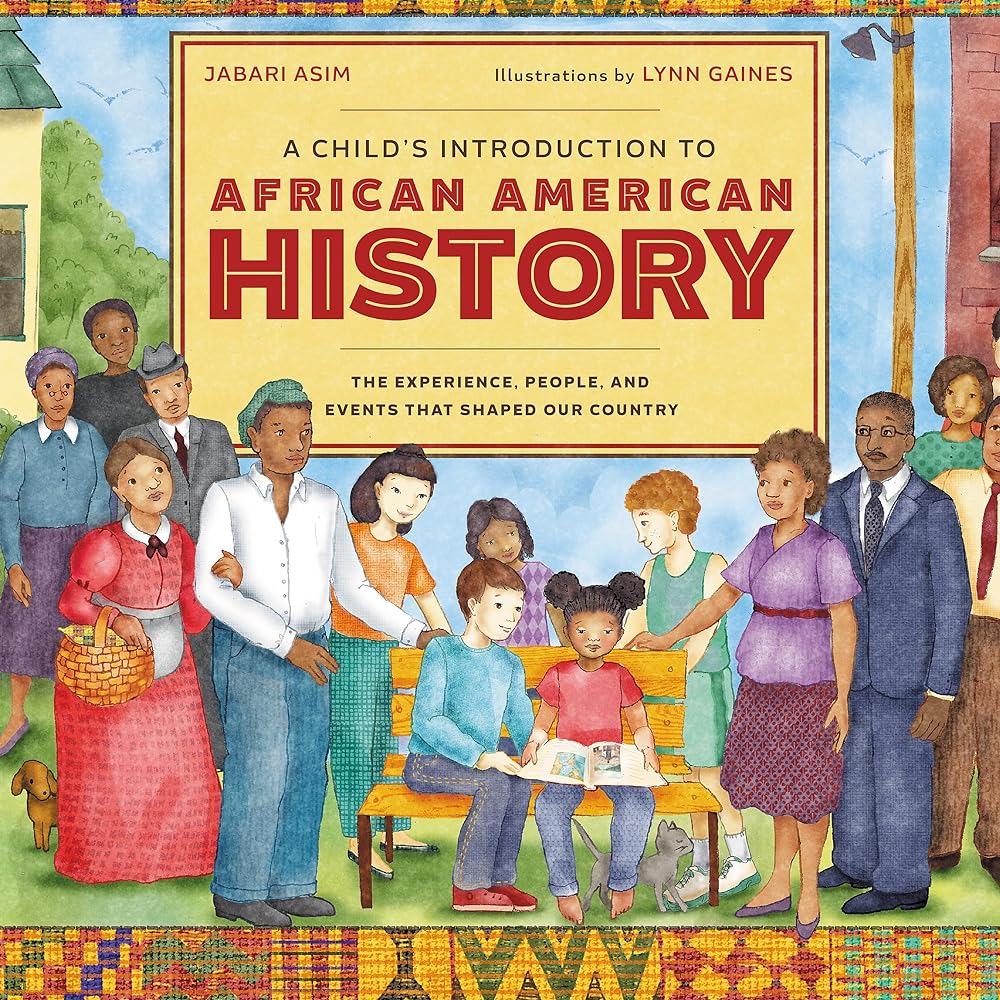
A Child's Introduction to African American History: The Experiences, People, and Events That Shaped Our Country
by Jabari Asim
$19.99A comprehensive, entertaining look at heroes, heroines, and critical moments from African American history -- from the slave trade to the Black Lives Matter movement -- by award-winning author Jabari Asim.
Jabari Asim goes beyond what's taught in the classroom to reveal a fact-filled history of African American history through politics, activism, sports, entertainment, music, and much more. You'll follow the road to freedom beginning with the slave trade and the middle passage through the abolitionist movement and the Civil War where many African Americans fought as soldiers. You'll learn how slave songs often contained hidden messages and how a 15-year-old Jamaican-born young man named Clive Campbell helped to create hip-hop in the early 1970's.
You'll experience the passionate speeches, marches, and movements of the Civil Rights era along with and the sacrifices of Martin Luther King, Rosa Parks, Medgar Evers, and many others. Along the way there are dozens of profiles of political trailblazers like Shirley Chisholm, the first black women elected to Congress in 1968; dominants athletes like Tiger Woods who, in 1995, was only the second African American to play in a Master's Golf Tournament which he went on to win in 1997; popular musicians like Miles Davis, one the most influential artists of the twentieth century; and inspiring writers like Toni Morrison, the first African American to win the Nobel Prize in literature.
Filled with beautiful illustrations by Lynn Gaines that bring these figures and events to life, plus a removable historical timeline poster, A Child's Introduction to African American History is a fascinating and comprehensive guide to this often overlooked yet immensely important part of American history.
-
Black American Portraits: From the Los Angeles County Museum of Art
![Black American Portraits: From the Los Angeles County Museum of Art]()

Black American Portraits: From the Los Angeles County Museum of Art
edited by Christine Kim
$49.95A celebratory visual chronicle of the many ways in which Black Americans have used portraiture to envision themselves
Spanning over two centuries from around 1800 to the present day, Black American Portraits chronicles the ways in which Black Americans have used portraiture to envision themselves in their own eyes. Remembering Two Centuries of Black American Art, curated by David C. Driskell at LACMA 45 years ago, this book is a companion to the exhibition of the same name that reframes portraiture to center Black American subjects, sitters and spaces. This selection of approximately 140 works from LACMA’s permanent collection highlights emancipation, scenes from the Harlem Renaissance, portraits from the Civil Rights and Black Power eras, multiculturalism of the 1990s and the spirit of Black Lives Matter.
Countering a visual culture that often demonizes Blackness and fetishizes the spectacle of Black pain, these images center love, abundance, family, community and exuberance. Black American Portraits depicts Black figures in a range of mediums such as painting, drawing, prints, photography, sculpture, mixed media and time-based media. In addition to work by artists of African descent, Black American Portraits includes several works by artists of other backgrounds who have exemplified a thoughtfulness about, sensitivity toward and commitment to Black artists, communities, histories and subjects.
Artists include: Alvin Baltrop, Edward Biberman, Bisa Butler, Jordan Casteel, Njideka Akunyili Crosby, Bruce Davidson, Stan Douglas, rafa esparza, Shepard Fairey, Charles Gaines, Sargent Claude Johnson, Deana Lawson, Kerry James Marshall, Alice Neel, Lorraine O'Grady, Catherine Opie, Amy Sherald, Ming Smith, Henry Taylor, Tourmaline, Mickalene Thomas, James Van Der Zee, Carrie Mae Weems, Charles White, Kehinde Wiley and Deborah Willis. -
The New Negro: A History in Documents, 1887–1937
![The New Negro: A History in Documents, 1887–1937 cover image]()

The New Negro: A History in Documents, 1887–1937
Martha H. Patterson
$39.95An authoritative anthology tracing the history of one of the most important concepts Black people drew on to challenge the brutal, totalizing system of Jim Crow racism
This book brings together a wealth of readings on the metaphor of the “New Negro,” charting how generations of thinkers debated its meaning and seized on its potency to stake out an astonishingly broad and sometimes contradictory range of ideological positions. It features dozens of newly unearthed pieces by major figures such as W. E. B. Du Bois, Charles S. Johnson, and Drusilla Dunjee Houston as well as writings from Cuba, the US Virgin Islands, Dominica, France, Sierra Leone, South Africa, colonial Zimbabwe, and the United States. Demonstrating how this evocative and supremely protean concept predates its popularization in Alain Locke’s 1925 anthology of the same name, The New Negro takes readers from its beginnings as a response to Henry Grady’s famous “New South” address in 1886 through the Harlem Renaissance and the New Deal.
Opening a fascinating window into a largely unexplored chapter in African American, Afro-Latin American, and African intellectual history, this groundbreaking anthology includes writings by Gwendolyn Bennett, Marita Bonner, John Edward Bruce (“Bruce Grit”), Nannie Helen Burroughs, Charles W. Chesnutt, James Bertram Clarke (“José Clarana,” “Jaime Gil”), Anna Julia Cooper, Alexander Crummell, Countee Cullen, Alice Dunbar-Nelson, Marcus Garvey, Hubert Harrison, Langston Hughes, Zora Neale Hurston, D. Hamilton Jackson, Fenton Johnson, Claude McKay, Oscar Micheaux, Jeanne “Jane” Nardal, Jean Toomer, Gustavo Urrutia, Booker T. Washington, Dorothy West, Ruth Whitehead Whaley, Fannie Barrier Williams, Carter G. Woodson, and a host of others.
-
The 1619 Project: A Visual Experience
![The 1619 Project: A Visual Experience]()

The 1619 Project: A Visual Experience
by Nikole Hannah-Jones
$65.00An illustrated edition of The 1619 Project, with newly commissioned artwork and archival images, The New York Times Magazine's award-winning reframing of the American founding and its contemporary echoes, placing slavery and resistance at the center of the American story.
Here, in these pages, Black art provides refuge. The marriage of beautiful, haunting and profound words and imagery creates an experience for the reader, a wanting to reflect, to sit in both the discomfort and the joy, to contemplate what a nation owes a people who have contributed so much and yet received so little, and maybe even, to act. --Nikole Hannah-Jones, from the Preface
Curated by the editors of The New York Times Magazine, led by Pulitzer Prize-winning journalist Nikole Hannah-Jones, this illustrated edition of The 1619 Project features seven chapters from the original book that lend themselves to beautiful, engaging visuals, deepening the experience of the content. The 1619 Project: A Visual Experience offers the same revolutionary idea as the original book, an argument for a new national origin story that begins in late August of 1619, when a cargo ship of enslaved people from Africa arrived on the shores of Jamestown, Virginia. Only by reckoning with this difficult history and understanding its powerful influence on our present can we prepare ourselves for a more just future.
Filled with original art by thirteen Black artists like Carrie Mae Weems, Calida Rawles, Vitus Shell, Xaviera Simmons, on the themes of resistance and freedom, a brand-new photo essay about slave auction sites, vivid photos of Black Americans celebrating their own forms of patriotism, and a collection of archival images of Black families by Black photographers, this gorgeous volume offers readers a dynamic new way of experiencing the impact of The 1619 Project.
Complete with many of the powerful essays and vignettes from the original edition, written by some of the most brilliant journalists, scholars, and thinkers of our time, The 1619 Project: A Visual Experience brings to life a fuller, more comprehensive understanding of American history and culture.
-
Photography and the Black Arts Movement, 1955-1985
![Photography and the Black Arts Movement, 1955-1985 cover image]()

Photography and the Black Arts Movement, 1955-1985
Philip Brookman
$65.00Featuring more than 100 artists, this landmark book charts the intricate connections between photography and the Black Arts Movement
The Black Arts Movement brought together writers, filmmakers, and visual artists who were exploring ways of using art to advance civil rights and Black self-determination. This book examines the vital role of photography in the evolution of the Black Arts Movement, revealing how photographs operated across art, community building, journalism, and political messaging to contribute to the development of a distinctly Black art and culture.
Works by Romare Bearden, Dawoud Bey, Kwame Brathwaite, Samuel Fosso, Jeanne Moutoussamy-Ashe, Gordon Parks, Juan Sánchez, Robert A. Sengstacke, Lorna Simpson, Ming Smith, and Carrie Mae Weems, among dozens of other celebrated and underappreciated artists, span documentary and fashion photography, portraiture, collage, installation, performance, and video. Pictured luminaries include Miles Davis, Mahalia Jackson, Martin Luther King, Jr., Bob Marley, Nina Simone, Malcolm X, and many more. The book’s essays by distinguished scholars focus on topics such as women and the movement, community, activism, and Black photojournalism. Taking an expansive approach, the authors consider the complex connections between American artists and the African diaspora and the dynamic interchange of pan-African ideas that propelled the movement. Authoritative and beautifully illustrated, this is the definitive volume on photography and the Black Arts Movement.
Published in association with the National Gallery of Art, Washington
Exhibition Schedule:
National Gallery of Art, Washington, DC
(September 21, 2025–January 4, 2026)
J. Paul Getty Museum, Los Angeles, CA
(February 24–May 24, 2026)
Mississippi Museum of Art, Jackson, MS
(July 25–November 1, 2026) -
Post Traumatic Slave Syndrome
![Post Traumatic Slave Syndrome]()
Post Traumatic Slave Syndrome
by Dr. Joy DeGruy
$19.95In the 16th century, the beginning of African enslavement in the Americas until the ratification of the Thirteenth Amendment and emancipation in 1865, Africans were hunted like animals, captured, sold, tortured, and raped. They experienced the worst kind of physical, emotional, psychological, and spiritual abuse. Given such history, isn't it likely that many of the enslaved were severely traumatized? And did the trauma and the effects of such horrific abuse end with the abolition of slavery?
Emancipation was followed by one hundred more years of institutionalized subjugation through the enactment of Black Codes and Jim Crow laws, peonage, convict leasing, domestic terrorism and lynching. Today the violations continue, and when combined with the crimes of the past, they result in yet unmeasured injury. What do repeated traumas, endured generation after generation by a people produce? What impact have these ordeals had on African Americans today?
Dr. Joy DeGruy, answers these questions and more. With over thirty years of practical experience as a professional in the mental health field, Dr. DeGruy encourages African Americans to view their attitudes, assumptions, and behaviors through the lens of history and so gain a greater understanding of how centuries of slavery and oppression have impacted people of African descent in America.
Post Traumatic Slave Syndrome helps to lay the necessary foundation to ensure the well-being and sustained health of future generations and provides a rare glimpse into the evolution of society's beliefs, feelings, attitudes and behavior concerning race in America.
-
In Hush to Harbor: Black Sanctuary from Slavery to Trump's America
![In Hush to Harbor: Black Sanctuary from Slavery to Trump's America cover image]()

In Hush to Harbor: Black Sanctuary from Slavery to Trump's America
$27.95Black communities in America have a long history of constructing sanctuaries amid oppression, from the secret hush harbors of slavery to the digital refuges created in response to the resurgence of white supremacist violence in the Trump era. These havens have offered places to grieve and to gather, to imagine freedom when the world denied it, and to practice care and resistance in the face of constant danger. They remind us that even in the darkest moments, Black people have made space to grieve, rest, heal, strategize, and imagine new futures.
In Hush to Harbor traces this enduring sanctuary-making through both historical memory and contemporary expression from the legacy of Freedmen’s Towns and Green Books for Motorists in the Jim Crow era as testaments to Black mobility and mutual protection to present-day digital activism and grassroots organizing that reimagine safety in the public sphere.
Blending literary criticism, cultural history, and ethnography, Scott demonstrates that sanctuary is not merely a place of retreat but a political and spiritual practice that calls forth a collective act of making space when none is offered. In Hush to Harbor offers not just a chronicle of survival but a blueprint for sustaining Black refuge in a time of urgent need, redefining what it means to be safe in a nation that has never guaranteed safety for Black life.
-
Four Hundred Souls: A Community History of African America, 1619-2019
![Four Hundred Souls: A Community History of African America, 1619-2019]()
Four Hundred Souls: A Community History of African America, 1619-2019
by Ibram Kendi and Keisha N. Blain
$20.00*ships in 7 - 10 business days*A “choral history” of African Americans covering 400 years of history in the voices of 90 writers, edited by the bestselling, National Book Award-winning historian Ibram X. Kendi and award-winning historian Keisha N. Blain.
2019 marked the four hundredth anniversary of the first captive Africans in Virginia—and also launched the Four Hundred Souls project, spearheaded by Ibram X. Kendi, founding director of the Boston University Center for Antiracist Research, and Keisha N. Blain, associate professor of history at the University of Pittsburgh and the president of the African American Intellectual History Society. They’ve gathered together ninety Black writers from all disciplines to tell one of history’s great epics: the journey of African Americans from 1619 to the present. With lyrical interludes from ten poets, eighty writers take on a five-year period of that four-hundred-year span, exploring their periods through a variety of techniques: historical essays, short stories, personal vignettes, and fiery polemic. This comprehensive, dynamic, single-volume work is an essential historical keepsake. -
The Negro in the Making of America by Benjamin Quarles
![The Negro in the Making of America by Benjamin Quarles]()
The Negro in the Making of America by Benjamin Quarles
$24.99The bestselling, definitive study of African Americans throughout American history, now with a new introduction by noted scholar V. P. Franklin.
In The Negro in the Making of America, eminent historian Benjamin Quarles provides one of the most comprehensive and readable accounts ever gathered in one volume of the role that African Americans have played in shaping the destiny of America. Starting with the arrival of the slave ships in the early 1600s and moving through the Colonial period, the Revolutionary and Civil Wars, and into the last half of the twentieth century, Quarles chronicles the sweep of events that have brought blacks and their struggle for social and economic equality to the forefront of American life.
Through compelling portraits of central political, historical, and artistic figures such as Nat Turner, Frederick Douglass, Duke Ellington, Malcolm X, and the Reverend Martin Luther King, Jr., Quarles illuminates the African American contributions that have enriched the cultural heritage of America. This classic history also covers black participation in politics, the rise of a black business class, and the forms of discrimination experienced by blacks in housing, employment, and the media.
Quarles's groundbreaking work not only surveys the role of black Americans as they engaged in the dual, simultaneous processes of assimilating into and transforming the culture of their country, but also, in a portrait of the white response to blacks, holds a mirror up to the deeper moral complexion of our nation's history. The restoration of this history holds a redemptive quality—one that can be used, in the author's words, as a "vehicle for present enlightenment, guidance, and enrichment." -
Middle Passages: African American Journeys to Africa, 1787-2005
![Middle Passages: African American Journeys to Africa, 1787-2005 cover image]()

Middle Passages: African American Journeys to Africa, 1787-2005
James T. Campbell
$30.00Penguin announces a prestigious new series under presiding editor Arthur Schlesinger, Jr.
Many works of history deal with the journeys of blacks in bondage from Africa to the United States along the "middle passage," but there is also a rich and little examined history of African Americans traveling in the opposite direction. In Middle Passages, award-winning historian James T. Campbell vividly recounts more than two centuries of African American journeys to Africa, including the experiences of such extraordinary figures as Langston Hughes, W.E.B. DuBois, Richard Wright, Malcolm X, and Maya Angelou. A truly groundbreaking work, Middle Passages offers a unique perspective on African Americans' ever-evolving relationship with their ancestral homeland, as well as their complex, often painful relationship with the United States.


Stay Informed. We're building a community committed to celebrating Black authors + artisans. Subscribe to keep up with all things Kindred Stories.