
Search results: 122 results for “national museum of african american history and culture”
Not finding what you're looking for? Check out our shop on bookshop.org to order and still support us ♥
122 results
-
IRL Author Talk: Where is Africa with Anita N. Bateman - March 12 @ 6:30 PM
![IRL Author Talk: Where is Africa with Anita N. Bateman - March 12 @ 6:30 PM]()
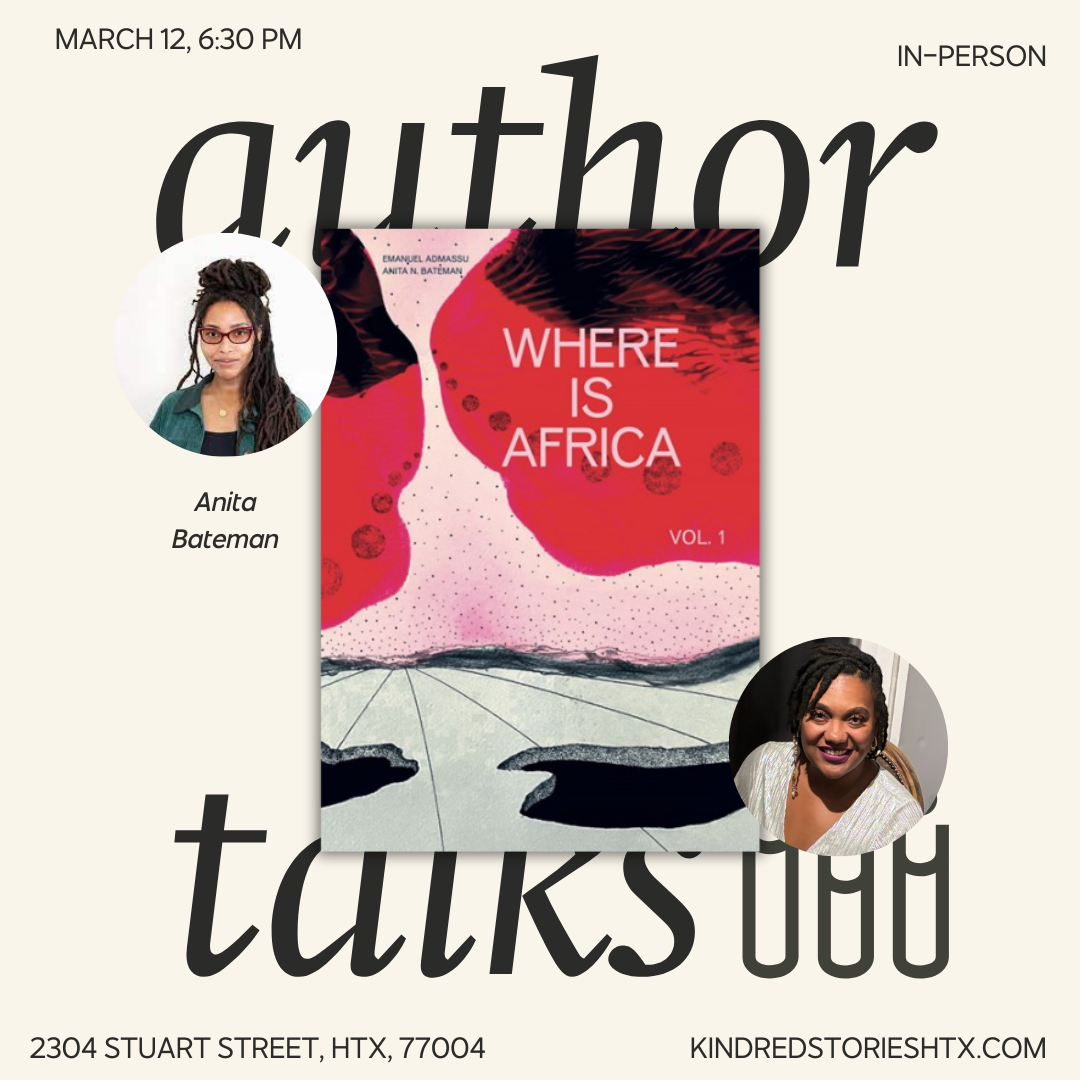
IRL Author Talk: Where is Africa with Anita N. Bateman - March 12 @ 6:30 PM
from $0.00Celebrate the release of Where is Africa with author and curator, Anita N. Bateman!
EVENT DEETS
When: Tuesday, March 12, 2024 @ 6:30 PM
Where: Kindred Stories Reading Garden (2304 Stuart Street, Houston, TX, 77004)
How: RSVP ONLY to reserve your seat or RSVP with Book to support the author and our programming.
ABOUT THE BOOK
A multidisciplinary illustrated reader unpacking imperialist representations of Africa by promoting dialogue, memory and everyday practice, and reimagining cultural institutions and the arts—from museums to academia, from architecture to art
In 2017, curator and art historian Anita N. Bateman and architect and professor Emanuel Admassu initiated research on the traditional positioning and mispositioning of the arts across the African continent. Where Is Africa has been an extended set of exchanges with contemporary artists, curators, designers and academics who are actively engaged in representing the continent—both within and outside its geographic boundaries. By examining artist collectives, new currents in art history and the rise of contemporary art festivals in and about Africa from the past 10 years, the project unpacks the imperialist foundations of cultural institutions and their anthropological fascination with African objects, people and places.
The interviews in Where Is Africa examine African and African-diasporic identities and spaces through questions of positionality in relation to specific disciplinary, cultural and political contexts. The texts address Afro-diasporic aesthetic practices and the curatorial, museological and artistic matrices that confront epistemologies of dominance and exclusion. The commissioned essays and images offer concise methodologies that expand or complicate issues addressed by the interviewees.
Where Is Africa is a conceptual project that accompanies a conceptual place, driven by the desire to dislodge Africa from categorical fixity and the representational logics of nation-states. Africa can never be fully enclosed by the residue of colonial violence or the totalitarian gaze of neoliberalism; instead, it creates infinite malleability, where place and concept are untethered from each other.
Contributors include: Mikael Awake, Salome Asega, Tau Tavengwa, Anthony Bogues, Jay Simple, Eric Gottesman, Rebecca Corey, Aida Mulkozi, Rakeb Sile, Mesai Haileleul, Mpho Matsipa, Niama Safia Sandy, Adama Delphine Fawundu, Rehema Chachage, Robel Temesgen, Valerie Amani, Meskerem Assegued, Elias Sime, Olalekan Jeyifous, Amanda Williams, Germane Barnes and Mario Gooden.ABOUT THE AUTHOR
Dr. Anita N. Bateman (she/her) specializes in modern and contemporary African art and the art of the African diaspora with additional expertise in the history of photography, Black Feminism/Womanism, and the role of social media in activism and liberation work. Bateman earned a doctorate in art history and visual culture and graduate certificate in African and African American Studies from Duke University, a master’s in art history from Duke University, and completed her undergraduate degree in art history, graduating cum laude from Williams College. She has held curatorial positions at the RISD Museum, the Williams College Museum of Art, and the Nasher Museum of Art. Her academic research has been supported by the American Council of Learned Societies, the Andrew W. Mellon Foundation, the Woodrow Wilson National Fellowship Foundation, and the Social Science Research Council. Bateman was the Fall 2022 ARCAthens Curatorial Fellow and a 2022 Graham Foundation grantee for the forthcoming publication, Where Is Africa (Center for Art, Research, and Alliances), co-edited with Emanuel Admassu. She is currently the Associate Curator of Modern and Contemporary Art at the Museum of Fine Arts, Houston.ABOUT THE CONVERSATION PARTNERAshley Hoskins is an inspiration to those who strive for cultural enrichment and knowledge expansion. As a lifelong reader and educator, Ashley finds the most joy in witnessing someone connect with a book. She believes that reading creates an imaginative space for travel and spirituality. She recalls always being a personal librarian for her friends and family members. They would often contact her to borrow books and ask for suggestions. Ashley founded the Houston chapter in 2019 with the blessings of OlaRonke Akinmowo of The Free Black Women’s Library. The Free Black Women’s Library HTX serves as a creative space that amplifies the literary and artistic expression of the Black woman. As the creative director of The Free Black Women’s Library HTX, Ashley curates community events centered around Black women writers and artists. She is currently an artist in residence at the Anderson Center for the Arts, where The Free Black Women’s Library HTX is on exhibition and available for visitors to swap books written by Black women authors. -
The Afro-Latin@ Reader: History and Culture in the United States (a John Hope Franklin Center Book)
![The Afro-Latin@ Reader: History and Culture in the United States (a John Hope Franklin Center Book) cover image]()

The Afro-Latin@ Reader: History and Culture in the United States (a John Hope Franklin Center Book)
Miriam Jiménez Román
$35.95The Afro-Latin@ Reader focuses attention on a large, vibrant, yet oddly invisible community in the United States: people of African descent from Latin America and the Caribbean. The presence of Afro-Latin@s in the United States (and throughout the Americas) belies the notion that Blacks and Latin@s are two distinct categories or cultures. Afro-Latin@s are uniquely situated to bridge the widening social divide between Latin@s and African Americans; at the same time, their experiences reveal pervasive racism among Latin@s and ethnocentrism among African Americans. Offering insight into Afro-Latin@ life and new ways to understand culture, ethnicity, nation, identity, and antiracist politics, The Afro-Latin@ Reader presents a kaleidoscopic view of Black Latin@s in the United States. It addresses history, music, gender, class, and media representations in more than sixty selections, including scholarly essays, memoirs, newspaper and magazine articles, poetry, short stories, and interviews.
While the selections cover centuries of Afro-Latin@ history, since the arrival of Spanish-speaking Africans in North America in the mid-sixteenth-century, most of them focus on the past fifty years. The central question of how Afro-Latin@s relate to and experience U.S. and Latin American racial ideologies is engaged throughout, in first-person accounts of growing up Afro-Latin@, a classic essay by a leader of the Young Lords, and analyses of U.S. census data on race and ethnicity, as well as in pieces on gender and sexuality, major-league baseball, and religion. The contributions that Afro-Latin@s have made to U.S. culture are highlighted in essays on the illustrious Afro-Puerto Rican bibliophile Arturo Alfonso Schomburg and music and dance genres from salsa to mambo, and from boogaloo to hip hop. Taken together, these and many more selections help to bring Afro-Latin@s in the United States into critical view.
Contributors: Afro–Puerto Rican Testimonies Project, Josefina Baéz, Ejima Baker, Luis Barrios, Eduardo Bonilla-Silva, Adrian Burgos Jr., Ginetta E. B. Candelario, Adrián Castro, Jesús Colón, Marta I. Cruz-Janzen, William A. Darity Jr., Milca Esdaille, Sandra María Esteves, María Teresa Fernández (Mariposa), Carlos Flores, Juan Flores, Jack D. Forbes, David F. Garcia, Ruth Glasser, Virginia Meecham Gould, Susan D. Greenbaum, Evelio Grillo, Pablo “Yoruba” Guzmán, Gabriel Haslip-Viera, Tanya K. Hernández, Victor Hernández Cruz, Jesse Hoffnung-Garskof, Lisa Hoppenjans, Vielka Cecilia Hoy, Alan J. Hughes, María Rosario Jackson, James Jennings, Miriam Jiménez Román, Angela Jorge, David Lamb, Aida Lambert, Ana M. Lara, Evelyne Laurent-Perrault, Tato Laviera, John Logan, Antonio López, Felipe Luciano, Louis Pancho McFarland, Ryan Mann-Hamilton, Wayne Marshall, Marianela Medrano, Nancy Raquel Mirabal, Yvette Modestin, Ed Morales, Jairo Moreno, Marta Moreno Vega, Willie Perdomo, Graciela Pérez Gutiérrez, Sofia Quintero, Ted Richardson, Louis Reyes Rivera, Pedro R. Rivera , Raquel Z. Rivera, Yeidy Rivero, Mark Q. Sawyer, Piri Thomas, Silvio Torres-Saillant, Nilaja Sun, Sherezada “Chiqui” Vicioso, Peter H. Wood
-
I'll Make Me a World: The 100-Year Journey of Black History Month
![I'll Make Me a World: The 100-Year Journey of Black History Month cover image]()

I'll Make Me a World: The 100-Year Journey of Black History Month
$24.99On its one-hundredth anniversary, a powerful and essential meditation on the origins, evolution, and future of Black History Month from one of America’s leading historians of Black education and the author of American Grammar.
In I’ll Make Me a World, acclaimed Harvard scholar Jarvis R. Givens takes us on a personal and political journey through the 100-year history of Black History Month—from its radical beginnings in 1926 as “Negro History Week” to its role today as a celebration and flashpoint in America’s cultural battles. Drawing on archival research, personal stories involving family and students, and especially the wisdom of Black educators, Givens recovers the legacy of Carter G. Woodson and many others who envisioned Black history as a liberatory force—knowledge that shapes who we are, how we resist, and what we dream.
With striking clarity, Givens challenges today’s myopic commemorations of iconic figures and urges us to expand our understanding of Black history to include the everyday lives of ordinary people—the “workadays” whose stories have long gone untold but form critical parts of Black history. Indeed, people who played important roles in passing on Black memories that helped disrupt oppressively narrow perspectives on human life. Givens also attends to the labor involved in preserving Black history, especially in intellectual environments where it is constantly denigrated and undervalued, and he insists that more transparency about such processes is necessary to ensure this worthy tradition is passed on to future generations.
I’ll Make Me A World is a call to remember, reimagine, and reclaim an intellectual tradition built by communities well before our time, and to take seriously what is politically at stake in its preservation. At a time when Black history is under attack, this book offers an inspiring vision for how it can still be a source of power, truth, and possibility.
-
Willie Birch: Stories to Tell
![Willie Birch: Stories to Tell cover image]()

Willie Birch: Stories to Tell
$55.00A career retrospective of a singular voice in contemporary American art, featuring six decades of artwork that chronicles his vision of the Black American experience
New Orleans–based artist, community organizer, and cultural provocateur Willie Birch (b. 1942) has dedicated his career to storytelling. His incisive work across a wide variety of media―including paintings, large-scale drawings, wood and papier-mâché sculpture, and public works―explores his unique vision of Black America and draws on sources as diverse as Egyptian numerology, American folk art, and jazz music.
This book showcases more than one hundred of Birch’s artworks alongside essays by eminent scholars and curators. Russell Lord provides an introduction to the artist’s life and work; Lowery Stokes Sims writes about Birch’s use of papier-mâché, for which he garnered acclaim during his time in New York City, and situates Birch within the New York art scene of the 1980s and ’90s; Grace Deveney considers the ways Birch gives visual form to the complex relationship between Black Americans and mass media; and Leslie King Hammond discusses how the city of New Orleans―its history and its communities―has shaped Birch’s work.
Published in association with the American Federation of Arts
Exhibition Schedule:
California African American Museum, Los Angeles
May 5–October 4, 2026
New Orleans Museum of Art
March 20–September 5, 2027
Museum of Contemporary Art Jacksonville, University of North Florida
October 28, 2027–May 14, 2028
Hudson River Museum
September 22, 2028–January 14, 2029 -
A Black Women's History of the United States
![A Black Women's History of the United States]()
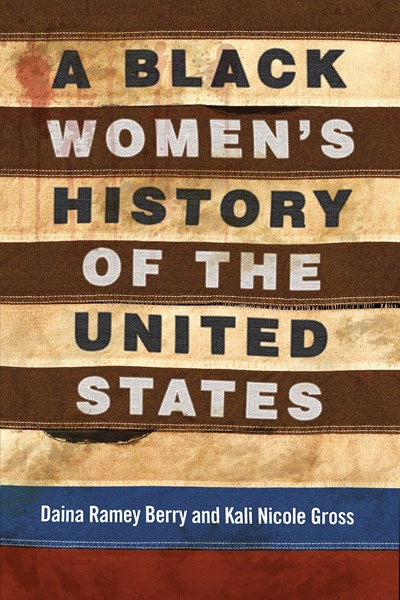
A Black Women's History of the United States
by Daina Ramey Berry and Kali Nicole Gross
$18.95A vibrant and empowering history that emphasizes the perspectives and stories of African American women to show how they are—and have always been—instrumental in shaping our country.
A Black Women’s History of the United States reaches far beyond a single narrative to showcase Black women’s lives in all their fraught complexities. Berry and Gross prioritize many voices: enslaved women, freedwomen, religious leaders, artists, queer women, activists, and women who lived outside the law. The result is a starting point for exploring Black women’s history and a testament to the beauty, richness, rhythm, tragedy, heartbreak, rage, and enduring love that abounds in the spirit of Black women in communities throughout the nation.
-
Afro-Atlantic Histories
![Afro-Atlantic Histories]()
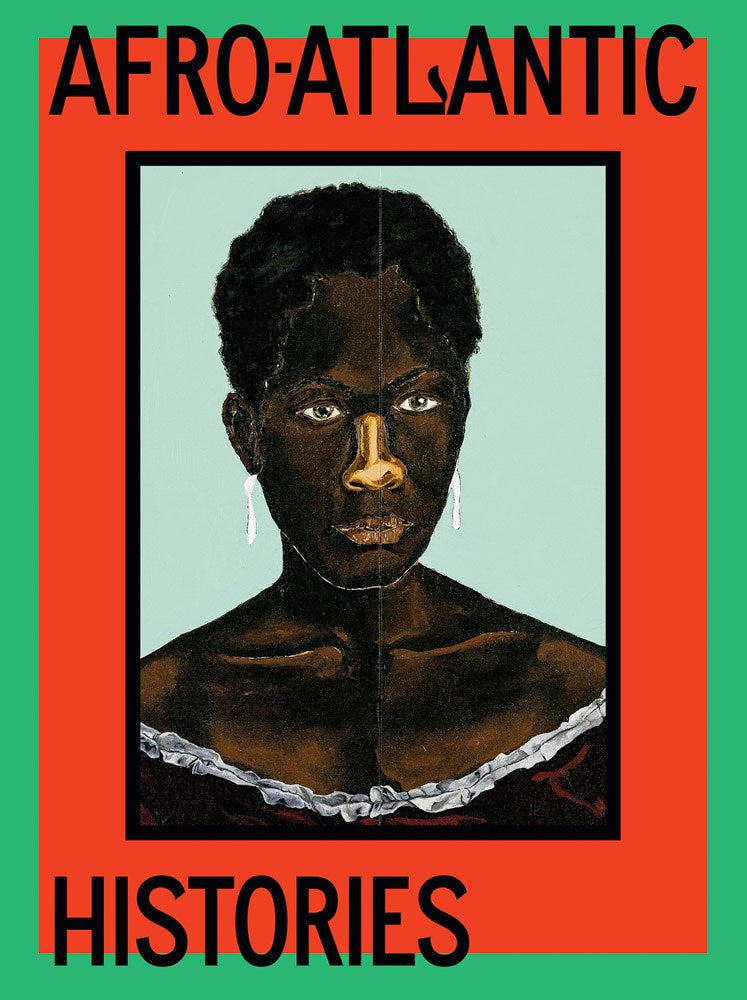
Afro-Atlantic Histories
by Mireille Miller-Young
$69.95*ship in 7-10 business days
Afro-Atlantic Histories brings together a selection of more than 400 works and documents by more than 200 artists from the 16th to the 21st centuries that express and analyze the ebbs and flows between Africa, the Americas, the Caribbean and Europe. The book is motivated by the desire and need to draw parallels, frictions and dialogues around the visual cultures of Afro-Atlantic territories―their experiences, creations, worshiping and philosophy. The so-called Black Atlantic, to use the term coined by Paul Gilroy, is geography lacking precise borders, a fluid field where African experiences invade and occupy other nations, territories and cultures.
The plural and polyphonic quality of “histórias” is also of note; unlike the English “histories,” the word in Portuguese carries a double meaning that encompasses both fiction and nonfiction, personal, political, economic and cultural, as well as mythological narratives.
The book features more than 400 works from Africa, the Americas and the Caribbean, as well as Europe, from the 16th to the 21st century. These are organized in eight thematic groupings: Maps and Margins; Emancipations; Everyday Lives; Rites and Rhythms; Routes and Trances; Portraits; Afro Atlantic Modernisms; Resistances and Activism.
Artists include: Nina Chanel Abney, Emma Amos, Benny Andrews, Emanoel Araujo, Maria Auxiliadora, Romare Bearden, John Biggers, Paul Cézanne, Victoria Santa Cruz, Beauford Delaney, Aaron Douglas, Melvin Edwards, Ibrahim El-Salahi, Ben Enwonwu, Ellen Gallagher, Theodore Géricault, Barkley Hendricks, William Henry Jones, Loïs Mailou Jones, Titus Kaphar, Wifredo Lam, Norman Lewis, Ibrahim Mahama, Edna Manley, Archibald Motley, Abdias Nascimento, Gilberto de la Nuez, Toyin Ojih Odutola, Dalton Paula, Rosana Paulino, Howardena Pindell, Heitor dos Prazeres, Joshua Reynolds, Faith Ringgold, Gerard Sekoto, Alma Thomas, Hank Willis Thomas, Rubem Valentim, Kara Walker and Lynette Yiadom-Boakye. -
Black New Orleans, 1860-1880
![Black New Orleans, 1860-1880]()
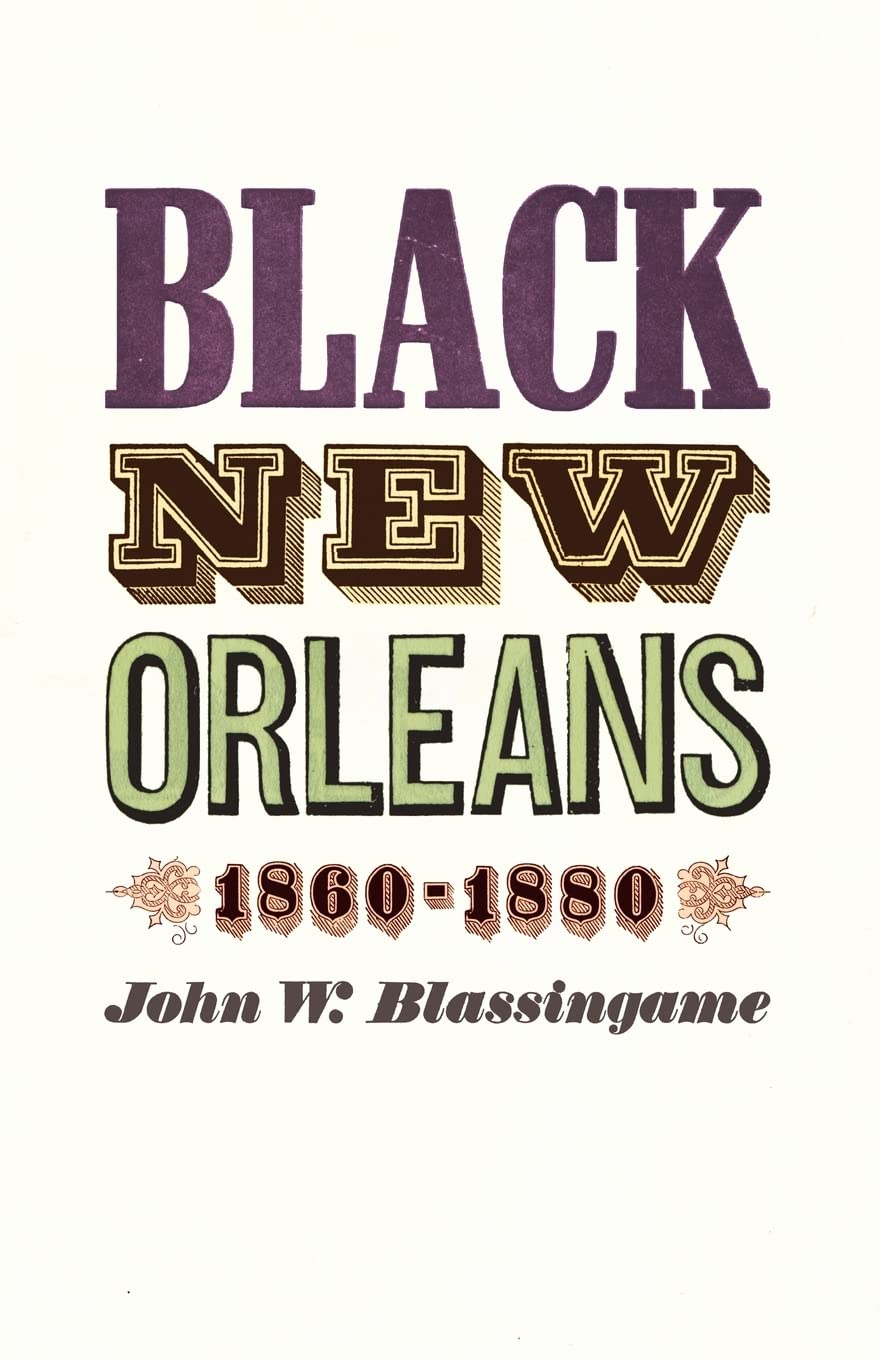
Black New Orleans, 1860-1880
by John W. Blassingame
$40.00Reissued for the first time in over thirty years, Black New Orleans explores the twenty-year period in which the city's black population more than doubled. Meticulously researched and replete with archival illustrations from newspapers and rare periodicals, John W. Blassingame's groundbreaking history offers a unique look at the economic and social life of black people in New Orleans during Reconstruction. Not a conventional political treatment, Blassingame's history instead emphasizes the educational, religious, cultural, and economic activities of African Americans during the late nineteenth century.
"Blending historical and sociological perspectives, and drawing with skill and imagination upon a variety of sources, [Blassingame] offers fresh insights into an oft-studied period of Southern history. . . . In both time and place the author has chosen an extraordinarily revealing vantage point from which to view his subject. "-Neil R. McMillen, American Historical Review
-
The Black Church: This Is Our Story, This Is Our Song
![The Black Church: This Is Our Story, This Is Our Song cover image]()

The Black Church: This Is Our Story, This Is Our Song
$20.00The instant New York Times bestseller and companion book to the PBS series.
“Absolutely brilliant . . . A necessary and moving work.” —Eddie S. Glaude, Jr., author of Begin Again
“Engaging. . . . In Gates’s telling, the Black church shines bright even as the nation itself moves uncertainly through the gloaming, seeking justice on earth—as it is in heaven.” —Jon Meacham, New York Times Book Review
From the New York Times bestselling author of Stony the Road and The Black Box,and one of our most important voices on the African American experience, comes a powerful new history of the Black church as a foundation of Black life and a driving force in the larger freedom struggle in America.
For the young Henry Louis Gates, Jr., growing up in a small, residentially segregated West Virginia town, the church was a center of gravity—an intimate place where voices rose up in song and neighbors gathered to celebrate life's blessings and offer comfort amid its trials and tribulations. In this tender and expansive reckoning with the meaning of the Black Church in America, Gates takes us on a journey spanning more than five centuries, from the intersection of Christianity and the transatlantic slave trade to today’s political landscape. At road’s end, and after Gates’s distinctive meditation on the churches of his childhood, we emerge with a new understanding of the importance of African American religion to the larger national narrative—as a center of resistance to slavery and white supremacy, as a magnet for political mobilization, as an incubator of musical and oratorical talent that would transform the culture, and as a crucible for working through the Black community’s most critical personal and social issues.
In a country that has historically afforded its citizens from the African diaspora tragically few safe spaces, the Black Church has always been more than a sanctuary. This fact was never lost on white supremacists: from the earliest days of slavery, when enslaved people were allowed to worship at all, their meetinghouses were subject to surveillance and destruction. Long after slavery’s formal eradication, church burnings and bombings by anti-Black racists continued, a hallmark of the violent effort to suppress the African American struggle for equality. The past often isn’t even past—Dylann Roof committed his slaughter in the Mother Emanuel AME Church 193 years after it was first burned down by white citizens of Charleston, South Carolina, following a thwarted slave rebellion.
But as Gates brilliantly shows, the Black church has never been only one thing. Its story lies at the heart of the Black political struggle, and it has produced many of the Black community’s most notable leaders. At the same time, some churches and denominations have eschewed political engagement and exemplified practices of exclusion and intolerance that have caused polarization and pain. Those tensions remain today, as a rising generation demands freedom and dignity for all within and beyond their communities, regardless of race, sex, or gender. Still, as a source of faith and refuge, spiritual sustenance and struggle against society’s darkest forces, the Black Church has been central, as this enthralling history makes vividly clear.
-
Long Memory: The Black Experience in America (1ST ed.)
![Long Memory: The Black Experience in America (1ST ed.)]()
Long Memory: The Black Experience in America (1ST ed.)
Mary Frances Berry & John W. Blassingame
$109.99A survey of Afro-American history is organized around the themes of the family and church, sex and racism, politics, education, criminal justice, and Black nationalism -
Modern Negro Art
![Modern Negro Art cover image]()

Modern Negro Art
James a Porter
$21.00Porter's work analyzes the important developments and individuals in African American painting and sculpture from the pre-Civil War period to World War II. "James A. Porter was an art historian, educator, curator, and visual artist. He is first remembered by academics as an art historian who taught some of the best minds and visual artists who studied at Howard University during the span of his teaching career. "A pioneer in establishing the field of African American art history," writes Jeffreen M. Hayes, who rightly declares that:
James A. Porter was instrumental as the first scholar to provide a systematic, critical analysis of African American artists and their works of art. An artist himself, he provided a unique and critical approach to the analysis of the work. Dedicated to educating and writing about African American artists, Porter set the foundation for artists and art historians to probe and unearth the necessary skills essential to their artistic and scholarly endeavors. The canon is borne from Porter's determination to document and view African American art in the context of American art."
-
Working the Roots
![Working the Roots]()
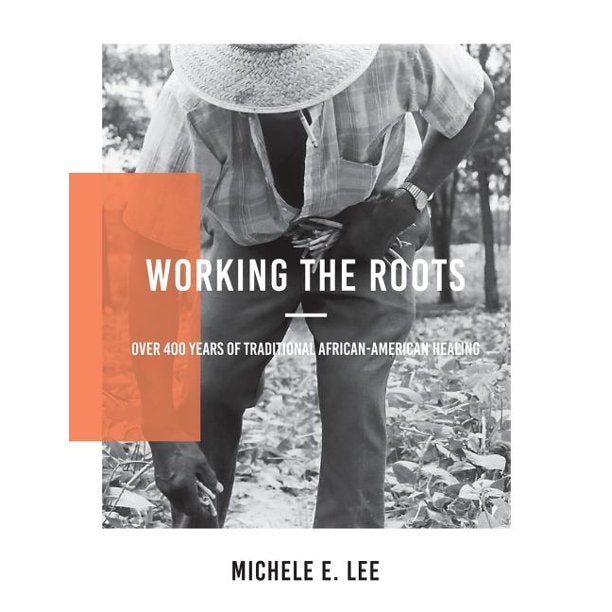
Working the Roots
by Michelle Elizabeth Lee
$29.00"Working The Roots: Over 400 Years of Traditional African American Healing" is an engaging study of the traditional healing arts that have sustained African Americans across the Atlantic ocean for four centuries down through today. Complete with photographs and illustrations, a medicines, remedies, and hoodoo section, interviews and stories.
-
PRE-ORDER: The Black History of the White House: Expanded Edition
![The Black History of the White House: Expanded Edition cover image]()

PRE-ORDER: The Black History of the White House: Expanded Edition
$24.95As the federal government attempts to erase all evidence of Black Americans' civic participation and achievements from official websites, museums and even from the National Park system, this Expanded Edition brings the essential, groundbreaking title, The Black History of the White House up to date, culminating in our current, Trumpian White House era.
"Clarence Lusane is one of America's most thoughtful and critical thinkers on issues of race, class and power."—Manning Marable
The Black History of the White House presents the untold history, racial politics, and shifting significance of the White House as experienced by African Americans, from the generations of enslaved people who helped to build it or were forced to work there to its first black First Family, the Obamas, and now in the era of its second occupation by President Donald Trump.
Clarence Lusane juxtaposes significant events in White House history with the ongoing struggle for democratic, civil, and human rights by Black Americans and demonstrates that only during crises have presidents used their authority to advance racial justice. He describes how in 1901 the building was officially named the "White House" amidst a furious backlash against President Roosevelt for inviting Booker T. Washington to dinner, and how that same year that saw the consolidation of white power with the departure of the last Black Congressmember elected after the Civil War. Lusane explores how, from its construction in 1792 to its becoming the home of the first Black president, through the first Trump term and Biden's, and up to the present moment of Trump's second presidential term, the White House has been a prism through which to view the progress and struggles of Black Americans seeking full citizenship and justice.


Stay Informed. We're building a community committed to celebrating Black authors + artisans. Subscribe to keep up with all things Kindred Stories.