
Search results: 1000 results for “by Frantz Fanon”
Not finding what you're looking for? Check out our shop on bookshop.org to order and still support us ♥
1000 results
-
The Black Period: On Personhood, Race, and Origin by Hafizah Augustus Geter
![The Black Period: On Personhood, Race, and Origin by Hafizah Augustus Geter]()

The Black Period: On Personhood, Race, and Origin by Hafizah Augustus Geter
$28.99An acclaimed poet reclaims her origin story as the queer daughter of a Muslim Nigerian immigrant and a Black American visual artist in this groundbreaking memoir, combining lyrical prose, biting criticism, and haunting visuals.
“Hafizah Augustus Geter is a genuine artist, not bound by genre or form. Her only loyalty is the harrowing beauty of the truth.”—Tayari Jones, author of An American Marriage
“I say, ‘the Black Period,’ and mean ‘home’ in all its shapeshifting ways.” In The Black Period, Hafizah creates a space for the beauty of Blackness, Islam, disability, and queerness to flourish, celebrating the many layers of her existence that America has time and again sought to erase.
At nineteen, she lost her mother to a sudden stroke. Weeks later, her father became so heartsick that he needed a triple bypass. By her thirties, she was constantly in pain, pinballing between physical therapy appointments, her grief, and the grind that is the American Dream. Hafizah realized she'd spent years internalizing the narratives that white supremacy had fed her about herself. Suddenly, she says, I was standing at the cliff of my own life, remembering.
Recalling her parents’ lessons on the art of Black revision, and mixing history, political analysis, and cultural criticism, alongside stunning original artworks created by her father, renowned artist Tyrone Geter, Hafizah maps out her own narrative, weaving between a childhood populated with Southern and Nigerian relatives; her days in a small Catholic school; a loving but tragically short relationship with her mother; and the feelings of joy and community that the Black Lives Matter protests engendered in her as an adult. All throughout, she forms a new personal and collective history, addressing the systems of inequity that make life difficult for non-able-bodied persons, queer people, and communities of color while capturing a world brimming with potential, art, music, hope, and love.
A unique combination of gripping memoir and Afrofuturist thought, in The Black Period, Hafizah manages to sidestep shame, confront disability, embrace forgiveness, and emerge from the erasures -
The Second: Race and Guns in a Fatally Unequal America
![The Second: Race and Guns in a Fatally Unequal America cover image]()

The Second: Race and Guns in a Fatally Unequal America
Carol Anderson
$18.00From the New York Times bestselling author of White Rage, an unflinching, critical new look at the Second Amendment and how it has been engineered to deny the rights of African Americans since its inception-now with a new introduction and afterword from the author.
In The Second, historian and award-winning, bestselling author of White Rage Carol Anderson powerfully illuminates the history and impact of the Second Amendment, how it was designed, and how it has consistently been constructed to keep African Americans powerless and vulnerable. The Second is neither a “pro-gun” nor an “anti-gun” book; the lens is the citizenship rights and human rights of African Americans.
From the seventeenth century, when it was encoded into law that the enslaved could not own, carry, or use a firearm whatsoever, until today, with measures to expand and curtail gun ownership aimed disproportionately at the African American population, the right to bear arms has been consistently used as a weapon to keep African Americans powerless--revealing that armed or unarmed, Blackness, it would seem, is the threat that must be neutralized and punished.
Throughout American history to the twenty-first century, regardless of the laws, court decisions, and changing political environment, the Second has consistently meant this: That the second a Black person exercises this right, the second they pick up a gun to protect themselves (or the second that they don't), their life--as surely as Philando Castile's, Tamir Rice's, Alton Sterling's--may be snatched away in that single, fatal second. Through compelling historical narrative merging into the unfolding events of today, Anderson's penetrating investigation shows that the Second Amendment is not about guns but about anti-Blackness, shedding shocking new light on another dimension of racism in America.
-
James Baldwin 3-Book Box Set: Giovanni's Room, If Beale Street Could Talk, and Go Tell It on the Mountain
![James Baldwin 3-Book Box Set: Giovanni's Room, If Beale Street Could Talk, and Go Tell It on the Mountain cover image]()

James Baldwin 3-Book Box Set: Giovanni's Room, If Beale Street Could Talk, and Go Tell It on the Mountain
James Baldwin
$51.00Celebrating the Centenary of James Baldwin's birth, a box set of Baldwin's principal novels, featuring Go Tell It on the Mountain, Giovanni's Room, and If Beale Street Could Talk.
These deluxe editions feature new introductions by Roxane Gay, Kevin Young, and Brit Bennett.
Originally published in 1953, Go Tell It on the Mountain was James Baldwin's first major work, based in part on his own childhood. With lyrical precision and a rage that is at once unrelenting and compassionate, Baldwin chronicles a fourteen-year-old boy's discovery of the terms of his identity as the stepson of the minister of a Pentecostal storefront church in Harlem.
Giovanni's Room is set in the Paris of the 1950s, where a young American expatriate finds himself caught between his repressed desires and conventional morality. One of the first novels to openly explore the theme of homosexuality, it paved the way for generations of gay and lesbian novelists.
And If Beale Street Could Talk is a stunning love story about a young Black woman whose life is torn apart when her lover is wrongly accused of a crime --a profoundly moving novel about love in the face of injustice that is as socially resonant today as it was when it was first published.
This stunningly designed slipcase with art by Baldwin's friend and contemporary Beauford Delaney will make the perfect perennial gift and keepsake.
-
The Afro-Latin@ Reader: History and Culture in the United States (a John Hope Franklin Center Book)
![The Afro-Latin@ Reader: History and Culture in the United States (a John Hope Franklin Center Book) cover image]()

The Afro-Latin@ Reader: History and Culture in the United States (a John Hope Franklin Center Book)
Miriam Jiménez Román
$35.95The Afro-Latin@ Reader focuses attention on a large, vibrant, yet oddly invisible community in the United States: people of African descent from Latin America and the Caribbean. The presence of Afro-Latin@s in the United States (and throughout the Americas) belies the notion that Blacks and Latin@s are two distinct categories or cultures. Afro-Latin@s are uniquely situated to bridge the widening social divide between Latin@s and African Americans; at the same time, their experiences reveal pervasive racism among Latin@s and ethnocentrism among African Americans. Offering insight into Afro-Latin@ life and new ways to understand culture, ethnicity, nation, identity, and antiracist politics, The Afro-Latin@ Reader presents a kaleidoscopic view of Black Latin@s in the United States. It addresses history, music, gender, class, and media representations in more than sixty selections, including scholarly essays, memoirs, newspaper and magazine articles, poetry, short stories, and interviews.
While the selections cover centuries of Afro-Latin@ history, since the arrival of Spanish-speaking Africans in North America in the mid-sixteenth-century, most of them focus on the past fifty years. The central question of how Afro-Latin@s relate to and experience U.S. and Latin American racial ideologies is engaged throughout, in first-person accounts of growing up Afro-Latin@, a classic essay by a leader of the Young Lords, and analyses of U.S. census data on race and ethnicity, as well as in pieces on gender and sexuality, major-league baseball, and religion. The contributions that Afro-Latin@s have made to U.S. culture are highlighted in essays on the illustrious Afro-Puerto Rican bibliophile Arturo Alfonso Schomburg and music and dance genres from salsa to mambo, and from boogaloo to hip hop. Taken together, these and many more selections help to bring Afro-Latin@s in the United States into critical view.
Contributors: Afro–Puerto Rican Testimonies Project, Josefina Baéz, Ejima Baker, Luis Barrios, Eduardo Bonilla-Silva, Adrian Burgos Jr., Ginetta E. B. Candelario, Adrián Castro, Jesús Colón, Marta I. Cruz-Janzen, William A. Darity Jr., Milca Esdaille, Sandra María Esteves, María Teresa Fernández (Mariposa), Carlos Flores, Juan Flores, Jack D. Forbes, David F. Garcia, Ruth Glasser, Virginia Meecham Gould, Susan D. Greenbaum, Evelio Grillo, Pablo “Yoruba” Guzmán, Gabriel Haslip-Viera, Tanya K. Hernández, Victor Hernández Cruz, Jesse Hoffnung-Garskof, Lisa Hoppenjans, Vielka Cecilia Hoy, Alan J. Hughes, María Rosario Jackson, James Jennings, Miriam Jiménez Román, Angela Jorge, David Lamb, Aida Lambert, Ana M. Lara, Evelyne Laurent-Perrault, Tato Laviera, John Logan, Antonio López, Felipe Luciano, Louis Pancho McFarland, Ryan Mann-Hamilton, Wayne Marshall, Marianela Medrano, Nancy Raquel Mirabal, Yvette Modestin, Ed Morales, Jairo Moreno, Marta Moreno Vega, Willie Perdomo, Graciela Pérez Gutiérrez, Sofia Quintero, Ted Richardson, Louis Reyes Rivera, Pedro R. Rivera , Raquel Z. Rivera, Yeidy Rivero, Mark Q. Sawyer, Piri Thomas, Silvio Torres-Saillant, Nilaja Sun, Sherezada “Chiqui” Vicioso, Peter H. Wood
-
The Tears of the Black Man (Global African Voices)
![Book cover image]()
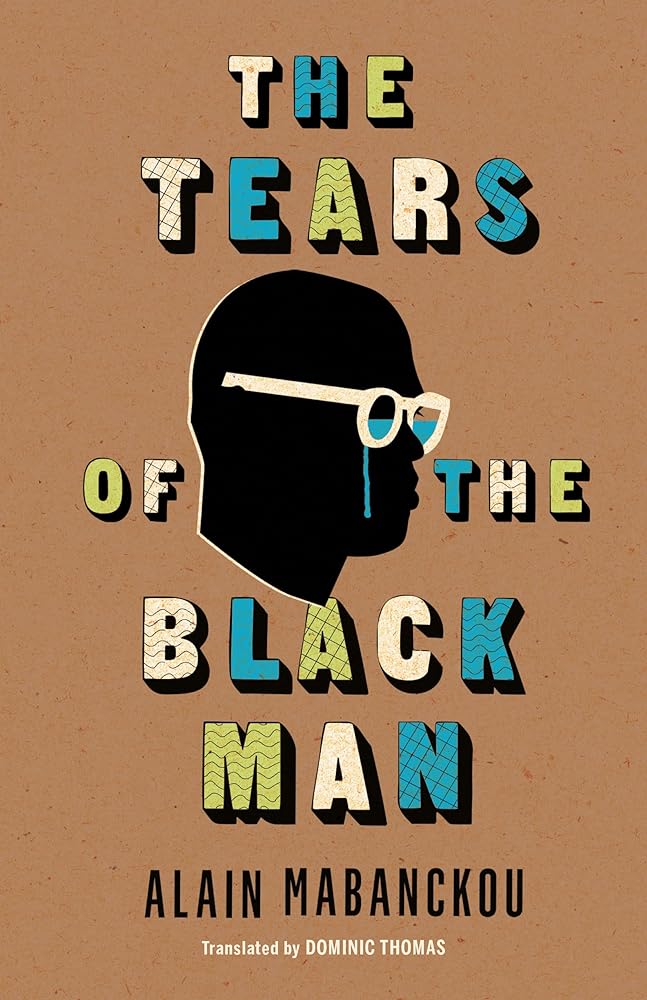
The Tears of the Black Man (Global African Voices)
$16.00*ship in 7-10 business days
In TheTears of the Black Man, award-winning author Alain Mabanckou explores what it means to be black in the world today. Mabanckou confronts the long and entangled history of Africa, France, and the United States as it has been shaped by slavery, colonialism, and their legacy today. Without ignoring the injustices and prejudice still facing blacks, he distances himself from resentment and victimhood, arguing that focusing too intenselyon the crimes of the past is limiting. Instead, it is time to ask: Now what? Embracing the challenges faced by ethnic minority communities today, The Tears of the Black Man looks to the future, choosing to believe that the history of Africa has yet to be written and seeking a path toward affirmation and reconciliation.
-
PRE-ORDER: From Infinite World: The Sound of the Hammond Organ and the Tragedy of AIDS in the Black Church
![From Infinite World: The Sound of the Hammond Organ and the Tragedy of AIDS in the Black Church cover image]()

PRE-ORDER: From Infinite World: The Sound of the Hammond Organ and the Tragedy of AIDS in the Black Church
$35.00An innovative work that explores the relationship between the Black church, the Hammond organ, and the musicians that bring it to life.
The Hammond organ has long distinguished the Black church. Masters of the instrument, often Blackqueer men, invented and advanced gospel music, pioneered new modes of worship, and helped define Black life in the twentieth century. But when AIDS crisis struck, churches vociferously rejected all forms of queerness, even as musicians grew ill and hushed rumors spread. Drawing on years of experience as a preacher, choir director, and organist, award-winning visual artist and scholar Ashon Crawley combines personal history and cultural analysis to tell an urgent story about how AIDS fundamentally changed gospel music and the sound of the church. Profiling foundational figures in the church and Black life, such as Zora Neale Hurston and Rev. Clarence Cobbs of Chicago’s First Church of Deliverance, as well as the inventor of the organ, Laurens Hammond, Crawley’s lyrical work offers a captivating new portrait of the Black church as a site of refuge and rejection for Blackqueer genius.
69 illustrations
-
The Grift: The Downward Spiral of Black Republicans from the Party of Lincoln to the Cult of Trump
![Book cover image]()

The Grift: The Downward Spiral of Black Republicans from the Party of Lincoln to the Cult of Trump
by Clay Cane
$17.99Part history and part cultural analysis, The Grift chronicles the nuanced history of Black Republicans. Clay Cane lays out how Black Republicanism has been mangled by opportunists who are apologists for racism.
After the Civil War, the pillars of Black Republicanism were a balanced critique of both political parties, civil rights for all Americans, reinventing an economy based on exploitation, and, most importantly, building thriving Black communities. How did Black Republicanism devolve from revolutionaries like Frederick Douglass to the puppets in the Trump era?
Whether it's radical conservatives like South Carolina Senator Tim Scott or Supreme Court Justice Clarence Thomas, they are consistently viral news and continuously upholding egregious laws at the expense of their Black brethren. Black faces in high places providing cover for explicit bigotry is one of the greatest threats to the liberation of Black and brown people. By studying these figures and their tactics, Cane exposes the grift and lays out a plan to emancipate our future.
-
Bones at the Crossroads (Blood at the Root)
![Bones at the Crossroads (Blood at the Root) cover image]()

Bones at the Crossroads (Blood at the Root)
LaDarrion Williams
from $13.99Read the sequel to the explosive, instant New York Times bestseller fantasy debut that People Magazine calls “unforgettable.” A Black teenager with magical powers returns to Caiman University only to find new dangers and new secrets.
It's Homecoming season at Caiman University, and all 17-year-old Malik Baron wants to do is be a regular college student…or as regular as he can get at a magical HBCU for young, Black Conjurers. He’s ready to go to parties, hang out with his new friends, choose a major, and talk to girls. Instead, he's reeling from a summer of revelations, heartbreak and betrayal, and still uncovering the truth about his powers and his legacy.
The family he only just discovered is already fractured beyond repair, and a new relative who shows up on his doorstep brings even more questions. Then there’s the mother he risked everything to find, who might be the biggest threat to the life he's trying to build. To protect his new community, Malik joins an elite secret society with roots in ancient magic.
His journey takes him even deeper into his own heritage and the history of the magical world, while bringing him closer to a classmate whose friendship might mean something more, if Malik is ready to let her in. But how can he use powers he can’t even control to defend a world he’s not sure will ever fully accept him? And as the pressure and danger builds, will he be able to confront the deepening cracks within the magical society, and those building within himself?
-
My Grandmother's Hands: Racialized Trauma and the Pathway to Mending Our Hearts and Bodies
![My Grandmother's Hands: Racialized Trauma and the Pathway to Mending Our Hearts and Bodies]()
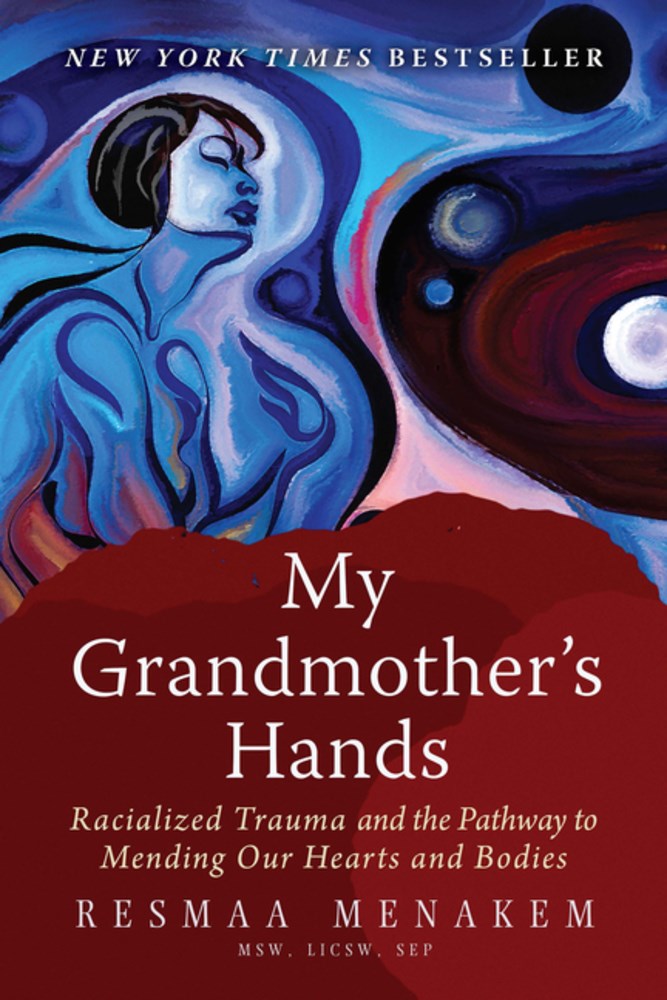
My Grandmother's Hands: Racialized Trauma and the Pathway to Mending Our Hearts and Bodies
by Resmaa Menakem
$17.95In this groundbreaking book, therapist Resmaa Menakem examines the damage caused by racism in America from the perspective of trauma and body-centered psychology.
The body is where our instincts reside and where we fight, flee, or freeze, and it endures the trauma inflicted by the ills that plague society. Menakem argues this destruction will continue until Americans learn to heal the generational anguish of white supremacy, which is deeply embedded in all our bodies. Our collective agony doesn't just affect African Americans. White Americans suffer their own secondary trauma as well. So do blue Americans—our police.
My Grandmother's Hands is a call to action for all of us to recognize that racism is not only about the head, but about the body, and introduces an alternative view of what we can do to grow beyond our entrenched racialized divide.
- Paves the way for a new, body-centered understanding of white supremacy—how it is literally in our blood and our nervous system.
- Offers a step-by-step healing process based on the latest neuroscience and somatic healing methods, in addition to incisive social commentary.
-
Black on Both Sides: A Racial History of Trans Identity
![Black on Both Sides: A Racial History of Trans Identity]()

Black on Both Sides: A Racial History of Trans Identity
by C. Riley Snorton
$24.95Winner of the John Boswell Prize from the American Historical Association 2018
Winner of the William Sanders Scarborough Prize from the Modern Language Association 2018
Winner of an American Library Association Stonewall Honor 2018
Winner of Lambda Literary Award for Transgender Nonfiction 2018
Winner of the Sylvia Rivera Award in Transgender Studies from the Center for Lesbian and Gay Studies
The story of Christine Jorgensen, America’s first prominent transsexual, famously narrated trans embodiment in the postwar era. Her celebrity, however, has obscured other mid-century trans narratives—ones lived by African Americans such as Lucy Hicks Anderson and James McHarris. Their erasure from trans history masks the profound ways race has figured prominently in the construction and representation of transgender subjects. In Black on Both Sides, C. Riley Snorton identifies multiple intersections between blackness and transness from the mid-nineteenth century to present-day anti-black and anti-trans legislation and violence.Drawing on a deep and varied archive of materials—early sexological texts, fugitive slave narratives, Afro-modernist literature, sensationalist journalism, Hollywood films—Snorton attends to how slavery and the production of racialized gender provided the foundations for an understanding of gender as mutable. In tracing the twinned genealogies of blackness and transness, Snorton follows multiple trajectories, from the medical experiments conducted on enslaved black women by J. Marion Sims, the “father of American gynecology,” to the negation of blackness that makes transnormativity possible.
Revealing instances of personal sovereignty among blacks living in the antebellum North that were mapped in terms of “cross dressing” and canonical black literary works that express black men’s access to the “female within,” Black on Both Sides concludes with a reading of the fate of Phillip DeVine, who was murdered alongside Brandon Teena in 1993, a fact omitted from the film Boys Don’t Cry out of narrative convenience. Reconstructing these theoretical and historical trajectories furthers our imaginative capacities to conceive more livable black and trans worlds.
-
The Black Utopians: Searching for Paradise and the Promised Land in America
![Book cover image]()

The Black Utopians: Searching for Paradise and the Promised Land in America
by Aaron Robertson
from $20.00A lyrical meditation on how Black Americans have envisioned utopia―and sought to transform their lives.
How do the disillusioned, the forgotten, and the persecuted not merely hold on to life but expand its possibilities and preserve its beauty? What, in other words, does utopia look like in black?
These questions animate Aaron Robertson’s exploration of Black Americans' efforts to remake the conditions of their lives. Writing in the tradition of Saidiya Hartman and Ta-Nehisi Coates, Robertson makes his way from his ancestral hometown of Promise Land, Tennessee, to Detroit―the city where he was born, and where one of the country’s most remarkable Black utopian experiments got its start. Founded by the brilliant preacher Albert Cleage Jr., the Shrine of the Black Madonna combined Afrocentric Christian practice with radical social projects to transform the self-conception of its members. Central to this endeavor was the Shrine’s chancel mural of a Black Virgin and child, the icon of a nationwide liberation movement that would come to be known as Black Christian Nationalism. The Shrine’s members opened bookstores and co-ops, created a self-defense force, and raised their children communally, eventually working to establish the country’s largest Black-owned farm, where attempts to create an earthly paradise for Black people continues today.
Alongside the Shrine’s story, Robertson reflects on a diverse array of Black utopian visions, from the Reconstruction era through the countercultural fervor of the 1960s and 1970s and into the present day. By doing so, Robertson showcases the enduring quest of collectives and individuals for a world beyond the constraints of systemic racism.
The Black Utopians offers a nuanced portrait of the struggle for spaces―both ideological and physical―where Black dignity, protection, and nourishment are paramount. This book is the story of a movement and of a world still in the making―one that points the way toward radical alternatives for the future.
-
The Weary Blues; Not Without Laughter; The Ways of White Folks (Everyman's Library Contemporary Classics Series)
![The Weary Blues; Not Without Laughter; The Ways of White Folks (Everyman's Library Contemporary Classics Series) cover image]()

The Weary Blues; Not Without Laughter; The Ways of White Folks (Everyman's Library Contemporary Classics Series)
Langston Hughes
$35.00A major hardcover compendium of poetry and fiction by the legendary Black American poet of the Harlem Renaissance
One of the most important writers to emerge from the Harlem Renaissance, Langston Hughes may be best known as a poet, but he was also a brilliant storyteller, blending elements of blues and jazz, speech and song, into a triumphant and wholly original idiom. Perhaps more than any other writer, Langston Hughes made the white America of the 1920s and 1930s aware of the Black culture thriving in its midst. Hughes's poetry and fiction works are messages from that America, sharply etched vignettes of its daily life, cruelly accurate portrayals of Black and white collisions.
This Everyman's Library compendium comprises Hughes's debut poetry collection, The Weary Blues, which catapulted him into literary stardom at just twenty-four years old; his award-winning debut novel, Not Without Laughter, published in 1930 to critical raves; and his 1933 collection of short stories The Ways of White Folks, currently only available in Vintage Classics trade paperback.
Everyman's Library pursues the highest production standards, printing on acid-free paper, with full-cloth cases with two-color foil stamping, decorative endpapers, silk ribbon markers, European-style half-round spines, and a full-color illustrated jacket.


Stay Informed. We're building a community committed to celebrating Black authors + artisans. Subscribe to keep up with all things Kindred Stories.