
Non-fiction
- The Taste of Country Cooking: 50th Anniversary Edition: A Cookbook
![The Taste of Country Cooking: 50th Anniversary Edition: A Cookbook cover image]()

The Taste of Country Cooking: 50th Anniversary Edition: A Cookbook
$40.00A stunning 50th anniversary edition of one of the most beloved cookbooks of all time, by “the empress of Southern cooking” (The New Yorker), beautifully repackaged and redesigned, with a new foreword by Toni Tipton-Martin
With the publication of The Taste of Country Cooking, Edna Lewis proclaimed the food of the American South as one of the world’s great cuisines. From Baked Virginia Ham and Corn Muffins to Oyster Stew and Lemon Meringue Pie, Miss Lewis (as she was almost universally known) extolled the virtues of the good food of her childhood, spent in a Virginia farming community founded by her grandfather and his friends after emancipation. A celebration of eating locally—decades before “farm to table” became common parlance—the book catalogs the joys of cooking with the seasons: the field greens and salads of spring, pan-fried chicken and crushed peaches in summer, baked ham and sweet potatoes for fall, and hearty soups and stews during the cold winter months. An affirmation of a distinctly American way of eating, half a century after its publication, it remains the definitive book on Southern cooking.
- African Designs from Traditional Sources
![African Designs from Traditional Sources cover image]()

African Designs from Traditional Sources
$14.95Since the discovery of African art by the Cubists, the primitive strength of its motifs has held a fascination for contemporary artists and designers and has exercised a considerable infl uence on the development of modern art. This book brings together an unusually varied selection of African designs which will find many uses in advertising and in the creation of book designs, bookplates, labels, and patterns for textiles and wallpaper; or may simply serve as inspiration for the creation of original designs. Rendered in stark black-and-white, they may be reproduced, enlarged, reduced or altered at will.
Symbolic and simple geometric motifs, repetitive designs and textural patterns, representations of human beings, animals and mythical figures, masks, abstract motifs, and artifacts and objects with figural components are reproduced from the work of the Ndebele, Ashanti, Zulu, Masai, Bushongo, Mangbetu, Bariba, Toma, Baule and many other tribes. There are designs from carved ivory pendants and bracelets, helmet masks, wooden combs, altar slabs and shields, and designs printed on cloth and painted on doors and walls. Each is identified by original use, and the source is listed for each.
Geoffrey Williams, himself a practicing designer, has reproduced most of these designs by means of linocut prints in order to capture the power of the originals. His sources have been artifacts in museums and private collections with a few designs gathered from the pages of important publications on the subject. A bibliography refers the reader not only to the sources of material used for this book, but to other major sources of information about African tribal art. - The Burning Ground: Oil and Militancy in Nigeria
![The Burning Ground: Oil and Militancy in Nigeria cover image]()

The Burning Ground: Oil and Militancy in Nigeria
$18.00They killed her father for speaking out
For decades, the oil-rich Niger Delta—an important wetland and farming region—has seen its environment devastated by oil extraction that has brought little economic benefit to its people. After a nonviolent campaign for environmental and human rights, Ken Saro-Wiwa and eight colleagues were executed by the military dictatorship in 1995. Their deaths sparked an armed insurgency marked by sabotage and oil theft in a bid for “resource control.”
Thirty years after Ken Saro-Wiwa’s death, his daughter Noo traces the rise of this insurgency and how it became entangled with politics, further damaging the environment and upending social hierarchies. In The Burning Ground, she travels across the delta to examine its aftermath, speaking with former militants, highlighting the undervalued role of women, and meeting individuals working toward sustainable development. Along the way, her sharp, humane reporting brings to life a region where environmental damage, political conflict, human-rights pressures, and accelerating climate threats converge in ways the world cannot ignore.
- Horses: Poems
![Horses: Poems cover image]()

Horses: Poems
$18.00“Beauty is possible even when it appears impossible. An astounding book.” —Joy Harjo, author of Washing My Mother's Body
Navajo Nation Poet Laureate Jake Skeets’s highly anticipated second collection patiently tracks the impacts of climate change on the land and its myriad inhabitants.
“For now, go out and dream of joy, we know the labor of feeling it.”
With Eyes Bottle Dark with a Mouthful of Flowers, Jake Skeets emerged as a visionary new literary voice, offering readers a queer, Indigenous poetics inextricable from a connection to land. With Horses, Skeets tracks the shifting land of the Navajo Nation: What changes and what remains the same in a place that has been inhabited for thousands of years?
In poems employing numbers significant to Diné thought and lifeway, Skeets explores the reclamation of land, imagination, and language—a world beyond environmental apocalypse, where joy is possible and where transformation is embraced over erasure. Arranged as a quartet, Horses begins with a meditation on two hundred horses found dead, mired in mud that had once been a stock pond on Navajo land in Arizona. What was once a source of life had become a death trap for a herd living on the edge of survival. From here, Skeets’s poems radiate outward, tracing the body and its relationship to a landscape marked by geologic time and the fragile, eroding moments of the present.
Fiercely observant, brilliantly constructed, and hauntingly incisive, Horses evokes both the end of a world and a new dawn emerging on the horizon.
- Black Soldiers, White Laws: The Tragedy of the 24th Infantry in 1917 Houston
![Black Soldiers, White Laws: The Tragedy of the 24th Infantry in 1917 Houston cover image]()

Black Soldiers, White Laws: The Tragedy of the 24th Infantry in 1917 Houston
Sold outThe first full and definitive narrative of one of the most shocking and largely unknown events of racial injustice in US history: the execution of nineteen Black soldiers in Texas
On the sweltering, rainy night of August 23, 1917, one of the most consequential events affecting America’s long legacy of racism and injustice began in Houston, Texas. Inflamed by a rumor that a white mob was arming to attack them, and after weeks of police harassment, more than 100 African American soldiers of the 3rd Battalion, 24th Infantry Regiment, took their weapons without authorization and, led by a sergeant, marched into the largely Black San Felipe district of the city. Violent confrontations with police and civilians ensued and nineteen lives were lost.
The Army moved quickly to court-martial 118 soldiers on charges of mutiny and murder, even though a majority of the soldiers involved had never fired their weapons. Inadequately defended en masse by a single officer who was not a lawyer and had no experience in capital cases, in three trials undermined by perjured testimony and clear racial bias, and confronted by an all-white tribunal committed to a rapid judgment, 110 Black soldiers were found guilty—despite the fact that no mutiny had, in fact, taken place. In the predawn darkness of December 11, thirteen of them were hanged at Fort Sam Houston in San Antonio—hastily and in secret, without any chance to appeal. News of the largest mass execution in the Army’s history outraged the country and inspired preventive legislation; and yet six more Black soldiers were executed in early 1918 and the rest were sentenced to life in prison.
The Houston Incident, as it became known, has remained largely untold, a deep stain on the Army’s record and pride. Award-winning historian and Army veteran John A. Haymond has spent six years researching the events surrounding the Incident and leading the efforts that ultimately led, in November 2023, to the largest act of retroactive clemency in the Army’s history when the verdicts were overturned and honorable discharges awarded to all the soldiers involved. His dramatic chronicle of what transpired—situated amongst the rampant racism in Texas and the country—is a crucially important and harrowing reminder of our racially violent past, offering the promise that justice, even posthumously, can prevail.
- Black Film: A History of Black Representation and Participation in the Movies
![Black Film: A History of Black Representation and Participation in the Movies cover image]()

Black Film: A History of Black Representation and Participation in the Movies
Sold outAn illustrated history that celebrates the legacy of Black actors, films, and filmmakers from the silent era through today and explores the deeply embedded racism of the film industry, from the award-winning author of The Black Panther Party
In Black Film, Eisner Award-winning author David F. Walker presents an immersive dive into the crucial history of Black actors, films, and filmmakers. Following closely behind the very first moving picture captured by Eadward Muybridge in 1872, Thomas Edison's thirty-second "actualities" from the late 1890s, including A Watermelon Contest and Dancing Darkey Boy, are among the first short films to depict Black people. These can be considered the earliest examples of how the film industry would go on to exploit, appropriate, and shape the narrative of Black people for the duration of its development.
Divided by decade, each section of the book covers an important era and milestone for Black film, highlighting both difficulties and triumphs through time. For example:
* The harmful popularization of blackface and minstrel shows (1890-1914)
* The emergence of racist feature-length movies such as Birth of a Nation after the advancement of sound in film, countered by the success of pioneering Black filmmakers such as Oscar Michaeux and brothers George and Noble Johnson (1915-1928)
* The rise of trailblazing actors such as Sidney Poitier and Dorothy Dandridge (1950-1959)
* The roots of Blaxploitation as a subgenre and how Black people ultimately saved Hollywood during trying times (1970-1979)
* The exciting crossover of hip-hop music into film (1980-1989)
* The box office success of Marvel's The Black Panther, Moonlight's history-making Best Picture win, and more.With gorgeous illustrations, film stills, and rare pieces of ephemera, Black Film celebrates the glowing contributions of Black actors and filmmakers, without shying away from discussing the racism that is rooted in Hollywood—an important reality to address in order to make progress.
- Black Public Joy: No Permit or Permission Required
![Black Public Joy: No Permit or Permission Required cover image]()

Black Public Joy: No Permit or Permission Required
$24.00From one of North America’s most influential public space experts comes a powerful treatise celebrating Black people’s audacious, complex, and universally embraced public joy expressions.
How much safety, belonging and delight do you feel when you walk through a park? Hang out in a coffee shop? Ride the subway to work? Explore a new neighbourhood? Now, how much do you know about how history, urban planning, culture and even your personal upbringing impact those feelings, and overall access, to public joy? For well over a decade, Jay Pitter has been thinking about public space and the ways it can be designed to not only contribute to social equity but also inspire joy for everyone. Her award-winning work helping cities navigate complex issues such as reimagining Confederate monument sites, the creation of cultural districts and the adoption of gender-responsive street design compels her to ask: “How can I ignite public joy?”
Pitter acknowledges egregious place-based violations faced by her community—historical and contemporary—while unapologetically bending the book’s narrative arc toward public joy. Declaring that Black public joy is so powerful that even the auction block could not extinguish it, Pitter guides the reader through an under-explored placemaking journey. In addition to unearthing historical rituals, the book builds on the current groundswell of Black-led initiatives highlighting hiking, dining, cycling, and frolicking punctuated by hashtags such as #BlackJoy and #BlackOutdoors. Pitter draws upon her practice expertise and research, delving more deeply to situate these moments and online conversations within the phenomenon that is Black public joy.
Along the way, she introduces us to beloved colleagues creating public joy in their communities, and also reveals vulnerable personal stories as ground for the book’s narrative. Black Public Joy’s themes—our collective desire for safely taking up space, feeling belonging, and freeing ourselves from fears of judgement—are universal. Pitter’s work calls on all of us to become better stewards of each other’s public joy, as well as to claim our own.
- Paule Marshall: A Writer’s Life (Black Lives)
![Paule Marshall: A Writer’s Life (Black Lives) cover image]()

Paule Marshall: A Writer’s Life (Black Lives)
$30.00An elegant biography of a prescient author whose novels portray Black women’s experiences across the African diaspora
Growing up in World War II–era Brooklyn among West Indian immigrants, Paule Marshall (1929–2019) was fiercely driven to become a writer, making art from the world she knew, the life she lived, and the world she imagined. Though her novels and stories are understood by scholars as the beginning of contemporary Black feminist literature―bridging Harlem Renaissance writers like Zora Neale Hurston to such writers as Toni Morrison, Alice Walker, and Maya Angelou―Marshall’s legacy is often overlooked. In this elegant literary biography, distinguished scholar of African American literature Mary Helen Washington draws on exclusive access to the writer’s papers, including her newly discovered unpublished memoir, and scores of interviews with family and friends to give us the first account of Marshall’s life as an artist and of the depth and brilliance of her work.
Beginning with her 1959 debut, Brown Girl, Brownstones, a coming-of-age story set among Barbadian immigrants and African Americans in Brooklyn, and moving through her later works set in the Caribbean, Africa, and the United States, Marshall’s novels chart the diasporic life that Marshall herself lived, defined by Black women’s experiences, an unapologetic and sometimes queer sexuality, and the history of the African diaspora. Despite the lush and finely observed inner lives of her heroines, however, Marshall was famous for tightly guarding her own privacy, and it is this enigma―Marshall’s deeply expressive writing versus her guarded public exterior―that Washington draws out. Here is the first look at a prescient, brilliantly talented writer, a complex and fascinating woman, whose fiction single-handedly stages a reverse middle passage that extends from the United States and the Caribbean to Africa. - The Essential Guide for Counseling Black Women
![The Essential Guide for Counseling Black Women cover image]()

The Essential Guide for Counseling Black Women
$29.99Black women deserve a safe therapeutic space to process their experiences.
As the fastest growing population in education, economics, entrepreneurship, and international travel, Black women are forging a world of their own. They are breaking generational cycles, reinventing social norms, and developing new identities. However, as a double marginalized minority, Black women are also navigating socially constructed ideas of race, oppression, and privilege. Many well-intentioned clinicians lack the skills and knowledge to properly support, guide, and develop inquiries with these clients.
Clinicians will find foundational information on the types of experiences that cause many Black women to seek therapy as well as ways to support them on their therapeutic journey. Topics such as nontraditional lifestyles, work ethic and legacy, understanding friendships, embracing newfound freedoms and opportunities, moving beyond stereotypes, understanding and working with emotions, addressing trauma, and mental health disorders through a cultural lens are explored.
Throughout the book, therapist tips, catalyst questions (springboard questions on certain topics), examples, and journaling prompts are shared to help clinicians and clients work together to explore undiscovered depths, ways of healing, and improve mental health.
19 black-and-white tables
- Futuring Black Lives: Independent Black Institutions and the Literary Imagination (Black Lives and Liberation)
![Futuring Black Lives: Independent Black Institutions and the Literary Imagination (Black Lives and Liberation) cover image]()

Futuring Black Lives: Independent Black Institutions and the Literary Imagination (Black Lives and Liberation)
$34.95Futuring Black Lives is a historical ethnography examining Black institution builders in the late 1960s and early 1970s and their work to leverage the power of publications and the literary imagination to engage “concerned men and women” in conversations about the educational journeys and futures of Black children. While many began as reactions to anti-Blackness and American public schooling failing Black children, Independent Black Institutions (IBIs) came to be viable ecosystems anchored in a shared Black value system preparing Black children in three areas: identity, purpose, and direction.
The rationale for establishing and valuing IBIs remains highly relevant, given the sociopolitical landscape of education today. In addition to persistent racial disparities in academic achievement and Black students’ highly disproportionate experiences of punishment and “discipline,” friction and legislation against critical examination of race, racism, and racist ideas in school settings are front and center, and children’s and young adult literature are under attack through censorship and outright book bans. Yet Black institution builders left useful maps of and for the educational future/s of Black children that remain available in journals, newspapers, pamphlets, and other ephemera. Author Maisha T. Winn demonstrates how and why the historiography-grounded futuring of Black education can and should inform current pursuits of equity, justice, and liberation through education.
- Contemporary Black Women Filmmakers and the Art of Resistance (Black Performance and Cultural Criticism)
![Contemporary Black Women Filmmakers and the Art of Resistance (Black Performance and Cultural Criticism) cover image]()

Contemporary Black Women Filmmakers and the Art of Resistance (Black Performance and Cultural Criticism)
Christina N. Baker
$34.95Christina N. Baker’s Contemporary Black Women Filmmakers and the Art of Resistance is the first book-length analysis of representations of Black femaleness in the feature films of Black women filmmakers. These filmmakers resist dominant ideologies about Black womanhood, deliberately and creatively reconstructing meanings of Blackness that draw from their personal experiences and create new symbolic meaning of Black femaleness within mainstream culture. Addressing social issues such as the exploitation of Black women in the entertainment industry, the impact of mass incarceration on Black women, political activism, and violence, these films also engage with personal issues as complex as love, motherhood, and sexual identity. Baker argues that their counter-hegemonic representations have the potential to transform the narratives surrounding Black femaleness. At the intersection of Black feminism and womanism, Baker develops a “womanist artistic standpoint” theory, drawing from the work of Alice Walker, Patricia Hill Collins, bell hooks, Audre Lorde, and Kimberlé Crenshaw.
Analyzing the cultural texts of filmmakers such as Ava DuVernay, Tanya Hamilton, Kasi Lemmons, Gina Prince-Bythewood, and Dee Rees—and including interviews she conducted with three of the filmmakers—Baker emphasizes the importance of applying an intersectional perspective that centers on the shared experiences of Black women and the role of film as a form of artistic expression and a tool of social resistance. - It's Not Hysteria: Everything You Need to Know About Your Reproductive Health (but Were Never Told)
![It's Not Hysteria: Everything You Need to Know About Your Reproductive Health (but Were Never Told) cover image]()

It's Not Hysteria: Everything You Need to Know About Your Reproductive Health (but Were Never Told)
Dr. Karen Tang
$19.99An inclusive and essential new resource for reproductive health―including period problems, pelvic pain, menopause, fertility, sexual health, vaginal and urinary conditions, and overall wellbeing―from leading expert and fierce advocate Dr. Karen Tang
"Dr. Karen Tang is a literal godsend to women in a time still filled with great ignorance in medical research and financing of women's health initiatives. Please read her book, follow her on Instagram as I have, and feel blessed as I do to have an advocate for our body, our health, and our human rights." ―Sharon Stone
Did you know that up to 90% of women experience menstrual abnormalities or pelvic issues in their lifetime? Yet these conditions are overwhelmingly misunderstood, misdiagnosed, or dismissed. The root causes for these issues, such as PCOS, endometriosis, fibroids, ovarian cysts, PMDD, or pelvic floor dysfunction, don’t receive the stream of funding for research and new treatments that other conditions do, despite affecting up to half the population.
Dr. Karen Tang is on a mission to transform how we engage with our bodies and our healthcare. It’s Not Hysteria is a comprehensive guide to common conditions and potential treatment options, with practical tools such as symptom prompts and sample questions for your provider, to equip readers to take control of their gynecologic health.
Reproductive healthcare, from abortion to gender-affirming care, is under siege. The onus continues to fall on patients to find and advocate for the care they need. In the face of uncertainty and misinformation, It’s Not Hysteria is destined to become a new classic that educates and empowers women and those assigned female at birth.
- Ethiopian Devotions: Paintings, Illuminated Manuscripts, and Processional Crosses from the Fourteenth to the Twentieth Centuries
![Ethiopian Devotions: Paintings, Illuminated Manuscripts, and Processional Crosses from the Fourteenth to the Twentieth Centuries cover image]()

Ethiopian Devotions: Paintings, Illuminated Manuscripts, and Processional Crosses from the Fourteenth to the Twentieth Centuries
Marilyn E. Heldman
$40.00Admire stunning Christian imagery of Ethiopian Orthodox Church art in this lavishly illustrated volume with informative essays and more than 100 images
Ethiopia is one of the world’s oldest Christian civilizations, and its rich artistic history often centers on religious themes and practices. Ranging from the fourteenth to the twentieth centuries, Ethiopian Devotions celebrates an incredible collection of work, from a free-standing basilica carved from living rock, to the tradition of Ethiopic hagiography describing the lives of saints, to diptych and triptych icons of veneration — miniature paintings distinctive for their vibrant colors and soulful eyes.
Insightful essays present Ethiopia’s devotional arts, and place in context the images of illustrated manuscripts, panel paintings, inscribed portraits, murals, crosses, garments, devotional images, prayer staffs, church and monastery architecture, and more, while exploring their connection to liturgical music and literature.
Written by distinguished scholars in the field, the book’s exploration of Ethiopia’s cultural, artistic, and religious traditions is authoritative, and its more than 100 images reveal the depth, beauty and detail embodied in the artwork. Ethiopian Devotions offers readers the opportunity to understand and admire radiant art and learn about its long and remarkable history.
- The Significance of Chinatown Development to a Multicultural America: An Exploration of the Houston Chinatowns (Emerald Points)
![The Significance of Chinatown Development to a Multicultural America: An Exploration of the Houston Chinatowns (Emerald Points) cover image]()

The Significance of Chinatown Development to a Multicultural America: An Exploration of the Houston Chinatowns (Emerald Points)
Zen Tong Chunhua Zheng
$60.00The Houston Chinatown’s dramatic transformation from a Chinese enclave decades ago to a continually expanding multiethnic boomtown today contrasts development stagnation in many other traditional American Chinatowns. This pioneer study delineates the evolution of Houston’s two Chinatowns, from the emergence and decline of Old Chinatown to the subsequent development and vibrant growth of New Chinatown – spanning nearly a century.
Zheng and Zou delve into the distinctive character of New Chinatown, underscoring its innovative progress that sets it apart from the nation’s oldest major Chinatowns, a quintessentially Houston story. They also probe the immigrant experience, political landscape, and socioeconomic dynamics that influenced the Chinatowns’ metamorphoses. Scanning the community’s collective response to the dire impact of the COVID-19 pandemic on New Chinatown, the chapters examine the latest development trends in the New Chinatown areas, shedding light on the extent to which they are upholding, or deviating from, traditional practices. Furthermore, the book explores the significance of these trends to the local community and beyond, alongside their wider implications.
Amidst the growth challenges encountered by numerous Chinatowns across America, this timely work offers insightful perspectives on a sustainable model for urban and community development, as demonstrated by the transformative journey of Houston’s New Chinatown.
- African American Religions, 1500-2000
![African American Religions, 1500-2000 cover image]()

African American Religions, 1500-2000
Sylvester A. Johnson
$37.00This book provides a narrative historical, postcolonial account of African American religions. It examines the intersection of Black religion and colonialism over several centuries to explain the relationship between empire and democratic freedom. Rather than treating freedom and its others (colonialism, slavery, and racism) as opposites, Sylvester A. Johnson interprets multiple periods of Black religious history to discern how Atlantic empires (particularly that of the United States) simultaneously enabled the emergence of particular forms of religious experience and freedom movements as well as disturbing patterns of violent domination. Johnson explains theories of matter and spirit that shaped early indigenous religious movements in Africa, Black political religion responding to the American racial state, the creation of Liberia, and FBI repression of Black religious movements in the twentieth century. By combining historical methods with theoretical analysis, Johnson explains the seeming contradictions that have shaped Black religions in the modern era.
- From Blues to Beyoncé: A Century of Black Women's Generational Sonic Rhetorics (Black Women's Wellness)
![From Blues to Beyoncé: A Century of Black Women's Generational Sonic Rhetorics (Black Women's Wellness) cover image]()

From Blues to Beyoncé: A Century of Black Women's Generational Sonic Rhetorics (Black Women's Wellness)
Alexis McGee
$34.95Explores how Black women have continually used sound to convey stories and forge community across generations.
From Blues to Beyoncé amplifies Black women's ongoing public assertions of resistance, agency, and hope across different media from the nineteenth century to today. By examining recordings, music videos, autobiographical writings, and speeches, Alexis McGee explores how figures such as Ida B. Wells, Billie Holiday, Ruth Brown, Queen Latifah, Aretha Franklin, Nina Simone, Janelle Monáe, and more mobilize sound to challenge antiBlack discourses and extend social justice pedagogies. Building on contemporary Black feminist interventions in sound studies and sonic rhetorics, From Blues to Beyoncé reveals how Black women's sonic acts transmit meaning and knowledge within, between, and across generations.
- Diasporican: A Puerto Rican Cookbook
![Diasporican: A Puerto Rican Cookbook]()
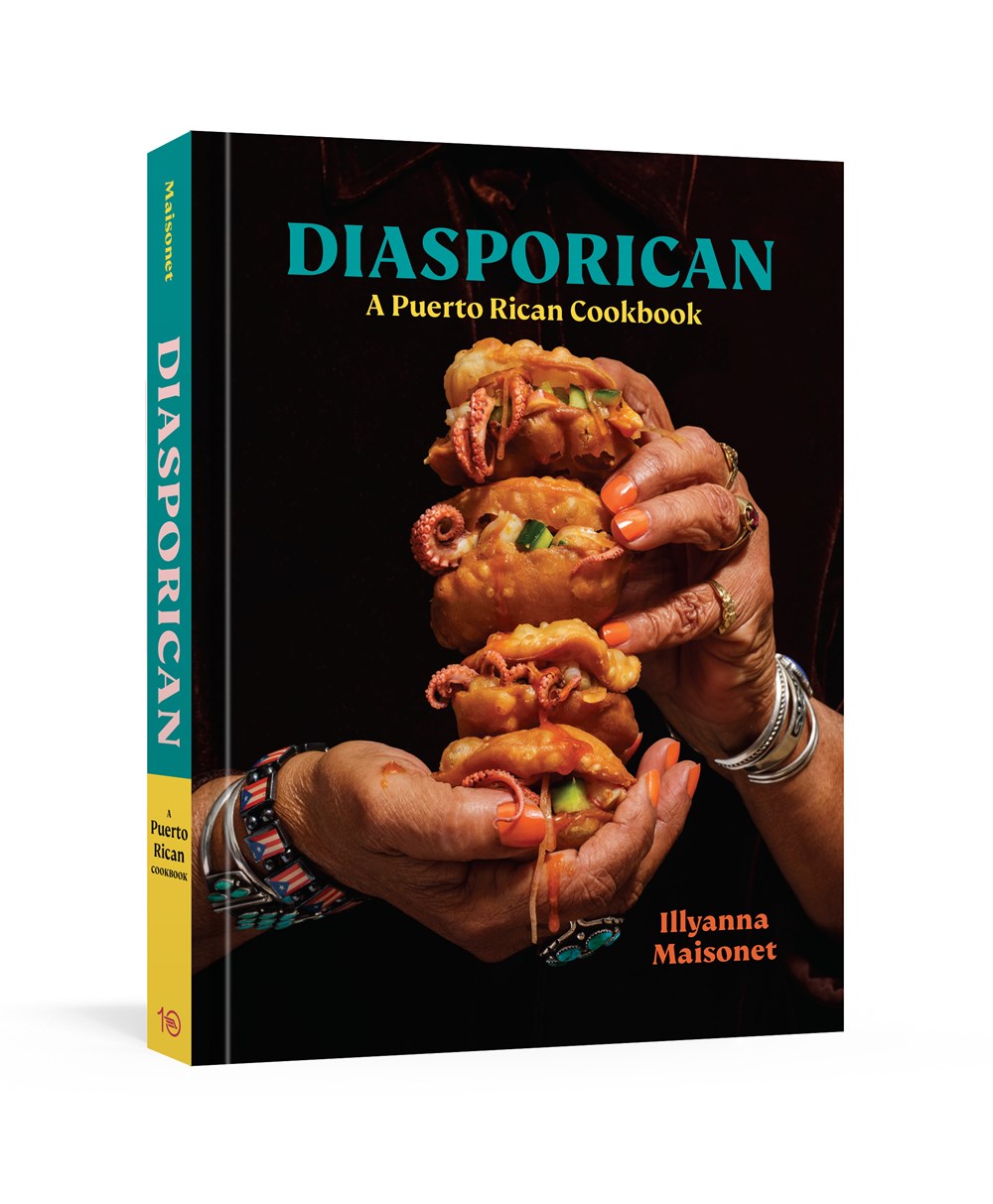
Diasporican: A Puerto Rican Cookbook
by Illyanna Maisonet
$32.50*ships in 7-10 business days*
Illyanna Maisonet spent years documenting her family’s Puerto Rican recipes and preserving the island’s disappearing foodways through rigorous, often bilingual research. In Diasporican, she shares over 90 recipes, some of which were passed down from her grandmother and mother—classics such as Tostones, Pernil, and Arroz con Gandules, as well as Pinchos with BBQ Guava Sauce, Rabbit Fricassee with Chayote, and Flan de Queso.
In this visual record of Puerto Rican food, ingredients, and techniques, Illyanna traces the island’s flavor traditions to the Taino, Spanish, African, and even United States' cultures that created it. These dishes, shaped by geography, immigration, and colonization, reflect the ingenuity and diversity of their people. Filled with travel and food photography, Diasporican reveals how food connects us to family, history, conflict, and migration. - Slavery After Slavery: Revealing the Legacy of Forced Child Apprenticeships on Black Families, from Emancipation to the Present
![Slavery After Slavery: Revealing the Legacy of Forced Child Apprenticeships on Black Families, from Emancipation to the Present cover image]()

Slavery After Slavery: Revealing the Legacy of Forced Child Apprenticeships on Black Families, from Emancipation to the Present
Mary Frances Berry
$19.95An acclaimed historian narrates the stories of newly emancipated children who were re-enslaved by white masters through apprenticeships and their parents fights to free them
While the Thirteenth Amendment abolished slavery, white southerners established a system of apprenticeship after the Civil War that entrapped Black children and their families, leading to undue hardships for generations to come. In Slavery After Slavery, historian Mary Frances Berry traces the stories behind individual cases from southern supreme courts to demonstrate how formerly enslaved families and their descendants were systemically injured through white supremacist practices, perpetuated by the legal system.
By filling in the family trees of formerly enslaved people to their descendants, Berry documents the intergenerational harm they experienced. The resulting damage of trafficking Black children through apprenticeship laws has been a largely overlooked source of inequality, yet these cases provide specific examples of the kind of economic and physical harm Black families have endured.
Slavery After Slavery tells individual stories, but the fates of their descendants tell our collective American story—contributing powerfully to a case for reparations and restorative justice.
- Getting to Reparations: How Building a Different America Requires a Reckoning with Our Past
![Getting to Reparations: How Building a Different America Requires a Reckoning with Our Past cover image]()

Getting to Reparations: How Building a Different America Requires a Reckoning with Our Past
Dorothy A. Brown
$30.00A bold manifesto arguing that there is a clear precedent for paying reparations to atone for America’s original sin of slavery, offering a compelling legal strategy to achieve this goal—from the acclaimed author of The Whiteness of Wealth.
The idea of reparations is not a new or original one; it is one that is baked into American history.
When the District of Columbia Emancipation Act of 1862 went into effect, wealthy slaveowners like Margaret Barber were compensated for the loss of their enslaved workers. Barber received $9,000—an equivalent to $250,000 today. When a group of Italian immigrants were lynched in 1892, President Harrison compensated Italy a total of $25,000 for their deaths—an equivalent to almost $766,000 today. The Indian Claims Commission, an arm of the federal government, paid Indigenous Americans $818 million for underhandedly stealing their land in the eighteenth and nineteenth centuries—an equivalent to almost $350 billion today.
Dorothy A. Brown addresses the glaring question: if reparations can be achieved for others, why not for Black Americans? If lynching can be remedied for Italian immigrants, and slaveholders compensated for losses associated with abolition and emancipation, then the government’s failure to provide such remedies to Black communities harmed by similar violence, loss, and destruction is long overdue. The fight for reparations is truly a fight for the soul of America, to produce the country our founding fathers idealized but never achieved.
Getting to Reparations makes a logical and necessary case for reparations for Black Americans. It lays out a path as to how we might achieve this, built on the frameworks used throughout U.S. history by the government to pay restitution. It is now time to do the same for America's Black population.
- Authentic: The Myth of Bringing Your Full Self to Work
![Authentic: The Myth of Bringing Your Full Self to Work cover image]()

Authentic: The Myth of Bringing Your Full Self to Work
Jodi-Ann Burey
Sold out*Use discount code: SALE at check out for 30% off*
A bold call to rethink authenticity at work
Workplace dynamics in recent years have been a dizzying storm of broken promises. Companies that once encouraged employees to “come as you are” and bring your full, authentic self to work are now shutting down initiatives, part of an ongoing cycle of trading on our identities when it’s convenient and profitable.
Jodi-Ann Burey, writer and critic known for her TED talk “The Myth of Bringing Your Full, Authentic Self to Work,” delves into the dangers of disclosure in environments that aren’t built for our well-being. With insights from pop culture, academic research, and interviews with other professionals of color, Burey argues that we deserve better than shallow ploys for representation.
Our physical and emotional health are at risk, and too much is sacrificed―for ourselves and for collective progress―when our full potential is blocked by racism, sexism, homophobia, transphobia, and ableism. Authentic is a powerful reckoning―and now is the time to reclaim our agency. Even at work.
- Seeds of Empire: Cotton, Slavery, and the Transformation of the Texas Borderlands, 1800-1850 (The David J. Weber Series in the New Borderlands History)
![Seeds of Empire: Cotton, Slavery, and the Transformation of the Texas Borderlands, 1800-1850 (The David J. Weber Series in the New Borderlands History) cover image]()

Seeds of Empire: Cotton, Slavery, and the Transformation of the Texas Borderlands, 1800-1850 (The David J. Weber Series in the New Borderlands History)
Andrew J. Torget
$32.50By the late 1810s, a global revolution in cotton had remade the U.S.-Mexico border, bringing wealth and waves of Americans to the Gulf Coast while also devastating the lives and villages of Mexicans in Texas. In response, Mexico threw open its northern territories to American farmers in hopes that cotton could bring prosperity to the region. Thousands of Anglo-Americans poured into Texas, but their insistence that slavery accompany them sparked pitched battles across Mexico. An extraordinary alliance of Anglos and Mexicans in Texas came together to defend slavery against abolitionists in the Mexican government, beginning a series of fights that culminated in the Texas Revolution. In the aftermath, Anglo-Americans rebuilt the Texas borderlands into the most unlikely the first fully committed slaveholders' republic in North America.
Seeds of Empire tells the remarkable story of how the cotton revolution of the early nineteenth century transformed northeastern Mexico into the western edge of the United States, and how the rise and spectacular collapse of the Republic of Texas as a nation built on cotton and slavery proved to be a blueprint for the Confederacy of the 1860s.
- Africans to Spanish America: Expanding the Diaspora (New Black Studies Series)
![Africans to Spanish America: Expanding the Diaspora (New Black Studies Series) cover image]()

Africans to Spanish America: Expanding the Diaspora (New Black Studies Series)
Sherwin K. Bryant
Sold outAfricans to Spanish America expands the Diaspora framework that has shaped much of the recent scholarship on Africans in the Americas to include Mexico, Peru, Ecuador, and Cuba, exploring the connections and disjunctures between colonial Latin America and the African Diaspora in the Spanish empires. While a majority of the research on the colonial Diaspora focuses on the Caribbean and Brazil, analysis of the regions of Mexico and the Andes opens up new questions of community formation that incorporated Spanish legal strategies in secular and ecclesiastical institutions as well as articulations of multiple African identities. Editors Sherwin K. Bryant, Rachel Sarah O'Toole, and Ben Vinson III arrange the volume around three themes: identity construction in the Americas; the struggle by enslaved and free people to present themselves as civilized, Christian, and resistant to slavery; and issues of cultural exclusion and inclusion. Across these broad themes, contributors offer probing and detailed studies of the place and roles of people of African descent in the complex realities of colonial Spanish America.
Contributors are Joan C. Bristol, Nancy E. van Deusen, Leo J. Garofalo, Herbert S. Klein, Charles Beatty-Medina, Karen Y. Morrison, Rachel Sarah O'Toole, Frank "Trey" Proctor III, and Michele Reid-Vazquez.
- Afro-Decolonial Manifesto (Quilombola)
![Afro-Decolonial Manifesto (Quilombola) cover image]()

Afro-Decolonial Manifesto (Quilombola)
Norman Ajari
$21.00Offering a compelling call to arms while challenging the pervasive grip of colonialism on the Black psyche, this manifesto charts a course toward a future defined by autonomy, dignity, and radical liberation.
Delving into the historical currents of resistance—from Negritude to Black nationalism to pan-Africanism—this manifesto unapologetically confronts the insidious nature of modern colonialism. In a world where the very presence of the Black body incites fear and insecurity among white supremacists, Afro-Decolonial Manifesto exposes the fallacy of equating Black existence with reverse colonialism. It challenges the prevailing narratives of gratitude and guilt, asserting the right of the Black diaspora to reclaim its autonomy and dignity, and also examines the effectiveness of movements like Black Lives Matter, advocating for a renewed Black internationalism rooted in Africa’s unity and autonomy.
In a stirring call to arms, Afro-Decolonial Manifesto heralds a new era of resistance, where reparation becomes not just a demand for restitution, but a catalyst for radical change. This volume emboldens Black people to reclaim their narrative, their agency, and their future. It is a testament to the enduring spirit of liberation and the indomitable resilience of Black lives.
- The Racial Contract
![The Racial Contract cover image]()

The Racial Contract
Charles W. Mills
$24.95The Racial Contract puts classic Western social contract theory, deadpan, to extraordinary radical use. With a sweeping look at the European expansionism and racism of the last five hundred years, Charles W. Mills demonstrates how this peculiar and unacknowledged "contract" has shaped a system of global European domination: how it brings into existence "whites" and "non-whites," full persons and sub-persons, how it influences white moral theory and moral psychology; and how this system is imposed on non-whites through ideological conditioning and violence. The Racial Contract argues that the society we live in is a continuing white supremacist state.
As this 25th anniversary edition—featuring a foreword by Tommy Shelbie and a new preface by the author—makes clear, the still-urgent The Racial Contract continues to inspire, provoke, and influence thinking about the intersection of the racist underpinnings of political philosophy.
- Hottentot Venus: A Novel
![Hottentot Venus: A Novel cover image]()

Hottentot Venus: A Novel
Barbara Chase-Riboud
Sold outIt is Paris, 1815. An extraordinarily shaped South African girl known as the Hottentot Venus, dressed only in feathers and beads, swings from a crystal chandelier in the duchess of Berry’s ballroom. Below her, the audience shouts insults and pornographic obscenities. Among these spectators is Napoleon’s physician and the most famous naturalist in Europe, the Baron George Cuvier, whose encounter with her will inspire a theory of race that will change European science forever.
Evoking the grand tradition of such “monster” tales as Frankensteinand The Hunchback of Notre Dame, Barbara Chase Riboud, prize-winning author of the classic Sally Hemings, again gives voice to an “invisible” of history. In this powerful saga, Sarah Baartman, for more than 200 years known only as the mysterious lady in the glass cage, comes vividly and unforgettably to life.
- Roots: The Saga of an American Family
![Roots: The Saga of an American Family cover image]()

Roots: The Saga of an American Family
Alex Haley
Sold outBased off of the bestselling author's family history, this novel tells the story of Kunta Kinte, who is sold into slavery in the United States where he and his descendants live through major historic events.
When Roots was first published forty years ago, the book electrified the nation: it received a Pulitzer Prize and was a #1 New York Times bestseller for 22 weeks. The celebrated miniseries that followed a year later was a coast-to-coast event-over 130 million Americans watched some or all of the broadcast. In the four decades since then, the story of the young African slave Kunta Kinte and his descendants has lost none of its power to enthrall and provoke.
Now, Roots once again bursts onto the national scene, and at a time when the race conversation has never been more charged. It is a book for the legions of earlier readers to revisit and for a new generation to discover.
To quote from the introduction by Michael Eric Dyson: "Alex Haley's Roots is unquestionably one of the nation's seminal texts. It affected events far beyond its pages and was a literary North Star.... Each generation must make up its own mind about how it will navigate the treacherous waters of our nation's racial sin. And each generation must overcome our social ills through greater knowledge and decisive action. Roots is a stirring reminder that we can achieve these goals only if we look history squarely in the face."
The star- studded cast in this new event series includes Academy Award-winners Forest Whitaker and Anna Paquin, Laurence Fishburne, Jonathan Rhys Meyers, Derek Luke, Grammy Award-winner Tip "T.I." Harris, and Mekhi Phifer. Questlove of The Roots is the executive music producer for the miniseries's stirring soundtrack.
- Negro Legislators Of Texas And Their Descendants: A History Of The Negro In Texas Politics From Reconstruction To Disfranchisement
![Book cover image]()

Negro Legislators Of Texas And Their Descendants: A History Of The Negro In Texas Politics From Reconstruction To Disfranchisement
John Mason Brewer and Herbert P Gambrell
$35.99""Negro Legislators Of Texas And Their Descendants"" is a historical account of the role of African Americans in Texas politics during the period of Reconstruction to Disfranchisement. The book is written by John Mason Brewer and provides an in-depth look at the lives of prominent black legislators and their descendants who played a significant role in shaping Texas politics during this tumultuous period.The book begins by exploring the political landscape of Texas after the Civil War, where African Americans were granted the right to vote and hold public office for the first time. It then delves into the lives of notable black legislators, including Richard Allen, Norris Wright Cuney, and Matthew Gaines, who fought for civil rights and equality in a state that was still deeply divided by racial tensions.The book also examines the challenges faced by black legislators and their descendants, including the rise of Jim Crow laws and the eventual disenfranchisement of African American voters. Despite these obstacles, the book highlights the resilience and determination of black Texans who continued to fight for their rights and make significant contributions to Texas politics.Overall, ""Negro Legislators Of Texas And Their Descendants"" is a comprehensive and insightful account of the role of African Americans in Texas politics during a pivotal moment in the state's history.This scarce antiquarian book is a facsimile reprint of the old original and may contain some imperfections such as library marks and notations. Because we believe this work is culturally important, we have made it available as part of our commitment for protecting, preserving, and promoting the world's literature in affordable, high quality, modern editions, that are true to their original work.
- Honey, Hush!: An Anthology of African American Women's Humor
![Book cover image]()
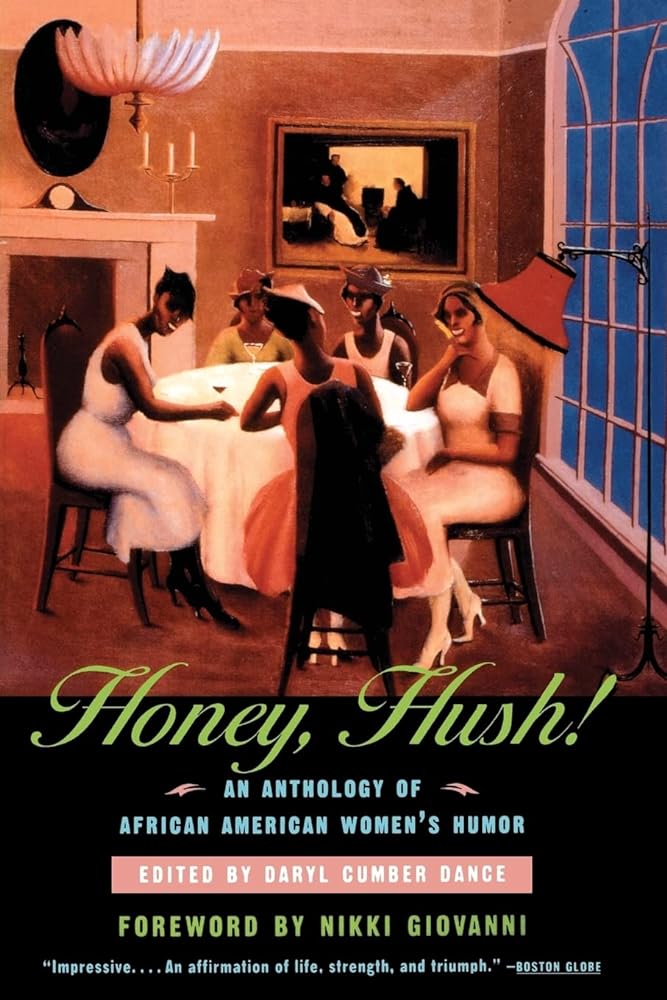
Honey, Hush!: An Anthology of African American Women's Humor
Sold out"Honey Hush!" is an exclamation used among black women, especially those from the South, as a friendly encouragement, a mild suggestion of playful disbelief, or a suggestion that one is telling truths that are prohibited. This anthology will make readers say "Honey, Hush!" many times. Often hard-hitting, sometimes risque', always dramatic and eloquent, the vibrant humor of African American women is celebrated in this bold, unique and comprehensive collection. Arising from the depth of black women's souls and the breadth of their lives, it reflects what the American experience has meant to them.
- Palestine: A Four Thousand Year History
![Palestine: A Four Thousand Year History]()

Palestine: A Four Thousand Year History
by Nur Masalha
$17.95Beginning with the late Bronze Age and moving through to the present day, this is the definitive history of Palestine and its people. This rich and magisterial work traces Palestine's millennia-old heritage, uncovering cultures and societies of astounding depth and complexity that stretch back to the very beginnings of recorded history.
Starting with the earliest references in Egyptian and Assyrian texts, Nur Masalha explores how Palestine and its Palestinian identity have evolved over thousands of years, from the Bronze Age to the present day. Drawing on a rich body of sources and the latest archaeological evidence, Masalha shows how Palestine’s multicultural past has been distorted and mythologised by Biblical lore and the Israel–Palestinian conflict.
In the process, Masalha reveals that the concept of Palestine, contrary to accepted belief, is not a modern invention or one constructed in opposition to Israel, but rooted firmly in ancient past. Palestine represents the authoritative account of the country's history. - Thicker than Water: A Memoir
![Thicker than Water: A Memoir]()

Thicker than Water: A Memoir
by Kerry Washington
Sold out*Ships in 7-10 business days*
Award-winning actor, director, producer, and activist Kerry Washington shares the "exquisitely moving” journey of her life so far (Isabel Wilkerson), and the bravely intimate story of discovering her truth.
While on a drive in Los Angeles, on a seemingly average afternoon, Kerry Washington received a text message that would send her on a life-changing journey of self-discovery. In an instant, her very identity was torn apart, with everything she thought she knew about herself thrown into question.
In Thicker than Water, Washington gives readers an intimate view into both her public and private worlds—as a mother, daughter, wife, artist, advocate, and trailblazer. Chronicling her upbringing and life’s journey thus far, she reveals how she faced a series of challenges and setbacks, effectively hid childhood traumas, met extraordinary mentors, managed to grow her career, and crossed the threshold into stardom and political advocacy, ultimately discovering her truest self and, with it, a deeper sense of belonging.
Throughout this profoundly moving and beautifully written memoir, Washington attempts to answer the questions so many have struggled with: Who am I? What is my truest and most authentic self? How do I find a deeper sense of connection and belonging? With grace and honesty, she inspires readers to search for—and find—themselves. - Wild Girls: How the Outdoors Shaped the Women Who Challenged a Nation
![Wild Girls: How the Outdoors Shaped the Women Who Challenged a Nation]()

Wild Girls: How the Outdoors Shaped the Women Who Challenged a Nation
by Tiya Miles
$22.00*ships in 7-10 business days
An award-winning historian shows how girls who found self-understanding in the natural world became women who changed America.Harriet Tubman, forced to labor outdoors on a Maryland plantation, learned from the land a terrain for escape. Louisa May Alcott ran wild, eluding gendered expectations in New England. The Indigenous women’s basketball team from Fort Shaw, Montana, recaptured a sense of pride in physical prowess as they trounced the white teams of the 1904 World’s Fair. Celebrating women like these who acted on their confidence outdoors, Wild Girls brings new context to misunderstood icons like Sacagawea and Pocahontas, and to underappreciated figures like Native American activist writer Zitkála-Šá, also known as Gertrude Bonnin, farmworkers’ champion Dolores Huerta, and labor and Civil Rights organizer Grace Lee Boggs.
This beautiful, meditative work of history puts girls of all races—and the landscapes they loved—at center stage and reveals the impact of the outdoors on women’s independence, resourcefulness, and vision. For these trailblazing women of the nineteenth and early twentieth centuries, navigating the woods, following the stars, playing sports, and taking to the streets in peaceful protest were not only joyful pursuits, but also techniques to resist assimilation, racism, and sexism. Lyrically written and full of archival discoveries, Wild Girls evokes landscapes as richly as the girls who roamed in them—and argues for equal access to outdoor spaces for young women of every race and class today.
- Power: A Woman's Guide to Living and Leading Without Apology
![Power: A Woman's Guide to Living and Leading Without Apology]()
Power: A Woman's Guide to Living and Leading Without Apology
by Kemi Nekvapil
$21.00*ships in 7-10 business days*
A transformative path for women to build their power in a world all too eager to strip it away
We all know what it’s like to feel powerless. We have had power taken from us and used over us, and sometimes we have had to give it away for our own safety. In Power, renowned leadership coach Kemi Nekvapil reveals how power built internally is stronger and more enduring than that bestowed externally—and introduces a new framework for cultivating it from the inside out.
When you tap into the power that comes from within, you have the capacity to rebuild yourself. You give yourself the opportunity to break free from chronic people-pleasing and start making choices that align with your needs and values. You stop living and leading with apology, and instead use your power as a force for good.
Through the principles of Presence, Ownership, Wisdom, Equality, and Responsibility, Power invites you to stop waiting for power to be handed to you and instead choose it for yourself and on your own terms. Drawing on stories from her own life as a Black woman in a society where power is often used as a tool for fear and obedience, and from the lives of leaders, gamechangers, and everyday women who’ve learned to step into their power, Nekvapil shows you how to practice, build, and feel your inner force.


Stay Informed. We're building a community committed to celebrating Black authors + artisans. Subscribe to keep up with all things Kindred Stories.