
History
- The Portable Frederick Douglass (Penguin Classics)
![The Portable Frederick Douglass (Penguin Classics) cover image]()

The Portable Frederick Douglass (Penguin Classics)
Frederick Douglass
$25.00A new collection of the seminal writings and speeches of a legendary writer, orator, and civil rights leader
This compact volume offers a full course on the remarkable, diverse career of Frederick Douglass, letting us hear once more a necessary historical figure whose guiding voice is needed now as urgently as ever. Edited by renowned scholar Henry Louis Gates, Jr., and Pulitzer Prize–nominated historian John Stauffer, The Portable Frederick Douglass includes the full range of Douglass’s works: the complete Narrative of the Life of Frederick Douglass, as well as extracts from My Bondage and My Freedom and Life and Times of Frederick Douglass; The Heroic Slave, one of the first works of African American fiction; the brilliant speeches that launched his political career and that constitute the greatest oratory of the Civil War era; and his journalism, which ranges from cultural and political critique (including his early support for women’s equality) to law, history, philosophy, literature, art, and international affairs, including a never-before-published essay on Haitian revolutionary Toussaint L’Ouverture.
The Portable Frederick Douglass is the latest addition in a series of African American classics curated by Henry Louis Gates, Jr. First published in 2008, the series reflects a selection of great works of fiction, nonfiction, and poetry by African and African American authors introduced and annotated by leading scholars and acclaimed writers in new or updated editions for Penguin Classics. In his series essay, “What Is an African American Classic?” Gates provides a broader view of the canon of classics of African American literature available from Penguin Classics and beyond. Gates writes, “These texts reveal the human universal through the African American particular: all true art, all classics do this; this is what ‘art’ is, a revelation of that which makes each of us sublimely human, rendered in the minute details of the actions and thoughts and feelings of a compelling character embedded in a time and place.”
For more than seventy years, Penguin has been the leading publisher of classic literature in the English-speaking world. With more than 1,700 titles, Penguin Classics represents a global bookshelf of the best works throughout history and across genres and disciplines. Readers trust the series to provide authoritative texts enhanced by introductions and notes by distinguished scholars and contemporary authors, as well as up-to-date translations by award-winning translators. - Toms, Coons, Mulattoes, Mammies, and Bucks: An Interpretive History of Blacks in American Films
![Toms, Coons, Mulattoes, Mammies, and Bucks: An Interpretive History of Blacks in American Films, Updated and Expanded 5th Edition cover image]()

Toms, Coons, Mulattoes, Mammies, and Bucks: An Interpretive History of Blacks in American Films
Donald Bogle
Sold outThis classic iconic study of black images in American motion pictures has been updated and revised, as Donald Bogle continues to enlighten us with his historical and social reflections on the relationship between African Americans and Hollywood. He notes the remarkable shifts that have come about in the new millennium when such filmmakers as Steve McQueen (12 Years a Slave) and Ava DuVernay (Selma) examined America's turbulent racial history and the particular dilemma of black actresses in Hollywood, including Halle Berry, Lupita Nyong'o, Octavia Spencer, Jennifer Hudson, and Viola Davis. Bogle also looks at the ongoing careers of such stars as Denzel Washington and Will Smith and such directors as Spike Lee and John Singleton, observing that questions of diversity in the film industry continue. From The Birth of a Nation, the 1934 Imitation of Life, Gone with the Wind, and Carmen Jones to Shaft, Do the Right Thing, and Boyz N the Hood to Training Day, Dreamgirls, The Help, Django Unchained, and Straight Outta Compton, Donald Bogle compellingly reveals the way in which the images of blacks in American movies have significantly changed-and also the shocking way in which those images have often remained the same.
- Radical Reparations: Healing the Soul of a Nation
![Book cover image]()
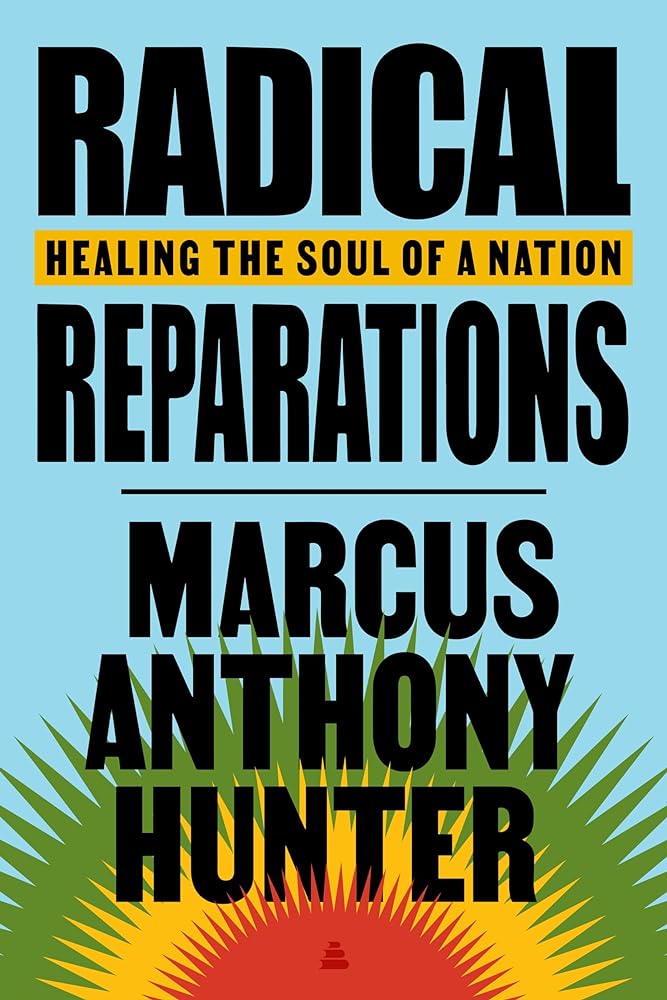
Radical Reparations: Healing the Soul of a Nation
by Marcus Anthony Hunter
$29.99*Ships in 7-10 business days*
A timely groundbreaking book in the vein of Derrick Bell's Faces at the Bottom of the Well, one of the country's foremost voices on reparations, offers a radical and vital new framework going beyond the current debate over this controversial issue.
For over a century, the idea of reparations for the descendants of enslaved Black Americans has divided the United States. However, while the iconic phrase "40 acres and a mule" encapsulates the general notion of reparations, history has proven that the damages of enslavement on the African American community far exceed what a plot of land or a check could repair.
While reparations are being widely debated once again, current petitions to redress the lasting and collateral consequences of slavery have not moved past economic solutions, even though we know that monetary redress alone is not enough. Not only would many wounds be left unhealed, but relying solely on economics would continue a legacy of neglect for African Americans. In this thoughtful and sure-to-be controversial book, Marcus Anthony Hunter argues that a radical shift in our outlook is necessary; we need more comprehensive solutions such as those currently sought by today's educators, historians, activists, organizers, Afrofuturists, and socially conscious citizens.
In Radical Reparations, this conversation shifter, social justice pioneer, change agent, and inventor of the hashtag #BlackLivesMatter, which redefined the global conversation on racism and social justice, offers a unifying and unconventional framework for achieving holistic and comprehensive healing of African American communities. Hunter reimagines reparations through a profound new lens as he defines seven types of compensation: political, intellectual, legal, economic, spatial, social, and spiritual, using analysis of historical documents, comparative international cases, and speculative parables.
Profound and revolutionary, trenchant and timely, Radical Reparations provides a compellingly and provocatively reframing of reparations' past, present, and future, offering a unifying way forward for us all.
- Travel & See: Black Diaspora Art Practices since the 1980s
![Travel & See: Black Diaspora Art Practices since the 1980s]()
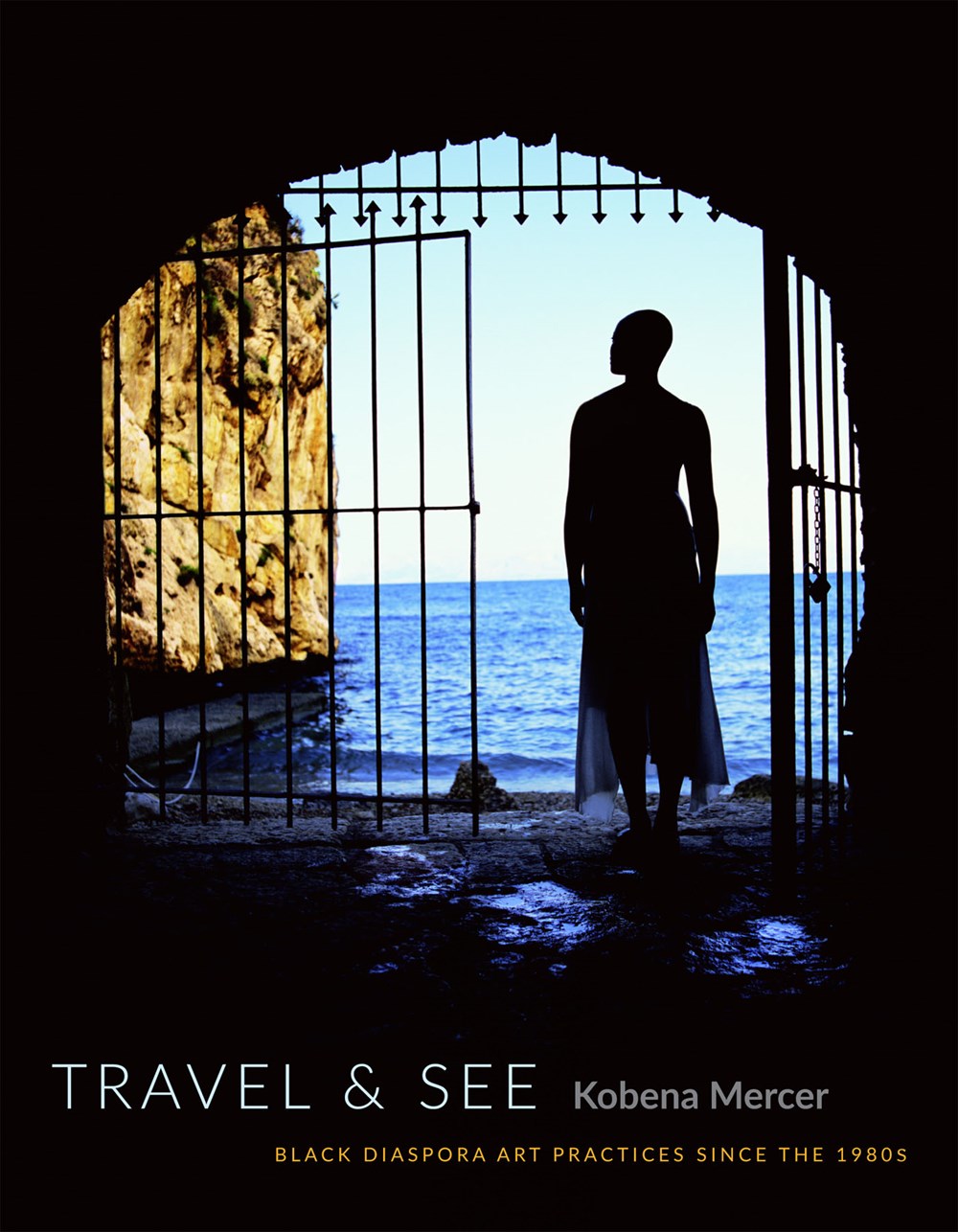
Travel & See: Black Diaspora Art Practices since the 1980s
by Kobena Mercer
Sold outIn this set of essays that cover the period from 1992 to 2012, Kobena Mercer uses a diasporic model of criticism to analyze the cross-cultural aesthetic practice of African American and black British artists and to show how their refiguring of visual representations of blackness transform perceptions of race.Over the years, Kobena Mercer has critically illuminated the visual innovations of African American and black British artists. In Travel & See he presents a diasporic model of criticism that gives close attention to aesthetic strategies while tracing the shifting political and cultural contexts in which black visual art circulates. In eighteen essays, which cover the period from 1992 to 2012 and discuss such leading artists as Isaac Julien, Renée Green, Kerry James Marshall, and Yinka Shonibare, Mercer provides nothing less than a counternarrative of global contemporary art that reveals how the “dialogical principle” of cross-cultural interaction not only has transformed commonplace perceptions of blackness today but challenges us to rethink the entangled history of modernism as well. - Southern Horrors: Women and the Politics of Rape and Lynching
![Southern Horrors: Women and the Politics of Rape and Lynching]()
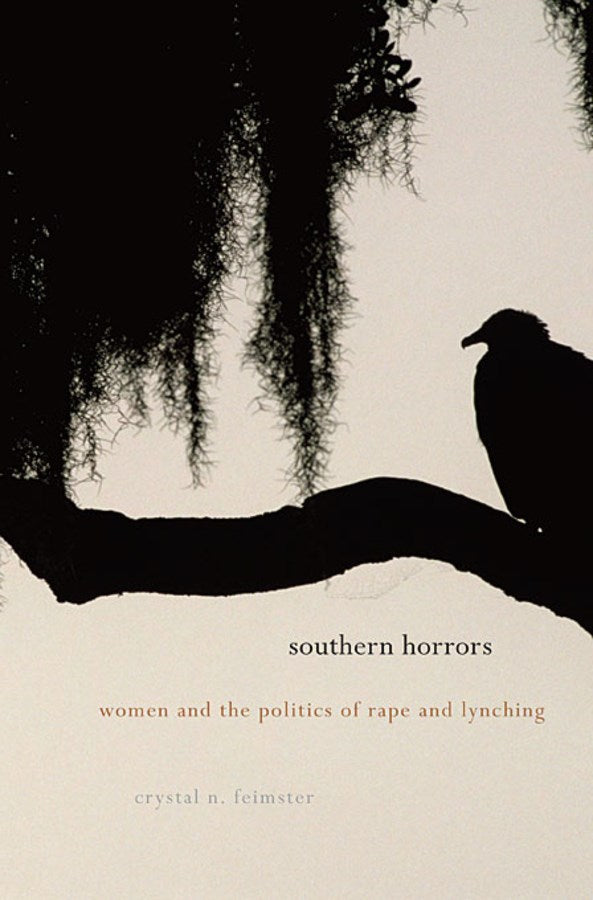
Southern Horrors: Women and the Politics of Rape and Lynching
by Crystal N. Feimster
$26.00*ships or ready for pick up in 7 - 10 business days*
Between 1880 and 1930, close to 200 women were murdered by lynch mobs in the American South. Many more were tarred and feathered, burned, whipped, or raped. In this brutal world of white supremacist politics and patriarchy, a world violently divided by race, gender, and class, black and white women defended themselves and challenged the male power brokers. Crystal Feimster breaks new ground in her story of the racial politics of the postbellum South by focusing on the volatile issue of sexual violence.
Pairing the lives of two Southern women—Ida B. Wells, who fearlessly branded lynching a white tool of political terror against southern blacks, and Rebecca Latimer Felton, who urged white men to prove their manhood by lynching black men accused of raping white women—Feimster makes visible the ways in which black and white women sought protection and political power in the New South. While Wells was black and Felton was white, both were journalists, temperance women, suffragists, and anti-rape activists. By placing their concerns at the center of southern politics, Feimster illuminates a critical and novel aspect of southern racial and sexual dynamics. Despite being on opposite sides of the lynching question, both Wells and Felton sought protection from sexual violence and political empowerment for women.
Southern Horrors provides a startling view into the Jim Crow South where the precarious and subordinate position of women linked black and white anti-rape activists together in fragile political alliances. It is a story that reveals how the complex drama of political power, race, and sex played out in the lives of Southern women. - Want to Start A Revolution? Radical Women in the Black Freedom Struggle
![Want to Start A Revolution? Radical Women in the Black Freedom Struggle]()
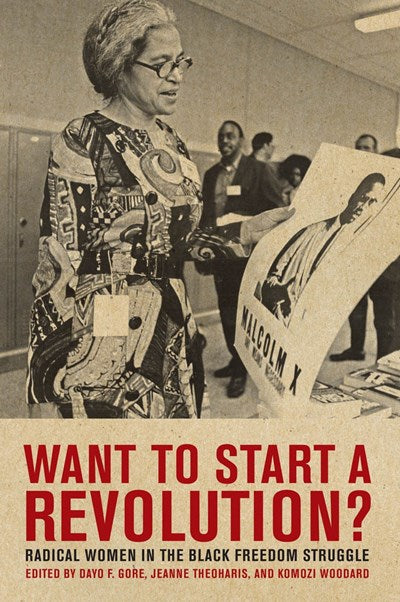
Want to Start A Revolution? Radical Women in the Black Freedom Struggle
by Dayo F. Gore, Jeanne Theoharis, and Komozi Woodard
$30.00*This item will ship or be ready for pick up in 7-10 business days
Uncovers the often overlooked stories of the women who shaped the black freedom struggle
The story of the black freedom struggle in America has been overwhelmingly male-centric, starring leaders like Martin Luther King, Jr., Malcolm X, and Huey Newton. With few exceptions, black women have been perceived as supporting actresses; as behind-the-scenes or peripheral activists, or rank and file party members. But what about Vicki Garvin, a Brooklyn-born activist who became a leader of the National Negro Labor Council and guide to Malcolm X on his travels through Africa? What about Shirley Chisholm, the first black Congresswoman?
From Rosa Parks and Esther Cooper Jackson, to Shirley Graham DuBois and Assata Shakur, a host of women demonstrated a lifelong commitment to radical change, embracing multiple roles to sustain the movement, founding numerous groups and mentoring younger activists. Helping to create the groundwork and continuity for the movement by operating as local organizers, international mobilizers, and charismatic leaders, the stories of the women profiled in Want to Start a Revolution? help shatter the pervasive and imbalanced image of women on the sidelines of the black freedom struggle.
Contributors: Margo Natalie Crawford, Prudence Cumberbatch, Johanna Fernández, Diane C. Fujino, Dayo F. Gore, Joshua Guild, Gerald Horne, Ericka Huggins, Angela D. LeBlanc-Ernest, Joy James, Erik McDuffie, Premilla Nadasen, Sherie M. Randolph, James Smethurst, Margaret Stevens, and Jeanne Theoharis. - Saying It Loud: 1966—The Year Black Power Challenged the Civil Rights Movement
![Saying It Loud: 1966—The Year Black Power Challenged the Civil Rights Movement]()
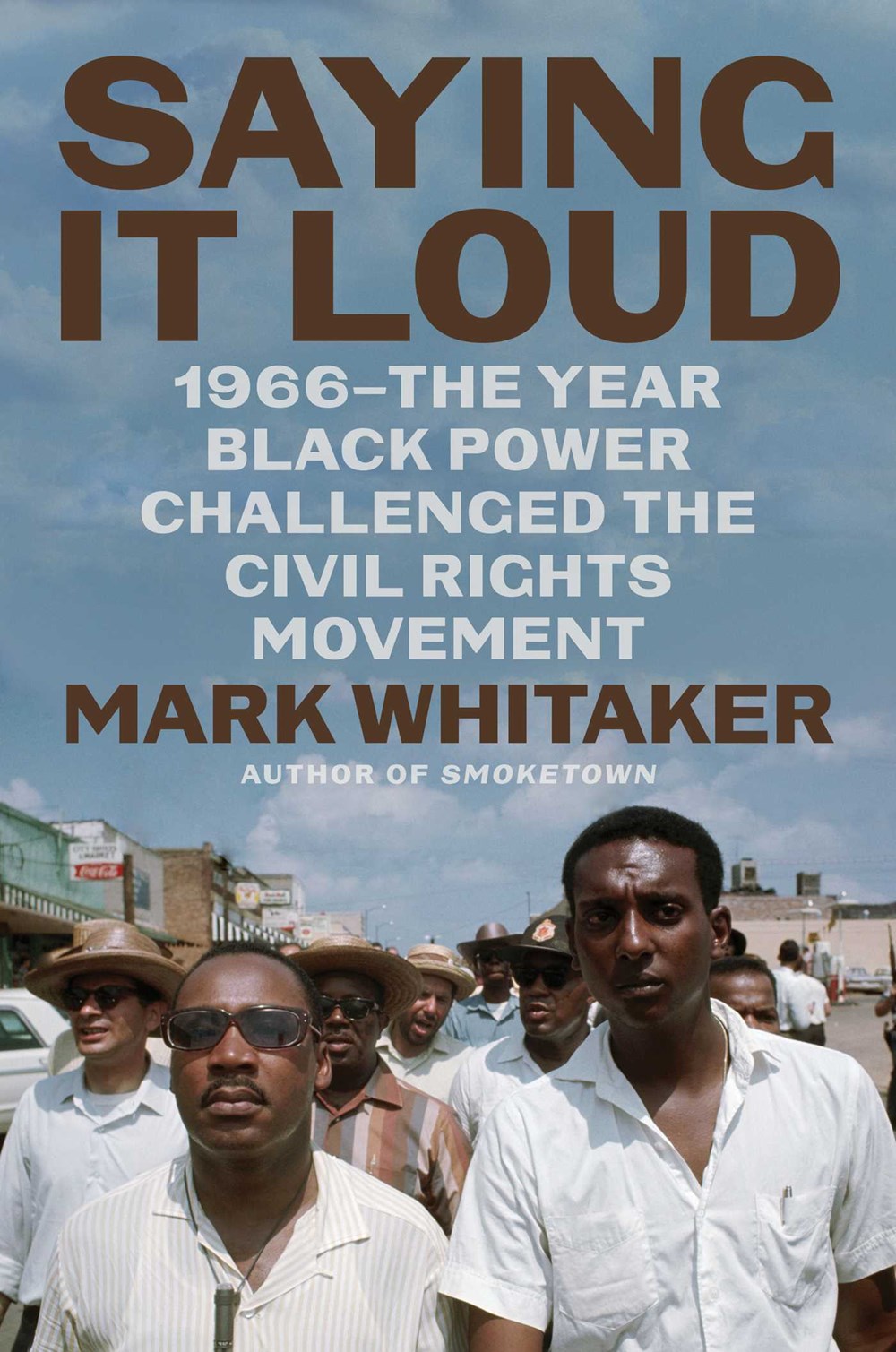
Saying It Loud: 1966—The Year Black Power Challenged the Civil Rights Movement
by Mark Whitaker
Sold out*ships in 7 - 10 business days*
Journalist and author Mark Whitaker explores the momentous year that redefined the civil rights movement as a new sense of Black identity expressed in the slogan “Black Power” challenged the nonviolent philosophy of Martin Luther King, Jr. and John Lewis.
In gripping, novelistic detail, Saying It Loud tells the story of how the Black Power phenomenon began to challenge the traditional civil rights movement in the turbulent year of 1966. Saying It Loud takes you inside the dramatic events in this seminal year, from Stokely Carmichael’s middle-of-the-night ouster of moderate icon John Lewis as chairman of the Student Nonviolent Coordinating Committee (SNCC) to Carmichael’s impassioned cry of “Black Power!” during a protest march in rural Mississippi. From Julian Bond’s humiliating and racist ouster from the Georgia state legislature because of his antiwar statements to Ronald Reagan’s election as California governor riding a “white backlash” vote against Black Power and urban unrest. From the founding of the Black Panther Party for Self-Defense by Huey Newton and Bobby Seale in Oakland, California, to the origins of Kwanzaa, the Black Arts Movement, and the first Black studies programs. From Reverend Martin Luther King, Jr.’s ill-fated campaign to take the civil rights movement north to Chicago to the wrenching ousting of the white members of SNCC.
Deeply researched and widely reported, Saying It Loud offers brilliant portraits of the major characters in the yearlong drama, and provides new details and insights from key players and journalists who covered the story. It also makes a compelling case for why the lessons from 1966 still resonate in the era of Black Lives Matter and the fierce contemporary battles over voting rights, identity politics, and the teaching of Black history. - Rastafari: The Evolution of a People and Their Identity
![Rastafari: The Evolution of a People and Their Identity]()
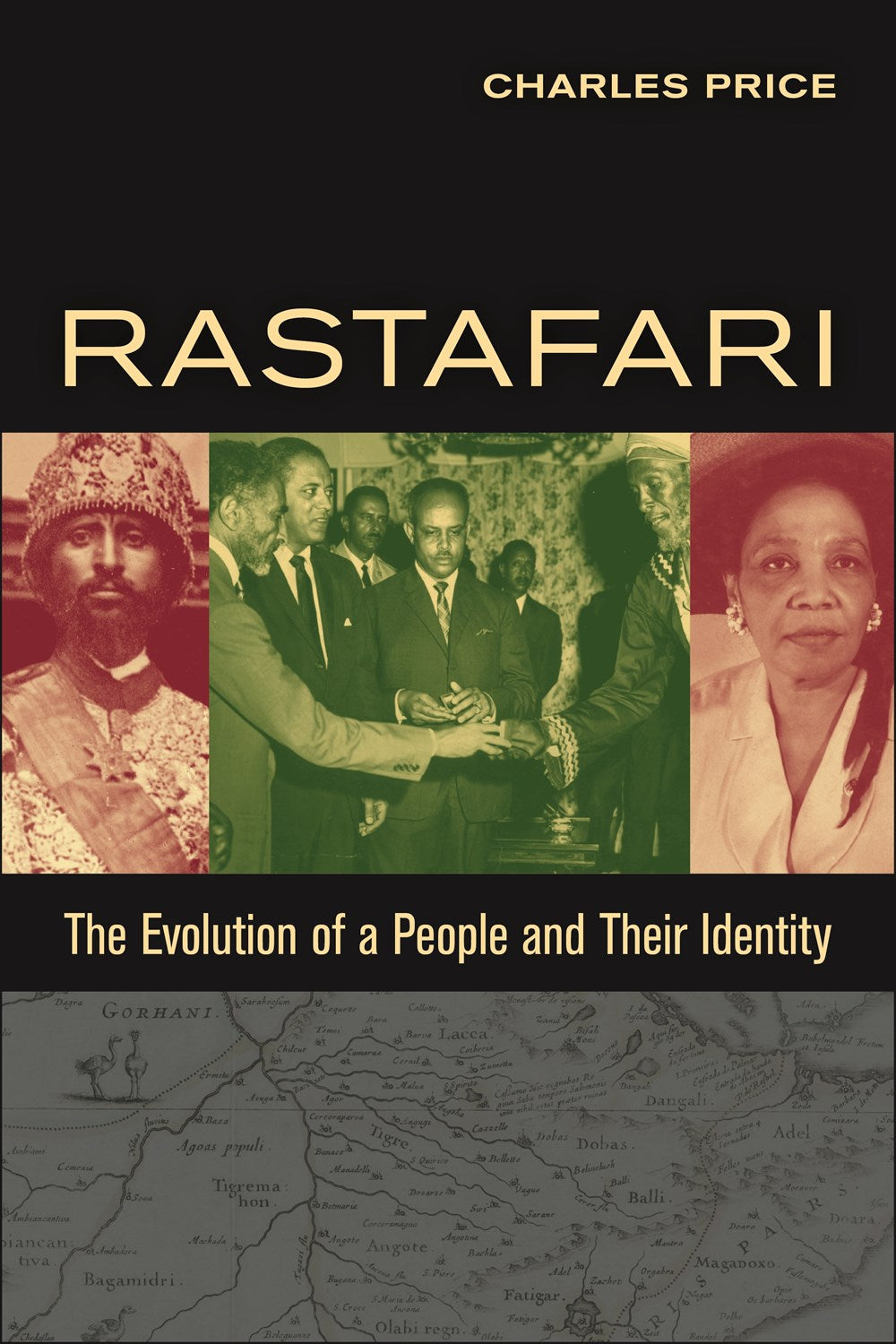
Rastafari: The Evolution of a People and Their Identity
by Charles Price
$30.00*Ships in 7-10 Business Days*
Illuminates how the Rastafari movement managed to evolve in the face of severe biases
Misunderstood, misappropriated, belittled: though the Rastafari feature frequently in media and culture, they have most often been misrepresented, their political and religious significance minimized. But they have not been vanquished.
Charles Price’s Rastafari: The Evolution of a People and Their Identity reclaims the rich history of this relatively new world religion. Charting its humble and rebellious roots in Jamaica’s backcountry in the late nineteenth century to the present day, Price explains how Jamaicans’ obsession with the Rastafari wavered from campaigns of violence to appeasement and cooptation. Indeed, he argues that the Rastafari as a political, religious, and cultural movement survived the biases and violence they faced through their race consciousness and uncanny ability to ride the waves of anti-colonialism and Black Power.
This social movement traveled throughout the Caribbean, Africa, Central America, and the United States, capturing the heart and imagination of much of the African diaspora. Rastafari spans the movement’s struggle for autonomy, its multiple campaigns for repatriation to Africa, and its leading role in the Black consciousness movements of the twentieth century. Not satisfied with simply narrating the past, Rastafari also takes on the challenges of gender equality and the commodification of Rastafari culture in the twenty-first century without abandoning its message of equality and empowering the downpressed.
Rastafari shows how this cultural and political context helped to shape the development of a Black collective identity, demonstrating how Rastafarians confronted society-wide ridicule and oppression and emerged prouder and more united, steadfast in their conviction that they were a chosen people. - Scenes of Subjection: Terror, Slavery, and Self-Making in Nineteenth-Century America
![Scenes of Subjection: Terror, Slavery, and Self-Making in Nineteenth-Century America]()
Scenes of Subjection: Terror, Slavery, and Self-Making in Nineteenth-Century America
by Saidiya Hartman
Sold out*ships in 7 - 10 business days*
The groundbreaking debut by the award-winning author of Wayward Lives, Beautiful Experiments, revised and updated.
Saidiya Hartman has been praised as “one of our most brilliant contemporary thinkers” (Claudia Rankine, New York Times Book Review) and “a lodestar for a generation of students and, increasingly, for politically engaged people outside the academy” (Alexis Okeowo, The New Yorker). In Scenes of Subjection—Hartman’s first book, now revised and expanded, with a new foreword, afterword, and illustrations—her singular talents and analytical framework are turned toward the “terrible spectacle” of slavery, illuminating the intertwining of violence, subjugation, and selfhood even in abolitionist depictions of enslavement. Through unmasking the hidden and overlooked at the margins of the historical archive, Hartman radically reshapes our understanding of history, in a work as resonant today as it was on first publication, now for a new generation of readers.
- Slavery and the African American Story: The African American Story
![Slavery and the African American Story: The African American Story]()
Slavery and the African American Story: The African American Story
by Patricia Williams Dockery
$8.99*Ships in 7-10 business days*
Until now, you've only heard one side of the story: how slavery began, and how America split itself in two to end it. Here's the true story of America from the African American perspective.
From the moment Africans were first brought to the shores of the United States, they had a hand in shaping the country. Their labor created a strong economy, built our halls of government, and defined American society in profound ways. And though the Emancipation Proclamation wasn't signed until 300 years after the first Africans arrived, the fight for freedom started the moment they set foot on American soil.
This book contains the true narrative of the first 300 years of Africans in America: the struggles, the heroes, and the untold stories that are left out of textbooks. If you want to learn the truth about African American history in this country, start here. - Fear of a Black Republic : Haiti and the Birth of Black Internationalism in the United States
![Fear of a Black Republic : Haiti and the Birth of Black Internationalism in the United States]()
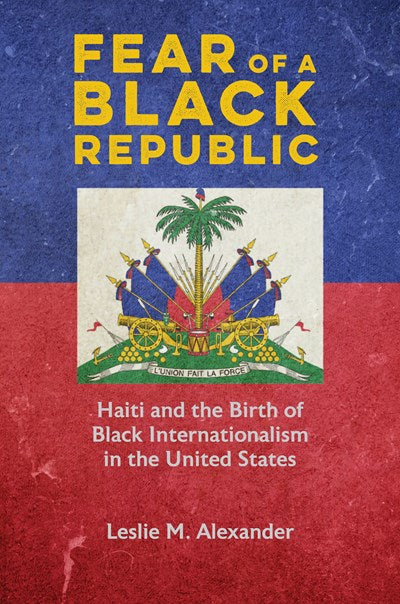
Fear of a Black Republic : Haiti and the Birth of Black Internationalism in the United States
Sold out*ships in 7-10 business days
The emergence of Haiti as a sovereign Black nation lit a beacon of hope for Black people throughout the African diaspora. Leslie M. Alexander’s study reveals the untold story of how free and enslaved Black people in the United States defended the young Caribbean nation from forces intent on maintaining slavery and white supremacy. Concentrating on Haiti’s place in the history of Black internationalism, Alexander illuminates the ways Haitian independence influenced Black thought and action in the United States. As she shows, Haiti embodied what whites feared most: Black revolution and Black victory. Thus inspired, Black activists in the United States embraced a common identity with Haiti’s people, forging the idea of a united struggle that merged the destinies of Haiti with their own striving for freedom.
A bold exploration of Black internationalism’s origins, Fear of a Black Republic links the Haitian revolution to the global Black pursuit of liberation, justice, and social equality.
- Black Soldiers, White Laws: The Tragedy of the 24th Infantry in 1917 Houston
![Black Soldiers, White Laws: The Tragedy of the 24th Infantry in 1917 Houston cover image]()

Black Soldiers, White Laws: The Tragedy of the 24th Infantry in 1917 Houston
$30.00The first full and definitive narrative of one of the most shocking and largely unknown events of racial injustice in US history: the execution of nineteen Black soldiers in Texas
On the sweltering, rainy night of August 23, 1917, one of the most consequential events affecting America’s long legacy of racism and injustice began in Houston, Texas. Inflamed by a rumor that a white mob was arming to attack them, and after weeks of police harassment, more than 100 African American soldiers of the 3rd Battalion, 24th Infantry Regiment, took their weapons without authorization and, led by a sergeant, marched into the largely Black San Felipe district of the city. Violent confrontations with police and civilians ensued and nineteen lives were lost.
The Army moved quickly to court-martial 118 soldiers on charges of mutiny and murder, even though a majority of the soldiers involved had never fired their weapons. Inadequately defended en masse by a single officer who was not a lawyer and had no experience in capital cases, in three trials undermined by perjured testimony and clear racial bias, and confronted by an all-white tribunal committed to a rapid judgment, 110 Black soldiers were found guilty—despite the fact that no mutiny had, in fact, taken place. In the predawn darkness of December 11, thirteen of them were hanged at Fort Sam Houston in San Antonio—hastily and in secret, without any chance to appeal. News of the largest mass execution in the Army’s history outraged the country and inspired preventive legislation; and yet six more Black soldiers were executed in early 1918 and the rest were sentenced to life in prison.
The Houston Incident, as it became known, has remained largely untold, a deep stain on the Army’s record and pride. Award-winning historian and Army veteran John A. Haymond has spent six years researching the events surrounding the Incident and leading the efforts that ultimately led, in November 2023, to the largest act of retroactive clemency in the Army’s history when the verdicts were overturned and honorable discharges awarded to all the soldiers involved. His dramatic chronicle of what transpired—situated amongst the rampant racism in Texas and the country—is a crucially important and harrowing reminder of our racially violent past, offering the promise that justice, even posthumously, can prevail.
- Evolution of Collective African Consciousness: An Integral View of African Development
![Evolution of Collective African Consciousness: An Integral View of African Development cover image]()

Evolution of Collective African Consciousness: An Integral View of African Development
Sold outThere exists, spearheaded by a critical mass of spiritually evolved Africans, the evolving higher consciousness of the African collective, or the Ausarian Self. This Self of higher spiritual consciousness can be fully known when the higher consciousness of one's individual self is known. As the ancients of spiritual culture have taught, knowledge and effectuation of one's higher Self is a supreme undertaking of life. Knowledge and effectuation of the collective Self or Ancestral consciousness is an equally supreme undertaking. The reason this must be so, is that life is a Unity behind its marvelous diversity; thus, one's individual higher Self is one with any collective Self (i.e., national soul) that the Supreme Being is poised in. The status of the whole is always relevant to the status of the individual, and vice versa. Our individual spiritual achievement is not complete if we isolate ourselves from the condition of others or from our ancestral heritage, self-content with our supposed state of Nirvana. We must see the evolving spirit in ourselves and in others of our collective as the same. Ultimately, there is only one Self that expresses through the unity and evolving diversity of life, the Universal Integral Divine One. The higher African Self has given to the World its first great humanity and civilizations; this same evolving higher African Self has a role to play in giving to the world its next higher expression of humanity and civilization. This books outlines evolutionary movements of the African Collective Consciousness. The author lays out educational imperatives for furthering that evolutionary push.
- I AM GOD: The 42 Kemetic Affirmations of MA’AT
![I AM GOD: The 42 Kemetic Affirmations of MA’AT cover image]()

I AM GOD: The 42 Kemetic Affirmations of MA’AT
Sold outI AM GOD: The 42 Kemetic Affirmations of Ma’at is a spiritual guide rooted in ancient African wisdom, offering a powerful and culturally restorative alternative to the religious systems imposed on the Black community through colonization.
Drawing from the timeless teachings of Ma’at—the Kemetic principle of truth, justice, balance, and divine order—this book reawakens the 42 Negative Confessions as daily affirmations. These affirmations are more than ritual words; they are a blueprint for self-mastery, ancestral alignment, and community healing.
Through this lens, I AM GOD empowers readers to reclaim their divine identity, reconnect with indigenous African spirituality, and live with purpose, harmony, and inner power. Whether you’re on a personal journey of growth or seeking to reconnect with the sacred teachings of Kemet, this book provides practical, heart-centered guidance for navigating the modern world with ancient wisdom.
Inside you’ll discover:
* The 42 Affirmations of Ma’at reimagined as daily spiritual practices
* Insights into Kemetic morality and how it applies to today’s challenges
* A powerful foundation for personal development rooted in Black ancestral truthThis is not just a book. It is a return. A return to self. A return to power. A return to Ma’at.
- Voodoo and Power: The Politics of Religion in New Orleans, 1881–1940
![Voodoo and Power: The Politics of Religion in New Orleans, 1881–1940 cover image]()

Voodoo and Power: The Politics of Religion in New Orleans, 1881–1940
$29.95The racialized and exoticized cult of Voodoo occupies a central place in the popular image of the Crescent City. But as Kodi A. Roberts argues in Voodoo and Power, the religion was not a monolithic tradition handed down from African ancestors to their American-born descendants. Instead, a much more complicated patchwork of influences created New Orleans Voodoo, allowing it to move across boundaries of race, class, and gender. By employing late nineteenth and early twentieth-century first-hand accounts of Voodoo practitioners and their rituals, Roberts provides a nuanced understanding of who practiced Voodoo and why.
Voodoo in New Orleans, a melange of religion, entrepreneurship, and business networks, stretched across the color line in intriguing ways. Roberts's analysis demonstrates that what united professional practitioners, or "workers," with those who sought their services was not a racially uniform folk culture, but rather the power and influence that Voodoo promised. Recognizing that social immobility proved a common barrier for their patrons, workers claimed that their rituals could overcome racial and gendered disadvantages and create new opportunities for their clients.
Voodoo rituals and institutions also drew inspiration from the surrounding milieu, including the privations of the Great Depression, the city's complex racial history, and the free-market economy. Money, employment, and business became central concerns for the religion's practitioners: to validate their work, some began operating from recently organized "Spiritual Churches," entities that were tax exempt and thus legitimate in the eyes of the state of Louisiana. Practitioners even leveraged local figures like the mythohistoric Marie Laveau for spiritual purposes and entrepreneurial gain. All the while, they contributed to the cultural legacy that fueled New Orleans's tourist industry and drew visitors and their money to the Crescent City.
- PRE-ORDER: Making Freedom Work: Free Women of Color in Antebellum New Orleans
![Making Freedom Work: Free Women of Color in Antebellum New Orleans cover image]()

PRE-ORDER: Making Freedom Work: Free Women of Color in Antebellum New Orleans
$34.95Making Freedom Work tells the stories of five free women of color in antebellum New Orleans. The lives of Eulalie Mandeville, Henriette Delille, Marie Couvent, Cécille Bonille, and Marie Dolores Laveaux reveal the economic, legal, and cultural strategies free Black women used to move through a racially stratified, patriarchal slave society. Janet Morrison argues that free women of color could play a crucial role in the city’s economic, religious, and communal life, even as they navigated and contested the restraints placed upon them by their race and gender. Foregrounding the voices of these women and their families, Morrison recovers stories that have long been marginalized in New Orleans history.
During a period of profound transformation in New Orleans―including French and Spanish colonial legacies, imposed American racial hierarchies after the Louisiana Purchase, and increased mobility within the Atlantic world―these five women found numerous ways to exercise their agency in a world that was not designed for them. They owned businesses, accumulated property, pursued litigation, engaged in philanthropy, and provided religious leadership, all while building durable networks of care, education, and spirituality. Avoiding the dangers of outright rebellion, the women employed strategies of gendered resistance―refusal, adaptation, collaboration―that often proved very successful, carving out space for survival in ways that confounded societal expectations of who they could be and what they could accomplish.
Morrison draws on a rich trove of archival sources such as censuses, city directories, notarial records, wills, successions, and court cases. Recognizing that these records were produced within white-controlled bureaucratic systems, Making Freedom Work attends closely to both their evidentiary value and their silences. It also confronts the complexities of slaveholding by free people of color, interpreting it as part of a broader struggle for security, status, and distance from enslavement, while emphasizing the uneven and contingent relationships between enslavers and the enslaved.
Making Freedom Work reintroduces these women―so often dismissed and devalued in their own time―as central historical actors, highlighting their influence as entrepreneurs, community builders, educators, and mothers of the next generation.
- The Invisibles: The Untold Story of African American Slaves in the White House
![The Invisibles: The Untold Story of African American Slaves in the White House cover image]()

The Invisibles: The Untold Story of African American Slaves in the White House
$17.95THE INVISIBLES: Slavery Inside The White House and How It Helped Shape America is the first book to tell the story of the executive mansion’s most unexpected residents, the African American slaves who lived with the U.S. presidents who owned them. Interest in African Americans and the White House are at an all-time high due to the historic presidency of Barack Obama, and the soon-to-be-opened Smithsonian National Museum of African American Culture and History.
The Invisibles chronicles the African American presence inside the White House from its beginnings in 1782 until 1862, when President Abraham Lincoln issued the Emancipation Proclamation that granted slaves their freedom. During these years, slaves were the only African Americans to whom the most powerful men in the United States were exposed on a daily, and familiar, basis.
By reading about these relationships, readers will better understand some of the views that various presidents held about class and race in American society, and how these slaves contributed not only to the life and comforts of the presidents they served, but to America as a whole.
- Mutiny of Rage: The 1917 Camp Logan Riots and Buffalo Soldiers in Houston
![Mutiny of Rage: The 1917 Camp Logan Riots and Buffalo Soldiers in Houston cover image]()

Mutiny of Rage: The 1917 Camp Logan Riots and Buffalo Soldiers in Houston
$27.95Salado Creek, Texas, 1918: Thirteen black soldiers stood at attention in front of gallows erected specifically for their hanging. They had been convicted of participating in one of America’s most infamous black uprisings, the Camp Logan Mutiny, otherwise known as the 1917 Houston Riots. The revolt and ensuing riots were carried out by men of the 3rd Battalion of the all-black 24th U.S. Infantry Regiment—the famed Buffalo Soldiers—after members of the Houston Police Department violently menaced them and citizens of the local black community. It all took place over one single bloody night.
In the wake of the uprising, scores lay dead, including bystanders, police, and soldiers. This incident remains one of Texas’ most complicated and misrepresented historical events. It shook race relations in Houston and created conditions that sparked a nationwide surge of racial activism. In the aftermath of the carnage, what was considered the “trial of the century” ensued. Even for its time, its profundity and racial significance rivals that of the O.J. Simpson trial eight decades later. The courts-martial resulted in the hanging of over a dozen black soldiers, eliciting memories of slave rebellions. But was justice served?
New evidence from declassified historical archives indicates that the courts-martial were rushed in an attempt to placate an angered white population as well as military brass. Mutiny of Rage sheds new light on a suppressed chapter in U.S. history. It also sets the legal record straight on what really happened, all while situating events in the larger context of race relations in America, from Nat Turner to George Floyd.
- Just Harvest: The Story of How Black Farmers Won the Largest Civil Rights Case against the U.S. Government
![Just Harvest: The Story of How Black Farmers Won the Largest Civil Rights Case against the U.S. Government cover image]()

Just Harvest: The Story of How Black Farmers Won the Largest Civil Rights Case against the U.S. Government
$28.00When a class-action lawsuit against the US government results in a billion dollar settlement for the aggrieved parties, you’d expect the story to be headline news . . .to be posted on social media everywhere . . . to be adapted to film or even to a popular legal procedural series on TV . . .
So why then have so many people never heard of Pigford vs. Glickman?
Or the follow-up lawsuit, Pigford II?
Or the Black Farmers Case, as the pair of these legal actions is often called?
Could it be that the heart-wrenching story of Black farmers in America, and the monumental legal case that brought long-sought justice to them, is rarely told because it reflects so poorly on the US and its treatment of those whose ancestors helped make the nation an agricultural giant in the first place?
Whatever the reason, the time to tell the full story has come and the person to share the gripping details is Greg Francis, one of the lead counsels in the historic case that finally helped Black farmers achieve equity. In Just Harvest, Francis narrates the dramatic twists and turns of the legal battle fought and won, and evidences the many years of ingrained discrimination and racism that preceded it. Awareness of this story makes us all witnesses to the history still unfolding— and while parts of what is recounted herein will enrage you, the hope is that this book will also inspire, inform, and motivate you to join the continuing fight for the rights of all Black farmers now and in the future.
- Democracy Awakening: Notes on the State of America
![Democracy Awakening: Notes on the State of America cover image]()

Democracy Awakening: Notes on the State of America
Sold outA New York Times Bestseller
A vital and urgent call to action about the precarious state of American democracy, charting its historical challenges and current threats, from one of our era’s most important and insightful historians, with a new afterword by the author.
“Magisterial.” –The Washington Post
“An excellent primer for anyone who needs the important facts of the last 150 years of American history–and how they got us to the sorry place we inhabit today.” –Guardian
At a time when the very foundations of American democracy seem under threat, the lessons of the past offer a road map for navigating a moment of political crisis. In Democracy Awakening, acclaimed historian Heather Cox Richardson delves into the tumultuous journey of American democracy, tracing the roots of Donald Trump’s “authoritarian experiment” to the earliest days of the republic. She examines the historical forces that have led to the current political climate, showing how modern conservatism has preyed upon a disaffected population, weaponizing language and promoting false history to consolidate power.
With remarkable clarity and the same accessible voice that brings millions to her newsletter, Letters from an American, Richardson wrangles a chaotic news feed into a story that pivots effortlessly from the Founders to the abolitionists to Nixon to the January 6 insurrection. An essential read for anyone concerned about the state of America, Democracy Awakening is more than a history book; it’s a call to action. Richardson reminds us that democracy requires constant vigilance and participation from all of us, showing how we, as a nation, can take the lessons of the past to secure a more just and equitable future.
- Sojourning for Freedom: Black Women, American Communism, and the Making of Black Left Feminism
![Sojourning for Freedom: Black Women, American Communism, and the Making of Black Left Feminism cover image]()

Sojourning for Freedom: Black Women, American Communism, and the Making of Black Left Feminism
$28.95Sojourning for Freedom portrays pioneering black women activists from the early twentieth century through the 1970s, focusing on their participation in the U.S. Communist Party (CPUSA) between 1919 and 1956. Erik S. McDuffie considers how women from diverse locales and backgrounds became radicalized, joined the CPUSA, and advocated a pathbreaking politics committed to black liberation, women’s rights, decolonization, economic justice, peace, and international solidarity. McDuffie explores the lives of black left feminists, including the bohemian world traveler Louise Thompson Patterson, who wrote about the “triple exploitation” of race, gender, and class; Esther Cooper Jackson, an Alabama-based civil rights activist who chronicled the experiences of black female domestic workers; and Claudia Jones, the Trinidad-born activist who emerged as one of the Communist Party’s leading theorists of black women’s exploitation. Drawing on more than forty oral histories collected from veteran black women radicals and their family members, McDuffie examines how these women negotiated race, gender, class, sexuality, and politics within the CPUSA. In Sojourning for Freedom, he depicts a community of radical black women activist intellectuals who helped to lay the foundation for a transnational modern black feminism.
- The Black Antifascist Tradition: Fighting Back from Anti-Lynching to Abolition
![The Black Antifascist Tradition: Fighting Back from Anti-Lynching to Abolition cover image]()

The Black Antifascist Tradition: Fighting Back from Anti-Lynching to Abolition
$24.95The story of the fight against fascism across the African diaspora, revealing that Black antifascism has always been vital to global freedom struggles.
At once a history for understanding fascism and a handbook for organizing against, The Black Antifascist Tradition is an essential book for understanding our present moment and the challenges ahead.
From London to the Caribbean, from Ethiopia to Harlem, from Black Lives Matter to abolition, Black radicals and writers have long understood fascism as a threat to the survival of Black people around the world―and to everyone.
In The Black Antifascist Tradition, scholar-activists Jeanelle K. Hope and Bill Mullen show how generations of Black activists and intellectuals―from Ida B. Wells in the fight against lynching, to Angela Y. Davis in the fight against the prison-industrial complex―have stood within a tradition of Black Antifascism.
As Davis once observed, pointing to the importance of anti-Black racism in the development of facism as an ideology, Black people have been “the first and most deeply injured victims of fascism.” Indeed, the experience of living under and resisting racial capitalism has often made Black radicals aware of the potential for fascism to take hold long before others understood this danger.
The book explores the powerful ideas and activism of Paul Robeson, Mary McLeod Bethune, Claudia Jones, W. E. B. Du Bois, Walter Rodney, Frantz Fanon, Aime Cesaire, and Walter Rodney, as well as that of the Civil Rights Congress, the Black Liberation Army, and the We Charge Genocide movement, among others.
In shining a light on fascism and anti-Blackness, Hope and Mullen argue, the writers and organizers featured in this book have also developed urgent tools and strategies for overcoming it.
- The Underground Railroad Records: Narrating the Hardships, Hairbreadth Escapes, and Death Struggles of Slaves in Their Efforts for Freedom
![The Underground Railroad Records: Narrating the Hardships, Hairbreadth Escapes, and Death Struggles of Slaves in Their Efforts for Freedom cover image]()

The Underground Railroad Records: Narrating the Hardships, Hairbreadth Escapes, and Death Struggles of Slaves in Their Efforts for Freedom
$18.00A riveting collection of the hardships, hairbreadth escapes, and mortal struggles of enslaved people seeking freedom: These are the true stories of the Underground Railroad.
Featuring a powerful introduction by Ta-Nehisi Coates
As a conductor for the Underground Railroad—the covert resistance network created to aid and protect slaves seeking freedom—William Still helped as many as eight hundred people escape enslavement. He also meticulously collected the letters, biographical sketches, arrival memos, and ransom notes of the escapees. The Underground Railroad Records is an archive of primary documents that trace the narrative arc of the greatest, most successful campaign of civil disobedience in American history.
This edition highlights the remarkable creativity, resilience, and determination demonstrated by those trying to subvert bondage. It is a timeless testament to the power we all have to challenge systems that oppress us.
- PRE-ORDER: This Insurgent Ground: Black Women, Marronage, and Rebellion in the Great Dismal Swamp (Black Women's History)
![This Insurgent Ground: Black Women, Marronage, and Rebellion in the Great Dismal Swamp (Black Women's History) cover image]()

PRE-ORDER: This Insurgent Ground: Black Women, Marronage, and Rebellion in the Great Dismal Swamp (Black Women's History)
Sold outOut of the Great Dismal Swamp, a huge morass of swampland straddling the Virginia and North Carolina eastern seaboard, there emerged a distinct culture of enslaved insurgency and fugitive subversion. Maroons who fled enslavement and resettled in wilderness spaces utilized the deep interior swamps to establish permanent, multigenerational autonomous communities. Historian Kathryn Benjamin Golden reveals for the first time the role of Black women in these maroon communities and locates them in the forests, swamps, and records where they have previously evaded detection and attention.
This Insurgent Ground centers the Black women who aided, supported, led, and nurtured maroon movements in the Great Dismal Swamp as they collaborated with enslaved people in rebellion. Throughout the region, Black women resisted the injustices of reproductive violence, sexual assault, and desecrated motherhoods. Acting as agents of counterintelligence, participants in defensive violence and militant strategy, and mothers and providers of alternative autonomous communities, these women dared to redirect and repossess their energies and their bodies in absolute defiance of the very economic workings of slavery and in refusal of borders, bondage, confinement, and capture.
- Art as Sanctuary: Conjuring an Africana Aesthetic (Religious Cultures of African and African Diaspora People)
![Art as Sanctuary: Conjuring an Africana Aesthetic (Religious Cultures of African and African Diaspora People) cover image]()

Art as Sanctuary: Conjuring an Africana Aesthetic (Religious Cultures of African and African Diaspora People)
Sold outIn Art as Sanctuary, Michael D. Harris considers literal and metaphorical uses of sanctuary in the black experience and African diaspora art, including locales of spiritual expression, self-renewal, and cultural celebration. Harris offers an alternative framework to the Duboisian philosophy of double consciousness, pushing the boundaries of Africana aesthetic analysis by exploring the cultural signifiers embedded consciously or unconsciously in African diaspora art. Within these works, he reveals how these cultural cues speak to the vibrancy of African American life. While acknowledging the presence of the white observer’s gaze, Harris wishes to relieve the black interior from the panoptic assumptions of that gaze and its disciplines. Art as Sanctuary provides innovative pathways to understand African American visual culture and music as autobiographies of cultural identity and experience.
- PRE-ORDER: Enter the Lion: The 1966 State Visit of Emperor Haile Selassie I to the Caribbean
![Enter the Lion: The 1966 State Visit of Emperor Haile Selassie I to the Caribbean cover image]()

PRE-ORDER: Enter the Lion: The 1966 State Visit of Emperor Haile Selassie I to the Caribbean
$34.95On April 21, 1966, tens of thousands of Jamaicans exuberantly greeted Ethiopia’s Emperor Haile Selassie I in Kingston, Jamaica. The emperor came to express gratitude for the peoples’ support during the Italo-Ethiopian War and bolster the ongoing struggle for liberation in Rhodesia. This state visit repositioned Rastafari in Jamaican society and ignited widespread cultural, social, and political transformations across the Caribbean. Enter the Lion assembles a vital archive of this landmark event, gathering British colonial records, newspaper reportage from the Caribbean and Ethiopia, the official records of the Ethiopian Ministry of Information, and oral history. The authors paint an illuminating picture of the diverse political interests at play, exploring how the visit reshaped the Rastafari movement, Jamaican society, the wider Caribbean, and their Pan-African connections.
- PRE-ORDER: Renaissance Men: Agents of Medical and Cultural Modernity
![Renaissance Men: Agents of Medical and Cultural Modernity cover image]()

PRE-ORDER: Renaissance Men: Agents of Medical and Cultural Modernity
$32.00The gripping, untold stories of three unsung Black physicians and their critical contributions to the field of medicine and American culture, from the National Book Critics Circle Award-winning author of Medical Apartheid
Between 1847 and 1952, three New York City doctors transformed medicine, catalyzed racial equity, elevated American culture, then were all but lost to history―until now.
James McCune Smith, MD., Rudolph Fisher, MD., and Louis T. Wright, MD each helped shape our nation and advance medicine while sharing overlapping passions―an uncompromising, even militant opposition to racial fetters; medical research that refused racial denigration; and literary acumen. While not strictly contemporaries, they were bound across time through obstacles that parallel those we confront today. Medical exclusion and disparagement, rampant healthcare inequities paired with housing segregation, racial abuse and police violence, lynching, the suppression of Black history ―and even racial bars to higher medical education―that mirrored today’s challenges to affirmative action.
In this comprehensive slice of previously unrevealed history, renowned writer and scholar Harriet Washington sheds light on Black physicians who pioneered important medical achievements that benefit the health of all Americans. Renaissance Men draws parallels between contemporary and historical medical exclusion and healthcare inequities and reveals a powerful argument for supporting current medical aspirants of color. Surfacing this long-buried history shows us what genius we stand to lose if medicine doesn’t rectify its current course of racial exclusion.
- PRE-ORDER: In Latin America You Could Be Free: An African American History
![In Latin America You Could Be Free: An African American History cover image]()

PRE-ORDER: In Latin America You Could Be Free: An African American History
$30.00A hemispheric history of how free and fugitive antebellum African Americans sought freedom in Latin America
"A groundbreaking account of African American freedom struggles." ―Alice Baumgartner, author of South to Freedom
Fifty years before the United States went to war over the issue, Chile abolished slavery. Colombia followed in 1821, and Mexico soon after. Black Americans took note. As plantation slavery terrorized their communities, Latin America emerged as the place they could be free.
Many have written about the Underground Railroad and northward migration to Canada, but for thousands of African Americans, freedom lay to the south. Abolitionists from Boston to San Antonio celebrated anti-slavery efforts in Latin America. Freed and fugitive slaves began to see the region as a viable place to migrate, a land where they could find stability, safety, and opportunity. Some went on their own initiative. Others were motivated by organized political movements, like a Lincoln-backed colony in Panama and hotly debated proposals for mass emigration to Central America.
Drawing on travelogues, runaway slave ads, and hundreds of other archival sources across the Americas, Yesenia Barragan rewrites conventional histories of slavery in the antebellum era to prove that emancipation was a hemispheric effort. Eloquent and cutting-edge, In Latin America You Could Be Free is a powerful account of how African Americans pursued freedom in the darkest of circumstances.
- PRE-ORDER: The Art of War (Arcturus Edge-Cut Classics)
![The Art of War (Arcturus Edge-Cut Classics) cover image]()

PRE-ORDER: The Art of War (Arcturus Edge-Cut Classics)
$24.99This handsome hardback edition presents Sun Tzu's classic text, The Art of War, gloriously illustrated with traditional, full-color artwork and striking laser-cut page edges.
The Art of War is one of the most successful treatises on warfare and military strategy of all time. Written by ancient Chinese general Sun Tzu in the 6th century BC, it has since been consulted by countless military leaders, politicians and business moguls, from General Gouglas MacArthur and John F. Kennedy to Elon Musk and Mark Zuckerberg.
Divided into thirteen chapters covering all aspects of warfare, Sun Tzu's lessons are as relevant today as they ever were. Flexible strategies, quick thinking on the battlefield, the use of intelligence, and understanding the enemy's intentions are all crucial ingredients for success. Whether you wish to get ahead in business, sport, or politics, The Art of War will help you to steal a march on your competitors.
Featuring stunning full-color illustrations throughout and Lionel Giles's classic translation, this attractive hardback edition is a wonderful companion for anyone interested in ancient wisdom.
ABOUT THE SERIES: The Arcturus Edge-Cut Classics series brings together luxurious gift editions of classic works of literature, presented with striking laser-cut, page-edge effects for a spectacular visual finish.
- PRE-ORDER: Freedom's Daughters: How a Generation of Black Women Resisted Oppression Through Literacy and Education
![Freedom's Daughters: How a Generation of Black Women Resisted Oppression Through Literacy and Education cover image]()

PRE-ORDER: Freedom's Daughters: How a Generation of Black Women Resisted Oppression Through Literacy and Education
$30.99From bestselling author Celeste Headlee, an urgent and eye-opening story of the women who risked everything to ensure a generation of Black Americans had the right to read.
In the waning days of the antebellum South, millions of African Americans were suddenly released from enslavement. But they soon realized that “freedom” was not free; they were subject to hundreds of laws aimed at preventing them from voting and, in many cases, learning. Were it not for the work of an exceptional group of women―activists, educators, mothers, organizers―the foundations for Black education might never have been laid.
With Freedom's Daughters, Headlee set out to write into the record book the untold stories of these remarkable women. As a journalist who spent her career in public media, Headlee has long championed unheard voices and sought to tell the stories of those whose contributions have gone unacknowledged. But this project was fueled by an even deeper connection: Carrie Still Shepperson―one of the most important figures in this fight―is Headlee's great grandmother and one of the biggest influences in her life.
Now, after a decade of research spanning personal diaries to public records, Freedom’s Daughters paints a vivid portrait of figures intentionally erased from history, recognizing the work of a generation of Black women who believed freedom was inextricably linked with learning and free expression, and who worked tirelessly to secure access to literacy and education for a generation of children born into freedom.
By turns shocking, inspiring, and deeply moving, Freedom’s Daughters is Headlee’s impeccably researched journey to better understand her family history and herself, and a timely examination of the influence and power of unfettered access to schools, libraries, and higher education.
- News of a Kidnapping: From the Nobel Laureate, the International Bestseller That Takes Us into the Horrific World of the Medellin Drug Cartel
![News of a Kidnapping: From the Nobel Laureate, the International Bestseller That Takes Us into the Horrific World of the Medellin Drug Cartel cover image]()

News of a Kidnapping: From the Nobel Laureate, the International Bestseller That Takes Us into the Horrific World of the Medellin Drug Cartel
Sold outConsumed these past twenty years by a "biblical holocaust," Colombia has endured leftist insurgencies, right-wing death squads, currency collapses, cholera epidemics, and, most recently and corrosively, drug trafficking. Returning to his days as a reporter for El Espectador, Gabriel Garcia Marquez chronicles, with consummate skill, the period in late 1990 when Colombian security forces mounted a nationwide manhunt for Pablo Escobar, the ruthless and elusive head of the Medellin cartel. Ten men and women were abducted by Escobar?s henchmen and used as bargaining chips against extradition to the United States. From the testimonies and diaries of the survivors, Garcia Marquez reconstructs their bizarre ordeal with cinematic intensity, breathtaking language, and rigor. We are drawn into a world that, like some phantasmagorical setting in a great Garcia Marquez novel, we can scarcely believe exists?but that continually shocks us with its cold, hard reality.
- PRE-ORDER: Freedom's Gate: Maya Angelou, Lorraine Hansberry, Abbey Lincoln, Miriam Makeba, and Nina Simone Live at the New York Nightclub that Shaped the Civil Rights Movement
![Freedom's Gate: Maya Angelou, Lorraine Hansberry, Abbey Lincoln, Miriam Makeba, and Nina Simone Live at the New York Nightclub that Shaped the Civil Rights Movement cover image]()

PRE-ORDER: Freedom's Gate: Maya Angelou, Lorraine Hansberry, Abbey Lincoln, Miriam Makeba, and Nina Simone Live at the New York Nightclub that Shaped the Civil Rights Movement
$35.00An illuminating portrait of five Black woman artists and the New York nightclub that helped inspire the civil rights movement.
Before they became household names, Maya Angelou, Lorraine Hansberry, Abbey Lincoln, Miriam Makeba, and Nina Simone needed a place to practice and perform. That place was the Village Gate, a New York City nightclub that became a downtown hotspot for Black art, culture, music, and politics. Freedom’s Gate depicts the deepening political convictions and groundbreaking artistry of women of the Gate as they developed as entertainers, activists, and intellectuals in the spotlight of art and revolution. From Hansberry’s A Raisin in the Sun to Nina Simone’s “Mississippi Goddam” and Abbey Lincoln and Max Roach’s We Insist! Freedom Now Suite, Soyica Diggs Colbert brings to life the culture and performances that were the soundtrack to Black freedom struggles in the 1950s and early 1960s. With supporting roles from stars and activists such as Harry Belafonte, Stokely Carmichael, and Sidney Poitier, Freedom’s Gate is a vibrant history of a little-known chapter of the civil rights movement that gave voice and soul to the call for liberation.
20 photographs


Stay Informed. We're building a community committed to celebrating Black authors + artisans. Subscribe to keep up with all things Kindred Stories.