
Search results: 19 results for “carl phillips”
Not finding what you're looking for? Check out our shop on bookshop.org to order and still support us ♥
19 results
-
In the Blood: Poems
![In the Blood: Poems cover image]()

In the Blood: Poems
$18.00A new edition of the first book of poems from the Pulitzer Prize winner Carl Phillips, with a new afterword.
I am no mystic. I know
nothing rises that doesn’t
know how to already.
In my ears, only the clubbed
foot of routine, no voices, noclatter of dreams: but I saw
what I sawEven in his first book of poems, the deep contradictions in Carl Phillips’s work are already pronounced. Here is a subtle poet, attuned to the simple honesty of everyday speech, and yet steeped in classical allusion. Life here is quiet, yet burning with anger and unavoidable desire. Offering intimate statements of passion and yet retaining a private withholding, these poems take as their primary subject the body―growing, aging, loving―and spirit that fills the flesh.
When In the Blood was selected for the 1992 Morse Poetry Prize, Carl Phillips was a high-school Latin teacher. Thirty years later, he has written seventeen books of poetry, has received the Pulitzer Prize, and is one of the most prominent voices in contemporary poetry.
-
Scattered Snows, to the North: Poems
![Scattered Snows, to the North: Poems cover image]()

Scattered Snows, to the North: Poems
Carl Phillips
$16.00An arresting study of memory, perception, and the human condition, from the Pulitzer Prize winner Carl Phillips.
Carl Phillips’s Scattered Snows, to the North is a collection about distortion and revelation, about knowing and the unreliability of a knowing that’s based on human memory. If the poet’s last few books have concerned themselves with power, this one focuses on vulnerability: the usefulness of embracing it and of releasing ourselves from the need to understand our past. If we remember a thing, did it happen? If we believe it didn’t, does that make our belief true?
In Scattered Snows, to the North, Phillips looks though the window of the past in order to understand the essential sameness of the human condition―“Tears / were tears,” mistakes were made and regretted or not regretted, and it mattered until it didn’t, the way people live until they don’t. And there was also joy. And beauty. “Yet the world’s still / so beautiful . . . Sometimes // it is . . .” And it was enough. And it still can be.
-
The Unvarnished Gary Phillips: A Mondo Pulp Collection
![The Unvarnished Gary Phillips: A Mondo Pulp Collection]()
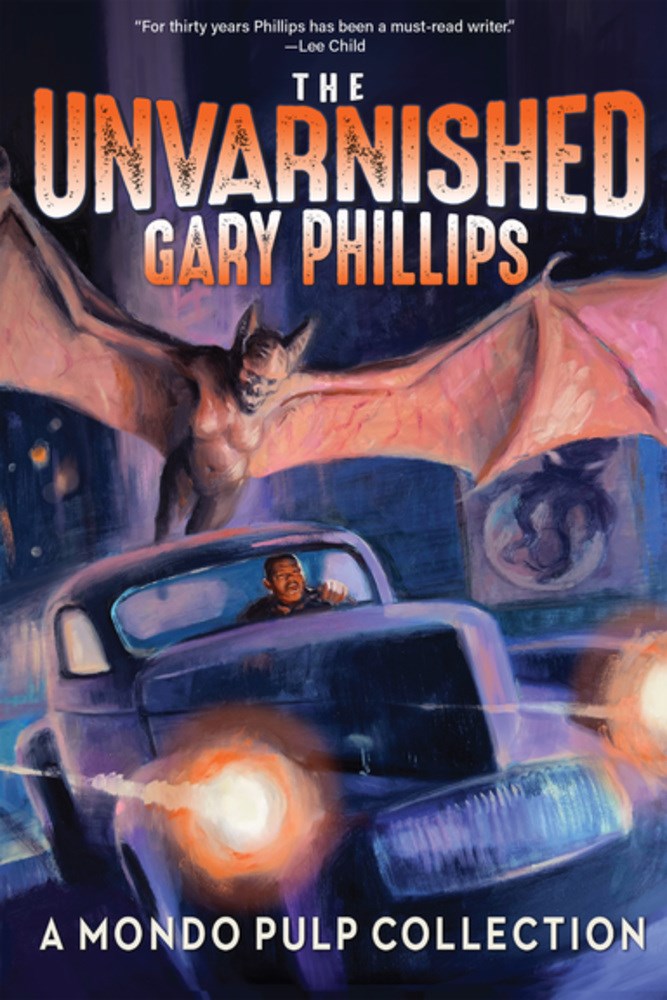
The Unvarnished Gary Phillips: A Mondo Pulp Collection
by Gary Phillips
$17.00*ship in 7-10 business days
Award-winning author, screenwriter, and editor Gary Phillips gathers his most thrilling, outlandish, and madcap pulp fiction in an 17-story collection that straddles the line between bizarro, science fiction, noir, and superhero classics.
Aztec vampires, astral projecting killers, oxygen stealing bombs, undercover space rangers, aliens occupying Los Angeles, right wing specters haunting the ’hood, masked vigilantes, and mad scientists in their underground lairs plotting world domination populate the stories in this rip-snorting collection. In these pages grindhouse melds with blaxploitation along with strong doses of B movie hardcore drive-in fare.
Phillips, editor of the Anthony Award-winning The Obama Inheritance: Fifteen Stories of Conspiracy Noir, and author of One-Shot Harry and Matthew Henson and the Ice Temple of Harlem, said this about pulp. “The most common definition of pulp is it’s fast-paced, a story containing out there characters and a wild plot. There is that. But certainly, as we’ve now arrived at the era of retro-pulp, these stories have elements of characterization: not just action, but a glimpse behind the steely eyes of these doers of incredible deeds.” As an added bonus, Phillips resurrects Phantasmo, a Golden Age comics character created by Black artist-writer E.C. Stoner in an all-new outing of ethereal doings (includes 4 original illustrations by cover artist Adam Shaw).
-
The Age of Phillis
![The Age of Phillis]()
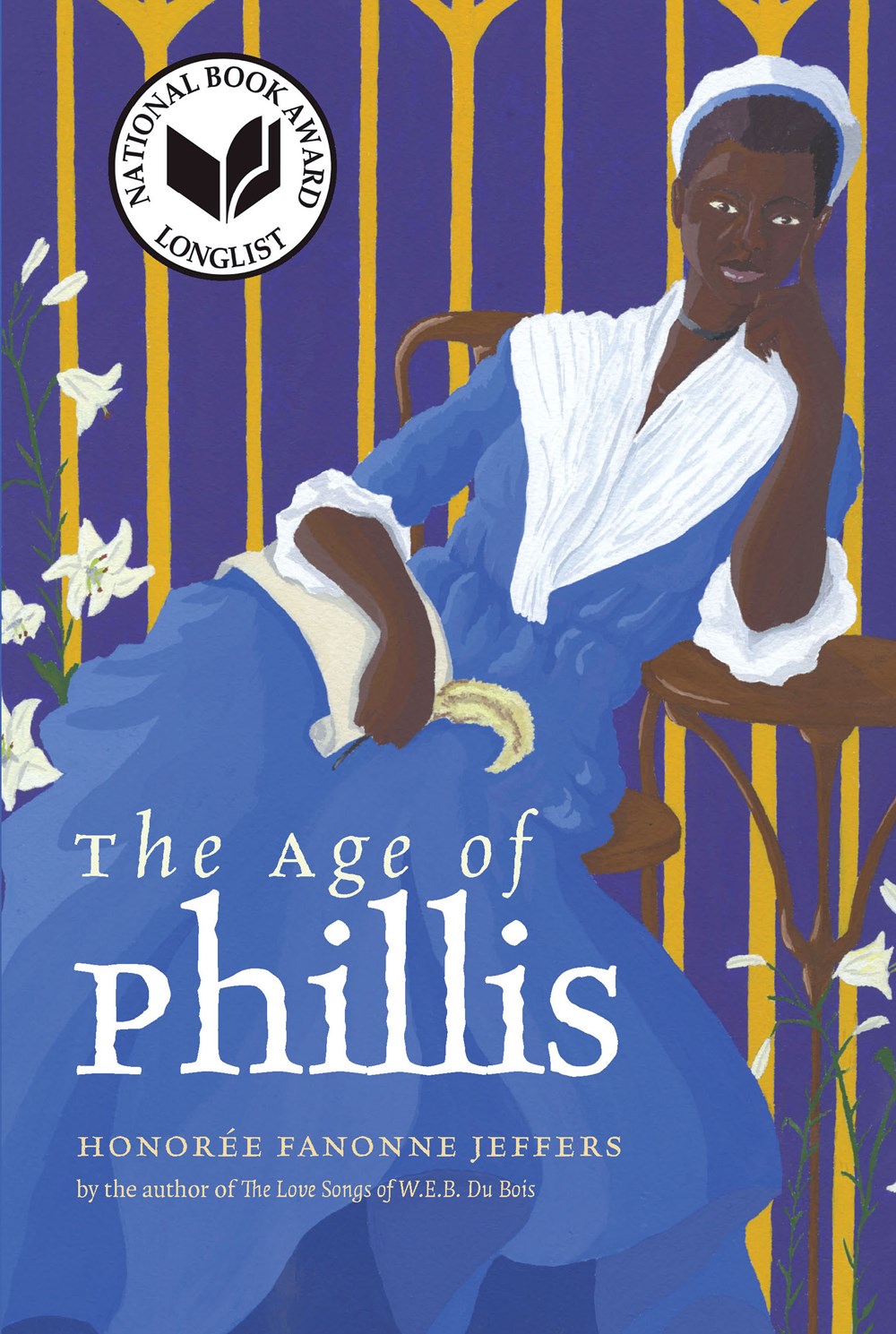
The Age of Phillis
by Honorée Fanonne Jeffers
$16.95Poems imagine the life and times of Phillis Wheatley Peters
NAACP Image Award Winner for Outstanding Literary Work for Poetry
2020 National Book Award for Poetry, Longlist
2020 LA Times Book Award Finalist
In 1773, a young, African American woman named Phillis Wheatley Peters published a book of poetry that challenged Western prejudices about African and female intellectual capabilities. Based on fifteen years of archival research, The Age of Phillis, by award-winning writer Honorée Fanonne Jeffers, imagines the life and times of Wheatley: her childhood in the Gambia, West Africa, her life with her white American owners, her friendship with Obour Tanner, and her marriage to the enigmatic John Peters. Woven throughout are poems about Wheatley's "age"—the era that encompassed political, philosophical, and religious upheaval, as well as the transatlantic slave trade. For the first time in verse, Wheatley's relationship to black people and their individual "mercies" is foregrounded, and here we see her as not simply a racial or literary symbol, but a human being who lived and loved while making her indelible mark on history.
mothering #1
Yaay, Someplace in the Gambia, c. 1753
after
the after-birth
is delivered
the mother stops
holding her breath
the mid-wife gives
what came before
her just-washed pain
her insanity pain
an undeserved pain
a God-given pain
oh oh oh pain
drum-talking pain
witnessing pain
Allah
a mother offers
You this gift
prays You find
it acceptable
her living pain
her creature pain
her pretty-little-baby
pain -
Why Solange Matters
![Why Solange Matters]()
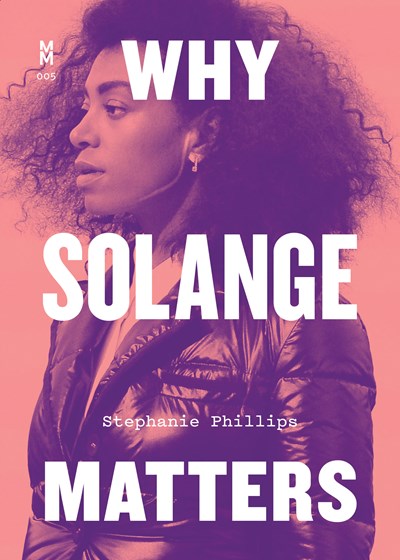
Why Solange Matters
By Stephanie Phillips
$18.95A Black feminist punk performer and important new voice recounts the dramatic story of an incandescent musician and artist whose unconventional journey to international success on her own terms was far more important than her family name.Growing up in the shadow of her superstar sister, Solange Knowles became a pivotal musician in her own right. Defying an industry that attempted to bend her to its rigid image of a Black woman, Solange continually experimented with her sound and embarked on a metamorphosis in her art that continues to this day.
In Why Solange Matters, Stephanie Phillips chronicles the creative journey of an artist who became a beloved voice for the Black Lives Matter generation. A Black feminist punk musician herself, Phillips addresses not only the unpredictable trajectory of Solange Knowles's career but also how she and other Black women see themselves through the musician's repertoire. First, she traces Solange’s progress through an inflexible industry, charting the artist’s development up to 2016, when the release of her third album, A Seat at the Table, redefined her career. Then, with A Seat at the Table and 2019’s When I Get Home, Phillips describes how Solange embraced activism, anger, Black womanhood, and intergenerational trauma to inform her remarkable art. Why Solange Matters not only cements the place of its subject in the pantheon of world-changing twenty-first century musicians, it introduces its writer as an important new voice.
-
Black Writers of the Founding Era: A Library of America Anthology
![Black Writers of the Founding Era: A Library of America Anthology]()
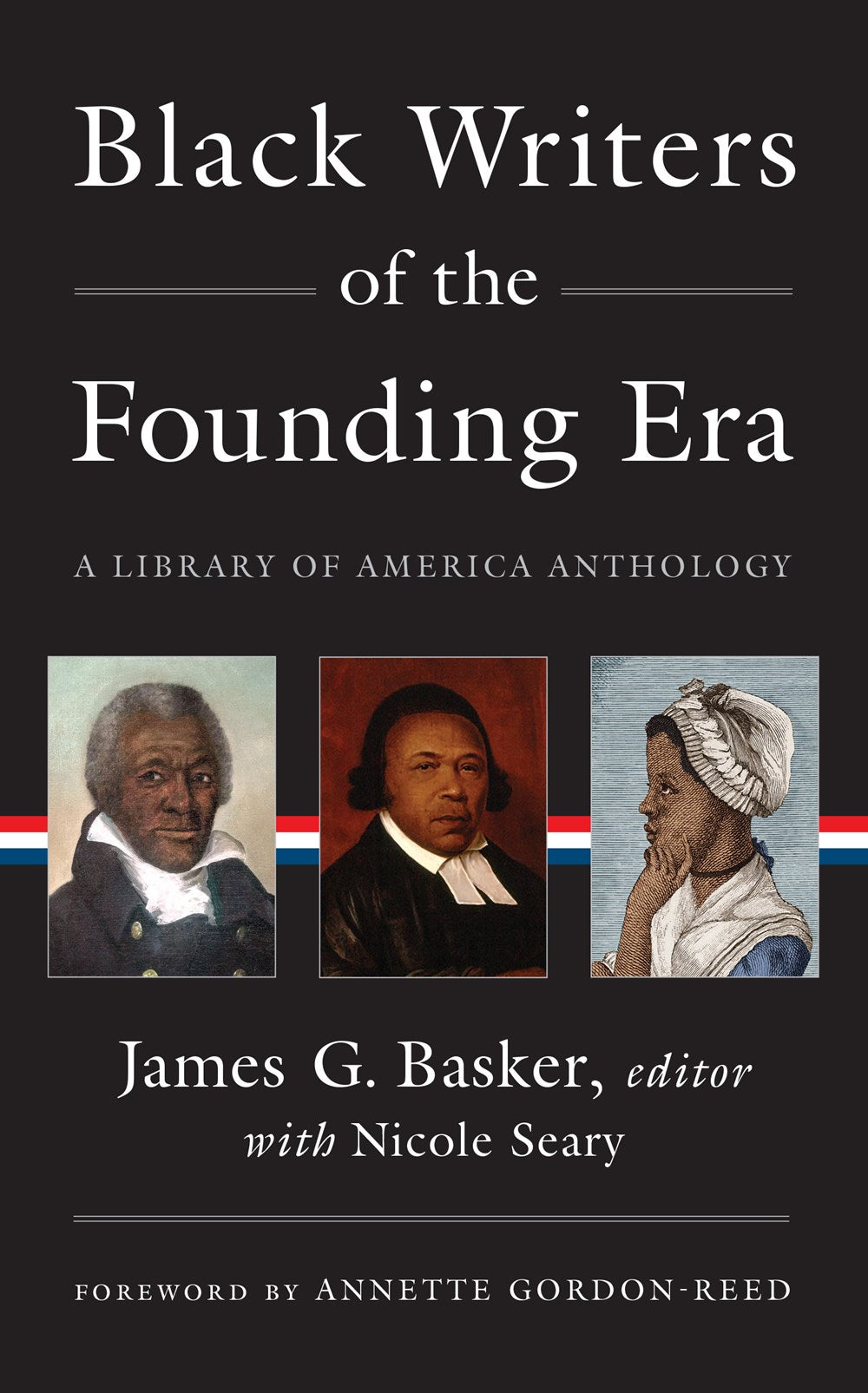
Black Writers of the Founding Era: A Library of America Anthology
edited by James G. Basker
$40.00A radical new vision of the nation's founding era and a major act of historical recovery
Featuring more than 120 writers, this groundbreaking anthology reveals the astonishing richness and diversity of Black experience in the turbulent decades of the American Revolution
Black Writers of the Founding Era is the most comprehensive anthology ever published of Black writing from the turbulent decades surrounding the birth of the United States. An unprecedented archive of historical sources––including more than 200 poems, letters, sermons, newspaper advertisements, slave narratives, testimonies of faith and religious conversion, criminal confessions, court transcripts, travel accounts, private journals, wills, petitions for freedom, even dreams, by over 100 authors––it is a collection that reveals the surprising richness and diversity of Black experience in the new nation.
Here are writers both enslaved and free, loyalist and patriot, female and male, northern and southern; soldiers, seamen, and veterans; painters, poets, accountants, orators, scientists, community organizers, preachers, restaurateurs and cooks, hairdressers, criminals, carpenters, and many more. Along with long-famous works like Phillis Wheatley’s poems and Benjamin Banneker’s astonishing mathematical and scientific puzzles are dozens of first-person narratives offering little-known Black perspectives on the events of the times, like the Boston Massacre and the death of George Washington.
From their bold and eloquent contributions to public debates about the meanings of the revolution and the values of the new nation–– writings that dramatize the many ways in which protest, activism, and community organizing have been integral to the Black American experience from the beginning––to their intimate thoughts preserved in private diaries and letters, some unseen to the present day, the words of the many writers gathered here will indelibly alter our understandings of American history.
A foreword by Annette Gordon-Reed and an introduction by James G. Basker, along with introductory headnotes and explanatory notes drawing on cutting edge scholarship, illuminate these writers’ works and to situate them in their historical contexts.
A 16-page color photo insert presents portraits of some of the writers included and images of the original manuscripts, broadside, and books in which their words have been preserved. -
PRE-ORDER: We Were Here: A History of Black People and Alternative Music
![We Were Here: A History of Black People and Alternative Music cover image]()

PRE-ORDER: We Were Here: A History of Black People and Alternative Music
$30.00A long-overdue corrective to the history of rock ‘n’ roll and alternative music, repopulating it with the extraordinary Black artists and influential figures who steered its course, from an author, journalist, and front woman of the British post punk band Big Joanie.
The history of rock and roll and alternative music is often told in bold, sweeping, isolated moments that are removed from the context of their time. Upon closer inspection, however, it becomes clear that the stories we tell center primarily on the achievements of white men like Elvis Presley, The Ramones, Nirvana, and David Bowie. White men who were the stars, white men who supposedly changed the game, white men who seemingly were at the forefront of every musical innovation in the 20th and 21st centuries. These rock and roll retellings perpetuate the belief that white men were the most important people to wield a guitar, strut on stage, or pound out a pummeling drumbeat. What is missing in these stories is everything in between—the people, the places, and the scenes that connect the dots—and you can’t tell the history of any music scene, let alone alternative music, without the Black community.
From the genre's earliest moments, Black musicians—like gospel entertainer Sister Rosetta Tharpe in the 1930s-40s and rock and roll legend Chuck Berry in the 1950s—have consistently pushed musical boundaries that forever impacted the music that followed. Throughout the decades, numerous Black entertainers continued to add their take on rock and alternative genres, expanding and building on what was already there to create what we know as alternative music today: look no further than the electric fire of Jimi Hendrix’s guitar licks in the '60s, the kaleidoscopic melee of hardcore and reggae that was Bad Brains in the late '70s, and the funkadelic swagger of Living Colour in the '80s.
Despite their groundbreaking contributions, why have Black musicians been so neglected from the historical canon? Is alternative music still seen as a white genre, and how are Black musicians and fans making space for themselves in the music scenes they love? We Were Here tells the story of Black artists performing in alternative genres from punk to rock and roll, indie to new wave, alongside their Black fans. Through brand new interviews and meticulous research, Phillips documents the history of Black people’s influence on these genres, highlighting the key players, assessing the legacy of their work, and drawing attention to those who have been obscured from history.
Where rock magazines and music books previously omitted or misunderstood the stories of Black artists and fans, this book centers their voices and attempts to right the wrongs of the past. Along the way, Phillips infuses her own coming-of-age story as a Black female musician in the punk scene, alongside a cultural analysis of rock and alternative music history.
-
PRE-ORDER: Lift Every Voice
![Lift Every Voice cover image]()

PRE-ORDER: Lift Every Voice
$20.00Every pre-ordered copy of Lift Every Voice will be signed.
From award-winning poet and novelist Phillip B. Williams, an astonishing new collection that revels in the possibility of creating one's own light
Captivating for both its grandeur and intimacy, Lift Every Voice explores the capacity for the past to be both a source of dread and empowerment, an unshakable reminder of violence and an indelible testament to the endurance of love. In virtuosic poems that are wise, musical, richly layered, and saturated with vivid imagery, Williams honors a mother "who knew seven ways to say bitch under her breath," a grandma whose smile "reflects the world," and wonders at "the impossible lift" of forgiveness. Lift Every Voice is a staggering tribute to personal and collective evolutions, a vital chorus that answers only to God, community, and the empowered self.
-
African American Poetry: 250 Years of Struggle and Song Edited
![African American Poetry: 250 Years of Struggle and Song Edited]()
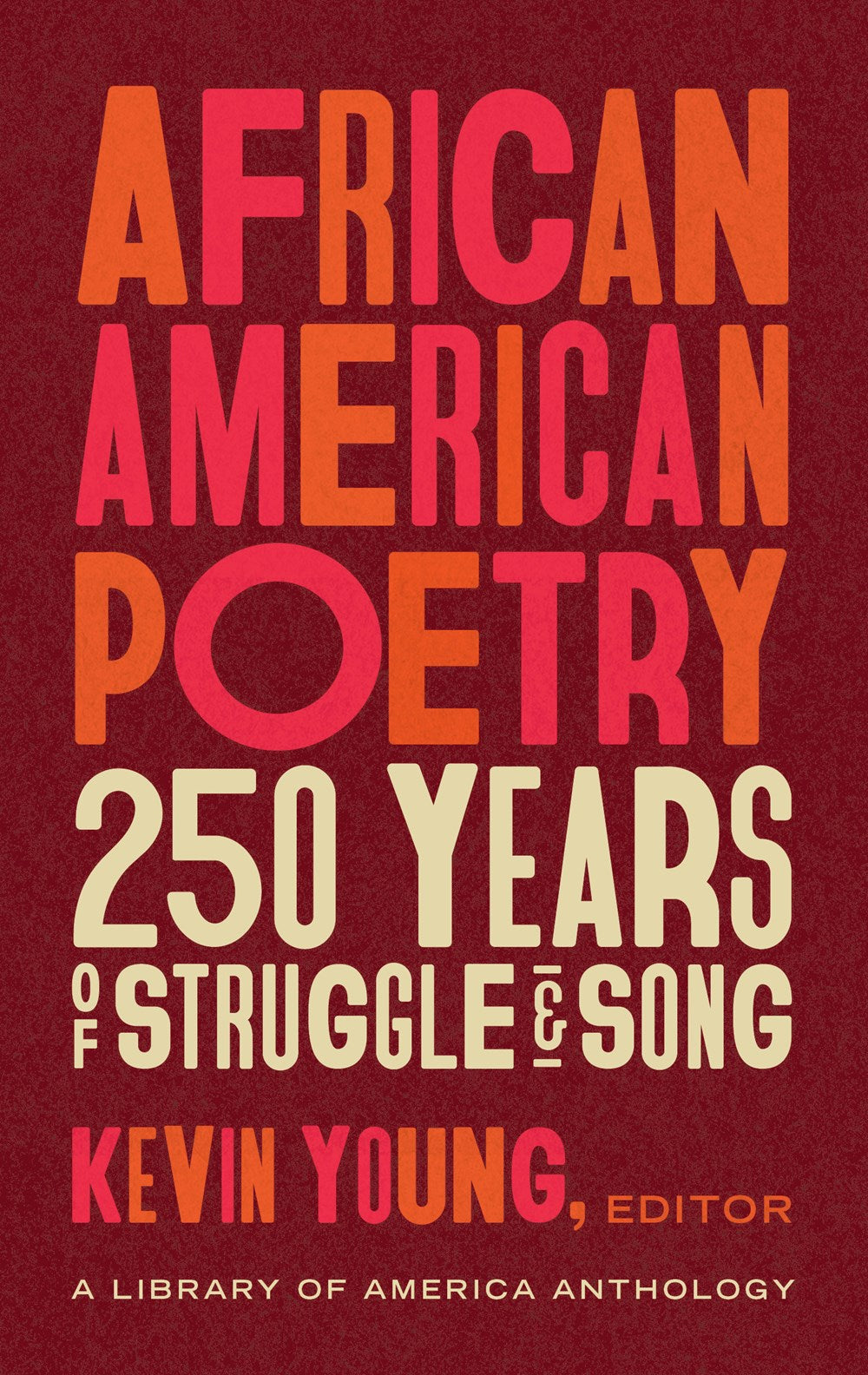
African American Poetry: 250 Years of Struggle and Song Edited
by Kevin Young
$45.00A literary landmark: the biggest, most ambitious anthology of black poetry ever published, gathering 250 poets from the colonial period to the present.
Only now, in the 21st century, can we fully grasp the breadth and range of African American poetry: a magnificent chorus of voices, some familiar, others recently rescued from neglect. Here, in this unprecedented anthology expertly selected by poet and scholar Kevin Young, this precious living heritage is revealed in all its power, beauty, and multiplicity.
Discover, in these pages, how an enslaved person like Phillis Wheatley confronted her legal status in verse and how an antebellum activist like Frances Ellen Watkins Harper voiced her own passionate resistance to slavery. Read nuanced, provocative poetic meditations on identity and self-assertion stretching from Paul Laurence Dunbar to Amiri Baraka to Lucille Clifton and beyond. Experience the transformation of poetic modernism in the works of figures such as Langston Hughes, Fenton Johnson, and Jean Toomer. Understand the threads of poetic history—in movements such as the Harlem and Chicago Renaissances, Black Arts, Cave Canem, Dark Noise Collective—and the complex bonds of solidarity and dialogue among poets across time and place.
See how these poets have celebrated their African heritage and have connected with other communities in the African Diaspora. Enjoy the varied but distinctly Black music of a tradition that draws deeply from jazz, hip hop, and the rhythms and cadences of the pulpit, the barbershop, and the street. And appreciate, in the anthology’s concluding sections, why contemporary African American poetry, amply recognized in recent National Book Awards and Poet Laureates, is flourishing as never before.Taking the measure of the tradition in a single indispensable volume, African American Poetry: 250 Years of Struggle and Song sets a new standard for a genuinely deep engagement with Black poetry and its essential expression of American genius. -
Drug Use for Grown Ups
![Drug Use for Grown Ups]()

Drug Use for Grown Ups
by Dr. Carl L Hart
$28.00*Ships in 7-10 business days*
From one of the world’s foremost experts on the subject, a powerful argument that the greatest damage from drugs flows from their being illegal, and a hopeful reckoning with the possibility of their use as part of a responsible and happy life
Dr. Carl L. Hart, Ziff Professor at Columbia University and former chair of the Department of Psychology, is one of the world’s preeminent experts on the effects of so-called recreational drugs on the human mind and body. Dr. Hart is open about the fact that he uses drugs himself, in a happy balance with the rest of his full and productive life as a colleague, husband, father, and friend. In Drug Use for Grown-Ups, he draws on decades of research and his own personal experience to argue definitively that the criminalization and demonization of drug use—not drugs themselves—have been a tremendous scourge on America, not least in reinforcing this country’s enduring structural racism.
Dr. Hart did not always have this view. He came of age in one of Miami’s most troubled neighborhoods at a time when many ills were being laid at the door of crack cocaine. His initial work as a researcher was aimed at proving that drug use caused bad outcomes. But one problem kept cropping up: the evidence from his research did not support his hypothesis. From inside the massively well-funded research arm of the American war on drugs, he saw how the facts did not support the ideology. The truth was dismissed and distorted in order to keep fear and outrage stoked, the funds rolling in, and black and brown bodies behind bars.
Drug Use for Grown-Ups will be controversial, to be sure: the propaganda war, Dr. Hart argues, has been tremendously effective. Imagine if the only subject of any discussion about driving automobiles was fatal car crashes. Drug Use for Grown-Ups offers a radically different vision: when used responsibly, drugs can enrich and enhance our lives. We have a long way to go, but the vital conversation this book will generate is an extraordinarily important step. -
Black Nature: Four Centuries of African American Nature Poetry
![Black Nature: Four Centuries of African American Nature Poetry]()
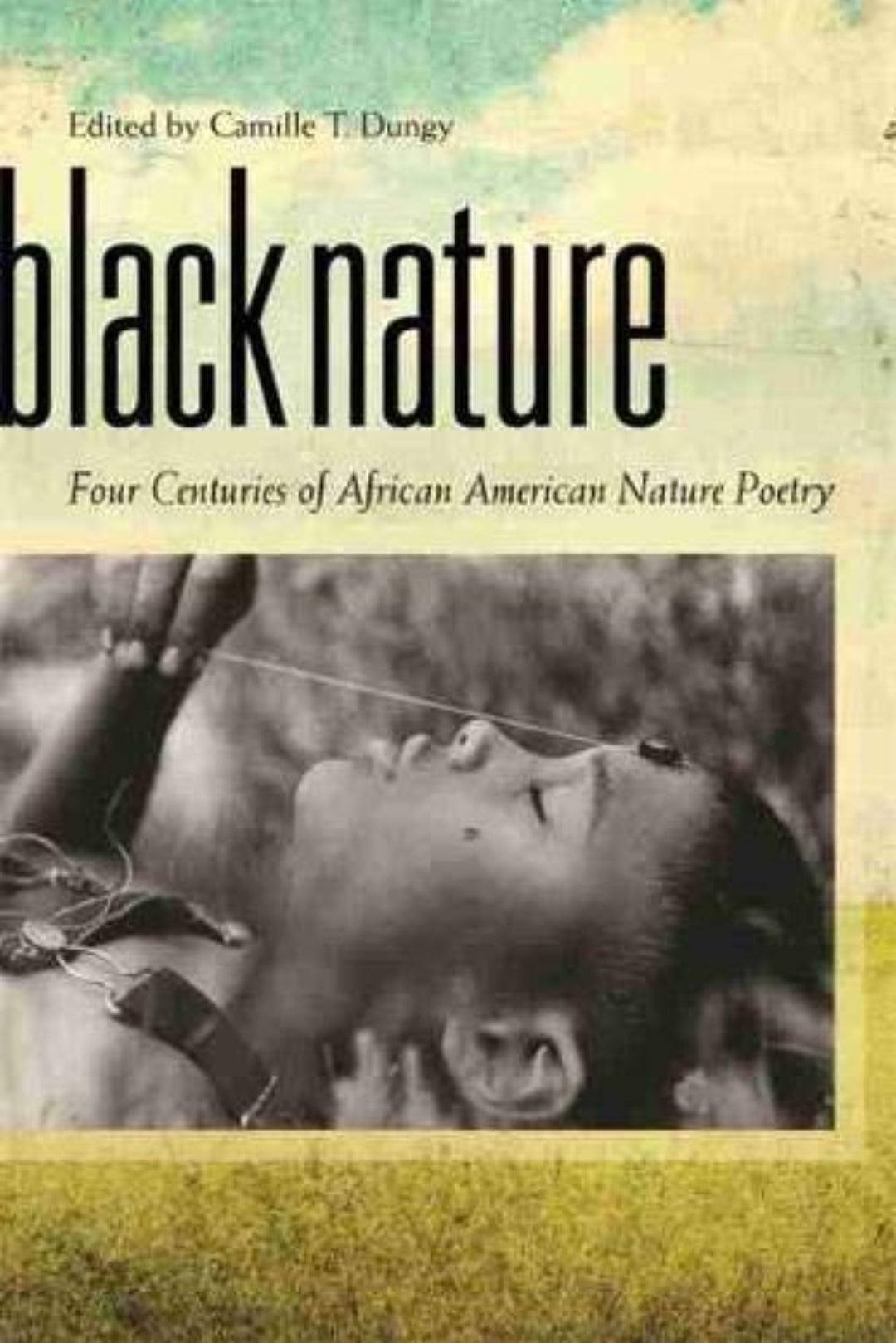
Black Nature: Four Centuries of African American Nature Poetry
edited by Camille T. Dungy
$38.95Black Nature is the first anthology to focus on nature writing by African American poets, a genre that until now has not commonly been counted as one in which African American poets have participated.
Black poets have a long tradition of incorporating treatments of the natural world into their work, but it is often read as political, historical, or protest poetry―anything but nature poetry. This is particularly true when the definition of what constitutes nature writing is limited to work about the pastoral or the wild.
Camille T. Dungy has selected 180 poems from 93 poets that provide unique perspectives on American social and literary history to broaden our concept of nature poetry and African American poetics. This collection features major writers such as Phillis Wheatley, Rita Dove, Yusef Komunyakaa, Gwendolyn Brooks, Sterling Brown, Robert Hayden, Wanda Coleman, Natasha Trethewey, and Melvin B. Tolson as well as newer talents such as Douglas Kearney, Major Jackson, and Janice Harrington. Included are poets writing out of slavery, Reconstruction, the Harlem Renaissance, the Black Arts Movement, and late twentieth- and early twenty-first-century African American poetic movements.
Black Nature brings to the fore a neglected and vital means of considering poetry by African Americans and nature-related poetry as a whole.
A Friends Fund Publication. -
Blues Boy: The B. B. King Story
![Blues Boy: The B. B. King Story cover image]()

Blues Boy: The B. B. King Story
$19.99From his childhood in the Jim Crow South to his triumphant reign as the King of Blues, Blues Boy tells the aspirational story of American music icon B.B. King. For readers of Trombone Shorty, When Marian Sang, and Drum Dream Girl. Includes a timeline, author’s note, and suggestions for reading and listening.
At twelve years old, Riley B. King borrowed fifteen dollars from his boss to buy a used guitar. Before long, he was playing his music for jubilant crowds all over the world. Blues Boy chronicles B. B. King’s inspiring journey from his childhood in the Jim Crow South to global stardom. It is a compelling biography about the widely known and celebrated American music figure as well as a beautifully illustrated picture book with themes of family, community, history, kindness, empathy, and justice.
Acclaimed author Alice Faye Duncan makes B.B. King’s story both accessible and inspiring for young readers. The text is sometimes uplifting and sometimes heart-wrenching, but always carries emotional depth, much like the music it celebrates. Illustrator and visual artist Carl Joe Williams provides artwork that is rich and distinctive, bringing B.B. King’s story to life on every page. Blues Boy will find a place on the shelf with books like Trombone Shorty and Radiant Child. Includes backmatter.


Stay Informed. We're building a community committed to celebrating Black authors + artisans. Subscribe to keep up with all things Kindred Stories.