
Search results: 39 results for “by W. E. B. Du Bois”
Not finding what you're looking for? Check out our shop on bookshop.org to order and still support us ♥
39 results
-
The Souls of Black Folk
![The Souls of Black Folk]()
The Souls of Black Folk
by W. E. B. Du Bois
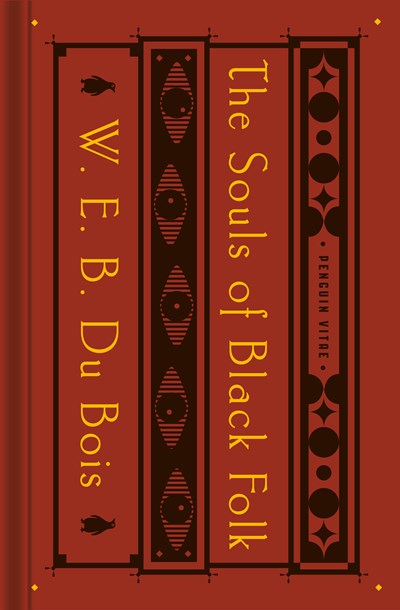
$25.00When The Souls of Black Folk was first published in 1903, it had a galvanizing effect on the conversation about race in America—and it remains both a touchstone in the literature of African America and a beacon in the fight for civil rights. Believing that one can know the “soul” of a race by knowing the souls of individuals, W. E. B. Du Bois combines history and stirring autobiography to reflect on the magnitude of American racism and to chart a path forward against oppression, and introduces the now-famous concepts of the color line, the veil, and double-consciousness.
With "The Talented Tenth" and "The Souls of White Folk"
-
The Love Songs of W.E.B. Du Bois
![The Love Songs of W.E.B. Du Bois]()

The Love Songs of W.E.B. Du Bois
by Honorée Fanonne Jeffers
from $20.00“My life had its significance and its only deep significance because it was part of a Problem,” W. E. B. Du Bois once wrote. Since childhood, Ailey Pearl Garfield has understood these words all too well. Bearing the names of two formidable Black Americans—the revered choreographer Alvin Ailey and her great grandmother, the descendant of slaves and tenant farmers—Ailey carries the weight of this Problem on her shoulders.
The daughter of an accomplished doctor and a strict schoolteacher, Ailey is raised in the City but spends summers in the small Georgia town of Chicasetta, where her mother’s family has lived since their ancestors arrived from Africa in bondage. Growing up, she struggles with this duality, a battle for belonging that shapes her identity. On one side are her exacting parents and her imperious, light-skinned grandmother Nana Claire, to whom skin color is paramount. On the other, Ailey feels the pull of the “deep country” of her mother’s land-tending family, whose forebears endured the horrors of slavery and Jim Crow.
But how can Ailey live up to everyone’s expectations when half of her family rejects the truth of a fraught racial history, while the rest can’t ever seem to break away from it?
-
We Are the Leaders We Have Been Looking For (The W. E. B. Du Bois Lectures)
![Book cover image]()
We Are the Leaders We Have Been Looking For (The W. E. B. Du Bois Lectures)
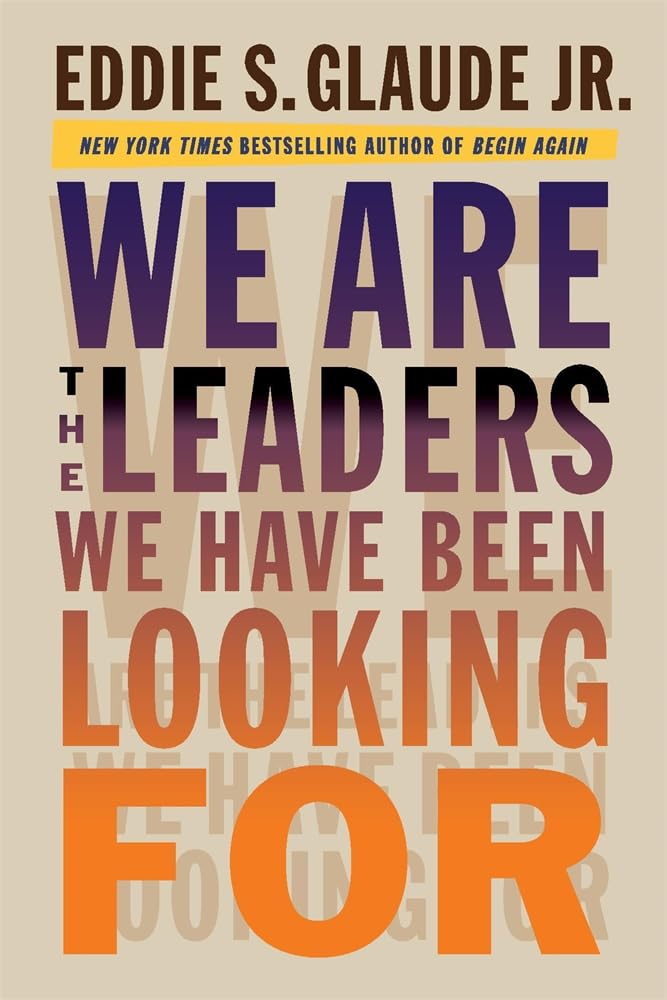
from $18.95From the author of the New York Times bestseller Begin Again, a politically astute, lyrical meditation on how ordinary people can shake off their reliance on a small group of professional politicians and assume responsibility for what it takes to achieve a more just and perfect democracy.
“Like attending a jazz concert with all of one’s favorite musicians…James Baldwin, Martin Luther King, Jr., Malcolm X, Ella Baker, Toni Morrison, and more…Glaude brilliantly takes us on an epic tour through their lives and work.”
―Henry Louis Gates, Jr., author of The Black Box: Writing the RaceWe are more than the circumstances of our lives, and what we do matters. In We Are the Leaders We Have Been Looking For, one of the nation’s preeminent scholars and a New York Times bestselling author, Eddie S. Glaude Jr., makes the case that the hard work of becoming a better person should be a critical feature of Black politics. Through virtuoso interpretations of Martin Luther King, Jr., Malcolm X, and Ella Baker, Glaude shows how we have the power to be the heroes that our democracy so desperately requires.
Based on the Du Bois Lectures delivered at Harvard University, the book begins with Glaude’s unease with the Obama years. He felt then, and does even more urgently now, that the excitement around the Obama presidency constrained our politics as we turned to yet another prophet-like figure. He examines his personal history and the traditions that both shape and overwhelm his own voice.
Glaude weaves anecdotes about his evolving views on Black politics together with the writings of Ralph Waldo Emerson, John Dewey, Toni Morrison, James Baldwin, and Ralph Ellison, encouraging us to reflect on the lessons of these great thinkers and address imaginatively the challenges of our day in voices uniquely our own.
Narrated with passion and philosophical intensity, this book is a powerful reminder that if American democracy is to survive, we must step out from under the shadows of past giants to build a better society―one that derives its strength from the pew, not the pulpit.
-
Black Reconstruction in America 1860-1880
![Black Reconstruction in America 1860-1880]()
Black Reconstruction in America 1860-1880
by W. E. B. Du Bois
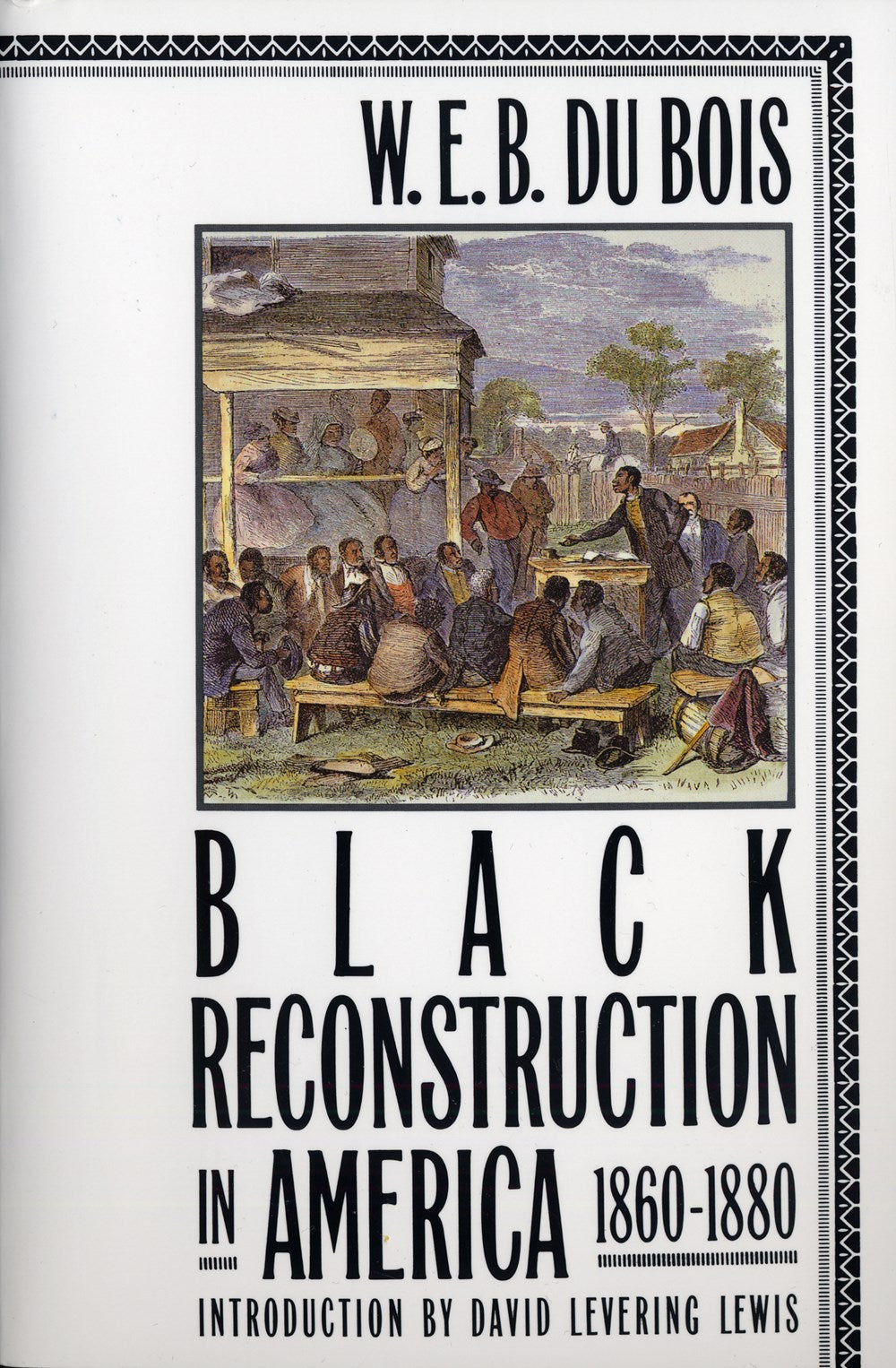
$26.00The pioneering work in the study of the role of Black Americans during Reconstruction by the most influential Black intellectual of his time.
This pioneering work was the first full-length study of the role black Americans played in the crucial period after the Civil War, when the slaves had been freed and the attempt was made to reconstruct American society. Hailed at the time, Black Reconstruction in America 1860–1880 has justly been called a classic. -
Harlem Rhapsody
![Book cover image]()

Harlem Rhapsody
Victoria Christopher Murray
from $19.00“A page turner and history lesson at once, Harlem Rhapsody reminds us that our stories are our generational wealth— this book and the real lives that inspired it.”—Tayari Jones, New York Times bestselling author of An American Marriage (Oprah’s Book Club Pick)
She found the literary voices that would inspire the world…. The extraordinary story of the woman who ignited the Harlem Renaissance, written by Victoria Christopher Murray, New York Times bestselling coauthor of The Personal Librarian.
In 1919, a high school teacher from Washington, D.C arrives in Harlem excited to realize her lifelong dream. Jessie Redmon Fauset has been named the literary editor of The Crisis. The first Black woman to hold this position at a preeminent Negro magazine, Jessie is poised to achieve literary greatness. But she holds a secret that jeopardizes it all.
W. E. B. Du Bois, the founder of The Crisis, is not only Jessie’s boss, he’s her lover. And neither his wife, nor their fourteen-year-age difference can keep the two apart. Amidst rumors of their tumultuous affair, Jessie is determined to prove herself. She attacks the challenge of discovering young writers with fervor, finding sixteen-year-old Countee Cullen, seventeen-year-old Langston Hughes, and Nella Larsen, who becomes one of her best friends. Under Jessie’s leadership, The Crisis thrives…every African American writer in the country wants their work published there.
When her first novel is released to great acclaim, it’s clear that Jessie is at the heart of a renaissance in Black music, theater, and the arts. She has shaped a generation of literary legends, but as she strives to preserve her legacy, she’ll discover the high cost of her unparalleled success. -
Dèy: A Novel
![Dèy: A Novel cover image]()

Dèy: A Novel
$30.00From the bestselling author of Everything Inside comes a vivid, timely story, moving from Haiti to Brooklyn to Miami, of a woman whose sense of self and family are called into question when she gets caught in a random act of violence one sunny Florida day.
“Is home the place where we are born? Or is it the place where we die?” These questions haunt Magnolia, a successful Haitian American real estate agent in Miami, after she hears the terrifying sounds of gunfire while shopping for her daughter’s first-ever cell phone; she takes shelter in a restaurant called Oasis, cowering with fellow shoppers and diners, each praying to their respective gods.
Once she’s safely home, Magnolia hides the fact that she was at the mall shooting from everyone close to her. But given her life back, she begins to see it all clearly, and as if for the first time—what the extraordinary bond she has with her daughter, Zoë, really means to her, and what Zoë may feel in return; what the nearly broken relationship she has with her partner, Harrison, has cost her, despite his love for her and their daughter; why her mentally troubled mother—whose unraveling patterns Magnolia worries she’s spiraling toward herself—might be so ghost-haunted; what the source of her father’s pain, and his reason for seeking solace in the arms of a mistress, really is. As Magnolia struggles through the labyrinth of her past, she must also come to terms with the losses sustained that traumatic day, losses that we all bear witness to all too often in our troubling times.
Can love, can family, protect us from harm? Does optimism or fear win out in one’s heart, one’s soul? Which side will win out for Magnolia—and where does she really belong? Pulled between these questions, and her beloved, high-stakes choices and worlds—Miami or Haiti, single or married, mortal or ghost, before or after—Magnolia is one of the most compelling characters that Danticat has ever created—a narrator who is "yon pati koukouy, part firefly": shimmering, flitting between choices, drawn to the light yet emitting her own.
Taking its title from the Creole word for mourning, Dèy is a profoundly warm and moving novel about the importance of sharing grief and leave-taking, but also of the ties of family—takeout dinners around a table, fresh dirt on a plant’s roots in the garden, swimming together in the azure seas. As Magnolia questions whether all has not yet been lost, Dèy celebrates the complexity of life in a brave and striking novel that is one of Danticat’s most powerful and deeply affecting works yet, told with a signature “unfaltering voice and evocative beauty” (The Boston Globe).
-
W.E.B. Du Bois: Black Reconstruction (LOA #350): An Essay Toward a History of the Part whichBlack Folk Played in the Attempt to ReconstructDemocracy in America, 1860–1880 (Library of America, 350)
![W.E.B. Du Bois: Black Reconstruction (LOA #350): An Essay Toward a History of the Part whichBlack Folk Played in the Attempt to ReconstructDemocracy in America, 1860–1880 (Library of America, 350) cover image]()

W.E.B. Du Bois: Black Reconstruction (LOA #350): An Essay Toward a History of the Part whichBlack Folk Played in the Attempt to ReconstructDemocracy in America, 1860–1880 (Library of America, 350)
W.E.B. Du Bois
$45.00A definitive edition of the landmark book that forever changed our understanding of the Civil War’s aftermath and the legacy of racism in America
Upon publication in 1935, W.E.B. Du Bois’s now classic Black Reconstruction offered a revelatory new assessment of Reconstruction—and of American democracy itself. One of the towering African American thinkers and activists of the twentieth century, Du Bois brought all his intellectual powers to bear on the nation’s post-Civil War era of political reorganization, a time when African American progress was met with a white supremacist backlash and ultimately yielded to the consolidation of the unjust social order of Jim Crow.
Black Reconstruction is a pioneering work of revisionist scholarship that, in the wake of the censorship of Du Bois’s characterization of Reconstruction by the Encyclopedia Britannica, was written to debunk influential historians whose racist ideas and emphases had disfigured the historical record. “The chief witness in Reconstruction, the emancipated slave himself,” Du Bois argued, “has been almost barred from court. His written Reconstruction record has been largely destroyed and nearly always neglected.” In setting the record straight Du Bois produced what co-editor Eric Foner has called an “indispensable book,” a magisterial work of detached scholarship that is also imbued with passionate outrage.
Presented in a handsome and authoritative hardcover edition prepared by Foner and co-editor Henry Louis Gates, Jr., Black Reconstruction is joined here for the first time with important writings that trace Du Bois’s thinking throughout his career about Reconstruction and its centrality in understanding the tortured course of democracy in America.
-
The New Negro: A History in Documents, 1887–1937
![The New Negro: A History in Documents, 1887–1937 cover image]()

The New Negro: A History in Documents, 1887–1937
Martha H. Patterson
$39.95An authoritative anthology tracing the history of one of the most important concepts Black people drew on to challenge the brutal, totalizing system of Jim Crow racism
This book brings together a wealth of readings on the metaphor of the “New Negro,” charting how generations of thinkers debated its meaning and seized on its potency to stake out an astonishingly broad and sometimes contradictory range of ideological positions. It features dozens of newly unearthed pieces by major figures such as W. E. B. Du Bois, Charles S. Johnson, and Drusilla Dunjee Houston as well as writings from Cuba, the US Virgin Islands, Dominica, France, Sierra Leone, South Africa, colonial Zimbabwe, and the United States. Demonstrating how this evocative and supremely protean concept predates its popularization in Alain Locke’s 1925 anthology of the same name, The New Negro takes readers from its beginnings as a response to Henry Grady’s famous “New South” address in 1886 through the Harlem Renaissance and the New Deal.
Opening a fascinating window into a largely unexplored chapter in African American, Afro-Latin American, and African intellectual history, this groundbreaking anthology includes writings by Gwendolyn Bennett, Marita Bonner, John Edward Bruce (“Bruce Grit”), Nannie Helen Burroughs, Charles W. Chesnutt, James Bertram Clarke (“José Clarana,” “Jaime Gil”), Anna Julia Cooper, Alexander Crummell, Countee Cullen, Alice Dunbar-Nelson, Marcus Garvey, Hubert Harrison, Langston Hughes, Zora Neale Hurston, D. Hamilton Jackson, Fenton Johnson, Claude McKay, Oscar Micheaux, Jeanne “Jane” Nardal, Jean Toomer, Gustavo Urrutia, Booker T. Washington, Dorothy West, Ruth Whitehead Whaley, Fannie Barrier Williams, Carter G. Woodson, and a host of others.
-
The Education of Black People: Ten Critiques, 1906-1960
![The Education of Black People: Ten Critiques, 1906-1960]()
The Education of Black People: Ten Critiques, 1906-1960
$18.00Undoubtedly the most influential black intellectual of the twentieth century and one of America's finest historians, W.E.B. DuBois knew that the liberation of the African American people required liberal education and not vocational training. He saw education as a process of teaching certain timeless values: moderation, an avoidance of luxury, a concern for courtesy, a capacity to endure, a nurturing love for beauty. At the same time, DuBois saw education as fundamentally subversive. This was as much a function of the well-established role of educationfrom Plato forwardas the realities of the social order under which he lived. He insistently calls for great energy and initiative; for African Americans controlling their own lives and for continued experimentation and innovation, while keeping education's fundamentally radical nature in view.
Though containing speeches written nearly one-hundred years ago, and on a subject that has seen more stormy debate and demagoguery than almost any other in recent history, The Education of Black People approaches education with a timelessness and timeliness, at once rooted in classical thought that reflects a remarkably fresh and contemporary relevance. -
Ideas in Unexpected Places : Reimagining Black Intellectual History
![Ideas in Unexpected Places : Reimagining Black Intellectual History]()

Ideas in Unexpected Places : Reimagining Black Intellectual History
by Leslie M. Alexander, Brandon R. Byrd & Russell Rickford
$38.00This transformative collection advances new approaches to Black intellectual history by foregrounding the experiences and ideas of people who lacked access to more privileged mechanisms of public discourse and power. While the anthology highlights renowned intellectuals such as W. E. B. Du Bois, it also spotlights thinkers such as enslaved people in the antebellum United States, US Black expatriates in Guyana, and Black internationals in Liberia. The knowledge production of these men, women, and children has typically been situated outside the disciplinary and conceptual boundaries of intellectual history.
The volume centers on the themes of slavery and sexuality; abolitionism; Black internationalism; Black protest, politics, and power; and the intersections of the digital humanities and Black intellectual history. The essays draw from diverse methodologies and fields to examine the ideas and actions of Black thinkers from the eighteenth century to the present, offering fresh insights while creating space for even more creative approaches within the field.
Timely and incisive, Ideas in Unexpected Places encourages scholars to ask new questions through innovative interpretive lenses—and invites students, scholars, and other practitioners to push the boundaries of Black intellectual history even further. -
W. E. B. Du Bois Stickers | Black History | Activists
![W. E. B. Du Bois Stickers | Black History | Activists]()

W. E. B. Du Bois Stickers | Black History | Activists
$4.00Celebrate the legacy of W. E. B. Du Bois, a trailblazing scholar, writer, and civil rights activist, with this premium die-cut sticker. Perfect for history enthusiasts, educators, and those who appreciate Black intellectual excellence, this sticker adds a meaningful touch to laptops, water bottles, notebooks, and more. Made from durable, waterproof material with a matte finish, it’s designed to last. ✨ Great for seasonal displays & themed promotions: • Black History Month & Educational Collections • Bookstores, Museum Shops & Gift Stores • Perfect for Teachers, Students & Scholars • Ideal for Cultural & Literary Enthusiasts 📌 Product details: • Size: Approx. 3” x2.6 " • Durable, waterproof vinyl with a matte finish • Dishwasher safe and long-lasting •Packaging: Sold individually; no packaging -
Negro Building: Black Americans in the World of Fairs and Museums
![Negro Building: Black Americans in the World of Fairs and Museums cover image]()

Negro Building: Black Americans in the World of Fairs and Museums
Mabel O. Wilson
$34.95Focusing on Black Americans' participation in world’s fairs, Emancipation expositions, and early Black grassroots museums, Negro Building traces the evolution of Black public history from the Civil War through the civil rights movement of the 1960s. Mabel O. Wilson gives voice to the figures who conceived the curatorial content: Booker T. Washington, W. E. B. Du Bois, Ida B. Wells, A. Philip Randolph, Horace Cayton, and Margaret Burroughs. Originally published in 2012, the book reveals why the Black cities of Chicago and Detroit became the sites of major Black historical museums rather than the nation's capital, which would eventually become home for the Smithsonian's National Museum of African American History and Culture, which opened in 2016.


Stay Informed. We're building a community committed to celebrating Black authors + artisans. Subscribe to keep up with all things Kindred Stories.