
Search results: 39 results for “by W. E. B. Du Bois”
Not finding what you're looking for? Check out our shop on bookshop.org to order and still support us ♥
39 results
-
In the Shadow of Du Bois: Afro-Modern Political Thought in America
![In the Shadow of Du Bois: Afro-Modern Political Thought in America cover image]()

In the Shadow of Du Bois: Afro-Modern Political Thought in America
Robert Gooding-Williams
$32.00The Souls of Black Folk is Du Bois’s outstanding contribution to modern political theory. It is his still influential answer to the question, “What kind of politics should African Americans conduct to counter white supremacy?” Here, in a major addition to American studies and the first book-length philosophical treatment of Du Bois’s thought, Robert Gooding-Williams examines the conceptual foundations of Du Bois’s interpretation of black politics.
For Du Bois, writing in a segregated America, a politics capable of countering Jim Crow had to uplift the black masses while heeding the ethos of the black folk: it had to be a politics of modernizing “self-realization” that expressed a collective spiritual identity. Highlighting Du Bois’s adaptations of Gustav Schmoller’s social thought, the German debate over the Geisteswissenschaften, and William Wordsworth’s poetry, Gooding-Williams reconstructs Souls’ defense of this “politics of expressive self-realization,” and then examines it critically, bringing it into dialogue with the picture of African American politics that Frederick Douglass sketches in My Bondage and My Freedom. Through a novel reading of Douglass, Gooding-Williams characterizes the limitations of Du Bois’s thought and questions the authority it still exerts in ongoing debates about black leadership, black identity, and the black underclass. Coming to Bondage and then to these debates by looking backward and then forward from Souls, Gooding-Williams lets Souls serve him as a productive hermeneutical lens for exploring Afro-Modern political thought in America.
-
Black No More
![Black No More]()

Black No More
by George S. Schuyler
$16.00*ships/available for pickup in 7-10 business days
It’s New Year’s Day 1933 in New York City, and Max Disher, a young black man, has just found out that a certain Dr. Junius Crookman has discovered a mysterious process that allows people to bleach their skin white—a new way to “solve the American race problem.” Max leaps at the opportunity, and after a brief stay at the Crookman Sanitarium, he becomes Matthew Fisher, a white man who is able to attain everything he has ever wanted: money, power, good liquor, and the white woman who rejected him when he was black.
Lampooning myths of white supremacy and racial purity and caricaturing prominent African American leaders like W. E. B. Du Bois, Madam C. J. Walker, and Marcus Garvey, Black No More is a masterwork of speculative fiction and a hilarious satire of America’s obsession with race.
For more than seventy years, Penguin has been the leading publisher of classic literature in the English-speaking world. With more than 1,800 titles, Penguin Classics represents a global bookshelf of the best works throughout history and across genres and disciplines. Readers trust the series to provide authoritative texts enhanced by introductions and notes by distinguished scholars and contemporary authors, as well as up-to-date translations by award-winning translators. -
Darkwater
![Darkwater]()
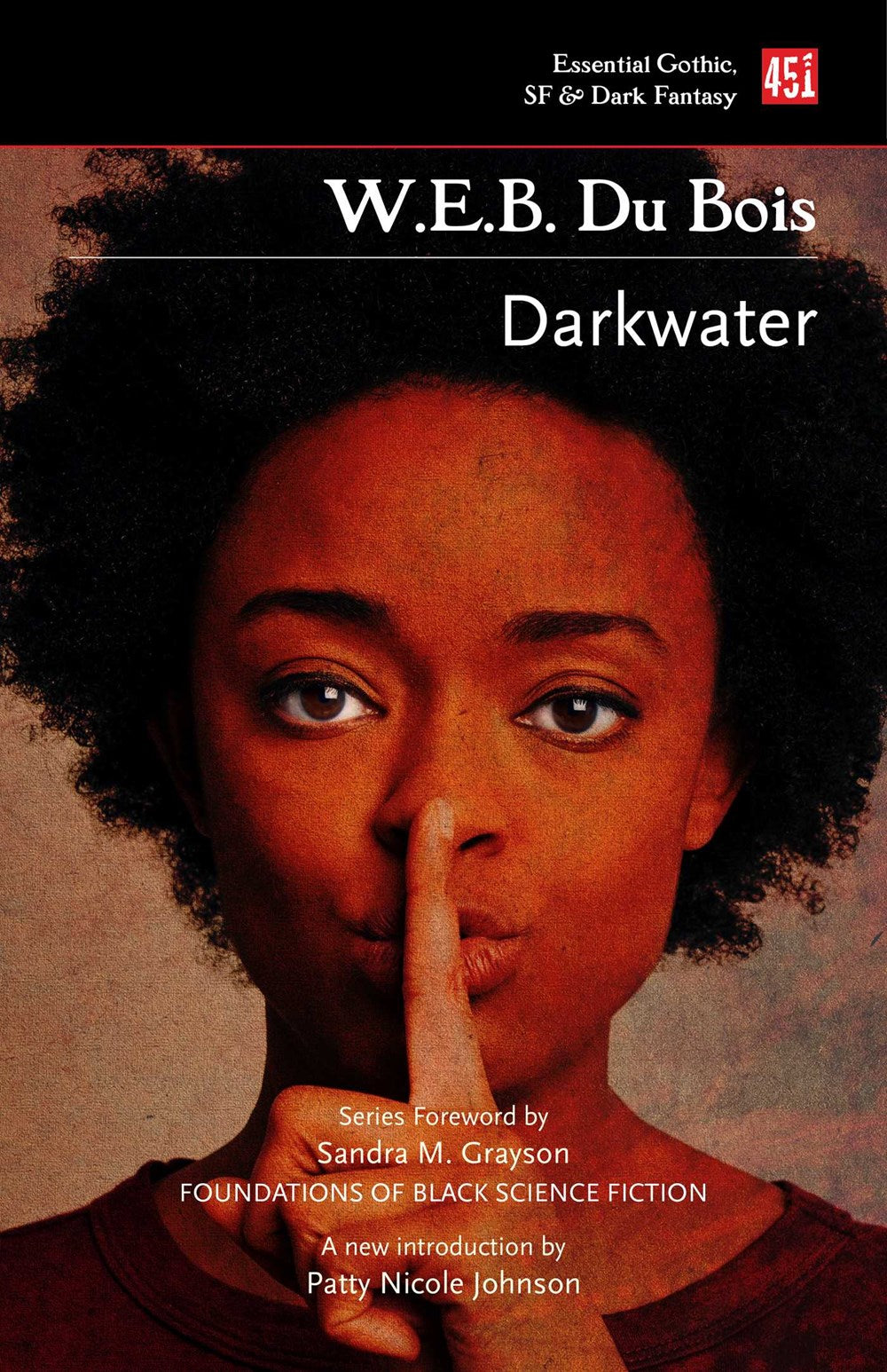
Darkwater
by W.E.B. Du Bois
$10.99Du Bois' foundational investigation of social justice and civil rights by means of essay, poetry, prayer and short science fiction.
A new edition with a new introduction, Du Bois' radical text is a rare statement of values formed around the vision of a collective life, where the humanity of black women and men is treated with dignity and equality. He expresses his themes through a series of literary forms: polemic essay, spirituals, poetry and short science fiction, each of which forms a pulse of social justice from a time when a true understanding of intersections between poverty, work, racism and feminism was rare. A new title in the Foundations of Black Science Fiction series. -
Collective Courage: A History of African American Cooperative Economic Thought and Practice
![Collective Courage: A History of African American Cooperative Economic Thought and Practice cover image]()

Collective Courage: A History of African American Cooperative Economic Thought and Practice
$39.95First published in 2014, Jessica Gordon Nembhard’s Collective Courage quickly became an important tool for understanding the history of cooperative economic enterprises in the African American community. This now-classic work recounts how African Americans benefited greatly from cooperative ownership and democratic economic participation throughout the nation’s history.
Many of the players in this story are well known―among them W. E. B. Du Bois; A. Philip Randolph and the Ladies’ Auxiliary to the Brotherhood of Sleeping Car Porters; Nannie Helen Burroughs; Fannie Lou Hamer; Ella Jo Baker and George Schuyler of the Young Negroes’ Co-operative League; the Federation of Southern Cooperatives; and the Black Panther Party. Drawing on media reports and co-op records, Gordon Nembhard uncovers the challenges they faced and highlights their hard-won victories.
This tenth anniversary edition of Collective Courage features a substantial preface that expands on material in the first edition and addresses the development of the Black co-op movement through the second decade of the twenty-first century. It remains an indispensable resource for readers interested in the history of the struggle for African American economic freedom and equity.
-
Slaves to Fashion: Black Dandyism and the Styling of Black Diasporic Identity
![Slaves to Fashion: Black Dandyism and the Styling of Black Diasporic Identity cover image]()

Slaves to Fashion: Black Dandyism and the Styling of Black Diasporic Identity
Monica L. Miller
$30.95Slaves to Fashion is a pioneering cultural history of the black dandy, from his emergence in Enlightenment England to his contemporary incarnations in the cosmopolitan art worlds of London and New York. It is populated by sartorial impresarios such as Julius Soubise, a freed slave who sometimes wore diamond-buckled, red-heeled shoes as he circulated through the social scene of eighteenth-century London, and Yinka Shonibare, a prominent Afro-British artist who not only styles himself as a fop but also creates ironic commentaries on black dandyism in his work. Interpreting performances and representations of black dandyism in particular cultural settings and literary and visual texts, Monica L. Miller emphasizes the importance of sartorial style to black identity formation in the Atlantic diaspora.
Dandyism was initially imposed on black men in eighteenth-century England, as the Atlantic slave trade and an emerging culture of conspicuous consumption generated a vogue in dandified black servants. “Luxury slaves” tweaked and reworked their uniforms, and were soon known for their sartorial novelty and sometimes flamboyant personalities. Tracing the history of the black dandy forward to contemporary celebrity incarnations such as Andre 3000, Miller explains how black people became arbiters of style and how they have historically used the dandy’s signature tools—clothing, gesture, and wit—to break down limiting identity markers and propose new ways of fashioning political and social possibility in the black Atlantic world. With an aplomb worthy of her iconographic subject, she considers the black dandy in relation to nineteenth-century American literature and drama, W. E. B. Du Bois’s reflections on black masculinity and cultural nationalism, the modernist aesthetics of the Harlem Renaissance, and representations of black cosmopolitanism in contemporary visual art.
-
Wings of Ebony
![Wings of Ebony]()
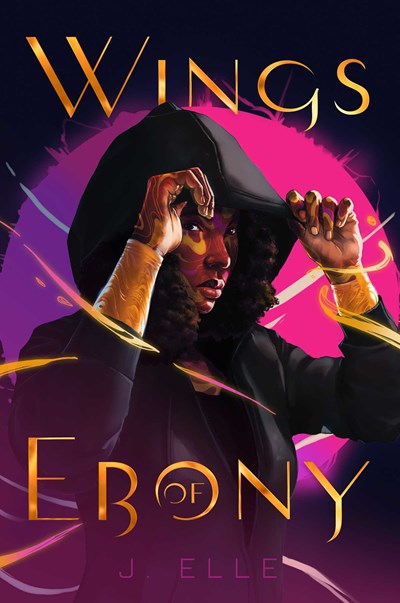
Wings of Ebony
by J. Elle
$12.99“Make a way out of no way” is just the way of life for Rue. But when her mother is shot dead on her doorstep, life for her and her younger sister changes forever. Rue's taken from her neighborhood by the father she never knew, forced to leave her little sister behind, and whisked away to Ghizon—a hidden island of magic wielders.
Rue is the only half-god, half-human there, where leaders protect their magical powers at all costs and thrive on human suffering. Miserable and desperate to see her sister on the anniversary of their mother’s death, Rue breaks Ghizon’s sacred Do Not Leave Law and returns to Houston, only to discover that Black kids are being forced into crime and violence. And her sister, Tasha, is in danger of falling sway to the very forces that claimed their mother’s life.
Worse still, evidence mounts that the evil plaguing East Row is the same one that lurks in Ghizon—an evil that will stop at nothing until it has stolen everything from her and everyone she loves. Rue must embrace her true identity and wield the full magnitude of her ancestors’ power to save her neighborhood before the gods burn it to the ground.About the author: J. Elle was born in Houston, Texas, and is a first-generation college student with a bachelor’s in journalism and MA in educational administration and human development. An advocate for marginalized voices in both publishing and her community, J. Elle’s passion for empowering youth dates back to her first career in education. She’s worked as a preschool director, middle school teacher, and high school creative writing mentor. In her spare time, she volunteers at an alternative school, provides feedback for aspiring writers, loves on her three littles, and cooks up dishes true to her Texas and Louisiana roots. Wings of Ebony is her first novel.
-
Plum Bun: A Novel Without a Moral (Modern Library Torchbearers)
![Plum Bun: A Novel Without a Moral (Modern Library Torchbearers) cover image]()

Plum Bun: A Novel Without a Moral (Modern Library Torchbearers)
Jessie Redmon Fauset
$17.00A rediscovered classic from the Harlem Renaissance about a young Black woman’s journey passing as white in 1920s New York City and her quest for self-acceptance—with an introduction by Glory Edim, founder and author of Well-Read Black Girl.
Jessie Redmon Fauset is one of the literary titans and foremost tastemakers of the Harlem Renaissance—hired by W. E. B. Du Bois to edit The Crisis, she helped popularize writers like Nella Larsen, Claude McKay, Langston Hughes, amongst countless others. And yet, her own work has been largely underread in the twenty-first century. Written in 1929, at the height of the Harlem renaissance, Fauset’s celebrated second novel tells the story of Angela Murray.
Growing up in a Black middle-class Philadelphia neighborhood, Angela has always dreamed of becoming a painter. But the profession is largely reserved for white society. So when Angela’s parents prematurely pass away, she moves to roaring New York City, where she befriends elite artists and presents herself as a white woman. While her sister Virginia’s complexion resembles that of their father’s, Angela’s is lighter, like her mother’s, and passing, she believes, is the only way she’ll ever achieve success. Virginia, meanwhile, refuses to bow to racist pressures, and stays in Philadelphia to embrace her heritage with pride.
Each time Angela thinks she’s found artistic, professional, and romantic fulfillment, her ethnicity gets exposed and she finds herself stripped of everything she cares about. As she navigates a world of seduction, betrayal, lust, and heartbreak, she’s forced to consider: What does it mean to find genuine success in a society marred by injustice? Fauset’s “novel without morals” never passes judgement and stays teeming with tenderness. Full of moments that underline the joy of every day Black life, Plum Bun is a pertinent meditation on art, identity, and what it means to find community—as relevant today as ever before. -
Testimony Therapy: Decolonizing Mental Health for Black Therapists and Clients
![Testimony Therapy: Decolonizing Mental Health for Black Therapists and Clients cover image]()

Testimony Therapy: Decolonizing Mental Health for Black Therapists and Clients
$28.99Centering Black culture and community for liberating, anti-racist therapeutic practice.
This innovative book lays out the journey of family therapist Makungu Akinyela in developing testimony therapy―a healing practice rooted in Black cultural traditions of testifying and storytelling. This book argues that traditional Eurocentric approaches to therapy often perpetuate colonial oppression in the lives of Black clients, and that decolonizing mental health requires centering African American cultural knowledge, history, and community.
Drawing from thinkers from the Black radical critical tradition like Frantz Fanon and W. E. B. Du Bois, Dr. Akinyela frames testimony therapy as a narrative practice grounded in Ubuntu (the African communal self) and the oral traditions of African diasporic peoples. Testimony Therapy maps out theory, practices, and supervision approaches that help therapists support clients in resisting internalized racism, reclaiming self-definition, and nurturing liberated Black identities. Ultimately, this work is a call for Black therapists and clients to engage therapy as cultural resistance―a pathway to repair our souls and build collective freedom beyond Eurocentric limitations.
-
Black No More: Being an Account of the Strange and Wonderful Workings of Science in the Land of the Free, A.D. 1933-1940
![Black No More: Being an Account of the Strange and Wonderful Workings of Science in the Land of the Free, A.D. 1933-1940 cover image]()

Black No More: Being an Account of the Strange and Wonderful Workings of Science in the Land of the Free, A.D. 1933-1940
$9.992015 Reprint of 1931 Printing. Not reproduced with Optical Recognition Software. This celebrated Picaresque novel is a 1931 Harlem Renaissance era satire on American race relations. Schuyler targets both the KKK and NAACP in condemning the ways in which race functions as both an obsession and a commodity in early twentieth-century America. The central premise of the novel is that an African American scientist invents a process that can transform blacks into whites. Those who have internalized white racism, those who are tired of inferior opportunities socially and economically, and those who simply want to expand their sexual horizons, line up to be transformed. As the country "whitens", the economic importance of racial segregation in the South as a means of maintaining elite white economic and social status becomes increasingly apparent. The novel is known not only for its satiric bite and inventive plot machinations, but also for the caricatures of prominent figures of the American 1920s including W. E. B. Du Bois, Marcus Garvey, James Weldon Johnson, C. J. Walker and others.
-
The Black Atlantic: Modernity and Double-Consciousness
![The Black Atlantic: Modernity and Double-Consciousness cover image]()

The Black Atlantic: Modernity and Double-Consciousness
$34.00Afrocentrism. Eurocentrism. Caribbean Studies. British Studies. To the forces of cultural nationalism hunkered down in their camps, this bold hook sounds a liberating call. There is, Paul Gilroy tells us, a culture that is not specifically African, American, Caribbean, or British, but all of these at once, a black Atlantic culture whose themes and techniques transcend ethnicity and nationality to produce something new and, until now, unremarked. Challenging the practices and assumptions of cultural studies, The Black Atlantic also complicates and enriches our understanding of modernism.
Debates about postmodernism have cast an unfashionable pall over questions of historical periodization. Gilroy bucks this trend by arguing that the development of black culture in the Americas arid Europe is a historical experience which can be called modern for a number of clear and specific reasons. For Hegel, the dialectic of master and slave was integral to modernity, and Gilroy considers the implications of this idea for a transatlantic culture. In search of a poetics reflecting the politics and history of this culture, he takes us on a transatlantic tour of the music that, for centuries, has transmitted racial messages and feeling around the world, from the Jubilee Singers in the nineteenth century to Jimi Hendrix to rap. He also explores this internationalism as it is manifested in black writing from the “double consciousness” of W. E. B. Du Bois to the “double vision” of Richard Wright to the compelling voice of Toni Morrison.
In a final tour de force, Gilroy exposes the shared contours of black and Jewish concepts of diaspora in order both to establish a theoretical basis for healing rifts between blacks and Jews in contemporary culture and to further define the central theme of his book: that blacks have shaped a nationalism, if not a nation, within the shared culture of the black Atlantic.
-
The Black Antifascist Tradition: Fighting Back from Anti-Lynching to Abolition
![The Black Antifascist Tradition: Fighting Back from Anti-Lynching to Abolition cover image]()

The Black Antifascist Tradition: Fighting Back from Anti-Lynching to Abolition
$24.95The story of the fight against fascism across the African diaspora, revealing that Black antifascism has always been vital to global freedom struggles.
At once a history for understanding fascism and a handbook for organizing against, The Black Antifascist Tradition is an essential book for understanding our present moment and the challenges ahead.
From London to the Caribbean, from Ethiopia to Harlem, from Black Lives Matter to abolition, Black radicals and writers have long understood fascism as a threat to the survival of Black people around the world―and to everyone.
In The Black Antifascist Tradition, scholar-activists Jeanelle K. Hope and Bill Mullen show how generations of Black activists and intellectuals―from Ida B. Wells in the fight against lynching, to Angela Y. Davis in the fight against the prison-industrial complex―have stood within a tradition of Black Antifascism.
As Davis once observed, pointing to the importance of anti-Black racism in the development of facism as an ideology, Black people have been “the first and most deeply injured victims of fascism.” Indeed, the experience of living under and resisting racial capitalism has often made Black radicals aware of the potential for fascism to take hold long before others understood this danger.
The book explores the powerful ideas and activism of Paul Robeson, Mary McLeod Bethune, Claudia Jones, W. E. B. Du Bois, Walter Rodney, Frantz Fanon, Aime Cesaire, and Walter Rodney, as well as that of the Civil Rights Congress, the Black Liberation Army, and the We Charge Genocide movement, among others.
In shining a light on fascism and anti-Blackness, Hope and Mullen argue, the writers and organizers featured in this book have also developed urgent tools and strategies for overcoming it.
-
Black Artists in Their Own Words (Documents of Twentieth-Century Art)
![Black Artists in Their Own Words (Documents of Twentieth-Century Art) cover image]()

Black Artists in Their Own Words (Documents of Twentieth-Century Art)
$34.95The first book to center Black artists' voices on Black aesthetics, revealing a century of evolving relationships to race, identity, and art.
What is Black art? No one has thought harder about that question than Black artists, yet their perspectives have been largely ignored. Instead, their stories have been told by intellectuals like W. E. B. Du Bois and Alain Locke, who defined "a school" of Black art in the early twentieth century. For the first time, Black Artists in Their Own Words offers an insightful corrective.
Esteemed art historian Lisa Farrington gathers writing spanning a century across the United States, the Caribbean, and the African continent—including from renowned artists Henry Tanner, Nancy Elizabeth Prophet, Romare Bearden, Wifredo Lam, Renee Cox, and many more—that reveals both evolutions and equivocations. Many artists, especially during the civil rights era, have embraced Black aesthetics as a source of empowerment. Others prefer to be artists first and Black second, while some have rejected racial identification entirely. Here, Black artists reclaim their work from reductive critical narratives, sharing the motivations underlying their struggles to create in a white-dominated art world.


- ← Previous
- page 1
- page 2
- page 3
- page 4
- Next →
Stay Informed. We're building a community committed to celebrating Black authors + artisans. Subscribe to keep up with all things Kindred Stories.