
Search results: 5 results for “Thomas Smallwood, Scott Shane, and Henry Louis Gates Jr.”
Not finding what you're looking for? Check out our shop on bookshop.org to order and still support us ♥
5 results
-
The Writings of Thomas Smallwood
![The Writings of Thomas Smallwood cover image]()

The Writings of Thomas Smallwood
$17.00A long-forgotten Black abolitionist who liberated captive workers by the wagonload, brilliantly satirized slaveholders, and gave the underground railroad its name.
Thomas Smallwood was a shoemaker by day and an organizer of mass escapes from slavery by night. Twelve years after purchasing his freedom from slavery, Smallwood took to the press and, over a 16-month stretch starting in 1842, pseudonymously published newspaper dispatches ridiculing and excoriating enslavers by name and offering sobering reflections on the depravity of slavery. With the pen that Smallwood called his “lash,” he leveraged mockery to flip the oppressive racial power structure of America. These dispatches, in which Smallwood was the first to use "underground railroad" in print, are the only accounts of escapes to be published in real time, imbuing Smallwood’s subversive wit with urgency and defiance. His 1851 memoir is prescient on the United States' tormented entanglement with race.
-
The Black Church: This Is Our Story, This Is Our Song
![The Black Church: This Is Our Story, This Is Our Song cover image]()

The Black Church: This Is Our Story, This Is Our Song
$20.00The instant New York Times bestseller and companion book to the PBS series.
“Absolutely brilliant . . . A necessary and moving work.” —Eddie S. Glaude, Jr., author of Begin Again
“Engaging. . . . In Gates’s telling, the Black church shines bright even as the nation itself moves uncertainly through the gloaming, seeking justice on earth—as it is in heaven.” —Jon Meacham, New York Times Book Review
From the New York Times bestselling author of Stony the Road and The Black Box,and one of our most important voices on the African American experience, comes a powerful new history of the Black church as a foundation of Black life and a driving force in the larger freedom struggle in America.
For the young Henry Louis Gates, Jr., growing up in a small, residentially segregated West Virginia town, the church was a center of gravity—an intimate place where voices rose up in song and neighbors gathered to celebrate life's blessings and offer comfort amid its trials and tribulations. In this tender and expansive reckoning with the meaning of the Black Church in America, Gates takes us on a journey spanning more than five centuries, from the intersection of Christianity and the transatlantic slave trade to today’s political landscape. At road’s end, and after Gates’s distinctive meditation on the churches of his childhood, we emerge with a new understanding of the importance of African American religion to the larger national narrative—as a center of resistance to slavery and white supremacy, as a magnet for political mobilization, as an incubator of musical and oratorical talent that would transform the culture, and as a crucible for working through the Black community’s most critical personal and social issues.
In a country that has historically afforded its citizens from the African diaspora tragically few safe spaces, the Black Church has always been more than a sanctuary. This fact was never lost on white supremacists: from the earliest days of slavery, when enslaved people were allowed to worship at all, their meetinghouses were subject to surveillance and destruction. Long after slavery’s formal eradication, church burnings and bombings by anti-Black racists continued, a hallmark of the violent effort to suppress the African American struggle for equality. The past often isn’t even past—Dylann Roof committed his slaughter in the Mother Emanuel AME Church 193 years after it was first burned down by white citizens of Charleston, South Carolina, following a thwarted slave rebellion.
But as Gates brilliantly shows, the Black church has never been only one thing. Its story lies at the heart of the Black political struggle, and it has produced many of the Black community’s most notable leaders. At the same time, some churches and denominations have eschewed political engagement and exemplified practices of exclusion and intolerance that have caused polarization and pain. Those tensions remain today, as a rising generation demands freedom and dignity for all within and beyond their communities, regardless of race, sex, or gender. Still, as a source of faith and refuge, spiritual sustenance and struggle against society’s darkest forces, the Black Church has been central, as this enthralling history makes vividly clear.
-
Colored People: A Memoir
![Colored People: A Memoir cover image]()

Colored People: A Memoir
Henry Louis Gates Jr.
$16.00In a coming-of-age story as enchantingly vivid and ribald as anything Mark Twain or Zora Neale Hurston, Henry Louis Gates, Jr., recounts his childhood in the mill town of Piedmont, West Virginia, in the 1950s and 1960s and ushers readers into a gossip, of lye-and-mashed-potato “processes,” and of slyly stubborn resistance to the indignities of segregation.
A winner of the Chicago Tribune’s Heartland Award and the Lillian Smith Prize, Colored People is a pungent and poignant masterpiece of recollection, a work that extends and deepens our sense of African American history even as it entrances us with its bravura storytelling -
Legends of Hip-Hop: Biggie Smalls: An Opposites Biography
![Book cover image]()
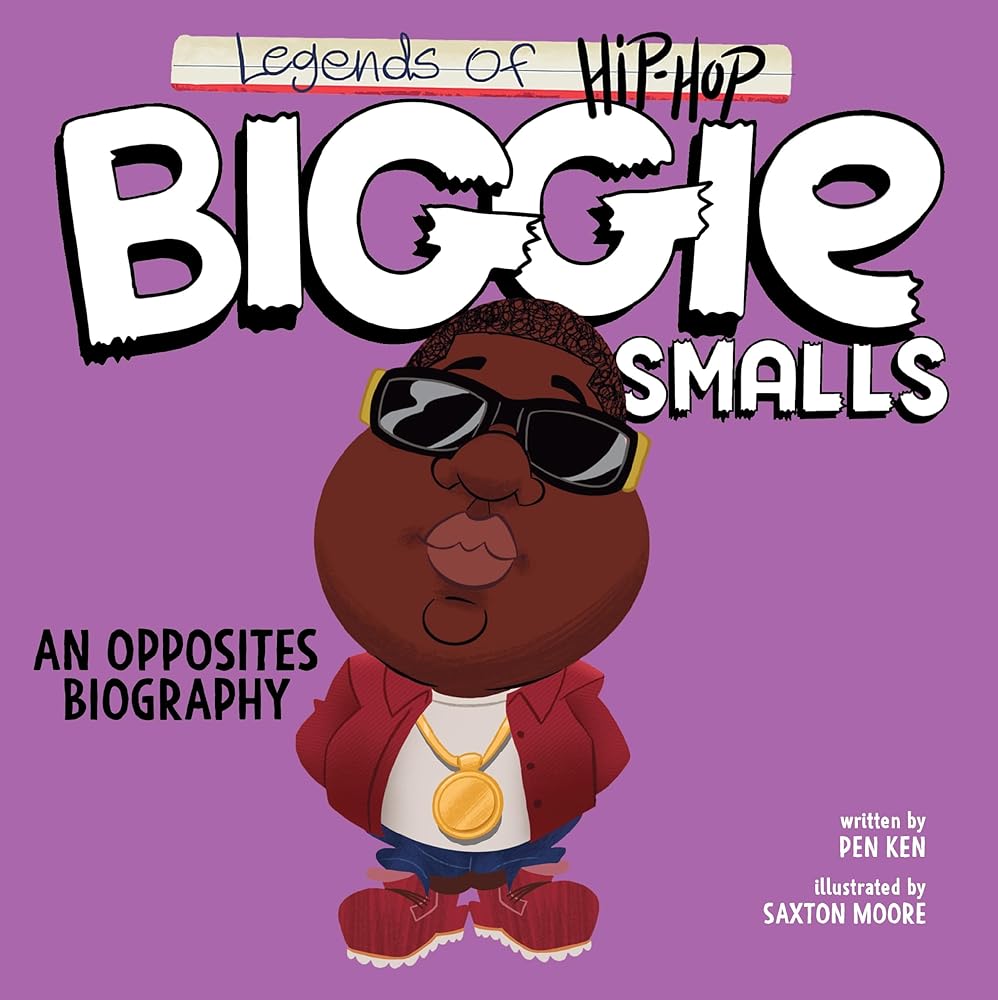
Legends of Hip-Hop: Biggie Smalls: An Opposites Biography
by Pen Ken, illustrated Saxton Moore
$9.99Mic check! Learn your opposites with Biggie Smalls in the Legends of Hip-Hop board book series.
In this accessible series perfectly crafted for babies (and adult fans), music producer Pen Ken and 3x Emmy Award–nominated animation director Saxton Moore introduce mini emcees to some of hip-hop’s biggest and brightest luminaries with fun facts about each rapper, organized by a teachable concept.
In this book, children will meet Biggie and learn all about opposites!
Check out other books in the series, including Legends of Hip-Hop: 2Pac and Legends of Hip-Hop: Queen Latifah.
-
Black in Latin America
![Black in Latin America]()
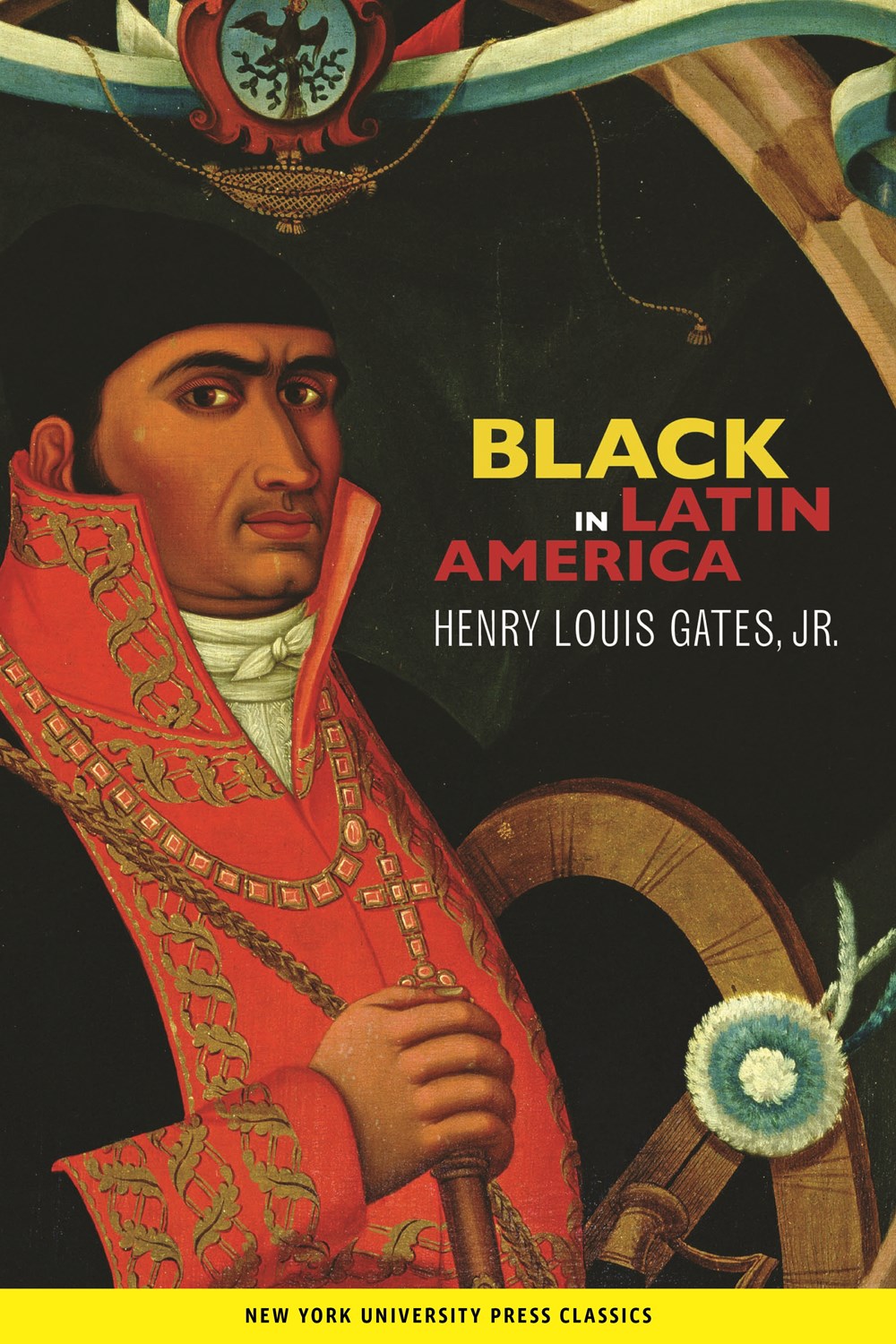
Black in Latin America
by Henry Louis Gates Jr.
Sold outThe history of how six Latin American countries acknowledge—or deny—their African past
12.5 million Africans were shipped to the New World during the Middle Passage. While just over 11.0 million survived the arduous journey, only about 450,000 of them arrived in the United States. The rest—over ten and a half million—were taken to the Caribbean and Latin America. This astonishing fact changes our entire picture of the history of slavery in the Western hemisphere, and of its lasting cultural impact. These millions of Africans created new and vibrant cultures, magnificently compelling syntheses of various African, English, French, Portuguese, and Spanish influences.
Despite their great numbers, the cultural and social worlds that they created remain largely unknown to most Americans, except for certain popular, cross-over musical forms. So Henry Louis Gates, Jr. set out on a quest to discover how Latin Americans of African descent live now, and how the countries acknowledge—or deny—their African past; how the fact of race and African ancestry play themselves out in the multicultural worlds of the Caribbean and Latin America. Starting with the slave experience and extending to the present, Gates unveils the history of the African presence in six Latin American countries—Brazil, Cuba, the Dominican Republic, Haiti, Mexico, and Peru—through art, music, cuisine, dance, politics, and religion, but also the very palpable presence of anti-black racism that has sometimes sought to keep the black cultural presence from view.
In Brazil, he delves behind the façade of Carnaval to discover how this ‘rainbow nation’ is waking up to its legacy as the world’s largest slave economy.
In Cuba, he finds out how the culture, religion, politics and music of this island is inextricably linked to the huge amount of slave labor imported to produce its enormously profitable 19th century sugar industry, and how race and racism have fared since Fidel Castro’s Communist revolution in 1959.
In Haiti, he tells the story of the birth of the first-ever black republic, and finds out how the slaves’s hard fought liberation over Napoleon Bonaparte’s French Empire became a double-edged sword.
In Mexico and Peru, he explores the almost unknown history of the significant numbers of black people—far greater than the number brought to the United States—brought to these countries as early as the sixteenth and seventeenth centuries, and the worlds of culture that their descendants have created in Vera Cruz on the Gulf of Mexico, the Costa Chica region on the Pacific, and in and around Lima, Peru.
Professor Gates’ journey becomes ours as we are introduced to the faces and voices of the descendants of the Africans who created these worlds. He shows both the similarities and distinctions between these cultures, and how the New World manifestations are rooted in, but distinct from, their African antecedents. “Black in Latin America” is the third instalment of Gates’s documentary trilogy on the Black Experience in Africa, the United States, and in Latin America. In America Behind the Color Line, Professor Gates examined the fortunes of the black population of modern-day America. In Wonders of the African World, he embarked upon a series of journeys to reveal the history of African culture. Now, he brings that quest full-circle in an effort to discover how Africa and Europe combined to create the vibrant cultures of Latin America, with a rich legacy of thoughtful, articulate subjects whose stories are astonishingly moving and irresistibly compelling.


Stay Informed. We're building a community committed to celebrating Black authors + artisans. Subscribe to keep up with all things Kindred Stories.