
Search results: 136 results for “Toni Morrison”
Not finding what you're looking for? Check out our shop on bookshop.org to order and still support us ♥
136 results
-
Language as Liberation: Reflections on the American Canon
![Language as Liberation: Reflections on the American Canon cover image]()

Language as Liberation: Reflections on the American Canon
Sold outNobel Laureate and Pulitzer Prize-winning author of Beloved, Toni Morrison, investigates Black characters in the American literary canon and the way they shaped the nation’s collective unconscious
In a dazzling series of lectures from her tenure as a professor at Princeton University, Toni Morrison interrogates America’s most famous works and authors, drawing a direct line from the Black bodies that built the nation to the Black characters that many of the country’s canonical white writers imagined in their work. Morrison sees these fictions as a form of creation and projection, arguing that they helped manufacture American racial identity – these “Africanist” presences are “the shadow that makes light possible,” as Morrison writes, and the reflections of the authors’ own deepest fears, insecurities, and longings.
With profound erudition and wit, Morrison breaks wide open the American conception of race with energetic, enlivening readings of the nation’s canon, revealing that our liberation from these diminishing notions comes through language. “How,” Morrison wonders, “could one speak of profit, of economy, of labor, or progress, of suffragism, or Christianity, of the frontier, of the formation of new states, the acquisition of new lands … of practically anything a new nation concerns itself with – without having as a referent, at the heart of the discourse or defining its edges, the presence of Africans and/or their descendants?”
To read these lectures, collected here for the first time, is to encounter Morrison, not just the writer but also the teacher, in the most profound and subversive way yet. With a foreword from her son, Ford Morrison, and an introduction from her Princeton comparative literature colleague, Claudia Brodsky, Language as Liberation is a revelatory collection that promises to redefine the American canon.
-
The Source of Self-Regard: Selected Essays, Speeches, and Meditations
![The Source of Self-Regard: Selected Essays, Speeches, and Meditations]()
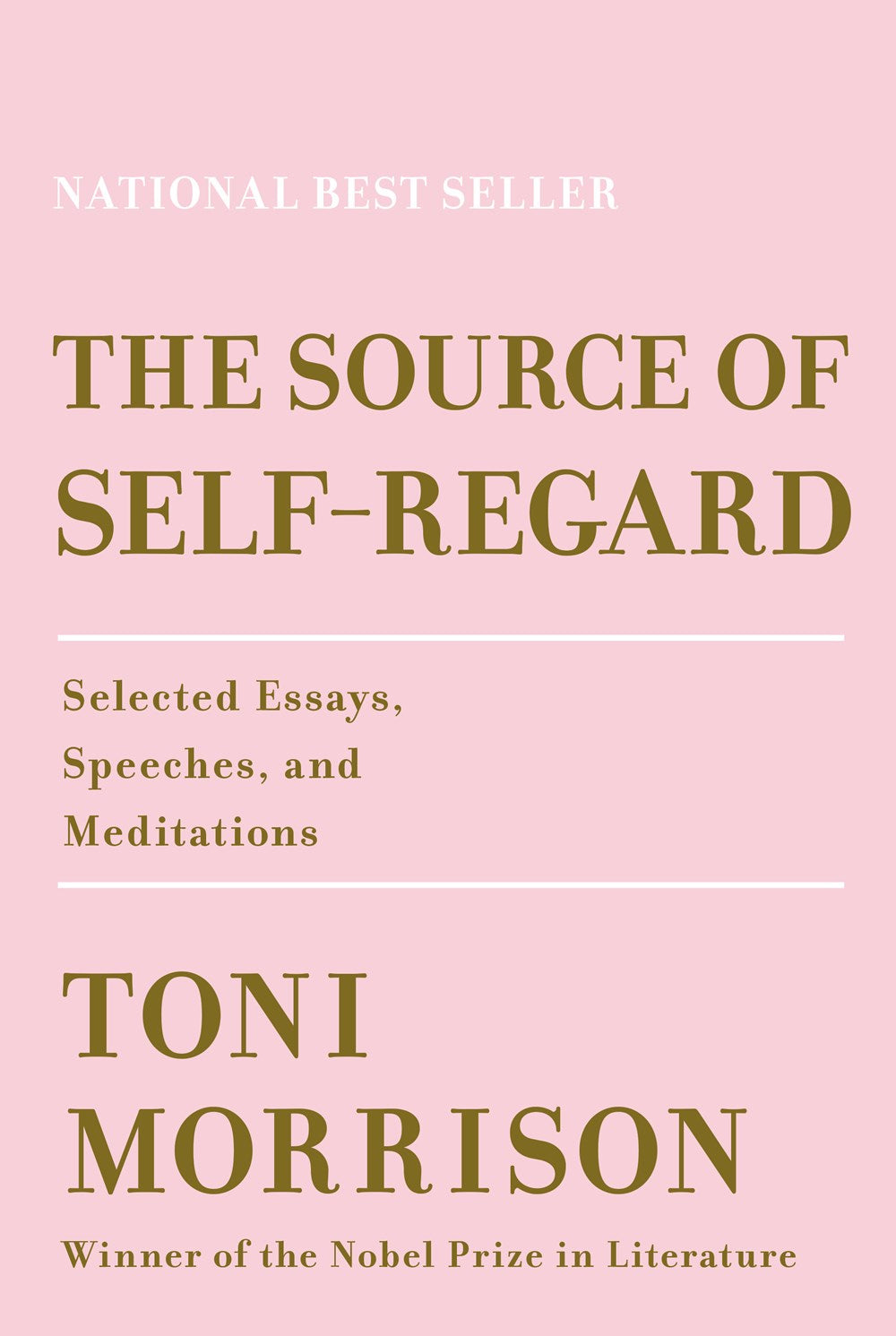
The Source of Self-Regard: Selected Essays, Speeches, and Meditations
by Toni Morrison
Sold outNATIONAL BESTSELLER • Here is the Nobel Prize winner in her own words: a rich gathering of her most important essays and speeches, spanning four decades that "speaks to today’s social and political moment as directly as this morning’s headlines” (NPR).
These pages give us her searing prayer for the dead of 9/11, her Nobel lecture on the power of language, her searching meditation on Martin Luther King Jr., her heart-wrenching eulogy for James Baldwin. She looks deeply into the fault lines of culture and freedom: the foreigner, female empowerment, the press, money, “black matter(s),” human rights, the artist in society, the Afro-American presence in American literature. And she turns her incisive critical eye to her own work (The Bluest Eye, Sula, Tar Baby, Jazz, Beloved,Paradise) and that of others.
An essential collection from an essential writer, The Source of Self-Regard shines with the literary elegance, intellectual prowess, spiritual depth, and moral compass that have made Toni Morrison our most cherished and enduring voice. -
Tar Baby
![Tar Baby]()

Tar Baby
by Toni Morrison
Sold outThe author of Song of Solomon now sets her extraordinary novelistic powers on a striking new course. Tar Baby, audacious and hypnotic, is masterful in its mingling of tones—of longing and alarm, of urbanity and a primal, mythic force in which the landscape itself becomes animate, alive with a wild, dark complicity in the fates of the people whose drama unfolds. It is a novel suffused with a tense and passionate inquiry, revealing a whole spectrum of emotions underlying the relationships between black men and women, white men and women, and black and white people.
The place is a Caribbean island. In their mansion overlooking the sea, the cultivated millionaire Valerian Street, now retired, and his pretty, younger wife, Margaret, go through rituals of living, as if in a trance. It is the black servant couple, who have been with the Streets for years—the fastidious butler, Sydney, and his strong yet remote wife—who have arranged every detail of existence to create a surface calm broken only by sudden bursts of verbal sparring between Valerian and his wife. And there is a visitor among them—a beautiful young black woman, Jadine, who is not only the servant’s dazzling niece, but the protegée and friend of the Streets themselves; Jadine, who has been educated at the Sorbonne at Valerian’s expense and is home now for a respite from her Paris world of fashion, film and art.
Through a season of untroubled ease, the lives of these five move with a ritualized grace until, one night, a ragged, starving black American street man breaks into the house. And, in a single moment, with Valerian’s perverse decision not to call for help but instead to invite the man to sit with them and eat, everything changes. Valerian moves toward a larger abdication. Margaret’s delicate and enduring deception is shattered. The butler and his wife are forced into acknowledging their illusions. And Jadine, who at first is repelled by the intruder, finds herself moving inexorably toward him—he calls himself Son; he is a kind of black man she has dreaded since childhood; uneducated, violent, contemptuous of her privilege.
As Jadine and Son come together in the loving collision they have both welcomed and feared, the novel moves outward—to the Florida backwater town Son was raised in, fled from, yet cherishes; to her sleek New York; then back to the island people and their protective and entangling legends. As the lovers strive to hold and understand each other, as they experience the awful weight of the separate worlds that have formed them—she perceiving his vision of reality and of love as inimical to her freedom, he perceiving her as the classic lure, the tar baby set out to entrap him—all the mysterious elements, all the highly charged threads of the story converge. Everything that is at risk is made clear: how the conflicts and dramas wrought by social and cultural circumstances must ultimately be played out in the realm of the heart.
Once again, Toni Morrison has given us a novel of daring, fascination, and power. -
Beloved (Contemporánea)
![Beloved (Contemporánea) cover image]()

Beloved (Contemporánea)
Toni Morrison
Sold outLa obra maestra de la premio Nobel de Literatura Toni Morrison, «la mejor novela norteamericana de los últimos cincuenta años» según The New York Times, ganadora del Premio Pulitzer y del American Book Award
«No puedo imaginar la literatura norteamericana sin esta novela.»
John Leonard, Los Angeles TimesPara escribir esta magnífica historia, merecedora del Premio Pulitzer, Toni Morrison se inspiró en la vida real de una esclava afroamericana, Margaret Garner, que en 1856 escapó de una plantación en Kentucky y consiguió llegar al estado libre de Ohio. A punto de ser recapturada, Margaret tomó la trágica decisión de sacrificar a su hija para salvarla de una vida en cautiverio.
En estas páginas, Sethe es la esclava prófuga que vendió su cuerpo para grabar el nombre de su hija muerta en la lápida: diez minutos por «Beloved», veinte por «Querida Beloved». Muchos años después, Sethe vive en Ohio con Denver, su hija adolescente, y Paul D., un viejo amigo que también fue esclavo. Todos intentan prosperar y olvidar el pasado, hasta que un día aparece una joven que dice llamarse Beloved. Tiene la edad que tendría su hija si viviese y sabe ciertas cosas que sugieren que podría serlo.
Beloved se convirtió de inmediato en un clásico cuando se publicó en 1987. El crítico John Leonard escribió en Los Angeles Times: «No concibo la literatura norteamericana sin esta novela». Casi dos décadas después, The New York Times la eligió como la mejor novela norteamericana de los últimos cincuenta años.
Reseñas:
«Uno de los libros por lo que vale la pena volver a la biblioteca (aunque sea virtual). Obra esencial de la Premio Nobel de Literatura.»
Begoña Alonso, Elle«Imbricando un realismo desabrido con una poderosa imaginación fantástica, [...] Beloved se convirtió de inmediato en un clásico».
Zenda«Toni Morrison fue un gigante de su época y de la nuestra. Todo el mundo debería
leer Beloved.»
Margaret Atwood, The New York Times«Beloved es la gran novela norteamericana no escrita del siglo XIX, trata de cosas sobre las que jamás se escribió y que laten sin embargo en el fondo de novelas sí escritas, por Melville, por Poe.»
A. S. Byatt«Una maravillosa artesana a la que la gente tiende a pasar por alto. Es tan genial e innovadora como Faulkner, García Márquez y Woolf.»
The New York Times«La mejor obra de Toni Morrison. [...] Muestra su prodigioso talento.»
Chicago Sun-Times«Si hay una novela con la que empezar a leer a Toni Morrison, es Beloved. [...] Morrison es un tesoro norteamericano.»
Biblioteca Pública de Nueva York«He terminado una segunda vuelta de Beloved, la misteriosa y tan fascinante novela de Toni Morrison, donde el mundo de los esclavos negros se vuelve un asunto íntimo y a la vez mágico. [...] Y las protagonistas son las mujeres, que todo lo desafían, y son ellas mismas la libertad.»
Sergio Ramírez, Babelia«Su obra es un bello y significativo desafío a nuestras conciencias y nuestra imaginación moral.»
Barack Obama«Beloved te hace sentir que todo lo que has escrito es aburrido y sin vida. El nivel de destreza, la perfección y la belleza de las oraciones, el alcance de la imaginación, el orden del lenguaje en torno al dolor indescriptible. Es buenísimo. Además, es nuestra historia de terror más estadounidense. [...] Sé que Morrison no escribía para mí, pero moldeó mi escritura y le estoy eternamente agradecida.»
Carmen María Machado -
Jazz
![Jazz]()

Jazz
by Toni Morrison
Sold outFrom the acclaimed Nobel Prize winner, a passionate, profound story of love and obsession that brings us back and forth in time, as a narrative is assembled from the emotions, hopes, fears, and deep realities of Black urban life. With a foreword by the author.
“As rich in themes and poetic images as her Pulitzer Prize–winning Beloved.... Morrison conjures up the hand of slavery on Harlem’s jazz generation. The more you listen, the more you crave to hear.” —Glamour
In the winter of 1926, when everybody everywhere sees nothing but good things ahead, Joe Trace, middle-aged door-to-door salesman of Cleopatra beauty products, shoots his teenage lover to death. At the funeral, Joe’s wife, Violet, attacks the girl’s corpse. This novel “transforms a familiar refrain of jilted love into a bold, sustaining time of self-knowledge and discovery. Its rhythms are infectious” (People). -
Song of Solomon
![Song of Solomon]()

Song of Solomon
by Toni Morrison
Sold outNEW YORK TIMES BESTSELLER • An official Oprah Winfrey’s “The Books That Help Me Through” selection • With this brilliantly imagined novel, the acclaimed Nobel Prize winner transfigures the coming-of-age story as audaciously as Saul Bellow or Gabriel García Márquez.
Milkman Dead was born shortly after a neighborhood eccentric hurled himself off a rooftop in a vain attempt at flight. For the rest of his life he, too, will be trying to fly. As Morrison follows Milkman from his rustbelt city to the place of his family’s origins, she introduces an entire cast of strivers and seeresses, liars and assassins, the inhabitants of a fully realized Black world. -
Ojos azules: 5 (Contemporánea)
![Ojos azules: 5 (Contemporánea) cover image]()

Ojos azules: 5 (Contemporánea)
Toni Morrison
Sold outToni Morrison, ganadora del Premio Nobel de Literatura 1993, parte de la realidad de una chiquilla desgraciada para tratar temas como el concepto de belleza impuesto, la voz femenina o la infancia truncada, y lo consigue con una historia dura y deliciosa al mismo tiempo.
Pecola es una niña pequeña que vive con sus padres y tiene una prima que se llama Claudia. Le gustan las muñecas y las caléndulas, que no le gustan a nadie excepto a ella. Pecola es negra y cree que es fea porque no se parece a Shirley Temple. Y tiene un truco para desaparecer cuando sus padres se pelean o su padre la molesta por las noches: piensa que tiene unos preciosos ojos azules, que todo el mundo admira su belleza y que las otras niñas la envidian. Pero ese sueño nunca se convertirá en realidad y Pecola seguirá atrapada en la triste vida que le ha tocado en suerte.
Reseñas:
«Una exploración de la raza y el género de la ganadora del Nobel, todo un clásico estadounidense. Con su exploración de las dinámicas entre el racismo interiorizado y la autoestima, [...] Morrison reflexiona sobre cómo la sociedad ensalza todo lo relacionado con los blancos #asociados con la belleza, la pureza y la inocencia#, algo que puede hacer mella en la autoestima de una persona y llevarla por la senda de la destrucción.»
Freddie Braun, Vogue ("6 novelas fundamentales de autores negros que deberías añadir a tu lista de lecturas"«Toni Morrison se ha convertido en la D. H. Lawrence de la psique negra, transformando individuos en fuerzas, idiosincrasias en inevitabilidad.»
New York Magazine -
Paradise
![Paradise]()

Paradise
by Toni Morrison
Sold outParadise opens with one of Morrison’s most raw and Faulknerian scenes: early one morning in 1976, nine men from the town of Ruby, Oklahoma—population 360, all black—unleash an assault upon a convent seventeen miles away. The misfortunes suffered in Ruby, the men believe, come from the convent women, who are rumored to engage in witchcraft and abortion. From this fateful moment of collision, Morrison takes us back to the town’s origins in 1890, when it was founded by former slaves. She then guides us through Ruby’s tumultuous journey through the twentieth century, as generations are born and lost, as racial turmoil shakes the nation. As time wears on, the residents of Ruby become ever more convinced that they must isolate themselves in order to preserve their freedom and dignity. Richly imagined and elegantly composed, Paradise is a deeply resonant allegory, one of Morrison’s most ambitious works.
-
Beloved
![Beloved]()

Beloved
by Toni Morrison
Sold outThe magnificent Pulitzer Prize–winning work that brought the wrenching experience of slavery into the literature of our time, enlarging our comprehension of America’s original sin.
Upon the original publication of Beloved in 1987, John Leonard wrote in the Los Angeles Times: “I can’t imagine American literature without it.” Nearly two decades later, The New York Times chose Beloved as the best American novel of the previous fifty years.
Set in post–Civil War Ohio, it is the story of Sethe, an escaped slave who has lost a husband and buried a child; who has withstood savagery and not gone mad. Sethe, who now lives in a small house on the edge of town with her daughter, Denver, her mother-in-law, Baby Suggs, and a disturbing, mesmerizing apparition who calls herself Beloved.
Sethe works at “beating back the past,” but it makes itself heard and felt incessantly: in her memory; in Denver’s fear of the world outside the house; in the sadness that consumes Baby Suggs; in the arrival of Paul D, a fellow former slave; and, most powerfully, in Beloved, whose childhood belongs to the hideous logic of slavery and who has now come from the “place over there” to claim retribution for what she lost and for what was taken from her.
Sethe’s struggle to keep Beloved from gaining possession of the present—and to throw off the long-dark legacy of the past—is at the center of this spellbinding novel. But it also moves beyond its particulars, combining imagination and the vision of legend with the unassailable truths of history. -
Home
![Home]()

Home
Toni Morrison
Sold outNATIONAL BESTSELLER • A New York Times Notable Book • From the acclaimed Nobel Prize winner: an emotional powerhouse of a novel about a modern Odysseus returning to a 1950s America mined with lethal pitfalls for an unwary Black man
When Frank Money joined the army to escape his too-small world, he left behind his cherished and fragile little sister, Cee. After the war, he journeys to his native Georgia with a renewed sense of purpose in search of his sister, but it becomes clear that their troubles began well before their wartime separation. Together, they return to their rural hometown of Lotus, where buried secrets are unearthed and where Frank learns at last what it means to be a man, what it takes to heal, and—above all—what it means to come home.
-
Playing in the Dark
![Playing in the Dark]()
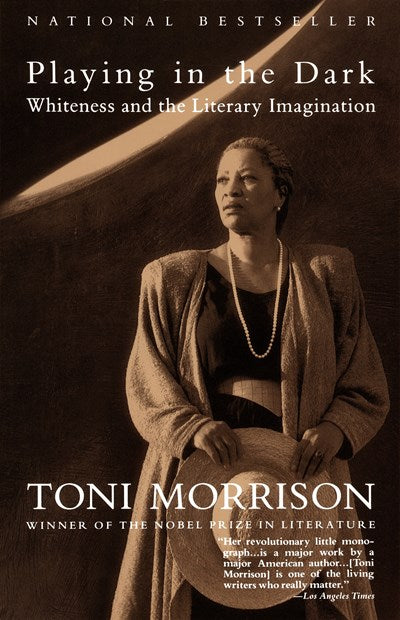
Playing in the Dark
by Toni Morrison
Sold outAn immensely persuasive work of literary criticism that opens a new chapter in the American dialogue on race—and promises to change the way we read American literature—from the acclaimed Nobel Prize winner
Morrison shows how much the themes of freedom and individualism, manhood and innocence, depended on the existence of a black population that was manifestly unfree--and that came to serve white authors as embodiments of their own fears and desires. According to the Chicago Tribune, Morrison "reimagines and remaps the possibility of America." Her brilliant discussions of the "Africanist" presence in the fiction of Poe, Melville, Cather, and Hemingway leads to a dramatic reappraisal of the essential characteristics of our literary tradition.
Written with the artistic vision that has earned the Nobel Prize-winning author a pre-eminent place in modern letters, Playing in the Dark is an invaluable read for avid Morrison admirers as well as students, critics, and scholars of American literature. -
Sula (Contemporánea)
![Sula (Contemporánea) cover image]()

Sula (Contemporánea)
Toni Morrison
Sold outUna obra maestra de la ganadora del Premio Nobel de Literatura 1993.
Esta es la historia de Sula y Nel, dos niñas que crecen juntas en un barrio de negros, compartiendo sus sueños e ilusiones. Ambas son precoces y curiosas, hijas de familias pobres. Pero el tiempo pasa y, cuando Nel se casa, Sula se marcha del suburbio para ir a la universidad y viajar por el país. Diez años después, Sula regresa e involuntariamente destruye la familia y la felicidad de Nel. A partir de entonces, los pintorescos habitantes del suburbio la consideran una bruja malvada...
Ambientada en los EE.UU. en el período de entreguerras, Sula es un portentoso retrato del poder de lo femenino en una comunidad pobre y rural de negros, donde las mujeres reinan como madres, hechiceras y depositarias de la tradición oral.
Reseña:
«Un aullido de amor y rabia, travieso y divertido, duro y amargo.»
The New York Times


Stay Informed. We're building a community committed to celebrating Black authors + artisans. Subscribe to keep up with all things Kindred Stories.