
Search results: 1000 results for “by Frantz Fanon”
Not finding what you're looking for? Check out our shop on bookshop.org to order and still support us ♥
1000 results
-
Caste: The Origins of Our Discontents
![Caste: The Origins of Our Discontents]()

Caste: The Origins of Our Discontents
by Isabel Wilkerson
from $21.00Beyond race, class, or other factors, there is a powerful caste system that influences people’s lives and behavior and the nation’s fate. Linking the caste systems of America, India, and Nazi Germany, Wilkerson explores eight pillars that underlie caste systems across civilizations, including divine will, bloodlines, stigma, and more. Using riveting stories about people—including Martin Luther King, Jr., baseball’s Satchel Paige, a single father and his toddler son, Wilkerson herself, and many others—she shows the ways that the insidious undertow of caste is experienced every day. She documents how the Nazis studied the racial systems in America to plan their out-cast of the Jews; she discusses why the cruel logic of caste requires that there be a bottom rung for those in the middle to measure themselves against; she writes about the surprising health costs of caste, in depression and life expectancy, and the effects of this hierarchy on our culture and politics. Finally, she points forward to ways America can move beyond the artificial and destructive separations of human divisions, toward hope in our common humanity.
-
Post Traumatic Slave Syndrome
![Post Traumatic Slave Syndrome]()

Post Traumatic Slave Syndrome
by Dr. Joy DeGruy
$19.95In the 16th century, the beginning of African enslavement in the Americas until the ratification of the Thirteenth Amendment and emancipation in 1865, Africans were hunted like animals, captured, sold, tortured, and raped. They experienced the worst kind of physical, emotional, psychological, and spiritual abuse. Given such history, isn't it likely that many of the enslaved were severely traumatized? And did the trauma and the effects of such horrific abuse end with the abolition of slavery?
Emancipation was followed by one hundred more years of institutionalized subjugation through the enactment of Black Codes and Jim Crow laws, peonage, convict leasing, domestic terrorism and lynching. Today the violations continue, and when combined with the crimes of the past, they result in yet unmeasured injury. What do repeated traumas, endured generation after generation by a people produce? What impact have these ordeals had on African Americans today?
Dr. Joy DeGruy, answers these questions and more. With over thirty years of practical experience as a professional in the mental health field, Dr. DeGruy encourages African Americans to view their attitudes, assumptions, and behaviors through the lens of history and so gain a greater understanding of how centuries of slavery and oppression have impacted people of African descent in America.
Post Traumatic Slave Syndrome helps to lay the necessary foundation to ensure the well-being and sustained health of future generations and provides a rare glimpse into the evolution of society's beliefs, feelings, attitudes and behavior concerning race in America.
-
Houston and the Permanence of Segregation: An Afropessimist Approach to Urban History
![Houston and the Permanence of Segregation: An Afropessimist Approach to Urban History cover image]()

Houston and the Permanence of Segregation: An Afropessimist Approach to Urban History
$34.952025 Most Significant Scholarly Book, Texas Institute of Letters
A history of racism and segregation in twentieth-century Houston and beyond.
Through the 1950s and beyond, the Supreme Court issued decisions that appeared to provide immediate civil rights protections to racial minorities as it relegated Jim Crow to the past. For black Houstonians who had been hoping and actively fighting for what they called a “raceless democracy,” these postwar decades were often seen as decades of promise. In Houston and the Permanence of Segregation, David Ponton argues that these were instead “decades of capture”: times in which people were captured and constrained by gender and race, by faith in the law, by antiblack violence, and even by the narrative structures of conventional histories. Bringing the insights of Black studies and Afropessimism to the field of urban history, Ponton explores how gender roles constrained thought in black freedom movements, how the “rule of law” compelled black Houstonians to view injustice as a sign of progress, and how antiblack terror undermined Houston’s narrative of itself as a “heavenly” place.
Today, Houston is one of the most racially diverse cities in the United States, and at the same time it remains one of the most starkly segregated. Ponton’s study demonstrates how and why segregation has become a permanent feature in our cities and offers powerful tools for imagining the world otherwise.
-
Black Fatigue, Second Edition: How Racism Erodes the Mind, Body, and Spirit
![Black Fatigue, Second Edition: How Racism Erodes the Mind, Body, and Spirit cover image]()

Black Fatigue, Second Edition: How Racism Erodes the Mind, Body, and Spirit
$22.95The pioneering book that exposed the intergenerational health impacts of systemic racism is back—with 50 percent new content to meet the demands of our post-2020 reality.
This updated edition delivers urgent tools for survival, including four new chapters, updated research, case studies, and real-world examples.
Black people are exhausted. The toll of living within systems designed to exclude them devastates minds, bodies, and spirits. Award-winning diversity, equity, and inclusion leader Mary-Frances Winters—now joined by Mareisha Winters Reese—addresses this ongoing crisis with an urgent update to her bestselling book.
Winters and Reese incorporate new data, fresh case studies, and expanded tools to reflect today’s realities. This edition, with 50 percent new content, includes the following:
* Four new chapters on current challenges facing Black communities
* Updated research on racism’s health impacts in a post-COVID world
* New stories and case studies that illuminate lived experience
* Updated models reflecting today’s most relevant findingsWith unflinching honesty and a practical lens, Winters and Reese document the enduring toll of “living while Black” while also equipping readers with strategies for personal healing and organizational transformation. The research is current, the case studies are real, and the tools are designed to create lasting systemic change.
-
These Heathens: A Novel
![These Heathens: A Novel cover image]()

These Heathens: A Novel
Mia McKenzie
$29.00In this vibrant, gratifying novel, a pious, small-town teenager travels to Atlanta to get an abortion and finds herself smack in the middle of the civil rights movement and the secret lives of queer Black people.
“Bursting with heart and humor, These Heathens reflects powerfully on choice and chance, while also being endlessly entertaining.”—Allison Larkin, author of The People We Keep and Home of the American CircusWhere do you get an abortion in 1960 Georgia, especially if your small town’s midwife goes to the same church as your parents? For seventeen-year-old Doris Steele, the answer is Atlanta, where her favorite teacher, Mrs. Lucas, calls upon her brash, wealthy childhood best friend, Sylvia, for help. While waiting to hear from the doctor who has agreed to do the procedure, Doris spends the weekend scandalized by, but drawn to, the people who move in and out of Sylvia’s orbit: celebrities whom Doris has seen in the pages of Jet and Ebony, civil rights leaders such as Coretta Scott King and Diane Nash, women who dance close together, boys who flirt too hard and talk too much, atheists! And even more shocking? Mrs. Lucas seems right at home.
From the guests at a queer kickback to the student activists at a SNCC conference, Doris suddenly finds herself surrounded by so many people who seem to know exactly who or what they want. Doris knows she doesn’t want a baby, but what does she want? Will this trip help her find out?
These Heathens is a funny, poignant story about Black women’s obligations and ambitions, what we owe to ourselves, and the transformative power of leaving your bubble, even for just one chaotic weekend.
-
Chain of Ideas: The Origins of Our Authoritarian Age
![Chain of Ideas: The Origins of Our Authoritarian Age cover image]()

Chain of Ideas: The Origins of Our Authoritarian Age
Ibram X. Kendi
$35.00The National Book Award-winning historian of Stamped from the Beginning charts how “great replacement theory” has moved from the margins to become the most dominant political theory of our time—and what we can do to safeguard democracy from this insidious threat.
Recall the words chanted in Charlottesville, Virginia, but heard around the world: “You will not replace us!” Recall the string of mass shooters around the world—in Oslo and Christchurch, Buffalo, El Paso, and Pittsburgh—who claimed their crimes were a defense against “White genocide.” Recall business and media figures cultivating anxiety and furor over demographic change. These incidents only scratch the surface of this ascendant idea: Popular and ruling politicians in every region of the world have been expressing some version of great replacement theory, eroding democratic norms in the name of preventing demographic change and restoring national greatness.
What is great replacement theory? Variations on the theory have existed for centuries, but it was given this name by a French novelist in 2011 who believed Black and Brown immigrants were “invading” Europe, brought by shadowy elites to “replace” Europe’s White population. From there, politicians and theorists—whether in the United States or the United Kingdom, Germany or Chile, Hungary or Australia—repackaged the conspiracy as a story of “globalists” welcoming “migrant criminals” and diversity initiatives to take away the jobs, cultures, electoral power, and the very lives of White people. Over time, great replacement theory has expanded the threat to include citizens, men, Jews, Christians, heterosexuals, and ethnic majorities in countries as distinct as Russia, El Salvador, Brazil, Italy, and India. All are targeted with the message that they are under an existential attack that only a strongman can prevent.
In our fast-shifting political landscape, most people are unfamiliar with this theory’s origins and its spread, which isn’t a coincidence. In Chain of Ideas, international bestselling author Ibram X. Kendi uses exacting and clear prose to uncover the roots of great replacement theory and its various mutations around the world. It is an unsettling but indispensable global history of how great replacement theory brought humanity into this authoritarian age—and how we can free ourselves from it. -
The Militant South, 1800-1861
![The Militant South, 1800-1861 cover image]()

The Militant South, 1800-1861
John Hope Franklin
$30.00In The Militant South, 1800-1861, John Hope Franklin identifies the factors and causes of the South's festering propensity for aggression that contributed to the outbreak of the Civil War in 1861.
Franklin asserts that the South was dominated by militant white men who resorted to violence in the face of social, personal, or political conflict. Fueled by their defense of slavery and a persistent desire to keep the North out of their affairs, Southerners adopted a vicious bellicosity that intensified as war drew nearer.
Drawing from Southern newspapers, government archives, memoirs, letters, and firsthand accounts, Franklin masterfully details the sources and consequences of antebellum aggression in the South. First published in 1956, this classic volume is an enduring and impeccably researched contribution to Southern history. This paperback edition features a new preface in which the author discusses controversial responses to the book. -
Stamped from the Beginning: The Definitive History of Racist Ideas in America (Revised)
![Stamped from the Beginning: The Definitive History of Racist Ideas in America (Revised)]()

Stamped from the Beginning: The Definitive History of Racist Ideas in America (Revised)
by Ibram X. Kendi
$24.99The National Book Award winning history of how racist ideas were created, spread, and deeply rooted in American society.
Some Americans insist that we're living in a post-racial society. But racist thought is not just alive and well in America -- it is more sophisticated and more insidious than ever. And as award-winning historian Ibram X. Kendi argues, racist ideas have a long and lingering history, one in which nearly every great American thinker is complicit.
In this deeply researched and fast-moving narrative, Kendi chronicles the entire story of anti-black racist ideas and their staggering power over the course of American history. He uses the life stories of five major American intellectuals to drive this history: Puritan minister Cotton Mather, Thomas Jefferson, abolitionist William Lloyd Garrison, W.E.B. Du Bois, and legendary activist Angela Davis.
As Kendi shows, racist ideas did not arise from ignorance or hatred. They were created to justify and rationalize deeply entrenched discriminatory policies and the nation's racial inequities.In shedding light on this history, Stamped from the Beginning offers us the tools we need to expose racist thinking. In the process, he gives us reason to hope. -
The 1619 Project: A New Origin Story
![The 1619 Project: A New Origin Story]()
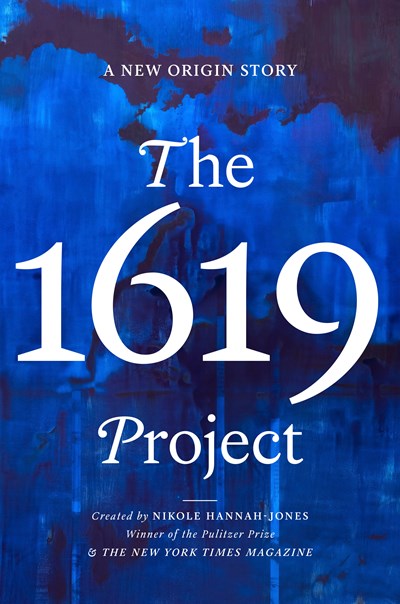
The 1619 Project: A New Origin Story
by Nikole Hannah-Jones
from $25.00One World is proud to present THE 1619 PROJECT: A New Origin Story, a book that dramatically builds on the vision of the original magazine project with major expansions of the original essays, seven new essays by historians, and dozens of new poems and pieces of fiction. The book includes a significant elaboration of the project’s Pulitzer Prize-winning lead essay by Nikole Hannah-Jones and a new introduction that together offer a stirring rebuttal to critics. Hannah-Jones has also written a third essay that makes the case for reparative solutions to the legacy of injustice the project documents.
Edited by Hannah-Jones, along with New York Times Magazine editor-in-chief Jake Silverstein, features editor Ilena Silverman, and New York Times executive producer Caitlin Roper, the book offers work from some of the country’s most outstanding journalists, thinkers, historians and scholars, including: Michelle Alexander, Leslie Alexander, Carol Anderson, Jamelle Bouie, Anthea Butler, Matthew Desmond, Martha Jones, Ibram Kendi, Kevin Kruse, Trymaine Lee, Tiya Miles, Wesley Morris, Khalil Gibran Muhammad, Dorothy Roberts, Jeneen Interlandi, Bryan Stevenson, and Linda Villarosa.
Woven throughout the book are works of fiction and poetry that bring to life four hundred years of history with imaginative writing by Joshua Bennett, Reginald Dwayne Betts, Rita Dove, Camille Dungy, Cornelius Eady, Eve L. Ewing, Nikky Finney, Vievee Francis, Yaa Gyasi, Forrest Hamer, Terrance Hayes, Honorée Fanonne Jeffers, Barry Jenkins, Tyehimba Jess, Robert Jones, Jr., A. Van Jordan, Yusef Komunyakaa, Kiese Laymon, Jasmine Mans, Terry McMillan, Lynn Nottage, ZZ Packer, Gregory Pardlo, Darryl Pinckney, Claudia Rankine, Jason Reynolds, Evie Shockley, Tim Siebles, Clint Smith, Danez Smith, Patricia Smith, Tracy K. Smith, Nafissa Thompson-Spires, Natasha Trethewey, Jesmyn Ward and Sonia Sanchez.
The book also includes archival portrait photography of Black Americans paired with each essay, curated by Kimberly Annece Henderson.
-
In View of the Tradition: Black Art and Radical Thought
![In View of the Tradition: Black Art and Radical Thought cover image]()

In View of the Tradition: Black Art and Radical Thought
$22.95A field-shaping account of how contemporary Black art revitalizes the Black radical tradition
In View of the Tradition argues that contemporary Black artists do not simply comment on politics. They help to generate it. Moving across sculpture, installation, photography, and film, Roderick A. Ferguson shows how Black art clarifies the stakes of capitalism, migration, war, settler colonialism, and ecological crisis while widening the tradition’s feminist, queer, and transnational horizons. The book asks what it means to relocate Black art in the annals of freedom rather than the balance sheets of the marketplace.
Reading work by John Akomfrah, Stephen Hayes, Hew Locke, Fabrice Monteiro, Wangechi Mutu, Noah Purifoy, Cauleen Smith, and Carrie Mae Weems, Ferguson restores the social character of art: how artworks imagine community, connect histories, and model ways of making and remaking the world. Street-level practices associated with Purifoy reframe official narratives of disorder into studies of collective making and civic imagination. Weems’s Hampton Project situates Black and Native lives within intertwined histories of racial governance and settler pedagogy, building an aesthetics of reckoning that links emancipation to captivity.
Across the Atlantic world, artists turn to the sea as both history and prophecy. In the flotillas and filmic ecologies of Locke, Akomfrah, and Monteiro, water becomes a sensor of racial capitalism and refugee flight, and it calls Black radicalism to account for migration’s precarity and the force of deregulated markets. Mutu’s hybrid anatomies trace militarism’s afterlives, from colonial counterinsurgency to Cold War entanglements, where bodies and ecologies register violence yet assemble unexpected kinships. The book closes with art as praxis through Cauleen Smith’s Human 3.0 Reading List, a hand-drawn syllabus that doubles as an engine room of creation. Ferguson names a method that is accessible and rigorous: look closely, connect widely, and link visual literacy to insurgent study and to áshe, the capacity to make things happen. Written with clarity for general readers and with depth for scholars and classrooms, In View of the Tradition shows how Black art and radical thought come together to represent the world and to sketch other possible ones.
-
Lovely One: A Memoir
![Book cover image]()

Lovely One: A Memoir
by Ketanji Brown Jackson
$35.00In this inspiring, intimate memoir, the first Black woman to ever be appointed to the U.S. Supreme Court chronicles her extraordinary life story.
With this unflinching account, Justice Ketanji BrownJackson invites readers into her life and world, tracing her family’s ascent from segregation to her confirmation on America’s highest court within the span of one generation.
Named “Ketanji Onyika,” meaning “Lovely One,” based on a suggestion from her aunt, a Peace Corps worker stationed in West Africa, Justice Jackson learned from her educator parents to take pride in her heritage since birth. She describes her resolve as a young girl to honor this legacy and realize her dreams: from hearing stories of her grandparents and parents breaking barriers in the segregated South, to honing her voice in high school as an oratory champion and student body president, to graduating magna cum laude from Harvard, where she performed in musical theater and improv and participated in pivotal student organizations.
Here, Justice Jackson pulls back the curtain, marrying the public record of her life with what is less known. She reveals what it takes to advance in the legal profession when most people in power don’t look like you, and to reconcile a demanding career with the joys and sacrifices of marriage and motherhood.
Through trials and triumphs, Justice Jackson’s journey will resonate with dreamers everywhere, especially those who nourish outsized ambitions and refuse to be turned aside. This moving, open-hearted tale will spread hope for a more just world, for generations to come. -
How to Look Away: On American Cruelty and the Refusal to Disappear
![How to Look Away: On American Cruelty and the Refusal to Disappear cover image]()

How to Look Away: On American Cruelty and the Refusal to Disappear
$28.00A riveting, kaleidoscopic portrait of the American compulsion toward cruelty and our power to subvert it from an award-winning contributor to The Guardian and The New York Times.
In How to Look Away, Daniel Peña explores how fringe elements of his Texas childhood—AM radio, conspiracy theories, Post-Cold War paranoia—came to dominate the American political discourse and contributed to our extreme tolerance of human rights abuses against migrants from Latin America and elsewhere. He asks: What compels us to look away from these abuses? And how do we wake ourselves into action?
These evocative essays braid journalism, cultural criticism, and memoir, roaming from the vestigial Comanche War battlefields of his native Austin, to the black markets of Mexico City, to the home of a cartel hitman’s family doomed to live in the unglamorous aftermath of his crimes. Writing from both Mexico and the United States, Daniel Peña reflects on two childhood fears: demons and the death penalty. Or the answer to the question, “Do you ever really belong to yourself?” A question that serves as the looking glass through which Peña meditates on American citizenship and the kinds of people we are willing to disappear in the name of the American project.
How to Look Away conjures disquiet and longing beside clarity and hope as it offers a haunting account of the strange bond between two nations, this American moment, and the land upon which our bodies stand.


Stay Informed. We're building a community committed to celebrating Black authors + artisans. Subscribe to keep up with all things Kindred Stories.