
Search results: 61 results for “zora neale hurston”
Not finding what you're looking for? Check out our shop on bookshop.org to order and still support us ♥
61 results
-
PRE-ORDER: Nola and Baldwin: A Novel
![Nola and Baldwin: A Novel cover image]()

PRE-ORDER: Nola and Baldwin: A Novel
$18.99Their Eyes Were Watching God for a new generation craving a romantic finale—a sweeping historical tale that is a journey of the heart and of the times.
If it wasn’t for Zora Neale Hurston’s Their Eyes Were Watching God, Nola Denny didn’t know how she would have survived her father’s tragic death or her mother’s descent into mental illness. Inspired by Hurston’s main character, Janie Crawford, Nola sets out to find her own voice, silenced by the weight of being a caretaker and the pains of her past. On her journey to New York, Nola stops in Meridian—a detour that unexpectedly leads to a fresh start, a home, and her own Tea Cake, a Pullman Porter named Baldwin Carter.
Baldwin escaped a loveless childhood and found a caring stranger who invited him into her home and gave him a chance at a new life. A proud, hardworking Pullman Porter, Baldwin must endure bowing and scraping to passengers who barely see him as a man. When he encounters Nola, he instinctively knows he has met his anchor, a woman who makes every inch of him stand tall.
Experiencing loss, hardship, and months of separation, Nola and Baldwin must come to terms with their pasts to share a future together. The young couple know that time and distance cannot separate them, and that the sacrifices they must make are not only for themselves, but for all those who come after them, searching for a better life.
Set during the end of the Great Depression, and shaped by real-world events, crisscrossing the country from South to Midwest to North, Nola and Baldwin is an epic tale of a love powerful enough to overcome the dark forces of racism that threatens to tear it apart.
-
Joy Goddess: A'Lelia Walker and the Harlem Renaissance
![Joy Goddess: A'Lelia Walker and the Harlem Renaissance cover image]()

Joy Goddess: A'Lelia Walker and the Harlem Renaissance
A'Lelia Bundles
$29.99A vibrant, deeply researched biography of A’Lelia Walker—daughter of Madam C.J. Walker and herself a central figure of the Harlem Renaissance—written by her great-granddaughter.
Dubbed the “joy goddess of Harlem’s 1920s” by poet Langston Hughes, A’Lelia Walker, daughter of millionaire entrepreneur Madam C.J. Walker and the author’s great-grandmother and namesake, is a fascinating figure whose legendary parties and Dark Tower salon helped define the Harlem Renaissance.
After inheriting her mother’s hair care enterprise, A’Lelia would become America’s first high profile black heiress and a prominent patron of the arts. Joy Goddess takes readers inside her three New York homes—a mansion, a townhouse, and a pied-a-terre—where she entertained Langston Hughes, Zora Neale Hurston, Paul Robeson, Florence Mills, James Weldon Johnson, Carl Van Vechten, W.E.B. DuBois, and other cultural, social and intellectual luminaries of the Roaring Twenties.
Now, based on extensive research and Walker’s personal correspondence, her great-granddaughter creates a meticulous, nuanced portrait of a charismatic woman struggling to define herself as a wife, mother, and businesswoman outside her famous mother’s sphere. In Joy Goddess, A’Lelia’s radiant personality and impresario instincts—at the center of a vast, artistic social world where she flourished as a fashion trendsetter and international traveler—are brought to vivid and unforgettable life.
-
Within the Circle: An Anthology of African American Literary Criticism from the Harlem Renaissance to the Present
![Within the Circle: An Anthology of African American Literary Criticism from the Harlem Renaissance to the Present cover image]()

Within the Circle: An Anthology of African American Literary Criticism from the Harlem Renaissance to the Present
Angelyn Mitchell
$39.95Within the Circle is the first anthology to present the entire spectrum of twentieth-century African American literary and cultural criticism. It begins with the Harlem Renaissance, continues through civil rights, the Black Arts Movement, and on into contemporary debates of poststructuralist and black feminist theory. Drawing on a quote from Frederick Douglass for the title of this book, Angelyn Mitchell explains in her introduction the importance for those "within the circle" of African American literature to examine their own works and to engage this critical canon.
The essays in this collection—many of which are not widely available today—either initiated or gave critical definition to specific periods or movements of African American literature. They address issues such as integration, separatism, political action, black nationalism, Afrocentricity, black feminism, as well as the role of art, the artist, the critic, and the audience. With selections from Langston Hughes, Sterling Brown, W. E. B. DuBois, Zora Neale Hurston, Richard Wright, James Baldwin, Toni Morrison, Barbara Smith, Alice Walker, Henry Louis Gates, Jr., and many others, this definitive collection provides a dynamic model of the cultural, ideological, historical, and aesthetic considerations in African American literature and literary criticism.
A major contribution to the study of African American literature, this volume will serve as a foundation for future work by students and scholars. Its importance will be recognized by all those interested in modern literary theory as well as general readers concerned with the African American experience.Selections by (partial list): Houston A. Baker, Jr., James Baldwin, Sterling Brown, Barbara Christian, W. E. B. DuBois, Ralph Ellison, LeRoi Jones, Sarah Webster Fabio, Henry Louis Gates, Jr., W. Lawrence Hogue, Langston Hughes, Zora Neale Hurston, Alain Locke, Deborah E. McDowell, Toni Morrison, J. Saunders Redding, George Schuyler, Barbara Smith, Valerie Smith, Hortense J. Spillers, Robert B. Stepto, Alice Walker, Margaret Walker, Mary Helen Washington, Richard Wright
-
School Clothes: A Collective Memoir of Black Student Witness
![School Clothes: A Collective Memoir of Black Student Witness]()
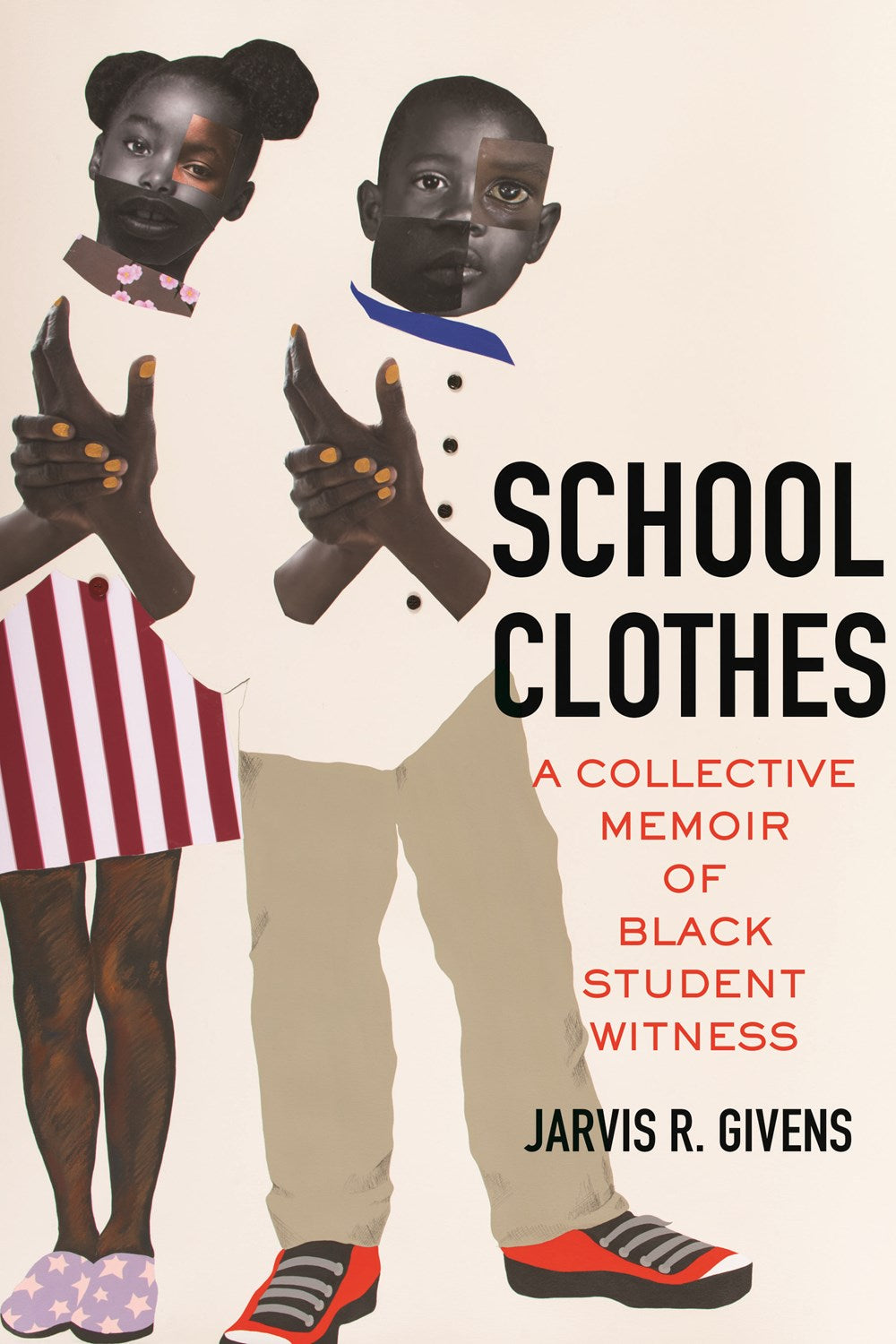
School Clothes: A Collective Memoir of Black Student Witness
by Jarvis R. Givens
$18.95A chorus of Black student voices that renders a new story of US education—one where racial barriers and violence are confronted by freedom dreaming and resistance
Black students were forced to live and learn on the Black side of the color line for centuries, through the time of slavery, Emancipation, and the Jim Crow era. And for just as long—even through to today—Black students have been seen as a problem and a seemingly troubled population in America’s public imagination.
Through over one hundred firsthand accounts from the nineteenth and twentieth centuries, Professor Jarvis Givens offers a powerful counter-narrative in School Clothes to challenge such dated and prejudiced storylines. He details the educational lives of writers such as Zora Neale Hurston and Ralph Ellison; political leaders like Mary McLeod Bethune, Malcolm X, and Angela Davis; and Black students whose names are largely unknown but who left their marks nonetheless. Givens blends this multitude of individual voices into a single narrative, a collective memoir, to reveal a through line shared across time and circumstance: a story of African American youth learning to battle the violent condemnation of Black life and imposed miseducation meant to quell their resistance.
School Clothes elevates a legacy in which Black students are more than the sum of their suffering. By peeling back the layers of history, Givens unveils in high relief a distinct student body: Black learners shaped not only by their shared vulnerability but also their triumphs, fortitude, and collective strivings. -
Well-Read Black Girl: Finding Our Stories, Discovering Ourselves
![Well-Read Black Girl: Finding Our Stories, Discovering Ourselves]()
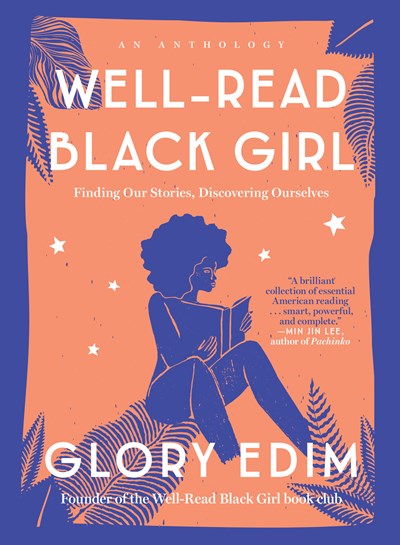
Well-Read Black Girl: Finding Our Stories, Discovering Ourselves
by Glory Edim
$20.00*ships in 7-10 business days
Remember that moment when you first encountered a character who seemed to be written just for you? That feeling of belonging remains with readers the rest of their lives—but it doesn’t happen as frequently for all of us. In this timely anthology, “well-read black girl” Glory Edim brings together original essays by some of our best black female writers and creative voices to shine a light on how important it is that everyone—regardless of gender, race, religion, or abilities—can find themselves in literature.
Contributors include Jesmyn Ward (Sing Unburied Sing), Lynn Nottage (Sweat), Jacqueline Woodson (Another Brooklyn), Gabourey Sidibe (This Is Just My Face), Morgan Jerkins (This Will Be My Undoing), Tayari Jones (An American Marriage), Rebecca Walker (Black, White and Jewish), Barbara Smith (Home Girls: A Black Feminist Anthology), and others.
Whether it’s learning about the complexities of femalehood from Zora Neale Hurston and Toni Morrison, finding a new type of love in The Color Purple, or using mythology to craft an alternative black future, each essay reminds us why we turn to books in times of both struggle and relaxation. Edim has created a space where black women’s writing and knowledge and life experiences are lifted up, to be shared with all readers who value the power of a story to help us understand the world and ourselves. -
These Long Shadows: Women's House Museums in the American South
![These Long Shadows: Women's House Museums in the American South cover image]()

These Long Shadows: Women's House Museums in the American South
Monica Nelson
$35.00PRE-ORDER: On Sale: May 26, 2026
A gorgeous illustrated meditation on the homes of iconic Southern women, from Nina Simone to Carson McCullers
In These Long Shadows, writer Monica Nelson excavates the domestic narratives and mythologies contained within the publicly preserved homes of some of the American South's leading cultural figures.
In Virginia, readers are drawn into the garden and home of Harlem Renaissance poet Anne Spencer and encounter modernist architect Amaza Lee Meredith's International Style residence, Azurest South. Journeying south, they encounter the North Carolinian childhood homes of both influential civil rights activist Anna "Pauli" Murray, and revolutionary singer-songwriter Nina Simone. In Atlanta, readers wander into the apartment of incendiary Southern author Margaret Mitchell. In Louisiana, they gaze upon the quietly profound folk art paintings of Clementine Hunter at Melrose Plantation, and take a pilgrimage to writers' homes from the Southern Renaissance, including Flannery O'Connor, William Faulkner, Zora Neale Hurston and Carson McCullers.
These Long Shadows assembles a constellation of new visions, narratives and readings with which to examine the nation's ever-metamorphosing historical landscape. Nelson's book constitutes the third volume of The Illustrated America, Atelier Editions' ongoing anthropological survey of eclectic chapters drawn from 20th-century America's cultural past.
Monica Nelson is a writer and graphic designer based in New York and Savannah. She has developed strategic visual narratives for publications, cultural institutions and brands, working with over 100 photographers. She was the founding creative and photo director of Wilder Quarterly, which fostered a floral-drenched view of the natural world, and the author of Edible Flowers (Monacelli Press, 2021). -
PRE-ORDER: Flight Lines: A Poetics of Black Space (Errantries)
![Flight Lines: A Poetics of Black Space (Errantries) cover image]()

PRE-ORDER: Flight Lines: A Poetics of Black Space (Errantries)
$29.95In Flight Lines, Elleza Kelley argues that African American art and writing make visible the unmappable dimensions of black space, not simply by depicting black worlds but by registering how black spatial praxis takes form under conditions of racial enclosure. Reading across literature and visual art, from W. E. B. Du Bois and Zora Neale Hurston to Faith Ringgold, Romare Bearden, and Gwendolyn Brooks, Kelley tracks spatial knowledge across media and contends that where mediums meet, black aesthetic form emerges as a crucial site for conceptualizing black space in the United States. Moving from Southern landscapes shaped by racialized property to the postmigration geographies of Harlem and Chicago, Flight Lines follows fences, railroads, blocks, apartments, and rooftops as sites where enclosure is contested, improvised on, and transformed. Proposing that black space and black form are mutually constitutive, Kelley shows how black aesthetics illuminate the racial operations of enclosure while preserving alternative ways of inhabiting, sensing, and remaking racialized worlds.
-
Paule Marshall: A Writer’s Life (Black Lives)
![Paule Marshall: A Writer’s Life (Black Lives) cover image]()

Paule Marshall: A Writer’s Life (Black Lives)
$30.00An elegant biography of a prescient author whose novels portray Black women’s experiences across the African diaspora
Growing up in World War II–era Brooklyn among West Indian immigrants, Paule Marshall (1929–2019) was fiercely driven to become a writer, making art from the world she knew, the life she lived, and the world she imagined. Though her novels and stories are understood by scholars as the beginning of contemporary Black feminist literature―bridging Harlem Renaissance writers like Zora Neale Hurston to such writers as Toni Morrison, Alice Walker, and Maya Angelou―Marshall’s legacy is often overlooked. In this elegant literary biography, distinguished scholar of African American literature Mary Helen Washington draws on exclusive access to the writer’s papers, including her newly discovered unpublished memoir, and scores of interviews with family and friends to give us the first account of Marshall’s life as an artist and of the depth and brilliance of her work.
Beginning with her 1959 debut, Brown Girl, Brownstones, a coming-of-age story set among Barbadian immigrants and African Americans in Brooklyn, and moving through her later works set in the Caribbean, Africa, and the United States, Marshall’s novels chart the diasporic life that Marshall herself lived, defined by Black women’s experiences, an unapologetic and sometimes queer sexuality, and the history of the African diaspora. Despite the lush and finely observed inner lives of her heroines, however, Marshall was famous for tightly guarding her own privacy, and it is this enigma―Marshall’s deeply expressive writing versus her guarded public exterior―that Washington draws out. Here is the first look at a prescient, brilliantly talented writer, a complex and fascinating woman, whose fiction single-handedly stages a reverse middle passage that extends from the United States and the Caribbean to Africa. -
The New Negro by Alain Locke
![The New Negro by Alain Locke]()
The New Negro by Alain Locke
$16.99The New Negro (1925) is an anthology by Alain Locke. Expanded from a March issue of Survey Graphic magazine, The New Negro compiles writing from such figures as Countee Cullen, Langston Hughes, Zora Neale Hurston, Jean Toomer, and Locke himself. Recognized as a foundational text of the Harlem Renaissance, the collection is organized around Locke’s writing on the function of art in reorganizing the conception of African American life and culture. Through self-understanding, creation, and independence, Locke’s New Negro came to represent a break from an inhumane past, a means toward meaningful change for a people held down for far too long.
“[F]or generations in the mind of America, the Negro has been more of a formula than a human being—a something to be argued about, condemned or defended, to be ‘kept down,’ or ‘in his place,’ or ‘helped up,’ to be worried with or worried over, harassed or patronized, a social bogey or a social burden.” Identifying the representation of black Americans in the national imaginary as oppressive in nature, Locke suggests a way forward through his theory of the New Negro, who “wishes to be known for what he is, even in his faults and shortcomings, and scorns a craven and precarious survival at the price of seeming to be what he is not.” Throughout The New Negro, leading artists and intellectuals of the Harlem Renaissance offer their unique visions of who and what they are; voicing their concerns, portraying injustice, and illuminating the black experience, they provide a holistic vision of self-expression in all of its colors and forms.
With a beautifully designed cover and professionally typeset manuscript, this edition of Alain Locke’s The New Negro is a classic of African American literature reimagined for modern readers.
-
Vinyl Moon
![Vinyl Moon]()
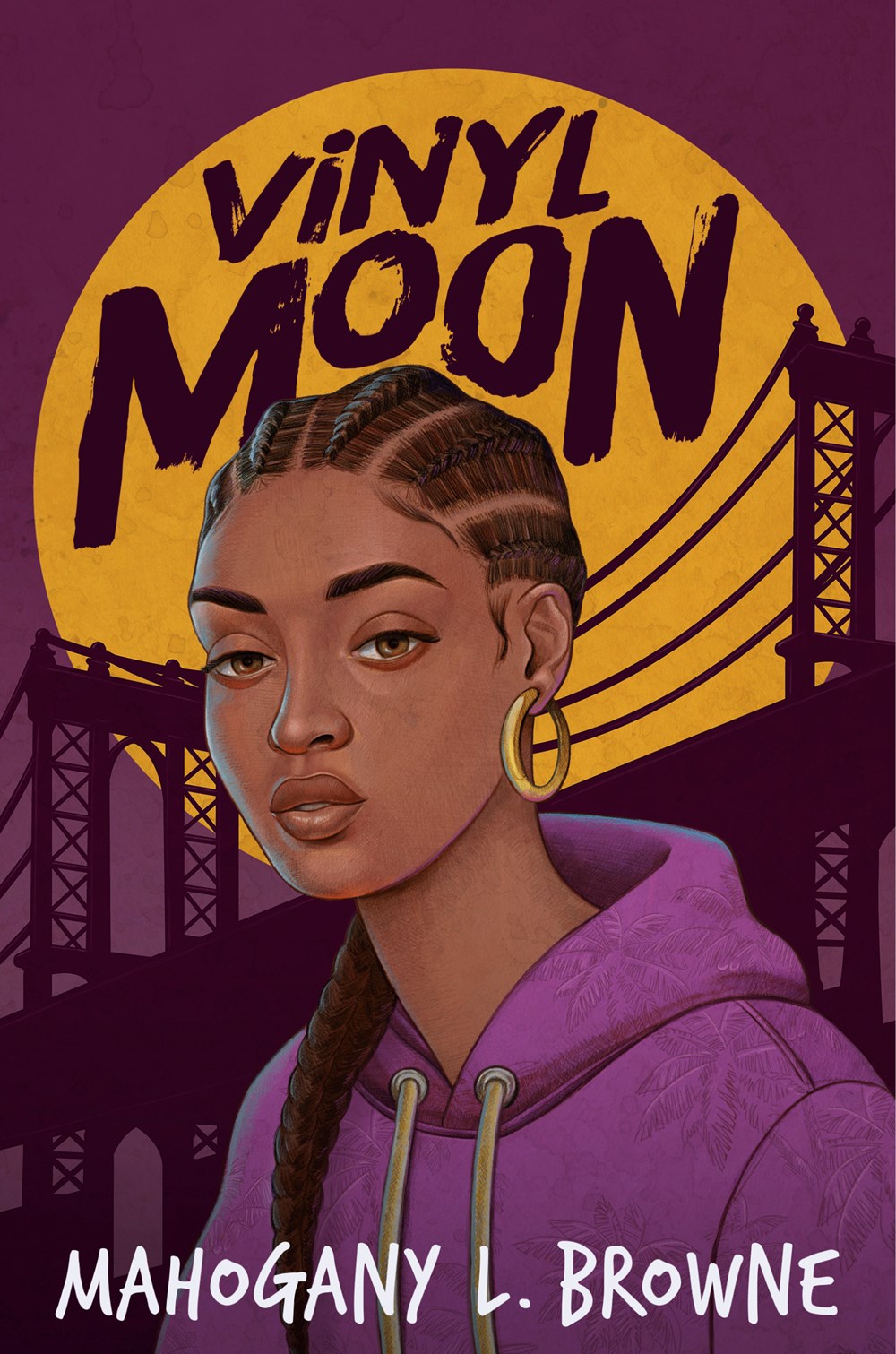
Vinyl Moon
by Mahogany L Browne
from $10.99*ships in 7-10 business days*
A teen girl hiding the scars of a past relationship finds home and healing in the words of strong Black writers. A beautiful sophomore novel from a critically acclaimed author and poet that explores how words have the power to shape and uplift our world even in the midst of pain.
When Darius told Angel he loved her, she believed him. But five weeks after the incident, Angel finds herself in Brooklyn, far from her family, from him, and from the California life she has known.
Angel feels out of sync with her new neighborhood. At school, she can’t shake the feeling everyone knows what happened—and that it was her fault. The only place that makes sense is Ms. G’s class. There, Angel’s classmates share their own stories of pain, joy, and fortitude. And as Angel becomes immersed in her revolutionary literature course, the words from Black writers like Toni Morrison, James Baldwin, and Zora NEale Hurston speak to her and begin to heal the wounds of her past.
This stunning novel weaves together prose, poems, and vignettes to tell the story of Angel, a young woman whose past was shaped by domestic violence but whose love of language and music and the gift of community grant her the chance to find herself again. -
PRE-ORDER: I Will Take to the Water: An Anthology of African Americans and the Sea
![I Will Take to the Water: An Anthology of African Americans and the Sea cover image]()

PRE-ORDER: I Will Take to the Water: An Anthology of African Americans and the Sea
$27.50A landmark survey of African American literature about Black experiences of the maritime environment.
The ocean is foundational to the story of Africans in America, beginning with the searing Middle Passage. Initially evoking terror, pain, and death, the ocean also became associated with escape, empowerment, freedom, and home, as over time, African Americans in seaport towns found work, built communities, and gained knowledge from travelers. David R. Anderson shows in this groundbreaking collection of memoir, fiction, poetry, and more that African American maritime literature summons many of the traditional themes―survival in the face of overwhelming natural force, sublimity, demonstration of skill and merit, and self-discovery―but often with an eye on legacies of imperialism, slavery, discrimination, and cultural erasure.
Divided thematically across ten sections that address peril, labor, recreation, and more, the book gathers work by influential writers and intellectuals from the eighteenth century to the present, including: Lucille Clifton, Edwidge Danticat, Frederick Douglass, Alice Dunbar-Nelson, W. E. B. DuBois, Camille T. Dungy, Marcus Garvey, Robert Hayden, Zora Neale Hurston, Major Jackson, Harriet Jacobs, John S. Jacobs, Nella Larsen, Claude McKay, Toni Morrison, Walter Mosley, Natasha Trethewey, Phillis Wheatley, Colson Whitehead, and Kevin Young.
-
Black Crip Modern: Race, Gender, and the Roots of Disability Consciousness
![Black Crip Modern: Race, Gender, and the Roots of Disability Consciousness cover image]()

Black Crip Modern: Race, Gender, and the Roots of Disability Consciousness
$30.00Asserts how Black artists and activists developed a disability consciousness in response to racialized disabling experiences in the early to mid-twentieth century
Black Crip Modern uncovers how early twentieth-century Black writers, artists, and activists laid the groundwork for modern disability consciousness. Under Jim Crow, Black disabled citizens were excluded from social services and medical reforms, even as racist violence, carceral surveillance, eugenic logic, and exploitative labor conditions deepened disabling experiences. Through literature, film, photography, and personal testimony, Black modernists registered these compounded injustices and articulated new ways of thinking about illness, impairment, and care.
Engaging the work of figures such as Zora Neale Hurston, Claude McKay, Wallace Thurman, Pauli Murray, Langston Hughes and Marita Bonner, Jess Waggoner traces how Black cultural production challenged both white supremacy and ableist ideals of progress. In their writing, Waggoner finds an early “Black crip modern” consciousness―one that rejected eugenic reform, critiqued racialized caregiving hierarchies, and envisioned collective care grounded in feminist and anti-carceral principles.
In conversation with contemporary disability justice movements, Black Crip Modern reveals how Black thinkers and artists forged a disability politics before it was formally named. By assembling these overlooked histories of Black ill and disabled life, Waggoner reframes the foundations of disability studies and insists that Black cultural production has always been central to the struggle for bodily autonomy, access, and justice.


Stay Informed. We're building a community committed to celebrating Black authors + artisans. Subscribe to keep up with all things Kindred Stories.