
Search results: 134 results for “by dr. martin luther king jr.”
Not finding what you're looking for? Check out our shop on bookshop.org to order and still support us ♥
134 results
-
Houston Negro Hospital: The Untold Legacy of Riverside General (American Heritage)
![Houston Negro Hospital: The Untold Legacy of Riverside General (American Heritage)]()

Houston Negro Hospital: The Untold Legacy of Riverside General (American Heritage)
$24.99“This Great Hospital Fight” – Dr. Drake
At the height of racial and political tensions in early twentieth-century Houston, two unlikely figures became allies. Dr. William M. Drake, a pioneering surgeon and Black community leader, and Joseph Cullinan, a White oil magnate and founder of the company that became Texaco, united in a desperate effort to save a hospital that symbolized hope. The Houston Negro Hospital was born from America’s Black Hospital Movement. Dedicated Juneteenth 1926, it embodied a bold experiment to bring dignity and healthcare access to a community systematically denied both in the Jim Crow south.
Journalist and storyteller Carlton Houston―whose ancestors played a role in this remarkable heritage―reveals the untold, human drama behind the institution that would become Riverside General. Recount the vision, conflict, and resilience that shaped a century of healthcare through the struggle of those determined to save lives.
-
Post Traumatic Slave Syndrome
![Post Traumatic Slave Syndrome]()
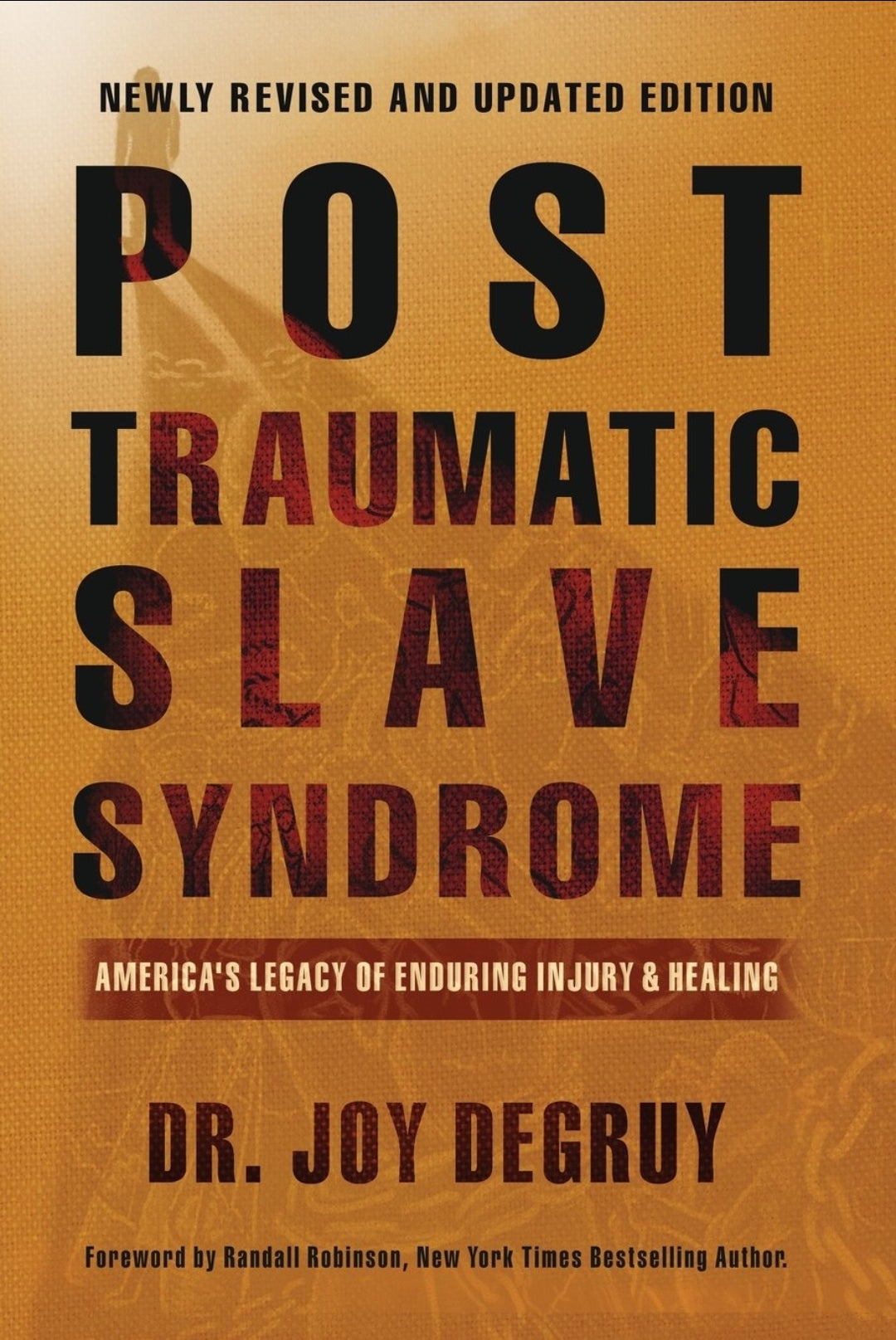
Post Traumatic Slave Syndrome
by Dr. Joy DeGruy
$19.95In the 16th century, the beginning of African enslavement in the Americas until the ratification of the Thirteenth Amendment and emancipation in 1865, Africans were hunted like animals, captured, sold, tortured, and raped. They experienced the worst kind of physical, emotional, psychological, and spiritual abuse. Given such history, isn't it likely that many of the enslaved were severely traumatized? And did the trauma and the effects of such horrific abuse end with the abolition of slavery?
Emancipation was followed by one hundred more years of institutionalized subjugation through the enactment of Black Codes and Jim Crow laws, peonage, convict leasing, domestic terrorism and lynching. Today the violations continue, and when combined with the crimes of the past, they result in yet unmeasured injury. What do repeated traumas, endured generation after generation by a people produce? What impact have these ordeals had on African Americans today?
Dr. Joy DeGruy, answers these questions and more. With over thirty years of practical experience as a professional in the mental health field, Dr. DeGruy encourages African Americans to view their attitudes, assumptions, and behaviors through the lens of history and so gain a greater understanding of how centuries of slavery and oppression have impacted people of African descent in America.
Post Traumatic Slave Syndrome helps to lay the necessary foundation to ensure the well-being and sustained health of future generations and provides a rare glimpse into the evolution of society's beliefs, feelings, attitudes and behavior concerning race in America.
-
No Name in the Street
![No Name in the Street]()
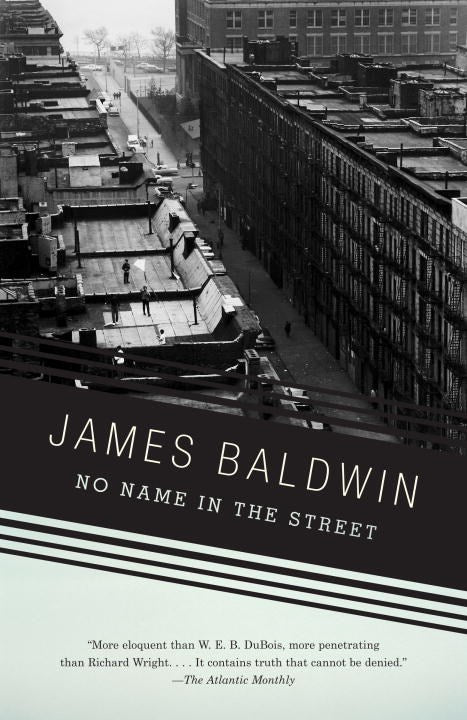
No Name in the Street
by James Baldwin
$15.95An extraordinary history of the turbulent sixties and early seventies that displays James Baldwin's fury and despair more deeply than any of his other works, and powerfully speaks to contemporary conversations around racism.
"It contains truth that cannot be denied.” — The Atlantic Monthly
In this stunningly personal document, James Baldwin remembers in vivid details the Harlem childhood that shaped his early conciousness and the later events that scored his heart with pain—the murders of Martin Luther King and Malcolm X, his sojourns in Europe and in Hollywood, and his retum to the American South to confront a violent America face-to-face. -
The Man Who Cried I Am: A Novel
![The Man Who Cried I Am: A Novel]()
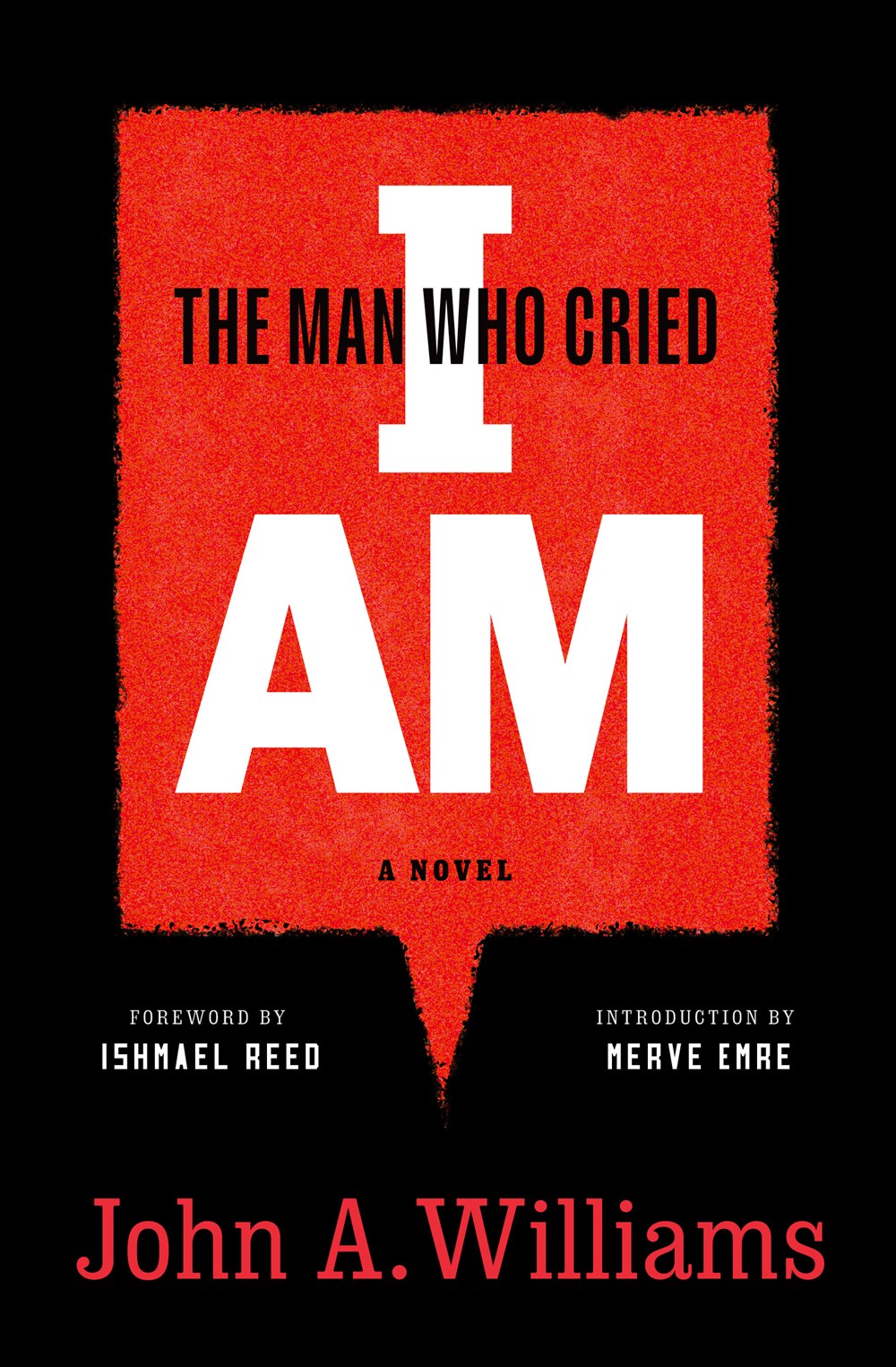
The Man Who Cried I Am: A Novel
by John A. Williams
$19.99Rediscover the sensational 1967 literary thriller that captures the bitter struggles of postwar Black intellectuals and artists
With a foreword by Ishmael Reed and a new introduction by Merve Emre about how this explosive novel laid bare America's racial fault lines
Max Reddick, a novelist, journalist, and presidential speechwriter, has spent his career struggling against the riptide of race in America. Now terminally ill, he has nothing left to lose. An expat for many years, Max returns to Europe one last time to settle an old debt with his estranged Dutch wife, Margrit, and to attend the Paris funeral of his friend, rival, and mentor Harry Ames, a character loosely modelled on Richard Wright.
In Amsterdam, among Harry’s papers, Max uncovers explosive secret government documents outlining “King Alfred,” a plan to be implemented in the event of widespread racial unrest and aiming “to terminate, once and for all, the Minority threat to the whole of the American society.” Realizing that Harry has been assassinated, Max must risk everything to get the documents to the one man who can help.
Greeted as a masterpiece when it was published in 1967, The Man Who Cried I Am stakes out a range of experience rarely seen in American fiction: from the life of a Black GI to the ferment of postcolonial Africa to an insider’s view of Washington politics in the era of segregation and the Civil Rights Movement, including fictionalized portraits of Martin Luther King, Jr., and Malcolm X. John A. Williams and his lost classic are overdue for rediscovery.
Few novels have so deliberately blurred the boundaries between fiction and reality as The Man Who Cried I Am (1967), and many of its early readers assumed the King Alfred plan was real. In her introduction, Merve Emre examines the gonzo marketing plan behind the novel that fueled this confusion and prompted an FBI investigation. This deluxe paperback also includes a new foreword by novelist Ishmael Reed. -
Mahalia Jackson, Moving On Up a Little Higher: The Story of an American Civil Rights Pioneer
![Mahalia Jackson, Moving On Up a Little Higher: The Story of an American Civil Rights Pioneer cover image]()

Mahalia Jackson, Moving On Up a Little Higher: The Story of an American Civil Rights Pioneer
$28.99“Mahalia Jackson was the greatest gospel singer of her time and an overlooked leader in the Civil Rights Movement. Her voice seemed born of heaven.” ?Henry Louis Gates Jr.
If Americans today still recognize the name Mahalia Jackson, they might recall that she was perhaps the greatest gospel singer who ever lived. But for many people, there is no awareness at all, not even for an entertainer whose “Move On Up a Little Higher” sold eight million copies, who headlined two Newport Jazz Festivals and performed before four United States presidents.
While this rich musical legacy is admired by those in the know, virtually no one recognizes Jackson’s astonishing role in American civil rights history. In this startling new depiction of the renowned gospel singer, New York Times best-selling author Timothy B. Tyson and Mary D. Williams, an acclaimed gospel singer herself, bring Jackson back to soaring life by positioning her as the major civil rights figure she, in fact, was.
Mahlia Jackson, Moving On Up a Little Higher then traces Jackson’s career from abject poverty in New Orleans to global superstardom, revealing how even after meteoric success, Jackson maintained an unwavering devotion to Black freedom. In the 1930s in Chicago, even before the Civil Rights Movement took its modern shape, she used her rapturous voice to support independent Black political power. Her work only intensified in the 1940s and beyond when she campaigned first for Franklin D. Roosevelt, and later for Harry Truman, John F. Kennedy, and Lyndon B. Johnson; headlined in Montgomery for the 1955–56 bus boycott; sang for the Birmingham campaign and on the Selma March; and performed at the iconic 1963 March on Washington, where she urged Martin Luther King Jr. to “Tell ’em about the dream.” In retrospect what becomes historically significant is that Mahalia Jackson was present at so many civil rights events, even singing a divine rendition of “Precious Lord, Take My Hand,” at Dr. King’s funeral in 1968. Weakened and worn, she succumbed to heart failure four years later at the age of sixty.
Weaving together Mahalia Jackson’s inspiring life journey with her soulful music into a transcendent text, this biography ultimately casts Mahalia Jackson as we’ve never seen her before, as a guiding light for the Civil Rights Movement, whose message still speaks to our struggles today.
5 illustrations
-
The South by Adolph L. Reed
![The South by Adolph L. Reed]()
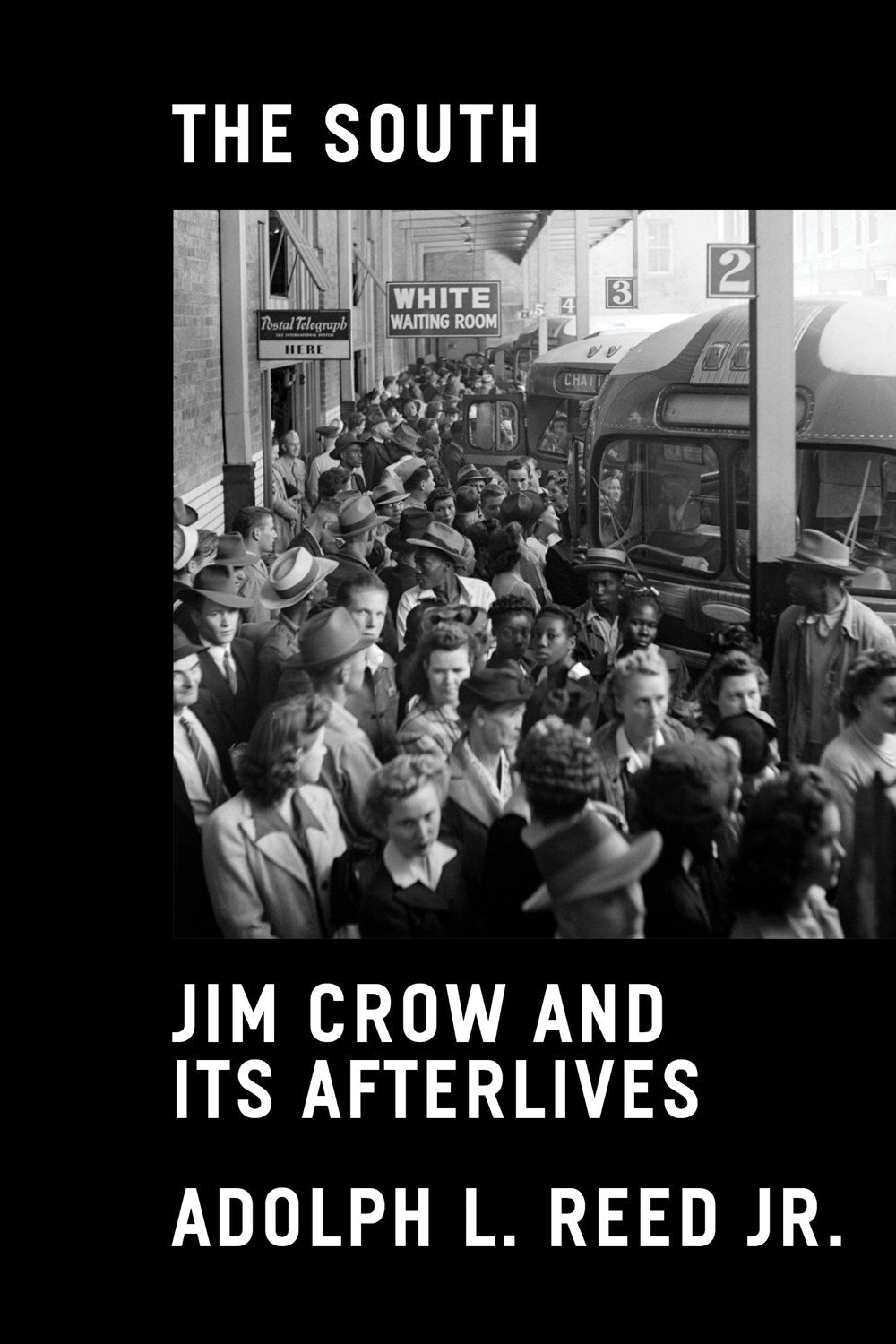
The South by Adolph L. Reed
$24.95A historical account of growing up Black in the Jim Crow South
The last generation of Americans with a living memory of Jim Crow will soon disappear. They leave behind a collective memory of segregation shaped increasingly by its horrors and heroic defeat but not a nuanced understanding of everyday life in Jim Crow America. In The South, Adolph L. Reed Jr. — New Orleanian, political scientist, and according to Cornel West, “the greatest democratic theorist of his generation” — takes up the urgent task of recounting the granular realities of life in the last decades of the Jim Crow South.
Reed illuminates the multifaceted structures of the segregationist order. Through his personal history and political acumen, we see America’s apartheid system from the ground up, not just its legal framework or systems of power, but the way these systems structured the day-to-day interactions, lives, and ambitions of ordinary working people.
The South unravels the personal and political dimensions of the Jim Crow order, revealing the sources and objectives of this unstable regime, its contradictions and precarity, and the social order that would replace it. -
We Refuse: A Forceful History of Black Resistance
![Book cover image]()

We Refuse: A Forceful History of Black Resistance
by Kellie Carter Jackson
$18.99A radical reframing of the past and present of Black resistance—both nonviolent and violent—to white supremacy
Black resistance to white supremacy is often reduced to a simple binary, between Dr. Martin Luther King Jr.’s nonviolence and Malcolm X’s “by any means necessary.” In We Refuse, historian Kellie Carter Jackson urges us to move past this false choice, offering an unflinching examination of the breadth of Black responses to white oppression, particularly those pioneered by Black women.
The dismissal of “Black violence” as an illegitimate form of resistance is itself a manifestation of white supremacy, a distraction from the insidious, unrelenting violence of structural racism. Force—from work stoppages and property destruction to armed revolt—has played a pivotal part in securing freedom and justice for Black people since the days of the American and Haitian Revolutions. But violence is only one tool among many. Carter Jackson examines other, no less vital tactics that have shaped the Black struggle, from the restorative power of finding joy in the face of suffering to the quiet strength of simply walking away.
Clear-eyed, impassioned, and ultimately hopeful, We Refuse offers a fundamental corrective to the historical record, a love letter to Black resilience, and a path toward liberation. -
African American Fraternities and Sororities: The Legacy and the Vision
![African American Fraternities and Sororities: The Legacy and the Vision]()
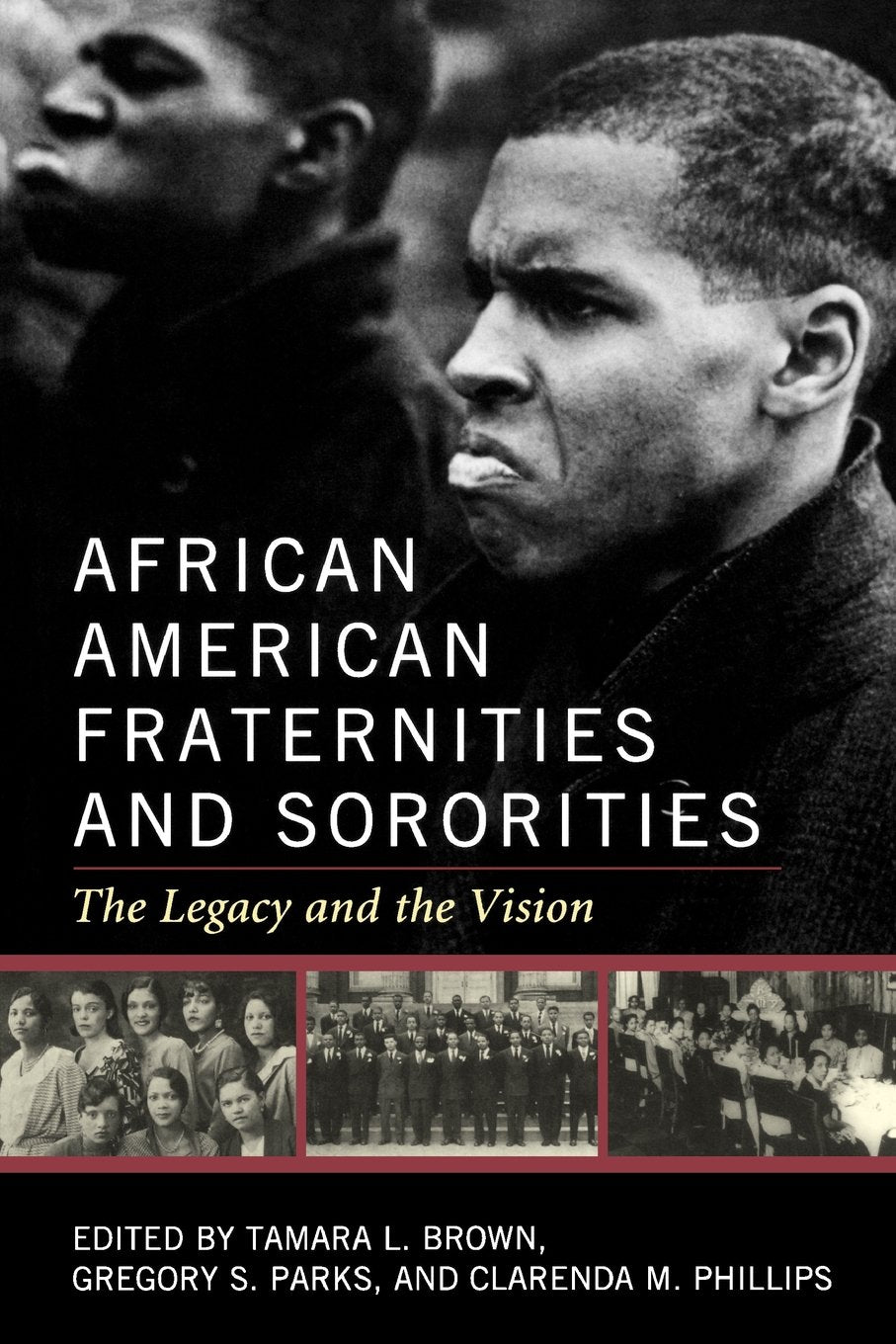
African American Fraternities and Sororities: The Legacy and the Vision
by Tamara L. Brown
$29.95*This book is not currently on our shelves and will ship in 5-10 business days. Please see FAQs for more information.
African American Fraternities and Sororities: The Legacy and the Vision explores the rich past and bright future of the nine Black Greek-Letter organizations that make up the National Pan-Hellenic Council. In the long tradition of African American benevolent and secret societies, intercollegiate African American fraternities and sororities have strong traditions of fostering brotherhood and sisterhood among their members, exerting considerable influence in the African American community, and being on the forefront of civic action, community service, and philanthropy. Dr. Martin Luther King Jr., Toni Morrison, Arthur Ashe, Carol Moseley Braun, Bill Cosby, Sarah Vaughan, George Washington Carver, Hattie McDaniel , and Bobby Rush are among the many trailblazing members of these organizations. The rolls of African American fraternities and sororities serve as a veritable who's who among African American leadership in the United States and abroad. African American Fraternities and Sororities places the history of these organizations in context, linking them to other movements and organizations that predated them and tying their history to one of the most important eras of United States history―the Civil Rights struggle. African American Fraternities and Sororities explores various cultural aspects of these organizations such as auxilliary groups, branding, calls, stepping, and the unique role of African American sororities. It also explores such contemporary issues as sexual aggression and alcohol use, college adjustment, and pledging, and provides a critique of Spike Lee's film School Daze, the only major motion picture to portray African American fraternities and sororities as a central theme. The year 2006 will mark the centennial anniversary of the intercollegiate African American fraternity and sorority movement. Yet, to date, little scholarly attention has been paid to these organizations and the men and women who founded and perpetuated them. African American Fraternities and Sororities reveals the vital social and political functions of these organizations and places them within the history of not only the African American community but the nation as a whole.
-
Radical Reparations: Healing the Soul of a Nation
![Book cover image]()
Radical Reparations: Healing the Soul of a Nation
by Marcus Anthony Hunter
$29.99*Ships in 7-10 business days*
A timely groundbreaking book in the vein of Derrick Bell's Faces at the Bottom of the Well, one of the country's foremost voices on reparations, offers a radical and vital new framework going beyond the current debate over this controversial issue.
For over a century, the idea of reparations for the descendants of enslaved Black Americans has divided the United States. However, while the iconic phrase "40 acres and a mule" encapsulates the general notion of reparations, history has proven that the damages of enslavement on the African American community far exceed what a plot of land or a check could repair.
While reparations are being widely debated once again, current petitions to redress the lasting and collateral consequences of slavery have not moved past economic solutions, even though we know that monetary redress alone is not enough. Not only would many wounds be left unhealed, but relying solely on economics would continue a legacy of neglect for African Americans. In this thoughtful and sure-to-be controversial book, Marcus Anthony Hunter argues that a radical shift in our outlook is necessary; we need more comprehensive solutions such as those currently sought by today's educators, historians, activists, organizers, Afrofuturists, and socially conscious citizens.
In Radical Reparations, this conversation shifter, social justice pioneer, change agent, and inventor of the hashtag #BlackLivesMatter, which redefined the global conversation on racism and social justice, offers a unifying and unconventional framework for achieving holistic and comprehensive healing of African American communities. Hunter reimagines reparations through a profound new lens as he defines seven types of compensation: political, intellectual, legal, economic, spatial, social, and spiritual, using analysis of historical documents, comparative international cases, and speculative parables.
Profound and revolutionary, trenchant and timely, Radical Reparations provides a compellingly and provocatively reframing of reparations' past, present, and future, offering a unifying way forward for us all.
-
The War Within a War: The Black Struggle in Vietnam and at Home
![The War Within a War: The Black Struggle in Vietnam and at Home cover image]()

The War Within a War: The Black Struggle in Vietnam and at Home
$35.00Award-winning author and journalist Wil Haygood explores how the Vietnam War became a mirror for the struggle of Black Americans—fighting for freedom abroad while demanding equality at home—and a powerful lens through which to understand the racial and political divides that continue to shape American life.
"With this book, Wil Haygood has become the preeminent chronicler of the Black experience in America.” —Richard Rhodes, Pulitzer Laureate for The Making of the Atomic Bomb
"In these masterful pages, Haygood reframes both the Vietnam War and the United States’ unfinished struggle for equality."—Mitchell Zuckoff, New York Times bestselling author of 13 Hours and Lost in Shangri-La
Drawing on the lives of soldiers and officers, doctors and nurses, journalists and activists, artists and politicians, Haygood illuminates a generation caught between two battles: one on the front lines in Vietnam and another for justice and dignity in America.
Among those at the heart of the story are Air Force pilot Fred Cherry, the first Black officer captured by the North Vietnamese and a hero to millions back home; Dr. Elbert Nelson, a doctor who came to Vietnam after watching TV footage of the Watts riots in Los Angeles and soon found himself amid rising Black soldier protests overseas; Wallace Terry, a groundbreaking Black reporter determined to expose the dynamics of race and war to the American public and Philippa Schuyler, a biracial concert pianist who traveled to Vietnam to rescue mixed-race orphans, many fathered by Black soldiers, and died trying to bring them to safety.
Surrounding their experiences are the cultural and political forces of the era, including Martin Luther King Jr., Marvin Gaye, Berry Gordy, and Lyndon Johnson, whose voices and actions shaped a decade of turbulence and transformation.
The War Within a War is both sweeping history and intimate revelation, capturing the tragedies and triumphs, the honor and hypocrisies, the courage and cowardice that shaped an era and whose repercussions resonate today.
-
A Song for the Unsung: Bayard Rustin, the Man Behind the 1963 March on Washington
![A Song for the Unsung: Bayard Rustin, the Man Behind the 1963 March on Washington]()

A Song for the Unsung: Bayard Rustin, the Man Behind the 1963 March on Washington
by Courtney Ahn
$19.99*ships/available for pickup in 7-10 business days
The author of Moses: When Harriet Tubman Led Her People to Freedom and the author of Pride: The Story of Harvey Milk and the Rainbow Flag combine their tremendous talents for a singular picture book biography of Bayard Rustin, the gay Black man behind the March on Washington of 1963.
On August 28, 1963, a quarter of a million activists and demonstrators from every corner of America convened for the March on Washington for Jobs and Freedom. It was there and then that they raised their voices in unison for racial and economic justice for all Black Americans, to call out inequities, and, ultimately, to advance the Civil Rights Movement.
Every movement has its unsung heroes. Individuals in the background who work without praise and accolades, who toil and struggle without notice. One of those unsung heroes was at the center of some of the most important decisions and events of the Civil Rights Movement.
Credited with introducing Dr. Martin Luther King, Jr. to the power of peaceful protest, for orchestrating the March on Washington, and for skillfully composing the program that placed Dr. King at the end of the list of speakers and musicians for what would become his historic “I Have a Dream” speech, this unsung hero will be celebrated for the first time in a picture book.
The unsung hero behind the movement was a quiet man. A gay, African American man. He was Bayard Rustin. On the heels of the sixtieth anniversary of this historic moment, two acclaimed picture book authors tell Bayard's inspiring story in an innovative and timeless book. A Song for the Unsung is the rousing story of one of our nation's greatest calls to action by honoring one of the men who made it happen. -
Before the Movement: The Hidden History of Black Civil Rights
![Before the Movement: The Hidden History of Black Civil Rights]()

Before the Movement: The Hidden History of Black Civil Rights
by Dylan C. Penningroth
$35.00A prize-winning scholar draws on astonishing new research to demonstrate how Black people used the law to their advantage long before the Civil Rights Movement.
The familiar story of civil rights goes something like this: Once, the American legal system was dominated by racist officials who shut Black people out and refused to recognize their basic human dignity. Then, starting in the 1940s, a few brave lawyers ventured south, bent on changing the law—and soon, everyday African Americans joined with them to launch the Civil Rights Movement. In Before the Movement, historian Dylan C. Penningroth overturns this story, demonstrating that Black people had long exercised “the rights of everyday use,” and that this lesser-known private-law tradition paved the way for the modern vision of civil rights. Well-versed in the law, Black people had used it to their advantage for nearly a century to shape how they worked, worshiped, learned, and loved. Based on long-forgotten sources found in the basements of county courthouses, Before the Movement recovers a vision of Black life allied with, yet distinct from, “the freedom struggle.”


Stay Informed. We're building a community committed to celebrating Black authors + artisans. Subscribe to keep up with all things Kindred Stories.