
Search results: 34 results for “by dr. martin luther king jr.”
Not finding what you're looking for? Check out our shop on bookshop.org to order and still support us ♥
34 results
-
Brothers in the Beloved Community: The Friendship of Thich Nhat Hanh and Martin Luther King Jr.
![Brothers in the Beloved Community: The Friendship of Thich Nhat Hanh and Martin Luther King Jr.]()
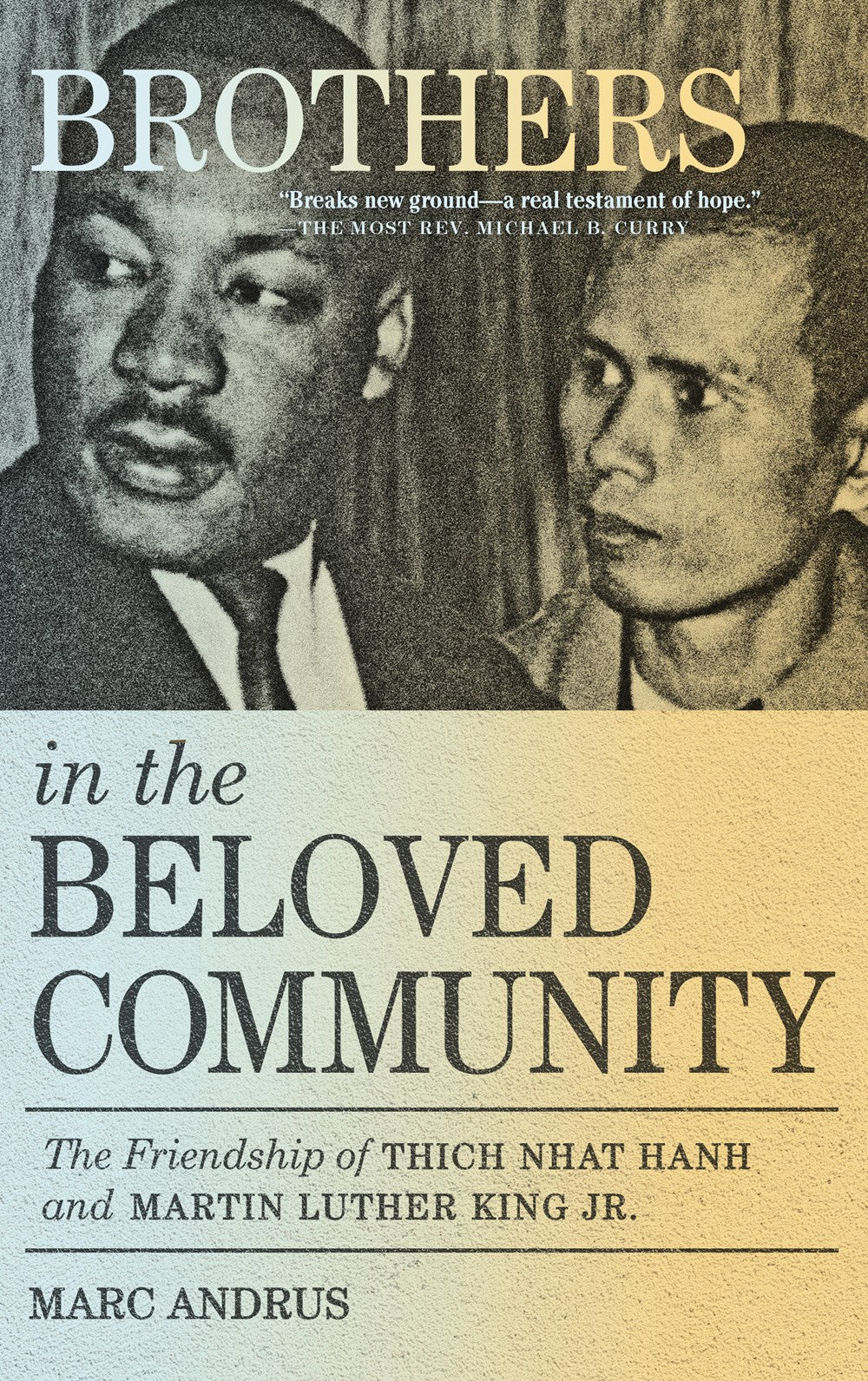
Brothers in the Beloved Community: The Friendship of Thich Nhat Hanh and Martin Luther King Jr.
by Marc Andrus
$17.95The never-before-told story of the friendship between Martin Luther King Jr. and Thich Nhat Hanh—icons who changed each other and the world
The day after Martin Luther King Jr. was assassinated in 1968, Thich Nhat Hanh wrote a heartbroken letter to their mutual friend Raphael Gould. He said: "I did not sleep last night. . . . They killed Martin Luther King. They killed us. I am afraid the root of violence is so deep in the heart and mind and manner of this society. They killed him. They killed my hope. I do not know what to say. . . . He made so great an impression in me. This morning I have the impression that I cannot bear the loss."
Only a few years earlier, Thich Nhat Hanh wrote an open letter to Martin Luther King Jr. as part of his effort to raise awareness and bring peace in Vietnam. There was an unexpected outcome of Nhat Hanh's letter to King: The two men met in 1966 and 1967 and became not only allies in the peace movement, but friends. This friendship between two prophetic figures from different religions and cultures, from countries at war with one another, reached a great depth in a short period of time. Dr. King nominated Thich Nhat Hanh for the Nobel Peace Prize in 1967. He wrote: "Thich Nhat Hanh is a holy man, for he is humble and devout. He is a scholar of immense intellectual capacity. His ideas for peace, if applied, would build a monument to ecumenism, to world brotherhood, to humanity."
The two men bonded over a vision of the Beloved Community: a vision described recently by Congressman John Lewis as "a nation and world society at peace with itself." It was a concept each knew of because of their membership within the Fellowship of Reconciliation, an international peace organization, and that Martin Luther King Jr. had been popularizing through his work for some time. Thich Nhat Hanh, Andrus shows, took the lineage of the Beloved Community from King and carried it on after his death.
In Brothers in the Beloved Community, Marc Andrus tells the little-known story of a friendship between two giants of our time. -
A Misrepresented People : Manhood in Black Religious Thought
![A Misrepresented People : Manhood in Black Religious Thought]()

A Misrepresented People : Manhood in Black Religious Thought
by Darrius D'Wayne Hills
$30.00Although much Black religious scholarship has engaged with feminist theory and womanist thought, a gap remains where little work has been done in religious studies to investigate the Black male experience. A Misrepresented People explores how African American men grapple with identity and masculinity in relation to Black religious thought. This book counters the dominant portrayal of Black men in American society as suspicious, morally defective, and irredeemable, and showcases the strength and relevance of Black religious thought in developing alternative notions of Black manhood.
Drawing on womanist discourses, African American religious thought, literature, and Black male studies, as well as an examination of the writings and sermons of Howard Thurman and Martin Luther King Jr., Darrius D’wayne Hills offers a vision of Black male identity that is grounded in interpersonal relationships and connection. Positioning identity formation as a religious concern, Hills expands the application of religious scholarship toward the complex social and material realities faced by Black men. In doing so, this volume offers a much-needed new model for understanding Black male gender identity, illustrating how religious thought fosters more holistic and livable futures for African American men. -
Black Power and Palestine: Transnational Countries of Color (Stanford Studies in Comparative Race and Ethnicity)
![Book cover image]()
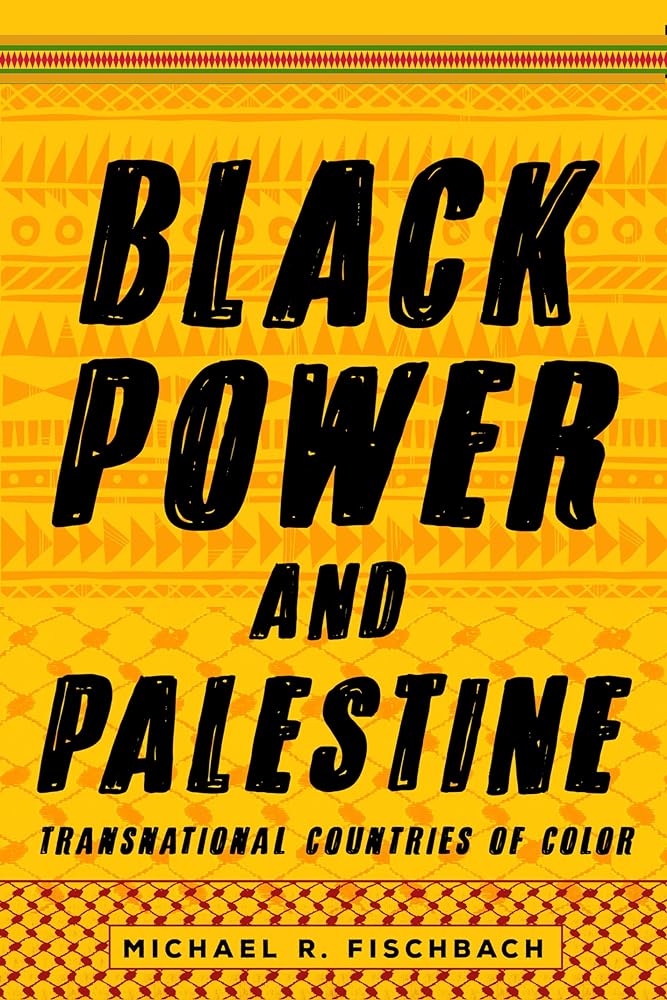
Black Power and Palestine: Transnational Countries of Color (Stanford Studies in Comparative Race and Ethnicity)
Michael R. Fischbach
$28.00The 1967 Arab–Israeli War rocketed the question of Israel and Palestine onto the front pages of American newspapers. Black Power activists saw Palestinians as a kindred people of color, waging the same struggle for freedom and justice as themselves. Soon concerns over the Arab–Israeli conflict spread across mainstream black politics and into the heart of the civil rights movement itself. Black Power and Palestine uncovers why so many African Americans―notably Martin Luther King, Jr., Malcolm X, and Muhammad Ali, among others―came to support the Palestinians or felt the need to respond to those who did.
Americans first heard pro-Palestinian sentiments in public through the black freedom struggle of the 1960s and 1970s. Michael R. Fischbach uncovers this hidden history of the Arab–Israeli conflict's role in African American activism and the ways that distant struggle shaped the domestic fight for racial equality. Black Power's transnational connections between African Americans and Palestinians deeply affected U.S. black politics, animating black visions of identity well into the late 1970s. Black Power and Palestine allows those black voices to be heard again today.
In chronicling this story, Fischbach reveals much about how American peoples of color create political strategies, a sense of self, and a place within U.S. and global communities. The shadow cast by events of the 1960s and 1970s continues to affect the United States in deep, structural ways. This is the first book to explore how conflict in the Middle East shaped the American civil rights movement.
-
On Critical Race Theory : Why It Matters & Why You Should Care
![On Critical Race Theory : Why It Matters & Why You Should Care]()
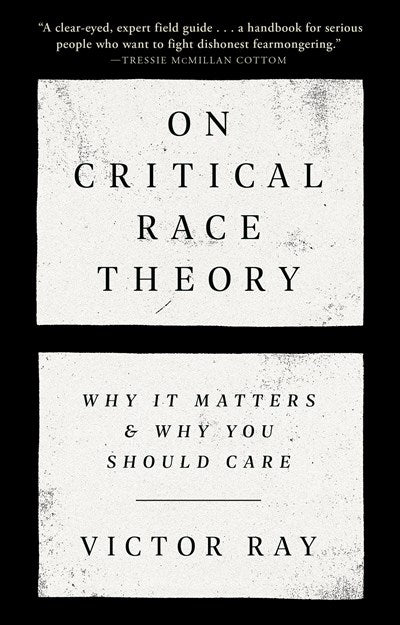
On Critical Race Theory : Why It Matters & Why You Should Care
by Victor Ray
$18.00*ships in 7-10 business days*
As our institutions and systems creak under the pressure of entrenched racism, renowned scholar Dr. Victor Ray explains how Critical Race Theory upholds truth amid misinformation to transcend backlash and uplift progress. On Critical Race Theory illustrates the centrality of race in American history and politics, and how the often mischaracterized intellectual movement became a political necessity.
Dr. Ray draws upon the radical thinking of giants such as Dr. Martin Luther King, Jr., Ida B. Wells, and W.E.B. Du Bois to clearly trace the foundations of Critical Race Theory in the Black intellectual traditions of emancipation and the civil rights movement. From this foundation, Dr. Ray explores the many facets that CRT interrogates, from deeply embedded structural racism to the historical connection between Whiteness and property, ownership, and more.
Dr. Ray argues that multicultural democracy is a recent and relatively fragile innovation that is under threat, in the face of the erosion of voting rights and attacks on speech at universities nationwide. He calls on readers to recall that it took the intervention of the National Guard to integrate schools as recently as 1960, that codifying racial subjugation has become the norm, and that populist demagoguery deployed racial insecurities to stir the January 6th insurrection and threaten the fabric of democracy.
In succinct and thoughtful essays, Dr. Ray explores how the conversation on CRT has expanded into the contemporary popular consciousness, showing why Critical Race Theory matters and why we all should care. -
No Name in the Street
![No Name in the Street]()
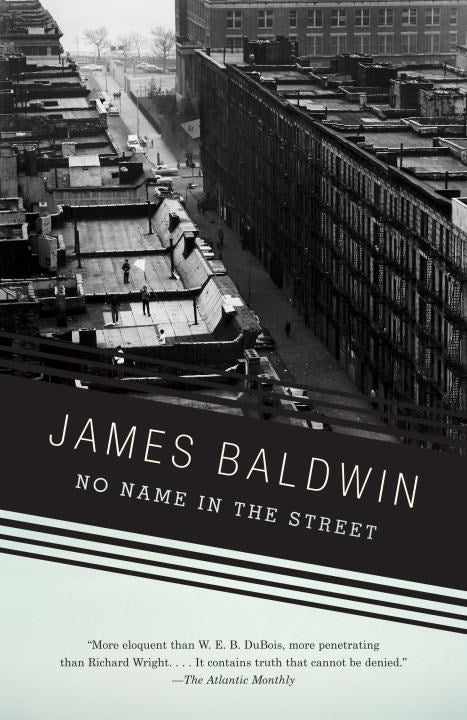
No Name in the Street
by James Baldwin
$15.95An extraordinary history of the turbulent sixties and early seventies that displays James Baldwin's fury and despair more deeply than any of his other works, and powerfully speaks to contemporary conversations around racism.
"It contains truth that cannot be denied.” — The Atlantic Monthly
In this stunningly personal document, James Baldwin remembers in vivid details the Harlem childhood that shaped his early conciousness and the later events that scored his heart with pain—the murders of Martin Luther King and Malcolm X, his sojourns in Europe and in Hollywood, and his retum to the American South to confront a violent America face-to-face. -
The Negro in the Making of America by Benjamin Quarles
![The Negro in the Making of America by Benjamin Quarles]()
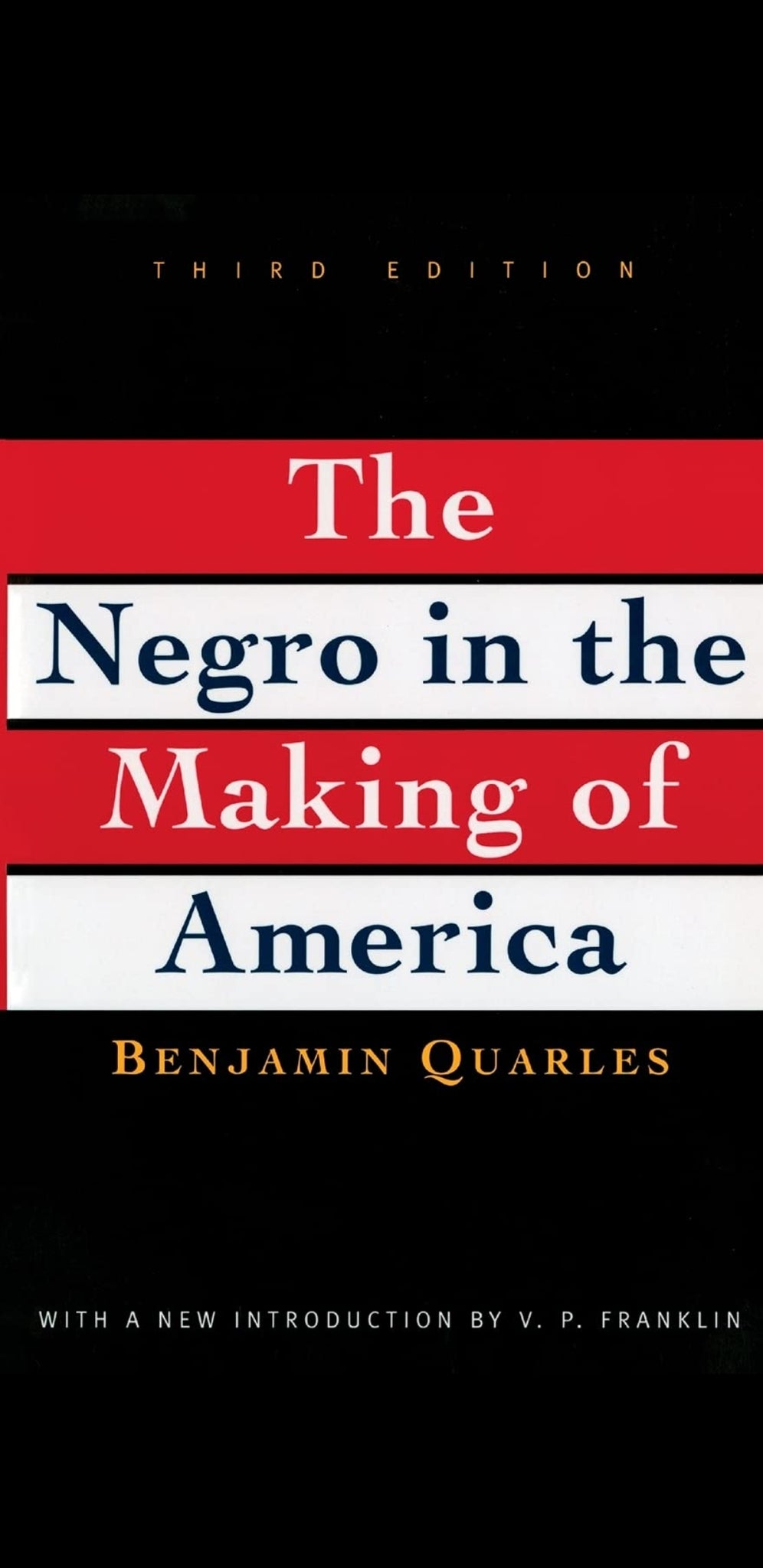
The Negro in the Making of America by Benjamin Quarles
$24.99The bestselling, definitive study of African Americans throughout American history, now with a new introduction by noted scholar V. P. Franklin.
In The Negro in the Making of America, eminent historian Benjamin Quarles provides one of the most comprehensive and readable accounts ever gathered in one volume of the role that African Americans have played in shaping the destiny of America. Starting with the arrival of the slave ships in the early 1600s and moving through the Colonial period, the Revolutionary and Civil Wars, and into the last half of the twentieth century, Quarles chronicles the sweep of events that have brought blacks and their struggle for social and economic equality to the forefront of American life.
Through compelling portraits of central political, historical, and artistic figures such as Nat Turner, Frederick Douglass, Duke Ellington, Malcolm X, and the Reverend Martin Luther King, Jr., Quarles illuminates the African American contributions that have enriched the cultural heritage of America. This classic history also covers black participation in politics, the rise of a black business class, and the forms of discrimination experienced by blacks in housing, employment, and the media.
Quarles's groundbreaking work not only surveys the role of black Americans as they engaged in the dual, simultaneous processes of assimilating into and transforming the culture of their country, but also, in a portrait of the white response to blacks, holds a mirror up to the deeper moral complexion of our nation's history. The restoration of this history holds a redemptive quality—one that can be used, in the author's words, as a "vehicle for present enlightenment, guidance, and enrichment." -
I AM A MAN - Soft Enamel Pin
![I AM A MAN - Soft Enamel Pin]()

I AM A MAN - Soft Enamel Pin
$12.00Item details Handmade item Materials rubber, soft enamel Memphis sanitation workers, the majority of them African-American, went out to strike on February 12, 1968, demanding recognition for their union, better wages, and safer working conditions after two trash handlers were killed by a malfunctioning garbage truck. As the strike dragged on through March, with the Memphis mayor refusing to negotiate, it gained national attention. As they marched, striking workers carried copies of a poster declaring “I AM A MAN,” a statement that recalled a question abolitionist posed more than 100 years earlier, “Am I not a man and a brother?” Martin Luther King Jr. -
I Am Not Your Negro (Vintage International)
![I Am Not Your Negro (Vintage International) cover image]()

I Am Not Your Negro (Vintage International)
James Baldwin
$17.00NATIONAL BESTSELLER • In his final years, one of America’s greatest writers envisioned a book about his three assassinated friends, Medgar Evers, Malcolm X, and Martin Luther King. His deeply personal notes for the project had never been published before acclaimed filmmaker Raoul Peck mined them to compose his Academy Award-nominated documentary.
“Thrilling…. A portrait of one man’s confrontation with a country that, murder by murder, as he once put it, ‘devastated my universe.’” —The New York Times
Peck weaves these texts together, brilliantly imagining the book that Baldwin never wrote with selected published and unpublished passages, essays, letters, notes, and interviews that are every bit as incisive and pertinent now as they have ever been. Peck’s film uses them to jump through time, juxtaposing Baldwin’s private words with his public statements, in a blazing examination of the tragic history of race in America.
This edition contains more than 40 black-and-white images from the film.
-
Blood in My Eye
![Blood in My Eye cover image]()

Blood in My Eye
George L. Jackson
$22.95Blood In My Eye was completed only days before it's author was killed. George Jackson died on August 21, 1971 at the hands of San Quentin prison guards during an alleged escape attempt. At eighteen, George Jackson was convicted of stealing seventy dollars from a gas station and was sentenced from one year to life. He was to spent the rest of his life -- eleven years-- in the California prison system, seven in solidary confinement. In prison he read widely and transformed himself into an activist and political theoretician who defined himself as a revolutionary.
-
The South by Adolph L. Reed
![The South by Adolph L. Reed]()
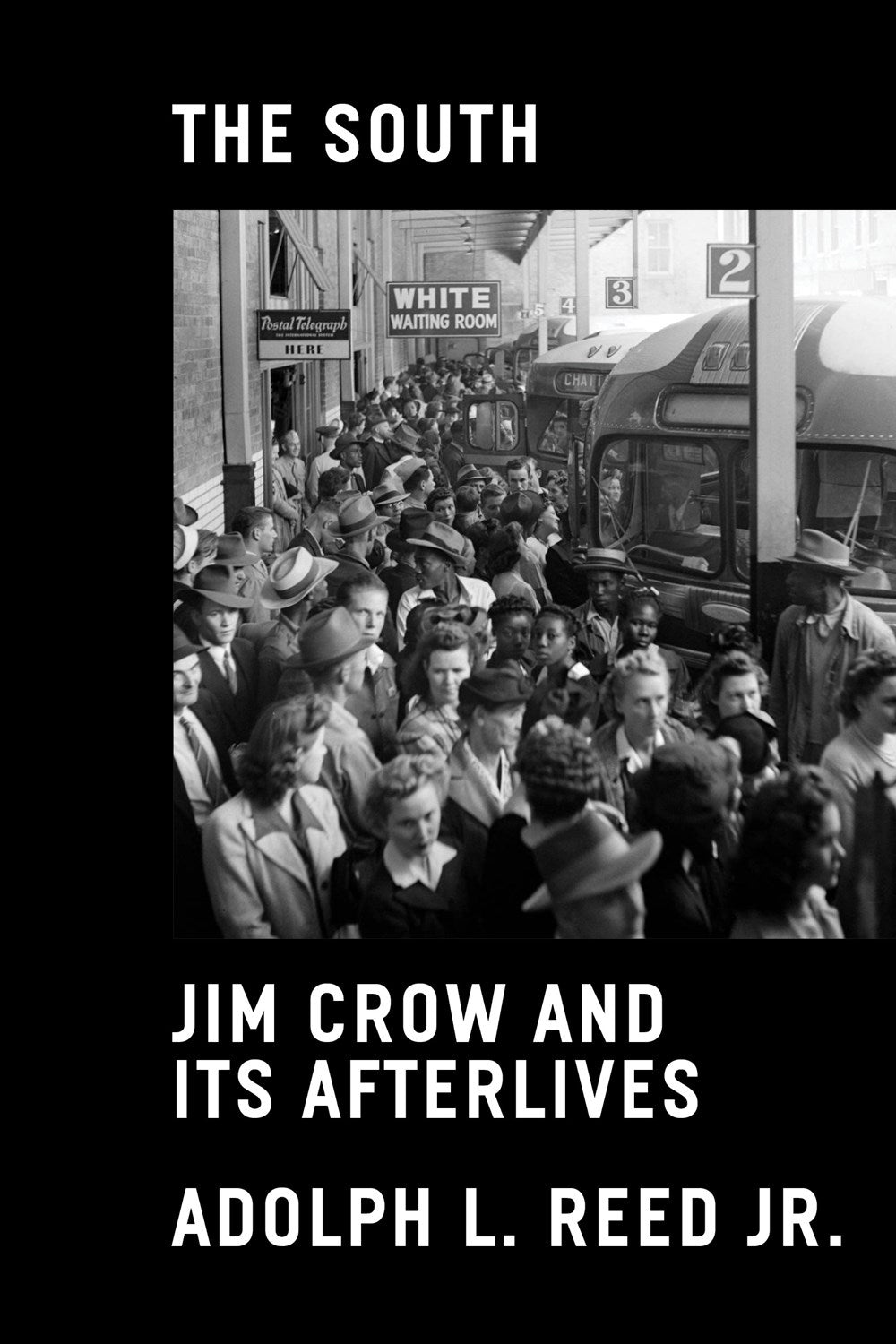
The South by Adolph L. Reed
$24.95A historical account of growing up Black in the Jim Crow South
The last generation of Americans with a living memory of Jim Crow will soon disappear. They leave behind a collective memory of segregation shaped increasingly by its horrors and heroic defeat but not a nuanced understanding of everyday life in Jim Crow America. In The South, Adolph L. Reed Jr. — New Orleanian, political scientist, and according to Cornel West, “the greatest democratic theorist of his generation” — takes up the urgent task of recounting the granular realities of life in the last decades of the Jim Crow South.
Reed illuminates the multifaceted structures of the segregationist order. Through his personal history and political acumen, we see America’s apartheid system from the ground up, not just its legal framework or systems of power, but the way these systems structured the day-to-day interactions, lives, and ambitions of ordinary working people.
The South unravels the personal and political dimensions of the Jim Crow order, revealing the sources and objectives of this unstable regime, its contradictions and precarity, and the social order that would replace it. -
A High Price for Freedom: Raising Hidden Voices from the African American Past
![A High Price for Freedom: Raising Hidden Voices from the African American Past cover image]()

A High Price for Freedom: Raising Hidden Voices from the African American Past
$30.00The author and director of the Martin Luther King, Jr. Library Publishing Project gives voice to long silent African Americans from the past, allowing them to tell their own stories that shed new light on critical moments in the Black Freedom Struggle, challenging what we think we know about Black history.
History is at its best when new findings and perspectives challenge old ideas and notions about the past, and even overturn common wisdom.
What if a former enslaved man in Galveston, Texas, witnessed the first Juneteenth and told a completely different story from what most of us know about that day? Why were slave ships most prone to rebellion, including those carrying the most African women? How has Islam found its way into R&B, soul, jazz, and other American popular music? Who was Benjamin Banneker, really?
In A High Price for Freedom, historian Clyde W. Ford addresses these and other questions, amplifying little-known voices from the African American past. In this wide-ranging, impeccably researched book, Ford begins with the 1656 court case of a woman named Elizabeth Key, who won a verdict for her freedom against her would-be enslaver—a victory that would forever change the nature, brutality, and course of American slavery.
Ford examines a range of topics, from the role of women in fomenting slave revolts to an in-depth look at how Selma was not really about voting rights or even Martin Luther King, Jr, but about a twenty-six-year-old Black man named Jimmie Lee Jackson who was killed by an Alabama state trooper. As he laying dying in the only hospital that would treat Black people in February 1965, Jimmie Lee whispered to his nurse, a Catholic nun, “Sister, isn’t this a high price for freedom?”
Eye-opening, enlightening, and often counterintuitive, this fascinating history includes compelling, heartrending, and factual accounts about people and events in the African American past that teach us things we never learned and challenge the stories we thought we knew.
-
JULY 2026: Horror Book Club - July 21 @ 7PM
![JULY 2026: Horror Book Club - July 21 @ 7PM]()

JULY 2026: Horror Book Club - July 21 @ 7PM
$0.00We're meeting to discuss Blood Slaves by Markus Redmond!
BOOK CLUB MEETING DEETS
When: Tuesday, July 21 @ 7PM CST
Where: Kindred Stories (2310 Elgin St, Houston, TX 77004)
How: RSVP ONLY to let us know you plan to attend! Support the Horror Book Club by purchasing a copy of the book from Kindred Stories here!
ABOUT BLOOD SLAVES
For readers of Victor LaValle, Tananarive Due, and Colson Whitehead’s The Underground Railroad, this ingenious reimagining of the vampire origin story set during the early days of American slavery blends alternate history with supernatural horror, as the last surviving member of an ancient African vampire tribe meets a slave desperate for freedom, and together, they lead an army of enslaved people in a cinematically blood-soaked battle for freedom and revenge.
What if nobody ever freed the slaves…because they freed themselves – 150 years before the Civil War?
In the Province of Carolina, 1710, freedom seems unattainable for Willie, for his beloved Gertie, and for their unborn child. They live, suffer, and toil under their brutal master, James “Big Jim” Barrow, whose grand plantation was built by the blood, sweat, and tears of the enslaved. To flee this hell on earth is be hunted and killed. Until one strange night Willie is offered a dark hope by Rafazi, an enigmatic slave with an irresistible and blood-chilling path to liberation.
Hailing from the Kingdom of Ghana, Rafazi is the lone survivor of the Ramanga, an African vampire tribe rendered nearly extinct by plague. Rafazi has roamed the world for centuries with an undying desire to replenish the power that once defined his heritage. In Willie, Rafazi has found his first biddable subject to be turned and to help in a hungry revolt. And Willie desires nothing more than to free his people from malicious bondage. Whatever it takes.
One by one, as an army of blood slaves thirsting for revenge is gathered, the headstrong Gertie fears that no good can come from the vampiric legacy that courses through Rafazi’s veins. Willie knows that only evil can fight evil. And when the woman he loves stands between the reemergence of the Ramanga and the justified slaughter of the oppressors, Willie must make an irreversible decision. Only one thing is certain: on the Barrow plantation, and beyond, blood will spill.
Part historical drama, part supernatural horror, and part alternate history, Blood Slaves is an ingenuous and defiant new creation myth of the vampire, one rooted in both justice and the sometimes-violent means necessary to achieve it.


- ← Previous
- page 1
- page 2
- page 3
- Next →
Stay Informed. We're building a community committed to celebrating Black authors + artisans. Subscribe to keep up with all things Kindred Stories.