
Search results: 66 results for “by Walter Mosley”
Not finding what you're looking for? Check out our shop on bookshop.org to order and still support us ♥
66 results
-
The Milky Way: An Autobiography of Our Galaxy by Moiya McTier
![The Milky Way: An Autobiography of Our Galaxy by Moiya McTier]()

The Milky Way: An Autobiography of Our Galaxy by Moiya McTier
$27.00*ships in 7-10 business days*
Astrophysicist and folklorist Dr. Moiya McTier channels The Milky Way in this approachable and utterly fascinating autobiography of the titular galaxy, detailing what humans have discovered about everything from its formation to its eventual death, and what more there is to learn about this galaxy we call home.
After a few billion years of bearing witness to life on Earth, of watching one hundred billion humans go about their day-to-day lives, of feeling unbelievably lonely, and of hearing its own story told by others, The Milky Way would like a chance to speak for itself. All one hundred billion stars and fifty undecillion tons of gas of it.
It all began some thirteen billion years ago, when clouds of gas scattered through the universe's primordial plasma just could not keep their metaphorical hands off each other. They succumbed to their gravitational attraction, and the galaxy we know as the Milky Way was born. Since then, the galaxy has watched as dark energy pushed away its first friends, as humans mythologized its name and purpose, and as galactic archaeologists have worked to determine its true age (rude). The Milky Way has absorbed supermassive (an actual technical term) black holes, made enemies of a few galactic neighbors, and mourned the deaths of countless stars. Our home galaxy has even fallen in love.
After all this time, the Milky Way finally feels that it's amassed enough experience for the juicy tell-all we've all been waiting for. Its fascinating autobiography recounts the history and future of the universe in accessible but scientific detail, presenting a summary of human astronomical knowledge thus far that is unquestionably out of this world. -
Cord Swell: Poems
![Cord Swell: Poems cover image]()

Cord Swell: Poems
brittny ray crowell
$26.99A pilgrimage of poems, stories, voices, and mixed-media collage through the lives of three generations of Black women.
How can we memorialize our dead? How can that memorialization rend the veil between the dead and the living? In her debut volume, brittny ray crowell sifts through decades of obituaries, journals, and other ephemera to exhume the generations of her family from her hometown of Texarkana, Texas. She preserves her relatives’ stories in writing and in works of collage, a style of archive that layers the past and the present literally and poetically.
This unique approach transforms Cord Swell into an altar, an artistically enshrined space where crowell communes with the past and looks to the future. The title poem, in which crowell speaks to an aunt who passed away, poignantly asks, “if there’s any such thing / as paradise . . . / better than the warmth / of your neck . . . / how close am i / to that context of space?” Her question acts as a provisional thesis statement for this collection, a poetic attempt to reveal, redress, and interpret those who came before her, especially in the absence of physical traces. Each poem imagines ways to access family members who have died and calls out to ancestors crowell never met.
In the process, crowell demonstrates capacious syntactical range, nimbly leaping from haibun to erasure poems, interviews to sonnets. She also invents forms she calls “grooves,” which are structured as album tracklists. These techniques marry form with meaning, echoing the voices of lost loved ones in indelible verse. Rhapsodic, inventive, and ambitious, Cord Swell establishes crowell as one of the most creative and dynamic new voices in poetry.
9 black-and-white illustrations
-
Romance in Marseille
![Romance in Marseille]()

Romance in Marseille
by Claude McKay
$16.00*ships in 7-10 business days*
The pioneering novel of physical disability, transatlantic travel, and black international politics. A vital document of black modernism and one of the earliest overtly queer fictions in the African American tradition. Published for the first time.
A Penguin Classic
Buried in the archive for almost ninety years, Claude McKay's Romance in Marseille traces the adventures of a rowdy troupe of dockworkers, prostitutes, and political organizers--collectively straight and queer, disabled and able-bodied, African, European, Caribbean, and American. Set largely in the culture-blending Vieux Port of Marseille at the height of the Jazz Age, the novel takes flight along with Lafala, an acutely disabled but abruptly wealthy West African sailor. While stowing away on a transatlantic freighter, Lafala is discovered and locked in a frigid closet. Badly frostbitten by the time the boat docks, the once-nimble dancer loses both of his lower legs, emerging from life-saving surgery as what he terms "an amputated man." Thanks to an improbably successful lawsuit against the shipping line, however, Lafala scores big in the litigious United States. Feeling flush after his legal payout, Lafala doubles back to Marseille and resumes his trans-African affair with Aslima, a Moroccan courtesan. With its scenes of black bodies fighting for pleasure and liberty even when stolen, shipped, and sold for parts, McKay's novel explores the heritage of slavery amid an unforgiving modern economy. This first-ever edition of Romance in Marseille includes an introduction by McKay scholars Gary Edward Holcomb and William J. Maxwell that places the novel within both the "stowaway era" of black cultural politics and McKay's challenging career as a star and skeptic of the Harlem Renaissance. -
Southern History across the Color Line (2nd Edition)
![Southern History across the Color Line (2nd Edition)]()

Southern History across the Color Line (2nd Edition)
by Nell Irvin Painter
$32.50The color line, once all too solid in southern public life, still exists in the study of southern history. As distinguished historian Nell Irvin Painter notes, we often still write about the South as though people of different races occupied entirely different spheres. In truth, although blacks and whites were expected to remain in their assigned places in the southern social hierarchy throughout the nineteenth century and much of the twentieth century, their lives were thoroughly entangled. -
Men We Reaped
![Men We Reaped]()
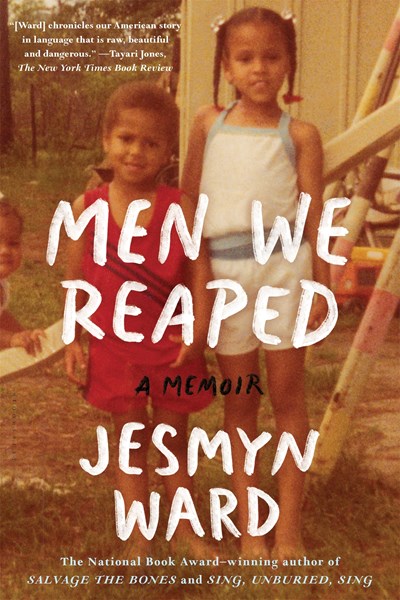
Men We Reaped
by Jesmyn Ward
$17.99“A brilliant book about beauty and death . . . with lyrical descriptions of the people and the land . . . Men We Reaped is [a] stirring and sad record.” —Los Angeles TimesUniversally praised, Jesmyn Ward's Men We Reaped confirmed her ascendancy as a writer of both fiction and nonfiction, her Southern requiem securing its place on bestseller and best books of the year lists, with honors and awards pouring in from around the country.
Jesmyn's memoir shines a light on the community she comes from, in the small town of DeLisle, Mississippi, a place of quiet beauty and fierce attachment. Here, in the space of four years, she lost five young men dear to her, including her beloved brother-lost to drugs, accidents, murder, and suicide. Their deaths were seemingly unconnected, yet their lives had been connected, by identity and place, and as Jesmyn dealt with these losses, she came to a staggering truth: These young men died because of who they were and the place they were from, because certain disadvantages breed a certain kind of bad luck. Because they lived with a history of racism and economic struggle. The agonizing reality commanded Jesmyn to write, at last, their true stories and her own.
Men We Reaped opens up a parallel universe, yet it points to problems whose roots are woven into the soil under all our feet. This indispensable American memoir is destined to become a classic. -
Theory for Moving Houses (The Bagley Wright Lecture Series)
![Theory for Moving Houses (The Bagley Wright Lecture Series) cover image]()

Theory for Moving Houses (The Bagley Wright Lecture Series)
$25.00You are asking me where I live and it’s making me think all these things about space, where I start and end in space and where space starts and ends in me and when, in space, I am a body and when I’m a book, in space.
So begins Renee Gladman's Theory for Moving Houses, and with these lines we are invited into a liminal space of imagination and investigation, as Gladman guides us through the architectures of her poetics. Foundational here is a sense of fluidity, a slippage of time, a devotion to “non-linear and hyper gestural movement,” a communal spirit. Her inquiry into her intersecting practices of writing and drawing reveals a deep commitment to uncertainty and “fictional knowing.” Yet again, Gladman upends traditional expectations of prose, as she leads us through landscape of her Ravicka series novels, ultimately surprising us with a novel within nonfiction. The latest volume in Wave’s Bagley Wright Lecture Series, Theory for Moving Houses is not only visionary it its contemplations but also is a virtuosic example of the ways in which language can shape utopian sites of possibility.
-
Playlist For the Apocalypse
![Playlist For the Apocalypse]()

Playlist For the Apocalypse
by Rita Dove
$15.95A piercing, unflinching new volume offers necessary music for our tumultuous present, from “perhaps the best public poet we have” (Boston Globe).
In her first volume of new poems in twelve years, Rita Dove investigates the vacillating moral compass guiding America’s, and the world’s, experiments in democracy. Whether depicting the first Jewish ghetto in sixteenth-century Venice or the contemporary efforts of Black Lives Matter, a girls’ night clubbing in the shadow of World War II or the doomed nobility of Muhammad Ali’s conscious objector stance, this extraordinary poet never fails to connect history’s grand exploits to the triumphs and tragedies of individual lives.
Meticulously orchestrated and musical in its forms, Playlist for the Apocalypse collects a dazzling array of voices: an elevator operator simmers with resentment, an octogenarian dances an exuberant mambo, a spring cricket philosophizes with mordant humor on hip hop, critics, and Valentine’s Day. Calamity turns all too personal in the book’s final section, “Little Book of Woe,” which charts a journey from terror to hope as Dove learns to cope with debilitating chronic illness.
At turns audaciously playful and grave, alternating poignant meditations on mortality and acerbic observations of injustice, Playlist for the Apocalypse takes us from the smallest moments of redemption to catastrophic failures of the human soul. Listen up, the poet says, speaking truth to power; what you’ll hear in return is “a lifetime of song.”
-
The Overseer Class: A Manifesto
![The Overseer Class: A Manifesto cover image]()

The Overseer Class: A Manifesto
$32.00The author of the critically acclaimed The Viral Underclass (one of Kirkus Reviews best books of 2022) is back with The Overseer Class, which explores what happens when members of historically minoritized groups are selected for high-visibility positions of power within existing institutions—but under the conditions of a kind of Faustian bargain.
Our society places so much weight and attention on those who become the first or only of their identifying group that we miss one of the inherent issues in that model. This book is about the kinds of compromises made by a small but influential group of people from minoritized groups in the United States as they have entered segregated institutions in highly visible positions. People in the overseer class wield enormous institutional power, even necropolitical power over who lives and who dies; it’s just that their power is predicated upon repressing other people who look (or speak/have sex/come from places) like them.
The most obvious contemporary overseer is the Black police officer. The Overseer Class begins with this quote from James Baldwin from 1967:
“The poor, of whatever color, do not trust the law and certainly have no reason to, and God knows we didn't. ‘If you must call a cop,’ we said in those days, ‘for God's sake, make sure it's a white one.’ We did not feel that the cops were protecting us, for we knew too much about the reasons for the kinds of crimes committed in the ghetto; but we feared black cops even more than white cops, because the black cop had to work so much harder--on your head--to prove to himself and his colleagues that he was not like all the other n******.”
But this dynamic does not only exist within law enforcement, it exists in many different spheres and The Overseer Class explores what it looks like in mass media, universities, corporate America, the military, and government. A powerful current and local example of this quandary can be seen right here in the ongoing saga of New York's Mayor Adams. At the end of the day, The Overseer Class aims not only to educate us and start this discussion but to provide a framework for challenging that dynamic. It is a weighty topic but one that Dr. Thrasher is well-equipped to handle. -
Selected Poems American Classics Edition (HarperCollins American Classics)
![Selected Poems American Classics Edition (HarperCollins American Classics) cover image]()

Selected Poems American Classics Edition (HarperCollins American Classics)
$20.00“When Miss Brooks. . . writes out of her heart, out of her rich and living background, out of her very real talent, then she induces almost unbearable excitement.” — New York Times
In celebration of the 250th anniversary of the United States, HarperCollins is proud to present this library of American classics drawn from our storied catalog. Selected Poems is the classic volume by the distinguished and celebrated poet Gwendolyn Brooks, winner of the 1950 Pulitzer Prize, and recipient of the National Book Foundation Medal for Distinguished Contribution to American Letters. This compelling collection showcases Brooks's technical mastery, her warm humanity, and her compassionate and illuminating response to a complex world.
By 1963 the civil rights movement was in full swing across the United States, and more and more African American writers were increasingly outspoken in attacking American racism and insisting on full political, economic, and social equality for all. In that memorable year of the March on Washington, Harper & Row released Brooks’s Selected Poems, which incorporated poems from her first three collections, as well as a selection of new poems.
This edition of Selected Poems includes A Street in Bronzeville, Brooks's first published volume of poetry for which she became nationally known and which led to successive Guggenheim fellowships; Annie Allen, published one year before she became the first African American author to win the Pulitzer Prize in any category; and The Bean Eaters, her fifth publication which expanded her focus from studies of the lives of mainly poor urban black Americans to the heroism of early civil rights workers and events of particular outrage—including the 1955 Emmett Till lynching and the 1957 school desegregation crisis in Little Rock, Arkansas.
-
Up from Slavery: An Autobiography (Signature Editions)
![Up from Slavery: An Autobiography (Signature Editions) cover image]()

Up from Slavery: An Autobiography (Signature Editions)
Booker T. Washington
$9.99Booker T. Washington’s famous 1901 memoir, Up From Slavery, charts Washington’s rise from an enslaved child with a passion for learning to the nation’s most prominent Black educator and first president of Tuskegee University. A tireless advocate for Black economic independence, Washington attempted to balance his public acceptance of segregation with behind-the-scenes lobbying against voter disenfranchisement and financing anti–Jim Crow court cases. His memoir is both a crucial American document and an exercise in understanding the “double consciousness” coined by W.E.B. DuBois, himself one of Washington’s most vocal critics.
-
Letters in Exile: Transnational Journeys of a Harlem Renaissance Writer
![Letters in Exile: Transnational Journeys of a Harlem Renaissance Writer cover image]()

Letters in Exile: Transnational Journeys of a Harlem Renaissance Writer
Claude McKay
$38.00A collection of private correspondence from one of the Harlem Renaissance’s brightest and most radical voices
The Jamaican-born, queer author Claude McKay (1890–1948) was a central figure of the Harlem Renaissance. His 1919 poem “If We Must Die” expressed a revolutionary vision for militant Black protest art, while his novels, including Home to Harlem, Banjo, and Banana Bottom, described ordinary Black life in lyrical prose. Yet for all that McKay connected himself to Harlem, he was a restless world traveler who sought spiritual, artistic, and political sustenance in France, Spain, Moscow, and Morocco.
Brooks E. Hefner and Gary Edward Holcomb bring together two decades of McKay’s never-before-published dispatches from the road with correspondents including W. E. B. Du Bois, Langston Hughes, Alain Locke, Max Eastman, and Louise Bryant. With wit, wisdom, insight, and sometimes irascible temper, McKay describes how he endured harassment from British authorities in London and worked alongside Leon Trotsky and Alexander Kerensky in Bolshevik Moscow. He reflects on Paris’s Lost Generation, immerses himself in the Marseille dockers’ noir subculture, and observes French colonialism in Morocco. Providing a new perspective on a unique figure of American modernism, this collection reveals McKay gossiping, cajoling, and confiding as he engages in spirited debates and challenges the political and artistic questions of the day. -
Sojourner Truth: A Life, A Symbol
![Sojourner Truth: A Life, A Symbol]()
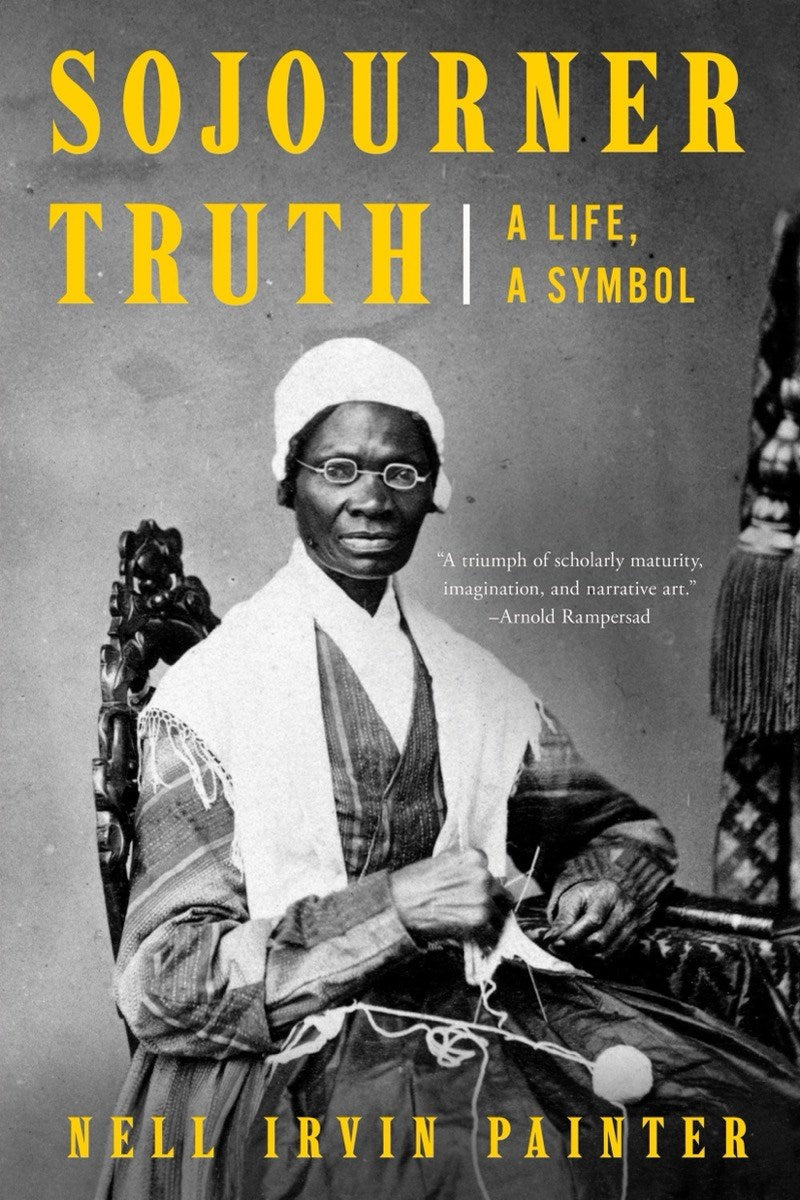
Sojourner Truth: A Life, A Symbol
by Nell Irvin Painter
$18.99"A pathbreaking biography. It should command the widest popular attention and profound scholarly attention." —David Levering Lewis, author of W. E. B. DuBois
Sojourner Truth: ex-slave and fiery abolitionist, figure of imposing physique, riveting preacher and spellbinding singer who dazzled listeners with her wit and originality. Straight-talking and unsentimental, Truth became a national symbol for strong black women—indeed, for all strong women. Like Harriet Tubman and Frederick Douglass, she is regarded as a radical of immense and enduring influence; yet, unlike them, what is remembered of her consists more of myth than of personality.
Now, in a masterful blend of scholarship and sympathetic understanding, eminent black historian Nell Irvin Painter goes beyond the myths, words, and photographs to uncover the life of a complex woman who was born into slavery and died a legend. Inspired by religion, Truth transformed herself from a domestic servant named Isabella into an itinerant pentecostal preacher; her words of empowerment have inspired black women and poor people the world over to this day. As an abolitionist and a feminist, Truth defied the notion that slaves were male and women were white, expounding a fact that still bears repeating: among blacks there are women; among women, there are blacks.
No one who heard her speak ever forgot Sojourner Truth, the power and pathos of her voice, and the intelligence of her message. No one who reads Painter's groundbreaking biography will forget this landmark figure and the story of her courageous life.


Stay Informed. We're building a community committed to celebrating Black authors + artisans. Subscribe to keep up with all things Kindred Stories.