
Search results: 20 results for “jamaica kincaid”
Not finding what you're looking for? Check out our shop on bookshop.org to order and still support us ♥
20 results
-
APRIL 2025: NO NAME BOOK CLUB - May 4 @ 1 PM CST
![APRIL 2025: NO NAME BOOK CLUB - May 4 @ 1 PM CST]()

APRIL 2025: NO NAME BOOK CLUB - May 4 @ 1 PM CST
Sold outNo Name is a Black-owned worker cooperative connecting community members both inside and outside carceral facilities with radical books. Each month, No Name uplifts two books written by Black, indigenous, and other people of color. No Name believes building community through political education is crucial for our liberation and should be accessible to everyone—which is why all programming is free.
MEETING DEETSWhen: Sunday, May 4 @ 1 PMWhere: Kindred Stories (2304 Stuart Street, HTX, 77004)How: RSVP to let us know you're coming! RSVP WITH BOOK to pick up your book in store or have it shipped to you before the meeting.ABOUT A SMALL PLACE
Lyrical, sardonic, and forthright, A Small Place magnifies our vision of one small place with Swiftian wit and precision. Jamaica Kincaid’s expansive essay candidly appraises the ten-by-twelve-mile island in the British West Indies where she grew up, Antigua, and makes palpable the impact of European colonialism and tourism.
This book is a missive to the traveler, whether American or European, who wants to escape the banality and corruption of some large place. Kincaid, powerful and resolute, reminds us that the Antiguan people, formerly British subjects, are unable to escape the same drawbacks of their own tiny realm—that behind the benevolent Caribbean scenery are human lives, always complex and often fraught with injustice. -
On Girlhood
![On Girlhood]()
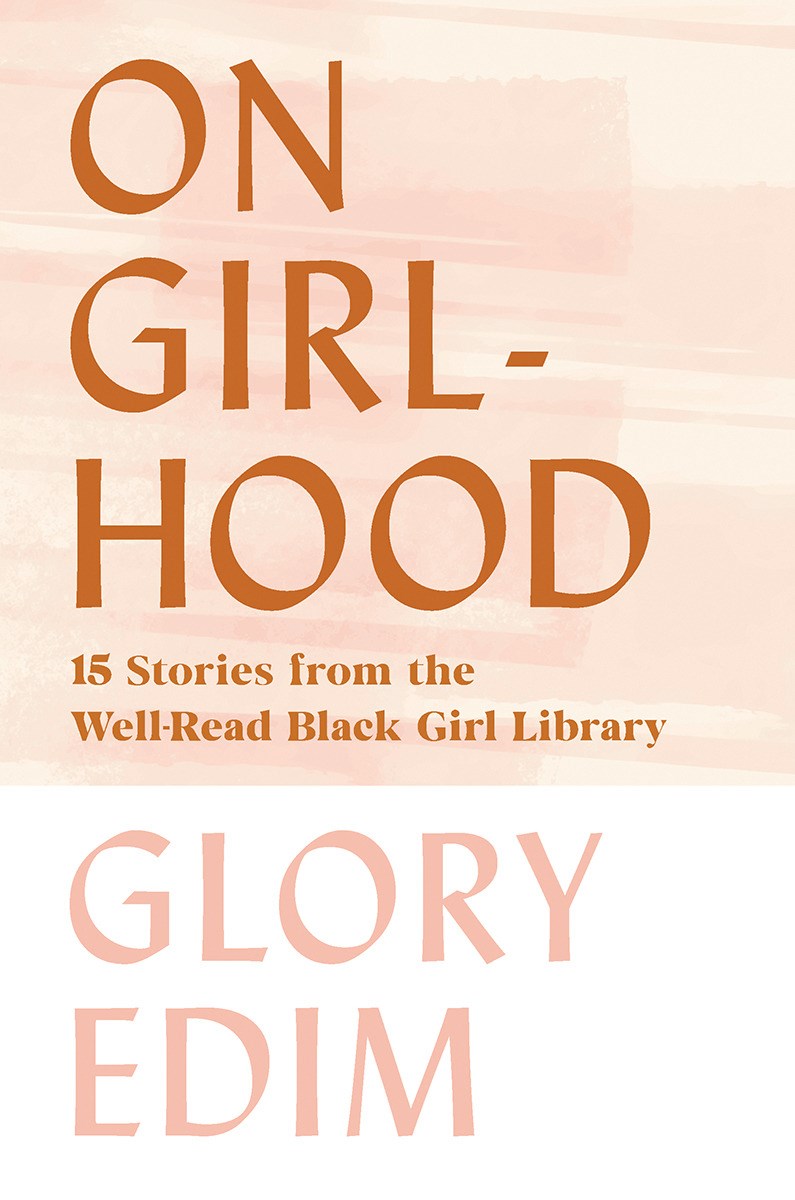
On Girlhood
by Glory Edim
Sold outWith On Girlhood, Edim has beautifully curated a canonical work centering around the voices of young Black characters as they contend with innocence, belonging, love, and self-discovery. From the timeless lessons in Jamaica Kincaid’s “Girl” (“this is how you smile to someone you like completely”) to those in Dana Johnson’s “Melvin in the Sixth Grade” (“this is how kids start fights”), these short stories illuminate the power and the precariousness of Black girlhood. Highlighting both iconic and lesser-known authors—Edwidge Danticat, Amina Gautier, Dorothy West, Paule Marshall, Shay Youngblood, and more—this is an indispensable compendium that will instill readers with “the nerve to walk [their] own way” (Zora Neale Hurston).
-
IN PERSON EVENT: MEET & GREET with Glory Edim- December 5 at 6:30PM
![IN PERSON EVENT: MEET & GREET with Glory Edim- December 5 at 6:30PM]()
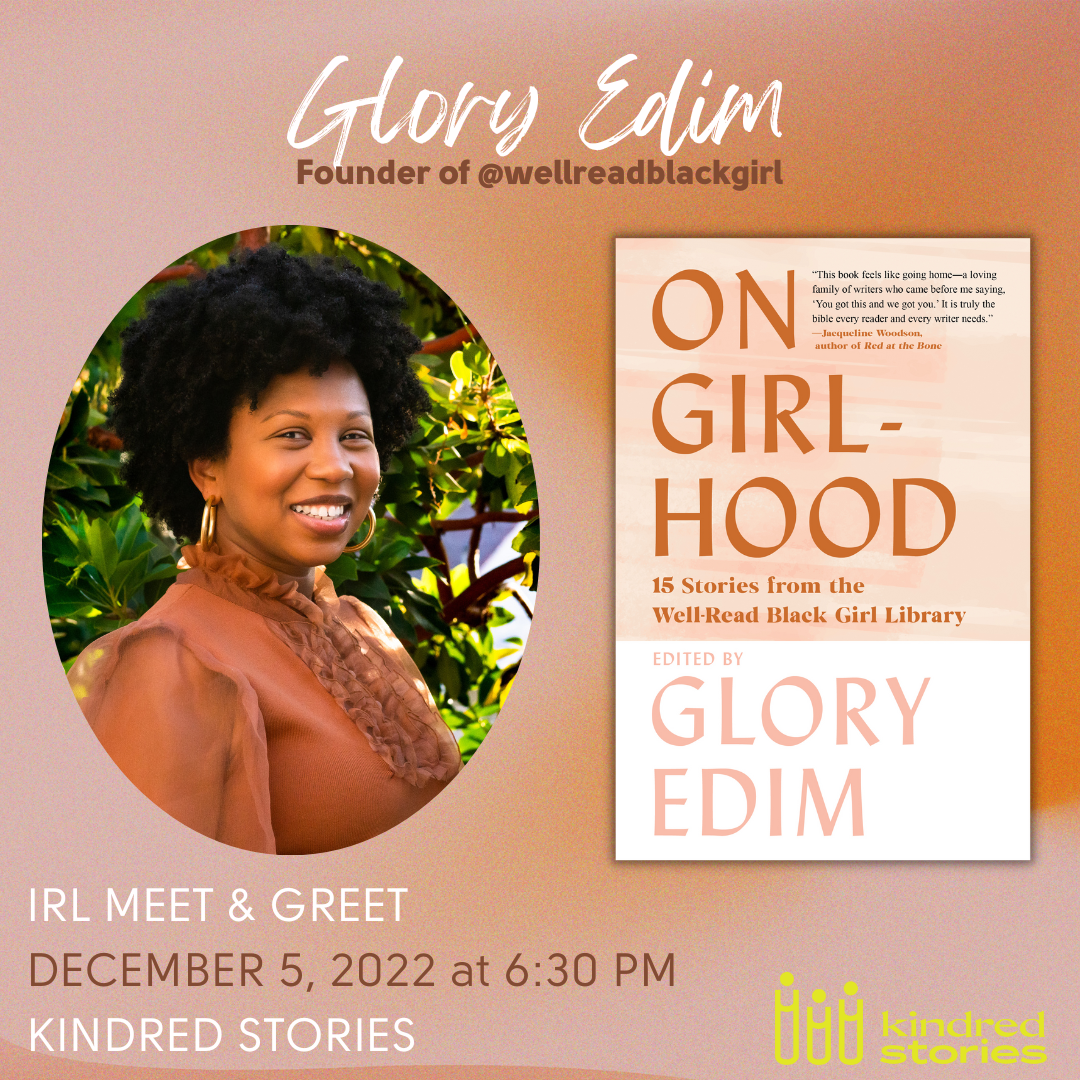
IN PERSON EVENT: MEET & GREET with Glory Edim- December 5 at 6:30PM
Sold outJoin us as we celebrate the paperback release of On Girlhood with Glory Edim, founder of the Well Read Black Girl.EVENT DEETS:
When: December 5 at 630 PM
Where: Kindred Stories (2304 Stuart Street, HTX 77004)
How: RSVP for your time with Glory. Please purchase On Girlhood if you have not to support our programming.
About The Book
Proudly introducing the Well-Read Black Girl Library Series, On Girlhood is a lovingly curated anthology celebrating short fiction from such luminaries as Rita Dove, Alice Walker, Toni Morrison, and more.
Featuring stories by: Jamaica Kincaid, Toni Morrison, Dorothy West, Rita Dove, Camille Acker, Toni Cade Bambara, Amina Gautier, Alexia Arthurs, Dana Johnson, Alice Walker, Gwendolyn Brooks, Edwidge Danticat, Shay Youngblood, Paule Marshall, and Zora Neale Hurston.
“When you look over your own library, who do you see?” asks Well-Read Black Girl founder Glory Edim in this lovingly curated anthology. Bringing together an array of “unforgettable, and resonant coming-of-age stories” (Nicole Dennis-Benn), Edim continues her life’s work to brighten and enrich American reading lives through the work of both canonical and contemporary Black authors—from Jamaica Kincaid and Toni Morrison to Dana Johnson and Alexia Arthurs. Divided into four themes—Innocence, Belonging, Love, and Self-Discovery—On Girlhood features fierce young protagonists who contend with trials that shape who they are and what they will become. At times heartbreaking and hilarious, the stories within push past flat stereotypes and powerfully convey the beauty of Black girlhood, resulting in an indispensable compendium for every home library.
About The Author
Glory Edim is the founder of Well-Read Black Girl, a podcast and digital literacy platform that celebrates the uniqueness of Black literature and sisterhood. She edited the Well-Read Black Girl anthology, which was nominated for an NAACP Image Award and named a best book of the year by Library Journal. Her latest book On Girlhood is a collection of groundbreaking short stories that explore the thin yet imperative line between Black girlhood and womanhood. The winner of the Innovator's Award from the Los Angeles Times Book Prizes, Edim worked as a cultural practitioner for over ten years and serves on the board of Baldwin for the Arts. She resides in Washington D.C. with her son, Zikomo.
-
God Made My Face: A Collective Portrait of James Baldwin
![God Made My Face: A Collective Portrait of James Baldwin]()
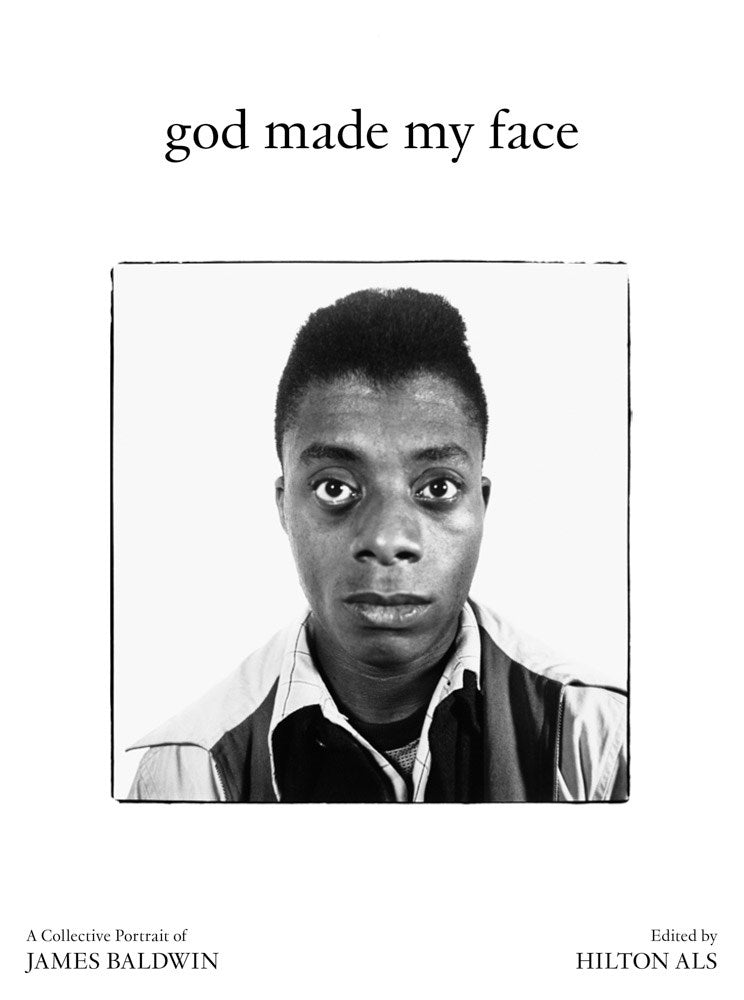
God Made My Face: A Collective Portrait of James Baldwin
edited by Hilton Als
Sold outBaldwin’s life and legacy as remembered by a pantheon of artists and writers: from Jamaica Kincaid and Barry Jenkins to Richard Avedon and Alice Neel
When author James Baldwin died in 1987, he left behind an extraordinary body of work: novels, poems, film scripts and, perhaps most indelibly, essays. A friend and supporter of Martin Luther King Jr., Malcolm X and Medgar Evers, Baldwin was a critical voice in the civil rights movement. After reaching acclaim in his early career as a writer, he struggled to retain the author’s “I,” while taking on the “we” of the people.
Edited by Pulitzer Prize–winning author Hilton Als and growing out of his landmark exhibition at David Zwirner in 2019, God Made My Face brings together an impressive assembly of contributors, ranging from Baldwin biographer David Leeming to novelist Jamaica Kincaid and Moonlight director Barry Jenkins, to create a memorial mosaic: one that not only mirrors Baldwin’s various tones but also closely examines his singular contributions to cinema, theater, the essay and Black American critical studies. These essays are illustrated by artwork from modern and contemporary artists who were either personal contemporaries of Baldwin or directly inspired by his work. In each piece assembled here, the authors speak from a personal, informed perspective, illuminating Baldwin’s deeply anguished and enlightened voice and his belief that, ultimately—because we are human—we share the potential to love, connect and live together in all our glory.
Artists include: Diane Arbus, Eugène Atget, Richard Avedon, Don Bachardy, Alvin Baltrop, Anthony Barboza, Njideka Akunyili Crosby, Beauford Delaney, Marlene Dumas, Glenn Ligon, George McCalman, Alice Neel, Elle Pérez, Cameron Rowland, Kara Walker, James Welling, Larry Wolhandler.
Authors include:Stephen Best, Daphne A. Brooks, Teju Cole, Marianne Jean-Baptiste, Barry Jenkins, Jamaica Kincaid, David Leeming, Darryl Pinckney. -
Oshun, Lemonade, and Intertextuality: Afro-Atlantic Religion in Black Cultural Production
![Oshun, Lemonade, and Intertextuality: Afro-Atlantic Religion in Black Cultural Production cover image]()

Oshun, Lemonade, and Intertextuality: Afro-Atlantic Religion in Black Cultural Production
Sold outExploring how Afro-Atlantic religion has been used to portray Black womanhood by writers and artists from Beyoncé to Ntozake Shange
In this book, Sheneese Thompson analyzes works of film and literature to explore how Afro-Atlantic religion intersects with themes of resilience in Black femininity and womanhood. Focusing on Beyoncé’s visual album Lemonade, Thompson examines iconography of the Yoruba goddess Oshun, represented by rivers, the color yellow, and other symbols. Thompson argues that Beyoncé’s tribute to Oshun creates a narrative of self-repossession amid external definitions, generational trauma, and emotional violence and draws connections to other works that feature similar religious references.
Oshun, “Lemonade,” and Intertextuality also explores Beyoncé’s album Black Is King, the television series She’s Gotta Have It, Julie Dash’s movie Daughters of the Dust, Ntozake Shange’s novel Sassafrass, Cypress & Indigo, and Jamaica Kincaid’s stories in At the Bottom of the River. These works highlight the significance of African traditional religions for the healing and transformation of their characters. Thompson discusses the ways in which Yoruba and Lucumí imagery and practices such as oríkì, or praise poetry, have long been incorporated into Black cultural texts such as these to tell stories of racial and gender-based injustices. In looking at Lemonade together with influential older texts created by Black women, Thompson establishes the use of Afro-Atlantic religion—to think through Black womanhood, to explore self-defined sexuality—as a central tenet of Black women’s literature, one that these artists and writers have brought to the global stage.
Publication of this work made possible by a Sustaining the Humanities through the American Rescue Plan grant from the National Endowment for the Humanities.
-
The Jamaica Kollection of the Shante Dream Arkive: being dreamity, algoriddims, chants & riffs
![The Jamaica Kollection of the Shante Dream Arkive: being dreamity, algoriddims, chants & riffs cover image]()

The Jamaica Kollection of the Shante Dream Arkive: being dreamity, algoriddims, chants & riffs
Marcia Douglas
Sold outA startling new dream-like vision of Jamaica―a work of surreal poetic fiction, lavishly studded with ecological prayers, drawings, and footnotes about healing herbs, disappearing flora-fauna, and buried herstories―by Whiting Award winner Marcia Douglas
Zooming into tight focus on present-day life and dashing deep into the past in turns, the pace is fast and fierce in The Jamaica Kollection of the Shante Dream Arkive, which continues Marcia Douglas’ “speculative ancestral project” (The Whiting Foundation) begun with The Marvellous Equations of the Dread. Her new poetic and eco-spiritual book carries further the cultural preservation so central to Douglas’ vision. TheShante Dream Arkive brings alive a mosaic of characters―all searching through history for something or someone lost to the island: a mother searches for her missing child through time and space; an undocumented migrant’s struggles with loss while living in the US; a youth wanders through dream-gates seeking liberation and the lost parts of himself. And one key to the whole is Zora Neale Hurston’s left-behind camera. Each chapter/poem opens like an aperture onto another aspect of the dream story. And, each and every potent dream story contains the spirit, beauty, and riddim of Jamaica:
For after three hundred years of slaughter, monk seals know better than to reveal themselves to humans. These days, they stay low, adapting to below surface conditions and establishing habitat with the underwater spirits of drowned horses and slaves disappeared overboard. For things happen below sea that have never been told. There is wheelin there and turnin; and far-far down past brochure azure, cerulean and indigo, there is a vast dark ink and vortices of voices caught up in such a trumpet of rah- &-glory bottomsea sound as to move earth’s axis. And after that, more ink blue, and cobalt and sapphire and a calm-calm wata― velvet and kin to the moon brand new. The monk seals dare not go this far. But the spirits do.
-
Granny's Kitchen: A Jamaican Story of Food and Family
![Granny's Kitchen: A Jamaican Story of Food and Family]()
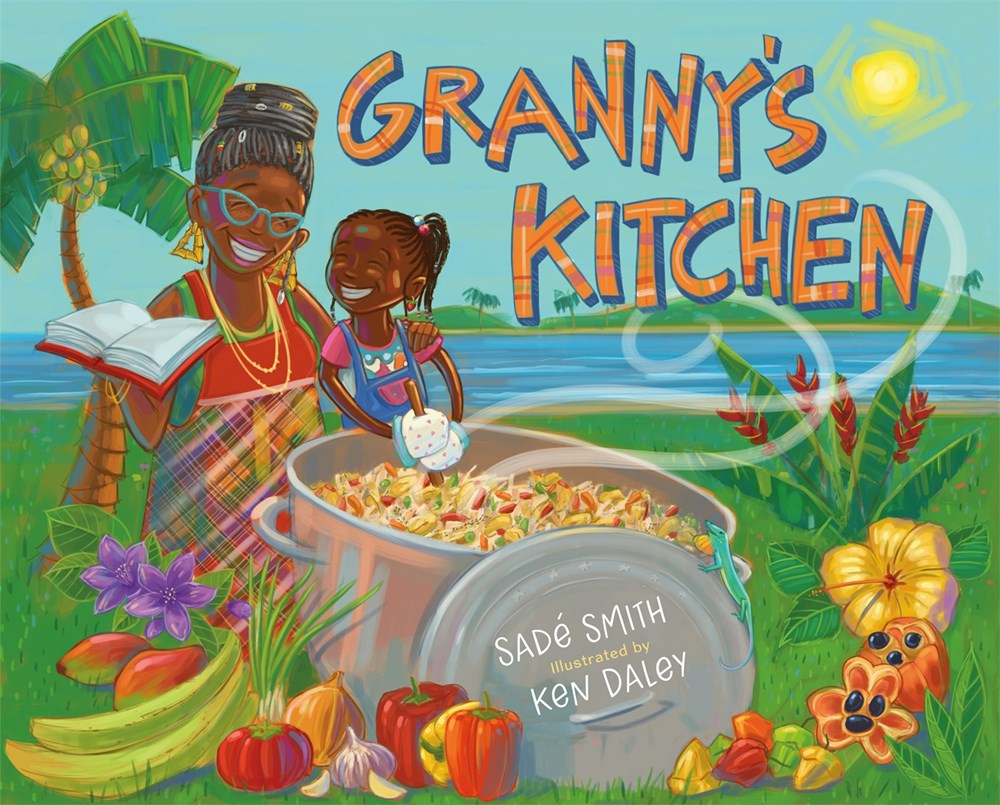
Granny's Kitchen: A Jamaican Story of Food and Family
by Sadé Smith
Sold out*ships in 7-10 business days
A little girl learns Jamaican recipes and self-confidence from her Granny in this warm, sweet picture book debut.
Shelly-Ann lives with her Granny on the beautiful island of Jamaica. When Shelly-Ann becomes hungry, she asks her Granny for something to eat. Granny tells her “Gyal, you betta can cook!” and teaches Shelly-Ann how to get in touch with her Jamaican roots through the process of cooking.
As Shelly-Ann tries each recipe, everything goes wrong. But when Granny is too tired to cook one morning, Shelly-Ann will have to find the courage to try one more time and prepare the perfect Jamaican breakfast.
Accompanied by Ken Daley's vibrant, sun-soaked artwork, Sadé Smith's debut picture book Granny's Kitchen is the perfect readaloud for budding chefs everywhere. -
How We Do It: Black Writers on Craft, Practice, and Skill
![How We Do It: Black Writers on Craft, Practice, and Skill]()
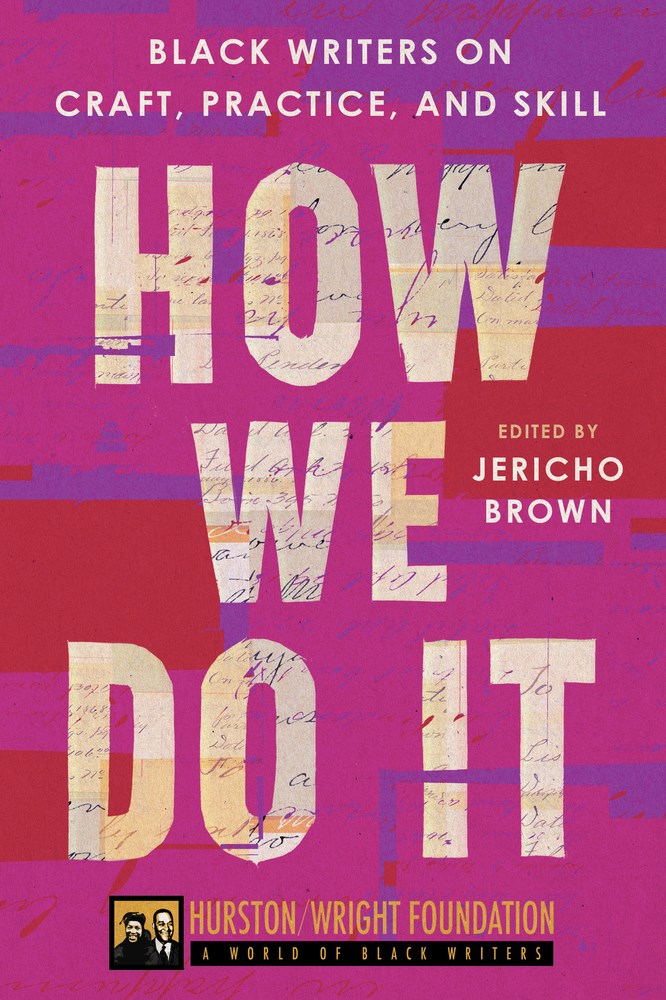
How We Do It: Black Writers on Craft, Practice, and Skill
by Jericho Brown
Sold out*Ships in 7-10 business days*
More than 30 acclaimed writers—including diverse voices such as Nikki Giovanni, David Omotosho Black, Natasha Trethewey, Barry Jenkins, Jacqueline Woodson, Tayari Jones, and Angela Flournoy—reflect on their experience and expertise in this unique book on the craft of writing that focuses on the Black creative spirit.
How We Do It is an anthology curated by Black writers for the creation and proliferation of Black thought. While a creator’s ethnicity does not solely define them, it is inherently part of who they are and how they interpret the world.
For centuries, Black creators have utilized oral and written storytelling traditions in crafting their art. But how does one begin the process of constructing a poem or story or character? How do Black writers, when faced with questions of “authenticity,” dive deep into the essence of their lives and work to find the inherent truth? How We Do It addresses these profound questions. Not a traditional “how to” writing handbook, it seeks to guide rather than dictate and to validate the complexity and range of styles—and even how one thinks about craft itself.
An outstanding list of contributors offer their insights on a range of important topics. Pulitzer Prize winner Jericho Brown explores the lives personified in poetry, while Pulitzer Prize winner Natasha Trethewey explores decolonizing enduring metaphors. National Book Award finalist Angela Flournoy illuminates the pain of grief in all forms and how it can be revealed in the act of creation, and iconoclast Nikki Giovanni offers an elegiac declaration on language.
New and previously published essays and interviews provide encouragement, examples, and templates, and offer lessons on everything from poetic form and plotting a story to the lessons inherent in the act of writing, trial & error, and finding inspiration in the works of others, including those of Toni Morrison, Shakespeare, and Edward P. Jones. A handbook and a reference tool, How We Do It is a thoughtful and welcome tool that offers direction to help Black artists establish their own creative practice while celebrating and widening the scope of the Black writer’s role in art, history, and culture.
Contributors include David Omotosho Black, Jericho Brown, Breena Clark, Rita Dove, Camille T. Dungy, W. Ralph Eubanks, Curdella Forbes, Angela Flournoy, Ernest Gaines, Nikki Giovanni, Marita Golden, Ravi Howard, Terrance Hayes, Mitchell S. Jackson, Barry Jenkins, Charles S. Johnson, Tayari Jones, Jamaica Kincaid, Tony Medina, E. Ethelbert Miller, Elizabeth Nunez, Carl Phillips, Jewell Parker Rhodes, Rion Amilcar Scott, Evie Shockley, Natasha Trethewey, Frank X Walker, Afaa M. Weaver, Crystal Wilkinson, Jacqueline Woodson, Tiphanie Yanique.


- ← Previous
- page 1
- page 2
Stay Informed. We're building a community committed to celebrating Black authors + artisans. Subscribe to keep up with all things Kindred Stories.