
Search results: 36 results for “by richard wright”
Not finding what you're looking for? Check out our shop on bookshop.org to order and still support us ♥
36 results
-
Within the Circle: An Anthology of African American Literary Criticism from the Harlem Renaissance to the Present
![Within the Circle: An Anthology of African American Literary Criticism from the Harlem Renaissance to the Present cover image]()

Within the Circle: An Anthology of African American Literary Criticism from the Harlem Renaissance to the Present
Angelyn Mitchell
$39.95Within the Circle is the first anthology to present the entire spectrum of twentieth-century African American literary and cultural criticism. It begins with the Harlem Renaissance, continues through civil rights, the Black Arts Movement, and on into contemporary debates of poststructuralist and black feminist theory. Drawing on a quote from Frederick Douglass for the title of this book, Angelyn Mitchell explains in her introduction the importance for those "within the circle" of African American literature to examine their own works and to engage this critical canon.
The essays in this collection—many of which are not widely available today—either initiated or gave critical definition to specific periods or movements of African American literature. They address issues such as integration, separatism, political action, black nationalism, Afrocentricity, black feminism, as well as the role of art, the artist, the critic, and the audience. With selections from Langston Hughes, Sterling Brown, W. E. B. DuBois, Zora Neale Hurston, Richard Wright, James Baldwin, Toni Morrison, Barbara Smith, Alice Walker, Henry Louis Gates, Jr., and many others, this definitive collection provides a dynamic model of the cultural, ideological, historical, and aesthetic considerations in African American literature and literary criticism.
A major contribution to the study of African American literature, this volume will serve as a foundation for future work by students and scholars. Its importance will be recognized by all those interested in modern literary theory as well as general readers concerned with the African American experience.Selections by (partial list): Houston A. Baker, Jr., James Baldwin, Sterling Brown, Barbara Christian, W. E. B. DuBois, Ralph Ellison, LeRoi Jones, Sarah Webster Fabio, Henry Louis Gates, Jr., W. Lawrence Hogue, Langston Hughes, Zora Neale Hurston, Alain Locke, Deborah E. McDowell, Toni Morrison, J. Saunders Redding, George Schuyler, Barbara Smith, Valerie Smith, Hortense J. Spillers, Robert B. Stepto, Alice Walker, Margaret Walker, Mary Helen Washington, Richard Wright
-
The Man Who Cried I Am: A Novel
![The Man Who Cried I Am: A Novel]()
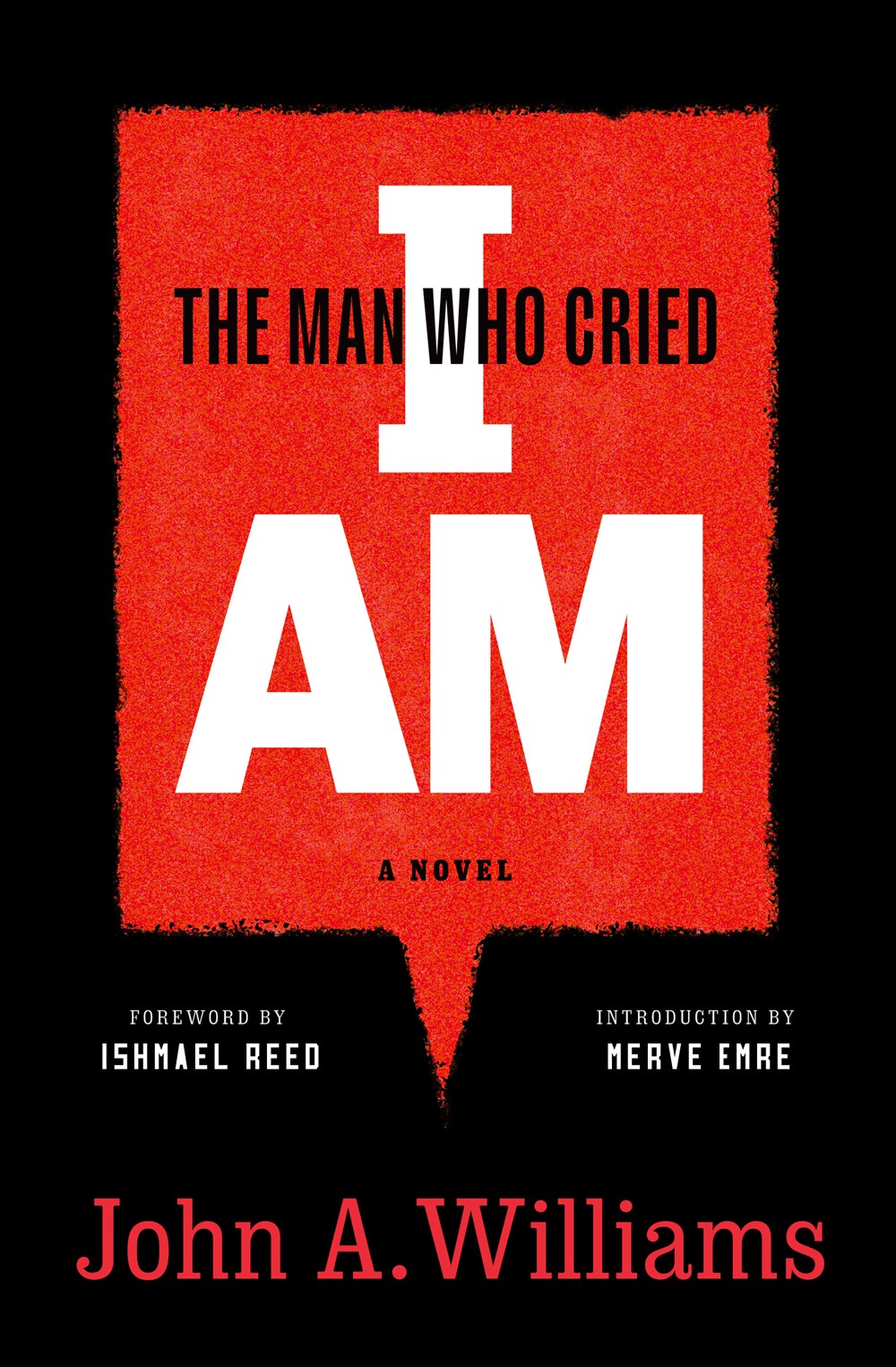
The Man Who Cried I Am: A Novel
by John A. Williams
$19.99Rediscover the sensational 1967 literary thriller that captures the bitter struggles of postwar Black intellectuals and artists
With a foreword by Ishmael Reed and a new introduction by Merve Emre about how this explosive novel laid bare America's racial fault lines
Max Reddick, a novelist, journalist, and presidential speechwriter, has spent his career struggling against the riptide of race in America. Now terminally ill, he has nothing left to lose. An expat for many years, Max returns to Europe one last time to settle an old debt with his estranged Dutch wife, Margrit, and to attend the Paris funeral of his friend, rival, and mentor Harry Ames, a character loosely modelled on Richard Wright.
In Amsterdam, among Harry’s papers, Max uncovers explosive secret government documents outlining “King Alfred,” a plan to be implemented in the event of widespread racial unrest and aiming “to terminate, once and for all, the Minority threat to the whole of the American society.” Realizing that Harry has been assassinated, Max must risk everything to get the documents to the one man who can help.
Greeted as a masterpiece when it was published in 1967, The Man Who Cried I Am stakes out a range of experience rarely seen in American fiction: from the life of a Black GI to the ferment of postcolonial Africa to an insider’s view of Washington politics in the era of segregation and the Civil Rights Movement, including fictionalized portraits of Martin Luther King, Jr., and Malcolm X. John A. Williams and his lost classic are overdue for rediscovery.
Few novels have so deliberately blurred the boundaries between fiction and reality as The Man Who Cried I Am (1967), and many of its early readers assumed the King Alfred plan was real. In her introduction, Merve Emre examines the gonzo marketing plan behind the novel that fueled this confusion and prompted an FBI investigation. This deluxe paperback also includes a new foreword by novelist Ishmael Reed. -
On Witness and Respair: Essays
![On Witness and Respair: Essays cover image]()

On Witness and Respair: Essays
$29.00The collected creative nonfiction of a singular American writer, Jesmyn Ward, including widely shared classics, three never-before-published speeches, and an introductory essay.
Respair (noun, obsolete), fresh hope after despair.
From the two-time National Book Award winner and New York Times bestselling author Jesmyn Ward, this collection of essays documents more than a decade of work in the life of a singular writer often lauded as “the heir apparent to Toni Morrison” (LitHub). Beginning with her upbringing in a multigenerational household in rural Mississippi, the cradle of both her youth and her gift for storytelling, Ward brings her keen wisdom and hauntingly lyrical prose to a range of topics, following in her grandmother Dorothy’s footsteps when she promises always to “Tell it straight. Tell it all.”
True to her word, in these pages Ward contemplates the writers and novels of her youth and adulthood—the transformative power of discovering Octavia Butler as a twenty-something, the mirror that Richard Wright’s novels held up to her own childhood, and of course, her lifelong love for Toni Morrison. Ward ruminates on her approach to both fiction and life, reflecting on the power of the novel, how to raise a Black son in an era of rising divisiveness and cruelty, as well as her own personal tragedies—including the titular essay of the collection, which tells the story of her partner’s sudden death on the eve of the COVID-19 epidemic. Every bit as piercing and moving as her fiction, On Witness and Respair is a testament to Ward’s powers as “one of America’s finest living writers” (San Francisco Chronicle) and is a monument to hope, beauty, and personal and collective resilience.
-
Notes of a Native Son
![Notes of a Native Son]()
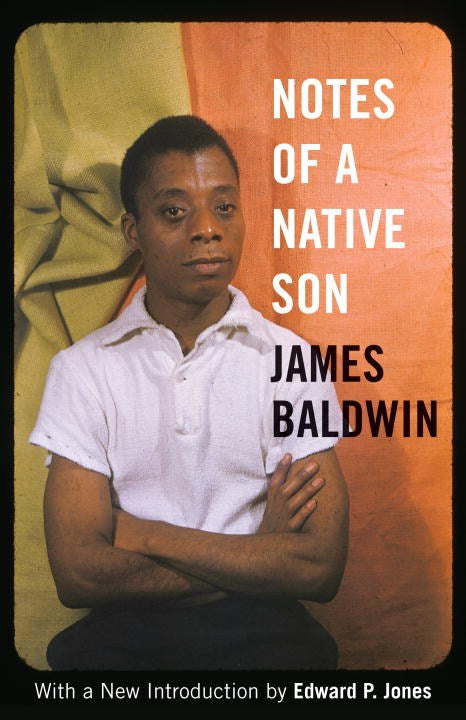
Notes of a Native Son
by James Baldwin
$16.00#26 on The Guardian's list of 100 best nonfiction books of all time, the essays explore what it means to be Black in America
In an age of Black Lives Matter, James Baldwin's essays on life in Harlem, the protest novel, movies, and African Americans abroad are as powerful today as when they were first written. With films like I Am Not Your Negro and the forthcoming If Beale Street Could Talk bringing renewed interest to Baldwin's life and work, Notes of a Native Son serves as a valuable introduction.Written during the 1940s and early 1950s, when Baldwin was only in his twenties, the essays collected in Notes of a Native Son capture a view of black life and black thought at the dawn of the civil rights movement and as the movement slowly gained strength through the words of one of the most captivating essayists and foremost intellectuals of that era. Writing as an artist, activist, and social critic, Baldwin probes the complex condition of being black in America. With a keen eye, he examines everything from the significance of the protest novel to the motives and circumstances of the many black expatriates of the time, from his home in “The Harlem Ghetto” to a sobering “Journey to Atlanta.”
Notes of a Native Son inaugurated Baldwin as one of the leading interpreters of the dramatic social changes erupting in the United States in the twentieth century, and many of his observations have proven almost prophetic. His criticism on topics such as the paternalism of white progressives or on his own friend Richard Wright’s work is pointed and unabashed. He was also one of the few writing on race at the time who addressed the issue with a powerful mixture of outrage at the gross physical and political violence against black citizens and measured understanding of their oppressors, which helped awaken a white audience to the injustices under their noses. Naturally, this combination of brazen criticism and unconventional empathy for white readers won Baldwin as much condemnation as praise.
Notes is the book that established Baldwin’s voice as a social critic, and it remains one of his most admired works. The essays collected here create a cohesive sketch of black America and reveal an intimate portrait of Baldwin’s own search for identity as an artist, as a black man, and as an American. -
Manchild in the Promised Land
![Manchild in the Promised Land cover image]()

Manchild in the Promised Land
$20.00With more than two million copies in print, Manchild in the Promised Land is one of the most remarkable autobiographies of our time—the definitive account of African-American youth in Harlem of the 1940s and 1950s, and a seminal work of modern literature.
Published during a literary era marked by the ascendance of black writers such as Richard Wright, Ralph Ellison, James Baldwin, and Alex Haley, this thinly fictionalized account of Claude Brown’s childhood as a hardened, streetwise criminal trying to survive the toughest streets of Harlem has been heralded as the definitive account of everyday life for the first generation of African Americans raised in the Northern ghettos of the 1940s and 1950s.
When the book was first published in 1965, it was praised for its realistic portrayal of Harlem—the children, young people, hardworking parents; the hustlers, drug dealers, prostitutes, and numbers runners; the police; the violence, sex, and humor.
The book continues to resonate generations later, not only because of its fierce and dignified anger, not only because the struggles of urban youth are as deeply felt today as they were in Brown’s time, but also because of its inspiring message. Now with an introduction by Nathan McCall, here is the story about the one who “made it,” the boy who kept landing on his feet and grew up to become a man.
-
Middle Passages: African American Journeys to Africa, 1787-2005
![Middle Passages: African American Journeys to Africa, 1787-2005 cover image]()

Middle Passages: African American Journeys to Africa, 1787-2005
James T. Campbell
$30.00Penguin announces a prestigious new series under presiding editor Arthur Schlesinger, Jr.
Many works of history deal with the journeys of blacks in bondage from Africa to the United States along the "middle passage," but there is also a rich and little examined history of African Americans traveling in the opposite direction. In Middle Passages, award-winning historian James T. Campbell vividly recounts more than two centuries of African American journeys to Africa, including the experiences of such extraordinary figures as Langston Hughes, W.E.B. DuBois, Richard Wright, Malcolm X, and Maya Angelou. A truly groundbreaking work, Middle Passages offers a unique perspective on African Americans' ever-evolving relationship with their ancestral homeland, as well as their complex, often painful relationship with the United States.
-
Beyond the Shores: A History of African Americans Abroad
![Book cover image]()
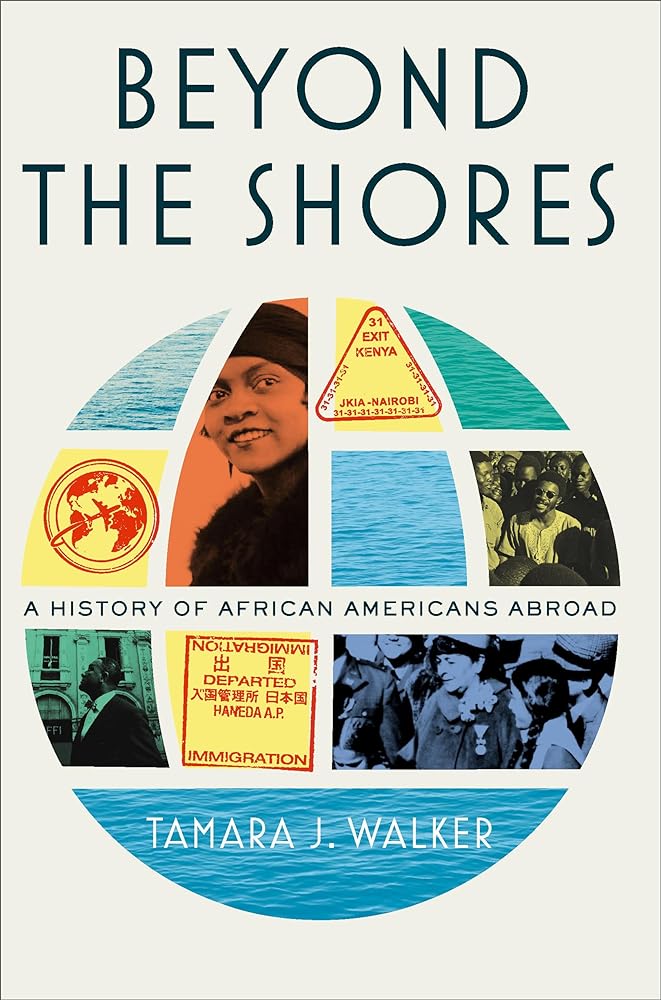
Beyond the Shores: A History of African Americans Abroad
Tamara J. Walker
$28.00*ships in 7-10 business days*
New York Times Book Review Editors’ Choice • An award-winning author charts the poignant global journeys of African Americans as she explores her own transatlantic family odyssey in Beyond the Shores, a powerful history of living abroad while Black.
“By exploring the life of Black expats, creatives, and activists, Beyond the Shores enhances the stories of migration to reveal how race is lived in the United States and abroad.”—Marcia Chatelain, Pulitzer Prize–winning author of South Side GirlsPart historical exploration, part travel memoir, Beyond the Shores reveals poignant histories of a diverse group of African Americans who have left the United States over the course of the past century. Together, the interwoven stories highlight African Americans’ complicated relationship to the United States and the world at large.
Beyond the Shores is not just about where African Americans stayed or where they ate when they traveled but also about why they left in the first place and how they were treated once they reached their destinations. Drawing on years of research, Dr. Tamara J. Walker chronicles their experiences in atmospheric detail, taking readers from well-known capital cities to more unusual destinations like Yangiyul, Uzbekistan, and Kabondo, Kenya. She follows Florence Mills, the would-be Josephine Baker of her day, in Paris, and Richard Wright, the author turned actor and filmmaker, in Buenos Aires. Throughout Beyond the Shores, she relays tender stories of adventurous travelers, including a group of gifted Black crop scientists in the 1930s, a housewife searching for purpose in the 1950s, a Peace Corps volunteer discovering his identity in the 1970s, and her own grandfather, who, after losing his eye fighting in World War II and returning to a country that showed no signs of honoring his sacrifice, set out with his wife and children on a circuitous journey that sent them back and forth across the Atlantic. Tying these tales together is Walker’s personal account of her family’s, and her own, experiences abroad—in France, Brazil, Argentina, Austria, and beyond.
By sharing the accounts of those who escaped the racism of the United States to try their hands at life abroad, Beyond the Shores shines a light on the meaning of home and the search for a better life. -
Beetlecreek: A Novel
![Beetlecreek: A Novel cover image]()

Beetlecreek: A Novel
William Demby
$17.00After several years of silence and seclusion in Beetlecreek's black quarter, a carnival worker named Bill Trapp befriends Johnny Johnson, a Pittsburgh teenager living with relatives in Beetlecreek. Bill is white. Johnny is black. Both are searching for acceptance, something that will give meaning to their lives. Bill tries to find it through good will in the community. Johnny finds it in the Nightriders, a local gang. David Diggs, the boy's dispirited uncle, aspires to be an artist but has to settle for sign painting. David and Johnny's new friendship with Bill kindles hope that their lives will get better. David's marriage has failed; his wife's shallow faith serves as her outlet from racial and financial oppression. David's unhappy routine is broken by Edith Johnson's return to Beetlecreek, but this relationship will be no better than his loveless marriage. Bill's attempts to unify black and white children with a community picnic is a disaster. A rumor scapegoats him as a child molester, and Beetlecreek is titillated by the imagined crimes.
This novel portraying race relations in a remote West Virginia town has been termed an existential classic. It would be hard, said The New Yorker, to give Mr. Demby too much praise for the skill with which he has maneuvered the relationships in this book. During the 1960s Arna Bontemps wrote, "Demby's troubled townsfolk of the West Virginia mining region foreshadow present dilemmas. The pressing and resisting social forces in this season of our discontent and the fatal paralysis of those of us unable or unwilling to act are clearly anticipated with the dependable second sight of a true artist."
First published in 1950, Beetlecreek stands as a moving condemnation of provincialism and fundamentalism. Both a critique of racial hypocrisy and a new direction for the African-American novel, it occupies fresh territory that is neither the ghetto realism of Richard Wright nor the ironic modernism of Ralph Ellison. Even after fifty years, more or less, William Demby said in 1998, "It still seems to me that Beetlecreek is about the absence of symmetry in human affairs, the imperfectibility of justice the tragic inevitability of mankind's inhumanity to mankind."
William Demby is the author of The Catacombs and Love Black. He lives in Sag Harbor, N. Y. James C. Hall, a professor of African-American Studies and English at the University of Illinois, Chicago, is the author of the forthcoming book, Mercy, Mercy, African-American Culture and the American Sixties, and editor of Langston A Collection of Poems.
-
Sula
![Sula]()

Sula
by Toni Morrison
$17.00This rich and moving novel traces the lives of two black heroines from their close-knit childhood in a small Ohio town, through their sharply divergent paths of womanhood, to their ultimate confrontation and reconciliation.
Nel Wright has chosen to stay in the place where she was born, to marry, raise a family, and become a pillar of the black community. Sula Peace has rejected the life Nel has embraced, escaping to college, and submerging herself in city life. When she returns to her roots, it is as a rebel and a wanton seductress. Eventually, both women must face the consequences of their choices. Together, they create an unforgettable portrait of what it means and costs to be a black woman in America. -
The Black Atlantic: Modernity and Double-Consciousness
![The Black Atlantic: Modernity and Double-Consciousness cover image]()

The Black Atlantic: Modernity and Double-Consciousness
$34.00Afrocentrism. Eurocentrism. Caribbean Studies. British Studies. To the forces of cultural nationalism hunkered down in their camps, this bold hook sounds a liberating call. There is, Paul Gilroy tells us, a culture that is not specifically African, American, Caribbean, or British, but all of these at once, a black Atlantic culture whose themes and techniques transcend ethnicity and nationality to produce something new and, until now, unremarked. Challenging the practices and assumptions of cultural studies, The Black Atlantic also complicates and enriches our understanding of modernism.
Debates about postmodernism have cast an unfashionable pall over questions of historical periodization. Gilroy bucks this trend by arguing that the development of black culture in the Americas arid Europe is a historical experience which can be called modern for a number of clear and specific reasons. For Hegel, the dialectic of master and slave was integral to modernity, and Gilroy considers the implications of this idea for a transatlantic culture. In search of a poetics reflecting the politics and history of this culture, he takes us on a transatlantic tour of the music that, for centuries, has transmitted racial messages and feeling around the world, from the Jubilee Singers in the nineteenth century to Jimi Hendrix to rap. He also explores this internationalism as it is manifested in black writing from the “double consciousness” of W. E. B. Du Bois to the “double vision” of Richard Wright to the compelling voice of Toni Morrison.
In a final tour de force, Gilroy exposes the shared contours of black and Jewish concepts of diaspora in order both to establish a theoretical basis for healing rifts between blacks and Jews in contemporary culture and to further define the central theme of his book: that blacks have shaped a nationalism, if not a nation, within the shared culture of the black Atlantic.
-
Blues Poems (Everyman's Library Pocket Poets Series)
![Blues Poems (Everyman's Library Pocket Poets Series) cover image]()

Blues Poems (Everyman's Library Pocket Poets Series)
$20.00In this gorgeous hardcover anthology—the first devoted exclusively to blues poems—a wide array of poets pay tribute to the form of the blues and offer testimony to its lasting power. Edited by award–winning poet Kevin Young.
Born in African American work songs, field hollers, and the powerful legacy of the spirituals, the blues traveled the country from the Mississippi delta to “Sweet Home Chicago,” forming the backbone of American music.
The blues have left an indelible mark on the work of a diverse range of poets: from “The Weary Blues” by Langston Hughes and “Funeral Blues” by W. H. Auden, to “Blues on Yellow” by Marilyn Chin and “Reservation Blues” by Sherman Alexie. Here are blues-influenced and blues-inflected poems from, among others, Gwendolyn Brooks, Allen Ginsberg, June Jordan, Richard Wright, Nikki Giovanni, Charles Wright, Yusef Komunyakaa, and Cornelius Eady. And here, too, are classic song lyrics—poems in their own right—from Bessie Smith, Robert Johnson, Ma Rainey, and Muddy Waters.
The rich emotional palette of the blues is fully represented here in verse that pays tribute to the heart and humor of the music, and in poems that swing with its history and hard-bitten hope.
Everyman's Library pursues the highest production standards, printing on acid-free cream-colored paper, with full-cloth cases with two-color foil stamping, decorative endpapers, silk ribbon markers, European-style half-round spines, and a full-color illustrated jacket.
-
When He’s Not There
![When He’s Not There]()

When He’s Not There
Zee Reneè
$15.00Invasive. Possessive. Assertive. Truce Wright is an ambitious man on a mission. Nothing in life is off limits to him. Whatever he wants, he gets….even if it’s someone else’s.
Displeased. Submissive. Captivating. Sanai Lee is a risk taker. Her boldness creates an exit for fear. What she didn’t know she needed comes in the form of a Truce.
What happens when you follow your heart and let him come over when your man is not there?
Welcome to Indigo Falls…


- ← Previous
- page 1
- page 2
- page 3
- Next →
Stay Informed. We're building a community committed to celebrating Black authors + artisans. Subscribe to keep up with all things Kindred Stories.