
Search results: 628 results for “W.E.B. Du Bois Movement School for Abolition and Reconstruction”
Not finding what you're looking for? Check out our shop on bookshop.org to order and still support us ♥
628 results
-
We Want to Do More Than Survive: Abolitionist Teaching and the Pursuit of Educational Freedom by Bettina L. Love
![We Want to Do More Than Survive: Abolitionist Teaching and the Pursuit of Educational Freedom by Bettina L. Love]()
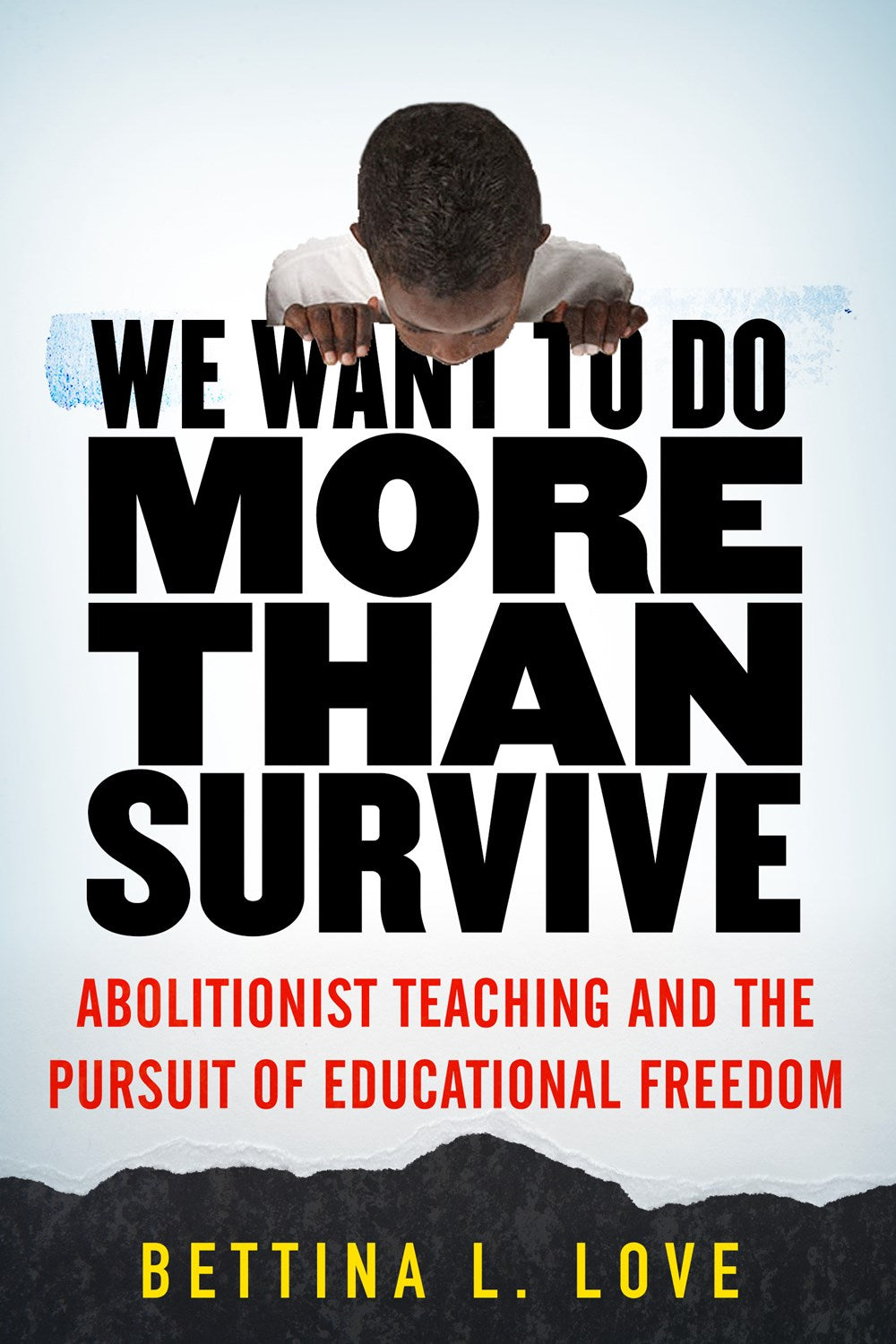
We Want to Do More Than Survive: Abolitionist Teaching and the Pursuit of Educational Freedom by Bettina L. Love
$17.95Drawing on personal stories, research, and historical events, an esteemed educator offers a vision of educational justice inspired by the rebellious spirit and methods of abolitionists.
Drawing on her life’s work of teaching and researching in urban schools, Bettina Love persuasively argues that educators must teach students about racial violence, oppression, and how to make sustainable change in their communities through radical civic initiatives and movements. She argues that the US educational system is maintained by and profits from the suffering of children of color. Instead of trying to repair a flawed system, educational reformers offer survival tactics in the forms of test-taking skills, acronyms, grit labs, and character education, which Love calls the educational survival complex.
To dismantle the educational survival complex and to achieve educational freedom—not merely reform—teachers, parents, and community leaders must approach education with the imagination, determination, boldness, and urgency of an abolitionist. Following in the tradition of activists like Ella Baker, Bayard Rustin, and Fannie Lou Hamer, We Want to Do More Than Survive introduces an alternative to traditional modes of educational reform and expands our ideas of civic engagement and intersectional justice. -
The Groundings With My Brothers
![The Groundings With My Brothers cover image]()

The Groundings With My Brothers
$21.95A striking book on the international operations of racism and the global meaning of Black Power
In his short life, the Guyanese intellectual Walter Rodney emerged as one of the leading thinkers and activists of the anticolonial revolution, leading movements in North America, South America, the African continent, and the Caribbean. In each locale, Rodney found himself a lightning rod for working class Black Power. His deportation catalyzed 20th century Jamaica's most significant rebellion, the 1968 Rodney riots, and his scholarship trained a generation how to think politics at an international scale. In 1980, shortly after founding of the Working People's Alliance in Guyana, the 38-year-old Rodney would be assassinated.
In this classic work published in the heady days of anti-colonial revolution, Groundings with My Brothers follows the global circulation of emancipatory ideas, from the black students of North America to the Rasta counter-culture of Jamaica and beyond. The book is striking in its simultaneous ability to survey the wide and heterogenous international context while remaining anchored in grassroots politics, as Rodney offers us first-hand accounts of mass movement organizing. Having inspired a generation of revolutionaries, this new edition will re-introduce the book to a new political landscape that it helped shape, with reflections from leading scholar-activists such as Carole Boyce Davies -
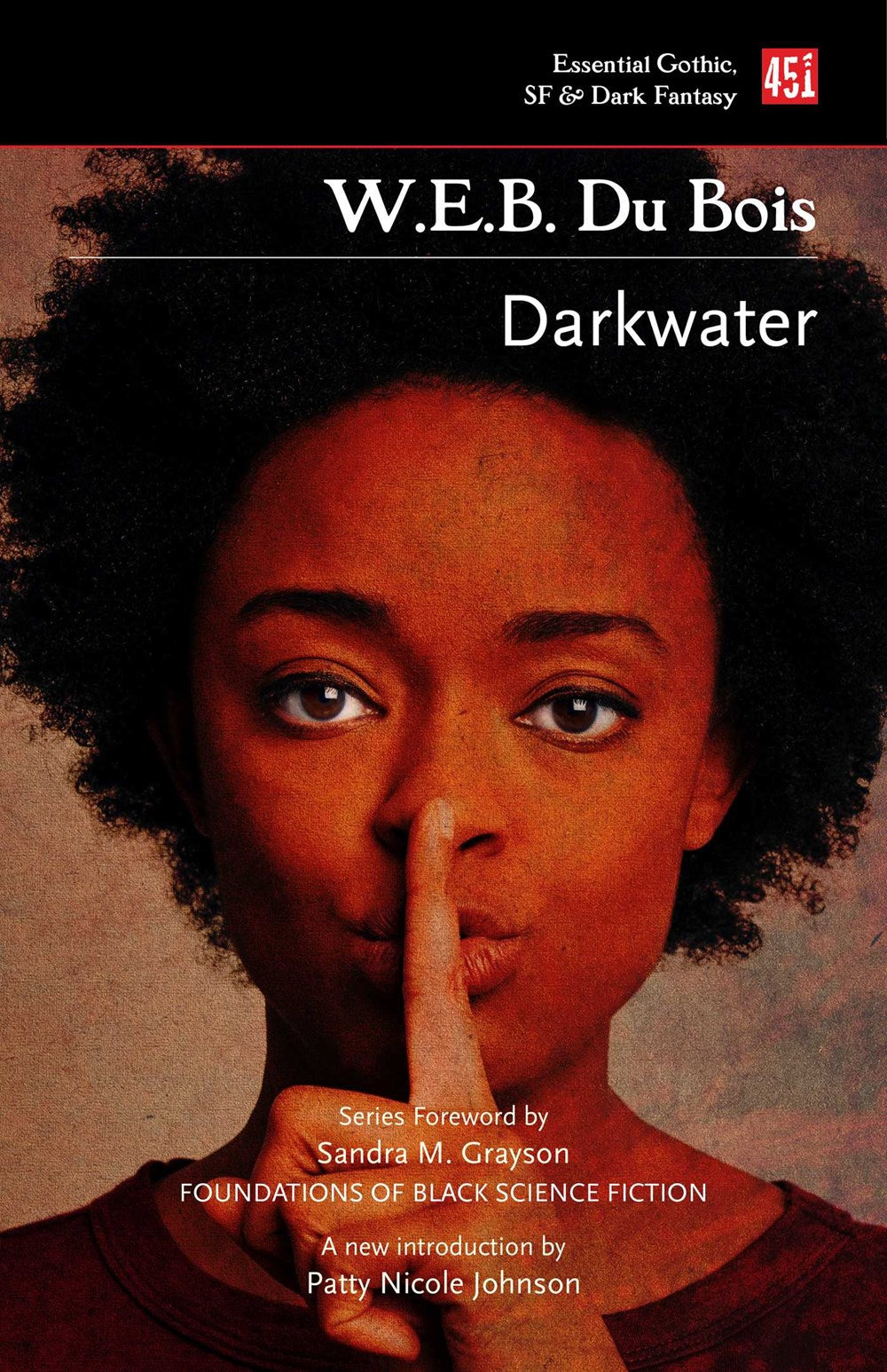
Darkwater
![Darkwater]()
Darkwater
by W.E.B. Du Bois
$10.99Du Bois' foundational investigation of social justice and civil rights by means of essay, poetry, prayer and short science fiction.
A new edition with a new introduction, Du Bois' radical text is a rare statement of values formed around the vision of a collective life, where the humanity of black women and men is treated with dignity and equality. He expresses his themes through a series of literary forms: polemic essay, spirituals, poetry and short science fiction, each of which forms a pulse of social justice from a time when a true understanding of intersections between poverty, work, racism and feminism was rare. A new title in the Foundations of Black Science Fiction series. -
African American Environmental Thought: Foundations (American Political Thought)
![African American Environmental Thought: Foundations (American Political Thought) cover image]()

African American Environmental Thought: Foundations (American Political Thought)
$29.99Choice Outstanding Book
African American intellectual thought has long provided a touchstone for national politics and civil rights, but, as Kimberly Smith reveals, it also has much to say about our relationship to nature. In this first singleauthored book to link African American and environmental studies, Smith uncovers a rich tradition stretching from the abolition movement through the Harlem Renaissance, demonstrating that black Americans have been far from indifferent to environmental concerns.
Beginning with environmental critiques of slave agriculture in the early nineteenth century and evolving through critical engagements with scientific racism, artistic primitivism, pragmatism, and twentiethcentury urban reform, Smith highlights the continuity of twentiethcentury black politics with earlier efforts by slaves and freedmen to possess the land. She examines the works of such canonical figures as Frederick Douglass, Booker T. Washington, W. E. B. Du Bois, and Alain Locke, all of whom wrote forcefully about how slavery and racial oppression affected black Americans' relationship to the environment
Smith's analysis focuses on the importance of freedom in humans' relationship with nature. According to black theorists, the denial of freedom can distort one's relationship to the natural world, impairing stewardship and alienating one from the land. Her pathbreaking study offers the first linkage of the early conservation movement to black history, the first detailed description of black agrarianism, and the first analysis of scientific racism as an environmental theory. It also offers a new way to conceptualize black politics by bringing into view its environmental dimension, as well as a normative environmental theory grounded in pragmatism and aimed at identifying the social conditions for environmental virtue.
Smith's work offers a new approach to established writers and thinkers and shows that they justly deserve a place in the canon of American environmental thought. African American Environmental Thought enriches our understanding of black politics and environmental history, and of environmental theory in general. Because slavery and racism have shaped the meaning of the American landscape, this body of thought offers us fresh conceptual resources by which we can make better sense of our world.
-
The New Negro: A History in Documents, 1887–1937
![The New Negro: A History in Documents, 1887–1937 cover image]()

The New Negro: A History in Documents, 1887–1937
Martha H. Patterson
$39.95An authoritative anthology tracing the history of one of the most important concepts Black people drew on to challenge the brutal, totalizing system of Jim Crow racism
This book brings together a wealth of readings on the metaphor of the “New Negro,” charting how generations of thinkers debated its meaning and seized on its potency to stake out an astonishingly broad and sometimes contradictory range of ideological positions. It features dozens of newly unearthed pieces by major figures such as W. E. B. Du Bois, Charles S. Johnson, and Drusilla Dunjee Houston as well as writings from Cuba, the US Virgin Islands, Dominica, France, Sierra Leone, South Africa, colonial Zimbabwe, and the United States. Demonstrating how this evocative and supremely protean concept predates its popularization in Alain Locke’s 1925 anthology of the same name, The New Negro takes readers from its beginnings as a response to Henry Grady’s famous “New South” address in 1886 through the Harlem Renaissance and the New Deal.
Opening a fascinating window into a largely unexplored chapter in African American, Afro-Latin American, and African intellectual history, this groundbreaking anthology includes writings by Gwendolyn Bennett, Marita Bonner, John Edward Bruce (“Bruce Grit”), Nannie Helen Burroughs, Charles W. Chesnutt, James Bertram Clarke (“José Clarana,” “Jaime Gil”), Anna Julia Cooper, Alexander Crummell, Countee Cullen, Alice Dunbar-Nelson, Marcus Garvey, Hubert Harrison, Langston Hughes, Zora Neale Hurston, D. Hamilton Jackson, Fenton Johnson, Claude McKay, Oscar Micheaux, Jeanne “Jane” Nardal, Jean Toomer, Gustavo Urrutia, Booker T. Washington, Dorothy West, Ruth Whitehead Whaley, Fannie Barrier Williams, Carter G. Woodson, and a host of others.
-
The Second Emancipation: Nkrumah, Pan-Africanism, and Global Blackness at High Tide
![The Second Emancipation: Nkrumah, Pan-Africanism, and Global Blackness at High Tide cover image]()

The Second Emancipation: Nkrumah, Pan-Africanism, and Global Blackness at High Tide
Howard W. French
from $22.99Named one of the Most Anticipated Books of 2025 by Foreign Policy
“Howard French’s The Second Emancipation stands the second half of the last century on its geopolitical head.” ―David Levering Lewis, winner of the Pulitzer Prize
From the acclaimed author of Born in Blackness comes an extraordinary account of Africa’s liberation from colonial oppression, a work that fundamentally reshapes our understanding of modern history.
A work of epic dimension that recasts the liberation of twentieth-century Africa through the lens of revolutionary leader Kwame Nkrumah.
The Second Emancipation, the second work in a trilogy from best-selling author Howard W. French about Africa’s pivotal role in shaping world history, underscores Adam Hochschild’s contention that French is a “modern-day Copernicus.” The title―referring to a brief period beginning in 1957 when dozens of African colonies gained their freedom―positions this liberation at the center of a “movement of global Blackness,” with one charismatic leader, Kwame Nkrumah (1909–1972), at its head.
That so few people today know about Nkrumah is an omission that French demonstrates is “typical of our deliberate neglect of Africa’s enormous role in the birth of the modern world.” Determined to re-create Nkrumah’s life as “an epic twentieth-century story,” The Second Emancipation begins with his impoverished, unheralded birth in the far-western region of Ghana’s Gold Coast. But blessed with a deep curiosity, a young Nkrumah pursued an overseas education in the United States. Nowhere is French’s consummate style more vivid than in Nkrumah’s early years in Depression-era America, especially in his mesmerizing portrait of a culturally effervescent Harlem that Nkrumah encountered in 1935 before heading to college. During his student years in Pennsylvania and later as an activist in London, Nkrumah became steeped in a renowned international Black intellectual milieu―including Du Bois, Garvey, Fanon, Padmore, and C.L.R. James, who called him “one of the greatest political leaders of our century”―and formed an ideology that readied him for an extraordinarily swift and peaceful rise to power upon his return to Ghana in 1947.
Four years later, in a political landslide he engineered while imprisoned, Nkrumah stunned Britain by winning the first general election under universal franchise in Africa, becoming Ghana’s first independent prime minister in 1957. As leader of a sovereign nation, Nkrumah wielded his influence to promote the liberation of the entire continent, pushing unity as the only pathway to recover from the damages of enslavement and subjugation. By the time national military and police forces, aided by the CIA, overthrew him in 1966, Nkrumah’s radical belief in pan-African liberation had both galvanized dozens of nascent African states and fired a global agenda of Black power.
In its dramatic recasting of the American civil rights story and in its tragic depiction of a continent that once exuded all the promise of a newly won freedom, The Second Emancipation becomes a generational work that positions Africa at the forefront of modern-day history.
16 pages of illustrations; 3 maps
-
Dangerous Learning: The South's Long War on Black Literacy
![Dangerous Learning: The South's Long War on Black Literacy cover image]()
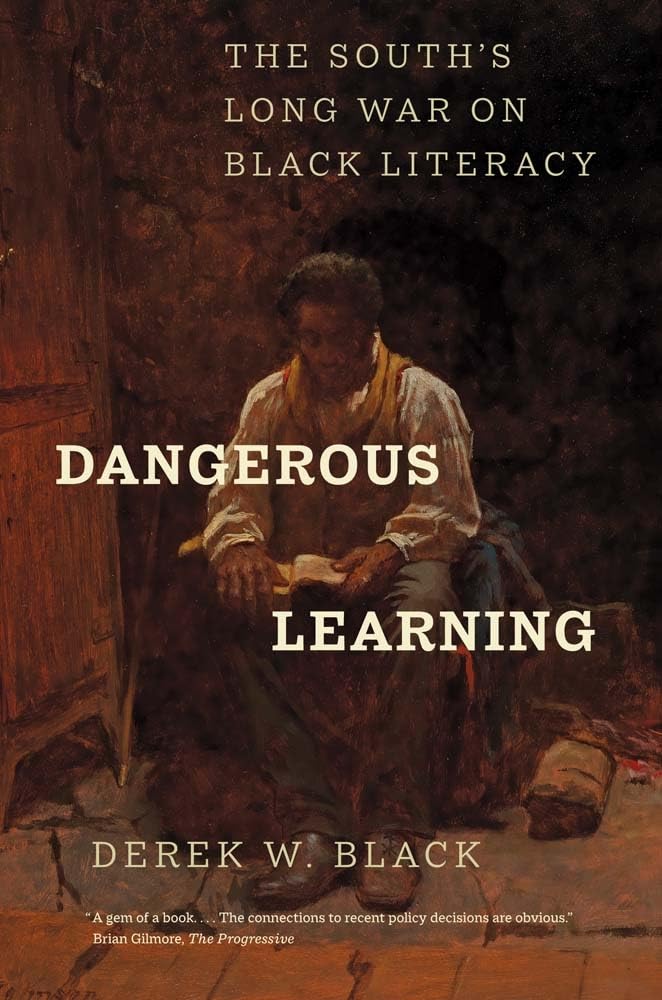
Dangerous Learning: The South's Long War on Black Literacy
$24.00The enduring legacy of the nineteenth-century struggle for Black literacy in the American South
Few have ever valued literacy as much as the enslaved Black people of the American South. For them, it was more than a means to a better life; it was a gateway to freedom and, in some instances, a tool for inspiring revolt. And few governments tried harder to suppress literacy than did those in the South. Everyone understood that knowledge was power: power to keep a person enslaved in mind and body, power to resist oppression. In the decades before the Civil War, Southern governments drove Black literacy underground, but it was too precious to be entirely stamped out.
This book describes the violent lengths to which southern leaders went to repress Black literacy and the extraordinary courage it took Black people to resist. Derek W. Black shows how, from the beginning of the nineteenth century to the end of Reconstruction, literacy evolved from a subversive gateway to freedom to a public program to extend citizenship and build democratic institutions—and how, once Reconstruction was abandoned, opposition to educating Black children depressed education throughout the South for Black and white students alike. He also reveals the deep imprint those events had on education and how this legacy is resurfacing today. -
Queen Mother: Black Nationalism, Reparations, and the Untold Story of Audley Moore
![Queen Mother: Black Nationalism, Reparations, and the Untold Story of Audley Moore cover image]()

Queen Mother: Black Nationalism, Reparations, and the Untold Story of Audley Moore
Ashley D. Farmer
$35.00From an award-winning historian of Black radical politics comes the definitive biography of Queen Mother Audley Moore—mother of modern Black Nationalism and trailblazer in the fight for reparations
“Queen Mother is a monumental achievement, a rendering worthy of the great Audley Moore herself.”—Jelani Cobb, Dean of the Columbia School of Journalism
In the world of Black radical politics, the name Audley Moore commands unquestioned respect. Across the nine decades of her life, Queen Mother Moore distinguished herself as a leading progenitor of Black Nationalism, the founder of the modern reparations movement, and, from her Philadelphia and Harlem homes, a mentor to some of America's most influential Black activists.
And yet, she is far less remembered than many of her peers and protégés—Marcus Garvey, Malcolm X, and Muhammad Ahmad, to name just a few—and the ephemera of her life are either lost or plundered. In Queen Mother, celebrated writer and historian Ashley D. Farmer restores Moore's faded portrait, delivering the first ever definitive account of her life and enduring legacy.
Deeply researched and richly detailed, Queen Mother is more than just the biography of an American icon. It's a narrative history of 20th-century Black radicalism, told through the lens of the woman whose grit and determination sustained the movement.
-
Freedom Is a Constant Struggle: Ferguson, Palestine, and the Foundations of a Movement
![Freedom Is a Constant Struggle: Ferguson, Palestine, and the Foundations of a Movement]()
Freedom Is a Constant Struggle: Ferguson, Palestine, and the Foundations of a Movement
by Angela Y. Davis
$15.95Activist, teacher, author and icon of the Black Power movement Angela Davis talks Ferguson, Palestine, and prison abolition.
In these newly collected essays, interviews, and speeches, world-renowned activist and scholar Angela Y. Davis illuminates the connections between struggles against state violence and oppression throughout history and around the world.
Reflecting on the importance of black feminism, intersectionality, and prison abolitionism for today's struggles, Davis discusses the legacies of previous liberation struggles, from the Black Freedom Movement to the South African anti-Apartheid movement. She highlights connections and analyzes today's struggles against state terror, from Ferguson to Palestine.
Facing a world of outrageous injustice, Davis challenges us to imagine and build the movement for human liberation. And in doing so, she reminds us that "Freedom is a constant struggle." -
Post Traumatic Slave Syndrome
![Post Traumatic Slave Syndrome]()
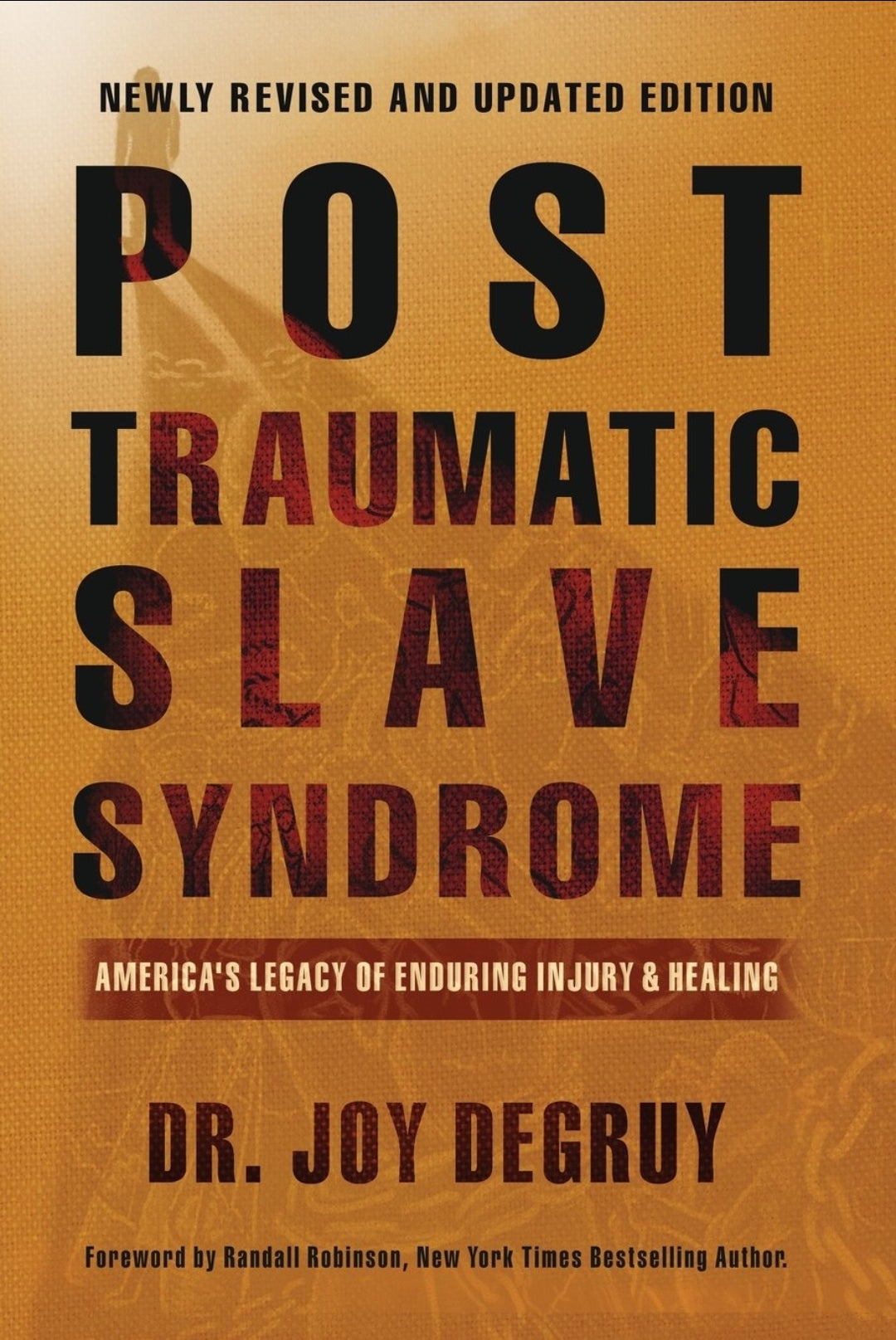
Post Traumatic Slave Syndrome
by Dr. Joy DeGruy
$19.95In the 16th century, the beginning of African enslavement in the Americas until the ratification of the Thirteenth Amendment and emancipation in 1865, Africans were hunted like animals, captured, sold, tortured, and raped. They experienced the worst kind of physical, emotional, psychological, and spiritual abuse. Given such history, isn't it likely that many of the enslaved were severely traumatized? And did the trauma and the effects of such horrific abuse end with the abolition of slavery?
Emancipation was followed by one hundred more years of institutionalized subjugation through the enactment of Black Codes and Jim Crow laws, peonage, convict leasing, domestic terrorism and lynching. Today the violations continue, and when combined with the crimes of the past, they result in yet unmeasured injury. What do repeated traumas, endured generation after generation by a people produce? What impact have these ordeals had on African Americans today?
Dr. Joy DeGruy, answers these questions and more. With over thirty years of practical experience as a professional in the mental health field, Dr. DeGruy encourages African Americans to view their attitudes, assumptions, and behaviors through the lens of history and so gain a greater understanding of how centuries of slavery and oppression have impacted people of African descent in America.
Post Traumatic Slave Syndrome helps to lay the necessary foundation to ensure the well-being and sustained health of future generations and provides a rare glimpse into the evolution of society's beliefs, feelings, attitudes and behavior concerning race in America.
-
Redeem a Nation: The Century-Long Battle to Restore the Soul of America
![Redeem a Nation: The Century-Long Battle to Restore the Soul of America cover image]()

Redeem a Nation: The Century-Long Battle to Restore the Soul of America
Sold outWe all feel it, the teetering toward a place in America from which there is no return. The battle to remain hopeful in spite of injustice after injustice. In this powerful story of one lawyer’s fight for his community, both justice and hope are redeemed.
The Greenwood neighborhood of North Tulsa was once a promised land for African Americans, deemed “Black Wall Street.” But on May 31, 1921, the deadliest race massacre in U.S. history sent Greenwood up in flames. At the time, Lessie Randle was just a child running to safety as bullets ricocheted around her. Almost a century later, lawyer Damario Solomon-Simmons knocks on her door asking if she’d be willing to run toward justice this time.
In Redeem a Nation, we follow Solomon-Simmons’s fight for justice, from the courtrooms of Tulsa to our nation’s capital, representing three centenarians: the last survivors of the Tulsa Race Massacre. Documenting a race against the calendar and the courts, Redeem a Nation grapples with the truth about corruption and disenfranchisement in America through this historic legal case for reparations and the deeply moving stories of survivors and descendants of the Massacre.
Yet this isn’t just a story of Tulsa. The community is a microcosm of the continued harm America inflicts through racial violence and economic injustice. The damage of generational poverty and loss of opportunity isn’t some relic of the past. It is happening right now. Redeem a Nation offers a way forward for communities across the nation through systemic change and community love. The Time is now to resist, repair, and redeem a land once promised.
“You think we can win?” Randle asked that day. This story is Solomon-Simmons’s answer.
-
Practicing New Worlds: Abolition and Emergent Strategies
![Practicing New Worlds: Abolition and Emergent Strategies]()
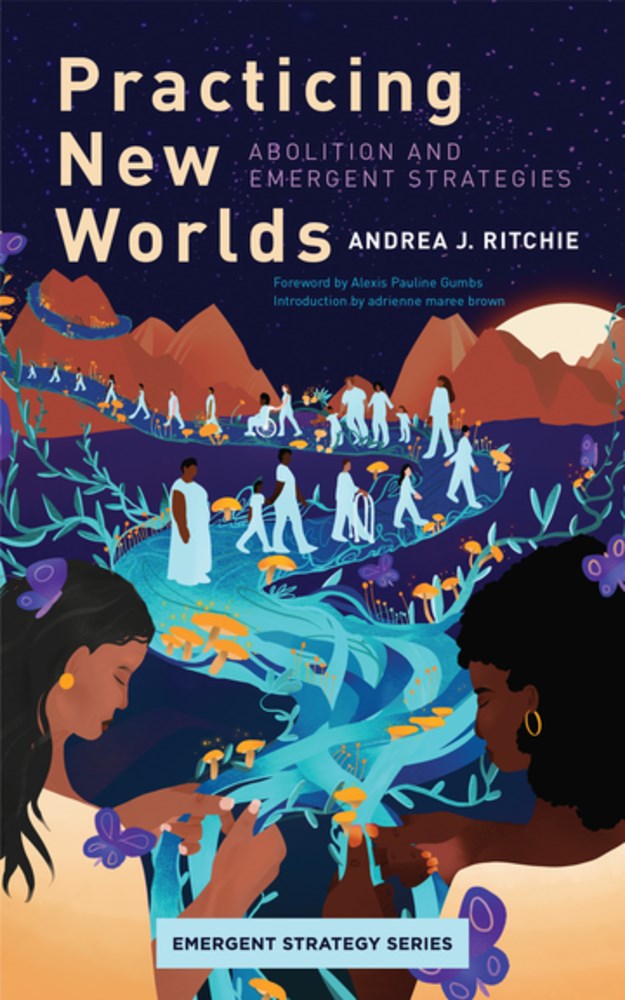
Practicing New Worlds: Abolition and Emergent Strategies
by Andrea Ritchie & Alexis Pauline Gumbs
$22.00An exploration of how emergent strategies can help us meet this moment, survive what is to come, and shape safer and more just futures.
Practicing New Worlds explores how principles of emergence, adaptation, iteration, resilience, transformation, interdependence, decentralization and fractalization can shape organizing toward a world without the violence of surveillance, police, prisons, jails, or cages of any kind, in which we collectively have everything we need to survive and thrive.
Drawing on decades of experience as an abolitionist organizer, policy advocate, and litigator in movements for racial, gender, economic, and environmental justice and the principles articulated by adrienne maree brown in Emergent Strategy: Shaping Change, Changing Worlds, Ritchie invites us to think beyond traditional legislative and policy change to create more possibilities for survival and resistance in the midst of the ongoing catastrophes of racial capitalism—and the cataclysms to come. Rooted in analysis of current abolitionist practices and interviews with on-the-ground organizers resisting state violence, building networks to support people in need of abortion care, and nurturing organizations and convergences that can grow transformative cities and movements, Practicing New Worlds takes readers on a journey of learning, unlearning, experimentation, and imagination to dream the worlds we long for into being.


Stay Informed. We're building a community committed to celebrating Black authors + artisans. Subscribe to keep up with all things Kindred Stories.