
Search results: 172 results for “Martin Luther King Jr.”
Not finding what you're looking for? Check out our shop on bookshop.org to order and still support us ♥
172 results
-
Without Fear: Black Women and the Making of Human Rights
![Without Fear: Black Women and the Making of Human Rights cover image]()

Without Fear: Black Women and the Making of Human Rights
Keisha N. Blain
Sold out“Without Fear tells the stories of Black women who, like Deborah in the Bible, have engaged in social justice agitation, refusing to simply suffer by engaging in the redemptive work of challenging injustice while in the midst of it. Each of us can and must learn from these women if we are to reconstruct America and build a just world.” ―Reverend Dr. William J. Barber II, coauthor of White Poverty
Even before they were recognized as citizens of the United States, Black women understood that the fights for civil and human rights were inseparable. Over the course of two hundred years, they were at the forefront of national and international movements for social change, weaving connections between their own and others’ freedom struggles around the world.
Without Fear tells how, during American history, Black women made humans rights theirs: from worldwide travel and public advocacy in the global Black press to their work for the United Nations, they courageously and effectively moved human rights beyond an esoteric concept to an active, organizing principle. Acclaimed historian Keisha N. Blain tells the story of these women―from the well-known, like Ida B. Wells, Madam C. J. Walker, and Lena Horne, to those who are still less known, including Pearl Sherrod, Aretha McKinley, and Marguerite Cartwright. Blain captures human rights thinking and activism from the ground up with Black women at the center, working outside the traditional halls of power.
By shouldering intersecting forms of oppression―including racism, sexism, and classism―Black women have long been in a unique position to fight for freedom and dignity. Without Fear is an account of their aspirations, strategies, and struggles to pioneer a human rights approach to combating systems of injustice.
8 pages of illustrations
-
The Autobiography of Malcolm X (As Told to Alex Haley)
![The Autobiography of Malcolm X (As Told to Alex Haley) cover image]()

The Autobiography of Malcolm X (As Told to Alex Haley)
Sold outONE OF TIME’S TEN MOST IMPORTANT NONFICTION BOOKS OF THE TWENTIETH CENTURY
In the searing pages of this classic autobiography, originally published in 1965, Malcolm X, the Muslim leader, firebrand, and anti-integrationist, tells the extraordinary story of his life and the growth of the Black Muslim movement. His fascinating perspective on the lies and limitations of the American Dream, and the inherent racism in a society that denies its nonwhite citizens the opportunity to dream, gives extraordinary insight into the most urgent issues of our own time. The Autobiography of Malcolm X stands as the definitive statement of a movement and a man whose work was never completed but whose message is timeless. It is essential reading for anyone who wants to understand America.
Praise for The Autobiography of Malcolm X
“Extraordinary . . . a brilliant, painful, important book.”—The New York Times
“This book will have a permanent place in the literature of the Afro-American struggle.”—I. F. Stone
-
I Write What I Like: Selected Writings
![I Write What I Like: Selected Writings]()

I Write What I Like: Selected Writings
Steve Biko
Sold out"The most potent weapon in the hands of the oppressor is the mind of the oppressed." Like all of Steve Biko's writings, those words testify to the passion, courage, and keen insight that made him one of the most powerful figures in South Africa's struggle against apartheid. They also reflect his conviction that black people in South Africa could not be liberated until they united to break their chains of servitude, a key tenet of the Black Consciousness movement that he helped found.
I Write What I Like contains a selection of Biko's writings from 1969, when he became the president of the South African Students' Organization, to 1972, when he was prohibited from publishing. The collection also includes a preface by Archbishop Desmond Tutu; an introduction by Malusi and Thoko Mpumlwana, who were both involved with Biko in the Black Consciousness movement; a memoir of Biko by Father Aelred Stubbs, his longtime pastor and friend; and a new foreword by Professor Lewis Gordon.
Biko's writings will inspire and educate anyone concerned with issues of racism, postcolonialism, and black nationalism. -
Photography and the Black Arts Movement, 1955-1985
![Photography and the Black Arts Movement, 1955-1985 cover image]()

Photography and the Black Arts Movement, 1955-1985
Philip Brookman
Sold outFeaturing more than 100 artists, this landmark book charts the intricate connections between photography and the Black Arts Movement
The Black Arts Movement brought together writers, filmmakers, and visual artists who were exploring ways of using art to advance civil rights and Black self-determination. This book examines the vital role of photography in the evolution of the Black Arts Movement, revealing how photographs operated across art, community building, journalism, and political messaging to contribute to the development of a distinctly Black art and culture.
Works by Romare Bearden, Dawoud Bey, Kwame Brathwaite, Samuel Fosso, Jeanne Moutoussamy-Ashe, Gordon Parks, Juan Sánchez, Robert A. Sengstacke, Lorna Simpson, Ming Smith, and Carrie Mae Weems, among dozens of other celebrated and underappreciated artists, span documentary and fashion photography, portraiture, collage, installation, performance, and video. Pictured luminaries include Miles Davis, Mahalia Jackson, Martin Luther King, Jr., Bob Marley, Nina Simone, Malcolm X, and many more. The book’s essays by distinguished scholars focus on topics such as women and the movement, community, activism, and Black photojournalism. Taking an expansive approach, the authors consider the complex connections between American artists and the African diaspora and the dynamic interchange of pan-African ideas that propelled the movement. Authoritative and beautifully illustrated, this is the definitive volume on photography and the Black Arts Movement.
Published in association with the National Gallery of Art, Washington
Exhibition Schedule:
National Gallery of Art, Washington, DC
(September 21, 2025–January 4, 2026)
J. Paul Getty Museum, Los Angeles, CA
(February 24–May 24, 2026)
Mississippi Museum of Art, Jackson, MS
(July 25–November 1, 2026) -
Black Scare / Red Scare: Theorizing Capitalist Racism in the United States
![Black Scare / Red Scare: Theorizing Capitalist Racism in the United States]()
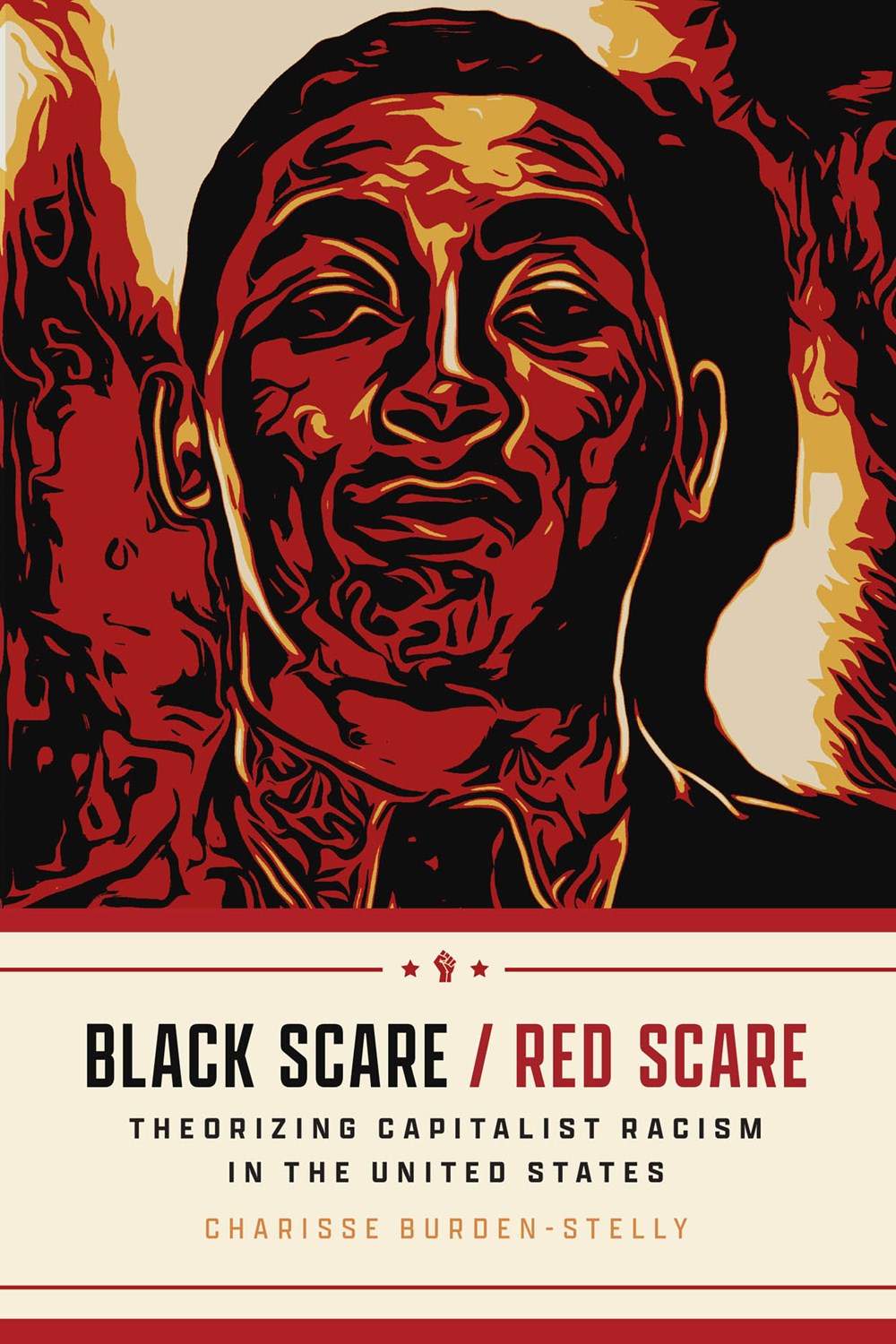
Black Scare / Red Scare: Theorizing Capitalist Racism in the United States
by Charisse Burden-Stelly
Sold outA radical explication of the ways anti-Black racial oppression has infused the US government’s anti-communist repression.
In the early twentieth century, two panics emerged in the United States. The Black Scare was rooted in white Americans’ fear of Black Nationalism and dread at what social, economic, and political equality of Black people might entail. The Red Scare, sparked by communist uprisings abroad and subversion at home, established anticapitalism as a force capable of infiltrating and disrupting the American order. In Black Scare / Red Scare, Charisse Burden-Stelly meticulously outlines the conjoined nature of these state-sanctioned panics, revealing how they unfolded together as the United States pursued capitalist domination. Antiradical repression, she shows, is inseparable from anti-Black oppression, and vice versa.
Beginning her account in 1917—the year of the Bolshevik Revolution, the East St. Louis Race Riot, and the Espionage Act—Burden-Stelly traces the long duration of these intertwined and mutually reinforcing phenomena. She theorizes two bases of the Black Scare / Red Scare: US Capitalist Racist Society, a racially hierarchical political economy built on exploitative labor relationships, and Wall Street Imperialism, the violent processes by which businesses and the US government structured domestic and foreign policies to consolidate capital and racial domination. In opposition, Radical Blackness embodied the government’s fear of both Black insurrection and Red instigation. The state’s actions and rhetoric therefore characterized Black anticapitalists as foreign, alien, and undesirable. This reactionary response led to an ideology that Burden-Stelly calls True Americanism, the belief that the best things about America were absolutely not Red and not Black, which were interchangeable threats.
Black Scare / Red Scare illuminates the anticommunist nature of the US and its governance, but also shines a light on a misunderstood tradition of struggle for Black liberation. Burden-Stelly highlights the Black anticapitalist organizers working within and alongside the international communist movement and analyzes the ways the Black Scare/Red Scare reverberates through ongoing suppression of Black radical activism today. Drawing on a range of administrative, legal, and archival sources, Burden-Stelly incorporates emancipatory ideas from several disciplines to uncover novel insights into Black political minorities and their legacy. -
Stigma and Culture: Last-Place Anxiety in Black America (Lewis Henry Morgan Lecture Series)
![Book cover image]()

Stigma and Culture: Last-Place Anxiety in Black America (Lewis Henry Morgan Lecture Series)
J. Lorand Matory and Thomas P. Gibson
Sold outIn Stigma and Culture, J. Lorand Matory provocatively shows how ethnic identification in the United States—and around the globe—is a competitive and hierarchical process in which populations, especially of historically stigmatized races, seek status and income by dishonoring other stigmatized populations. And there is no better place to see this than among the African American elite in academia, where he explores the emergent ethnic identities of African and Caribbean immigrants and transmigrants, Gullah/Geechees, Louisiana Creoles, and even Native Americans of partly African ancestry.
Matory describes the competitive process that hierarchically structures their self-definition as ethnic groups and the similar process by which middle-class African Americans seek distinction from their impoverished compatriots. Drawing on research at universities such as Howard, Harvard, and Duke and among their alumni networks, he details how university life—while facilitating individual upward mobility, touting human equality, and regaling cultural diversity—also perpetuates the cultural standards that historically justified the dominance of some groups over others. Combining his ethnographic findings with classic theoretical insights from Frantz Fanon, Fredrik Barth, Erving Goffman, Pierre Bourdieu and others—alongside stories from his own life in academia—Matory sketches the university as an institution that, particularly through the anthropological vocabulary of culture, encourages the stigmatized to stratify their own. -
The Awakening of Malcolm X: A Novel
![The Awakening of Malcolm X: A Novel]()
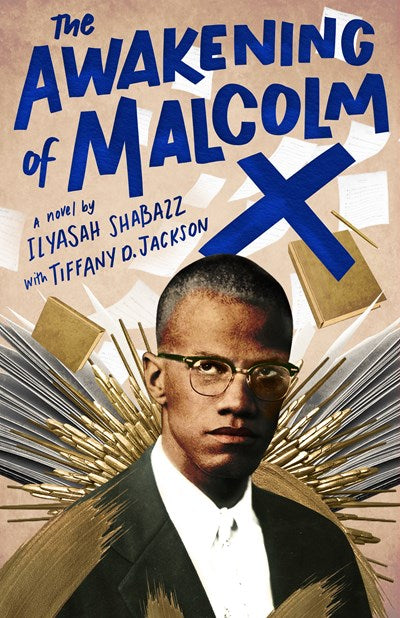
The Awakening of Malcolm X: A Novel
by Ilyasah Shabazz and Tiffany D. Jackson
Sold out*ships in 7-10 business days
In Charlestown Prison, Malcolm Little struggles with the weight of his past. Plagued by nightmares, he drifts through days unsure of his future. Slowly, he befriends other prisoners and writes to his family. He reads all the books in the prison library, joins the debate team and the Nation of Islam. Malcolm grapples with race, politics, religion, and justice in the 1940s. And as his time in jail comes to an end, he begins to awaken--emerging from prison more than just Malcolm Little: Now, he is Malcolm X.
-
Until the Last Gun Is Silent: A Story of Patriotism, the Vietnam War, and the Fight to Save America's Soul
![Until the Last Gun Is Silent: A Story of Patriotism, the Vietnam War, and the Fight to Save America's Soul cover image]()

Until the Last Gun Is Silent: A Story of Patriotism, the Vietnam War, and the Fight to Save America's Soul
Sold outThe untold story of the Black patriots—from soldiers in combat to peace protesters—who ended the Vietnam War and defended the soul of American democracy, from a pre-eminent civil rights historian and the award-winning author of Half American
As the civil rights movement blazed through America, more than 300,000 Black troops were drafted and sent to fight in the Vietnam War. These soldiers, often from disadvantaged backgrounds and subjected to the brutalities of racism back home, found themselves thrust onto the frontlines of a war many saw as unjust. On the homefront, Black antiwar activists faced another battle: Opposition to the Vietnam War, vilified by key allies in the media and government as anti-American, jeopardized the fight for civil rights. For Black Americans, the Vietnam War forced a generation to question what it truly meant to fight for justice.
Award-winning civil rights historian Matthew F. Delmont weaves together the stories of two Black heroes of the Vietnam War era: Coretta Scott King, who bravely championed the antiwar cause—and eventually persuaded her husband to do the same—and Dwight “Skip” Johnson, a Medal of Honor recipient whose life ended tragically after returning from battle to his native Detroit. Together, these extraordinary accounts expose the contradictions of Black activism and military service during the Vietnam War. Through rich storytelling, Delmont offers a portrait of this period unlike any other, shedding light on a fractured civil rights movement, a generation of veterans failed by the country they served, and the valor of Black servicemen and peace advocates in the midst of it all.
Vivid, revelatory, and meticulously researched, Until the Last Gun Is Silent: How a Civil Rights Icon and Vietnam War Hero Changed America is essential reading for anyone looking to understand the enduring legacy of Black military service, protest, and patriotism in the United States.
-
Juneteenth Ephemera Collage
![Juneteenth Ephemera Collage]()

Juneteenth Ephemera Collage
Sold outIt’s that time of year and BLK MKT Vintage has proudly designed the 2026 Annual Juneteenth Commemorative collection with an array of Emancipation Day-related ephemera in mind. They are always inspired by the layering and quilting of collage traditions and this Juneteenth, we’re centering vintage found photos, a poll tax receipt, antique ribbon/metal memorabilia, Galveston, Texas maps, pins, stereoview photographs and other ephemera that make up the best of our work. The best of us, our memory, our jubilation, our collective stories and lived experiences. Designed in-house by BLK MKT Vintage.
-
To Die for the People
![To Die for the People]()
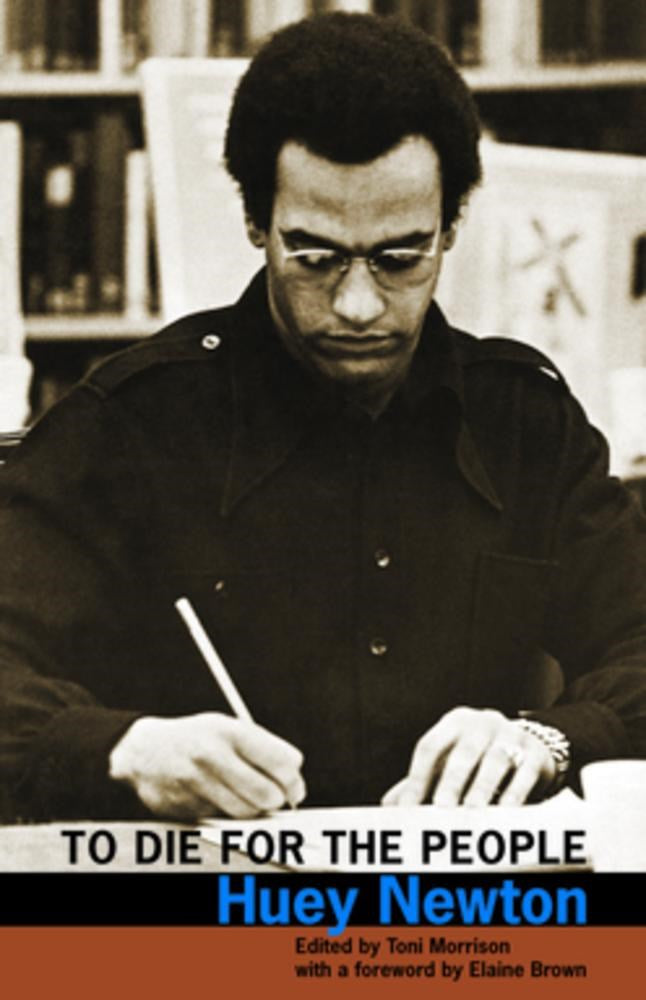
To Die for the People
by Huey Newton
Sold outA fascinating, first-person account of a historic era in the struggle for black empowerment in America.A fascinating, first-person account of a historic era in the struggle for black empowerment in America.
Long an iconic figure for radicals, Huey Newton is now being discovered by those interested in the history of America's social movements. Was he a gifted leader of his people or a dangerous outlaw? Were the Black Panthers heroes or terrorists?
Whether Newton and the Panthers are remembered in a positive or a negative light, no one questions Newton's status as one of America's most important revolutionaries. To Die for the People is a recently issued classic collection of his writings and speeches, tracing the development of Newton's personal and political thinking, as well as the radical changes that took place in the formative years of the Black Panther Party.
With a rare and persuasive honesty, To Die for the People records the Party's internal struggles, rivalries and contradictions, and the result is a fascinating look back at a young revolutionary group determined to find ways to deal with the injustice it saw in American society. And, as a new foreword by Elaine Brown makes eminently clear, Newton's prescience and foresight make these documents strikingly pertinent today.Huey Newton was the founder, leader and chief theoretician of the Black Panther Party, and one of America’s most dynamic and important revolutionary philosophers.
"Huey P. Newton's To Die for the People represents one of the most important analyses of the politics of race, black radicalism, and democracy written during the civil rights-Black Power era. It remains a crucial and indispensible text in our contemporary efforts to understand the continuous legacy of social movements of the 1960s and 1970s."
—Peniel Joseph, author of Waiting Til the Midnight Hour: A Narrative History of Black Power in America"Huey P. Newton's name, and more importantly, his history of resistance and struggle, is little more than a mystery for many younger people. The name of a third-rate rapper is more familiar to the average Black youth, and that's hardly surprising, for the public school system is invested in ignorance, and Huey P. Newton was a rebel — and more, a Black Revolutionary . . . who gave his best to the Black Freedom movement; who inspired millions of others to stand."
—Mumia Abu Jamal, political prisoner and author of Jailhouse Lawyers"Newton's ability to see theoretically, beyond most individuals of his time, is part of his genius. The opportunity to recognize that genius and see its applicability to our own times is what is most significant about this new edition."
—Robert Stanley Oden, former Panther, Professor of Government, California State University, Sacramento -
When I Waked, I Cried To Dream Again: Poems
![When I Waked, I Cried To Dream Again: Poems]()
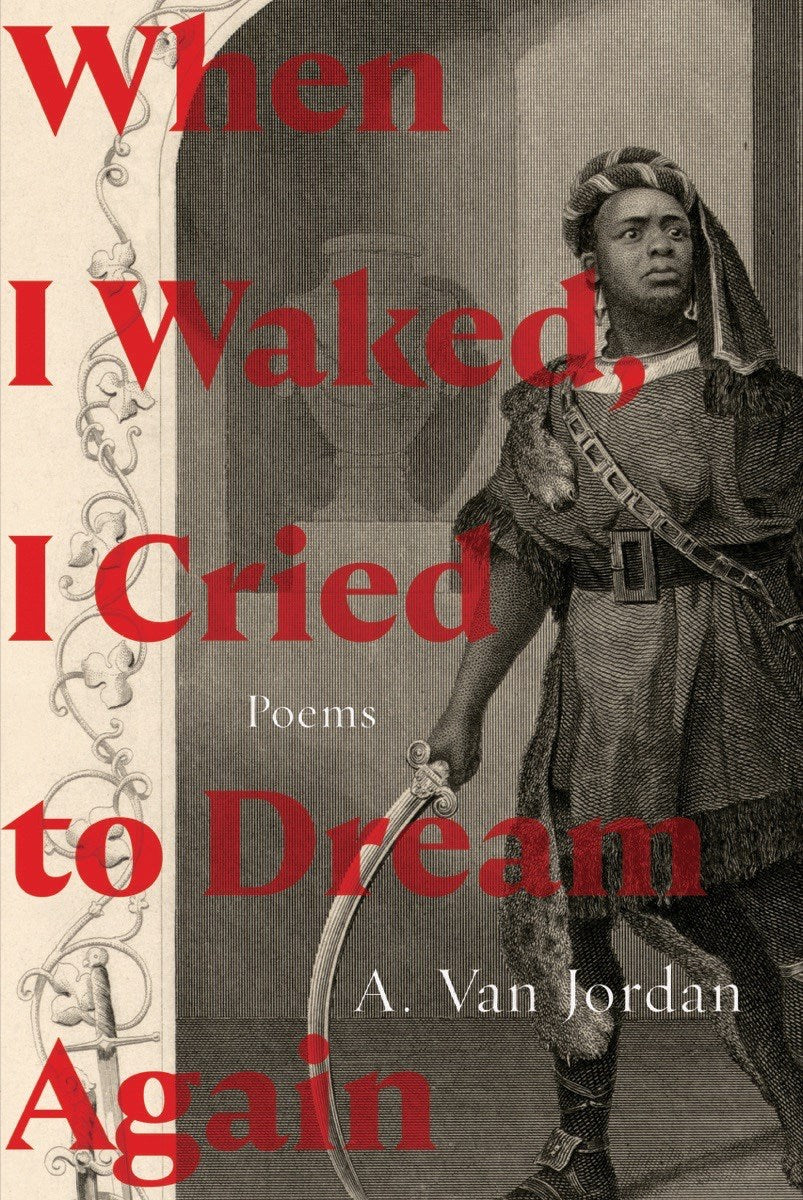
When I Waked, I Cried To Dream Again: Poems
by A. Van Jordan
Sold out*Ships in 7-10 Business Days*
A dynamic, moving hybrid work that celebrates Black youth, often too fleeting, and examines Black lives lost to police violence.
In this astonishing volume of poems and lyric prose, Whiting Award–winner A. Van Jordan draws comparisons to Black characters in Shakespearean plays—Caliban and Sycorax from?The Tempest, Aaron the Moor from?Titus Andronicus, and the eponymous antihero of?Othello—to mourn the deaths of Black people, particularly Black children, at the hands of police officers. What do these characters, and the ways they are defined by the white figures who surround them, have in common with Tamir Rice, Trayvon Martin, and other Black people killed in the twenty-first century?
Balancing anger and grief with celebration, Jordan employs an elastic variety of poetic forms, including ekphrastic sestinas inspired by the photography of Malick Sidibé, fictional dialogues, and his signature definition poems that break down the insidious power of words like “fair,” “suspect,” and “juvenile.” He invents a new form of window poems, based on a characterization exercise, to see Shakespeare’s Black characters in three dimensions, and finds contemporary parallels in the way these characters are othered, rendered at once undesirable and hypersexualized, a threat and a joke.
At once a stunning inquiry into the roots of racist violence and a moving recognition of the joy of Black youth before the world takes hold, When I Waked, I Cried to Dream Again expresses the preciousness and precarity of life.
-
The Essential June Jordan
![The Essential June Jordan]()
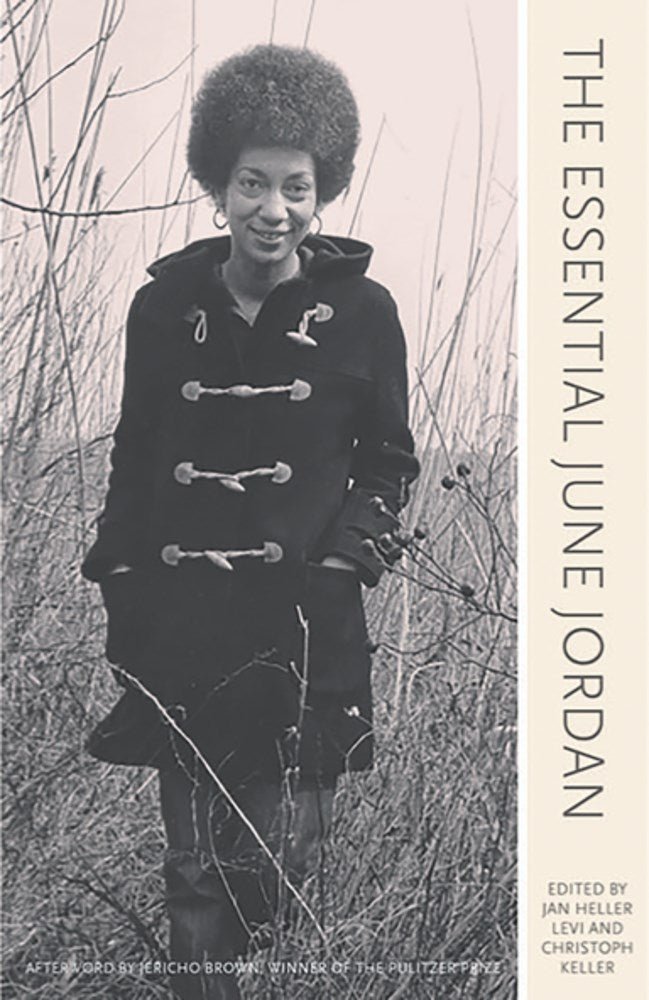
The Essential June Jordan
edited by Jan Heller Levi & Christoph Keller
Sold outHonored as a "Best Book of 2021" by Publishers Weekly
"This volume of verse displays the undeniable legacy June Jordan left on both our literature and culture. Collected here are blazing examples of poetry as activism, stanzas that speak truth to power and speak out against violence against women and police brutality. But Jordan also speaks on the significance of hope, mixing, as Brown puts it, 'the doom and devastation made mundane through media with the hard decision to love anyway.'"—O, The Oprah Magazine
"A selection of poems published between 1971 and 2001, this posthumous volume reflects Jordan’s view of poetry as 'a political action' that can 'build a revolution.' Her own work is filled with love and delight as well as revenge and justice."—New York Times Book Review, "Editor's Choice"
The Essential June Jordan honors the enduring legacy of a poet fiercely dedicated to building a better world. In this definitive volume, introduced by Pulitzer Prize winner Jericho Brown, June Jordan’s generous body of poetry is distilled and curated to represent the very best of her works. Written over the span of several decades—from Some Changes in 1971 to Last Poems in 2001—Jordan’s poems are at once of their era and tragically current, with subject matter including racist police brutality, violence against women, and the opportunity for global solidarity amongst people who are marginalized or outside of the norm. In these poems of great immediacy and radical kindness, humor and embodied candor, readers will (re)discover a voice that has inspired generations of contemporary poets to write their truths. June Jordan is a powerful voice of the time-honored movement for justice, a poet for the ages. Introduced by Jericho Brown, winner of the 2020 Pulitzer prize in poetry.


Stay Informed. We're building a community committed to celebrating Black authors + artisans. Subscribe to keep up with all things Kindred Stories.