
Art & Culture
- Black Photojournalism
![Black Photojournalism cover image]()

Black Photojournalism
Charlene Foggie-Barnett
$65.00A landmark survey of Black American photojournalism spanning 1945 to 1984, chronicling a critical period in the civil rights movements in the United States
This volume presents work by 57 Black photographers and contributions from scholars such as Joy Bivins, Tina M. Campt and Gerald Horne, chronicling historic events and daily life in the United States from the conclusion of World War II in 1945 to the presidential campaigns of 1984, including the civil rights movements through the 1950s, '60s and '70s. Drawn from archives and collections in the care of journalists, libraries, museums, newspapers, photographers and universities, the photographs in the catalog were circulated and reviewed in publishing offices across the country.
Responding to a dearth of stories about Black lives told from the perspectives of Black people, Black publishers and their staff created groundbreaking editorial and photojournalistic methods and news networks. During a period of urgent social change and civil rights advocacy, newspapers and magazines, including the Afro American News, Atlanta Daily World, Pittsburgh Courier, Chicago Defender and Ebony, transformed how people were able to access seeing themselves and their communities. Their impact on the media landscape continues into the digital present.
The catalog is published on the occasion of the exhibition of the same name at Carnegie Museum of Art. The exhibition and catalog are both designed by artist David Hartt, and organized and edited by Charlene Foggie-Barnett, Charles ""Teenie"" Harris, community archivist, and Dan Leers, curator of photography, in dialogue with an expanded network of archivists, curators, historians and scholars.
Photographers include: Harry Adams, Anthony Barboza, Kwame Brathwaite, Don Hogan Charles, Adger Cowans, Guy Crowder, Roy DeCarava, Doris Derby, Bob Douglas, Louis Draper, Theodore Gaffney, Charles "Teenie" Harris, Chester Higgins, Kojo Kamau, Jeanne Moutoussamy-Ashe, Marilyn Nance, Gordon Parks, Ming Smith, Bruce Talamon, Deborah Willis-Ryan. - DEANA LAWSON
![DEANA LAWSON cover image]()

DEANA LAWSON
Sold out'Deana Lawson', the first scholarly publication on the artist Deana Lawson, surveying fifteen years of her photography, will be published to accompany the first comprehensive museum survey exhibition featuring Lawson’s artwork. A singular voice in contemporary photography, Lawson has been investigating and challenging conventional representations of black identities in the African American and African diaspora for over fifteen years. Her work samples numerous photographic languages, including the family album, studio portraiture, staged tableaux, documentary pictures, and found images, creating narratives of family, love, and desire. Lawson’s photographs are made in collaboration with her subjects, who are sometimes nude, embracing, and directly confronting the camera, destabilizing the notion of photography as a passively voyeuristic medium. Whether in posed photographs or assembled collages, Lawson’s works channel broader ideas about personal and social histories of black life, love, sexuality, family, and spiritual beliefs. This publication will include selections from Lawson’s personal family photographs and archives of vernacular images that have profoundly informed her work. Accompanies an exhibition at ICA/Boston from 3 November, 2021 - 27 February, 2022; MoMA PS1 from 14 April - 5 September, 2022; and High Museum of Art from 7 October, 2022 - 19 February, 2023. Includes essays by Eva Respini and Peter Eleey (curators of the exhibition), Kimberly Juanita Brown (Professor at Dartmouth College), Tina M. Campt (Professor at Brown University), Alexander Nemerov (Professor at Stanford University), Greg Tate (writer, musician, and producer), and a conversation between the artist and Deborah Willis (Professor at New York University).
- Transcendence: A Century of Black Queer Ecstasy, 1924–2024
![Transcendence: A Century of Black Queer Ecstasy, 1924–2024]()

Transcendence: A Century of Black Queer Ecstasy, 1924–2024
Sold outA richly illustrated reflection on a century of Black queer art and culture featuring seven essays from leading scholars.
The word ecstasy derives from the Greek ekstasis, meaning “to put out of place.” It passed into English through the Old French extasie, which roughly translates as “rapturous.” Ecstasy, today, can be understood as a form of transcendence, often through an indiscriminate combination of extremes. Art’s truest depictions of ecstasy exist in the muddled territory between exaltation and despair. Transcendence highlights visual representations of Black queer ecstasy in a variety of media from the last one hundred years that challenge its absence from the historical record. Centering Blackness and queerness creates the conditions to investigate the potential of queer perspectives around the paradoxes of pleasure and pain, excess and lack, and autonomy and dependence.
This catalogue features seven essays by preeminent scholars of Black LGBTQ+ art and culture, each based on one of the volume’s subthemes: Portraiture; Beyond Figuration; Dance and Movement; Spirituality; Sex and Sensuality; Black Queer Futures; and Altered States. Together these themes represent the foundations of queer experiences and offer readers a space to engage with artwork and ephemera that highlight an ecstatically abundant past and advocate for a more inclusive and equitable future.
- Basquiat: Headstrong
![Basquiat: Headstrong cover image]()

Basquiat: Headstrong
Sold outUsing the head as a site of investigation, Basquiat's frenetic drawings of faces are at once immediate and contemplative
Between 1981 and 1983, Jean-Michel Basquiat made between 50 and 100 drawings of heads. Working with oil stick on paper, he created a series far removed from his public paintings and collages filled with words and symbols―a more concentrated, private study whose pieces are rarely exhibited and seldom offered for sale. Stripped of external references, they read as intimate meditations on identity, perception and the fragile balance between presence and disappearance.
Bringing this exceptional group together for the first time in decades in an oversize folio, Headstrong sheds new light on a lesser-known aspect of Basquiat's practice. Essays by Pulitzer Prize–winning author Hilton Als and artists including George Condo and Julie Mehretu explore the drawings' formal invention and psychological intensity, showing how Basquiat transformed the head into a vessel for everything he was thinking and feeling―a space where imagination, history and lived experience converge.
Jean-Michel Basquiat (1960–88) is one of the most successful Black visual artists in history, despite his brief career. He emerged on the New York City arts scene in the late 1970s and quickly skyrocketed to international fame, becoming one of the most important artists of his generation. Basquiat's work and legacy continue to influence popular culture, especially art, music and fashion. - The World of Black Film: A Journey Through Cinematic Blackness in 100 Films With a Foreword by John Akomfrah
![The World of Black Film: A Journey Through Cinematic Blackness in 100 Films With a Foreword by John Akomfrah cover image]()

The World of Black Film: A Journey Through Cinematic Blackness in 100 Films With a Foreword by John Akomfrah
$45.00My Brother Ashley Clark Has Broke It Down To What Black Film Was, Is Present Day, And What The Future Might Be. BLAK IZ BLAK. YA-DIG? SHO-NUFF. Enjoy This BLAK CINEMATIC SCIENCE. - Spike Lee
This book belongs on the shelf of every film lover, every student of cinema, and everyone who believes in the transformative power of storytelling. It's a celebration, an education, and an inspiration all at once. - Julie Dash
Resonant, exciting and eye-opening - one of the best books I've read about Black cinema. - Mark Cousins
The World of Black Film is an entertaining, informed, and thought-provoking survey of important and influential Black films from around the globe. Starting with the unfinished silent comedy Lime Kiln Club Field Day (1913) and concluding with Steve McQueen's World War II epic Blitz (2024), this book takes readers on an exciting journey through an eclectic mix of classics and hidden gems spanning more than 100 years and 30 countries.
Beautifully designed and bursting with eye-catching film imagery and poster art, this is essential reading for general film fans, enthusiasts of Black cinema, educators, and students alike.
Includes a foreword by Sir John Akomfrah, CBE RA.Films and directors include:
Black Orpheus (Marcel Camus, 1959)
Black Girl (Ousmane Sembène, 1966)
Hollywood Shuffle (Robert Townsend, 1987)
Malcolm X (Spike Lee, 1992)
Belle (Amma Asante, 2013)
Timbuktu (Abderrahmane Sissako, 2015)
Moonlight (Barry Jenkins, 2016)
Black Panther (Ryan Coogler, 2018)
Saint Omer (Alice Diop, 2022)
Dahomey (Mati Diop, 2024)
Blitz (Steve McQueen, 2024) - The Harlem Book of the Dead
![The Harlem Book of the Dead cover image]()

The Harlem Book of the Dead
$24.00Available for the first time since 1978, The Harlem Book of the Dead showcases James Van Der Zee's unflinching creative vision
Originally published in 1978, The Harlem Book of the Dead is a haunting and beautiful document of Black funerary traditions in Harlem, capturing the community's mourning rituals through the lens of one of the Harlem Renaissance's most celebrated photographers. The publication is the most complete record of Van Der Zee's funerary photographs, featuring over three dozen portraits by the artist, who meticulously composed the setting and the subjects before using his renowned darkroom and retouching skills to superimpose celestial figures, poetry, biblical scenes or portraits onto the images to compensate for lack of adornments, such as flowers, or to fulfill the requests of his subjects or their families.
These portraits are complemented and captioned by poems from Owen Dodson and a wide-ranging interview with Van Der Zee by the sculptor and filmmaker Camille Billops, who conceptualized and edited the publication. This facsimile edition reproduces the printing and specifications of the 1978 publication. The original foreword by Toni Morrison is included, and accompanied by a newly commissioned afterword by Karla FC Holloway, author of the canonical Passed On (2001).
James Van Der Zee (1886–1983) began working as a photographer in 1915, and by the following year had opened his photography studio on West 135th Street in Harlem. His images of Black New Yorkers, together with celebrities such as Langston Hughes, Joe Louis and Marcus Garvey, form an indelible corpus of images of the Harlem Renaissance. - Pastor E. F. Ledbetter and The Metropolitan Missionary Baptist Church, 1953
![Pastor E. F. Ledbetter and The Metropolitan Missionary Baptist Church, 1953 cover image]()

Pastor E. F. Ledbetter and The Metropolitan Missionary Baptist Church, 1953
Gordon Parks
Sold outIn 1953, Gordon Parks returned to Chicago on assignment for Life magazine to photograph the Metropolitan Missionary Baptist Church for a series on American religious life. After the success of his recent work for Life, Parks approached the Near West Side church with a decisive eye toward composing compelling images that conveyed simultaneously the universal humanity and local specificity of the religious community. This would be the first assignment for which he was both writer as well as photographer. His photographs and essay were never published by Life, yet as this book demonstrates, Parks’ visual and textual representation of Black religious life powerfully documents the dynamism of a community shaped by the Great Migration and Chicago’s industrial landscape. Parks embarked on a significant chapter of his aesthetic and conceptual development through his engagement with the pastor, the Reverend Ernest F. Ledbetter, Sr., and the members of his church. This publication features more than 65 previously unpublished photographs and contact sheets, complemented by Parks’ unseen manuscript and ephemeral material from the private collection of the Ledbetter family. A range of scholarly essays provides further insight and contextual analysis in art history, cultural geography, Black religious studies, and creative writing. Co-published with The Gordon Parks Foundation and Howard University, Washington DC
- Meaning Matter Memory: Selections from the Studio Museum in Harlem Collection
![Meaning Matter Memory: Selections from the Studio Museum in Harlem Collection cover image]()

Meaning Matter Memory: Selections from the Studio Museum in Harlem Collection
Thelma Golden
$34.95Selections from the extraordinary Studio Museum in Harlem Collection, accompanying the highly anticipated opening of the institution’s first-ever purpose-built museum
Meaning Matter Memory is a keepsake extension of the Studio Museum’s collection of artwork by artists of African descent. Beautiful illustrations of significant works by more than 250 artists are accompanied by original texts from more than 100 voices in the art world, including writers, scholars, artists, and critics.
Celebrating myriad voices and artistic media, styles, and eras, this handbook glimpses into the profound and manifold artistic achievements made by Black artists for over 200 years. The book exhibits and carries forward a principal tenet of the Studio Museum’s mission: to serve as the stewards of the work – old, new, and still to be created – by artists of African descent.
Featuring work by: Derrick Adams, Emma Amos, Jean-Michel Basquiat, Romare Bearden, Jordan Casteel, Elizabeth Catlett, Nick Cave, Samuel Fosso, Theaster Gates, Cy Gavin, Barkley L. Hendricks, Arthur Jafa, Rashid Johnson, Simone Leigh, Glenn Ligon, Julie Mehretu, Wangechi Mutu, Gordon Parks, Martin Puryear, Faith Ringgold, Betye Saar, Augusta Savage, Tschabalala Self, Lorna Simpson, Mickalene Thomas, Kara Walker, and Carrie Mae Weems, among many more.
- Jordan Casteel (Phaidon Contemporary Artists Series)
![Jordan Casteel (Phaidon Contemporary Artists Series) cover image]()

Jordan Casteel (Phaidon Contemporary Artists Series)
Legacy Russell
$54.95The first monograph on Jordan Casteel, one of the most critically acclaimed artists working today
Jordan Casteel is a New York-based artist known for her larger-than-life paintings, which highlight the humanity of her subjects while affirming ideas of social justice.
At once tender and powerful, Casteel’s intimate portraits include friends, family members, and classmates as well as diverse subjects whom she meets and photographs on the streets of her neighborhood, thus effectively transforming strangers into close friends and collaborators. This near-anthropological pursuit puts viewers into a position where they are asked to contend with their preconceived notions of masculinity and race.
Casteel’s debut monograph features nearly 150 beautifully reproduced images, with sections specially conceived and designed by the artist herself.
- The True Size of Africa: Transcontinental Perspectives
![The True Size of Africa: Transcontinental Perspectives]()

The True Size of Africa: Transcontinental Perspectives
Ralf Beil
$65.00Opening up the cosmos of an entire continent - New perspectives on Africa
This lavishly illustrated volume explores Africa from multiple points of view as it progresses beyond prejudice and stereotypes. Combining cultural history with contemporary art, it presents a diverse range of artistic voices and shifting viewpoints. Human history intersects with the colonial past and the omnipresent influence of Africa across the world.A fresh lens capturing the cosmos of Africa and its everlasting presence in our global societies.
This lavishly illustrated volume approaches the vast continent of Africa from a variety of viewpoints; beyond prejudice and stereotypes, via cultural history and contemporary art: by means of permanent changes of perspective and a diversity of artistic voices. The history of humankind meets the colonial past and the omnipresence of aspects of Africa in many regions of the world.
On the one hand, surprising views of Africa are focused on from Europe. And on the other, works and installations by Africans or protagonists from the diaspora present ideas, impulses and identities which all signify Africa. The texts illustrate the broad time frame from the first humans to Pan-Africanism and Afro-Futurism, as well as present literary and philosophical narratives.
ARTISTS:
DELE ADEYEMO, JOHN AKOMFRAH, JAMES GREGORY ATKINSON, SAMMY BALOJI, ARÉBÉNOR BASSÉNE, MEMORY BIWA, MARÍA MAGDALENA CAMPOS-PONS, CATPC, OMAR VICTOR DIOP, SOKARI DOUGLAS CAMP, WILLIAM KENTRIDGE, KONGO ASTRONAUTS, SUSANA PILAR DELAHANTA MANTIENZO, ROMÉO MIVEKANNIN, ZANELE MUHOLI, JOSÈFA NTJAM, KALOKI NYAMAI, EMEKA, OGBOH, ZINEB SEDIRA, SANDRA SEGHIR, YINKA SHONIBARE, THE SINGH TWINS, GÉRALDINE TOBE, KARA WALKER, CARRIE MAE WEEMS - Spoken Word: A Cultural History by Joshua Bennett
![Spoken Word: A Cultural History by Joshua Bennett]()
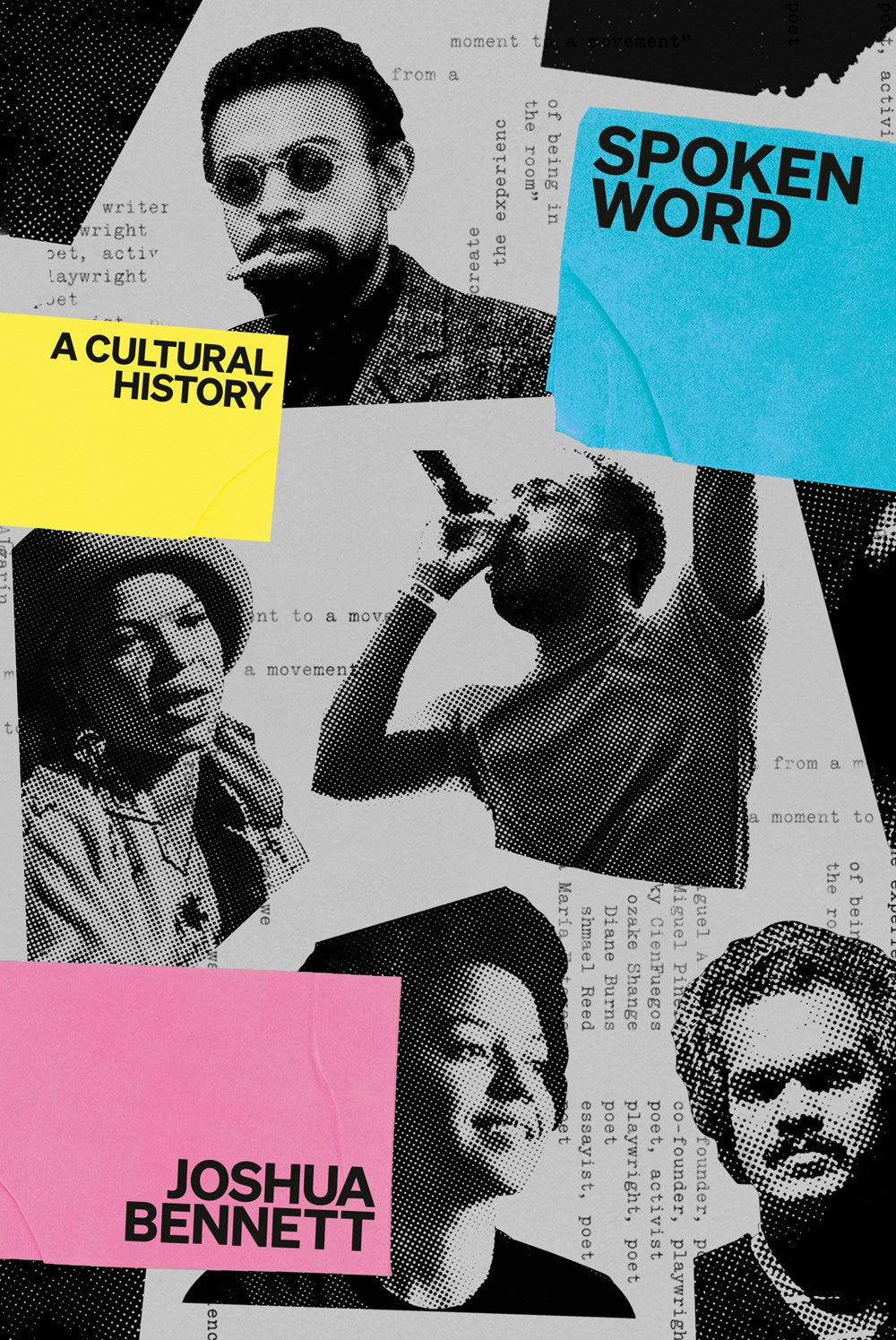
Spoken Word: A Cultural History by Joshua Bennett
$30.00*This item will ship or be ready for pick up in 7-10 business days
A fascinating history of the art form that has transformed the cultural landscape, by one of its influential practitioners, an award-winning poet, professor, and slam champion
In 2009, when he was twenty years old, Joshua Bennett was invited to perform a spoken word poem for Barack and Michelle Obama, at the same White House "Poetry Jam" where Lin-Manuel Miranda declaimed the opening bars of a work-in-progress that would soon revolutionize American theater. That meeting is but one among many in the trajectory of Bennett's young life, as he rode the cresting wave of spoken word through the 2010s. In this book, he goes back to its roots, considering the Black Arts movement and the prominence of poetry and song in Black education; the origins of the famed Nuyorican Poets Cafe in the Lower East Side living room of the visionary Miguel Algarín, who hosted verse gatherings with legendary figures like Ntozake Shange and Miguel Piñero; the rapid growth of the "slam" format that was pioneered at the Get Me High Lounge in Chicago; the perfect storm of spoken word's rise during the explosion of social media; and Bennett's own journey alongside his older sister, whose work to promote the form helped shape spaces online and elsewhere dedicated to literature and the pursuit of human freedom.
A celebration of voices outside the dominant cultural narrative, who boldly embraced an array of styles and forms and redefined what—and whom—the mainstream would include, Bennett's book illuminates the profound influence spoken word has had everywhere melodious words are heard, from Broadway to academia, from the podiums of political protest to cafés, schools, and rooms full of strangers all across the world. - Women Painting Women
![Women Painting Women]()
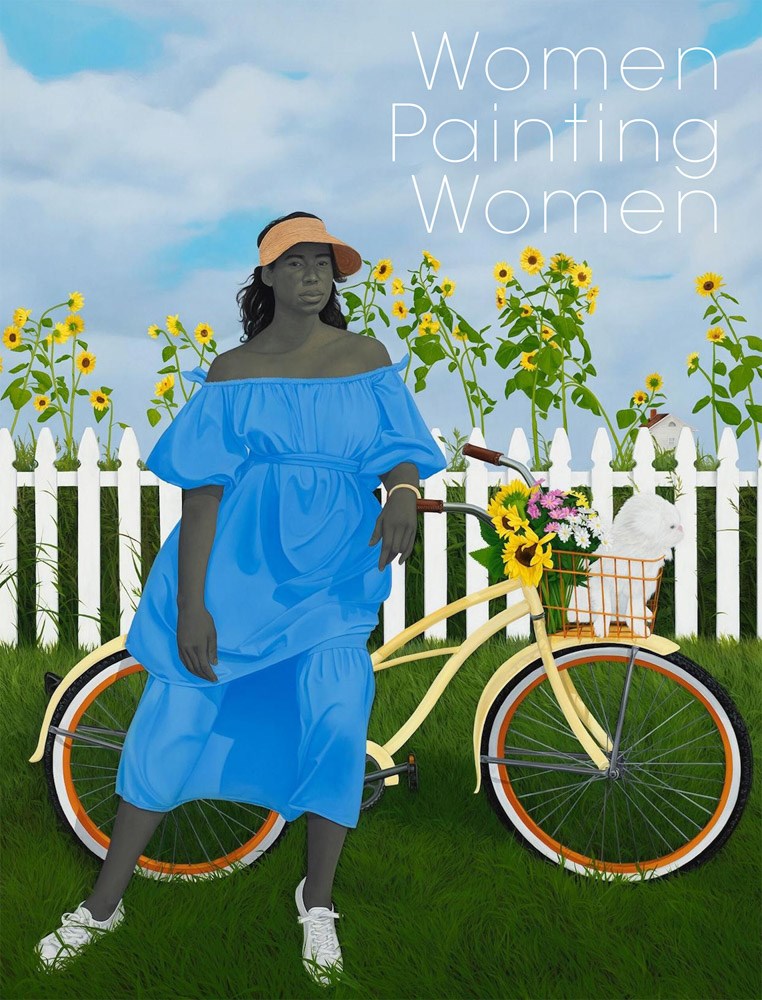
Women Painting Women
by Andrea Karnes
$49.95*Ships in 7-10 Business Days*
Replete with complexities, abjection, beauty and joy, Women Painting Women offers new ways to imagine the portrayal of women, from Alice Neel to Jordan Casteel
A thematic exploration of nearly 50 female artists who choose women as subject matter in their works, Women Painting Women includes nearly 50 portraits that span the 1960s to the present. International in scope, the book recognizes female perspectives that have been underrepresented in the history of postwar figuration. Painting is the focus, as traditionally it has been a privileged medium for portraiture, particularly for white male artists. The artists here use painting and women as subject matter and as vehicles for change. They range from early trailblazers such as Emma Amos and Alice Neel to emerging artists such as Jordan Casteel, Somaya Critchlow and Apolonia Sokol. All place women—their bodies, gestures and individuality—at the forefront.
The pivotal narrative in Women Painting Women is how the artists included use the conventional portrait of a woman as a catalyst to tell another story outside of male interpretations of the female body. They conceive new ways to activate and elaborate on the portrayal of women by exploring themes of the Body, Nature Personified, Selfhood and Color as Portrait. Replete with complexities, realness, abjection, beauty, complications, everydayness and joy, the portraits in this volume make way for women artists to share the stage with their male counterparts in defining the image of woman and how it has evolved.
Artists include: Rita Ackermann, Njideka Akunyili Crosby, Emma Amos, María Berrío, Louise Bonnet, Lisa Brice, Joan Brown, Jordan Casteel, Somaya Critchlow, Kim Dingle, Marlene Dumas, Celeste Dupuy-Spencer, Nicole Eisenman, Tracey Emin, Natalie Frank, Hope Gangloff, Eunice Golden, Jenna Gribbon, Alex Heilbron, Ania Hobson, Luchita Hurtado, Chantal Joffe, Hayv Kahraman, Maria Lassnig, Christiane Lyons, Danielle Mckinney, Marilyn Minter, Alice Neel, Elizabeth Peyton, Paula Rego, Faith Ringgold, Deborah Roberts, Susan Rothenberg, Jenny Saville, Dana Schutz, Joan Semmel, Amy Sherald, Lorna Simpson, Arpita Singh, Sylvia Sleigh, Apolonia Sokol, May Stevens, Claire Tabouret, Mickalene Thomas, Nicola Tyson and Lisa Yuskavage. - African Art Now: 50 Pioneers Defining African Art for the Twenty-First Century
![African Art Now: 50 Pioneers Defining African Art for the Twenty-First Century]()
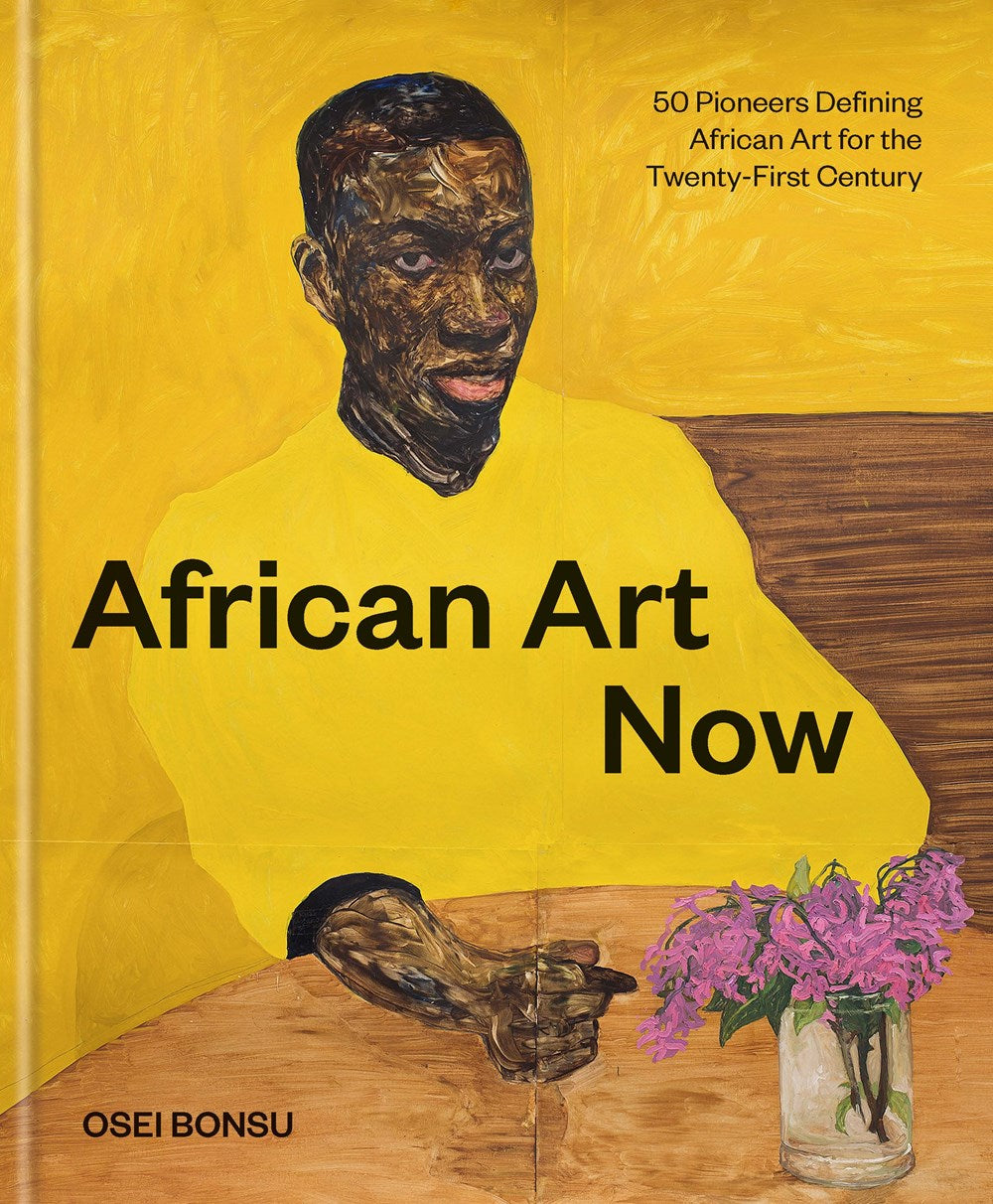
African Art Now: 50 Pioneers Defining African Art for the Twenty-First Century
by Osei Bonsu
$55.00*Ships in 7-10 Business Days*
With African artists attracting sizable audience numbers to museums, setting sky-high auction records, and appearing in mainstream press, it has become impossible to overlook the cultural significance of contemporary African art today. Author and curator Osei Bonsu's engaging profiles of leading African artists—along with gorgeous full-color reproductions of their work—introduce readers to a generation of movers and shakers whose innovative artwork reflects on Africa as both an idea and an experience. Using diverse forms, languages, and expressions to articulate what it means to be a part of the world, these artists generate alternate histories and imaginative futures—work that is both personal and political, universal and incredibly specific. Their work helps define contemporary African art as a vast artistic and cultural movement.
STELLAR ROSTER OF ARTISTS: Amoako Boafo, Njideka Akunyili Crosby, Tunji Adeniyi-Jones, Bronwyn Katz—from household names to up-and-coming artists, African Art Now features some of the most exciting artists working today.
IMPORTANT AND TIMELY: Over the past two decades, contemporary African art has become part of the global mainstream, inspiring countless exhibitions, fairs, and auctions around the world. And yet, African art remains overlooked as an area of dedicated study due to continued academic and cultural bias. This book shines a spotlight on the artists whose wide-ranging accomplishments represent the shifting dynamics and boundless possibilities of African art today.
Perfect for:- Artists, art collectors, art lovers, and museumgoers
- Educators and students
- Anyone interested in learning about contemporary African art
- Four Generations: The Joyner/Giuffrida Collection of Abstract Art
![Four Generations: The Joyner/Giuffrida Collection of Abstract Art]()
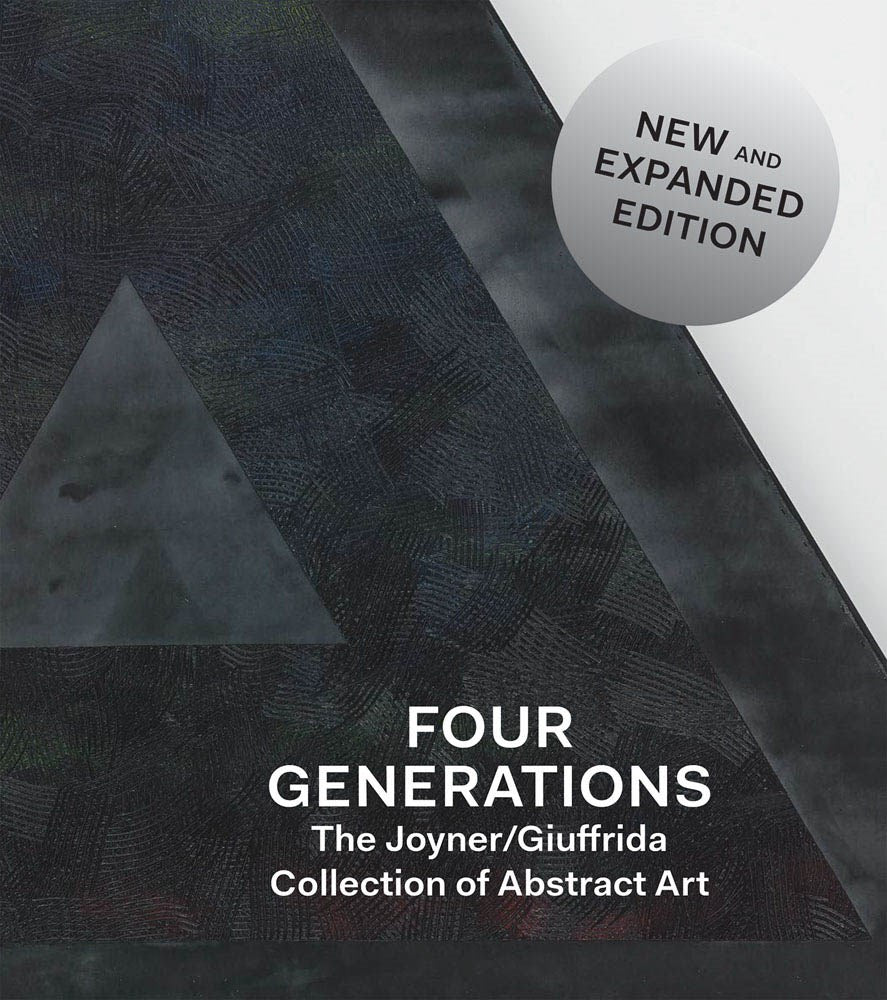
Four Generations: The Joyner/Giuffrida Collection of Abstract Art
$55.00*ship in 7-10 business days
The Joyner/Giuffrida Collection of Abstract Art is widely recognized as one of the most significant collections of modern and contemporary work by artists of the African diaspora and from the continent of Africa itself. Four Generations: The Joyner/Giuffrida Collection of Abstract Art draws upon the collection's unparalleled holdings to explore the critical contributions made by Black artists to the evolution of visual art in the 20th and 21st centuries.
This revised and expanded edition updates Four Generations with several new texts and nearly 100 images of works that have been added to the collection since the initial publication of this influential and widely praised book. Lavishly illustrated and featuring important contributions by leading art historians, critics, and curators, Four Generations gives an essential overview of some of the most notable Black artists and movements of the past century, and their approaches to abstraction in its various forms. Filled with countless insights and visual treasures, Four Generations is a journey through the momentous legacy of postwar art of the African diaspora.
Artists include: Firelei Báez, Romare Bearden, Kevin Beasley, Zander Blom, Mark Bradford, Leonardo Drew, Sam Gilliam, David Hammons, Isaac Julien, Jacob Lawrence, Norman Lewis, Glenn Ligon, Julie Mehretu, Oscar Murillo, Christina Quarles, Robin Rhode, Lorna Simpson, Shinique Smith, Alma Thomas, Kara Walker, Jack Whitten, Lynette Yiadom-Boakye and many others.
Rarely is a monograph on a private collection as revelatory as this—what an extraordinary, rich body of work is packed into these pages. The achievements of the artists, as well as their conceptual and formal daring, leave no doubt that a new page on American art is about to be opened." –Okwui Enwezor - Black Curators Matter: Conversations on Art and Change
![Black Curators Matter: Conversations on Art and Change cover image]()

Black Curators Matter: Conversations on Art and Change
Sold outSelected as one of Hyperallergic’s 15 Art Books We’re Excited to Read in 2026
This book chronicles the transformative impact of Black curators on American art museums since the 1970s as told by visionaries at the forefront of the change.
The relationship between Black Americans and U.S. art museums has historically been fraught and hard-won. In the late 1960s, the Black Emergency Cultural Coalition and other groups organized protests at major art museums, calling for the inclusion of Black artists and curators. Such advocacy led to acquisitions and exhibitions by Black artists at important institutions and spurred the establishment of museums and cultural organizations promoting Black art and culture. Today, Black curators hold significant positions at institutions nationwide. Black Curators Matter illuminates this critical history by spotlighting figures who have transformed the art world since the 1970s.
This book presents illuminating conversations between six pioneering curators―Lowery Stokes Sims, Deborah Willis, Richard J. Powell, Kellie Jones, Thelma Golden, and Franklin Sirmans―and a new generation of professionals, including Ashley James, Kalia Brooks, Aaron Bryant, Thomas Jean Lax, Rujeko Hockley, and LeRonn P. Brooks. Capturing the voices and experiences of Black curators, these discussions highlight their achievements and provide guidance for future generations aiming to diversify and enrich the cultural landscape. This volume reexamines the curatorial field to reveal the transformative strategies, critical interventions, and boundary-breaking exhibitions that reshaped American art museums toward greater inclusivity and experimentation.
- White Shoes
![White Shoes cover image]()

White Shoes
Sold outWhite Shoes is a collection of self-portraits taken in locations around New York that were central to the city’s once pivotal – and now largely obscured and unacknowledged – involvement in the slave trade. Nona Faustine depicts herself at the sites of slave auctions, burial grounds, slave-owning farms, and the coastal locations where slave ships docked, posing nude apart from a pair of white high-heeled shoes. Documenting herself in places where history becomes tangible, Faustine acts as a conduit or receptor, in solidarity with people whose names and memories have been lost but are embedded in the land. Through quiet but defiant self-representation, Faustine responds to a history of depiction of Black people that is shaped by subjugation, phrenology, and pseudo-science. Her complex large-format images refer and respond to a range of sources including daguerrotypes of slaves and photographs commissioned by naturalists, while her nudity ― expressive of fearless self-possession as well as vulnerability – subverts the legacy of Black and female nudes in Western art. Running throughout the images, the talismanic white shoes that give the series its name suggest the many adaptations to dominant White culture that were and are still demanded of people of colour. At once historical and speculative, White Shoes confronts the relationship between the visible and invisible, between what is displayed and what is kept from view. Includes newly commissioned texts by Pamela Sneed, Jessica Lanay, Jonathan Michael Square and Seph Rodney, together with an interview of the artist by Jessica Lanay.
- Diversity of Aesthetics
![Diversity of Aesthetics cover image]()

Diversity of Aesthetics
$20.00Critical conversations and reflections about lessons learned at the intersection of social movements and artist production.
Diversity of Aesthetics collects powerful and timely conversations among leading cultural critics, artists, and organizers to connect the threads between some of the most pressing social struggles and conflicts of our time: policing, war, borders and migration, economic crisis.
Across three themes—infrastructure, migration, and riots—militant thinkers, artists, educators, and others discuss aesthetic production, forms of social organization, modes of struggle against gendered and racialized capitalism, and revolutionary theory. Common to all three conversations is a commitment to rethinking the relationship between forms of critique and forms of struggle undertaken by collective social practices, offering lessons for tactics, strategies, and practices.
- Coltrane: The Definitive Visual Celebration of the Legend
![Coltrane: The Definitive Visual Celebration of the Legend cover image]()

Coltrane: The Definitive Visual Celebration of the Legend
Ravi Coltrane
Sold outThe definitive photographic celebration of John Coltrane's life and music, featuring exclusive contributions written by Ravi Coltrane, Wayne Coyne, Dev Hynes, Phil Lesh, Julie Mehretu, Carlos Santana, and Patti Smith.
John Coltrane's impact on music and culture endures far beyond his prolific career and untimely death in 1967 at age forty. His masterful saxophone style and groundbreaking jazz compositions had a profound effect on the evolution of music through the decades, and it continues to resonate across styles and genres to this day.
This beautiful photography book offers an intimate and in-depth look at his life with over one hundred expertly curated images taken by renowned photographers such as Francis Wolff and Chuck Stewart. The selection includes outtakes from the album cover photoshoot for Ascension, in-studio candid shots taken during the recording of Blue Train, a glimpse backstage with Alice Coltrane before their first performance together, and more. Coltrane is a visual celebration of John Coltrane's musical legacy, complete with an introduction by his son and fellow musician Ravi Coltrane, along with personal stories from other musicians, artists, and writers who have been moved by his work.
- The Romare Bearden Reader
![The Romare Bearden Reader cover image]()

The Romare Bearden Reader
Robert G. O'Meally
$31.95The Romare Bearden Reader brings together a collection of new essays and canonical writings by novelists, poets, historians, critics, and playwrights. The contributors, who include Toni Morrison, Ralph Ellison, August Wilson, Farah Jasmine Griffin, and Kobena Mercer, contextualize Bearden's life and career within the history of modern art, examine the influence of jazz and literature on his work, trace his impact on twentieth-century African American culture, and outline his art's political dimensions. Others focus on specific pieces, such as A Black Odyssey, or the ways in which Bearden used collage to understand African American identity. The Reader also includes Bearden's most important writings, which grant readers insight into his aesthetic values and practices and share his desire to tell what it means to be black in America. Put simply, The Romare Bearden Reader is an indispensable volume on one of the giants of twentieth-century American art.
Contributors. Elizabeth Alexander, Romare Bearden, Mary Lee Corlett, Rachel DeLue, David C. Driskell, Brent Hayes Edwards, Ralph Ellison, Henri Ghent, Farah Jasmine Griffin, Harry Henderson, Kobena Mercer, Toni Morrison, Albert Murray, Robert G. O’Meally, Richard Powell, Richard Price, Sally Price, Myron Schwartzman, Robert Burns Stepto, Calvin Tomkins, John Edgar Wideman, August Wilson
- Overlooked Creations of Black Art and Culture (From the Archives)
![Overlooked Creations of Black Art and Culture (From the Archives) cover image]()

Overlooked Creations of Black Art and Culture (From the Archives)
Jay Leslie
$7.99A perfect book for young readers to discover lesser-known works of art and culture that have shaped Black history in the United States.
The Banjo Lesson. The Brownies Book. "Rapper's Delight." Throughout history, Black people have performed, created art, and broken barriers that helped propel the fight for equality forward. Celebrate little-known groundbreaking contributions to art and culture like these and learn about their social impact on American history in Overlooked Creations of Black Art and Culture.
ABOUT THIS SERIES:
This brand-new series is rooted in a profound commitment to shedding light on some of the important -- and often lesser-known -- aspects of Black history. From the Archives features landmarks, events, people, and artistic endeavors that have played a significant role in the Black experience in America and offers a chance to celebrate them. Written in a vivid, engaging style and featuring a colorful combination of photos and illustrations, each title serves as a powerful vehicle for education, inspiration, and empowerment for young readers.
- Black Artists in America: From Civil Rights to the Bicentennial
![Black Artists in America: From Civil Rights to the Bicentennial cover image]()

Black Artists in America: From Civil Rights to the Bicentennial
Earnestine Lovelle Jenkins
$45.00The second book in a three-volume series on Black American artists, featuring work from the 1950s to the 1970s that responded to the cultural, political, and social concerns of the era
During the turbulent 1950s to 1970s, Black American artists, responding to increasing civil rights activism, challenged inequities in the art world. Artists created works that celebrated their racial identity, connected with Black audiences, and participated in the struggle for political, economic, and social equality. The establishment of artist collectives, such as Spiral, and museums devoted to Black art, including the Studio Museum in Harlem, alongside the emergence of art historians and critics such as David Driskell and Linda Goode Bryant, marked early steps to bring Black art into broader artistic discourse.
The book features 140 color illustrations of paintings, sculptures, and works on paper by such celebrated artists as Romare Bearden, Sam Gilliam, Jacob Lawrence, Norman Lewis, Howardena Pindell, and Alma Thomas, as well as by under-recognized artists. Essays provide an overview of the period and in-depth examinations of James A. Porter, an artist and art historian credited with establishing the field of African American art history, and Merton D. Simpson, an abstract painter, member of the Spiral group, and one of the most important dealers of African art in the United States.Published in association with the Dixon Gallery and Gardens
Exhibition Schedule:
Dixon Gallery and Gardens, Memphis
(October 22, 2023–January 14, 2024)
Crocker Art Museum, Sacramento
(February 4–May 19, 2024) - The Time is Always Now: Artists Reframe Black Figure
![Book cover image]()
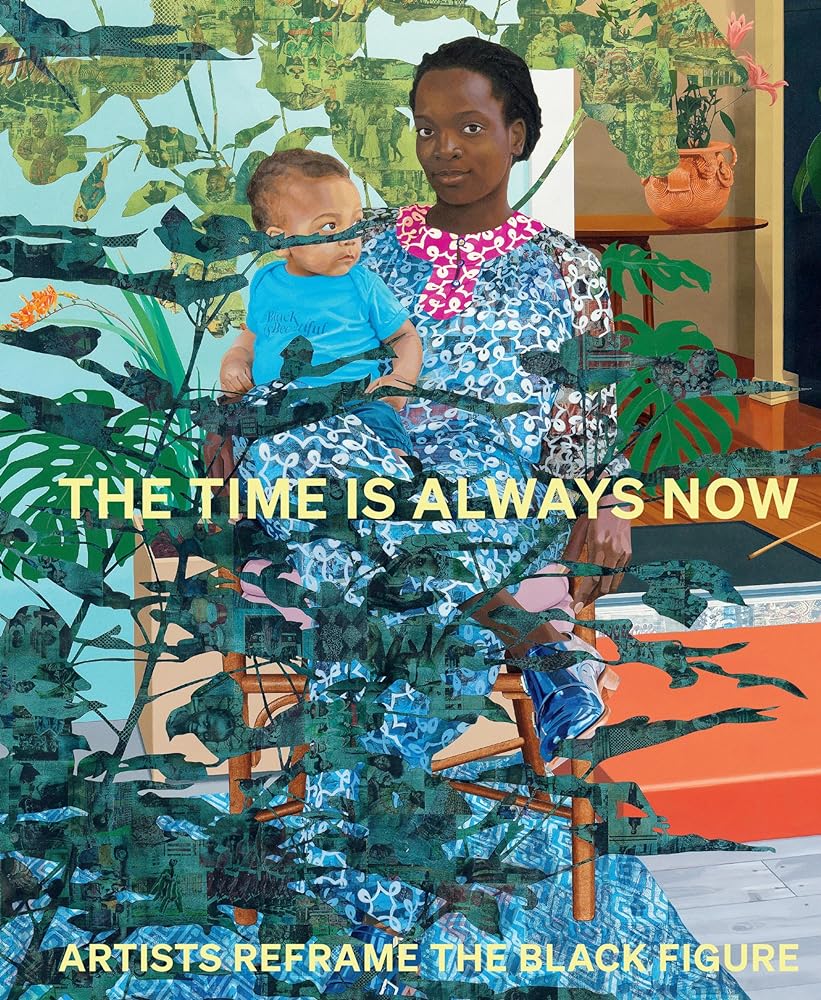
The Time is Always Now: Artists Reframe Black Figure
Ekow Eshun
$45.00*ships or ready for pick up in 7 - 10 business days*
Black figuration and portraiture as realized in the works of Amy Sherald, Jordan Casteel and other contemporary artists
“There is never a time in the future in which we will work out our salvation. The challenge is in the moment, the time is always now,” wrote James Baldwin. Published in conjunction with the eponymous exhibition at the National Portrait Gallery, London, The Time is Always Now is edited by curator Ekow Eshun, former director of the Institute of Contemporary Arts in London. The book brings together 22 contemporary African diasporic artists working primarily in the United Kingdom and the United States, whose practices―whether through painting, drawing or sculpture―foreground the Black figure. Acknowledging the paradox of race as both a “socially constructed fiction” and a “lived reality,” as Eshun writes, The Time is Always Now celebrates these Black figurative artworks against a background of heightened cultural visibility. Through a three-part structure, this book examines Black figuration as a means to address the absence and distortion of Black presence within Western art history. Each artist receives a detailed biographical profile alongside reproductions of their included works. The catalog is also supplemented by three original essays from Dorothy Price, Professor of Modern and Contemporary Art and Critical Race Art History at the Courtauld Institute of Art; Bernardine Evaristo, Booker Prize–winning author of Girl, Woman, Other; and Esi Edugyan, two-time Giller Prize winner for her novels Half-Blood Blues and Washington Black.
Artists include: Njideka Akunyili Crosby, Hurvin Anderson, Michael Armitage, Jordan Casteel, Noah Davis, Godfried Donkor, Kimathi Donkor, Denzil Forrester, Lubaina Himid, Claudette Johnson, Titus Kaphar, Kerry James Marshall, Wangechi Mutu, Chris Ofili, Toyin Ojih Odutola, Jennifer Packer, Thomas J. Price, Nathaniel Mary Quinn, Lorna Simpson, Amy Sherald, Henry Taylor, Barbara Walker. - The Meaning of Soul: Black Music and Resilience since the 1960s
![The Meaning of Soul: Black Music and Resilience since the 1960s]()
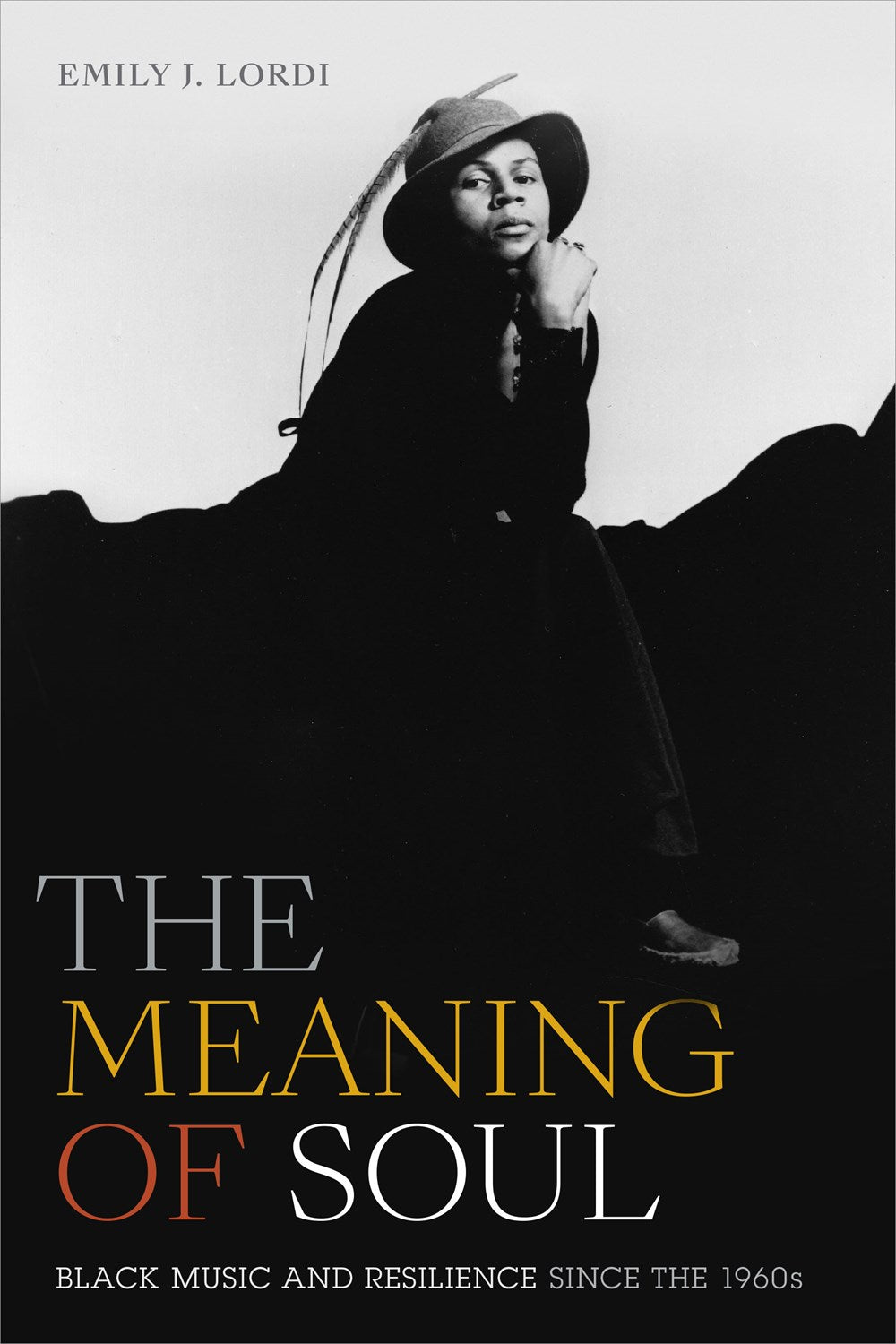
The Meaning of Soul: Black Music and Resilience since the 1960s
by Emily J. Lordi
$26.95Examining the work of Aretha Franklin, Nina Simone, Solange Knowles, Flying Lotus, and others, Emily J. Lordi proposes a new understanding of soul, showing how it came to signify a belief in black resilience enacted through musical practices.
In The Meaning of Soul, Emily J. Lordi proposes a new understanding of this famously elusive concept. In the 1960s, Lordi argues, soul came to signify a cultural belief in black resilience, which was enacted through musical practices—inventive cover versions, falsetto vocals, ad-libs, and false endings. Through these soul techniques, artists such as Aretha Franklin, Donny Hathaway, Nina Simone, Marvin Gaye, Isaac Hayes, and Minnie Riperton performed virtuosic survivorship and thus helped to galvanize black communities in an era of peril and promise. Their soul legacies were later reanimated by such stars as Prince, Solange Knowles, and Flying Lotus. Breaking with prior understandings of soul as a vague masculinist political formation tethered to the Black Power movement, Lordi offers a vision of soul that foregrounds the intricacies of musical craft, the complex personal and social meanings of the music, the dynamic movement of soul across time, and the leading role played by black women in this musical-intellectual tradition. - Afrofuturisms: Ecology, Humanity, and Francophone Cultural Expressions
![Afrofuturisms: Ecology, Humanity, and Francophone Cultural Expressions]()
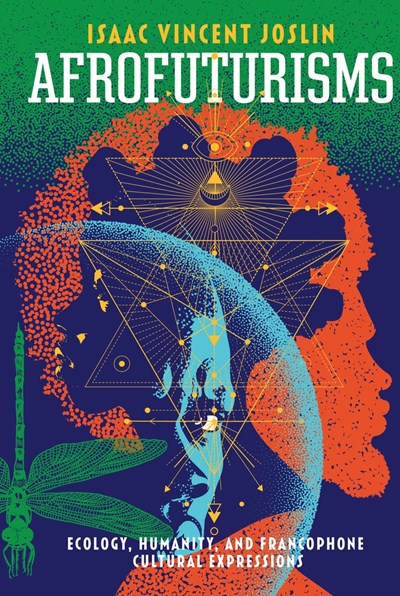
Afrofuturisms: Ecology, Humanity, and Francophone Cultural Expressions
by Isaac Vincent Joslin
$36.95*Ships in 7-10 Business Days*
An exploration of Francophone African literary imaginations and expressions through the lens of AfrofuturismGenerally attributed to the Western imagination, science fiction is a literary genre that has expressed projected technological progress since the Industrial Revolution. However, certain fantastical elements in African literary expressions lend themselves to science fiction interpretations, both utopian and dystopian. When the concept of science is divorced from its Western, rationalist, materialist, positivist underpinnings, science fiction represents a broad imaginative space that supersedes the limits of this world. Whether it be on the moon, under the sea, or elsewhere within the imaginative universe, Afrofuturist readings of select films, novels, short stories, plays, and poems reveal a similarly emancipatory African future that is firmly rooted in its own cultural mythologies, cosmologies, and philosophies. Isaac Joslin identifies the contours and modalities of a speculative, futurist science fiction rooted in the sociocultural and geopolitical context of continental African imaginaries. Constructing an arc that begins with gender identity and cultural plurality as the bases for an inherently multicultural society, this project traces the essential role of language and narrativity in processing traumas that stem from the violence of colonial and neocolonial interventions in African societies. Joslin then outlines the influential role of discursive media that construct divisions and create illusions about societal success, belonging, and exclusion, while also identifying alternative critical existential mythologies that promote commonality and social solidarity. The trajectory proceeds with a critical analysis of the role of education in affirming collective identity in the era of globalization; the book also assesses the market-driven violence that undermines efforts to instill and promote cultural and social autonomy. Last, this work proposes an egalitarian and ecological ethos of communal engagement with and respect for the diversity of the human and natural worlds. - Why Bushwick Bill Matters
![Why Bushwick Bill Matters]()
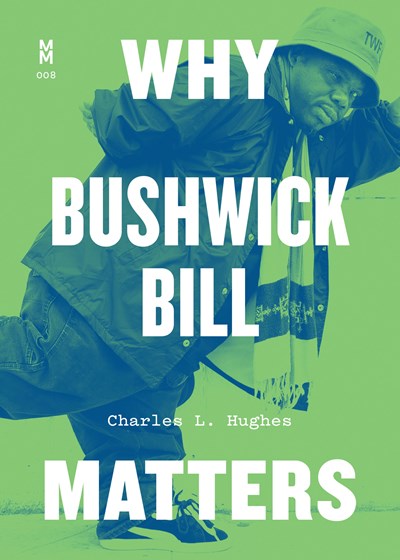
Why Bushwick Bill Matters
$18.95*ship in 7-10 business days
In 1989 the Geto Boys released a blistering track, “Size Ain’t Shit,” that paid tribute to the group’s member Bushwick Bill. Born with dwarfism, Bill was one of the few visibly disabled musicians to achieve widespread fame and one of the even fewer to address disability in a direct, sustained manner. Initially hired as a dancer, Bill became central to the Geto Boys as the Houston crew became one of hip-hop’s most important groups.
Why Bushwick Bill Matters chronicles this crucial artist and explores what he reveals about the relationships among race, sex, and disability in pop music. Charles L. Hughes examines Bill's recordings and videos (both with the Geto Boys and solo), from the horror-comic persona of “Chuckie” to vulnerable verses in songs such as “Mind Playing Tricks On Me,” to discuss his portrayals of dwarfism, addiction, and mental illness. Hughes also explores Bill’s importance to his era and to the longer history of disability in music. A complex figure, Bill exposed the truths of a racist and ableist society even as his violent and provocative lyrics put him in the middle of debates over censorship and misogyny. Confrontational and controversial, Bushwick Bill left a massive legacy as he rhymed and swaggered through an often-inaccessible world.
- Tina Turner: That's My Life: That's My Life
![Tina Turner: That's My Life: That's My Life]()

Tina Turner: That's My Life: That's My Life
$65.00*Ships in 7-10 Business Days*
The first authorized pictorial autobiography for the trade by the legendary Tina Turner, containing iconic as well as never-before-seen candid photos, letters, and other personal items of The Queen of Rock 'n' Roll, from her early career to today.
Tina Turner has always been a glorious force to be reckoned with; for more than sixty years, Tina has captivated audiences all over the world. For the first time, Tina has assembled an exceptional collection of images and ephemera to mark her eightieth birthday. Lavishly illustrated, Tina Turner: That's My Life features the work of world-renowned photographers including Peter Lindbergh, Annie Leibovitz, Bruce Weber, Anton Corbijn, Herb Ritts, Andy Warhol, Lord Snowdon, and Paul Cox among others. Also showcased are illustrations by fashion designers who were inspired by Tina, including Christian Louboutin, Antonio, and Bob Mackie.
Additionally, Tina delved into her personal archive, and That's My Life showcases some of Tina's most famous dresses, wigs, and shoes. Comments handwritten by Tina Turner herself are included, and as well as handwritten letters from such friends as Beyoncé, Giorgio Armani, Bryan Adams, Oprah Winfrey, and Mick Jagger and others. Tina Turner: That's My Life is a comprehensive window into the world of Tina Turner, and is the perfect celebration of this storied performer that is sure to wow longtime and new fans alike. - Ming Smith: An Aperture Monograph
![Ming Smith: An Aperture Monograph]()
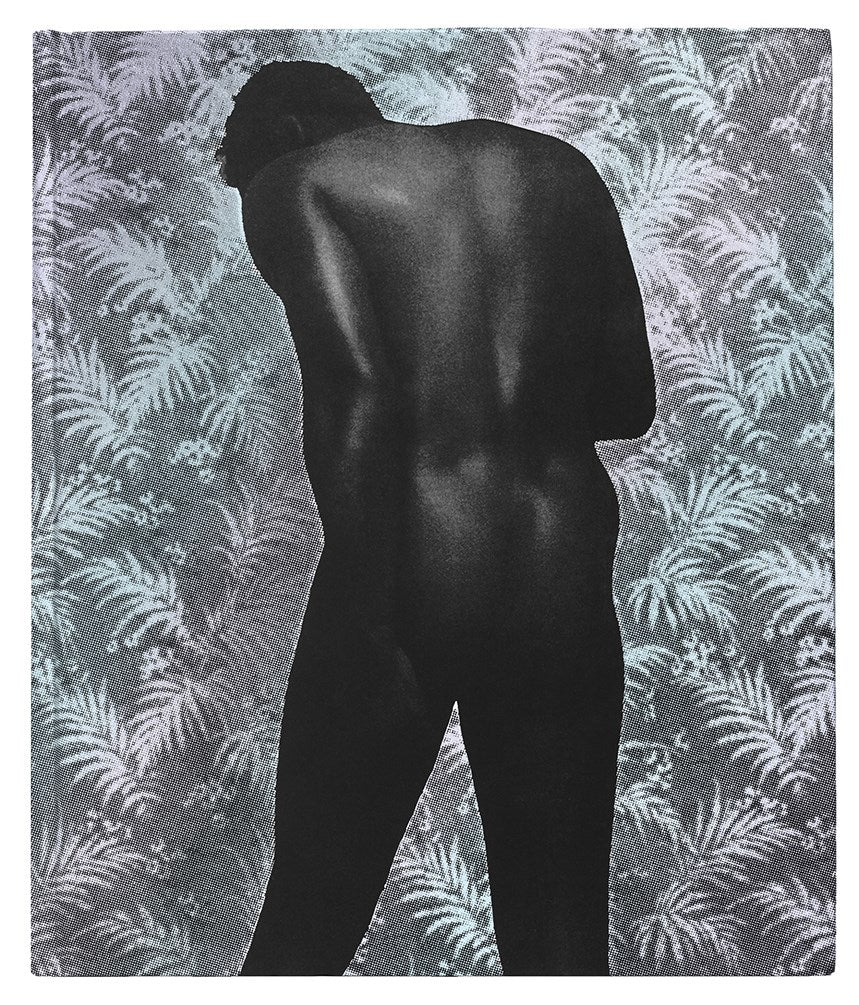
Ming Smith: An Aperture Monograph
$75.00Ming Smith’s poetic and experimental images are icons of twentieth-century African American life.
One of the greatest artist-photographers working today, Smith moved to New York in the 1970s and began to make images charged with startling beauty and spiritual energy. This long-awaited monograph brings together four decades of Smith’s work, celebrating her trademark lyricism, distinctively blurred silhouettes, dynamic street scenes, and deep devotion to theater, music, poetry, and dance—from the “Pittsburgh Cycle” plays of August Wilson to the Afrofuturism of Sun Ra. With never-before-seen images, and a range of illuminating essays and interviews, this tribute to Smith’s singular vision promises to be an enduring contribution to the history of American photography.
Copublished by Aperture and Documentary Arts - The Black Technical Object: On Machine Learning and the Aspiration of Black Being by Ramon Amaro
![The Black Technical Object: On Machine Learning and the Aspiration of Black Being by Ramon Amaro]()
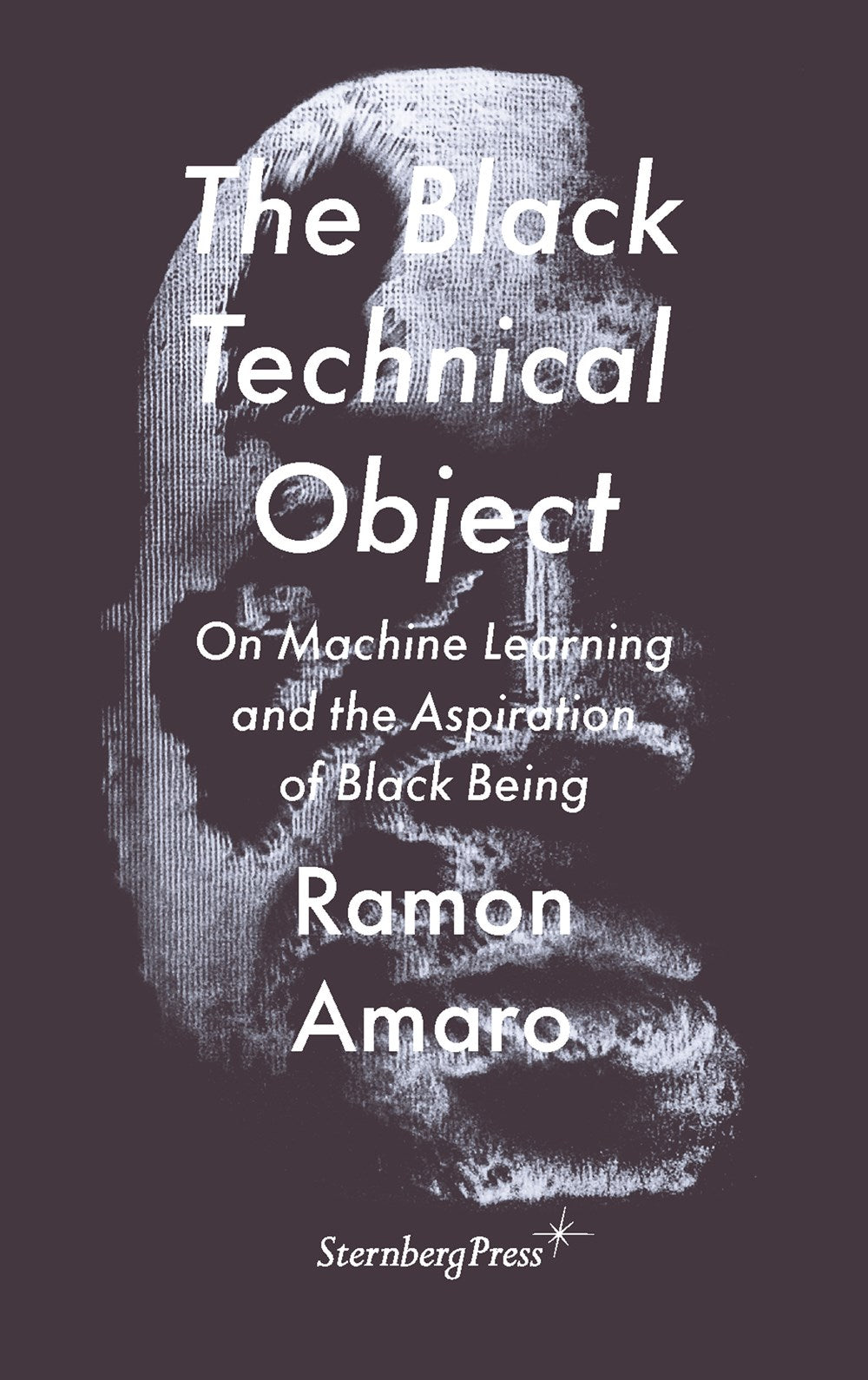
The Black Technical Object: On Machine Learning and the Aspiration of Black Being by Ramon Amaro
$25.00*ships in 7-10 business days
On the abstruse nature of machine learning, mathematics, and the deep incursion of racial hierarchy.
To impair the racial ordering of the world, The Black Technical Object introduces the history of statistical analysis and “scientific” racism into research on machine learning. Computer programming designed for taxonomic patterning, machine learning offers useful insights into racism and racist behavior, but its connection to the racial history of science and the Black lived experience has yet to be developed. In this book, Ramon Amaro explores how the history of data and statistical analysis informs the complex relationship between race and machine learning. He juxtaposes a practical analysis of this type of computerized learning with a theory of Black alienation in order to inspire alternative approaches to contemporary algorithmic practice. In doing so, Amaro contemplates the abstruse nature of programming and mathematics, as well as the deep incursion of racial hierarchies.
Series Overview: In the decades that followed the demise of decolonial struggles and the end of the USSR, a great deal of intellectual effort was devoted to conceptualizing political emancipation as freedom from the masses rather than freedom for the masses. Focusing on connectivity rather than on collectivity, these modalities of political action led to depoliticizing effects and to a certain counter-political ethos expressed in terms such as parapolitics, psychopolitics, or micropolitics, all which this series terms “antipolitical.” Rather than counter the arguments that each term puts forth, On the Antipolitical, edited by Ana Teixeira Pinto, suggests historizing this disposition, situating it within the neocolonial continuum that animates the digital frontier as the new locus of settler becoming. - To Begin Again: Artists and Childhood
![To Begin Again: Artists and Childhood]()
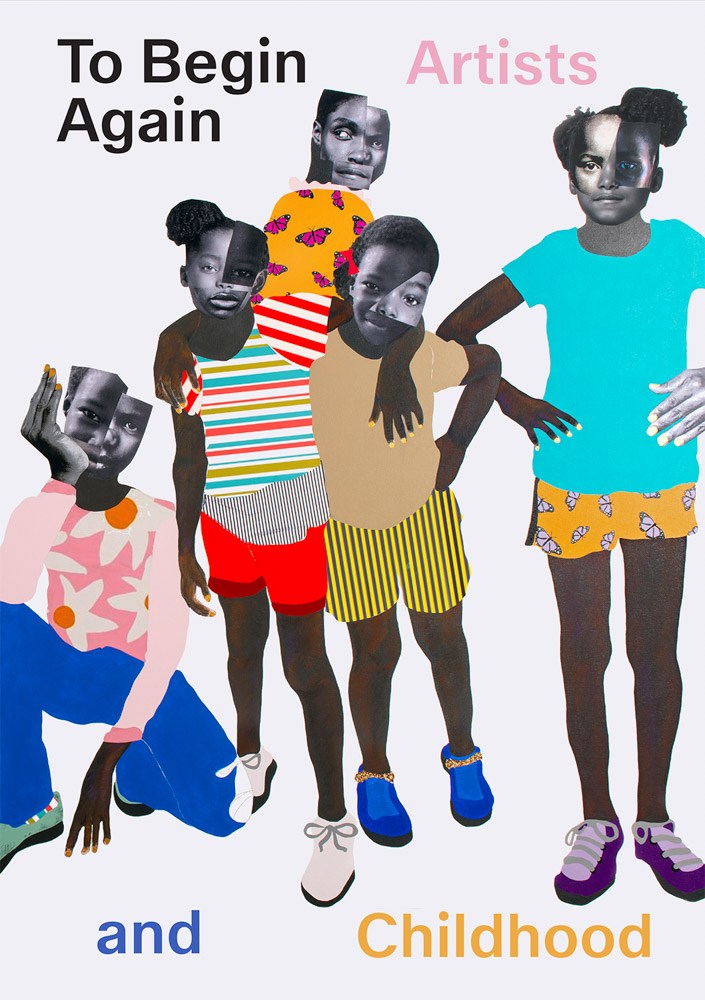
To Begin Again: Artists and Childhood
edited by Jeffrey De Blois & Ruth Erickson
$39.95How artists from Paul Klee and Mierle Laderman Ukeles to Faith Ringgold and Deborah Roberts have explored childhood themes of innocence, spontaneity and storytelling
Artists have long been inspired by children—by their imagination, creativity and unique ways of seeing and being in the world—and have made work that depicts and involves children as collaborators, that represents or mimics their ways of drawing or telling stories, that highlights their unique cultures, and that addresses ideas of innocence and spontaneity closely associated with children. To Begin Again: Artists and Childhood surveys how artists have reflected on and contributed to notions of childhood from the early 20th century to the present. The works in To Begin Again offer distinctive viewpoints and experiences, revealing how time and place, economics and race, and representation and aesthetics fundamentally shape how we experience and understand early development. The catalog underscores that while there is no single, uniform idea of childhood, it is nevertheless the ground upon which so much of society is built, negotiated and imagined.
Artists include: Ann Agee, John Ahearn, Njideka Akunyili Crosby, Francis Alÿs, Jean-Michel Basquiat, Brian Belott, Jordan Casteel, Lenka Clayton, Allan Rohan Crite, Henry Darger, Karon Davis, Robert Gober, Jay Lynn Gomez, Trenton Doyle Hancock, Duane Hanson, Mona Hatoum, Sharon Hayes, Ekua Holmes, Mary Kelly, Paul Klee, Justine Kurland, Helen Levitt, Tau Lewis, Glenn Ligon, Oscar Murillo, Rivane Neuenschwander, Berenice Olmedo, Charles Ray, Faith Ringgold, Deborah Roberts, Tim Rollins and K.O.S., Rachel Rose, Heji Shin, Sable Elyse Smith, Becky Suss, Mierle Laderman Ukeles, Cathy Wilkes and Carmen Winant. - Kerry James Marshall: Mastry
![Kerry James Marshall: Mastry]()
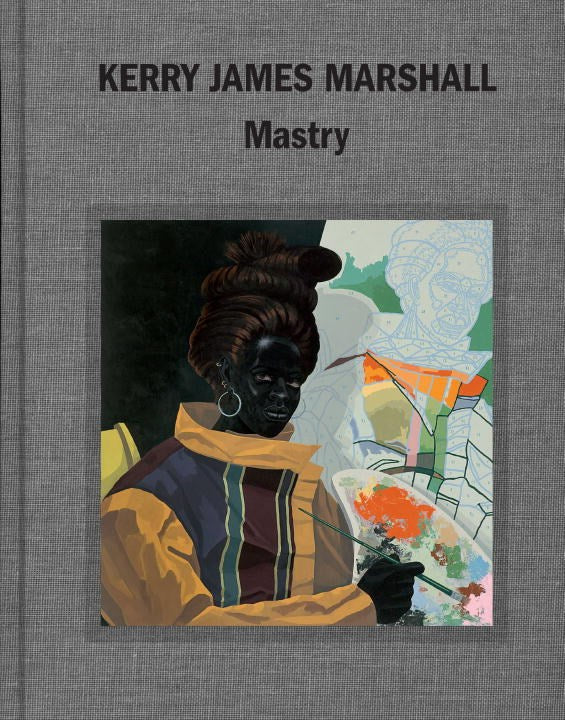
Kerry James Marshall: Mastry
$65.00*Ships in 7-10 business days*
The definitive monograph on contemporary African American painter Kerry James Marshall, accompanying a major traveling retrospective. This long-awaited volume celebrates the work of Kerry James Marshall, one of America’s greatest living painters. Born before the passage of the Civil Rights Act, in Birmingham, Alabama, and witness to the Watts riots in 1965, Marshall has long been an inspired and imaginative chronicler of the African American experience. Best known for large-scale interiors, landscapes, and portraits featuring powerful black figures, Marshall explores narratives of African American history from slave ships to the present and draws upon his deep knowledge of art history from the Renaissance to twentieth-century abstraction, as well as other sources such as the comic book and the muralist tradition. With luscious color and brushstrokes and highly detailed patterning, his direct and intimate scenes of black middle-class life conjure a wide range of emotions, resulting in powerful paintings that confront the position of African Americans throughout American history. Richly illustrated, this monumental book features essays by noted curators as well as the artist, and more than 100 paintings from throughout the artist’s career arranged thematically by subject: history painting; beauty, as expressed through the nude, portraiture, and self-portraiture; landscape; religion; and the politics of black nationalism.
- John Wilson: Witnessing Humanity
![John Wilson: Witnessing Humanity cover image]()

John Wilson: Witnessing Humanity
Jennifer Farrell
$55.00Through paintings, sculptures, drawings and more, John Wilson's work foregrounds the human experience and refuses invisibility
American artist John Wilson was not only a master draftsman, printmaker, painter and sculptor active for over seven decades, but he was also a keen observer and social activist. In his representations of Black Americans in particular, he sought to pay homage to the beauty and truths of ordinary Black people in such a way that all viewers, across race and culture, might see themselves reflected. His multidisciplinary works include unflinching representations of racial violence and war, tender family portraits, monumental bronze heads and landmark commissions such as the bust of Martin Luther King, Jr., which stands in the United States Capitol.
The first major retrospective of the artist’s work, Witnessing Humanity sheds light on Wilson’s life and artistic evolution. Reproductions of artworks and photographs accompany critical essays and personal reflections, including analyses by art historians, interviews with Wilson’s peers, remembrances from fellow Black creatives and a full chronology by the late artist’s gallerist. The varied voices which resonate through this catalog illustrate that it is long past time to recognize Wilson’s art―to celebrate his lifelong dedication to depicting what he described as the "reality of being Black in this impossible world."
John Woodrow Wilson (1922–2015) was born in Roxbury, Massachusetts, and studied at the School of the Museum of Fine Arts, Boston, and Tufts University. He lived in Mexico for five years and became a friend and colleague of artist Elizabeth Catlett. Wilson taught fine art at Boston University from 1964 until 1986. - Black Opera
![Black Opera]()
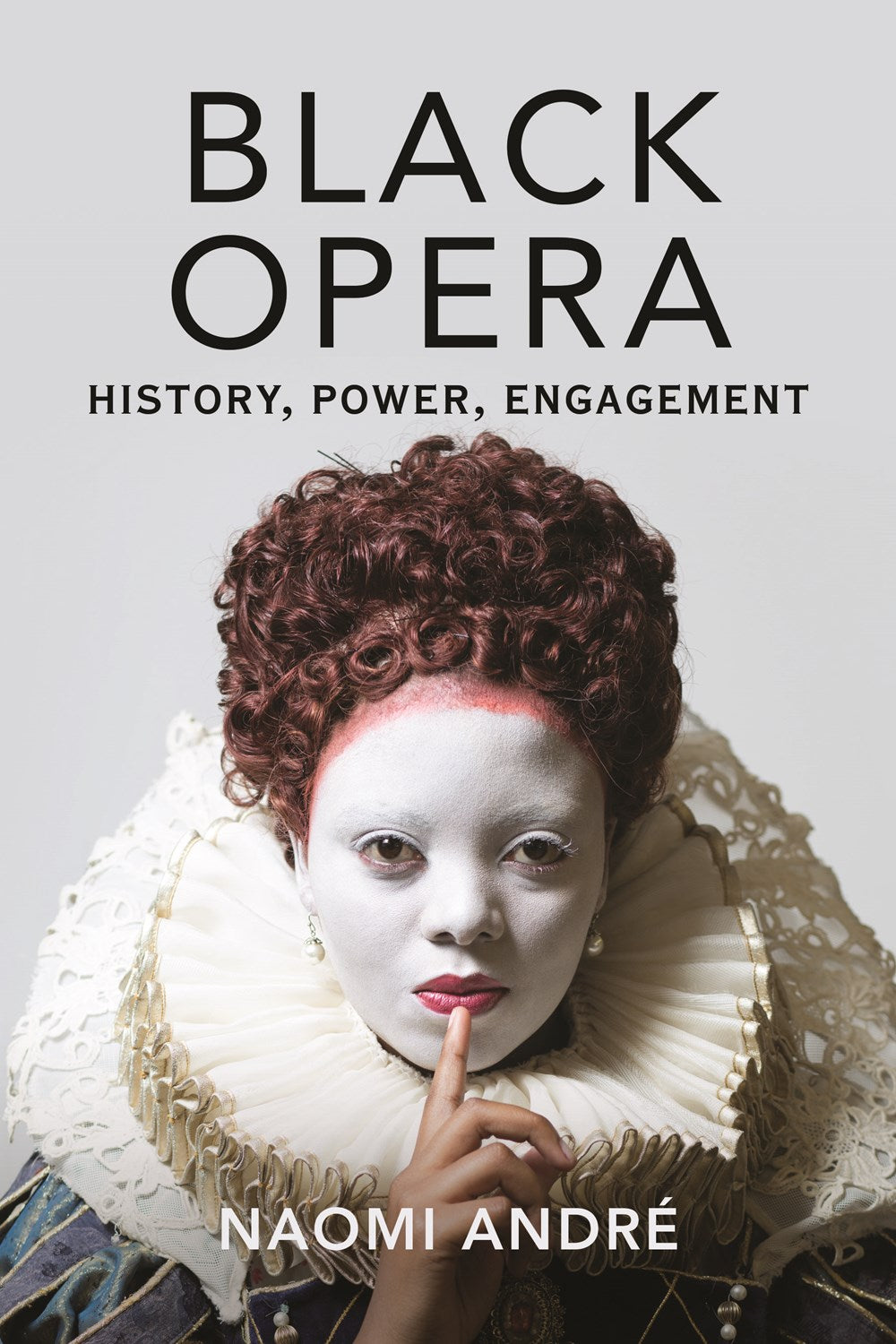
Black Opera
by Naomi Andre
$27.95*ships in 7-10 business days
Throughout Africa, artists use hip-hop both to describe their lives and to create shared spaces for uncensored social commentary, feminist challenges to patriarchy, and resistance against state institutions, while at the same time engaging with the global hip-hop community. In Hip-Hop in Africa, Msia Kibona Clark examines some of Africa’s biggest hip-hop scenes and shows how hip-hop helps us understand specifically African narratives of social, political, and economic realities.
Clark looks at the use of hip-hop in protest, both as a means of articulating social problems and as a tool for mobilizing listeners around those problems. She also details the spread of hip-hop culture in Africa following its emergence in the United States, assessing the impact of urbanization and demographics on the spread of hip-hop culture. Hip-Hop in Africa is a tribute to a genre and its artists as well as a timely examination that pushes the study of music and diaspora in critical new directions. Accessibly written by one of the foremost experts on African hip-hop, this book will easily find its place in the classroom.


Stay Informed. We're building a community committed to celebrating Black authors + artisans. Subscribe to keep up with all things Kindred Stories.