
Search results: 12 results for “frantz fanon”
Not finding what you're looking for? Check out our shop on bookshop.org to order and still support us ♥
12 results
-
The Wretched of the Earth
![The Wretched of the Earth]()
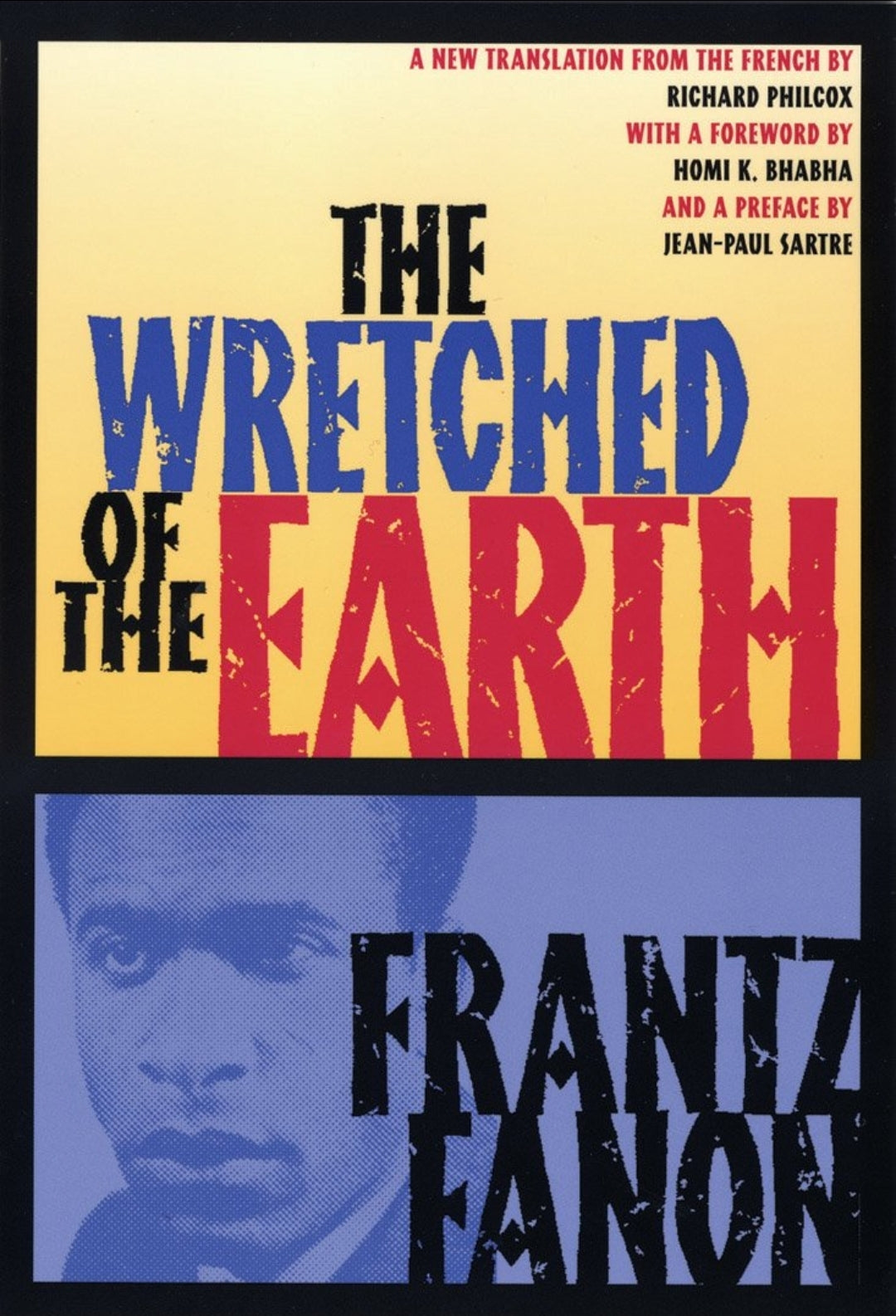
The Wretched of the Earth
by Frantz Fanon
$18.00First published in 1961, Frantz Fanon’s The Wretched of the Earth is a masterful and timeless interrogation of race, colonialism, psychological trauma, and revolutionary struggle. In 2020, it found a new readership in the wake of the Black Lives Matter protests and the centering of narratives interrogating race by Black writers. Bearing singular insight into the rage and frustration of colonized peoples, and the role of violence in spurring historical change, the book incisively attacks the twin perils of post-independence colonial politics: the disenfranchisement of the masses by the elites on the one hand, and intertribal and interfaith animosities on the other. A landmark text for revolutionaries and activists, The Wretched of the Earth is an eternal touchstone for civil rights, anti-colonialism, psychiatric studies, and Black consciousness movements around the world. Translated by Richard Philcox, and featuring now-classic critical essays by Jean-Paul Sartre and Homi K. Bhabha, as well as a new essay, this sixtieth anniversary edition of Fanon’s most famous text stands proudly alongside such pillars of anti-colonialism and anti-racism as Edward Said’s Orientalism and The Autobiography of Malcolm X.
-
Fanon
![Fanon cover image]()

Fanon
John Edgar Wideman
$16.95A philosopher, psychiatrist, and political activist, Frantz Fanon was a fierce, acute critic of racism and oppression. Born of African descent in Martinique in 1925, Fanon fought in defense of France during World War II but later against France in Algeria’s war for independence. His last book, The Wretched of the Earth, published in 1961, inspired leaders of diverse liberation movements: Steve Biko in South Africa, Che Guevara in Latin America, the Black Panthers in the States. Wideman’s novel is disguised as the project of a contemporary African American novelist,Thomas, who undertakes writing a life of Fanon. The result is an electrifying mix of perspectives, traveling from Manhattan to Paris to Algeria to Pittsburgh. Part whodunit, part screenplay, part love story, Fanon introduces the French film director Jean-Luc Godard to the ailing Mrs. Wideman in Homewood and chases the meaning of Fanon’s legacy through our violent, post-9/11 world, which seems determined to perpetuate the evils Fanon sought to rectify.
-
Toward the African Revolution
![Book cover image]()

Toward the African Revolution
Frantz Fanon
$17.00This powerful collection of articles, essays, and letters spans the period between Black Skin, White Masks (1952) and The Wretched of the Earth (1961), Fanon’s landmark manifesto on the psychology of the colonized and the means of empowerment necessary for their liberation. These pieces display the genesis of some of Fanon’s greatest ideas ideas that became so vital to the leaders of the American civil rights movement.
-
Postcolonial Melancholia (The Wellek Library Lectures)
![Postcolonial Melancholia (The Wellek Library Lectures) cover image]()

Postcolonial Melancholia (The Wellek Library Lectures)
$24.95In an effort to deny the ongoing effect of colonialism and imperialism on contemporary political life, the death knell for a multicultural society has been sounded from all sides. That's the provocative argument Paul Gilroy makes in this unorthodox defense of the multiculture. Gilroy's searing analyses of race, politics, and culture have always remained attentive to the material conditions of black people and the ways in which blacks have defaced the "clean edifice of white supremacy." In Postcolonial Melancholia, he continues the conversation he began in the landmark study of race and nation 'There Ain't No Black in the Union Jack' by once again departing from conventional wisdom to examine―and defend―multiculturalism within the context of the post-9/11 "politics of security."
This book adapts the concept of melancholia from its Freudian origins and applies it not to individual grief but to the social pathology of neoimperialist politics. The melancholic reactions that have obstructed the process of working through the legacy of colonialism are implicated not only in hostility and violence directed at blacks, immigrants, and aliens but in an inability to value the ordinary, unruly multiculture that has evolved organically and unnoticed in urban centers. Drawing on the seminal discussions of race begun by Frantz Fanon, W. E. B. DuBois, and George Orwell, Gilroy crafts a nuanced argument with far-reaching implications. Ultimately, Postcolonial Melancholia goes beyond the idea of mere tolerance to propose that it is possible to celebrate the multiculture and live with otherness without becoming anxious, fearful, or violent.
-
Misbehaving at the Crossroads: Essays & Writings
![Misbehaving at the Crossroads: Essays & Writings cover image]()

Misbehaving at the Crossroads: Essays & Writings
Honoree Fanonne Jeffers
$19.99The New York Times-bestselling, National Book Award-nominated author of The Love Songs of W.E.B. Du Bois and The Age of Phillis makes her nonfiction debut with this personal and thought-provoking work that explores the journeys and possibilities of Black women throughout American history and in contemporary times.
Honorée Fanonne Jeffers is at a crossroads.
Traditional African/Black American cultures present the crossroads as a place of simultaneous difficulty and possibility. In contemporary times, Kimberlé Crenshaw coined the phrase “intersectionality” to explain the unique position of Black women in America. In many ways, they are at a third crossroads: attempting to fit into notions of femininity and respectability primarily assigned to White women, while inventing improvisational strategies to combat oppression.
In Misbehaving at the Crossroads, Jeffers explores the emotional and historical tensions in Black women’s public lives and her own private life. She charts voyages of Black girlhood to womanhood and the currents buffeting these journeys, including the difficulties of racially gendered oppression, the challenges of documenting Black women’s ancestry; the adultification of Black girls; the irony of Black female respectability politics; the origins of Womanism/Black feminism; and resistance to White supremacy and patriarchy. As Jeffers shows with empathy and wisdom, naming difficult historical truths represents both Blues and transcendence, a crossroads that speaks.
Necessary and sharply observed, provocative and humane, and full of the insight and brilliance that has characterized her poetry and fiction, Misbehaving at the Crossroads illustrates the life of one extraordinary Black woman—and her extraordinary foremothers.
-
Stigma and Culture: Last-Place Anxiety in Black America (Lewis Henry Morgan Lecture Series)
![Book cover image]()

Stigma and Culture: Last-Place Anxiety in Black America (Lewis Henry Morgan Lecture Series)
J. Lorand Matory and Thomas P. Gibson
$32.00In Stigma and Culture, J. Lorand Matory provocatively shows how ethnic identification in the United States—and around the globe—is a competitive and hierarchical process in which populations, especially of historically stigmatized races, seek status and income by dishonoring other stigmatized populations. And there is no better place to see this than among the African American elite in academia, where he explores the emergent ethnic identities of African and Caribbean immigrants and transmigrants, Gullah/Geechees, Louisiana Creoles, and even Native Americans of partly African ancestry.
Matory describes the competitive process that hierarchically structures their self-definition as ethnic groups and the similar process by which middle-class African Americans seek distinction from their impoverished compatriots. Drawing on research at universities such as Howard, Harvard, and Duke and among their alumni networks, he details how university life—while facilitating individual upward mobility, touting human equality, and regaling cultural diversity—also perpetuates the cultural standards that historically justified the dominance of some groups over others. Combining his ethnographic findings with classic theoretical insights from Frantz Fanon, Fredrik Barth, Erving Goffman, Pierre Bourdieu and others—alongside stories from his own life in academia—Matory sketches the university as an institution that, particularly through the anthropological vocabulary of culture, encourages the stigmatized to stratify their own. -
The Black Antifascist Tradition: Fighting Back from Anti-Lynching to Abolition
![The Black Antifascist Tradition: Fighting Back from Anti-Lynching to Abolition cover image]()

The Black Antifascist Tradition: Fighting Back from Anti-Lynching to Abolition
$24.95The story of the fight against fascism across the African diaspora, revealing that Black antifascism has always been vital to global freedom struggles.
At once a history for understanding fascism and a handbook for organizing against, The Black Antifascist Tradition is an essential book for understanding our present moment and the challenges ahead.
From London to the Caribbean, from Ethiopia to Harlem, from Black Lives Matter to abolition, Black radicals and writers have long understood fascism as a threat to the survival of Black people around the world―and to everyone.
In The Black Antifascist Tradition, scholar-activists Jeanelle K. Hope and Bill Mullen show how generations of Black activists and intellectuals―from Ida B. Wells in the fight against lynching, to Angela Y. Davis in the fight against the prison-industrial complex―have stood within a tradition of Black Antifascism.
As Davis once observed, pointing to the importance of anti-Black racism in the development of facism as an ideology, Black people have been “the first and most deeply injured victims of fascism.” Indeed, the experience of living under and resisting racial capitalism has often made Black radicals aware of the potential for fascism to take hold long before others understood this danger.
The book explores the powerful ideas and activism of Paul Robeson, Mary McLeod Bethune, Claudia Jones, W. E. B. Du Bois, Walter Rodney, Frantz Fanon, Aime Cesaire, and Walter Rodney, as well as that of the Civil Rights Congress, the Black Liberation Army, and the We Charge Genocide movement, among others.
In shining a light on fascism and anti-Blackness, Hope and Mullen argue, the writers and organizers featured in this book have also developed urgent tools and strategies for overcoming it.
-
Testimony Therapy: Decolonizing Mental Health for Black Therapists and Clients
![Testimony Therapy: Decolonizing Mental Health for Black Therapists and Clients cover image]()

Testimony Therapy: Decolonizing Mental Health for Black Therapists and Clients
$28.99Centering Black culture and community for liberating, anti-racist therapeutic practice.
This innovative book lays out the journey of family therapist Makungu Akinyela in developing testimony therapy―a healing practice rooted in Black cultural traditions of testifying and storytelling. This book argues that traditional Eurocentric approaches to therapy often perpetuate colonial oppression in the lives of Black clients, and that decolonizing mental health requires centering African American cultural knowledge, history, and community.
Drawing from thinkers from the Black radical critical tradition like Frantz Fanon and W. E. B. Du Bois, Dr. Akinyela frames testimony therapy as a narrative practice grounded in Ubuntu (the African communal self) and the oral traditions of African diasporic peoples. Testimony Therapy maps out theory, practices, and supervision approaches that help therapists support clients in resisting internalized racism, reclaiming self-definition, and nurturing liberated Black identities. Ultimately, this work is a call for Black therapists and clients to engage therapy as cultural resistance―a pathway to repair our souls and build collective freedom beyond Eurocentric limitations.
-
PRE-ORDER: Harold Cruse: Critic, Writer, Teacher (Black Lives)
![Harold Cruse: Critic, Writer, Teacher (Black Lives) cover image]()

PRE-ORDER: Harold Cruse: Critic, Writer, Teacher (Black Lives)
$28.00The first biography of a controversial, iconoclastic architect of Black Studies, from a leading scholar of the Black intellectual tradition
In the 1960s and 1970s, Harold Cruse (1916–2005) was one of the most prominent Black intellectuals in the world, mentioned in the same breath as James Baldwin, Frantz Fanon, and Malcolm X. Today, Cruse is nearly forgotten. In this biography, Vincent W. Lloyd reclaims the story of an influential contrarian, a man who was beloved, feared, hated, reviled, praised.
Cruse grew up poor in Virginia and Harlem, worked as a critic and organizer, and then spent years making his living through manual labor while writing The Crisis of the Negro Intellectual (1967). The book electrified Black America, and the activist who never finished high school became a tenured college professor, a founder of the field of Black Studies, and a mentor to countless student activists. By the 1980s, however, Cruse’s distaste for integration, liberal pluralism, and multiculturalism meant that his influential work was fading from view.
Drawing on Cruse’s letters and unpublished writings, along with scores of interviews, Lloyd offers a fast-paced narrative of an extraordinary life―and a new perspective on Black justice struggles. Ultimately, this is the story of a singular man: passionate, brilliant, strange, and visionary.
-
Little Stories Club: Storytime at Kindred - September 26 @ 11 AM
![Little Stories Club: Storytime at Kindred - September 26 @ 11 AM]()

Little Stories Club: Storytime at Kindred - September 26 @ 11 AM
$0.00Join us for a montly children's storytime at Kindred Stories. Each Story time will celebrate a special book and be read by a wondertful community mementer. IT also includes a story time.
Featured Book: Daisy Helps With The Dress
Featured Reader: Antonia Adams
EVENT DEETS
When: Saturday, September 26 @ 11 AM CST
Where: Kindred Stories (2310 Elgin St. Houston, TX 77004)
How:
-
RSVP ONLY to reserve your spot and let us know you are coming.
ABOUT DAISY HELPS WITH THE DRESS
When Daisy tries to help with her cousin’s wedding, her misguided assists almost ruin the big day, until she finds a way to pull the dress—and her family—together in this charming picture book by award-winning author Olugbemisola Rhuday-Perkovich.
Daisy loves helping her family and she knows the best kind of helpers never wait to be asked. That’s why she doesn’t ask before adding finishing touches to her family’s special reused, re-tried, remixed things, like a leftover broccoli topping for Auntie Fontie’s cakes or a good bath for Nana DJ’s “back-in-the-day, rusty, dusty” vintage albums—much to their chagrin.
But what Daisy wants most is to help give her cousin Simone’s recycled wedding dress a little razzle dazzle. She knows just what the vintage dress needs: a little glitter here, a few stickers there to give the dress some flair.
But Daisy’s cousin Simone and the rest of the family are not so happy with her decorations. Can Daisy make things right and help find Simone a new re-lived, re-loved wedding dress?
-
-
Black Skin, White Masks (Revised)
![Black Skin, White Masks (Revised)]()
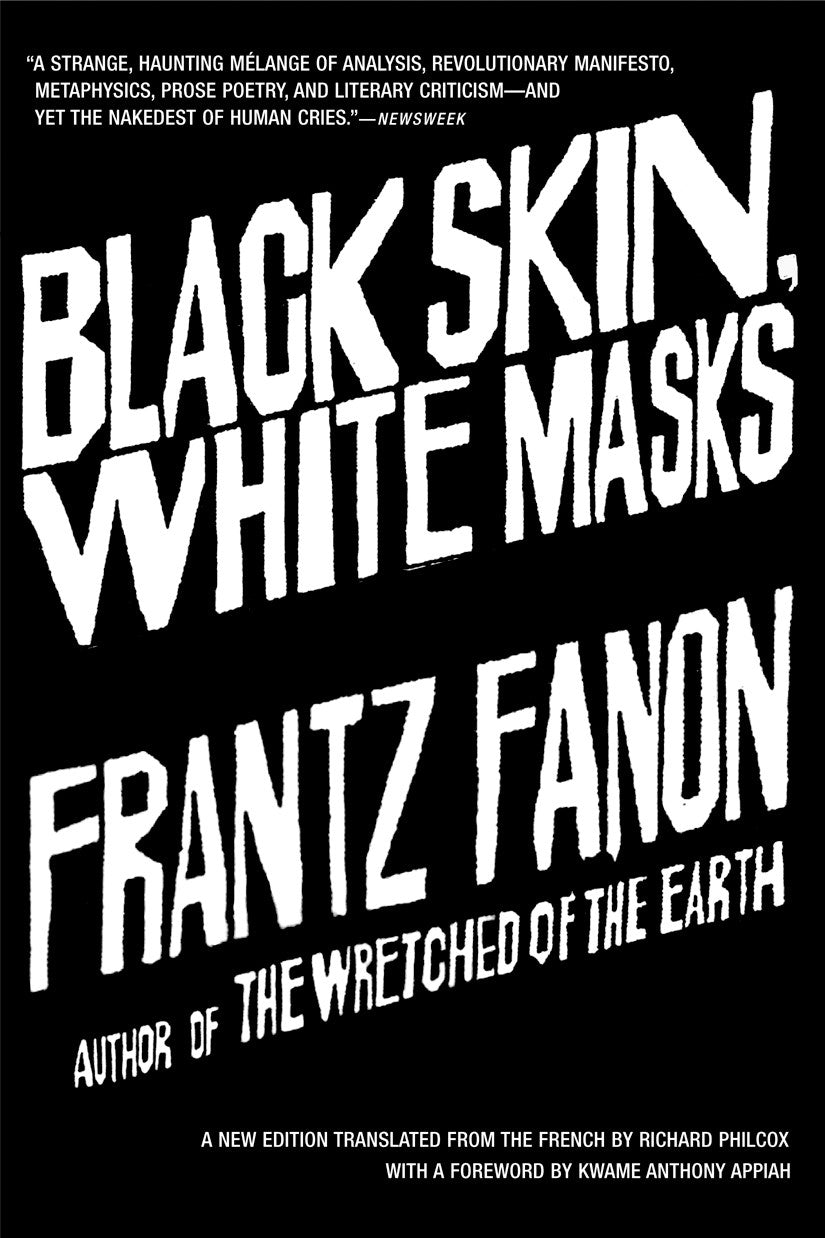
Black Skin, White Masks (Revised)
by Frantz Fanon
Sold outFew modern voices have had as profound an impact on the black identity and critical race theory as Frantz Fanon, and Black Skin, White Masks represents some of his most important work. Fanon’s masterwork is now available in a new translation that updates its language for a new generation of readers.
A major influence on civil rights, anti-colonial, and black consciousness movements around the world, Black Skin, White Masks is the unsurpassed study of the black psyche in a white world. Hailed for its scientific analysis and poetic grace when it was first published in 1952, the book remains a vital force today from one of the most important theorists of revolutionary struggle, colonialism, and racial difference in history. -
APRIL 2026: NO NAME BOOK CLUB - April 26 @ 1 PM CST
![APRIL 2026: NO NAME BOOK CLUB - April 26 @ 1 PM CST]()

APRIL 2026: NO NAME BOOK CLUB - April 26 @ 1 PM CST
Sold outNo Name is a Black-owned worker cooperative connecting community members both inside and outside carceral facilities with radical books. Each month, No Name uplifts two books written by Black, indigenous, and other people of color. No Name believes building community through political education is crucial for our liberation and should be accessible to everyone—which is why all programming is free.
MEETING DEETSWhen: Sunday, April 26 @ 1 PMWhere: Kindred Stories (2310 Elgin St, Houston, TX 77004)How: RSVP to let us know you're coming! Support the Fiction Book Club by purchasing a copy of the book from Kindred Stories here!ABOUT THE WRETCHED OF THE EARTHFirst published in 1961, Frantz Fanon’s The Wretched of the Earth is a masterful and timeless interrogation of race, colonialism, psychological trauma, and revolutionary struggle. In 2020, it found a new readership in the wake of the Black Lives Matter protests and the centering of narratives interrogating race by Black writers. Bearing singular insight into the rage and frustration of colonized peoples, and the role of violence in spurring historical change, the book incisively attacks the twin perils of post-independence colonial politics: the disenfranchisement of the masses by the elites on the one hand, and intertribal and interfaith animosities on the other. A landmark text for revolutionaries and activists, The Wretched of the Earth is an eternal touchstone for civil rights, anti-colonialism, psychiatric studies, and Black consciousness movements around the world. Translated by Richard Philcox, and featuring now-classic critical essays by Jean-Paul Sartre and Homi K. Bhabha, as well as a new essay, this sixtieth anniversary edition of Fanon’s most famous text stands proudly alongside such pillars of anti-colonialism and anti-racism as Edward Said’s Orientalism and The Autobiography of Malcolm X.


Stay Informed. We're building a community committed to celebrating Black authors + artisans. Subscribe to keep up with all things Kindred Stories.