
Search results: 49 results for “edited by Marc Robinson”
Not finding what you're looking for? Check out our shop on bookshop.org to order and still support us ♥
49 results
-
PRE-ORDER: The Antinomies of Black Marxism: Critique of the Racial Capitalism Paradigm
![The Antinomies of Black Marxism: Critique of the Racial Capitalism Paradigm cover image]()

PRE-ORDER: The Antinomies of Black Marxism: Critique of the Racial Capitalism Paradigm
$56.99Cedric Robinson’s widely acclaimed study on Marxism and race has enjoyed a celebratory renaissance in recent years, becoming commonplace across the disciplines and beyond to activist and left circles. The Antinomies of Black Marxism contests its now‑enormous influence, bringing together leading scholars of Marxism to reassess the decisive question of race and Marxist thought and practice.
While varied in their approaches, the contributors all affirm that racism is a modern production of capitalist class exploitation. They put forth a trenchant and uncompressing critique of Black Marxism. They see Robinson’s transhistoric racialism and hostility to Marxism as politically dangerous to the extent that it propagates a race over a class consciousness that undermines working‑class unity. They place a premium on multiethnic, transnational proletarian struggle against capitalism at a time of epochal crisis in the global capitalist system.
This indispensable compendium makes a timely contribution to contemporary debates on race, class, capitalism, and social inequality and is essential to classes on Black Studies and black social thought, as it provides a thorough analysis and critique of one of the landmark contemporary critical theorists in US political and social theory.
-
Decolonial Marxism: Essays from the Pan-African Revolution
![Decolonial Marxism: Essays from the Pan-African Revolution]()

Decolonial Marxism: Essays from the Pan-African Revolution
by Walter Rodney
$29.95A previously unpublished collection of Rodney's essays on Marxism, spanning his engagement with of Black Power, Ujamaa Villages, and the everyday people who put an end to a colonial era
Early in life, Walter Rodney became a major revolutionary figure in a dizzying range of locales that traversed the breadth of the Black diaspora: in North America and Europe, in the Caribbean and on the African continent. He was not only a witness of a Pan-African and socialist internationalism; in his efforts to build mass organizations, catalyze rebellious ferment, and theorize an anti-colonial path to self-emancipation, he can be counted among its prime authors.
Decolonial Marxism records such a life by collecting previously unbound essays written during the world-turning days of Black revolution. In drawing together pages where he elaborates on the nexus of race and class, offers his reflections on radical pedagogy, outlines programs for newly independent nation-states, considers the challenges of anti-colonial historiography, and produces balance sheets for a dozen wars for national liberation, this volume captures something of the range and power of Rodney's output. But it also demonstrates the unbending consistency that unites his life and work: the ongoing reinvention of living conception of Marxism, and a respect for the still untapped potential of mass self-rule. -
From Presence to Power: How to Take On the Fights That Matter--and Win
![From Presence to Power: How to Take On the Fights That Matter--and Win cover image]()

From Presence to Power: How to Take On the Fights That Matter--and Win
$32.00Why do some fights for justice hit a wall while others succeed? What does it take to win social change, especially now? It comes down to understanding one thing: the difference between presence and power.
Failing to do so is one way we got into this mess, but understanding how power really works is a big part of how we get out of it.
Rashad Robinson would know. A social change strategist, he’s spent more than twenty years at the highest levels of leadership in two of the most significant social movements of our time: the fight for LGBTQ rights and the fight for racial justice. He’s taken on tech giants and the criminal justice system, politicians in Washington and corporate executives in Hollywood. He’s been on the front lines of protest and in the back rooms of negotiation.
Robinson argues that achieving presence—the visibility of marches, media fads, and making issues popular—is not the same as gaining the leverage required to change the rules for how society works or change the decisions that politicians, corporate executives, and other people in authority make.
This book offers a set of essential lessons about power for anyone who wants to understand it, gain it, and use it to win the progress we all deserve—and to defeat the forces trying to take our freedoms away. Robinson provides the tools needed to help everyday people build real leverage in systems designed to prevent them from doing so.
As someone who helped shape the resistance after the 2016 election, and continues to help leaders at every level find innovative ways to fight back and win progress today, Robinson offers a hopeful, practical guide to achieving positive impact in the most challenging times.
-
PRE-ORDER: Who We Are: Our Buried History of Anti-Black Racism
![Who We Are: Our Buried History of Anti-Black Racism cover image]()

PRE-ORDER: Who We Are: Our Buried History of Anti-Black Racism
$35.00A blistering exposé of how anti-Black racism has influenced the most essential cornerstones of American life — from where we live and where we go to school to our opportunities to vote and our relationship with law enforcement— from the founder of the Who We Are Project and former director of the ACLU and the Trone Center for Justice and Equality
Featuring a foreword by Tom Hanks
One of America’s darkest myths is that the abolition of slavery and the 1960s’ dismantling of legalized racial segregation created a racially equitable and just society. But in this illuminating work, Jeffery Robinson uncovers just how deeply anti-Black racism is still woven into the fabric of our nation. White supremacy fueled the country for over a century after the Civil War and is still deeply ingrained in our culture, and racist laws that were banned and deemed unconstitutional have been replaced by more covert ones. Robinson argues that if our country is to change for the better, we must confront this truth.
Robinson takes us on a dramatic journey through America’s past, from the first group of people captured in Africa and enslaved on American soil to the racist policies and practices still impacting our country today. He argues that anti-Black racism is not just a series of isolated acts but a highly sophisticated system, in which centuries of racial segregation have resulted in flagrant disparities in public school funding, voter turnout, policing, and criminal sentencing.
Clear-eyed, explosive, and stirring, Who We Are is a powerful correction of American history that shines a light on our country’s darkest stain, revealing who we are in an effort to heal our country and improve who we become.
-
Black AF History
![Black AF History]()

Black AF History
by Michael Harriot
Sold outIt should come as no surprise that the dominant narrative of American history is blighted with errors and oversights—after all, history books were written with the perspective of white men at the forefront. It could even be said that the historical devaluation and elimination of the experiences of Black people is as American as apple pie. Or rioting after football games. Or calling the cops on Black Americans for walking around their own neighborhoods, or listening to music, or bird-watching, or any other normal everyday activity.
-
"Black Marxism": A Marxist Critique
![]()

"Black Marxism": A Marxist Critique
$22.00Over the last decade, Cedric Robinson’s Black Marxism: The Making of the Black Radical Tradition has had a tremendous influence on scholars and activists alike, deeply shaping debates on the place of race within capitalist societies. Is race subsumed by class, with the latter the sine qua non of capitalism? Do race and class act independently within modern societies? Or does capitalism inevitably express a deeper racial impetus in the West? In this, the first book-length discussion of Black Marxism, Nimtz lays out the limits of Robinson’s much-celebrated text, showing it represents a sophisticated, but ultimately flawed, version of Black nationalism. Nimtz defends Marxism from Robinson’s accusations of myopia on matters of race, suggesting that, in charging Marx and Engels with Eurocentrism, he either failed to understand, or misrepresented, their work―and that, in effect, many thinkers inspired by Black Marxism blatantly misrepresented Marxist texts. Especially in his writings about the U.S. Civil War, Marx had far more to say about race than is commonly understood, Nimtz shows.
An authentic Marxism, argues Nimtz, remains the most reliable real-world method for human liberation, not least among peoples of African descent. Speaking for himself as a contemporary of Robinson’s, Nimtz grounds Black Marxism: A Marxist Critique in an account of his own upbringing in New Orleans, and his development throughout the struggles of the 1960s, explaining how and why he came to radically different conclusions. Accessible and engaging,
Black Marxism: A Marxist Critique will be a significant intervention in the race-versus-class debate on the U.S. Left. No doubt, Nimtz’s trenchant critique will generate controversy, highlighting how more possibilities for transracial class alliances exist than ever before―and misguided theories like Robinson’s prevent us from seeing that potential. His detailed rejoinder to Black Marxism is much needed.
-
The Revelation of Dionne Daphne: A Novel
![The Revelation of Dionne Daphne: A Novel cover image]()

The Revelation of Dionne Daphne: A Novel
$30.00Mara Brock Akil, the award-winning creator of Girlfriends, Being Mary Jane, Love Is, and Forever, pens an emotionally enthralling debut novel about enduring love, world-shattering secrets, and self-awakening.
What happens when one knock at your door sends your entire world into chaos? When a stranger becomes a lifeline? When the reality you’ve meticulously curated seems to be a mirage?
From the outside looking in, one might say that Dionne Daphne had it all: being the beauty editor at a prestigious New York magazine, a boyfriend who could have been plucked out of its model pages, the social life of the upper echelon, and a girlhood steeped in debutant balls.
But that is from the outside. When the now ex-boyfriend arrives at her Brooklyn doorstep Dionne imagines reconciliation, going back to the good life brimming with the possibility of marriage; the life her mother always wanted for her. Instead, he delivers life-threatening news that creates a crack in her picture-perfect world. A crack that grows legs and runs her right into her past, unearthing a secret that she has hidden since childhood.
In an effort to run toward the truth and away from a lie, Dionne sets out on a spur-of-the-moment road trip with an unlikely stranger to confront the long-buried darkness of her past and the family who made it so. As Dionne comes to a final reckoning, she begins to unravel new layers of herself and fresh possibilities for her life, her family, and even her love.
The Revelation of Dionne Daphne is at once a deeply moving and provocatively gripping novel that shows when you dig deep enough into the shadows of your life, light can be revealed. It’s a novel of broken lovers, a fractured family, and distant friendships all making their way back to one another.
-
The Wretched of the Earth
![The Wretched of the Earth]()
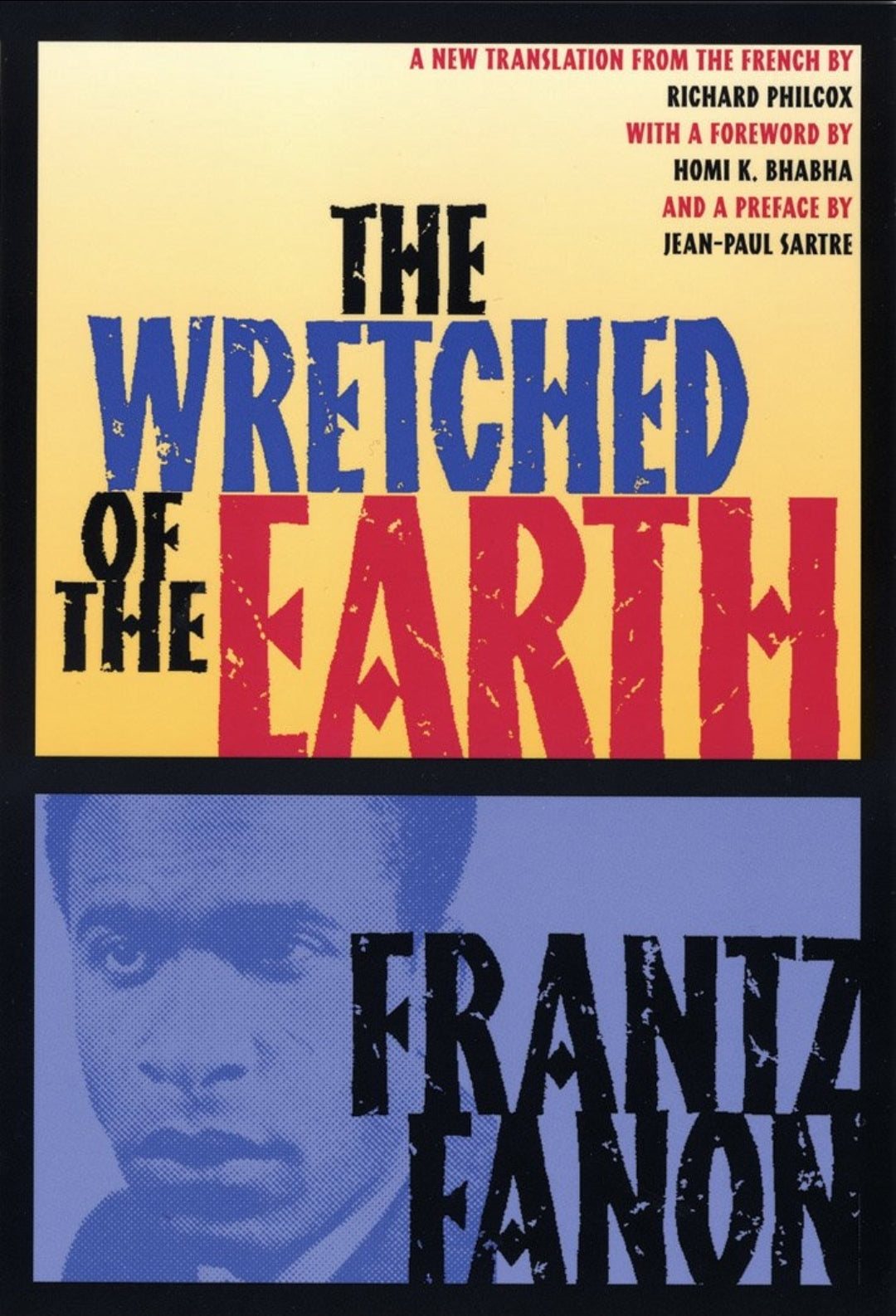
The Wretched of the Earth
by Frantz Fanon
$18.00First published in 1961, Frantz Fanon’s The Wretched of the Earth is a masterful and timeless interrogation of race, colonialism, psychological trauma, and revolutionary struggle. In 2020, it found a new readership in the wake of the Black Lives Matter protests and the centering of narratives interrogating race by Black writers. Bearing singular insight into the rage and frustration of colonized peoples, and the role of violence in spurring historical change, the book incisively attacks the twin perils of post-independence colonial politics: the disenfranchisement of the masses by the elites on the one hand, and intertribal and interfaith animosities on the other. A landmark text for revolutionaries and activists, The Wretched of the Earth is an eternal touchstone for civil rights, anti-colonialism, psychiatric studies, and Black consciousness movements around the world. Translated by Richard Philcox, and featuring now-classic critical essays by Jean-Paul Sartre and Homi K. Bhabha, as well as a new essay, this sixtieth anniversary edition of Fanon’s most famous text stands proudly alongside such pillars of anti-colonialism and anti-racism as Edward Said’s Orientalism and The Autobiography of Malcolm X.
-
Radical Reparations: Healing the Soul of a Nation
![Book cover image]()
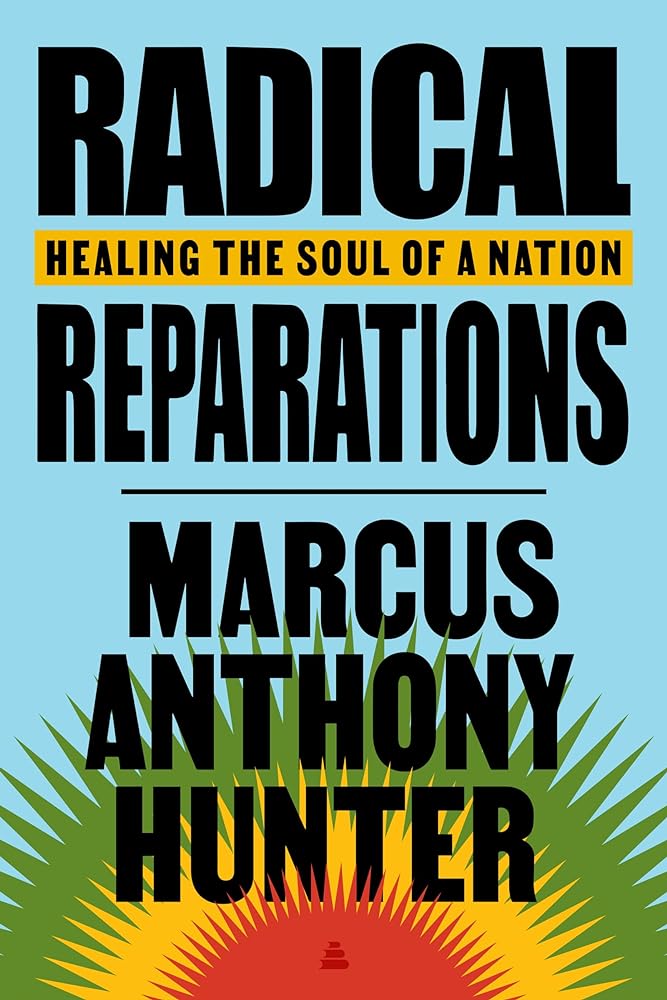
Radical Reparations: Healing the Soul of a Nation
by Marcus Anthony Hunter
$29.99*Ships in 7-10 business days*
A timely groundbreaking book in the vein of Derrick Bell's Faces at the Bottom of the Well, one of the country's foremost voices on reparations, offers a radical and vital new framework going beyond the current debate over this controversial issue.
For over a century, the idea of reparations for the descendants of enslaved Black Americans has divided the United States. However, while the iconic phrase "40 acres and a mule" encapsulates the general notion of reparations, history has proven that the damages of enslavement on the African American community far exceed what a plot of land or a check could repair.
While reparations are being widely debated once again, current petitions to redress the lasting and collateral consequences of slavery have not moved past economic solutions, even though we know that monetary redress alone is not enough. Not only would many wounds be left unhealed, but relying solely on economics would continue a legacy of neglect for African Americans. In this thoughtful and sure-to-be controversial book, Marcus Anthony Hunter argues that a radical shift in our outlook is necessary; we need more comprehensive solutions such as those currently sought by today's educators, historians, activists, organizers, Afrofuturists, and socially conscious citizens.
In Radical Reparations, this conversation shifter, social justice pioneer, change agent, and inventor of the hashtag #BlackLivesMatter, which redefined the global conversation on racism and social justice, offers a unifying and unconventional framework for achieving holistic and comprehensive healing of African American communities. Hunter reimagines reparations through a profound new lens as he defines seven types of compensation: political, intellectual, legal, economic, spatial, social, and spiritual, using analysis of historical documents, comparative international cases, and speculative parables.
Profound and revolutionary, trenchant and timely, Radical Reparations provides a compellingly and provocatively reframing of reparations' past, present, and future, offering a unifying way forward for us all.
-
Freedom Dreams (TWENTIETH ANNIVERSARY EDITION): The Black Radical Imagination
![Freedom Dreams (TWENTIETH ANNIVERSARY EDITION): The Black Radical Imagination]()

Freedom Dreams (TWENTIETH ANNIVERSARY EDITION): The Black Radical Imagination
by Robin D.G. Kelley
$19.95*ships in 7 - 10 business days*
The 20th-anniversary edition of Kelley’s influential history of 20th-century Black radicalism, with new reflections on current movements and their impact on the author, and a foreword by poet Aja Monet
First published in 2002, Freedom Dreams is a staple in the study of the Black radical tradition. Unearthing the thrilling history of grassroots movements and renegade intellectuals and artists, Kelley recovers the dreams of the future worlds Black radicals struggled to achieve.
Focusing on the insights of activists, from the Revolutionary Action Movement to the insurgent poetics of Aimé and Suzanne Césaire, Kelley chronicles the quest for a homeland, the hope that communism offered, the politics of surrealism, the transformative potential of Black feminism, and the long dream of reparations for slavery and Jim Crow.
In this edition, Kelley includes a new introduction reflecting on how movements of the past 20 years have expanded his own vision of freedom to include mutual care, disability justice, abolition, and decolonization, and a new epilogue exploring the visionary organizing of today’s freedom dreamers.
This classic history of the power of the Black radical imagination is as timely as when it was first published. -
How to Go Mad without Losing Your Mind: Madness and Black Radical Creativity (Black Outdoors: Innovations in the Poetics of Study)
![How to Go Mad without Losing Your Mind: Madness and Black Radical Creativity (Black Outdoors: Innovations in the Poetics of Study) cover image]()

How to Go Mad without Losing Your Mind: Madness and Black Radical Creativity (Black Outdoors: Innovations in the Poetics of Study)
La Marr Jurelle Bruce
$29.95Winner of the 2022 Modern Language Association First Book Prize
Winner of the 2022 Nicolás Cristóbal Guillén Batista Outstanding Book Award, presented by the Caribbean Philosophical Association
"Hold tight. The way to go mad without losing your mind is sometimes unruly." So begins La Marr Jurelle Bruce's urgent provocation and poignant meditation on madness in black radical art. Bruce theorizes four overlapping meanings of madness: the lived experience of an unruly mind, the psychiatric category of serious mental illness, the emotional state also known as "rage," and any drastic deviation from psychosocial norms. With care and verve, he explores the mad in the literature of Amiri Baraka, Gayl Jones, and Ntozake Shange; in the jazz repertoires of Buddy Bolden, Sun Ra, and Charles Mingus; in the comedic performances of Richard Pryor and Dave Chappelle; and in the protest music of Nina Simone, Lauryn Hill, and Kendrick Lamar, among many others. These artists activate madness as content, form, aesthetic, strategy, philosophy, and energy in an enduring black radical tradition. Joining this tradition, Bruce mobilizes what he calls "mad methodology"—where madness informs and animates ways of reading, ways of thinking, ways of feeling, ways of telling, ways of being, and ways of life. Ultimately, How to Go Mad without Losing Your Mind is both a study and an act of critical, ethical, radical madness.
-
Dismantling the Master's Clock: On Race, Space, and Time
![Dismantling the Master's Clock: On Race, Space, and Time cover image]()

Dismantling the Master's Clock: On Race, Space, and Time
Rasheedah Phillips
$25.00A radical new treatise on time, quantum physics, and racial justice from world-renowned artist and advocate Rasheedah Phillips of Black Quantum Futurism.
Why do some processes—like aging, birth, and car crashes—occur in only one direction in time, when by the fundamental symmetry of the universe, we should experience time both forward and backward? Our dominant perception of time owes more to Western history and social order than to a fact of nature, argues writer Rasheedah Phillips, delving into Black and Afrodiasporic conceptions of time, where the past, present, and future interact in more numerous constellations.
Phillips unfolds the history of time and its legacy of racial oppression, from colonial exploration and the plantation system to the establishment of Daylight Savings. Yet Black communities have long subverted space-time through such tools of resistance as Juneteenth, tenant organizing, ritual, and time travel. What could Black liberation look like if the past were as changeable as the future?
Drawing on philosophy, archival research, quantum physics, and Phillips’s own art practice and work on housing policy, Dismantling the Master’s Clock expands the horizons of what can be imagined and, ultimately, achieved.


Stay Informed. We're building a community committed to celebrating Black authors + artisans. Subscribe to keep up with all things Kindred Stories.