
Search results: 8 results for “dorothy roberts”
Not finding what you're looking for? Check out our shop on bookshop.org to order and still support us ♥
8 results
-
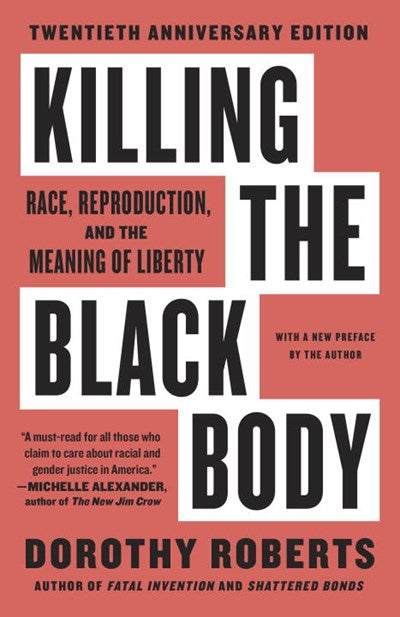
Killing the Black Body: Race, Reproduction, and the Meaning of Liberty
![Killing the Black Body: Race, Reproduction, and the Meaning of Liberty]()
Killing the Black Body: Race, Reproduction, and the Meaning of Liberty
by Dorothy Roberts
$18.00*ships in 7-10 business days*
In 1997, the image of the “Welfare Queen” dominated white America’s perceptions of Black women. Legislation was being proposed to deny benefits to children born to welfare mothers and to require insertion of birth-control implants as a condition of receiving aid. Meanwhile, a booming fertility industry was catering primarily to infertile white couples.
Dorothy Roberts’s landmark book, Killing the Black Body, made a powerful entrance into the national conversation of the era, exposing America’s systemic abuse of Black women’s bodies, from slave masters’ economic stake in bonded women’s fertility to government programs that coerced thousands of poor Black women into being sterilized as late as the 1970s. These abuses point not only to the degradation of Black motherhood, but to the exclusion of Black women’s reproductive needs from the feminist agenda. Killing the Black Body turns twenty next year and is as relevant today as it was upon publication. In our current moment of Black Lives Matter, Between the World and Me, and authors like Chimamanda Ngozi Adichie and Roxane Gay speaking out about feminism and race, Killing the Black Body offers a vision of reproductive freedom that respects each and every American. -
The Mixed Marriage Project: A Memoir of Love, Race, and Family
![The Mixed Marriage Project: A Memoir of Love, Race, and Family cover image]()

The Mixed Marriage Project: A Memoir of Love, Race, and Family
$30.00From Dorothy Roberts, author of Killing the Black Body and a writer who “has brilliantly illuminated the Black experience in America for decades” (Bryan Stevenson), comes a spirited and riveting memoir of growing up in an interracial family in 1960s Chicago and a daughter’s journey to understand her parents’ marriage—and her own identity.
Dorothy Roberts grew up in a deeply segregated Chicago of the 1960s where relationships barely crossed the “colorline.” Yet inside her own home, where her father was white and her mother a Black Jamaican immigrant, interracial marriage wasn’t just a part of her upbringing, it was a shared mission. Her father, an anthropologist, spent her entire childhood working on a book about Black-white marriages—a project he never finished but shaped every aspect of their family life.
As a 21-year-old graduate student, Dorothy’s father dedicated himself to the study of interracial marriage and her mother soon became his full-time partner in that work. Together over the years they interviewed over 500 couples and assembled stunning stories about interracial marriages that took place as early as the 1880s—studying, but also living, championing, and believing in their power to advance social equality.
Decades later, while sorting through her father’s papers, Roberts uncovers a truth that upends everything she thought she knew about her family: her father’s research didn’t begin with her parents’ love story—it came long before it. This discovery forces her to wrestle with her father’s intentions, her own views about interracial relationships, and where she fits in that story. Rather than finish the book her father never published, Roberts immerses herself in their archive of interviews to trace the story of her parents and to better understand her own.
Though grounded in her parents’ research, it’s Roberts’ captivating storytelling that drives this memoir. In following the arc of her parents’ interviews and marriage, The Mixed Marriage Project invites us into the everyday lives of interracial couples in Chicago over four decades. Along the way, Roberts reflects on her own childhood as a Black girl with a white father, and how those experiences shaped her into one of today’s most prominent public thinkers and scholars on race. Blurring the boundaries between the political and the personal, between memoir and history, The Mixed Marriage Project is a deeply moving meditation on family, race, identity, and love.
-
Give Him to Me
![Give Him to Me: the heart-stopping new thriller from the Queen of the Big Reveal! cover image]()

Give Him to Me
$17.99'Master of the jaw-dropping twist' S MAGAZINE
'An edge-of-your-seat thriller that'll keep you guessing right until the end, get this to the top of your reading pile' HEAT
** Pre-order the new heart-stopping emotional thriller from the Queen of the Big Reveal **
Robyn 'Avril' Managa was twelve when she witnessed her controlling and abusive father murder her mother. Put into care while her well-connected father was given a new identity in Witness Protection, Robyn has lived with the trauma of that day ever since.
Now in her twenties, Robyn has decided she wants a family reunion - so is killing people connected to her father's case, leaving on their bodies the note: GIVE HIM TO ME.
Dr Kez Lanyon is called onto the case. But can Kez get into Robyn's mind before she kills again? Or is she about to become Avril's latest victim?
Profiler and therapist Kez Lanyon returns in a gripping new stand-alone novel from Sunday Times bestselling author Dorothy Koomson.
Readers love Dorothy Koomson:
'Raw, emotive and chilling'
'Full of shocks and surprises . . . another hard hitting, psychologically thrilling page turner'
'Jaw-dropping, totally unexpected'
'Terrifyingly authentic, twisty and compelling'
'A must read!'
-
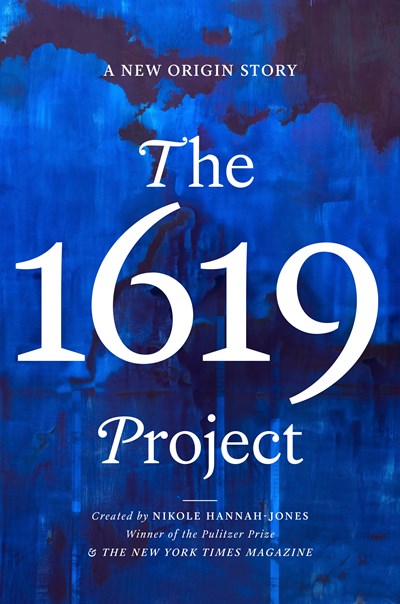
The 1619 Project: A New Origin Story
![The 1619 Project: A New Origin Story]()
The 1619 Project: A New Origin Story
by Nikole Hannah-Jones
from $25.00One World is proud to present THE 1619 PROJECT: A New Origin Story, a book that dramatically builds on the vision of the original magazine project with major expansions of the original essays, seven new essays by historians, and dozens of new poems and pieces of fiction. The book includes a significant elaboration of the project’s Pulitzer Prize-winning lead essay by Nikole Hannah-Jones and a new introduction that together offer a stirring rebuttal to critics. Hannah-Jones has also written a third essay that makes the case for reparative solutions to the legacy of injustice the project documents.
Edited by Hannah-Jones, along with New York Times Magazine editor-in-chief Jake Silverstein, features editor Ilena Silverman, and New York Times executive producer Caitlin Roper, the book offers work from some of the country’s most outstanding journalists, thinkers, historians and scholars, including: Michelle Alexander, Leslie Alexander, Carol Anderson, Jamelle Bouie, Anthea Butler, Matthew Desmond, Martha Jones, Ibram Kendi, Kevin Kruse, Trymaine Lee, Tiya Miles, Wesley Morris, Khalil Gibran Muhammad, Dorothy Roberts, Jeneen Interlandi, Bryan Stevenson, and Linda Villarosa.
Woven throughout the book are works of fiction and poetry that bring to life four hundred years of history with imaginative writing by Joshua Bennett, Reginald Dwayne Betts, Rita Dove, Camille Dungy, Cornelius Eady, Eve L. Ewing, Nikky Finney, Vievee Francis, Yaa Gyasi, Forrest Hamer, Terrance Hayes, Honorée Fanonne Jeffers, Barry Jenkins, Tyehimba Jess, Robert Jones, Jr., A. Van Jordan, Yusef Komunyakaa, Kiese Laymon, Jasmine Mans, Terry McMillan, Lynn Nottage, ZZ Packer, Gregory Pardlo, Darryl Pinckney, Claudia Rankine, Jason Reynolds, Evie Shockley, Tim Siebles, Clint Smith, Danez Smith, Patricia Smith, Tracy K. Smith, Nafissa Thompson-Spires, Natasha Trethewey, Jesmyn Ward and Sonia Sanchez.
The book also includes archival portrait photography of Black Americans paired with each essay, curated by Kimberly Annece Henderson.
-
Getting to Reparations: How Building a Different America Requires a Reckoning with Our Past
![Getting to Reparations: How Building a Different America Requires a Reckoning with Our Past cover image]()

Getting to Reparations: How Building a Different America Requires a Reckoning with Our Past
Dorothy A. Brown
$30.00A bold manifesto arguing that there is a clear precedent for paying reparations to atone for America’s original sin of slavery, offering a compelling legal strategy to achieve this goal—from the acclaimed author of The Whiteness of Wealth.
The idea of reparations is not a new or original one; it is one that is baked into American history.
When the District of Columbia Emancipation Act of 1862 went into effect, wealthy slaveowners like Margaret Barber were compensated for the loss of their enslaved workers. Barber received $9,000—an equivalent to $250,000 today. When a group of Italian immigrants were lynched in 1892, President Harrison compensated Italy a total of $25,000 for their deaths—an equivalent to almost $766,000 today. The Indian Claims Commission, an arm of the federal government, paid Indigenous Americans $818 million for underhandedly stealing their land in the eighteenth and nineteenth centuries—an equivalent to almost $350 billion today.
Dorothy A. Brown addresses the glaring question: if reparations can be achieved for others, why not for Black Americans? If lynching can be remedied for Italian immigrants, and slaveholders compensated for losses associated with abolition and emancipation, then the government’s failure to provide such remedies to Black communities harmed by similar violence, loss, and destruction is long overdue. The fight for reparations is truly a fight for the soul of America, to produce the country our founding fathers idealized but never achieved.
Getting to Reparations makes a logical and necessary case for reparations for Black Americans. It lays out a path as to how we might achieve this, built on the frameworks used throughout U.S. history by the government to pay restitution. It is now time to do the same for America's Black population.
-
The Richer, the Poorer: Stories, Sketches, and Reminiscences
![The Richer, the Poorer: Stories, Sketches, and Reminiscences cover image]()

The Richer, the Poorer: Stories, Sketches, and Reminiscences
Dorothy West
$20.00On the heels of the bestseller success of her novel The Wedding, Dorothy West, the last surviving member of the Harlem Renaissance, presents a collection of essays and stories that explore both the realism of everyday life, and the fantastical, extraordinary circumstances of one woman's life in a mythic time. Traversing the universal themes and conflicts between poverty and prosperity, men and women, and young and old, and compiling writing that spans almost seventy years, The Richer, The Poorer not only affords an unparalleled window into the African-American middle class, but also delves into the richness of experience of "one of the finest writers produced in this country during the Roaring Twenties"(Book Page).
-
Critical Race Theory
![Critical Race Theory]()
Critical Race Theory
by Kimberle Crenshaw
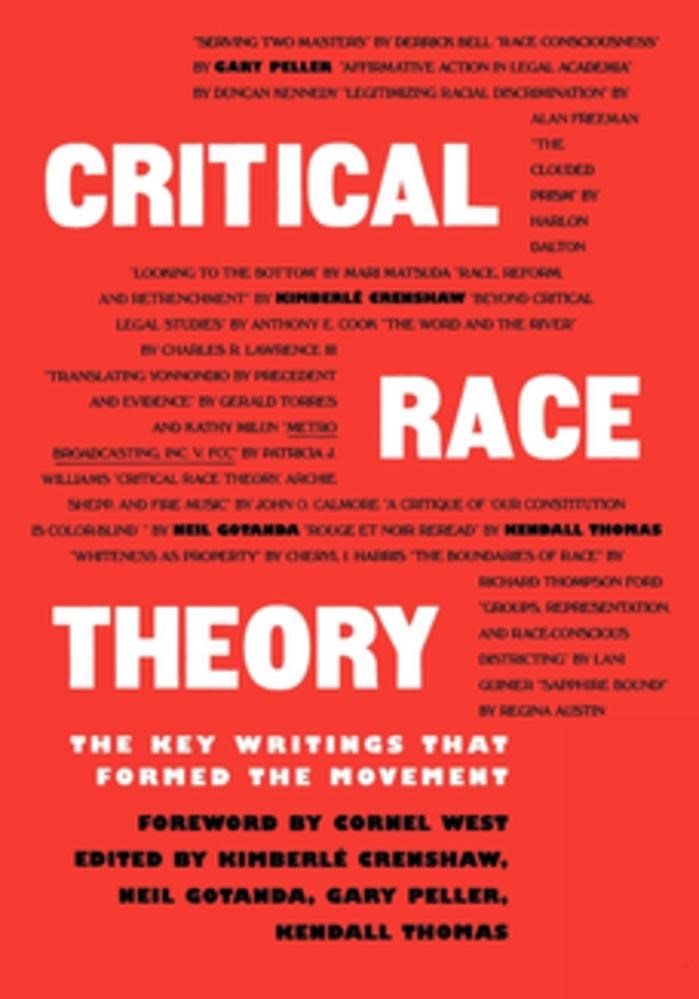
$32.50What is Critical Race Theory and why is it under fire from the political right? This foundational essay collection, which defines key terms and includes case studies, is the essential work to understand the intellectual movement
Why did the president of the United States, in the midst of a pandemic and an economic crisis, take it upon himself to attack Critical Race Theory? Perhaps Donald Trump appreciated the power of this groundbreaking intellectual movement to change the world.
In recent years, Critical Race Theory has vaulted out of the academy and into courtrooms, newsrooms, and onto the streets. And no wonder: as intersectionality theorist Kimberlé Crenshaw recently told Time magazine, "It's an approach to grappling with a history of white supremacy that rejects the belief that what's in the past is in the past, and that the laws and systems that grow from that past are detached from it." The panicked denunciations from the right notwithstanding, CRT has changed the way millions of people interpret our troubled world.
Edited by its principal founders and leading theoreticians, Critical Race Theory was the first book to gather the movement's most important essays. This groundbreaking book includes contributions from scholars including Derrick Bell, Kimberlé Crenshaw, Patricia Williams, Dorothy Roberts, Lani Guinier, Duncan Kennedy, and many others. It is essential reading in an age of acute racial injustice.
-
Torn Apart
![Torn Apart]()
Torn Apart
by Dorothy Roberts
Sold out*Ships in 7-10 Business Days*
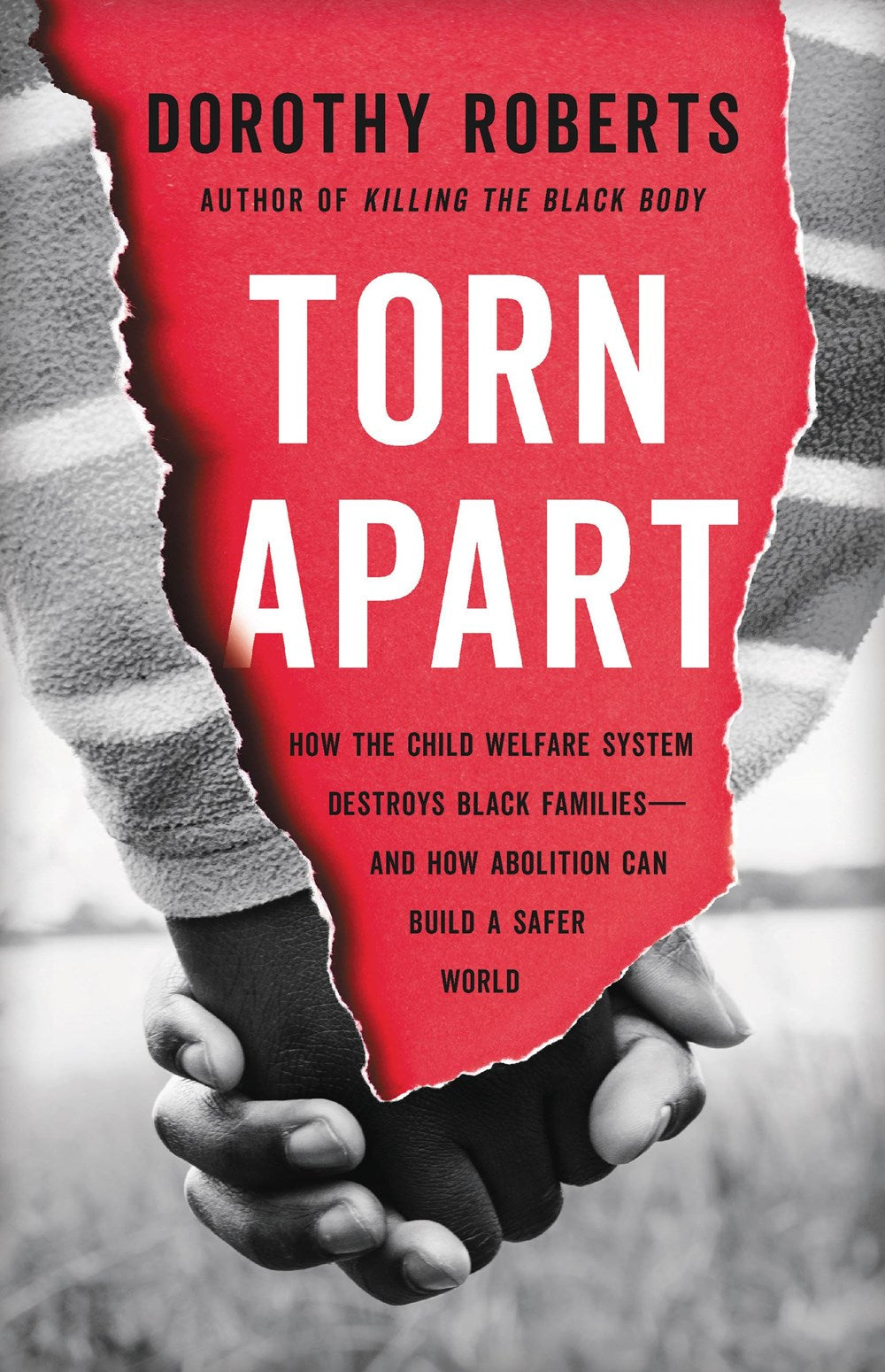
An award-winning scholar exposes the foundational racism of the child welfare system and calls for radical change
Many believe the child welfare system protects children from abuse. But as Torn Apart uncovers, this system is designed to punish Black families. Drawing on decades of research, legal scholar and sociologist Dorothy Roberts reveals that the child welfare system is better understood as a “family policing system” that collaborates with law enforcement and prisons to oppress Black communities. Child protection investigations ensnare a majority of Black children, putting their families under intense state surveillance and regulation. Black children are disproportionately likely to be torn from their families and placed in foster care, driving many to juvenile detention and imprisonment.
The only way to stop the destruction caused by family policing, Torn Apart argues, is to abolish the child welfare system and liberate Black communities.


Stay Informed. We're building a community committed to celebrating Black authors + artisans. Subscribe to keep up with all things Kindred Stories.