
Search results: 27 results for “charles white”
Not finding what you're looking for? Check out our shop on bookshop.org to order and still support us ♥
27 results
-
Charles White: Black Pope
![Charles White: Black Pope cover image]()

Charles White: Black Pope
Charles White
$26.95"The Chicago-born artist Charles White (1918–79) was celebrated during his lifetime for depictions of African-American men, women and children that acquired the name “images of dignity. White’s draftsmanship, his direct address of the social and political concerns of his time, and his commitment to media that gave his art wide circulation established him as a major artist, and one with significant influence both on his contemporaries and on later generations.
Beginning with White’s early days as an artist in the Chicago of the 1930s and ’40s, moving through his time spent developing his craft in New York in the late 1940s and ’50s, and closing with his final decades as a revered figure in Los Angeles, Charles White: Black Pope explores the artist’s practice and strategies through consideration of key works. It devotes particularly close examination to his late masterwork "Black Pope (Sandwich Board Man)," in the collection of The Museum of Modern Art. By creating visually compelling, ideologically complex works that engage audiences on many levels, White established himself as a key figure of his time, one whose work continues to resonate today."
-
The Racial Contract
![The Racial Contract cover image]()

The Racial Contract
Charles W. Mills
$24.95The Racial Contract puts classic Western social contract theory, deadpan, to extraordinary radical use. With a sweeping look at the European expansionism and racism of the last five hundred years, Charles W. Mills demonstrates how this peculiar and unacknowledged "contract" has shaped a system of global European domination: how it brings into existence "whites" and "non-whites," full persons and sub-persons, how it influences white moral theory and moral psychology; and how this system is imposed on non-whites through ideological conditioning and violence. The Racial Contract argues that the society we live in is a continuing white supremacist state.
As this 25th anniversary edition—featuring a foreword by Tommy Shelbie and a new preface by the author—makes clear, the still-urgent The Racial Contract continues to inspire, provoke, and influence thinking about the intersection of the racist underpinnings of political philosophy.
-
The Fervent Whites: A Novel
![The Fervent Whites: A Novel cover image]()

The Fervent Whites: A Novel
$28.00Guilt, shame, and suspicion swirl as a small community in upstate New York turns on itself in this moody, propulsive thriller from the award-winning writer of In West Mills.
“Endlessly entertaining . . . Does anyone write about the intersections of race, class, gender, and sexuality with more honesty and intensity than De’Shawn Charles Winslow?”—Wiley Cash, author of When Ghosts Come Home
The truth is closer than you think—just beyond the fence.
The year is 1982, and the people of the Hudson Valley community of Fervent have begun to move on from a homicide that upended the once quiet town. When the former neighbors who were convicted of the crime, James and Ella White, are proven innocent, released from prison, and return to Fervent, some people have cause for concern.
Sylvia Upshaw and her best friend, Lafayette “Fate” Jolly, are uneasy about the Whites’ return. While the Whites were incarcerated, Sylvia revealed an explosive secret to their adopted son, Morgan, with devastating consequences. During the murder trial, Fate’s testimony helped seal their fate. James and Ella won’t let the betrayals go unpunished. Sylvia and Fate quickly become victims of harassment from the Whites, and when another murder is committed in Fervent, the town is left to fend for itself.
Intimate and chilling, The Fervent Whites examines how small communities with long-simmering tensions behave when pushed to the limits of civility.
-
Red Clay
![Red Clay cover image]()

Red Clay
Charles B. Fancher
$28.99An astounding multigenerational saga, Red Clay chronicles the interwoven lives of an enslaved Black family and their white owners as the Civil War ends and Reconstruction begins.
In 1943, when a frail old white woman shows up in Red Clay, Alabama, at the home of a Black former slave--on the morning following his funeral--his family hardly knows what to expect after she utters the words "... a lifetime ago, my family owned yours." Adelaide Parker has a story to tell--one of ambition, betrayal, violence, and redemption--that shaped both the fate of her family and that of the late Felix H. Parker.
But there are gaps in her knowledge, and she's come to Red Clay seeking answers from a family with whom she shares a name and a history that neither knows in full. In an epic saga that takes us from Red Clay to Paris, to the Côte d'Azur and New Orleans, human frailties are pushed to their limits as secrets are exposed and the line between good and evil becomes ever more difficult to discern. Red Clay is a tale that deftly lays bare the ugliness of slavery, the uncertainty of the final months of the Civil War, the optimism of Reconstruction, and the pain and frustration of Jim Crow.
With a vivid sense of place and a cast of memorable characters, Charles B. Fancher draws upon his own family history to weave a riveting tale of triumph over adversity, set against a backdrop of societal change and racial animus that reverberates in contemporary America. Through seasons of joy and unspeakable pain, Fancher delivers rich moments as allies become enemies, and enemies--to their great surprise--find new respect for each other.
-
Red Clay
![Red Clay cover image]()

Red Clay
$19.99An astounding multigenerational saga, Red Clay chronicles the interwoven lives of an enslaved Black family and their white owners as the Civil War ends and Reconstruction begins.
In 1943, when a frail old white woman shows up in Red Clay, Alabama, at the home of a Black former slave--on the morning following his funeral--his family hardly knows what to expect after she utters the words "... a lifetime ago, my family owned yours." Adelaide Parker has a story to tell--one of ambition, betrayal, violence, and redemption--that shaped both the fate of her family and that of the late Felix H. Parker.
But there are gaps in her knowledge, and she's come to Red Clay seeking answers from a family with whom she shares a name and a history that neither knows in full. In an epic saga that takes us from Red Clay to Paris, to the Côte d'Azur and New Orleans, human frailties are pushed to their limits as secrets are exposed and the line between good and evil becomes ever more difficult to discern. Red Clay is a tale that deftly lays bare the ugliness of slavery, the uncertainty of the final months of the Civil War, the optimism of Reconstruction, and the pain and frustration of Jim Crow.
With a vivid sense of place and a cast of memorable characters, Charles B. Fancher draws upon his own family history to weave a riveting tale of triumph over adversity, set against a backdrop of societal change and racial animus that reverberates in contemporary America. Through seasons of joy and unspeakable pain, Fancher delivers rich moments as allies become enemies, and enemies--to their great surprise--find new respect for each other.
-
All Your Racial Problems Will Soon End: The Cartoons of Charles Johnson
![All Your Racial Problems Will Soon End: The Cartoons of Charles Johnson]()

All Your Racial Problems Will Soon End: The Cartoons of Charles Johnson
by Charles Johnson
$34.95*ships/available for pickup in 7-10 business days
Years before he wrote his National Book Award–winning novel Middle Passage, Charles Johnson created these sidesplitting and subversive gag comics about Black life in America, now collected for the first time in nearly half a century.
Before Charles Johnson found fame as a novelist and won the National Book Award for Middle Passage in 1991, he was a cartoonist, and a very good one.
Taught via mail correspondence course by the comics editor Lawrence Lariar, mentored by the New Yorker cartoonist Charles Barsotti, and inspired by the call of poet Amiri Baraka to celebrate and depict Black life in America, Johnson crafted some of the fiercest and funniest cartoons of the twentieth century.
Reimagining the gag comic as a powerful and incendiary tool, Johnson tackled America’s mid-century afflictions—segregation, inner-city poverty, police brutality, and white supremacy—by craftily subverting stale gag tropes. He populated them with bullet-dodging Black Panthers, doubt-filled Klansmen, militant babies, self-serving politicians, and complacent suburban liberals.
This collection, Johnson’s first in nearly fifty years, brings together work from across his career: college newspaper gags, selections from his books Black Humor and Half-Past Nation Time, his unpublished manuscript Lumps in the Melting Pot, and uncollected pieces. Taken together, this volume reveals Johnson as long overdue for appreciation as a cartoonist of the first order. -
Why Bushwick Bill Matters
![Why Bushwick Bill Matters]()
Why Bushwick Bill Matters
$18.95*ship in 7-10 business days
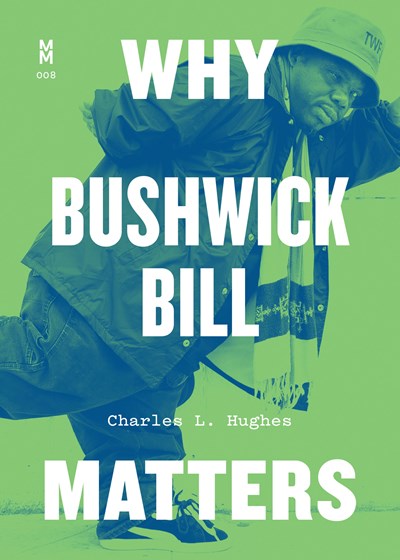
In 1989 the Geto Boys released a blistering track, “Size Ain’t Shit,” that paid tribute to the group’s member Bushwick Bill. Born with dwarfism, Bill was one of the few visibly disabled musicians to achieve widespread fame and one of the even fewer to address disability in a direct, sustained manner. Initially hired as a dancer, Bill became central to the Geto Boys as the Houston crew became one of hip-hop’s most important groups.
Why Bushwick Bill Matters chronicles this crucial artist and explores what he reveals about the relationships among race, sex, and disability in pop music. Charles L. Hughes examines Bill's recordings and videos (both with the Geto Boys and solo), from the horror-comic persona of “Chuckie” to vulnerable verses in songs such as “Mind Playing Tricks On Me,” to discuss his portrayals of dwarfism, addiction, and mental illness. Hughes also explores Bill’s importance to his era and to the longer history of disability in music. A complex figure, Bill exposed the truths of a racist and ableist society even as his violent and provocative lyrics put him in the middle of debates over censorship and misogyny. Confrontational and controversial, Bushwick Bill left a massive legacy as he rhymed and swaggered through an often-inaccessible world.
-
The Devil You Know: A Black Power Manifesto
![The Devil You Know: A Black Power Manifesto]()
The Devil You Know: A Black Power Manifesto
by Charles M. Blow
from $17.99*Ships in 7-10 business days*
Acclaimed columnist and author Charles Blow never wanted to write a “race book.” But as violence against Black people—both physical and psychological—seemed only to increase in recent years, culminating in the historic pandemic and protests of the summer of 2020, he felt compelled to write a new story for Black Americans. He envisioned a succinct, counterintuitive, and impassioned corrective to the myths that have for too long governed our thinking about race and geography in America. Drawing on both political observations and personal experience as a Black son of the South, Charles set out to offer a call to action by which Black people can finally achieve equality, on their own terms.
So what will it take to make lasting change when small steps have so frequently failed? It’s going to take an unprecedented shift in power. The Devil You Know is a groundbreaking manifesto, proposing nothing short of the most audacious power play by Black people in the history of this country. This book is a grand exhortation to generations of a people, offering a road map to true and lasting freedom.
-
Soul of A Nation
![Soul of A Nation]()
Soul of A Nation
by Edmund Gaither
$39.95*ships in 7 - 10 business days*
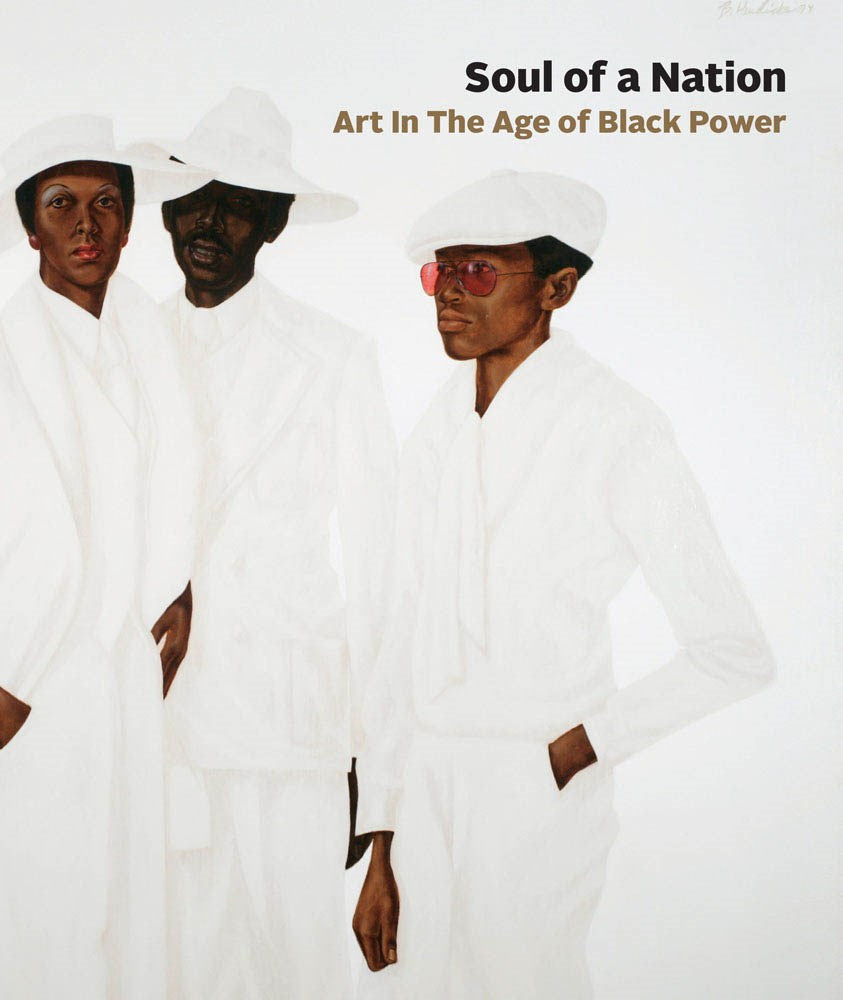
African American art in the era of Malcolm X and the Black Panthers
In the period of radical change that was 1963–83, young black artists at the beginning of their careers confronted difficult questions about art, politics and racial identity. How to make art that would stand as innovative, original, formally and materially complex, while also making work that reflected their concerns and experience as black Americans?
Soul of a Nation surveys this crucial period in American art history, bringing to light previously neglected histories of 20th-century black artists, including Sam Gilliam, Melvin Edwards, Jack Whitten, William T. Williams, Howardina Pindell, Romare Bearden, David Hammons, Barkley L. Hendricks, Senga Nengudi, Noah Purifoy, Faith Ringgold, Betye Saar, Charles White and Frank Bowling.
The book features substantial essays from Mark Godfrey and Zoe Whitley, writing on abstraction and figuration, respectively. It also explores the art-historical and social contexts with subjects ranging from black feminism, AfriCOBRA and other artist-run groups to the role of museums in the debates of the period and visual art’s relation to the Black Arts Movement. Over 170 artworks by these and many other artists of the era are illustrated in full color.
2017 marks the 50th anniversary of the first use of the term “black power” by student activist Stokely Carmichael; it will also be 50 years since the US Supreme Court overturned the prohibition of interracial marriage. At this turning point in the reassessment of African American art history, Soul of a Nation is a vital contribution to this timely subject.
-
To Save and to Destroy: Writing as an Other (The Charles Eliot Norton Lectures)
![To Save and to Destroy: Writing as an Other (The Charles Eliot Norton Lectures) cover image]()

To Save and to Destroy: Writing as an Other (The Charles Eliot Norton Lectures)
Viet Thanh Nguyen
$26.95From the Pulitzer Prize–winning author of The Sympathizer (now an HBO series) comes a moving and unflinchingly personal meditation on the literary forms of otherness and a bold call for expansive political solidarity.
Born in war-ravaged Vietnam, Viet Nguyen arrived in the United States as a child refugee in 1975. The Nguyen family would soon move to San Jose, California, where the author grew up, attending UC Berkeley in the aftermath of the shocking murder of Vincent Chin, which shaped the political sensibilities of a new generation of Asian Americans.
The essays here, delivered originally as the prestigious Norton Lectures, proffer a new answer to a classic literary question: What does the outsider mean to literary writing? Over the course of six captivating and moving chapters, Nguyen explores the idea of being an outsider through lenses that are, by turns, literary, historical, political, and familial.
Each piece moves between writers who influenced Nguyen’s craft and weaves in the haunting story of his late mother’s mental illness. Nguyen unfolds the novels and nonfiction of Herman Melville, F. Scott Fitzgerald, Ralph Ellison, William Carlos Williams, and Maxine Hong Kingston, until aesthetic theories give way to pressing concerns raised by war and politics. What is a writer’s responsibility in a time of violence? Should we celebrate fiction that gives voice to the voiceless―or do we confront the forces that render millions voiceless in the first place? What are the burdens and pleasures of the “minor” writer in any society? Unsatisfied with the modest inclusion accorded to “model minorities” such as Asian Americans, Nguyen sets the agenda for a more radical and disquieting solidarity with those whose lives have been devastated by imperialism and forever wars.
-
Savings and Trust: The Rise and Betrayal of the Freedman's Bank
![Savings and Trust: The Rise and Betrayal of the Freedman's Bank cover image]()

Savings and Trust: The Rise and Betrayal of the Freedman's Bank
$19.99A leading historian exposes how the rise and tragic failure of the Freedman’s Bank has shaped economic inequality in America.
In the years immediately after the Civil War, tens of thousands of former slaves deposited millions of dollars into the Freedman’s Bank. African Americans envisioned this new bank as a launching pad for economic growth and self-determination. But only nine years after it opened, their trust was betrayed and the Freedman’s Bank collapsed.
Fully informed by new archival findings, historian Justene Hill Edwards unearths a major turning point in American history in this comprehensive account of the Freedman’s Bank and its depositors. She illuminates the hope with which the bank was first envisioned and demonstrates the significant setback that the sabotage of the bank caused in the fight for economic autonomy. Hill Edwards argues for a new interpretation of its tragic failure: the bank’s white financiers drove the bank into the ground, not Fredrick Douglass, its final president, or its Black depositors and cashiers. A page-turning story filled with both well-known figures like Abraham Lincoln, Frederick Douglass, Jay and Henry Cooke, and General O. O. Howard, and less well-known figures like Dr. Charles B. Purvis, John Mercer Langston, Congressman Robert Smalls, and Ellen Baptiste Lubin. Savings and Trust is necessary reading for those seeking to understand the roots of racial economic inequality in America.
10 illustrations
-
Going Dark: The Contemporary Figure at the Edge of Visibility
![Going Dark: The Contemporary Figure at the Edge of Visibility]()

Going Dark: The Contemporary Figure at the Edge of Visibility
edited by Ashley James
$65.00*Ships in 7-10 Business Days*
From Dawoud Bey and Lorna Simpson to Sondra Perry and Kerry James Marshall, a multiethnic group of artists explores what it means to be seen, not seen or erased in the world through formal experimentations with the figure
Going Dark brings together a multigenerational group of contemporary artists who engage the "semi-visible" figure—representations that are partially (or fully) obscured, including, in some cases, literally darkened—and suggests that the concept of going dark is a tool that has been used by artists for decades to probe enduring questions surrounding both the potential and the discontents of social visibility. Across mediums—painting, photography, sculpture, video and installation—Going Dark names, charts and makes meaning of the semi-visible figure, arguing for its significance in contemporary art as a genre of unique conceptual and formal power. More than 125 works in all of these mediums by more than 25 artists are featured.
Essays by such curators as Legacy Russell and Jordan Carter, and professor Abbe Schriber, among others, contextualize the histories that inspired these works. In addition, four award-winning poets and three acclaimed graphic designers have contributed works.
Artists include: American Artist, Kevin Beasley, Rebecca Belmore, Dawoud Bey, John Edmonds, Ellen Gallagher, David Hammons, Lyle Ashton Harris, Tomashi Jackson, Titus Kaphar, Glenn Ligon, Kerry James Marshall, Tiona Nekkia McClodden, Joiri Minaya, Sandra Mujinga, Chris Ofili, Sondra Perry, Farah Al Qasimi, Faith Ringgold, Doris Salcedo, Lorna Simpson, Sable Elyse Smith, Stephanie Syjuco, Hank Willis Thomas, WangShui, Carrie Mae Weems and Charles White.


Stay Informed. We're building a community committed to celebrating Black authors + artisans. Subscribe to keep up with all things Kindred Stories.