Search results: 40 results for “by w. e. b. du bois”
Not finding what you're looking for? Check out our shop on bookshop.org to order and still support us ♥
40 results
-
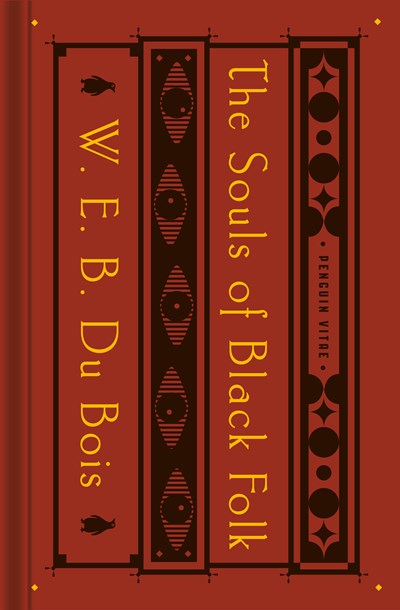
The Souls of Black Folk
by W. E. B. Du Bois
$25.00When The Souls of Black Folk was first published in 1903, it had a galvanizing effect on the conversation about race in America—and it remains both a touchstone in the literature of African America and a beacon in the fight for civil rights. Believing that one can know the “soul” of a race by knowing the souls of individuals, W. E. B. Du Bois combines history and stirring autobiography to reflect on the magnitude of American racism and to chart a path forward against oppression, and introduces the now-famous concepts of the color line, the veil, and double-consciousness.
With "The Talented Tenth" and "The Souls of White Folk"
-
Ideas in Unexpected Places : Reimagining Black Intellectual History
by Leslie M. Alexander, Brandon R. Byrd & Russell Rickford
$38.00This transformative collection advances new approaches to Black intellectual history by foregrounding the experiences and ideas of people who lacked access to more privileged mechanisms of public discourse and power. While the anthology highlights renowned intellectuals such as W. E. B. Du Bois, it also spotlights thinkers such as enslaved people in the antebellum United States, US Black expatriates in Guyana, and Black internationals in Liberia. The knowledge production of these men, women, and children has typically been situated outside the disciplinary and conceptual boundaries of intellectual history.
The volume centers on the themes of slavery and sexuality; abolitionism; Black internationalism; Black protest, politics, and power; and the intersections of the digital humanities and Black intellectual history. The essays draw from diverse methodologies and fields to examine the ideas and actions of Black thinkers from the eighteenth century to the present, offering fresh insights while creating space for even more creative approaches within the field.
Timely and incisive, Ideas in Unexpected Places encourages scholars to ask new questions through innovative interpretive lenses—and invites students, scholars, and other practitioners to push the boundaries of Black intellectual history even further. -
Harlem Rhapsody
Harlem Rhapsody
Victoria Christopher Murray
from $19.00“A page turner and history lesson at once, Harlem Rhapsody reminds us that our stories are our generational wealth— this book and the real lives that inspired it.”—Tayari Jones, New York Times bestselling author of An American Marriage (Oprah’s Book Club Pick)
She found the literary voices that would inspire the world…. The extraordinary story of the woman who ignited the Harlem Renaissance, written by Victoria Christopher Murray, New York Times bestselling coauthor of The Personal Librarian.
In 1919, a high school teacher from Washington, D.C arrives in Harlem excited to realize her lifelong dream. Jessie Redmon Fauset has been named the literary editor of The Crisis. The first Black woman to hold this position at a preeminent Negro magazine, Jessie is poised to achieve literary greatness. But she holds a secret that jeopardizes it all.
W. E. B. Du Bois, the founder of The Crisis, is not only Jessie’s boss, he’s her lover. And neither his wife, nor their fourteen-year-age difference can keep the two apart. Amidst rumors of their tumultuous affair, Jessie is determined to prove herself. She attacks the challenge of discovering young writers with fervor, finding sixteen-year-old Countee Cullen, seventeen-year-old Langston Hughes, and Nella Larsen, who becomes one of her best friends. Under Jessie’s leadership, The Crisis thrives…every African American writer in the country wants their work published there.
When her first novel is released to great acclaim, it’s clear that Jessie is at the heart of a renaissance in Black music, theater, and the arts. She has shaped a generation of literary legends, but as she strives to preserve her legacy, she’ll discover the high cost of her unparalleled success. -
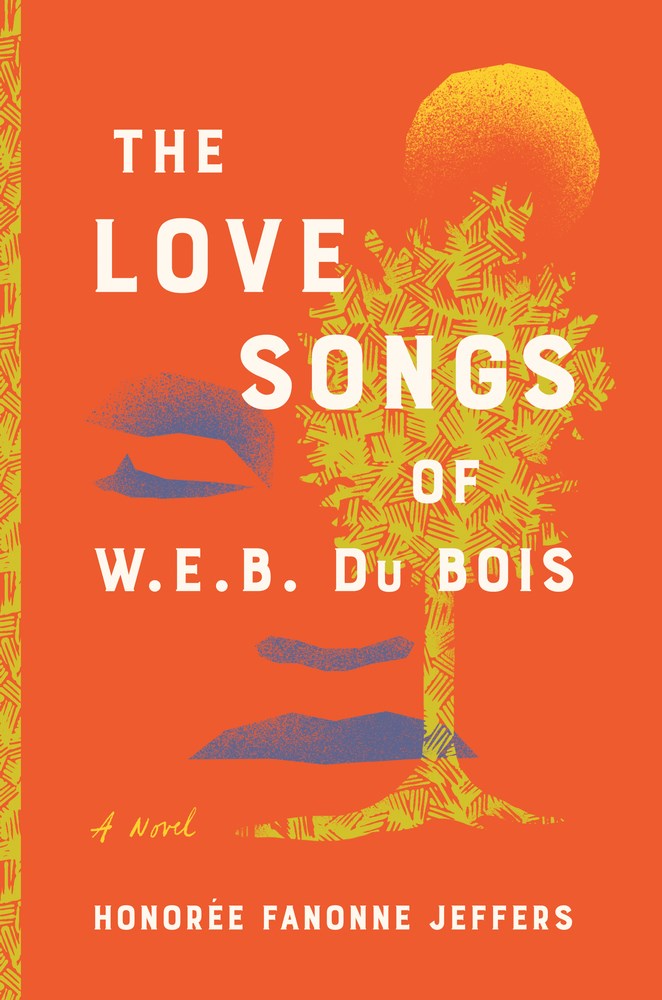
The Love Songs of W.E.B. Du Bois
by Honorée Fanonne Jeffers
from $20.00“My life had its significance and its only deep significance because it was part of a Problem,” W. E. B. Du Bois once wrote. Since childhood, Ailey Pearl Garfield has understood these words all too well. Bearing the names of two formidable Black Americans—the revered choreographer Alvin Ailey and her great grandmother, the descendant of slaves and tenant farmers—Ailey carries the weight of this Problem on her shoulders.
The daughter of an accomplished doctor and a strict schoolteacher, Ailey is raised in the City but spends summers in the small Georgia town of Chicasetta, where her mother’s family has lived since their ancestors arrived from Africa in bondage. Growing up, she struggles with this duality, a battle for belonging that shapes her identity. On one side are her exacting parents and her imperious, light-skinned grandmother Nana Claire, to whom skin color is paramount. On the other, Ailey feels the pull of the “deep country” of her mother’s land-tending family, whose forebears endured the horrors of slavery and Jim Crow.
But how can Ailey live up to everyone’s expectations when half of her family rejects the truth of a fraught racial history, while the rest can’t ever seem to break away from it?
-
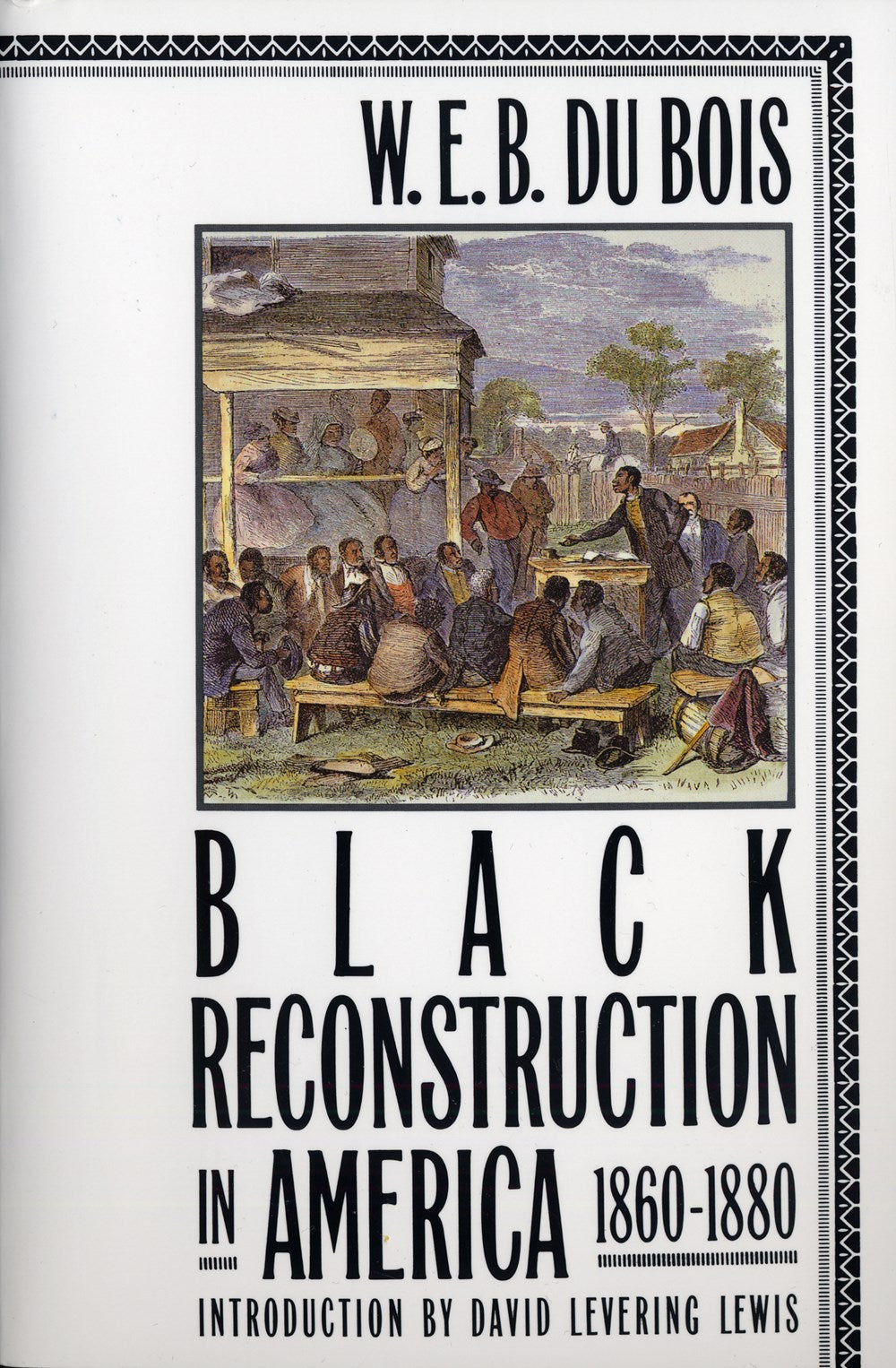
W.E.B. Du Bois: Black Reconstruction (LOA #350): An Essay Toward a History of the Part whichBlack Folk Played in the Attempt to ReconstructDemocracy in America, 1860–1880 (Library of America, 350)
W.E.B. Du Bois
$45.00A definitive edition of the landmark book that forever changed our understanding of the Civil War’s aftermath and the legacy of racism in America
Upon publication in 1935, W.E.B. Du Bois’s now classic Black Reconstruction offered a revelatory new assessment of Reconstruction—and of American democracy itself. One of the towering African American thinkers and activists of the twentieth century, Du Bois brought all his intellectual powers to bear on the nation’s post-Civil War era of political reorganization, a time when African American progress was met with a white supremacist backlash and ultimately yielded to the consolidation of the unjust social order of Jim Crow.
Black Reconstruction is a pioneering work of revisionist scholarship that, in the wake of the censorship of Du Bois’s characterization of Reconstruction by the Encyclopedia Britannica, was written to debunk influential historians whose racist ideas and emphases had disfigured the historical record. “The chief witness in Reconstruction, the emancipated slave himself,” Du Bois argued, “has been almost barred from court. His written Reconstruction record has been largely destroyed and nearly always neglected.” In setting the record straight Du Bois produced what co-editor Eric Foner has called an “indispensable book,” a magisterial work of detached scholarship that is also imbued with passionate outrage.
Presented in a handsome and authoritative hardcover edition prepared by Foner and co-editor Henry Louis Gates, Jr., Black Reconstruction is joined here for the first time with important writings that trace Du Bois’s thinking throughout his career about Reconstruction and its centrality in understanding the tortured course of democracy in America.
-
The New Negro: A History in Documents, 1887–1937
Martha H. Patterson
$39.95An authoritative anthology tracing the history of one of the most important concepts Black people drew on to challenge the brutal, totalizing system of Jim Crow racism
This book brings together a wealth of readings on the metaphor of the “New Negro,” charting how generations of thinkers debated its meaning and seized on its potency to stake out an astonishingly broad and sometimes contradictory range of ideological positions. It features dozens of newly unearthed pieces by major figures such as W. E. B. Du Bois, Charles S. Johnson, and Drusilla Dunjee Houston as well as writings from Cuba, the US Virgin Islands, Dominica, France, Sierra Leone, South Africa, colonial Zimbabwe, and the United States. Demonstrating how this evocative and supremely protean concept predates its popularization in Alain Locke’s 1925 anthology of the same name, The New Negro takes readers from its beginnings as a response to Henry Grady’s famous “New South” address in 1886 through the Harlem Renaissance and the New Deal.
Opening a fascinating window into a largely unexplored chapter in African American, Afro-Latin American, and African intellectual history, this groundbreaking anthology includes writings by Gwendolyn Bennett, Marita Bonner, John Edward Bruce (“Bruce Grit”), Nannie Helen Burroughs, Charles W. Chesnutt, James Bertram Clarke (“José Clarana,” “Jaime Gil”), Anna Julia Cooper, Alexander Crummell, Countee Cullen, Alice Dunbar-Nelson, Marcus Garvey, Hubert Harrison, Langston Hughes, Zora Neale Hurston, D. Hamilton Jackson, Fenton Johnson, Claude McKay, Oscar Micheaux, Jeanne “Jane” Nardal, Jean Toomer, Gustavo Urrutia, Booker T. Washington, Dorothy West, Ruth Whitehead Whaley, Fannie Barrier Williams, Carter G. Woodson, and a host of others.
-
Letters in Exile: Transnational Journeys of a Harlem Renaissance Writer
Claude McKay
$38.00A collection of private correspondence from one of the Harlem Renaissance’s brightest and most radical voices
The Jamaican-born, queer author Claude McKay (1890–1948) was a central figure of the Harlem Renaissance. His 1919 poem “If We Must Die” expressed a revolutionary vision for militant Black protest art, while his novels, including Home to Harlem, Banjo, and Banana Bottom, described ordinary Black life in lyrical prose. Yet for all that McKay connected himself to Harlem, he was a restless world traveler who sought spiritual, artistic, and political sustenance in France, Spain, Moscow, and Morocco.
Brooks E. Hefner and Gary Edward Holcomb bring together two decades of McKay’s never-before-published dispatches from the road with correspondents including W. E. B. Du Bois, Langston Hughes, Alain Locke, Max Eastman, and Louise Bryant. With wit, wisdom, insight, and sometimes irascible temper, McKay describes how he endured harassment from British authorities in London and worked alongside Leon Trotsky and Alexander Kerensky in Bolshevik Moscow. He reflects on Paris’s Lost Generation, immerses himself in the Marseille dockers’ noir subculture, and observes French colonialism in Morocco. Providing a new perspective on a unique figure of American modernism, this collection reveals McKay gossiping, cajoling, and confiding as he engages in spirited debates and challenges the political and artistic questions of the day. -
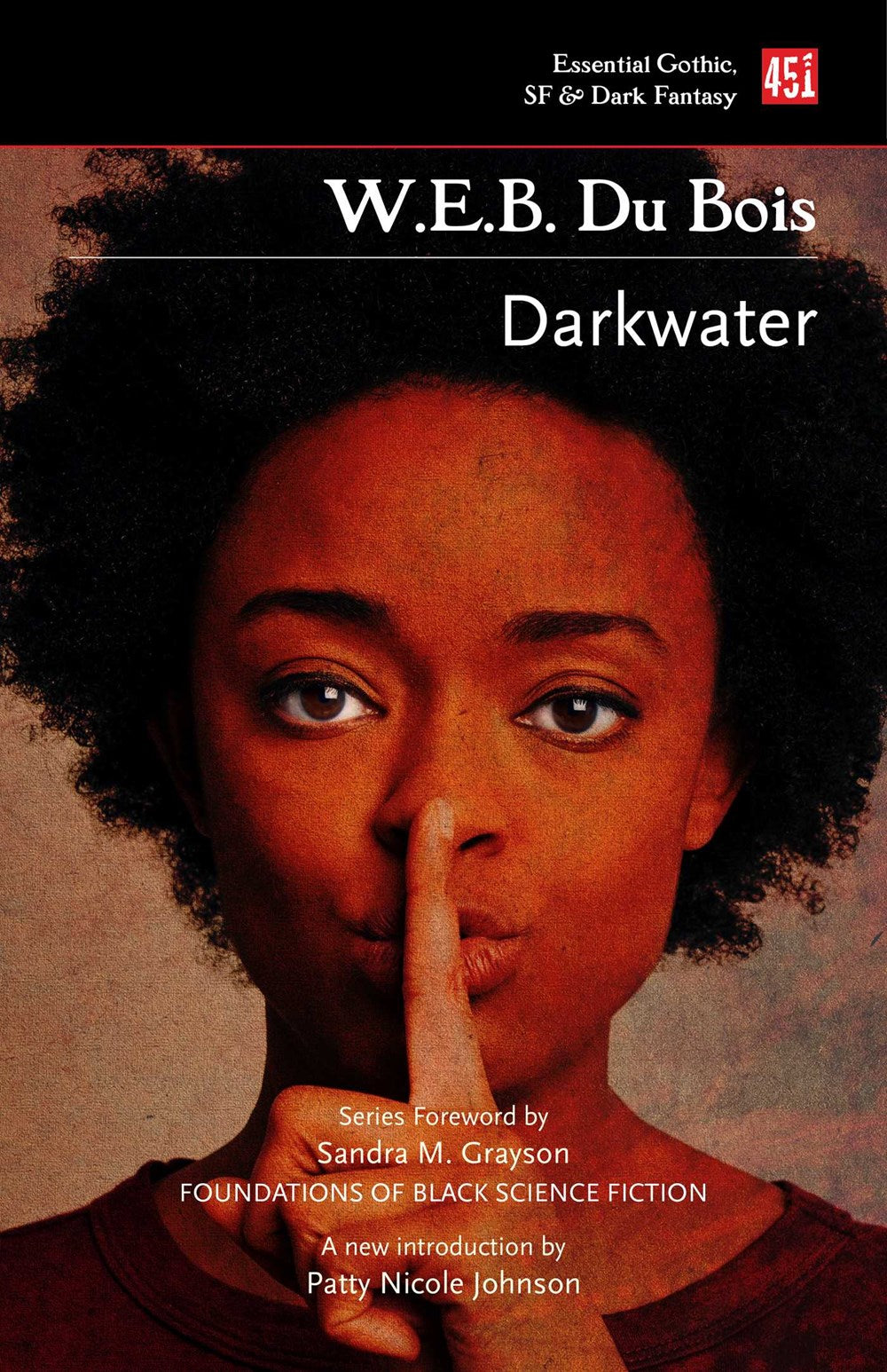
Darkwater
Darkwater
by W.E.B. Du Bois
$10.99Du Bois' foundational investigation of social justice and civil rights by means of essay, poetry, prayer and short science fiction.
A new edition with a new introduction, Du Bois' radical text is a rare statement of values formed around the vision of a collective life, where the humanity of black women and men is treated with dignity and equality. He expresses his themes through a series of literary forms: polemic essay, spirituals, poetry and short science fiction, each of which forms a pulse of social justice from a time when a true understanding of intersections between poverty, work, racism and feminism was rare. A new title in the Foundations of Black Science Fiction series. -
The Portable Anna Julia Cooper
Shirley Moody-Turner
$20.00A collection of essential writings from the iconic foremother of Black women's intellectual history, feminism, and activism, who helped pave the way for modern social justice movements like Black Lives Matter and Say Her Name
Winner of the American Library Association Award for Best Historical Materials
A Penguin Classic
The Portable Anna Julia Cooper brings together, for the first time, Anna Julia Cooper's major collection of essays, A Voice from the South, along with several previously unpublished poems, plays, journalism and selected correspondences, including over thirty previously unpublished letters between Anna Julia Cooper and W. E. B. Du Bois. The Portable Anna Julia Cooper will introduce a new generation of readers to an educator, public intellectual, and community activist whose prescient insights and eloquent prose underlie some of the most important developments in modern American intellectual thought and African American social and political activism.
Recognized as the iconic foremother of Black women's intellectual history and activism, Cooper (1858-1964) penned one of the most forceful and enduring statements of Black feminist thought to come of out of the nineteenth century. Attention to her work has grown exponentially over the years--her words have been memorialized in the US passport and, in 2009, she was commemorated with a US postal stamp. Cooper's writings on the centrality of Black girls and women to our larger national discourse has proved especially prescient in this moment of Black Lives Matter, Say Her Name, and the recent protests that have shaken the nation.
-
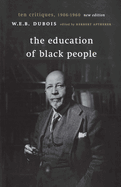
The Education of Black People: Ten Critiques, 1906-1960
$18.00Undoubtedly the most influential black intellectual of the twentieth century and one of America's finest historians, W.E.B. DuBois knew that the liberation of the African American people required liberal education and not vocational training. He saw education as a process of teaching certain timeless values: moderation, an avoidance of luxury, a concern for courtesy, a capacity to endure, a nurturing love for beauty. At the same time, DuBois saw education as fundamentally subversive. This was as much a function of the well-established role of educationfrom Plato forwardas the realities of the social order under which he lived. He insistently calls for great energy and initiative; for African Americans controlling their own lives and for continued experimentation and innovation, while keeping education's fundamentally radical nature in view.
Though containing speeches written nearly one-hundred years ago, and on a subject that has seen more stormy debate and demagoguery than almost any other in recent history, The Education of Black People approaches education with a timelessness and timeliness, at once rooted in classical thought that reflects a remarkably fresh and contemporary relevance. -
Why Are All the Black Kids Sitting Together in the Cafeteria?: And Other Conversations about Race
$21.99The classic, New York Times-bestselling book on the psychology of racism that shows us how to talk about race in America.
Walk into any racially mixed high school and you will see Black, White, and Latino youth clustered in their own groups. Is this self-segregation a problem to address or a coping strategy? How can we get past our reluctance to discuss racial issues?
Beverly Daniel Tatum, a renowned authority on the psychology of racism, argues that straight talk about our racial identities is essential if we are serious about communicating across racial and ethnic divides and pursuing antiracism. These topics have only become more urgent as the national conversation about race is increasingly acrimonious. This fully revised edition is essential reading for anyone seeking to understand dynamics of race and racial inequality in America.
-
The Wake of the Wind: A Novel
$15.95A dramatic and thought-provoking novel of one family's triumph in the face of the hardships and challenges of the post-Civil War South, from the award-winning author of Family
"Rendered with compassion and beautiful simplicity."--The Washington Post Book World
"[A] provocative and at times painful family portrait . . . It should be required reading."--Detroit Free Press
Opening in Texas during the waning years of the Civil War, The Wake of the Wind tells the epic story of a remarkable heroine, Lifee, and her husband, Mor. When news of Emancipation finally comes to Texas, Mor, Lifee, and their family set out in search of hope and a piece of land they can work and call their own. Miraculously, they manage not only to survive but to succeed--their crops grow, their children thrive, they educate themselves and others. But the South during Reconstruction is not a place that takes kindly to the achievements of former slaves, and as lynchings and injustices become a plague across the region, time and time again they must make the anguished decision to leave their land in search of a safer place.
Land, however, is the least of their worldly possessions. Lifee and Mor are the descendants of a long and vital line. Having used their intelligence, strength, and ingenuity to make their place in the new post-Civil War world, they in turn pass those talents along to their children--the next generation to surge forward, accomplishing more than their parents could ever dream.
At once tragic and triumphant, The Wake of the Wind is a penetrating look at the challenges that generations of African Americans have had to overcome in order to carve out a home and a future for themselves and their families.
Stay Informed. We're building a community committed to celebrating Black authors + artisans. Subscribe to keep up with all things Kindred Stories.