
Search results: 75 results for “by frantz fanon”
Not finding what you're looking for? Check out our shop on bookshop.org to order and still support us ♥
75 results
-
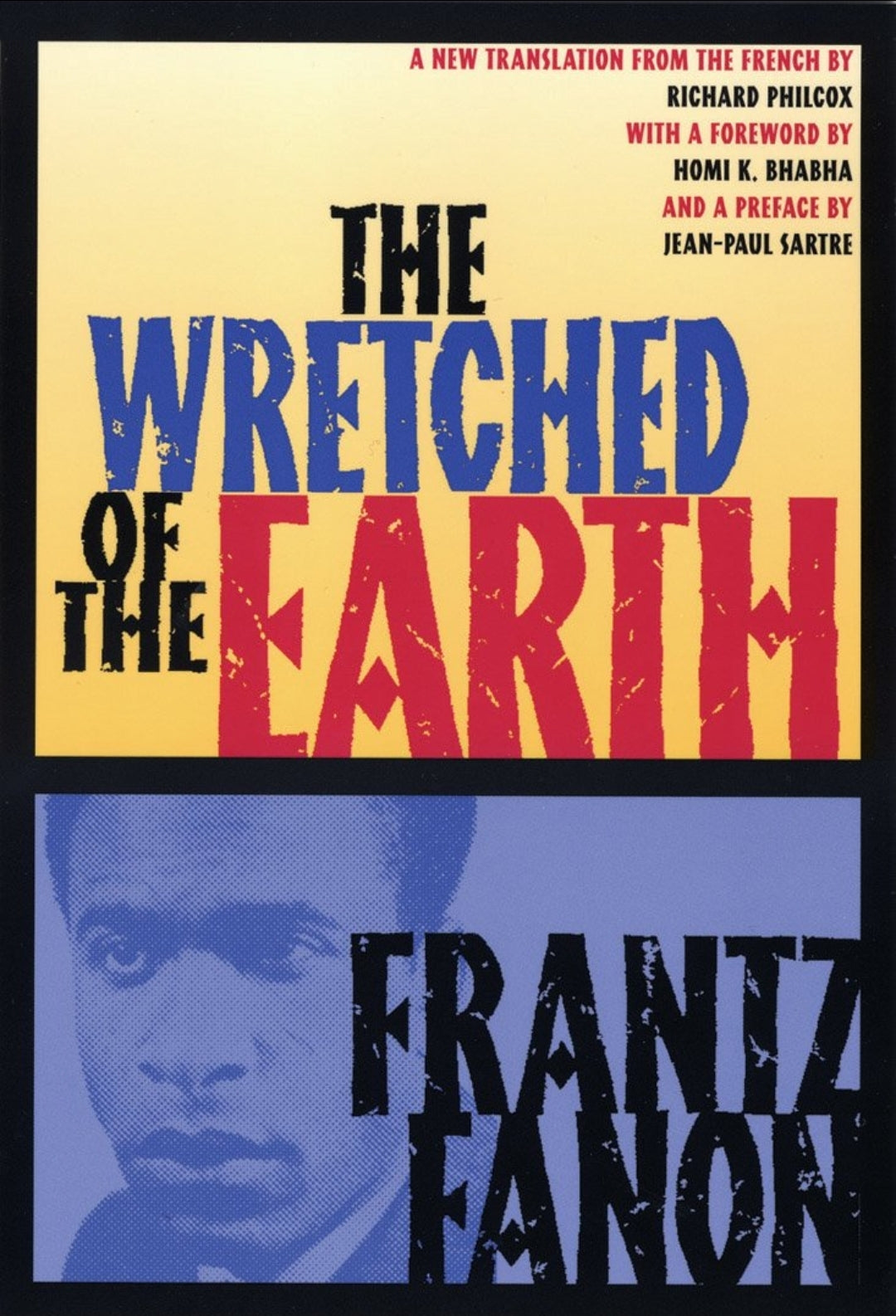
The Wretched of the Earth
![The Wretched of the Earth]()
The Wretched of the Earth
by Frantz Fanon
$18.00First published in 1961, Frantz Fanon’s The Wretched of the Earth is a masterful and timeless interrogation of race, colonialism, psychological trauma, and revolutionary struggle. In 2020, it found a new readership in the wake of the Black Lives Matter protests and the centering of narratives interrogating race by Black writers. Bearing singular insight into the rage and frustration of colonized peoples, and the role of violence in spurring historical change, the book incisively attacks the twin perils of post-independence colonial politics: the disenfranchisement of the masses by the elites on the one hand, and intertribal and interfaith animosities on the other. A landmark text for revolutionaries and activists, The Wretched of the Earth is an eternal touchstone for civil rights, anti-colonialism, psychiatric studies, and Black consciousness movements around the world. Translated by Richard Philcox, and featuring now-classic critical essays by Jean-Paul Sartre and Homi K. Bhabha, as well as a new essay, this sixtieth anniversary edition of Fanon’s most famous text stands proudly alongside such pillars of anti-colonialism and anti-racism as Edward Said’s Orientalism and The Autobiography of Malcolm X.
-
Fanon
![Fanon cover image]()

Fanon
John Edgar Wideman
$16.95A philosopher, psychiatrist, and political activist, Frantz Fanon was a fierce, acute critic of racism and oppression. Born of African descent in Martinique in 1925, Fanon fought in defense of France during World War II but later against France in Algeria’s war for independence. His last book, The Wretched of the Earth, published in 1961, inspired leaders of diverse liberation movements: Steve Biko in South Africa, Che Guevara in Latin America, the Black Panthers in the States. Wideman’s novel is disguised as the project of a contemporary African American novelist,Thomas, who undertakes writing a life of Fanon. The result is an electrifying mix of perspectives, traveling from Manhattan to Paris to Algeria to Pittsburgh. Part whodunit, part screenplay, part love story, Fanon introduces the French film director Jean-Luc Godard to the ailing Mrs. Wideman in Homewood and chases the meaning of Fanon’s legacy through our violent, post-9/11 world, which seems determined to perpetuate the evils Fanon sought to rectify.
-
Toward the African Revolution
![Book cover image]()

Toward the African Revolution
Frantz Fanon
$17.00This powerful collection of articles, essays, and letters spans the period between Black Skin, White Masks (1952) and The Wretched of the Earth (1961), Fanon’s landmark manifesto on the psychology of the colonized and the means of empowerment necessary for their liberation. These pieces display the genesis of some of Fanon’s greatest ideas ideas that became so vital to the leaders of the American civil rights movement.
-
Postcolonial Melancholia (The Wellek Library Lectures)
![Postcolonial Melancholia (The Wellek Library Lectures) cover image]()

Postcolonial Melancholia (The Wellek Library Lectures)
$24.95In an effort to deny the ongoing effect of colonialism and imperialism on contemporary political life, the death knell for a multicultural society has been sounded from all sides. That's the provocative argument Paul Gilroy makes in this unorthodox defense of the multiculture. Gilroy's searing analyses of race, politics, and culture have always remained attentive to the material conditions of black people and the ways in which blacks have defaced the "clean edifice of white supremacy." In Postcolonial Melancholia, he continues the conversation he began in the landmark study of race and nation 'There Ain't No Black in the Union Jack' by once again departing from conventional wisdom to examine―and defend―multiculturalism within the context of the post-9/11 "politics of security."
This book adapts the concept of melancholia from its Freudian origins and applies it not to individual grief but to the social pathology of neoimperialist politics. The melancholic reactions that have obstructed the process of working through the legacy of colonialism are implicated not only in hostility and violence directed at blacks, immigrants, and aliens but in an inability to value the ordinary, unruly multiculture that has evolved organically and unnoticed in urban centers. Drawing on the seminal discussions of race begun by Frantz Fanon, W. E. B. DuBois, and George Orwell, Gilroy crafts a nuanced argument with far-reaching implications. Ultimately, Postcolonial Melancholia goes beyond the idea of mere tolerance to propose that it is possible to celebrate the multiculture and live with otherness without becoming anxious, fearful, or violent.
-
Bemused
![Book cover image]()

Bemused
Farrah Rochon
$18.99The untold origin story of the 5 Muses from Disney’s Hercules is revealed in this rollicking YA fantasy filled with mythical adventure, music, and the unbreakable bonds of sisterhood.
The Muses narrated Hercules’s story. Now, in this novel for fans of the New York Times bestsellers Go the Distance and Fire & Fate, they’ll narrate their own "gospel truth."
Living in a quiet seaside village with their overprotective mother, teenaged sisters Calliope, Clio, Melpomene, Terpsichore, and Thalia are talented performers with no audience. If Calli had her way, she'd pursue her dream of writing epic stories in the city of Thebes. But family comes first, and as the eldest, she'd never leave her beloved sisters behind.
Then, following a disastrous public music performance, their mother reveals a shocking secret: she is Mnemosyne, the Goddess of Memory, and for nearly two decades, she’s been on the run from the gods of Mount Olympus, desperate to keep her daughters safe from their machinations. Before she can share more, she is kidnapped . . . and though the girls don’t know it yet, the villain pulling the strings is none other than Hades, fiery God of the Underworld.
Under Calli’s leadership, the sisters embark on a journey to save their mother and to learn more about their own divine origins. But the path ahead is filled with mythical trials and tribulations, and they’ll need to rely on both their individual talents and the strength of their sisterhood to ensure that they ascend from "zeroes" to "heroes"--or more accurately, heroines.
Penned by New York Times bestselling author Farrah Rochon, this YA fantasy uniquely blends a twist on a Disney classic with a fresh take on Greek mythology.
-
Misbehaving at the Crossroads: Essays & Writings
![Misbehaving at the Crossroads: Essays & Writings cover image]()

Misbehaving at the Crossroads: Essays & Writings
Honoree Fanonne Jeffers
$19.99*Paperback Release Date - 6/23/2026*
The New York Times-bestselling, National Book Award-nominated author of The Love Songs of W.E.B. Du Bois and The Age of Phillis makes her nonfiction debut with this personal and thought-provoking work that explores the journeys and possibilities of Black women throughout American history and in contemporary times.
Honorée Fanonne Jeffers is at a crossroads.
Traditional African/Black American cultures present the crossroads as a place of simultaneous difficulty and possibility. In contemporary times, Kimberlé Crenshaw coined the phrase “intersectionality” to explain the unique position of Black women in America. In many ways, they are at a third crossroads: attempting to fit into notions of femininity and respectability primarily assigned to White women, while inventing improvisational strategies to combat oppression.
In Misbehaving at the Crossroads, Jeffers explores the emotional and historical tensions in Black women’s public lives and her own private life. She charts voyages of Black girlhood to womanhood and the currents buffeting these journeys, including the difficulties of racially gendered oppression, the challenges of documenting Black women’s ancestry; the adultification of Black girls; the irony of Black female respectability politics; the origins of Womanism/Black feminism; and resistance to White supremacy and patriarchy. As Jeffers shows with empathy and wisdom, naming difficult historical truths represents both Blues and transcendence, a crossroads that speaks.
Necessary and sharply observed, provocative and humane, and full of the insight and brilliance that has characterized her poetry and fiction, Misbehaving at the Crossroads illustrates the life of one extraordinary Black woman—and her extraordinary foremothers.
-
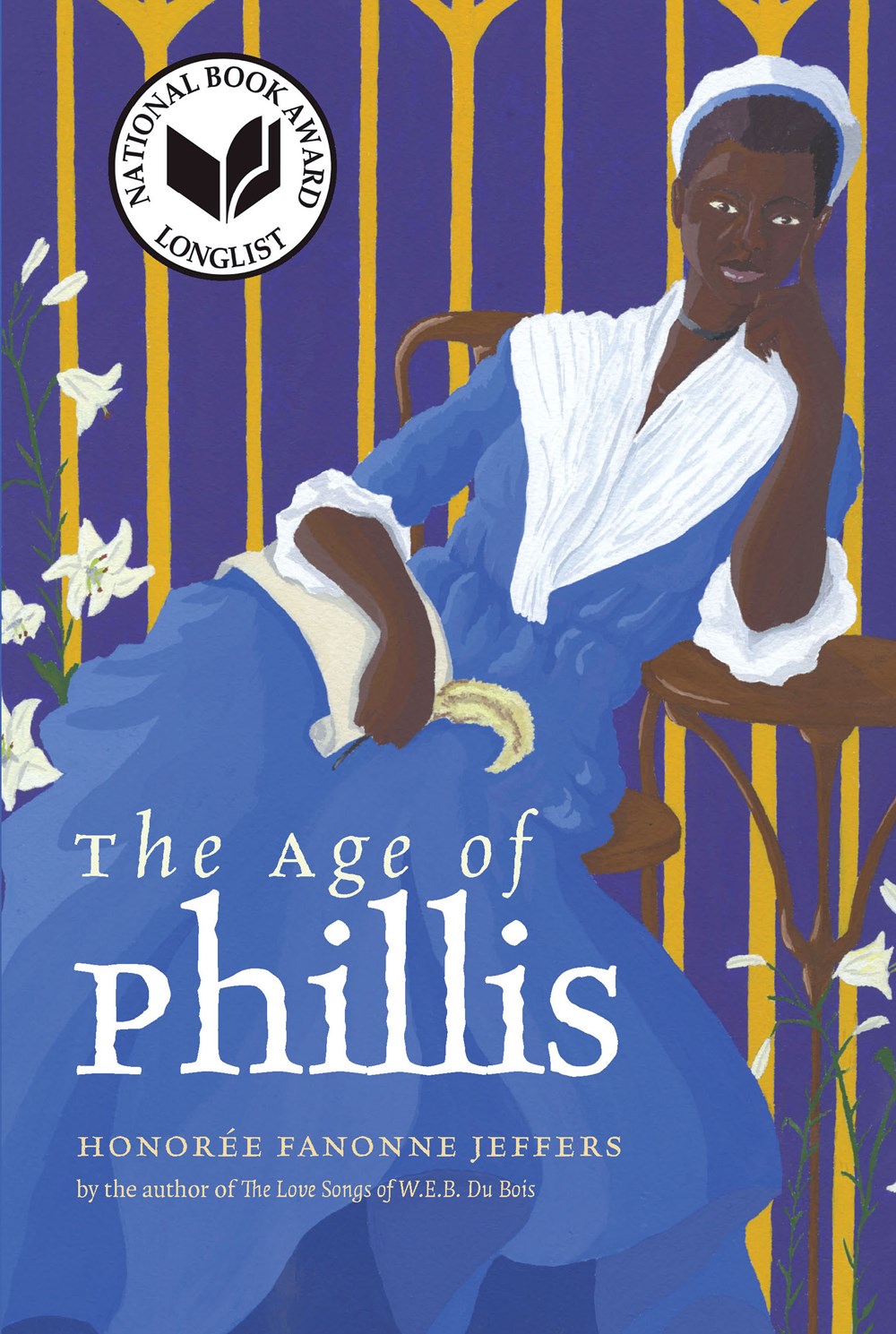
The Age of Phillis
![The Age of Phillis]()
The Age of Phillis
by Honorée Fanonne Jeffers
$16.95Poems imagine the life and times of Phillis Wheatley Peters
NAACP Image Award Winner for Outstanding Literary Work for Poetry
2020 National Book Award for Poetry, Longlist
2020 LA Times Book Award Finalist
In 1773, a young, African American woman named Phillis Wheatley Peters published a book of poetry that challenged Western prejudices about African and female intellectual capabilities. Based on fifteen years of archival research, The Age of Phillis, by award-winning writer Honorée Fanonne Jeffers, imagines the life and times of Wheatley: her childhood in the Gambia, West Africa, her life with her white American owners, her friendship with Obour Tanner, and her marriage to the enigmatic John Peters. Woven throughout are poems about Wheatley's "age"—the era that encompassed political, philosophical, and religious upheaval, as well as the transatlantic slave trade. For the first time in verse, Wheatley's relationship to black people and their individual "mercies" is foregrounded, and here we see her as not simply a racial or literary symbol, but a human being who lived and loved while making her indelible mark on history.
mothering #1
Yaay, Someplace in the Gambia, c. 1753
after
the after-birth
is delivered
the mother stops
holding her breath
the mid-wife gives
what came before
her just-washed pain
her insanity pain
an undeserved pain
a God-given pain
oh oh oh pain
drum-talking pain
witnessing pain
Allah
a mother offers
You this gift
prays You find
it acceptable
her living pain
her creature pain
her pretty-little-baby
pain -
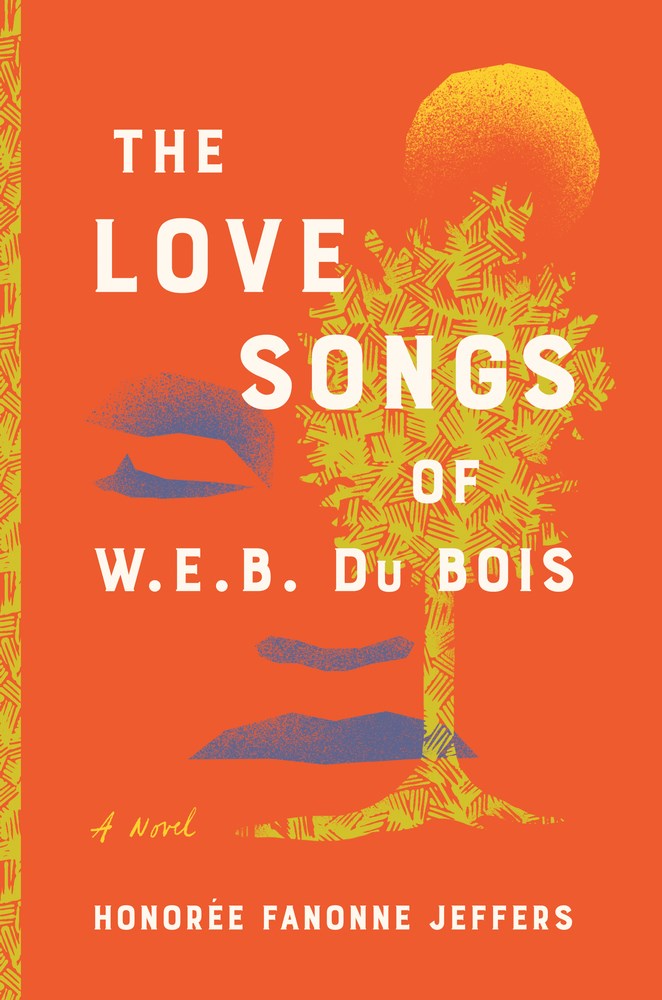
The Love Songs of W.E.B. Du Bois
![The Love Songs of W.E.B. Du Bois]()
The Love Songs of W.E.B. Du Bois
by Honorée Fanonne Jeffers
from $20.00“My life had its significance and its only deep significance because it was part of a Problem,” W. E. B. Du Bois once wrote. Since childhood, Ailey Pearl Garfield has understood these words all too well. Bearing the names of two formidable Black Americans—the revered choreographer Alvin Ailey and her great grandmother, the descendant of slaves and tenant farmers—Ailey carries the weight of this Problem on her shoulders.
The daughter of an accomplished doctor and a strict schoolteacher, Ailey is raised in the City but spends summers in the small Georgia town of Chicasetta, where her mother’s family has lived since their ancestors arrived from Africa in bondage. Growing up, she struggles with this duality, a battle for belonging that shapes her identity. On one side are her exacting parents and her imperious, light-skinned grandmother Nana Claire, to whom skin color is paramount. On the other, Ailey feels the pull of the “deep country” of her mother’s land-tending family, whose forebears endured the horrors of slavery and Jim Crow.
But how can Ailey live up to everyone’s expectations when half of her family rejects the truth of a fraught racial history, while the rest can’t ever seem to break away from it?
-
The Illusion of Power: Passion and Politics #1
![The Illusion of Power: Passion and Politics #1 cover image]()

The Illusion of Power: Passion and Politics #1
$26.99For fans of the New Camelot series by Sierra Simone and Kennedy Ryan’s All the King’s Men duet, comes The Illusion of Power. A spicy, contemporary romance that follows future First Lady, Selene Taylor, during the integral months of her husband's campaign for the Oval where she finds herself navigating the embarrassment of his infidelity, the dangers of being a Black woman in proximity to political power, and perhaps worst of all, falling for the two men tasked with protecting her.
-
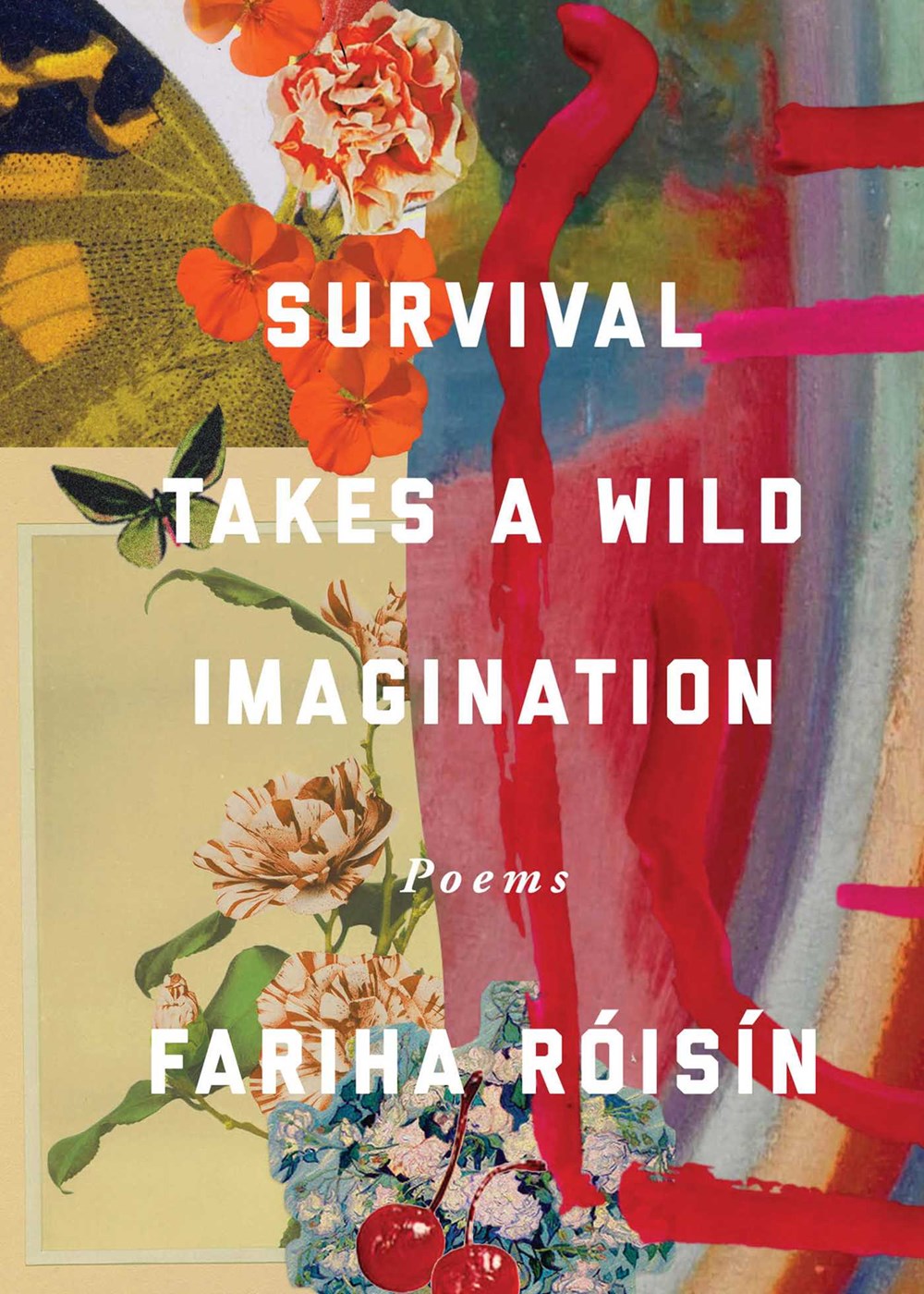
Survival Takes a Wild Imagination: Poems
![Survival Takes a Wild Imagination: Poems]()
Survival Takes a Wild Imagination: Poems
by Fariha Róisín
$16.99In the powerful follow up to her critically acclaimed debut collection, poet and activist Fariha Róisín is writing, praying, clawing, and scratching her way out of the grips of generational trauma on the search for the freedom her mother never received and the kindness she couldn’t give.
This collection of poetry asks a kaleidoscope of questions: Who is my family? My father? How do I love a mother no longer here? Can I see myself? What does it mean to be Bangladeshi? What is a border? Innately hopeful and resolutely strong, Fariha's voice turns to the optimism and beauty inherent in rebuilding the self, and in turn, the world that the self moves through. Ubiquitous to the human experience, Survival Takes a Wild Imagination is an illuminating breath of fresh air from a powerful poetic voice. -
A Map to the Door of No Return: Notes to Belonging
![A Map to the Door of No Return: Notes to Belonging cover image]()
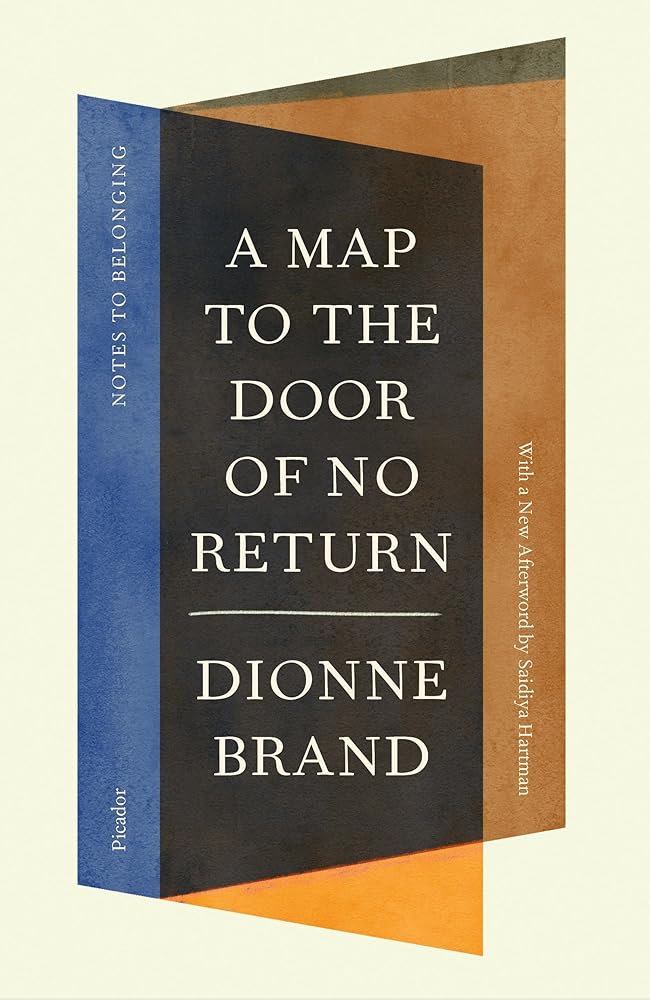
A Map to the Door of No Return: Notes to Belonging
$19.00Now in its first American edition, Dionne Brand's groundbreaking A Map to the Door of No Return has emerged as a modern classic, a highly influential exploration of "being" in the Black Diaspora.
Since its first publication in 2001, Dionne Brand's groundbreaking exploration of being in the Black Diaspora, A Map to the Door of No Return, has emerged as a modern classic. The door, in Brand's iconic schema, represents the point of rupture where the ancestors of the Black Diaspora departed one world for another: the place where all names were forgotten, and all beginnings recast. "This door," writes Brand, "is not mere physicality. It is a spiritual location . . . Since leaving was never voluntary, return was, and still may be, an intention, however deeply buried. There is as it says no way in; no return."
Through shards of history, memoir, lyrical investigation, and the unwritten experience of so many descendants of those who passed through the door, Brand constructs a map of this indelible region, culminating in an enduring expression, both definitive and seeking, of what it is to live, think, and create in the wake of colonization.
With a new preface by the author, and an afterword by Saidiya Hartman.
-
Let the Poets Govern: A Declaration of Freedom
![Let the Poets Govern: A Declaration of Freedom cover image]()

Let the Poets Govern: A Declaration of Freedom
$26.00In this part-memoir, part-manifesto, an acclaimed poet interprets Black radical literary traditions to reimagine freedom through refusal.
“In these fierce yet tender pages, Camonghne Felix reveals how imagination can become a form of governance—an instrument for creating a world rooted in care, community, and radical possibility.”—Michelle Alexander, New York Times bestselling author of The New Jim Crow
Over the past decade, Camonghne Felix has been at the center of American politics, working in strategy, communications, and as a speechwriter. Throughout it all, she has maintained her unwavering belief in language’s foundational revolutionary potential, outside of its deployment for legislative and political ends. In this groundbreaking work of nonfiction, she argues that Black radical poetic traditions model an ethical code and overcome entrenched structures of patriarchy and paternalism, inventing a new form that examines the historical and legislative, and the personal and poetic.
Felix draws on stories from her life in campaigns and the decisions she has had to make: preparing speeches for candidates, responding to harassment, recruiting staff. She recounts her moving personal history—accompanying her mother, a lawyer, to court, and her father, a participant in the Grenadian revolution of 1983, to protests—as well as her coming-of-age being schooled in a wider tradition of Black radical thinkers, from Gwendolyn Brooks to Audre Lorde.
Through rupture, rhythm, and a refusal of politics as usual, Let the Poets Govern encourages us to hold ourselves to the standards of our highest ideals and embraces our shared humanity.


Stay Informed. We're building a community committed to celebrating Black authors + artisans. Subscribe to keep up with all things Kindred Stories.