
Search results: 7 results for “by claude mckay”
Not finding what you're looking for? Check out our shop on bookshop.org to order and still support us ♥
7 results
-
Romance in Marseille
![Romance in Marseille]()
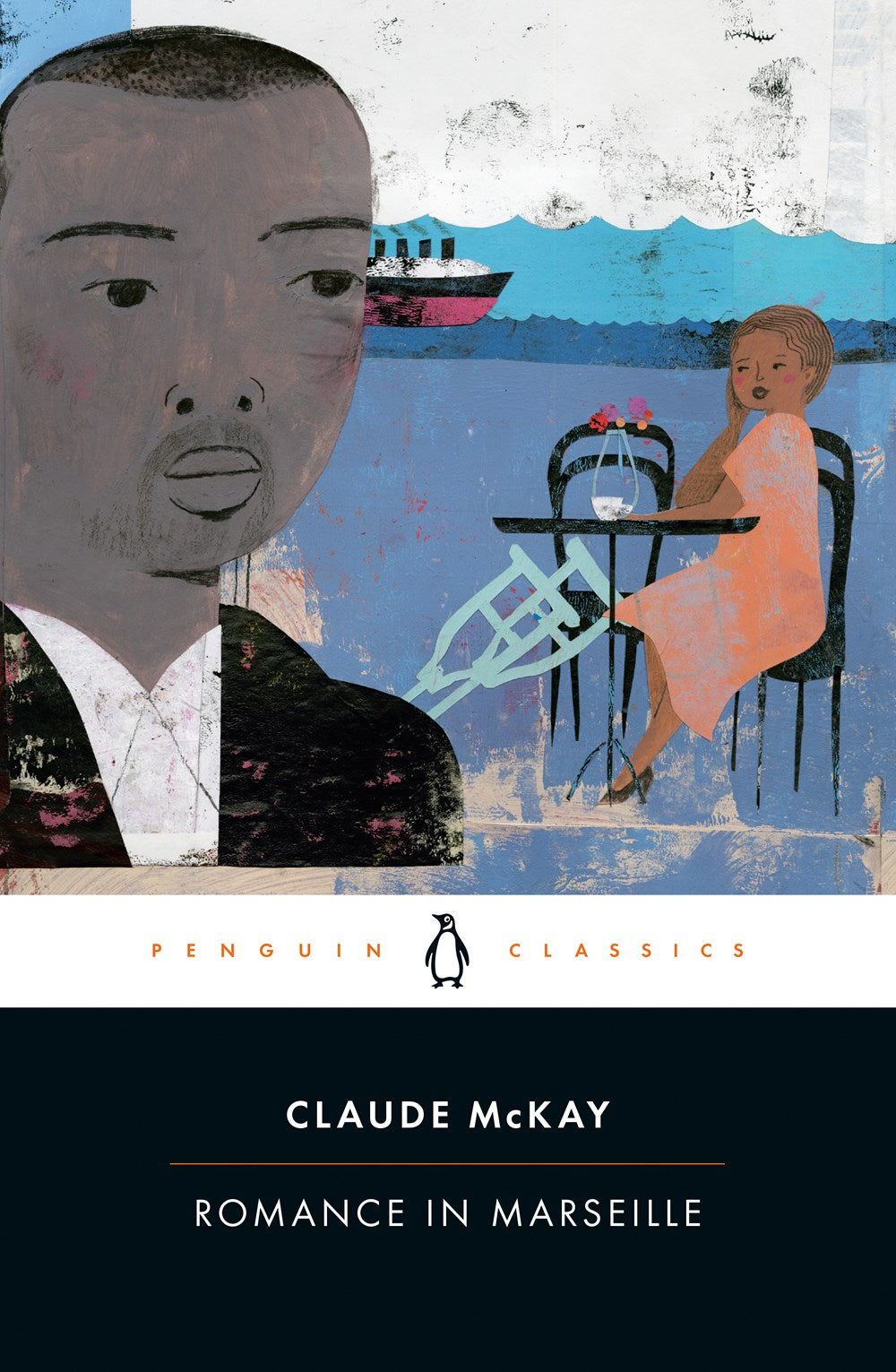
Romance in Marseille
by Claude McKay
$16.00*ships in 7-10 business days*
The pioneering novel of physical disability, transatlantic travel, and black international politics. A vital document of black modernism and one of the earliest overtly queer fictions in the African American tradition. Published for the first time.
A Penguin Classic
Buried in the archive for almost ninety years, Claude McKay's Romance in Marseille traces the adventures of a rowdy troupe of dockworkers, prostitutes, and political organizers--collectively straight and queer, disabled and able-bodied, African, European, Caribbean, and American. Set largely in the culture-blending Vieux Port of Marseille at the height of the Jazz Age, the novel takes flight along with Lafala, an acutely disabled but abruptly wealthy West African sailor. While stowing away on a transatlantic freighter, Lafala is discovered and locked in a frigid closet. Badly frostbitten by the time the boat docks, the once-nimble dancer loses both of his lower legs, emerging from life-saving surgery as what he terms "an amputated man." Thanks to an improbably successful lawsuit against the shipping line, however, Lafala scores big in the litigious United States. Feeling flush after his legal payout, Lafala doubles back to Marseille and resumes his trans-African affair with Aslima, a Moroccan courtesan. With its scenes of black bodies fighting for pleasure and liberty even when stolen, shipped, and sold for parts, McKay's novel explores the heritage of slavery amid an unforgiving modern economy. This first-ever edition of Romance in Marseille includes an introduction by McKay scholars Gary Edward Holcomb and William J. Maxwell that places the novel within both the "stowaway era" of black cultural politics and McKay's challenging career as a star and skeptic of the Harlem Renaissance. -
Manchild in the Promised Land
![Manchild in the Promised Land cover image]()

Manchild in the Promised Land
$20.00With more than two million copies in print, Manchild in the Promised Land is one of the most remarkable autobiographies of our time—the definitive account of African-American youth in Harlem of the 1940s and 1950s, and a seminal work of modern literature.
Published during a literary era marked by the ascendance of black writers such as Richard Wright, Ralph Ellison, James Baldwin, and Alex Haley, this thinly fictionalized account of Claude Brown’s childhood as a hardened, streetwise criminal trying to survive the toughest streets of Harlem has been heralded as the definitive account of everyday life for the first generation of African Americans raised in the Northern ghettos of the 1940s and 1950s.
When the book was first published in 1965, it was praised for its realistic portrayal of Harlem—the children, young people, hardworking parents; the hustlers, drug dealers, prostitutes, and numbers runners; the police; the violence, sex, and humor.
The book continues to resonate generations later, not only because of its fierce and dignified anger, not only because the struggles of urban youth are as deeply felt today as they were in Brown’s time, but also because of its inspiring message. Now with an introduction by Nathan McCall, here is the story about the one who “made it,” the boy who kept landing on his feet and grew up to become a man.
-
PRE-ORDER: I Will Take to the Water: An Anthology of African Americans and the Sea
![I Will Take to the Water: An Anthology of African Americans and the Sea cover image]()

PRE-ORDER: I Will Take to the Water: An Anthology of African Americans and the Sea
$27.50A landmark survey of African American literature about Black experiences of the maritime environment.
The ocean is foundational to the story of Africans in America, beginning with the searing Middle Passage. Initially evoking terror, pain, and death, the ocean also became associated with escape, empowerment, freedom, and home, as over time, African Americans in seaport towns found work, built communities, and gained knowledge from travelers. David R. Anderson shows in this groundbreaking collection of memoir, fiction, poetry, and more that African American maritime literature summons many of the traditional themes―survival in the face of overwhelming natural force, sublimity, demonstration of skill and merit, and self-discovery―but often with an eye on legacies of imperialism, slavery, discrimination, and cultural erasure.
Divided thematically across ten sections that address peril, labor, recreation, and more, the book gathers work by influential writers and intellectuals from the eighteenth century to the present, including: Lucille Clifton, Edwidge Danticat, Frederick Douglass, Alice Dunbar-Nelson, W. E. B. DuBois, Camille T. Dungy, Marcus Garvey, Robert Hayden, Zora Neale Hurston, Major Jackson, Harriet Jacobs, John S. Jacobs, Nella Larsen, Claude McKay, Toni Morrison, Walter Mosley, Natasha Trethewey, Phillis Wheatley, Colson Whitehead, and Kevin Young.
-
Black Crip Modern: Race, Gender, and the Roots of Disability Consciousness
![Black Crip Modern: Race, Gender, and the Roots of Disability Consciousness cover image]()

Black Crip Modern: Race, Gender, and the Roots of Disability Consciousness
$30.00Asserts how Black artists and activists developed a disability consciousness in response to racialized disabling experiences in the early to mid-twentieth century
Black Crip Modern uncovers how early twentieth-century Black writers, artists, and activists laid the groundwork for modern disability consciousness. Under Jim Crow, Black disabled citizens were excluded from social services and medical reforms, even as racist violence, carceral surveillance, eugenic logic, and exploitative labor conditions deepened disabling experiences. Through literature, film, photography, and personal testimony, Black modernists registered these compounded injustices and articulated new ways of thinking about illness, impairment, and care.
Engaging the work of figures such as Zora Neale Hurston, Claude McKay, Wallace Thurman, Pauli Murray, Langston Hughes and Marita Bonner, Jess Waggoner traces how Black cultural production challenged both white supremacy and ableist ideals of progress. In their writing, Waggoner finds an early “Black crip modern” consciousness―one that rejected eugenic reform, critiqued racialized caregiving hierarchies, and envisioned collective care grounded in feminist and anti-carceral principles.
In conversation with contemporary disability justice movements, Black Crip Modern reveals how Black thinkers and artists forged a disability politics before it was formally named. By assembling these overlooked histories of Black ill and disabled life, Waggoner reframes the foundations of disability studies and insists that Black cultural production has always been central to the struggle for bodily autonomy, access, and justice.
-
The New Negro: A History in Documents, 1887–1937
![The New Negro: A History in Documents, 1887–1937 cover image]()

The New Negro: A History in Documents, 1887–1937
Martha H. Patterson
$39.95An authoritative anthology tracing the history of one of the most important concepts Black people drew on to challenge the brutal, totalizing system of Jim Crow racism
This book brings together a wealth of readings on the metaphor of the “New Negro,” charting how generations of thinkers debated its meaning and seized on its potency to stake out an astonishingly broad and sometimes contradictory range of ideological positions. It features dozens of newly unearthed pieces by major figures such as W. E. B. Du Bois, Charles S. Johnson, and Drusilla Dunjee Houston as well as writings from Cuba, the US Virgin Islands, Dominica, France, Sierra Leone, South Africa, colonial Zimbabwe, and the United States. Demonstrating how this evocative and supremely protean concept predates its popularization in Alain Locke’s 1925 anthology of the same name, The New Negro takes readers from its beginnings as a response to Henry Grady’s famous “New South” address in 1886 through the Harlem Renaissance and the New Deal.
Opening a fascinating window into a largely unexplored chapter in African American, Afro-Latin American, and African intellectual history, this groundbreaking anthology includes writings by Gwendolyn Bennett, Marita Bonner, John Edward Bruce (“Bruce Grit”), Nannie Helen Burroughs, Charles W. Chesnutt, James Bertram Clarke (“José Clarana,” “Jaime Gil”), Anna Julia Cooper, Alexander Crummell, Countee Cullen, Alice Dunbar-Nelson, Marcus Garvey, Hubert Harrison, Langston Hughes, Zora Neale Hurston, D. Hamilton Jackson, Fenton Johnson, Claude McKay, Oscar Micheaux, Jeanne “Jane” Nardal, Jean Toomer, Gustavo Urrutia, Booker T. Washington, Dorothy West, Ruth Whitehead Whaley, Fannie Barrier Williams, Carter G. Woodson, and a host of others.
-
Plum Bun: A Novel Without a Moral (Modern Library Torchbearers)
![Plum Bun: A Novel Without a Moral (Modern Library Torchbearers) cover image]()

Plum Bun: A Novel Without a Moral (Modern Library Torchbearers)
Jessie Redmon Fauset
$17.00A rediscovered classic from the Harlem Renaissance about a young Black woman’s journey passing as white in 1920s New York City and her quest for self-acceptance—with an introduction by Glory Edim, founder and author of Well-Read Black Girl.
Jessie Redmon Fauset is one of the literary titans and foremost tastemakers of the Harlem Renaissance—hired by W. E. B. Du Bois to edit The Crisis, she helped popularize writers like Nella Larsen, Claude McKay, Langston Hughes, amongst countless others. And yet, her own work has been largely underread in the twenty-first century. Written in 1929, at the height of the Harlem renaissance, Fauset’s celebrated second novel tells the story of Angela Murray.
Growing up in a Black middle-class Philadelphia neighborhood, Angela has always dreamed of becoming a painter. But the profession is largely reserved for white society. So when Angela’s parents prematurely pass away, she moves to roaring New York City, where she befriends elite artists and presents herself as a white woman. While her sister Virginia’s complexion resembles that of their father’s, Angela’s is lighter, like her mother’s, and passing, she believes, is the only way she’ll ever achieve success. Virginia, meanwhile, refuses to bow to racist pressures, and stays in Philadelphia to embrace her heritage with pride.
Each time Angela thinks she’s found artistic, professional, and romantic fulfillment, her ethnicity gets exposed and she finds herself stripped of everything she cares about. As she navigates a world of seduction, betrayal, lust, and heartbreak, she’s forced to consider: What does it mean to find genuine success in a society marred by injustice? Fauset’s “novel without morals” never passes judgement and stays teeming with tenderness. Full of moments that underline the joy of every day Black life, Plum Bun is a pertinent meditation on art, identity, and what it means to find community—as relevant today as ever before. -
Little Stories Club: Storytime at Kindred - September 26 @ 11 AM
![Little Stories Club: Storytime at Kindred - September 26 @ 11 AM]()

Little Stories Club: Storytime at Kindred - September 26 @ 11 AM
$0.00Join us for a montly children's storytime at Kindred Stories. Each Story time will celebrate a special book and be read by a wondertful community mementer. IT also includes a story time.
Featured Book: Daisy Helps With The Dress
Featured Reader: Antonia Adams
EVENT DEETS
When: Saturday, September 26 @ 11 AM CST
Where: Kindred Stories (2310 Elgin St. Houston, TX 77004)
How:
-
RSVP ONLY to reserve your spot and let us know you are coming.
ABOUT DAISY HELPS WITH THE DRESS
When Daisy tries to help with her cousin’s wedding, her misguided assists almost ruin the big day, until she finds a way to pull the dress—and her family—together in this charming picture book by award-winning author Olugbemisola Rhuday-Perkovich.
Daisy loves helping her family and she knows the best kind of helpers never wait to be asked. That’s why she doesn’t ask before adding finishing touches to her family’s special reused, re-tried, remixed things, like a leftover broccoli topping for Auntie Fontie’s cakes or a good bath for Nana DJ’s “back-in-the-day, rusty, dusty” vintage albums—much to their chagrin.
But what Daisy wants most is to help give her cousin Simone’s recycled wedding dress a little razzle dazzle. She knows just what the vintage dress needs: a little glitter here, a few stickers there to give the dress some flair.
But Daisy’s cousin Simone and the rest of the family are not so happy with her decorations. Can Daisy make things right and help find Simone a new re-lived, re-loved wedding dress?
-


Stay Informed. We're building a community committed to celebrating Black authors + artisans. Subscribe to keep up with all things Kindred Stories.