Search results: 40 results for “Richard Wright”
Not finding what you're looking for? Check out our shop on bookshop.org to order and still support us ♥
40 results
-
Pagan Spain
Pagan Spain
Richard Wright
$18.99A master chronicler of the African-American experience, Richard Wright brilliantly expanded his literary horizons with Pagan Spain, originally published in 1957. An amalgam of expert travel reportage, dramatic monologue, and arresting sociological critique, Pagan Spain serves as a pointed and still-relevant commentary on the grave human dangers of oppression and governmental corruption.
The Spain Richard Wright visited in the mid-twentieth century was not the romantic locale of song and story, but a place of tragic beauty and dangerous contradictions. The portrait he offers in Pagan Spain is a blistering, powerful, yet scrupulously honest depiction of a land and people in turmoil, caught in the strangling dual grip of cruel dictatorship and what Wright saw as an undercurrent of primitive faith.
-
Haiku: The Last Poems of an American Icon
Richard Wright
$24.99Here are over 800 haiku by Richard Wright, one of the early forceful and eloquent spokesmen for black Americans, author of the acclaimed Native Son and Black Boy.
Wright discovered the haiku in the last eighteen months of life. He attempted to capture, through his sensibility as an African-American, the elusive Zen discipline and beauty in depicting man’s relationship, not only to his fellow man as he had in the raw and forceful prose of his fiction, but to the natural world. In all, he wrote over 4,000 haiku.
Here are the 817 he personally chose; Wright’s haiku, disciplined and steeped in beauty, display a universality that transcends both race and color without ever denying them. Wright wrote his haiku obsessively—in bed, in cafes, in restaurants, in both Paris and the French countryside. They offered him a new form of expression and a new vision: with the threat of death constantly before him, he found in them inspiration, beauty, and insights.
Fighting illness and frequently bedridden, deeply upset by the recent loss of his mother, Ella, Wright continued, as his daughter notes in her introduction, “to spin these poems of light out of the gathering darkness.”
-
Black Boy
Black Boy
by Richard Wright
$18.9960th anniversary edition: Richard Wright’s eloquent autobiography about growing up in the Jim Crow South that gives unique voice to being Southern, black, and male in early 20th century America Black Boy is a classic of American autobiography, a subtly crafted narrative of Richard Wright’s journey from innocence to experience in the Jim Crow South. An enduring story of one young man’s coming of age during a particular time and place, Black Boy remains a seminal text in our history about what it means to be a man, black, and Southern in America.
When Black Boy was first published in 1945, it soared to the top of the bestseller lists, became a Book-of-the-Month Club selection, and Ralph Ellison discerned it belonged to the tradition of the blues, an elegant gesture of testifying, “both to the agony of life and the possibility of conquering it through sheer toughness of spirit.” Sixty years later and now a classic, Black Boy is an eloquent and deeply moving document of a young boy’s struggle for survival.
-
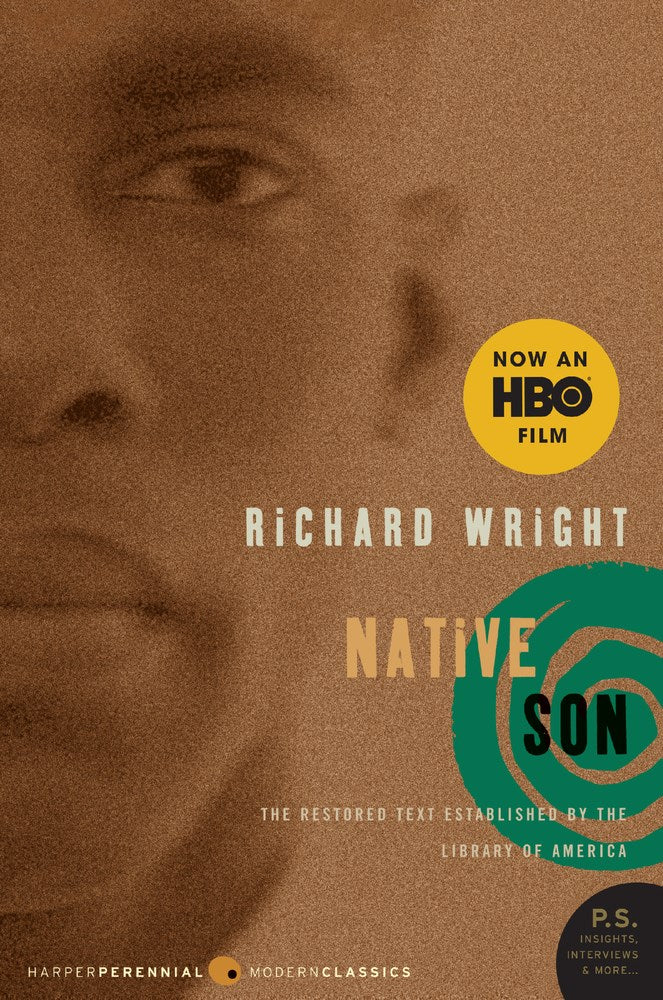
Native Son American Classics Edition: A Novel (HarperCollins American Classics)
$20.00One of The Atlantic’s Great American Novels
“If one had to identify the single most influential shaping force in modern Black literary history, one would probably have to point to Wright and the publication of Native Son.” – Henry Louis Gates Jr.
In celebration of the 250th anniversary of the United States, HarperCollins is proud to present this library of American classics drawn from our storied catalog. When it was first published in 1940, Native Son established Richard Wright as a literary star. In the decades since, Wright's masterpiece—hailed as "a novel of tremendous power and beauty" (Newsweek)—has become a revered classic that remains as timely and relevant today as when it first appeared.
Set in Chicago in the 1930s, Native Son is the story of Bigger Thomas, a young Black man caught in a downward spiral after killing a young white woman in a brief moment of panic. Written with the distinctive rhythm of a modern crime story, this formidable work is both a condemnation of social injustice and an unsparing portrait of the Black experience in America, revealing the tragic effect of poverty, racism, and hopelessness on the human spirit. As Wright explained, "I wrote Native Son to show what manner of men and women our 'society of the majority' breeds, and my aim was to depict a character in terms of the living tissue and texture of daily consciousness."
This edition of Native Son isthe restored text established by the Library of America—the novel as Wright intended it to be published. It also includes an essay by Wright titled, How "Bigger" was Born, along with notes on the text.
-
Uncle Tom's Children: Novellas (P.S.)
Richard Wright
$17.99"I found these stories both heartening. . . and terrifying as the expression of a racial hatred that has never ceased to grow and gets no chance to die." —Malcolm Cowley, The New Republic
Richard Wright's powerful collection of novellas set in the American Deep South
Each of the poignant and devastating stories in Uncle Tom's Children concerns an aspect of the lives of Black people in the post-slavery era, exploring their resistance to white racism and oppression. This extraordinary collection also includes a personal essay by Wright titled "The Ethics of Living Jim Crow."
Originally published in 1938, Uncle Tom's Children was the first book from Wright, who would go on to win international renown for his powerful and visceral depiction of the Black experience. The author of numerous works, most notably the acclaimed novel Native Son and his stunning autobiography, Black Boy, Wright stands today as one of the greatest American writers of the twentieth century.
-
The Man Who Lived Underground: A Novel by Richard Wright
$17.00*ships in 5-7 business days*
From the legendary author of Native Son and Black Boy, the novel he was unable to publish during his lifetime—an explosive story of racism, injustice, brutality, and survival. "Not just Wright's masterwork, but also a milestone in African American literature . . . One of those indispensable works that reminds all its readers that, whether we are in the flow of life or somehow separated from it, above- or belowground, we are all human." (Gene Seymour, CNN.com)
“The Man Who Lived Underground reminds us that any ‘greatest writers of the 20th century’ list that doesn’t start and end with Richard Wright is laughable. It might very well be Wright’s most brilliantly crafted, and ominously foretelling, book.”—Kiese Laymon
Fred Daniels, a Black man, is picked up by the police after a brutal double murder and tortured until he confesses to a crime he did not commit. After signing a confession, he escapes from custody and flees into the city’s sewer system.
This is the devastating premise of Richard Wright's scorching novel, The Man Who Lived Underground, written between his landmark books Native Son (1940) and Black Boy (1945), at the height of his creative powers. Now, for the first time, by special arrangement with the author’s estate, the full text of the work that meant more to Wright than any other (“I have never written anything in my life that stemmed more from sheer inspiration”) is published in the form that he intended, complete with his companion essay, “Memories of My Grandmother.” Malcolm Wright, the author’s grandson, contributes an afterword.
-
Going to the Territory
Ralph Ellison
$16.00The work of one of the most formidable figures in American intellectual life."
-- Washington Post Book World
The seventeen essays collected in this volume prove that Ralph Ellison was not only one of America's most dazzlingly innovative novelists but perhaps also our most perceptive and iconoclastic commentator on matters of literature, culture, and race. In Going to the Territory, Ellison provides us with dramatically fresh readings of William Faulkner and Richard Wright, along with new perspectives on the music of Duke Ellington and the art of Romare Bearden. He analyzes the subversive quality of black laughter, the mythic underpinnings of his masterpiece Invisible Man, and the extent to which America's national identity rests on the contributions of African Americans. Erudite, humane, and resounding with humor and common sense, the result is essential Ellison.
-
Nobody Knows My Name
James Baldwin
$16.00From one of the most brilliant writers and thinkers of the twentieth century comes a collection of "passionate, probing, controversial" essays (The Atlantic) on topics ranging from race relations in the United States to the role of the writer in society.
Told with Baldwin's characteristically unflinching honesty, this “splendid book” (The New York Times) offers illuminating, deeply felt essays along with personal accounts of Richard Wright, Norman Mailer and other writers.
“James Baldwin is a skillful writer, a man of fine intelligence and a true companion in the desire to make life human. To take a cue from his title, we had better learn his name.” —The New York Times
-
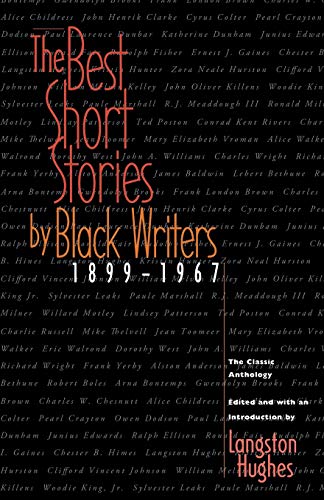
The Best Short Stories by Black Writers
edited by Langston Hughes
$22.99*Ships/ready for pick-up in 7-10 business days*
A classic anthology of short stories by Black writers including James Baldwin, Zora Neale Hurston, and Richard Wright -- edited and with an introduction by Langston Hughes.
Originally published in 1967, The Best Short Stories by Black Writers offers a timeless and unforgettable portrait of the tragedy, comedy, triumph, and suffering that were part of African American life from 1899 to 1967. -
The Essential Harlem Detectives
by Chester Himes
$35.00Featuring A Rage in Harlem, The Real Cool Killers, The Crazy Kill, & Cotton Comes To Harlem
A one-volume selection of four novels in a legendary detective series—blistering, groundbreaking capers set in Harlem's criminal underworld—by master crime writer Chester Himes A friend and contemporary of Richard Wright and James Baldwin—and every bit their equal—Chester Himes is the acclaimed author of literary novels, stories, and essays, as well as the classic crime fiction series for which he is best known, featuring detectives Coffin Ed Johnson and Grave Digger Jones. Himes authored nine novels in the Harlem Detectives series, and in these four popular, accomplished installments, his cold, wisecracking sleuths are thrown into a brutal, murderous world, full of conniving con men, gun-toting gangsters, and opium-smoking preachers. Himes's vision of Harlem's criminal underground is both riotous entertainment, enriched by his deftly plotted mysteries and scintillating dialogue, and a penetrating look into the fraught tensions of race in postwar America. Everyman's Library pursues the highest production standards, printing on acid-free paper, with full-cloth cases with two-color foil stamping, decorative endpapers, silk ribbon markers, European-style half-round spines, and a full-color illustrated jacket. Contemporary Classics include an introduction, a select bibliography, and a chronology of the author's life and times.
-
The Blue Period: Black Writing in the Early Cold War (Thinking Literature)
Jesse McCarthy
$25.00Addresses the political and aesthetic evolution of African American literature and its authors during the Cold War, an era McCarthy calls “the Blue Period.”
In the years after World War II, to be a black writer was to face a stark predicament. The contest between the Soviet Union and the United States was a global one—an ideological battle that dominated almost every aspect of the cultural agenda. On the one hand was the Soviet Union, espousing revolutionary communism that promised egalitarianism while being hostile to conceptions of personal freedom. On the other hand was the United States, a country steeped in racial prejudice and the policies of Jim Crow.
Black writers of this time were equally alienated from the left and the right, Jesse McCarthy argues, and they channeled that alienation into remarkable experiments in literary form. Embracing racial affect and interiority, they forged an aesthetic resistance premised on fierce dissent from both US racial liberalism and Soviet communism. From the end of World War II to the rise of the Black Power movement in the 1960s, authors such as Richard Wright, James Baldwin, Gwendolyn Brooks, and Paule Marshall defined a distinctive moment in American literary culture that McCarthy terms the Blue Period.
In McCarthy’s hands, this notion of the Blue Period provides a fresh critical framework that challenges long-held disciplinary and archival assumptions. Black writers in the early Cold War went underground, McCarthy argues, not to depoliticize or liberalize their work, but to make it more radical—keeping alive affective commitments for a future time.
-
Beetlecreek: A Novel
William Demby
$17.00After several years of silence and seclusion in Beetlecreek's black quarter, a carnival worker named Bill Trapp befriends Johnny Johnson, a Pittsburgh teenager living with relatives in Beetlecreek. Bill is white. Johnny is black. Both are searching for acceptance, something that will give meaning to their lives. Bill tries to find it through good will in the community. Johnny finds it in the Nightriders, a local gang. David Diggs, the boy's dispirited uncle, aspires to be an artist but has to settle for sign painting. David and Johnny's new friendship with Bill kindles hope that their lives will get better. David's marriage has failed; his wife's shallow faith serves as her outlet from racial and financial oppression. David's unhappy routine is broken by Edith Johnson's return to Beetlecreek, but this relationship will be no better than his loveless marriage. Bill's attempts to unify black and white children with a community picnic is a disaster. A rumor scapegoats him as a child molester, and Beetlecreek is titillated by the imagined crimes.
This novel portraying race relations in a remote West Virginia town has been termed an existential classic. It would be hard, said The New Yorker, to give Mr. Demby too much praise for the skill with which he has maneuvered the relationships in this book. During the 1960s Arna Bontemps wrote, "Demby's troubled townsfolk of the West Virginia mining region foreshadow present dilemmas. The pressing and resisting social forces in this season of our discontent and the fatal paralysis of those of us unable or unwilling to act are clearly anticipated with the dependable second sight of a true artist."
First published in 1950, Beetlecreek stands as a moving condemnation of provincialism and fundamentalism. Both a critique of racial hypocrisy and a new direction for the African-American novel, it occupies fresh territory that is neither the ghetto realism of Richard Wright nor the ironic modernism of Ralph Ellison. Even after fifty years, more or less, William Demby said in 1998, "It still seems to me that Beetlecreek is about the absence of symmetry in human affairs, the imperfectibility of justice the tragic inevitability of mankind's inhumanity to mankind."
William Demby is the author of The Catacombs and Love Black. He lives in Sag Harbor, N. Y. James C. Hall, a professor of African-American Studies and English at the University of Illinois, Chicago, is the author of the forthcoming book, Mercy, Mercy, African-American Culture and the American Sixties, and editor of Langston A Collection of Poems.
Stay Informed. We're building a community committed to celebrating Black authors + artisans. Subscribe to keep up with all things Kindred Stories.