
Search results: 9 results for “Jim Clyburn”
Not finding what you're looking for? Check out our shop on bookshop.org to order and still support us ♥
9 results
-
The First Eight: A Personal History of the Pioneering Black Congressmen Who Shaped a Nation
![The First Eight: A Personal History of the Pioneering Black Congressmen Who Shaped a Nation cover image]()

The First Eight: A Personal History of the Pioneering Black Congressmen Who Shaped a Nation
$30.00*This book is not currently on our shelves and will ship in 5-10 business days. Please see FAQs for more information.
From one of America's most venerable politicians, The First Eight is an extraordinary work of living history: the powerful, untold story of the pioneering Black politicians from South Carolina who were elected to Congress in the aftermath of the Civil War, and a revealing explanation of why it took nearly a century before the ninth, James Clyburn, was elected.
Today, South Carolina congressman James E. Clyburn is renowned as a Democratic kingmaker and our nation's most august Black political leader. But behind him stand eight other remarkable men: the first Black politicians to go to Congress from his home state, and who blazed a path for his own ascent. Since his own arrival in Congress in the early nineties, Congressman Clyburn has been guided by the wisdom and example of these men, and also instructed by their struggles—especially with the demon of American racism. South Carolina's first eight Black congressmen all rose to office following the Civil War and emancipation, but then the dark veil of Jim Crow fell across the South. It would take nearly a century before the ninth Black representative, Clyburn himself, was elected.
In The First Eight, Congressman Clyburn shares these men's stories, and their message of liberty, with the nation they served. Among them are Joseph Rainey, the first Black politician to be elected to the U.S. House of Representatives in our nation's history, who was born enslaved in 1832; Robert Smalls, iconic for his heroism during the Civil War, when he fled the Confederacy, stole a ship, and fought for the Union Army; and Richard Cain, who ran a widely read newspaper for Black South Carolinians and is associated with the Emanuel AME Church, one of the oldest and most distinguished Black churches in America, and where neo-Nazi Dylan Roof killed nine Black congregants in a mass shooting in 2015. Through the trials, tribulations, triumphs, and challenges that all nine men faced, Congressman Clyburn reveals a whole new way of understanding the period between the Civil War and the present.
A unique blend of history and memoir, The First Eight is both a monument to the legacies of these eight trailblazing Americans, and also a clear-eyed appraisal of how far we've come, and how far we have left to go, in our nation's ongoing struggle for true democracy.
-
Burn Down Master's House: A Novel
![Burn Down Master's House: A Novel cover image]()

Burn Down Master's House: A Novel
Clay Cane
$28.00Inspired by long-buried true stories of enslaved people who dared to fight back, this powerful novel offers a searing portrayal of resistance. From Clay Cane, award-winning journalist and New York Times bestselling author of The Grift, it's a must-read for fans of Colson Whitehead, Jesmyn Ward, and Percival Everett.
As turmoil simmers within a divided nation, smoke from another blaze begins to rise. Sparked by individual acts of resistance among those enslaved across the American South, their seemingly disparate rebellions fuel a singular inferno of justice, connecting them in ways quiet at times, explosive at others. As these flames rise, so will they.
Luke, quick-witted and perceptive, and Henri, a man of strong and defiant spirit, forge an unbreakable bond at a Virginia plantation called Magnolia Row. Both seek escape from unimaginable cruelty. And sure as the fires of hell, Luke and Henri will leave their mark among the lives they touch...
Like Josephine, a young and observant girl who wields silence as her greatest weapon. A witness to Luke and Henri's resilience, she listens, watches, and waits.Then there's Charity Butler, inspired by a formerly enslaved man who found his freedom fighting alongside Josephine. At his encouragement, Charity rises up for her life and family—only to face a deeply unjust system.
And finally, there is Nathaniel, who ruthlessly exploits other Black people and mirrors the cruelty of the white men who, like him, are enslavers. A perversion of the system of slavery, his rule is both fragile and contradictory.
Burn Down Master's House is a singular tour de force of a novel—breathtaking in scope, compassion, and timeliness that speaks powerfully to our present era.
-
James: A Novel
![Book cover image]()
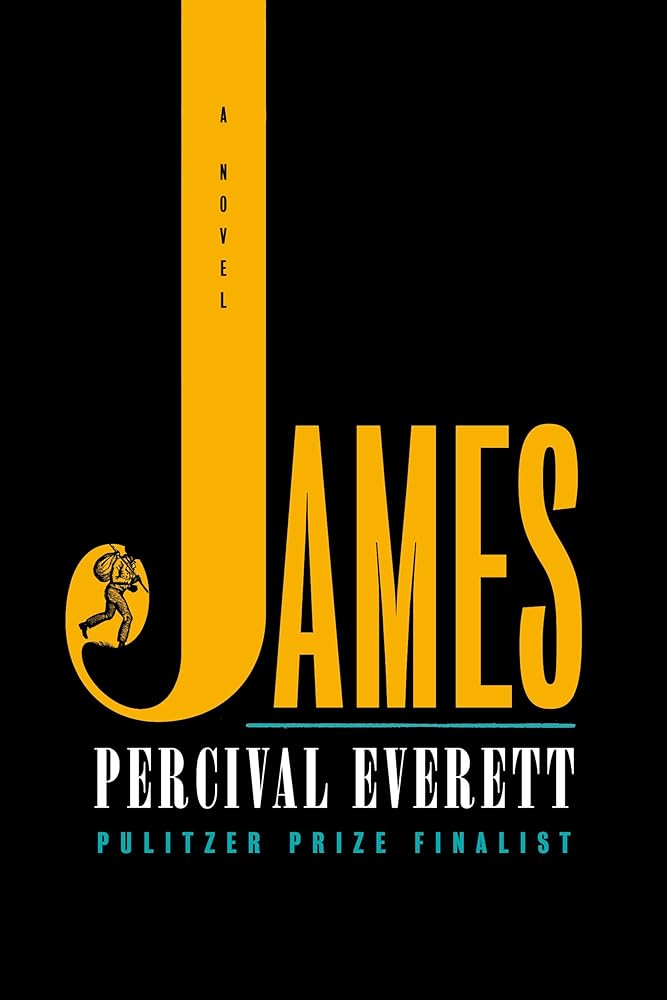
James: A Novel
by Percival Everett
from $20.00A brilliant, action-packed reimagining of Adventures of Huckleberry Finn, both harrowing and ferociously funny, told from the enslaved Jim's point of view • From the “literary icon” (Oprah Daily) and Pulitzer Prize Finalist whose novel Erasure is the basis for Cord Jefferson’s critically acclaimed film American Fiction When the enslaved Jim overhears that he is about to be sold to a man in New Orleans, separated from his wife and daughter forever, he decides to hide on nearby Jackson Island until he can formulate a plan. Meanwhile, Huck Finn has faked his own death to escape his violent father, recently returned to town. As all readers of American literature know, thus begins the dangerous and transcendent journey by raft down the Mississippi River toward the elusive and too-often-unreliable promise of the Free States and beyond. While many narrative set pieces of Adventures of Huckleberry Finn remain in place (floods and storms, stumbling across both unexpected death and unexpected treasure in the myriad stopping points along the river’s banks, encountering the scam artists posing as the Duke and Dauphin…), Jim’s agency, intelligence and compassion are shown in a radically new light. Brimming with the electrifying humor and lacerating observations that have made Everett a “literary icon” (Oprah Daily), and one of the most decorated writers of our lifetime, James is destined to be a major publishing event and a cornerstone of twenty-first century American literature.
-
PRE-ORDER: Hanging and Burning: A King Oliver Novel
![Hanging and Burning: A King Oliver Novel cover image]()

PRE-ORDER: Hanging and Burning: A King Oliver Novel
$30.00A dying gangster's plea sends Joe King Oliver on a quest for a missing woman across America's coasts―unraveling a dark and violent family history along the way―in this engrossing new novel from one of the most celebrated and acclaimed crime writers at work today.
Joe King Oliver is the big man you call to solve the most delicate and dangerous of problems. Fresh off unraveling the mystery of his own parents’ fates, King finds himself accepting (again at his grandmother’s request) a case from Arman Babylon, a powerful Los Angeles gangster now dying from cancer.
Babylon’s granddaughter, Twyla Mann, has been missing for years, and he’s desperate to find her before he passes. The search pulls King into the Babylons’ stained past and the cold case of Dalia Shorts, a torch singer who vanished without a trace and whom Arman was once suspected of killing.
As King follows her trail from L.A. to New York and back, he’ll realize nothing is what it seems as he uncovers a pattern of violence that has targeted the women around Babylon for decades. How much will King be willing to risk to finally set things right?
-
The Burning God
![Book cover image]()
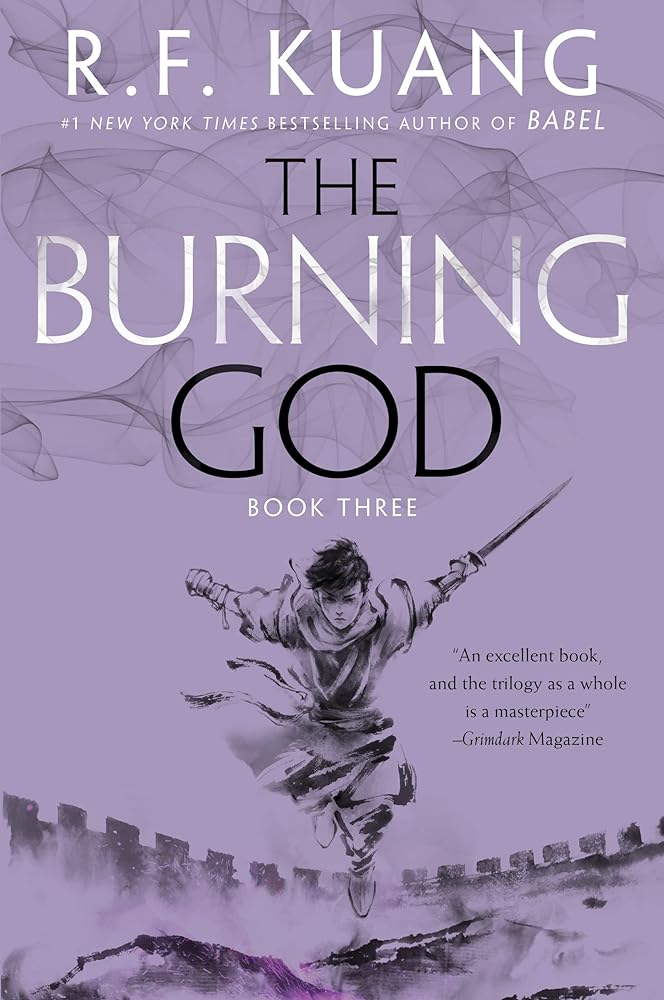
The Burning God
$19.99*Ships/ready for pick up in 5-8 business days*
The exciting end to the Poppy War trilogy, R. F. Kuang’s acclaimed, award-winning epic fantasy that combines the history of twentieth-century China with a gripping world of gods and monsters, to devastating, enthralling effect.
After saving her nation of Nikan from foreign invaders and battling the evil Empress Su Daji in a brutal civil war, Fang Runin was betrayed by allies and left for dead.
Despite her losses, Rin hasn’t given up on those for whom she has sacrificed so much—the people of the southern provinces and especially Tikany, the village that is her home. Returning to her roots, Rin meets difficult challenges—and unexpected opportunities. While her new allies in the Southern Coalition leadership are sly and untrustworthy, Rin quickly realizes that the real power in Nikan lies with the millions of common people who thirst for vengeance and revere her as a goddess of salvation.
Backed by the masses and her Southern Army, Rin will use every weapon to defeat the Dragon Republic, the colonizing Hesperians, and all who threaten the shamanic arts and their practitioners. As her power and influence grows, though, will she be strong enough to resist the Phoenix’s intoxicating voice urging her to burn the world and everything in it?
(The Poppy War, 3)
-
PRE-ORDER: A Burning House: My Politics
![A Burning House: My Politics cover image]()

PRE-ORDER: A Burning House: My Politics
$22.99The late, legendary performer and activist’s candid reflections on American race relations and social movements, based on previously unpublished conversations with the award-winning historian
Harry Belafonte was more than a bestselling folk singer and Hollywood’s first Black matinée idol; he was also the secret weapon of human rights movements for seventy years—a close confidante of Martin Luther King Jr. and Eleanor Roosevelt; a trusted whisperer to JFK; and a political advisor to African heads of state.
Belafonte simultaneously advised Robert F. Kennedy on how to win the Black vote, openly supported Communist leaders including Fidel Castro, and skillfully avoided being blacklisted by J. Edgar Hoover. He was also a masterful fundraiser, almost singlehandedly bankrolling the civil rights movement from his own earnings as well as donations solicited from Hollywood friends and Vegas mobsters. It was Belafonte’s idea to organize superstar artists to record the hit song, “We Are the World” in 1984 to benefit famine victims in Africa.
In this candid, revelatory book, drawn from a series of conversations with historian Kevin Baker shortly before Belafonte’s death in 2023, the legendary singer of “Day-O” shares his philosophy on racial politics, African colonialism, the emergence of Israel, the shortcomings of Barack Obama, and the rise of Donald Trump. A Burning House offers a primer on celebrity activism at its best—as well as a cautionary tale about the rise of American authoritarianism.
-
The Novel Art of Murder by V.M. Burns
![The Novel Art of Murder by V.M. Burns]()

The Novel Art of Murder by V.M. Burns
$15.95*ships in 7-10 business days
Mystery bookstore owner Samantha Washington is trying to keep her grandmother from spending her golden years in an orange jumpsuit . . .
The small town of North Harbor, Michigan, is just not big enough for the two of them: flamboyant phony Maria Romanov and feisty Nana Jo. The insufferable Maria claims she's descended from Russian royalty and even had a fling with King Edward VIII back in the day. She’s not just a lousy liar, she's a bad actress, so when she nabs the lead in the Shady Acres Senior Follies—a part Nana Jo plays every year in their retirement village production—Nana Jo blows a gasket and reads her the riot act in front of everyone.
Of course, when Maria is silenced with a bullet to the head, Nana Jo lands the leading role on the suspects list. Sam’s been writing her newest mystery, set in England between the wars, with her intrepid heroine Lady Daphne drawn into murder and scandal in the household of Winston Churchill. But now she has to prove that Nana Jo’s been framed. With help from her grandmother's posse of rambunctious retirees, Sam shines a spotlight on Maria’s secrets, hoping to draw the real killer out of the shadows . . .
-
A History of Burning
![A History of Burning]()
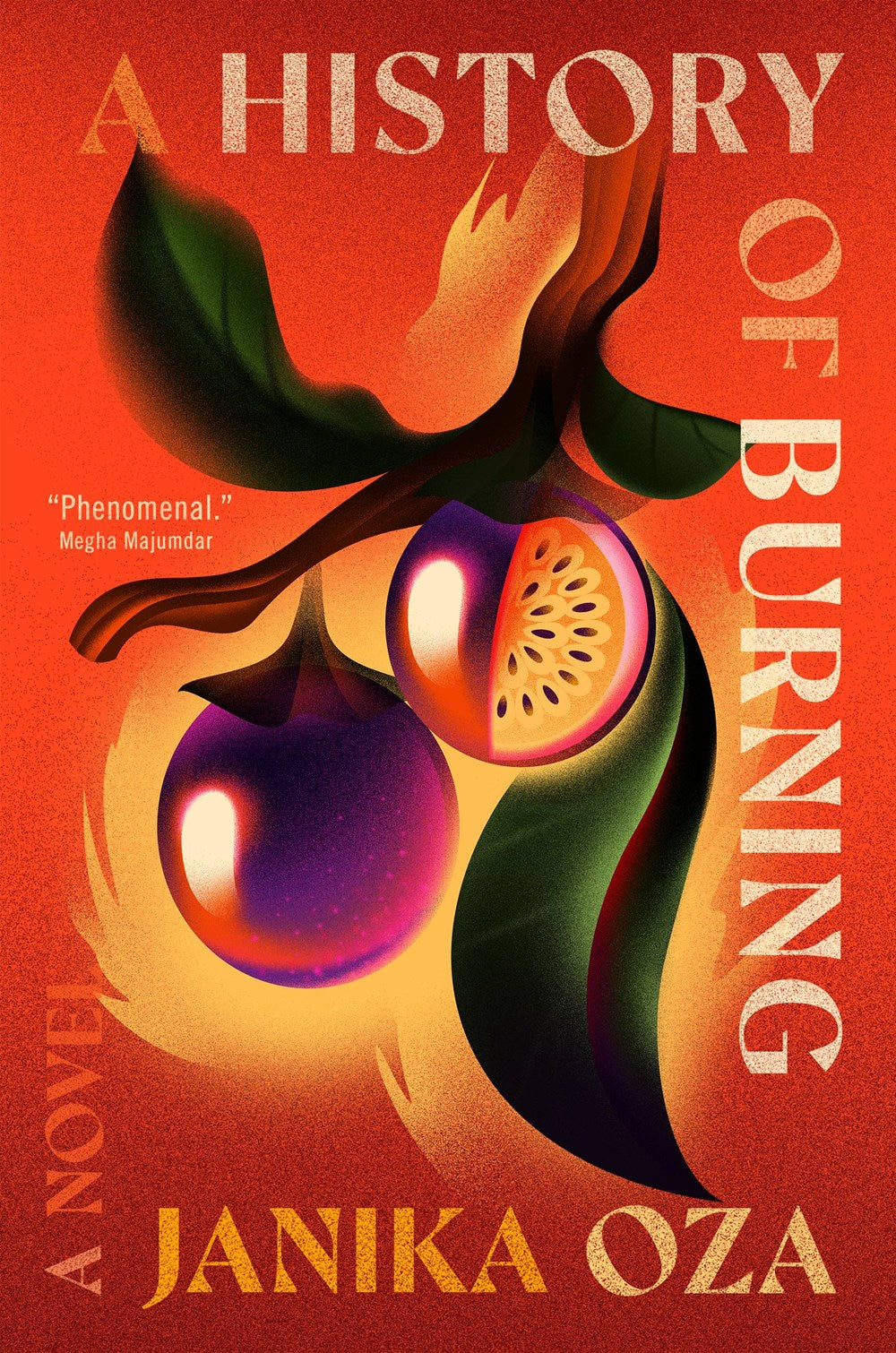
A History of Burning
by Janika Oza
Sold outThis epic, sweeping historical novel full of "wondrous complexity” spans continents and a century, and reveals how one act of survival can reverberate through generations (Rachel Khong, author of Goodbye, Vitamin).
“Remarkable….a haunting, symphonic tale”— New York Times Book Review
In 1898, Pirbhai, a teenage boy looking for work, is taken from his village in India to labor for the British on the East African Railway. Far from home, Pirbhai commits a brutal act in the name of survival that will haunt him and his family for years to come.
So begins Janika Oza’s masterful, richly told epic, where the embers of this desperate act are fanned into flame over four generations, four continents, throughout the twentieth century. Pirbhai’s children are born in Uganda during the waning days of British colonial rule, and as the country moves toward independence, his granddaughters, three sisters, come of age in a divided nation. Latika is an aspiring journalist, who will put everything on the line for what she believes in; Mayuri’s ambitions will take her farther away from home than she ever imagined; and fearless Kiya will have to carry the weight of her family’s silence and secrets.
In 1972, the entire family is forced to flee under Idi Amin’s military dictatorship. Pirbhai’s grandchildren are now scattered across the world, struggling to find their way back to each other. One day a letter arrives with news that makes each generation question how far they are willing to go, and who they are willing to defy, to secure their own place in the world.
A History of Burning is an unforgettable tour de force, an intimate family saga of complicity and resistance, about the stories we share, the ones that remain unspoken, and the eternal search for home. -
Nothing Burns as Bright as You
![Nothing Burns as Bright as You]()
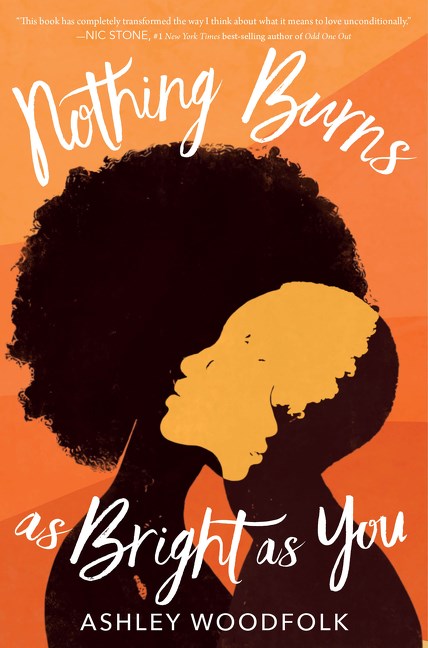
Nothing Burns as Bright as You
by Ashley Woodfolk
Sold outFrom New York Times bestselling author Ashley Woodfolk, Nothing Burns as Bright as You is an impassioned stand-alone tale of queer love, grief, and the complexity of female friendship for fans of Nina LaCour.
Two girls. One wild and reckless day. Years of tumultuous history unspooling like a thin, fraying string in the hours after they set a fire.
They were best friends. Until they became more. Their affections grew. Until the blurry lines became dangerous.
Over the course of a single day, the depth of their past, the confusion of their present, and the unpredictability of their future is revealed. And the girls will learn that hearts, like flames, aren’t so easily tamed.
It starts with a fire.
How will it end?


Stay Informed. We're building a community committed to celebrating Black authors + artisans. Subscribe to keep up with all things Kindred Stories.