
Search results: 6 results for “Jean Toomer”
Not finding what you're looking for? Check out our shop on bookshop.org to order and still support us ♥
6 results
-
Cane
![Cane]()

Cane
Jean Toomer
$15.00Jean Toomer’s Cane is one of the most significant works to come out of the Harlem Renaissance, and is considered to be a masterpiece in American modernist literature because of its distinct structure and style.
First published in 1923 and told through a series of vignettes, Cane uses poetry, prose, and play-like dialogue to create a window into the varied lives of African Americans living in the rural South and urban North during a time when Jim Crow laws pervaded and racism reigned. While critically acclaimed and known today as a pioneering text of the Harlem Renaissance, the book did not gain as much popularity as other works written during the period. Fellow Harlem Renaissance writer Langston Hughes believed Cane’s lack of a wider readership was because it didn’t reinforce the stereotypes often associated with African Americans during the time, but portrayed them in an accurate and entirely human way, breaking the mold and laying the groundwork for how African Americans are depicted in literature.
For the first time in Penguin Classics, this edition of Cane features a new introduction, suggestions for further reading, and notes by scholar George Hutchinson, and National Book Award Foundation 5 Under 35 novelist Zinzi Clemmons contributes a foreword. -
The New Negro: A History in Documents, 1887–1937
![The New Negro: A History in Documents, 1887–1937 cover image]()

The New Negro: A History in Documents, 1887–1937
Martha H. Patterson
$39.95An authoritative anthology tracing the history of one of the most important concepts Black people drew on to challenge the brutal, totalizing system of Jim Crow racism
This book brings together a wealth of readings on the metaphor of the “New Negro,” charting how generations of thinkers debated its meaning and seized on its potency to stake out an astonishingly broad and sometimes contradictory range of ideological positions. It features dozens of newly unearthed pieces by major figures such as W. E. B. Du Bois, Charles S. Johnson, and Drusilla Dunjee Houston as well as writings from Cuba, the US Virgin Islands, Dominica, France, Sierra Leone, South Africa, colonial Zimbabwe, and the United States. Demonstrating how this evocative and supremely protean concept predates its popularization in Alain Locke’s 1925 anthology of the same name, The New Negro takes readers from its beginnings as a response to Henry Grady’s famous “New South” address in 1886 through the Harlem Renaissance and the New Deal.
Opening a fascinating window into a largely unexplored chapter in African American, Afro-Latin American, and African intellectual history, this groundbreaking anthology includes writings by Gwendolyn Bennett, Marita Bonner, John Edward Bruce (“Bruce Grit”), Nannie Helen Burroughs, Charles W. Chesnutt, James Bertram Clarke (“José Clarana,” “Jaime Gil”), Anna Julia Cooper, Alexander Crummell, Countee Cullen, Alice Dunbar-Nelson, Marcus Garvey, Hubert Harrison, Langston Hughes, Zora Neale Hurston, D. Hamilton Jackson, Fenton Johnson, Claude McKay, Oscar Micheaux, Jeanne “Jane” Nardal, Jean Toomer, Gustavo Urrutia, Booker T. Washington, Dorothy West, Ruth Whitehead Whaley, Fannie Barrier Williams, Carter G. Woodson, and a host of others.
-
The New Negro by Alain Locke
![The New Negro by Alain Locke]()
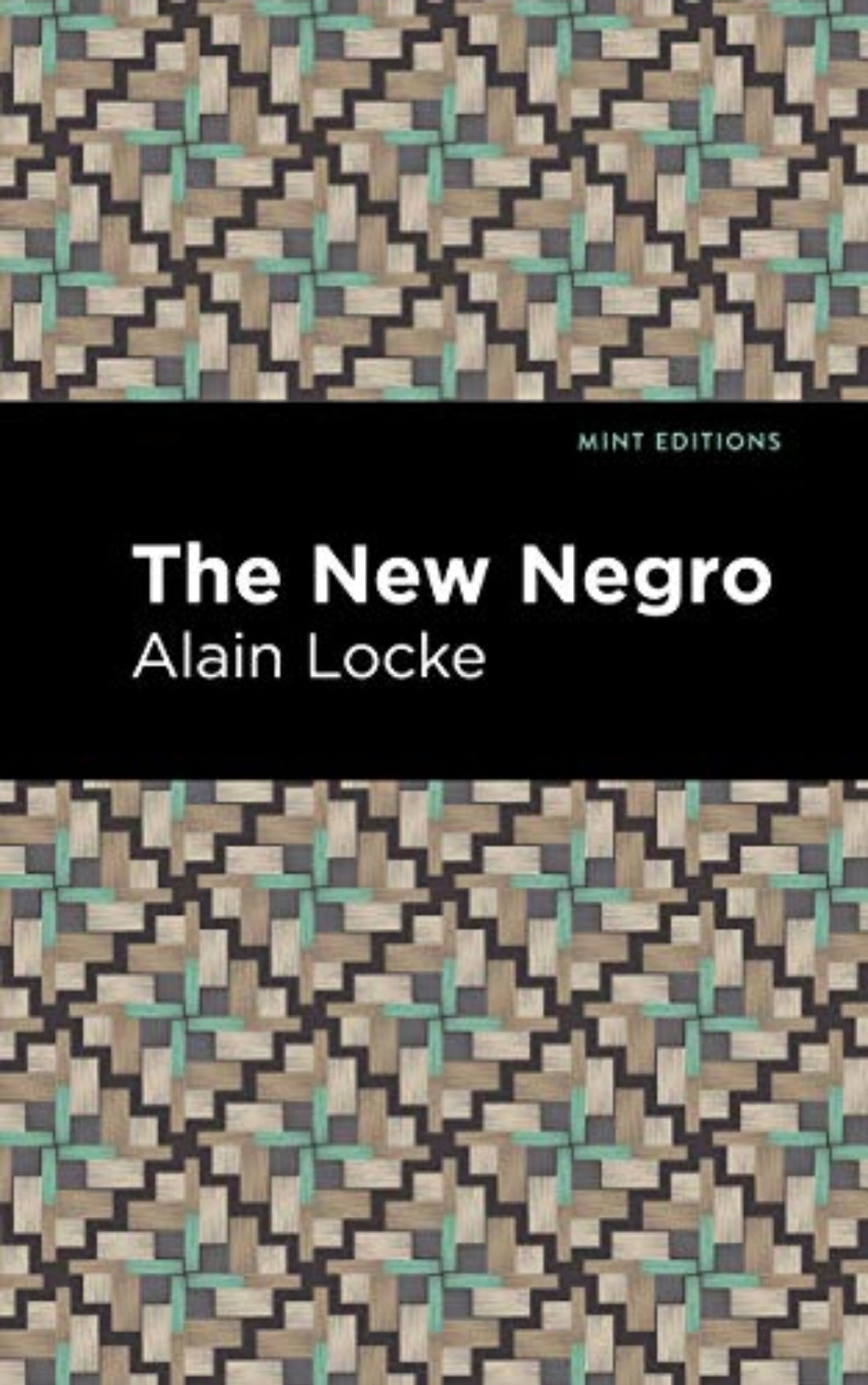
The New Negro by Alain Locke
$16.99The New Negro (1925) is an anthology by Alain Locke. Expanded from a March issue of Survey Graphic magazine, The New Negro compiles writing from such figures as Countee Cullen, Langston Hughes, Zora Neale Hurston, Jean Toomer, and Locke himself. Recognized as a foundational text of the Harlem Renaissance, the collection is organized around Locke’s writing on the function of art in reorganizing the conception of African American life and culture. Through self-understanding, creation, and independence, Locke’s New Negro came to represent a break from an inhumane past, a means toward meaningful change for a people held down for far too long.
“[F]or generations in the mind of America, the Negro has been more of a formula than a human being—a something to be argued about, condemned or defended, to be ‘kept down,’ or ‘in his place,’ or ‘helped up,’ to be worried with or worried over, harassed or patronized, a social bogey or a social burden.” Identifying the representation of black Americans in the national imaginary as oppressive in nature, Locke suggests a way forward through his theory of the New Negro, who “wishes to be known for what he is, even in his faults and shortcomings, and scorns a craven and precarious survival at the price of seeming to be what he is not.” Throughout The New Negro, leading artists and intellectuals of the Harlem Renaissance offer their unique visions of who and what they are; voicing their concerns, portraying injustice, and illuminating the black experience, they provide a holistic vision of self-expression in all of its colors and forms.
With a beautifully designed cover and professionally typeset manuscript, this edition of Alain Locke’s The New Negro is a classic of African American literature reimagined for modern readers.
-
Forgotten Readers: Recovering the Lost History of African American Literary Societies
![Forgotten Readers: Recovering the Lost History of African American Literary Societies]()
Forgotten Readers: Recovering the Lost History of African American Literary Societies
by Elizabeth McHenry
$39.95Over the past decade the popularity of black writers including E. Lynn Harris and Terry McMillan has been hailed as an indication that an active African American reading public has come into being. Yet this is not a new trend; there is a vibrant history of African American literacy, literary associations, and book clubs. Forgotten Readers reveals that neglected past, looking at the reading practices of free blacks in the antebellum north and among African Americans following the Civil War. It places the black upper and middle classes within American literary history, illustrating how they used reading and literary conversation as a means to assert their civic identities and intervene in the political and literary cultures of the United States from which they were otherwise excluded. Forgotten Readers expands our definition of literacy and urges us to think of literature as broadly as it was conceived of in the nineteenth century. Elizabeth McHenry delves into archival sources, including the records of past literary societies and the unpublished writings of their members. She examines particular literary associations, including the Saturday Nighters of Washington, D.C., whose members included Jean Toomer and Georgia Douglas Johnson. She shows how black literary societies developed, their relationship to the black press, and the ways that African American women's clubs--which flourished during the 1890s--encouraged literary activity. In an epilogue, McHenry connects this rich tradition of African American interest in books, reading, and literary conversation to contemporary literary phenomena such as Oprah Winfrey's book club.
-
African American Poetry: 250 Years of Struggle and Song Edited
![African American Poetry: 250 Years of Struggle and Song Edited]()
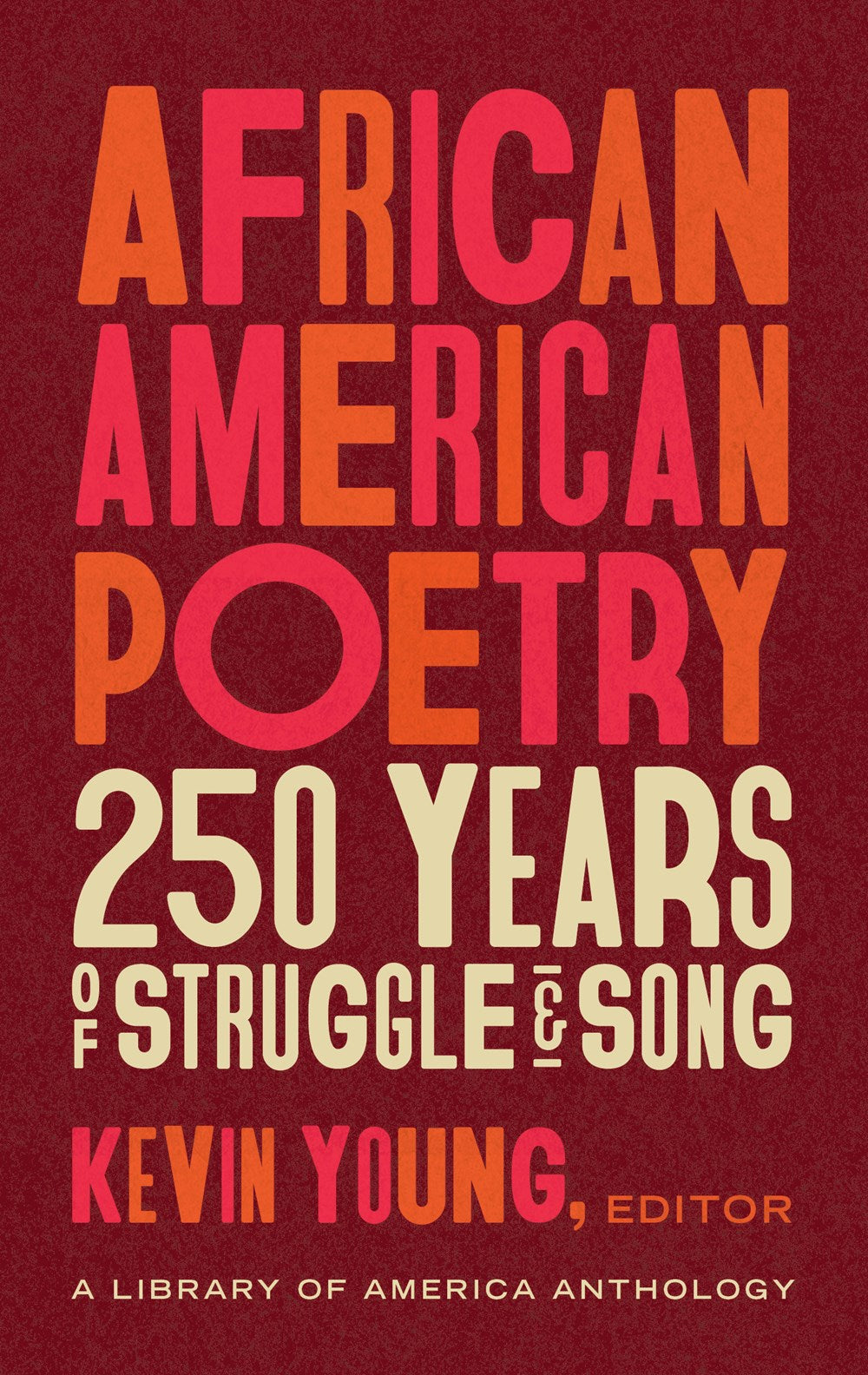
African American Poetry: 250 Years of Struggle and Song Edited
by Kevin Young
$45.00A literary landmark: the biggest, most ambitious anthology of black poetry ever published, gathering 250 poets from the colonial period to the present.
Only now, in the 21st century, can we fully grasp the breadth and range of African American poetry: a magnificent chorus of voices, some familiar, others recently rescued from neglect. Here, in this unprecedented anthology expertly selected by poet and scholar Kevin Young, this precious living heritage is revealed in all its power, beauty, and multiplicity.
Discover, in these pages, how an enslaved person like Phillis Wheatley confronted her legal status in verse and how an antebellum activist like Frances Ellen Watkins Harper voiced her own passionate resistance to slavery. Read nuanced, provocative poetic meditations on identity and self-assertion stretching from Paul Laurence Dunbar to Amiri Baraka to Lucille Clifton and beyond. Experience the transformation of poetic modernism in the works of figures such as Langston Hughes, Fenton Johnson, and Jean Toomer. Understand the threads of poetic history—in movements such as the Harlem and Chicago Renaissances, Black Arts, Cave Canem, Dark Noise Collective—and the complex bonds of solidarity and dialogue among poets across time and place.
See how these poets have celebrated their African heritage and have connected with other communities in the African Diaspora. Enjoy the varied but distinctly Black music of a tradition that draws deeply from jazz, hip hop, and the rhythms and cadences of the pulpit, the barbershop, and the street. And appreciate, in the anthology’s concluding sections, why contemporary African American poetry, amply recognized in recent National Book Awards and Poet Laureates, is flourishing as never before.Taking the measure of the tradition in a single indispensable volume, African American Poetry: 250 Years of Struggle and Song sets a new standard for a genuinely deep engagement with Black poetry and its essential expression of American genius. -
Little Stories Club: Storytime at Kindred - September 26 @ 11 AM
![Little Stories Club: Storytime at Kindred - September 26 @ 11 AM]()

Little Stories Club: Storytime at Kindred - September 26 @ 11 AM
$0.00Join us for a montly children's storytime at Kindred Stories. Each Story time will celebrate a special book and be read by a wondertful community mementer. IT also includes a story time.
Featured Book: Daisy Helps With The Dress
Featured Reader: Antonia Adams
EVENT DEETS
When: Saturday, September 26 @ 11 AM CST
Where: Kindred Stories (2310 Elgin St. Houston, TX 77004)
How:
-
RSVP ONLY to reserve your spot and let us know you are coming.
ABOUT DAISY HELPS WITH THE DRESS
When Daisy tries to help with her cousin’s wedding, her misguided assists almost ruin the big day, until she finds a way to pull the dress—and her family—together in this charming picture book by award-winning author Olugbemisola Rhuday-Perkovich.
Daisy loves helping her family and she knows the best kind of helpers never wait to be asked. That’s why she doesn’t ask before adding finishing touches to her family’s special reused, re-tried, remixed things, like a leftover broccoli topping for Auntie Fontie’s cakes or a good bath for Nana DJ’s “back-in-the-day, rusty, dusty” vintage albums—much to their chagrin.
But what Daisy wants most is to help give her cousin Simone’s recycled wedding dress a little razzle dazzle. She knows just what the vintage dress needs: a little glitter here, a few stickers there to give the dress some flair.
But Daisy’s cousin Simone and the rest of the family are not so happy with her decorations. Can Daisy make things right and help find Simone a new re-lived, re-loved wedding dress?
-


Stay Informed. We're building a community committed to celebrating Black authors + artisans. Subscribe to keep up with all things Kindred Stories.