
Search results: 299 results for “edited by Miriam Decosta-Willis, Reginald Martin,”
Not finding what you're looking for? Check out our shop on bookshop.org to order and still support us ♥
299 results
-
Tell Me How Long the Train's Been Gone
![Tell Me How Long the Train's Been Gone cover image]()

Tell Me How Long the Train's Been Gone
James Baldwin
$19.00A major work of American literature from a major American writer that powerfully portrays the anguish of being Black in a society that at times seems poised on the brink of total racial war.
"Baldwin is one of the few genuinely indispensable American writers." —Saturday Review
At the height of his theatrical career, the actor Leo Proudhammer is nearly felled by a heart attack. As he hovers between life and death, Baldwin shows the choices that have made him enviably famous and terrifyingly vulnerable.
For between Leo's childhood on the streets of Harlem and his arrival into the intoxicating world of the theater lies a wilderness of desire and loss, shame and rage. An adored older brother vanishes into prison. There are love affairs with a white woman and a younger black man, each of whom will make irresistible claims on Leo's loyalty.
Tell Me How Long the Train's Been Gone is overpowering in its vitality and extravagant in the intensity of its feeling.
-
Reggie Burrows Hodges: Mela
![Reggie Burrows Hodges: Mela cover image]()

Reggie Burrows Hodges: Mela
$55.00A technique-focused study of Hodges’ recent paintings, where soft brushstrokes against black ground contribute to his subtle approach to the figure in space
Compton-born, Maine-based painter Reggie Burrows Hodges (born 1965) originally studied film and performance art, and thus brings a sense of dramatic staging to his compositions. Beginning with a black ground, Hodges builds his scenes through loose brushwork―a technique which deliberately plays with perceptions by reducing the focus on the human figure. As Hodges says, “I’m painting an environment in which the figures emerge from negative space.” By focusing on the environment where the figures are situated rather than the figures themselves, Hodges explores questions of identity, community and memory. Published on the occasion of the artist’s first solo museum exhibition in Europe, Mela features over 30 new works inspired by his relocation to Malta.
-
The New Negro by Alain Locke
![The New Negro by Alain Locke]()
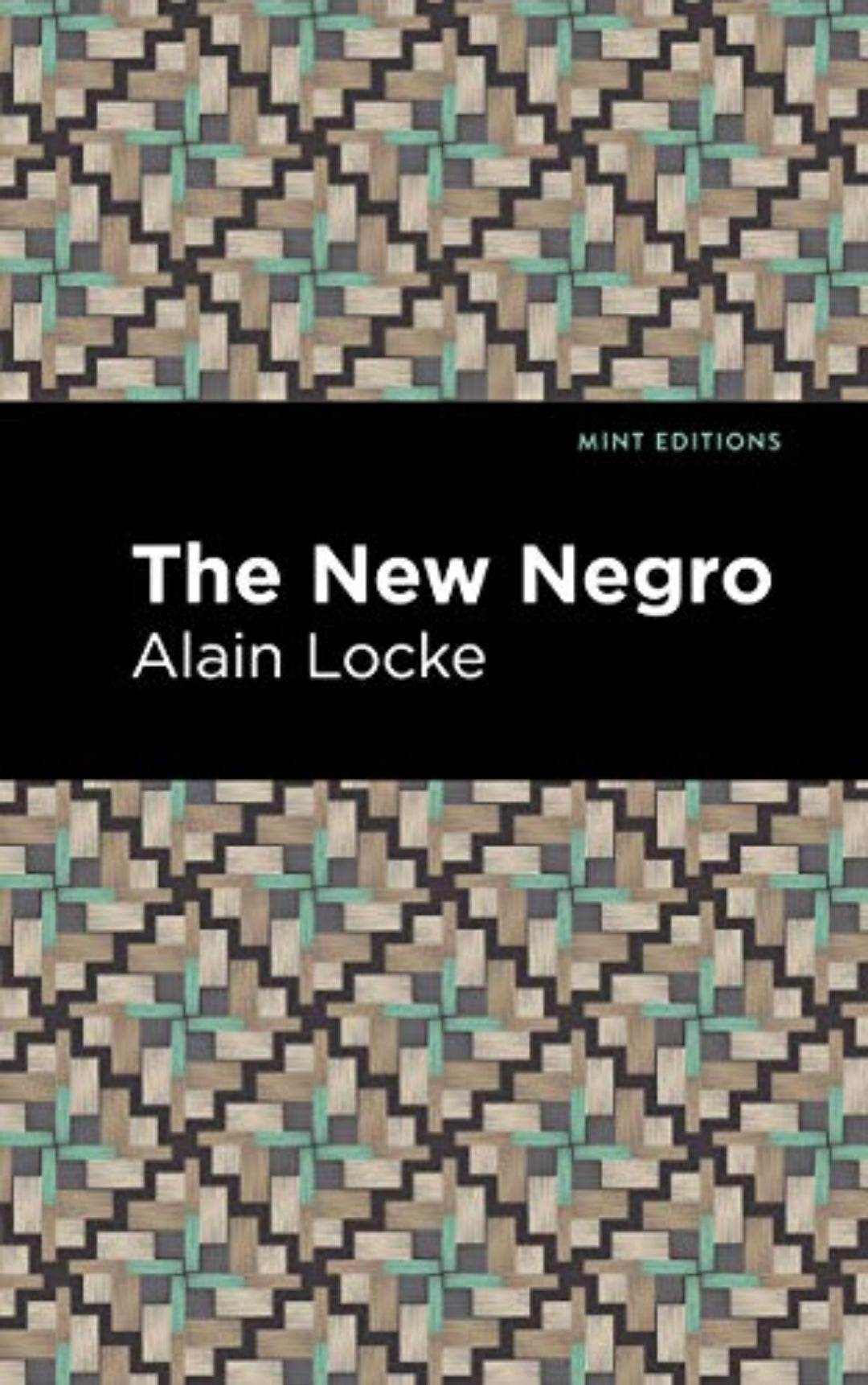
The New Negro by Alain Locke
$16.99The New Negro (1925) is an anthology by Alain Locke. Expanded from a March issue of Survey Graphic magazine, The New Negro compiles writing from such figures as Countee Cullen, Langston Hughes, Zora Neale Hurston, Jean Toomer, and Locke himself. Recognized as a foundational text of the Harlem Renaissance, the collection is organized around Locke’s writing on the function of art in reorganizing the conception of African American life and culture. Through self-understanding, creation, and independence, Locke’s New Negro came to represent a break from an inhumane past, a means toward meaningful change for a people held down for far too long.
“[F]or generations in the mind of America, the Negro has been more of a formula than a human being—a something to be argued about, condemned or defended, to be ‘kept down,’ or ‘in his place,’ or ‘helped up,’ to be worried with or worried over, harassed or patronized, a social bogey or a social burden.” Identifying the representation of black Americans in the national imaginary as oppressive in nature, Locke suggests a way forward through his theory of the New Negro, who “wishes to be known for what he is, even in his faults and shortcomings, and scorns a craven and precarious survival at the price of seeming to be what he is not.” Throughout The New Negro, leading artists and intellectuals of the Harlem Renaissance offer their unique visions of who and what they are; voicing their concerns, portraying injustice, and illuminating the black experience, they provide a holistic vision of self-expression in all of its colors and forms.
With a beautifully designed cover and professionally typeset manuscript, this edition of Alain Locke’s The New Negro is a classic of African American literature reimagined for modern readers.
-
Braiding Sweetgrass: Indigenous Wisdom, Scientific Knowledge and the Teachings of Plants
![Book cover image]()

Braiding Sweetgrass: Indigenous Wisdom, Scientific Knowledge and the Teachings of Plants
Robin Wall Kimmerer
$22.00Updated with a new introduction from Robin Wall Kimmerer, the special edition of Braiding Sweetgrass, reissued in honor of the fortieth anniversary of Milkweed Editions, celebrates the book as an object of meaning that will last the ages. Beautifully bound with a new cover featuring an engraving by Tony Drehfal, this edition includes a bookmark ribbon and five brilliantly colored illustrations by artist Nate Christopherson. In increasingly dark times, we honor the experience that more than 350,000 readers in North America have cherished about the book—gentle, simple, tactile, beautiful, even sacred—and offer an edition that will inspire readers to gift it again and again, spreading the word about scientific knowledge, indigenous wisdom, and the teachings of plants.
As a botanist, Robin Wall Kimmerer has been trained to ask questions of nature with the tools of science. As a member of the Citizen Potawatomi Nation, she embraces the notion that plants and animals are our oldest teachers. In Braiding Sweetgrass, Kimmerer brings these two lenses of knowledge together to take us on “a journey that is every bit as mythic as it is scientific, as sacred as it is historical, as clever as it is wise” (Elizabeth Gilbert).
Drawing on her life as an indigenous scientist, and as a woman, Kimmerer shows how other living beings—asters and goldenrod, strawberries and squash, salamanders, algae, and sweetgrass—offer us gifts and lessons, even if we've forgotten how to hear their voices. In reflections that range from the creation of Turtle Island to the forces that threaten its flourishing today, she circles toward a central argument: that the awakening of ecological consciousness requires the acknowledgment and celebration of our reciprocal relationship with the rest of the living world. For only when we can hear the languages of other beings will we be capable of understanding the generosity of the earth, and learn to give our own gifts in return.
-
Plum Bun: A Novel Without a Moral (Modern Library Torchbearers)
![Plum Bun: A Novel Without a Moral (Modern Library Torchbearers) cover image]()

Plum Bun: A Novel Without a Moral (Modern Library Torchbearers)
Jessie Redmon Fauset
$17.00A rediscovered classic from the Harlem Renaissance about a young Black woman’s journey passing as white in 1920s New York City and her quest for self-acceptance—with an introduction by Glory Edim, founder and author of Well-Read Black Girl.
Jessie Redmon Fauset is one of the literary titans and foremost tastemakers of the Harlem Renaissance—hired by W. E. B. Du Bois to edit The Crisis, she helped popularize writers like Nella Larsen, Claude McKay, Langston Hughes, amongst countless others. And yet, her own work has been largely underread in the twenty-first century. Written in 1929, at the height of the Harlem renaissance, Fauset’s celebrated second novel tells the story of Angela Murray.
Growing up in a Black middle-class Philadelphia neighborhood, Angela has always dreamed of becoming a painter. But the profession is largely reserved for white society. So when Angela’s parents prematurely pass away, she moves to roaring New York City, where she befriends elite artists and presents herself as a white woman. While her sister Virginia’s complexion resembles that of their father’s, Angela’s is lighter, like her mother’s, and passing, she believes, is the only way she’ll ever achieve success. Virginia, meanwhile, refuses to bow to racist pressures, and stays in Philadelphia to embrace her heritage with pride.
Each time Angela thinks she’s found artistic, professional, and romantic fulfillment, her ethnicity gets exposed and she finds herself stripped of everything she cares about. As she navigates a world of seduction, betrayal, lust, and heartbreak, she’s forced to consider: What does it mean to find genuine success in a society marred by injustice? Fauset’s “novel without morals” never passes judgement and stays teeming with tenderness. Full of moments that underline the joy of every day Black life, Plum Bun is a pertinent meditation on art, identity, and what it means to find community—as relevant today as ever before. -
Golden Ax
![Golden Ax]()

Golden Ax
by Rio Cortez
$24.00A groundbreaking collection about Afropioneerism past and present from Pushcart Prize-nominated poet and New York Times bestselling author Rio Cortez
From a visionary writer praised for her captivating work on Black history and experience, comes a poetry collection exploring personal, political, and artistic frontiers, journeying from her family's history as "Afropioneers" in the American West to shimmering glimpses of transcendent, liberated futures.
In poems that range from wry, tongue-in-cheek observations about contemporary life to more nuanced meditations on her ancestors—some of the earliest Black pioneers to settle in the western United States after Reconstruction—Golden Ax invites readers to re-imagine the West, Black womanhood, and the legacies that shape and sustain the pursuit of freedom. -
Radical Poetics: Essays on Literature & Culture (Poets On Poetry)
![Radical Poetics: Essays on Literature & Culture (Poets On Poetry) cover image]()

Radical Poetics: Essays on Literature & Culture (Poets On Poetry)
$29.95Literature has the power to help build a shelter in language for a way of being that holds integrity and love as its root. In the tradition of Audre Lorde, Angela Davis, and many other Black writers and theorists, poet and professor Khadijah Queen observes questions of life and literature, human feeling and behavior, and explores language-based solutions to common cultural conflicts that are often rooted in harmful assumptions.
Instead of operating from a base of unquestioned thought and systemic tradition, Radical Poetics presents more inclusive and accurate ways of contemplating literary work. Building on ideas and theoretical practices from Édouard Glissant, Toni Morrison, bell hooks, Saidiya Hartman, and Kimberlé Crenshaw, Queen reads for where love is present as well as for where it is absent—tracing systems of thought and aesthetic choices to track how characters are portrayed in terms of race, gender, class, and disability. She analyzes short stories, novels, nonfiction narratives, poetry, and a play from authors such as Herman Melville, Kate Chopin, Dionne Brand, Frances Ellen Watkins Harper, Ma-ka-tai-me-she-kia-kiak, Sor Juana Inés de la Cruz, Natasha Trethewey, and Muriel Rukeyser. Queen’s essays offer shifts in thinking about language—beyond calling out the ways language punishes vulnerability, entrenches harm, and suppresses true intercultural communication. Her intuitive approach aims to correct inaccuracies that have served as a foundation for the discriminatory thinking that undergirds American institutions and culture, particularly the continued glorification of violence. Radical Poetics makes a case for the imperative and practical value of understanding poetics beyond artistic and academic spaces and into everyday life.
-
The Unfluencer (The Divatantes)
![The Unfluencer (The Divatantes) cover image]()

The Unfluencer (The Divatantes)
$18.99Whitney Graves didn’t build Ellswood’s most respected gallery by playing it safe. She’s spent years cultivating the perfect reputation—and keeping her heart firmly out of frame. What her gallery needs is a masterpiece to cement her legacy. So when whispers surface about a highly coveted private collection, she’s determined to claim it. She just didn’t expect Warner Easton, six-foot-infinity stunner, enigmatic billionaire, reclusive widower, and the estate representative.
Warner isn’t just another powerful man with deep pockets. He’s rebuilding his life, and parting with his late wife’s art is another step toward healing. So when a local gallery’s brochure is hand-delivered along with an invitation to an upcoming exhibit, it feels like a sign. A fresh start. A chance to meet the captivating woman featured inside… not so much the scandalous “Restroom Rendezvous” that makes the next day’s headlines.
Now no other gallery will touch him. And Whit may be his only option.
Soon, Warner asks her to venture to his remote Caribbean island to assess the collection. There’s just one catch: isolation changes everything. Alone in paradise with an unfairly beautiful man as guarded as she is, Whit finds herself entangled in more than brushstrokes and contracts. As secrets surface and an unexpected art thief closes in, what begins as a high-stakes acquisition turns dangerous. And if they’re not careful, surviving may be the least of their worries—a second chance at love could leave their hearts in ruins.
-
Bivouac
![Bivouac cover image]()

Bivouac
$15.95The death of a Jamaican man’s father raises questions about the father’s political endeavors, and about the plight of 1980s Jamaica.
“Few other novels encapsulate Jamaica’s political upheavals so well. Protagonist Ferron Morgan agonizes over his father’s death, maybe from a doctor’s mistake, maybe from a radical rival’s hands. Meanwhile, he’s running from everything, including his own emotions about his fiancée―with sad results. Bivouac is not an easy or light book, but the immediacy Dawes creates is worth it.” ―Literary Hub, included in 5 Books You May Have Missed in April
“An examination of grief and politics in a deftly written novel set in 1980s Jamaica . . . Astonishing prose.” ―Kirkus Reviews
When Ferron Morgan’s father dies in suspicious circumstances, his trauma is exacerbated by the conflict within his family and among his father’s friends over whether the death was the result of medical negligence or if it was a political assassination. Ferron grew up in awe of his father’s radical political endeavors, but in later years he watched as the resurgence of the political right in the Caribbean in the 1980s robbed the man of his faith.
Ferron’s response to the death is further complicated by guilt, particularly over his failure to protect his fiancée from a brutal assault. He begins to investigate the direction of his life with great intensity, in particular his instinct to keep moving on and running from trouble.
This is a sharply focused portrayal of Jamaica at a tipping point in its recent past, in which the private grief and trauma condenses a whole society’s scarcely understood sense of temporariness and dislocation.
-
The Evidence of Things Not Seen by James Baldwin
![The Evidence of Things Not Seen by James Baldwin]()

The Evidence of Things Not Seen by James Baldwin
$17.99The Evidence of Things Not Seen, award-winning author James Baldwin’s searing 1985 indictment of the nation’s racial stagnation, is contextualized anew by an introduction from New York Times bestselling author and political leader Stacey Abrams.
In this essential work, James Baldwin examines the Atlanta child murders that took place over twenty-two months in 1979 and 1980. Examining this incident with a reporter’s skill and an essayist’s insight, he notes the significance of Atlanta as the site of these brutal killings—a city that claimed to be “too busy to hate”—and the permeation of race throughout the case: the Black administration in Atlanta; the murdered Black children; and Wayne Williams, the Black man tried for the crimes. In Baldwin’s hands, this specific set of events has transcended its era and remains as relevant today as ever.
Rummaging through the ruins of American race relations, Baldwin addresses all the hard-to-face issues that have brought us to a moment in history when we are forced to reckon with some of the country’s most ingrained, foundational issues and when, too often, public officials fail to ask real questions about “justice for all.” In this, his last book, Baldwin also reveals his optimistic faith in America’s ability to move toward repair: “This is the only nation in the world that can hope to liberate—to begin to liberate—mankind from the strangling idea of the national identity and the tyranny of the territorial dispute. I know this sounds remote, now, and that I will not live to see anything resembling this hope come to pass. Yet, I know that I have seen it—in fire and blood and anguish, true, but I have seen it. I speak with the authority of the issue of the slave born in the country once believed to be: the last best hope of earth.”
-
Our Nig: or, Sketches from the Life of a Free Black
![Our Nig: or, Sketches from the Life of a Free Black cover image]()

Our Nig: or, Sketches from the Life of a Free Black
Harriet E. Wilson
$16.95With a New Introduction and Notes by Henry Louis Gates, Jr. and Richard J. Ellis
A fascinating fusion of two literary models of the nineteenth century, the sentimental novel and the slave narrative, Our Nig, apart from its historical significance, is a deeply ironic and highly readable work, tracing the trials and tribulations of Frado, a mulatto girl abandoned by her white mother after the death of the child's black father, who grows up as an indentured servant to a white family in nineteenth-century Massachusetts.
This definitive edition of Our Nig includes a new Introduction by Henry Louis Gates, Jr. and Richard J. Ellis and a set of appendices: "Harriet Wilson's Career as a Spiritualist"; "Hattie E. Wilson in the Banner of Light and Spiritual Scientist" a collection of her extant contributions to these newspapers; "Documents from Harriet Wilson's Life in Boston," and a compilation of primary source material relating to Wilson's identity. There is also a new chronology of the life of Harriet Wilson by Richard J. Ellis, as well as an up-to-date Select Bibliography of current scholarship regarding Harriet Wilson. This edition gives the fullest account to date of the life of Harriet Wilson, filling out many critical points regarding her life after writing Our Nig, in particular when she became a "medium" who communicated with the dead and as an educator in the "Spiritualist" movement after the Civil War.
-
Notes of a Native Son (Beacon Classics)
![Book cover image]()

Notes of a Native Son (Beacon Classics)
James Baldwin & Edward P. Jones
$25.00A deluxe hardcover edition of one of James Baldwin’s most admired works, exploring what it means to be Black in America and his own search for identity
Part of the Beacon Classics series
Originally published in 1955, James Baldwin's timeless and moving essays on life in Harlem, the protest novel, movies, and African Americans abroad inaugurated him as one of the leading interpreters of the dramatic social changes erupting in the United States in the 20th century. Through a mix of autobiographical and analytical essays, Baldwin delivers honest and raw revelations about what it means to be Black in America, specifically pre-Civil Rights Movement, and how, he himself, came to understand the nation.
Writing as an artist, activist, and social critic, Baldwin examines everything from the significance of the protest novel to the motives and circumstances of the many Black expatriates of the time, from his home in “The Harlem Ghetto” to a sobering “Journey to Atlanta.” He was one of the few writing on race at the time who addressed the issue with a powerful mixture of outrage at the gross physical and political violence against Black citizens and measured understanding of their oppressors, which helped awaken a white audience to the injustices under their noses.
For fans of Baldwin's well-known works or those new to Baldwin altogether, this celebrated essay collection showcases his extraordinary writing, revolutionary analyses, and prophetic insight into American culture and politics.


Stay Informed. We're building a community committed to celebrating Black authors + artisans. Subscribe to keep up with all things Kindred Stories.