
Search results: 113 results for “by Toni Morrison”
Not finding what you're looking for? Check out our shop on bookshop.org to order and still support us ♥
113 results
-
Mosquito
![Mosquito]()
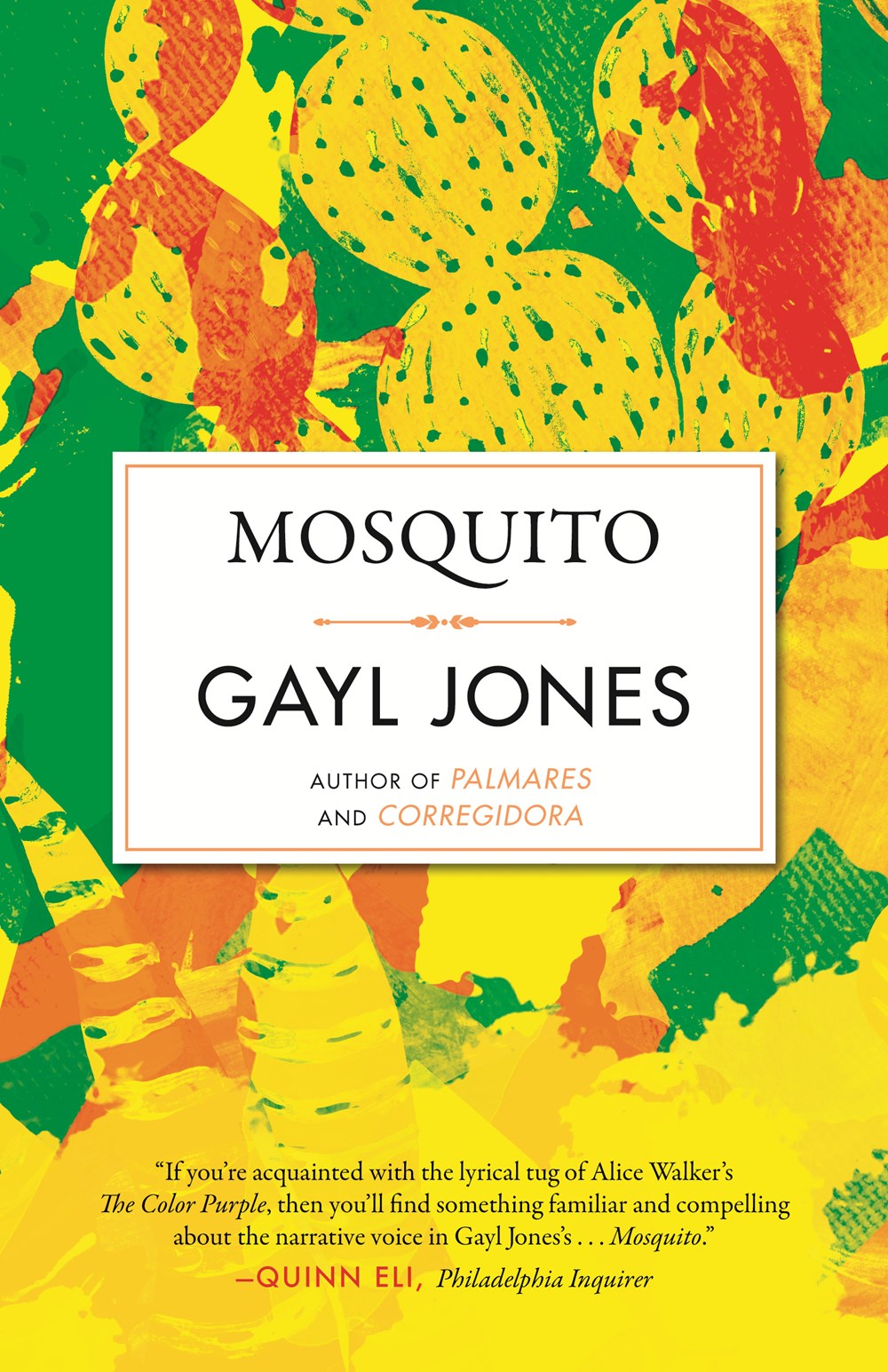
Mosquito
by Gayl Jones
$19.95“Jones’s great achievement is to reckon with both history and interiority, and to collapse the boundary between them.”—Anna Wiener, The New Yorker
From the highly acclaimed author of Palmares, Corregidora, and The Healing—a rare and unforgettable journey set along the US-Mexico border about identity, immigration, and “the new underground railroad.”
First discovered and edited by Toni Morrison, Gayl Jones has been described as one of the great literary writers of the 20th century. In Mosquito, she examines the US-Mexico border crisis through the eyes of Sojourner Nadine Jane Johnson, an African American truck driver known as Mosquito. Her journey begins after she discovers a stowaway who nearly gives birth in the back of her truck, sparking Mosquito’s accidental yet growing involvement in “the new underground railroad,” a sanctuary movement for Mexican immigrants.
As Mosquito’s understanding of the immigrants’ need to forge new lives and identities deepens, so too does Mosquito’s romance with Ray, a gentle revolutionary, a philosopher, and, perhaps, a priest. Along the road, Mosquito introduces us to Delgadina, a Chicana bartender who fries cactus, writes haunting stories, and studies to become a detective; Monkey Bread, a childhood pal who is, improbably, assistant to a blonde star in Hollywood; Maria, the stowaway who names her baby Journal, a misspelled tribute to her unwitting benefactor Sojourner; and many more. -
But Where's Home?: A Novella and Stories
![But Where's Home?: A Novella and Stories cover image]()

But Where's Home?: A Novella and Stories
$24.95It's 1963 in the small town of Monroe, New York. The Arringtons, a Black family, buy a house in a picturesque, all-white neighborhood. Some residents are welcoming, but many react to Dr. Philip Arrington, his wife Velma, and their daughters Livia and Maddie by conspiring against their success in both big and small ways. Amid this mix of hostility and shaky acceptance, the Arringtons must navigate their careers, deal with a volatile marriage, and raise their daughters.
But Where's Home?, Toni Ann Johnson's new collection of linked short stories explores the sometimes painful and often humorous experiences of the Arringtons as an upper-middle-class Black family in a predominantly white, working-class community. This book follows Johnson's previous collection, Light Skin Gone to Waste, which won the 2021 Flannery O'Connor Award. Through multiple perspectives and moments in time, from the 1960s to 2022, readers are invited into the lives of the eldest daughter, who longs for her father's affection while striving for independence; the youngest daughter, who seeks to overcome childhood pain through music and love; a father practicing psychology while engaging in affairs with the white women of the town; and a mother dealing with infidelity while raising her daughters in a place that rejects them.
Deeply emotional, funny, and unflinchingly honest, But Where's Home? lays bare the realities of Black life in America, challenging readers to confront racism, classism, colonized thinking, narcissism, abuse, and troubled parent-child relationships. Johnson's complex and interwoven characters create a kaleidoscope of truths about human nature and race relations in the United States.
-
The African Trilogy: Things Fall Apart; Arrow of God; No Longer at Ease
![The African Trilogy: Things Fall Apart; Arrow of God; No Longer at Ease]()

The African Trilogy: Things Fall Apart; Arrow of God; No Longer at Ease
by Chinua Achebe
$25.00*Ships in 7-10 Business Days*
Chinua Achebe is considered the father of modern African literature, the writer who "opened the magic casements of African fiction." The African Trilogy--comprised of Things Fall Apart, Arrow of God, and No Longer at Ease--is his magnum opus. In these masterly novels, Achebe brilliantly imagines the lives of three generations of an African community as their world is upended by the forces of colonialism from the first arrival of the British to the waning days of empire.
The trilogy opens with the groundbreaking Things Fall Apart, the tale of Okonkwo, a hero in his village, whose clashes with missionaries--coupled with his own tragic pride--lead to his fall from grace. Arrow of God takes up the ongoing conflict between continuity and change as Ezeulu, the headstrong chief priest, finds his authority is under threat from rivals and colonial functionaries. But he believes himself to be untouchable and is determined to lead his people, even if it is towards their own destruction. Finally, in No Longer at Ease, Okonkwo's grandson, educated in England, returns to a civil-service job in Lagos, only to see his morality erode as he clings to his membership in the ruling elite.
Drawing on the traditional Igbo tales of Achebe's youth, The African Trilogy is a literary landmark, a mythic and universal tale of modern Africa. As Toni Morrison wrote, "African literature is incomplete and unthinkable without the works of Chinua Achebe. For passion, intellect and crystalline prose, he is unsurpassed." -
The Delectable Negro: Human Consumption and Homoeroticism within US Slave Culture
![The Delectable Negro: Human Consumption and Homoeroticism within US Slave Culture]()
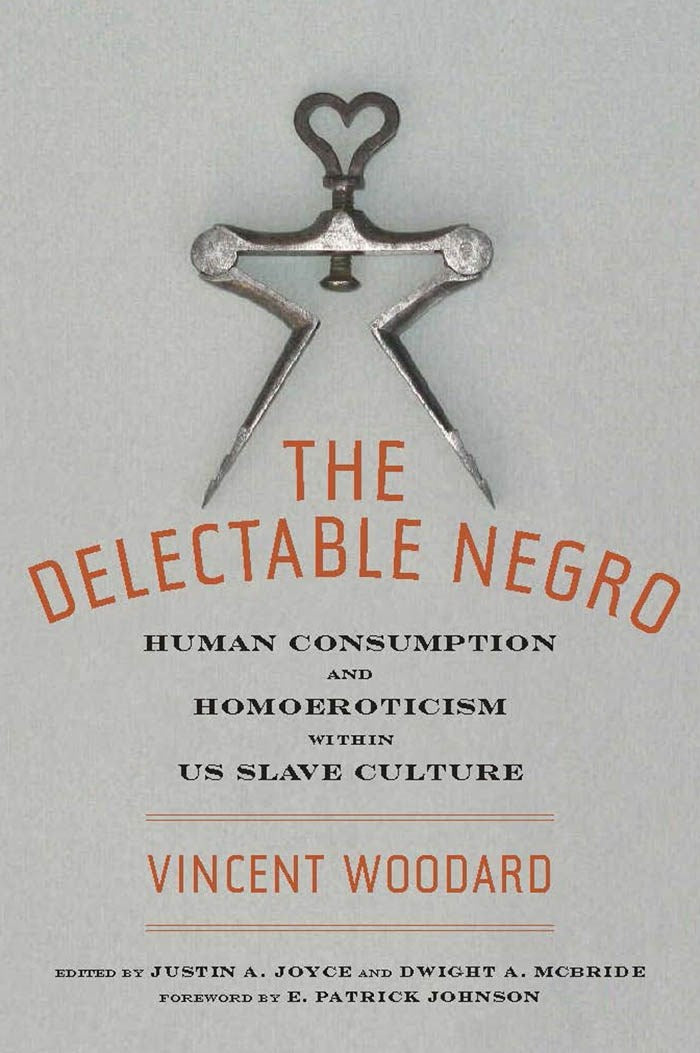
The Delectable Negro: Human Consumption and Homoeroticism within US Slave Culture
by Vincent Woodard
$39.00Winner of the 2015 LGBT Studies Award presented by the Lambda Literary Foundation
Unearths connections between homoeroticism, cannibalism, and cultures of consumption in the context of American literature and US slave culture that has largely been ignored until now
Scholars of US and transatlantic slavery have largely ignored or dismissed accusations that Black Americans were cannibalized. Vincent Woodard takes the enslaved person’s claims of human consumption seriously, focusing on both the literal starvation of the slave and the tropes of cannibalism on the part of the slaveholder, and further draws attention to the ways in which Blacks experienced their consumption as a fundamentally homoerotic occurrence. The Delectable Negro explores these connections between homoeroticism, cannibalism, and cultures of consumption in the context of American literature and US slave culture.
Utilizing many staples of African American literature and culture, such as the slave narratives of Olaudah Equiano, Harriet Jacobs, and Frederick Douglass, as well as other less circulated materials like James L. Smith’s slave narrative, runaway slave advertisements, and numerous articles from Black newspapers published in the nineteenth century, Woodard traces the racial assumptions, political aspirations, gender codes, and philosophical frameworks that dictated both European and white American arousal towards Black males and hunger for Black male flesh. Woodard uses these texts to unpack how slaves struggled not only against social consumption, but also against endemic mechanisms of starvation and hunger designed to break them. He concludes with an examination of the controversial chain gang oral sex scene in Toni Morrison’s Beloved, suggesting that even at the end of the twentieth and beginning of the twenty-first century, we are still at a loss for language with which to describe Black male hunger within a plantation culture of consumption. -
Gather Me: A Memoir in Praise of the Books That Saved Me
![Book cover image]()

Gather Me: A Memoir in Praise of the Books That Saved Me
by Glory Edim
$28.00An inspiring memoir of family, community, and resilience, and an ode to the power of books to help us understand ourselves, from the renowned founder of Well-Read Black Girl.
“She is a friend of my mind. She gather me, man. The pieces I am, she gather them and give them back to me in all the right order.”—Toni Morrison, Beloved
For Glory Edim, that “friend of my mind” is books. Edim, who grew up in Virginia to Nigerian immigrant parents, started the popular Well-Read Black Girl book club at age thirty, eventually reaching a community of half a million readers. But her own love of books stretches far back.
Edim’s father moved back to Nigeria while she was still a child, marking the beginning of a series of traumatic changes and losses for her family. What became an escape, a safe space, and a second home for her and her brother was their local library. Books were where Edim found community, and as she grew older she discovered authors and ideas that she wasn’t being taught about in class. Reading wherever and whenever she could, be it in her dorm room or when traveling by subway or plane, she found the Black writers whose words would forever change her life: Nikki Giovanni, through children’s poetry cassettes; Maya Angelou, through a critical high school English teacher; Toni Morrison, while attending Morrison’s alma mater, Howard University; Audre Lorde, on a flight to Nigeria. In prose full of both joy and heartbreak, Edim recounts how these writers and so many others taught her how to value herself by helping her to find her own voice when her mother lost hers, to trust her feelings when her father remarried, and to create bonds with other Black women and uplift their stories.
Gather Me is a glowing testament to how the power of representation in literature can gather the disparate parts that make us who we are and assemble them into a portrait of discovery. -
Imagination: A Manifesto
![Imagination: A Manifesto]()
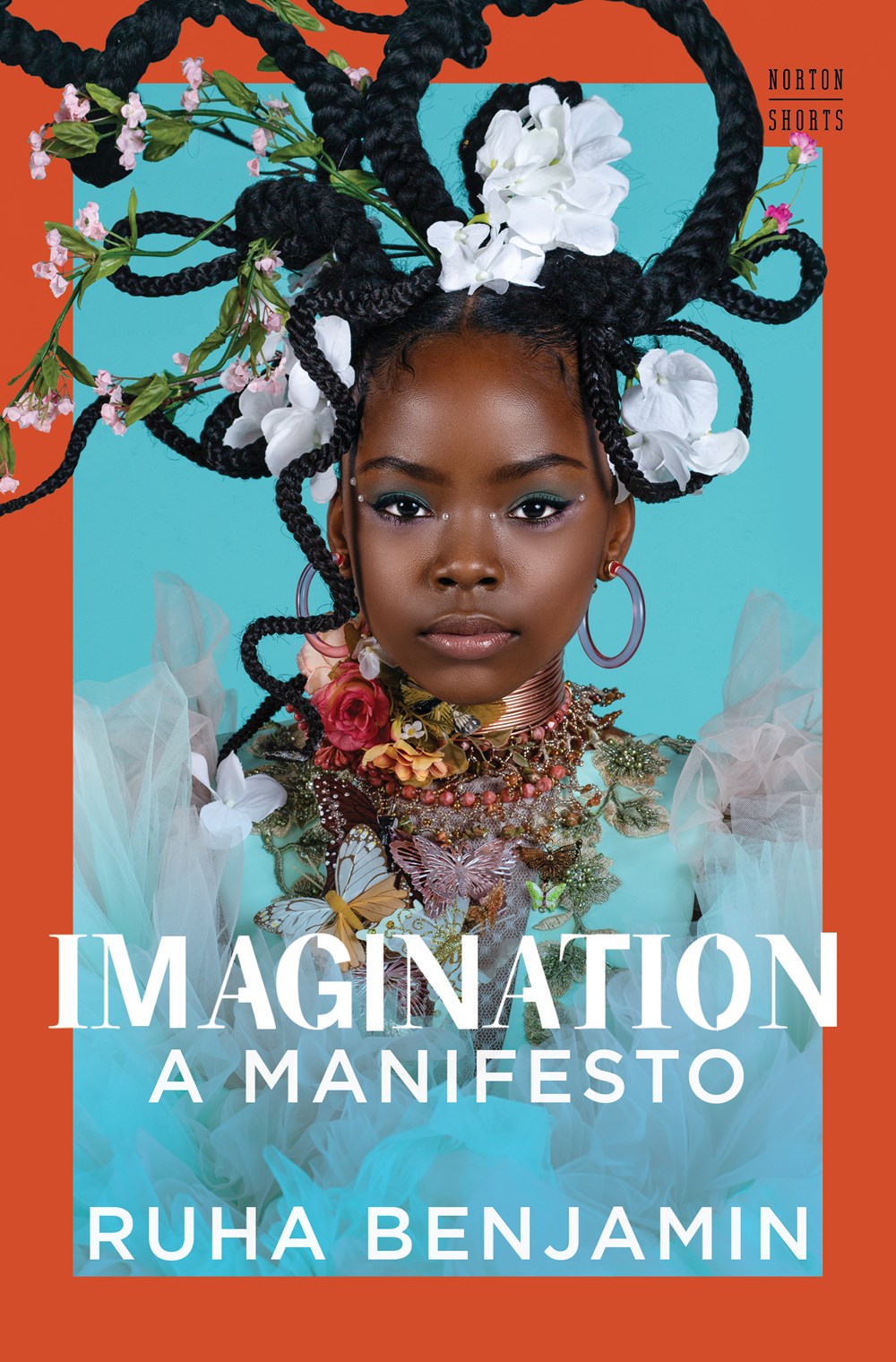
Imagination: A Manifesto
by Ruha Benjamin
$12.00In this revelatory work, Ruha Benjamin calls on us to take imagination seriously as a site of struggle and a place of possibility for reshaping the future.
A world without prisons? Ridiculous. Schools that foster the genius of every child? Impossible. Work that doesn’t strangle the life out of people? Naive. A society where everyone has food, shelter, love? In your dreams. Exactly. Ruha Benjamin, Princeton University professor, insists that imagination isn’t a luxury. It is a vital resource and powerful tool for collective liberation.
Imagination: A Manifesto is her proclamation that we have the power to use our imaginations to challenge systems of oppression and to create a world in which everyone can thrive. But obstacles abound. We have inherited destructive ideas that trap us inside a dominant imagination. Consider how racism, sexism, and classism make hierarchies, exploitation, and violence seem natural and inevitable—but all emerged from the human imagination.
The most effective way to disrupt these deadly systems is to do so collectively. Benjamin highlights the educators, artists, activists, and many others who are refuting powerful narratives that justify the status quo, crafting new stories that reflect our interconnection, and offering creative approaches to seemingly intractable problems.
Imagination: A Manifesto offers visionary examples and tactics to push beyond the constraints of what we think, and are told, is possible. This book is for anyone who is ready to take to heart Toni Morrison’s instruction: “Dream a little before you think.”
-
The Birdcatcher by Gayl Jones
![The Birdcatcher by Gayl Jones]()
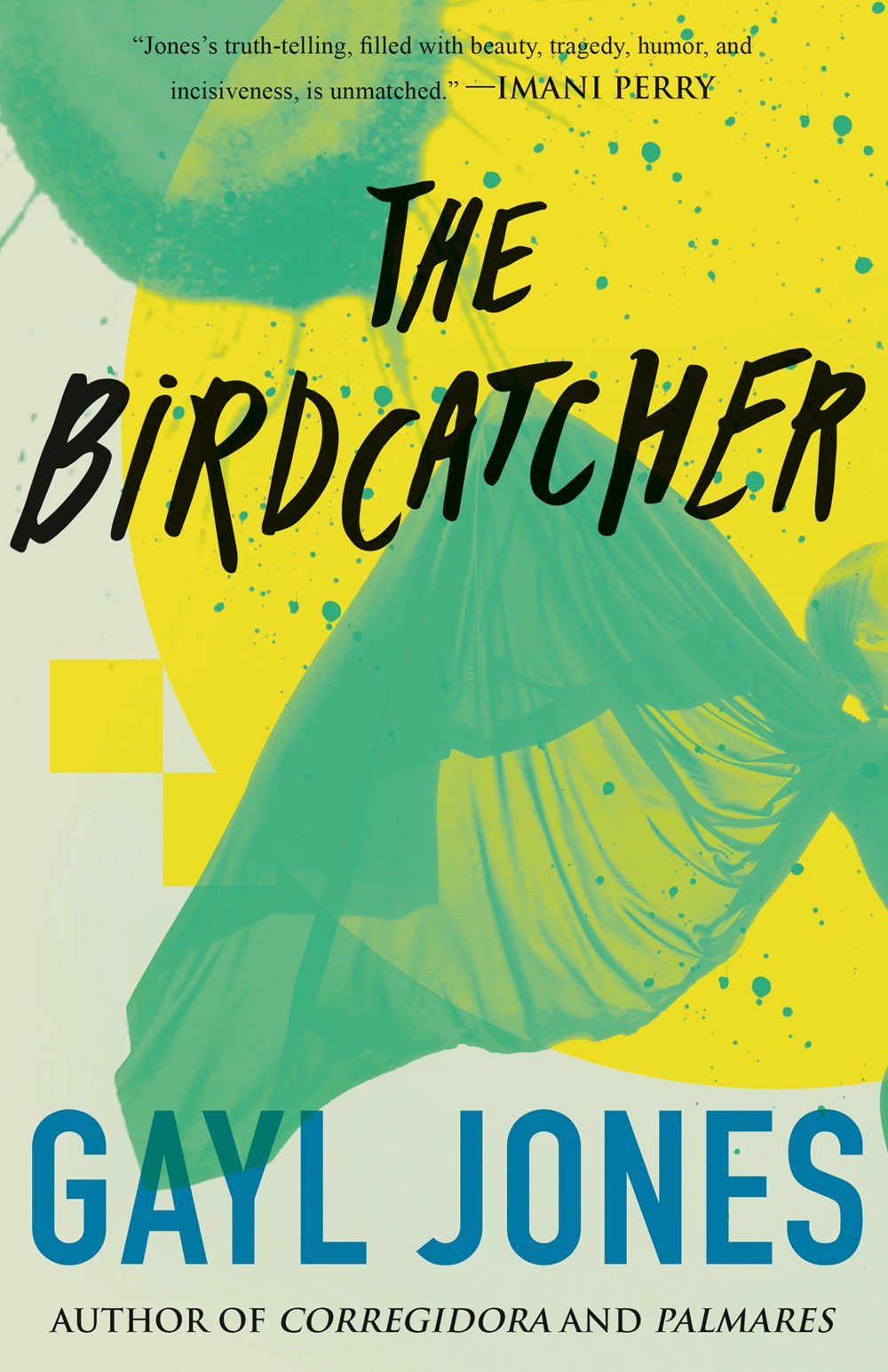
The Birdcatcher by Gayl Jones
$24.95Legendary writer Gayl Jones returns with a stunning new novel about Black American artists in exile
Gayl Jones, the novelist Toni Morrison discovered decades ago and Tayari Jones recently called her favorite writer, has been described as one of the great literary writers of the 20th century. Now, for the first time in over 20 years, Jones is publishing again. In the wake of her long-awaited fifth novel, Palmares, The Birdcatcher is another singular achievement, a return to the circles of her National Book Award finalist, The Healing.
Set primarily on the island of Ibiza, the story is narrated by the writer Amanda Wordlaw, whose closest friend, a gifted sculptor named Catherine Shuger, is repeatedly institutionalized for trying to kill a husband who never leaves her. The three form a quirky triangle on the white-washed island.
A study in Black women’s creative expression, and the intensity of their relationships, this work from Jones shows off her range and insight into the vicissitudes of all human nature - rewarding longtime fans and bringing her talent to a new generation of readers. -
The Black Atlantic: Modernity and Double-Consciousness
![The Black Atlantic: Modernity and Double-Consciousness cover image]()

The Black Atlantic: Modernity and Double-Consciousness
$34.00Afrocentrism. Eurocentrism. Caribbean Studies. British Studies. To the forces of cultural nationalism hunkered down in their camps, this bold hook sounds a liberating call. There is, Paul Gilroy tells us, a culture that is not specifically African, American, Caribbean, or British, but all of these at once, a black Atlantic culture whose themes and techniques transcend ethnicity and nationality to produce something new and, until now, unremarked. Challenging the practices and assumptions of cultural studies, The Black Atlantic also complicates and enriches our understanding of modernism.
Debates about postmodernism have cast an unfashionable pall over questions of historical periodization. Gilroy bucks this trend by arguing that the development of black culture in the Americas arid Europe is a historical experience which can be called modern for a number of clear and specific reasons. For Hegel, the dialectic of master and slave was integral to modernity, and Gilroy considers the implications of this idea for a transatlantic culture. In search of a poetics reflecting the politics and history of this culture, he takes us on a transatlantic tour of the music that, for centuries, has transmitted racial messages and feeling around the world, from the Jubilee Singers in the nineteenth century to Jimi Hendrix to rap. He also explores this internationalism as it is manifested in black writing from the “double consciousness” of W. E. B. Du Bois to the “double vision” of Richard Wright to the compelling voice of Toni Morrison.
In a final tour de force, Gilroy exposes the shared contours of black and Jewish concepts of diaspora in order both to establish a theoretical basis for healing rifts between blacks and Jews in contemporary culture and to further define the central theme of his book: that blacks have shaped a nationalism, if not a nation, within the shared culture of the black Atlantic.
-
Dark Days: Fugitive Essays
![Dark Days: Fugitive Essays]()
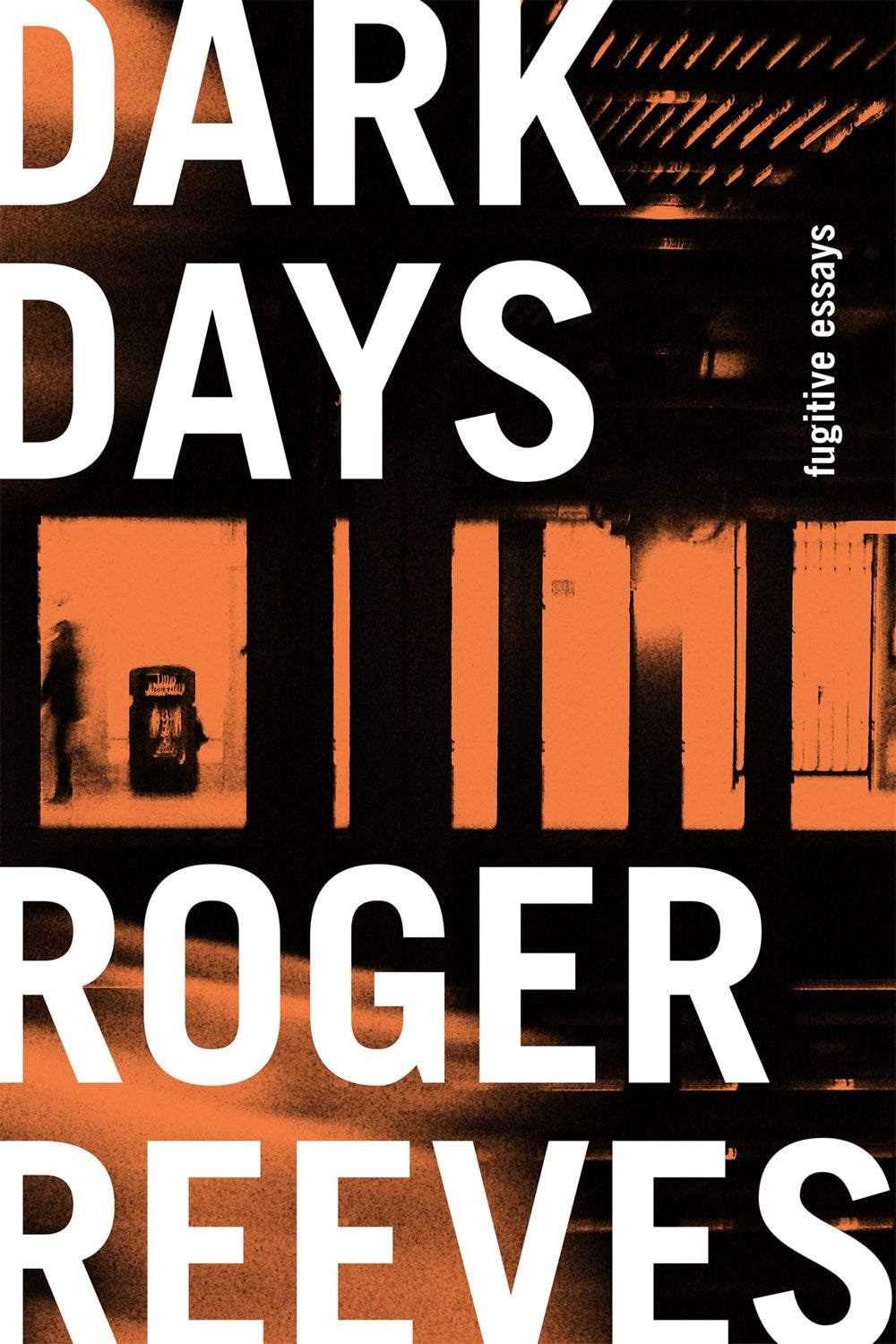
Dark Days: Fugitive Essays
by Roger Reeves
$18.00A crucial book that calls for community, solidarity, and joy, even in—especially in—these dark days
In his debut work of nonfiction, award-winning poet Roger Reeves finds new meaning in silence, protest, fugitivity, freedom, and ecstasy. Braiding memoir, theory, and criticism, Reeves juxtaposes the images of an opera singer breaking the state-mandated silence curfew by singing out into the streets of Santiago, Chile, and a father teaching his daughter to laugh out loud at the planes dropping bombs on them in Aleppo, Syria. He describes the history of the hush harbor—places where enslaved people could steal away to find silence and court ecstasy, to the side of their impossible conditions. In other essays, Reeves highlights a chapter in Toni Morrison’s Beloved to locate common purpose between Black and Indigenous peoples; he visits the realities of enslaved people on McLeod Plantation, where some of the descendants of those formerly enslaved lived into the 1990s; and he explores his own family history, his learning to read closely through the Pentecostal church tradition, and his passing on of reading as a pleasure, freedom, and solace to his daughter, who is frightened the police will gun them down.
Together, these groundbreaking essays build a profound vision for how to see and experience the world in our present moment, and how to strive toward an alternative existence in intentional community underground. “The peace we fight and search for,” Reeves writes, “begins and ends with being still.” -
Bloom How You Must: A Black Woman's Guide to Self-Care and Generational Healing
![Bloom How You Must: A Black Woman's Guide to Self-Care and Generational Healing cover image]()

Bloom How You Must: A Black Woman's Guide to Self-Care and Generational Healing
Tara Pringle Jefferson
$28.00A self-empowering wellness guide that celebrates the roots of self-care and community care as a sustaining force for generations of Black women. Bloom How You Must is a love letter to the millions of Black women who want a less stressful life but don’t know where to begin.
Self-care isn’t a trend among Black women; it has always been a throughline in our heritage. Consider Coretta Scott King, who along with fellow activists Betty Shabazz and Myrlie Evers-Williams, would enjoy “girls’ trips” to take a break from the stress of the Civil Rights Movement. Remember their contemporary Rosa Parks attended (and led) yoga classes while on the front lines for Black rights in Detroit.
Think of the enduring friendship between Oprah Winfrey and Gayle King, a sisterhood in which they have leaned on each other for nearly forty years while thriving in the glaring media and entertainment spotlight.
Picture Toni Morrison’s overflowing gardens and lush houseplants she tended while writing classics like Beloved and The Bluest Eye.
Recall Audre Lord’s enduring declaration written after her second cancer diagnosis: “Caring for myself is not self-indulgence, it is self-preservation, and that is an act of political warfare.”
Bloom How You Must explores and expands on this self-care legacy and shows how it can help every Black woman today.
Tara Pringle Jefferson excavates the roots of self-care and community care as a sustaining force for generations of Black women and transforms her findings into a blueprint women can follow in their daily lives. A blend of guidebook and journal, Bloom How You Must explores several distinct pillars of wellness, featuring:
* Research from leading wellness experts
* Interviews with women aged 19–99
* Stories of personal experience
* Overviews and explanations of each component of self-care
* Dedicated pages for readers to reflect on each chapter
* Exercises to put wellness into practice
* Easy-to-follow explanatory graphics and sidebarsWith its diversity of insights,practical skills and multigenerational focus, Bloom How You Must is a love letter to the millions of Black women who want a less stressful life but don’t know where to begin. Bloom How You Must gives them the tools they need to improve their health and their daily lives.
-
Vexy Thing
![Vexy Thing]()
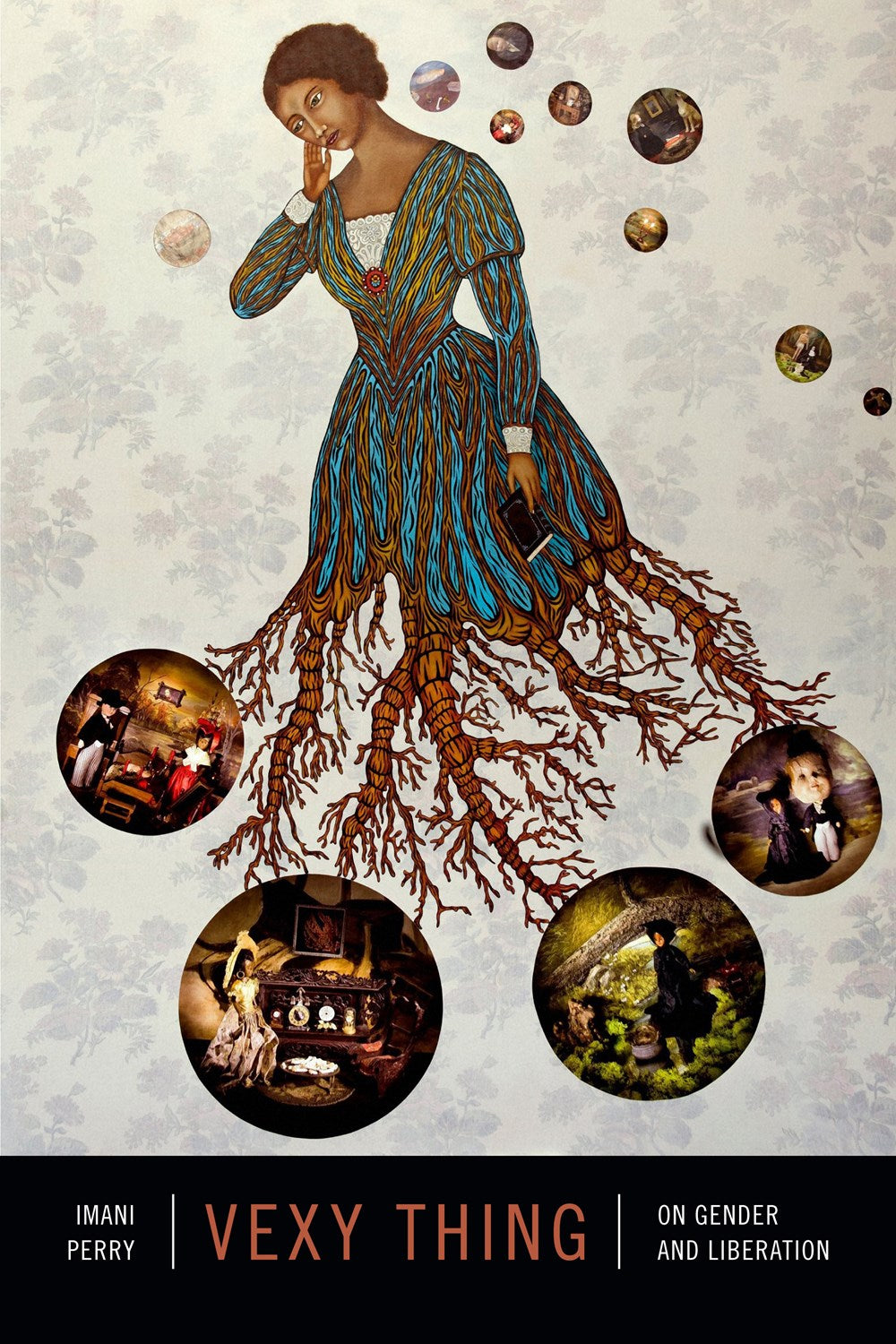
Vexy Thing
by Imani Perry
$27.95Imani Perry recenters patriarchy to contemporary discussions of feminism through a social and literary analysis of cultural artifacts—ranging from nineteenth-century slavery court cases and historical vignettes to literature and contemporary art—from the Enlightenment to the present.
Even as feminism has become increasingly central to our ideas about institutions, relationships, and everyday life, the term used to diagnose the problem—“patriarchy”—is used so loosely that it has lost its meaning. In Vexy Thing Imani Perry resurrects patriarchy as a target of critique, recentering it to contemporary discussions of feminism through a social and literary analysis of cultural artifacts from the Enlightenment to the present. Drawing on a rich array of sources—from nineteenth-century slavery court cases and historical vignettes to writings by Toni Morrison and Audre Lorde and art by Kara Walker and Wangechi Mutu—Perry shows how the figure of the patriarch emerged as part and parcel of modernity, the nation-state, the Industrial Revolution, and globalization. She also outlines how digital media and technology, neoliberalism, and the security state continue to prop up patriarchy. By exploring the past and present of patriarchy in the world we have inherited and are building for the future, Perry exposes its mechanisms of domination as a necessary precursor to dismantling it. -
The Dark Delight of Being Strange: Black Stories of Freedom
![The Dark Delight of Being Strange: Black Stories of Freedom cover image]()

The Dark Delight of Being Strange: Black Stories of Freedom
James B. Haile III
$26.00Winner, 2025 Hugh J. Silverman Book Prize, Association for Philosophy and Literature
Finalist, 2025 PEN Open Book Award, PEN America
An ambitious genre-crossing exploration of Black speculative imagination, The Dark Delight of Being Strange combines fiction, historical accounts, and philosophical prose to unveil the extraordinary and the surreal in everyday Black life.
In a series of stories and essays, James B. Haile, III, traces how Black speculative fiction responds to enslavement, racism, colonialism, and capitalism and how it reveals a life beyond social and political alienation. He reenvisions Black technologies of freedom through Henry Box Brown’s famed escape from slavery in a wooden crate, fashions an anticolonial “hollow earth theory” from the works of H. G. Wells and Jules Verne, and considers the octopus and its ability to camouflage itself as a model for Black survival strategies, among others. Looking at Black life through the lens of speculative fiction, this book transports readers to alternative worlds and spaces while remaining squarely rooted in present-day struggles. In so doing, it rethinks historical and contemporary Black experiences as well as figures such as Harriet Tubman, Frederick Douglass, Booker T. Washington, W. E. B. Du Bois, Henry Dumas, and Toni Morrison.
Offering new ways to grasp the meanings and implications of Black freedom, The Dark Delight of Being Strange invites us to reimagine history and memory, time and space, our identities and ourselves.


Stay Informed. We're building a community committed to celebrating Black authors + artisans. Subscribe to keep up with all things Kindred Stories.