
Search results: 109 results for “National Museum of African American History and Culture”
Not finding what you're looking for? Check out our shop on bookshop.org to order and still support us ♥
109 results
-
The Black Atlantic: Modernity and Double-Consciousness
![The Black Atlantic: Modernity and Double-Consciousness cover image]()

The Black Atlantic: Modernity and Double-Consciousness
$34.00Afrocentrism. Eurocentrism. Caribbean Studies. British Studies. To the forces of cultural nationalism hunkered down in their camps, this bold hook sounds a liberating call. There is, Paul Gilroy tells us, a culture that is not specifically African, American, Caribbean, or British, but all of these at once, a black Atlantic culture whose themes and techniques transcend ethnicity and nationality to produce something new and, until now, unremarked. Challenging the practices and assumptions of cultural studies, The Black Atlantic also complicates and enriches our understanding of modernism.
Debates about postmodernism have cast an unfashionable pall over questions of historical periodization. Gilroy bucks this trend by arguing that the development of black culture in the Americas arid Europe is a historical experience which can be called modern for a number of clear and specific reasons. For Hegel, the dialectic of master and slave was integral to modernity, and Gilroy considers the implications of this idea for a transatlantic culture. In search of a poetics reflecting the politics and history of this culture, he takes us on a transatlantic tour of the music that, for centuries, has transmitted racial messages and feeling around the world, from the Jubilee Singers in the nineteenth century to Jimi Hendrix to rap. He also explores this internationalism as it is manifested in black writing from the “double consciousness” of W. E. B. Du Bois to the “double vision” of Richard Wright to the compelling voice of Toni Morrison.
In a final tour de force, Gilroy exposes the shared contours of black and Jewish concepts of diaspora in order both to establish a theoretical basis for healing rifts between blacks and Jews in contemporary culture and to further define the central theme of his book: that blacks have shaped a nationalism, if not a nation, within the shared culture of the black Atlantic.
-
Keepers of a Movement: Black Collectors Who Preserve Art, Stories, and Legacies That Define Black Life
![Keepers of a Movement: Black Collectors Who Preserve Art, Stories, and Legacies That Define Black Life cover image]()

Keepers of a Movement: Black Collectors Who Preserve Art, Stories, and Legacies That Define Black Life
$50.00Features 39 Black art collectors who collect works in a variety of art mediums created by Black artists that span more than five decades.
For centuries, Black artists across the African diaspora have been architects of cultural innovation, resilience, and transformation. Their art, music, literature, and activism have profoundly shaped the world.
But behind these celebrated figures stands another equally vital force: the Black collector.
These keepers of history and culture play a crucial role in preserving artifacts, stories, and legacies that define Black life.
They safeguard rare books, heirlooms, art, and ephemera that might otherwise be lost, ensuring future generations can access these narratives.
Keepers of a Movement honors these individuals whose passion and dedication illuminate our heritage and identity. Each collection showcases a unique perspective, offering a deeper understanding of history.
Visitors will also hear from collectors about their personal connections to the works featured. More than objects, these collections represent lives, communities, and movements—ensuring that Black voices are heard, remembered, and celebrated for generations to come.
-
Born in Blackness: Africa, Africans, and the Making of the Modern World, 1471 to the Second World War
![Born in Blackness: Africa, Africans, and the Making of the Modern World, 1471 to the Second World War]()
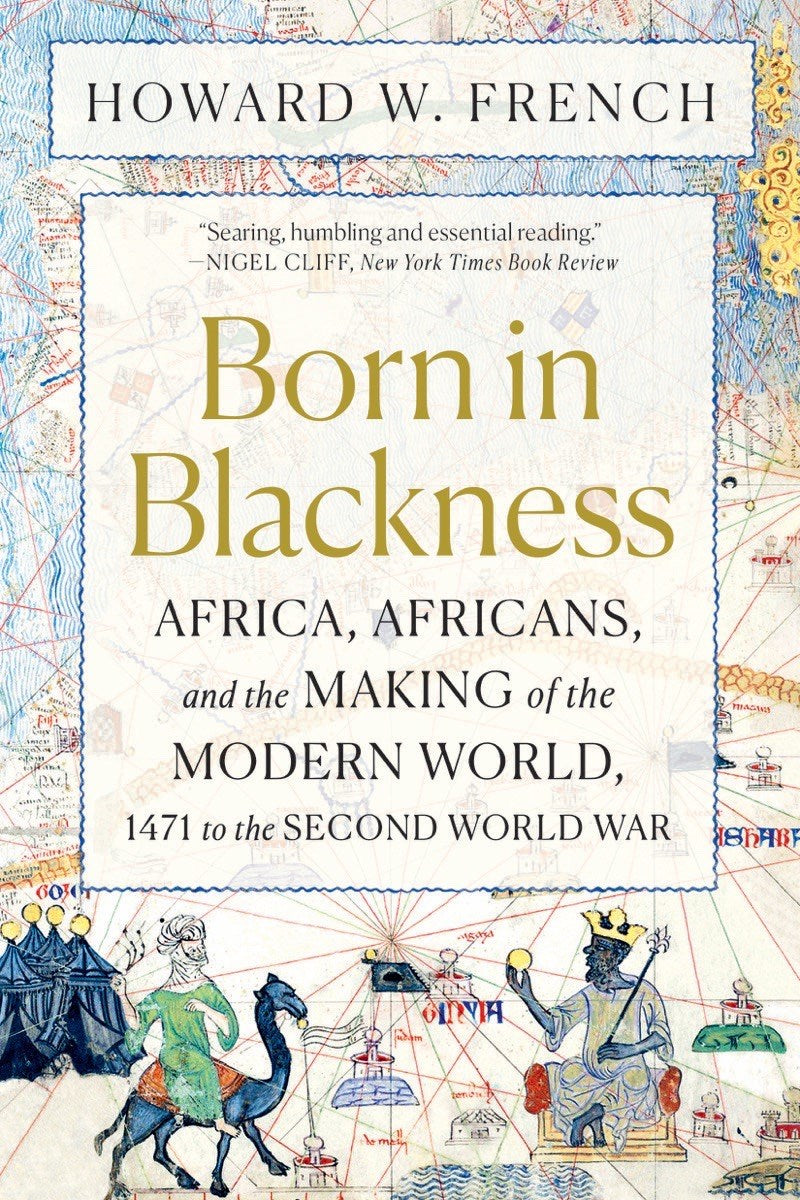
Born in Blackness: Africa, Africans, and the Making of the Modern World, 1471 to the Second World War
by Howard W. French
$19.95Revealing the central yet intentionally obliterated role of Africa in the creation of modernity, Born in Blackness vitally reframes our understanding of world history. Traditional accounts of the making of the modern world afford a place of primacy to European history. Some credit the fifteenth-century Age of Discovery and the maritime connection it established between West and East; others the accidental unearthing of the “New World.” Still others point to the development of the scientific method, or the spread of Judeo-Christian beliefs; and so on, ad infinitum. The history of Africa, by contrast, has long been relegated to the remote outskirts of our global story. What if, instead, we put Africa and Africans at the very center of our thinking about the origins of modernity?
In a sweeping narrative spanning more than six centuries, Howard W. French does just that, for Born in Blackness vitally reframes the story of medieval and emerging Africa, demonstrating how the economic ascendancy of Europe, the anchoring of democracy in the West, and the fulfillment of so-called Enlightenment ideals all grew out of Europe’s dehumanizing engagement with the “dark” continent. In fact, French reveals, the first impetus for the Age of Discovery was not—as we are so often told, even today—Europe’s yearning for ties with Asia, but rather its centuries-old desire to forge a trade in gold with legendarily rich Black societies sequestered away in the heart of West Africa.
Creating a historical narrative that begins with the commencement of commercial relations between Portugal and Africa in the fifteenth century and ends with the onset of World War II, Born in Blackness interweaves precise historical detail with poignant, personal reportage. In so doing, it dramatically retrieves the lives of major African historical figures, from the unimaginably rich medieval emperors who traded with the Near East and beyond, to the Kongo sovereigns who heroically battled seventeenth-century European powers, to the ex-slaves who liberated Haitians from bondage and profoundly altered the course of American history.
While French cogently demonstrates the centrality of Africa to the rise of the modern world, Born in Blackness becomes, at the same time, a far more significant narrative, one that reveals a long-concealed history of trivialization and, more often, elision in depictions of African history throughout the last five hundred years. As French shows, the achievements of sovereign African nations and their now-far-flung peoples have time and again been etiolated and deliberately erased from modern history. As the West ascended, their stories—siloed and piecemeal—were swept into secluded corners, thus setting the stage for the hagiographic “rise of the West” theories that have endured to this day.
“Capacious and compelling” (Laurent Dubois), Born in Blackness is epic history on the grand scale. In the lofty tradition of bold, revisionist narratives, it reframes the story of gold and tobacco, sugar and cotton—and of the greatest “commodity” of them all, the twelve million people who were brought in chains from Africa to the “New World,” whose reclaimed lives shed a harsh light on our present world.
-
The Time is Always Now: Artists Reframe Black Figure
![Book cover image]()
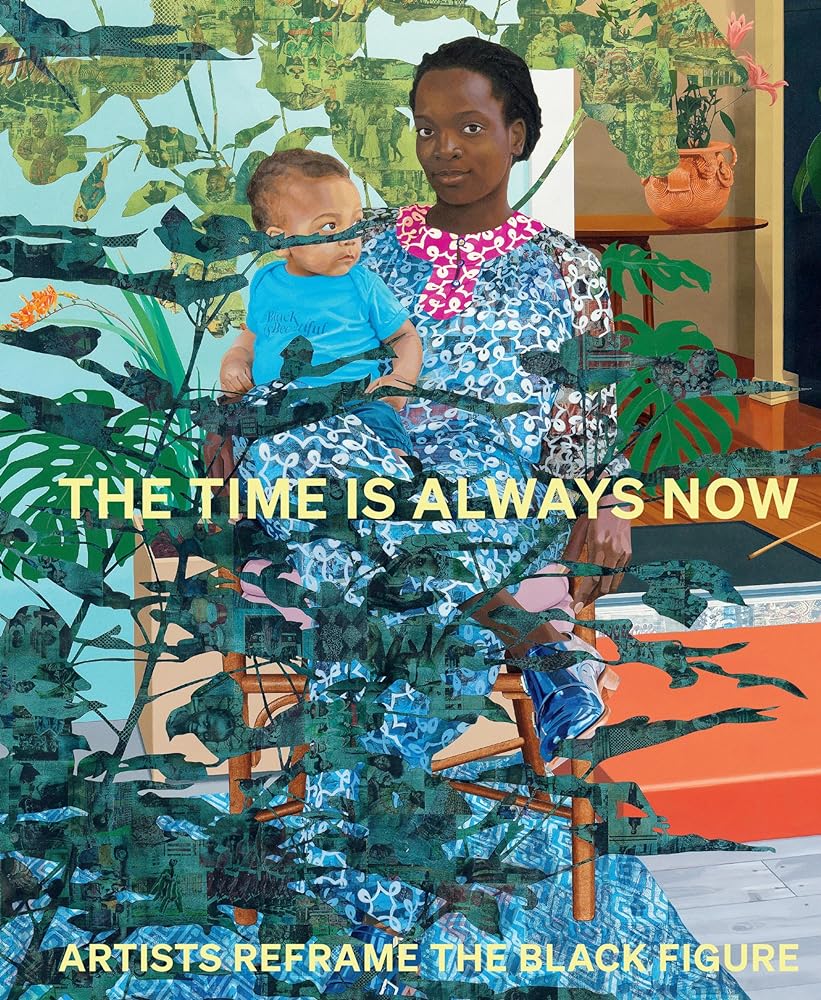
The Time is Always Now: Artists Reframe Black Figure
Ekow Eshun
$45.00*ships or ready for pick up in 7 - 10 business days*
Black figuration and portraiture as realized in the works of Amy Sherald, Jordan Casteel and other contemporary artists
“There is never a time in the future in which we will work out our salvation. The challenge is in the moment, the time is always now,” wrote James Baldwin. Published in conjunction with the eponymous exhibition at the National Portrait Gallery, London, The Time is Always Now is edited by curator Ekow Eshun, former director of the Institute of Contemporary Arts in London. The book brings together 22 contemporary African diasporic artists working primarily in the United Kingdom and the United States, whose practices―whether through painting, drawing or sculpture―foreground the Black figure. Acknowledging the paradox of race as both a “socially constructed fiction” and a “lived reality,” as Eshun writes, The Time is Always Now celebrates these Black figurative artworks against a background of heightened cultural visibility. Through a three-part structure, this book examines Black figuration as a means to address the absence and distortion of Black presence within Western art history. Each artist receives a detailed biographical profile alongside reproductions of their included works. The catalog is also supplemented by three original essays from Dorothy Price, Professor of Modern and Contemporary Art and Critical Race Art History at the Courtauld Institute of Art; Bernardine Evaristo, Booker Prize–winning author of Girl, Woman, Other; and Esi Edugyan, two-time Giller Prize winner for her novels Half-Blood Blues and Washington Black.
Artists include: Njideka Akunyili Crosby, Hurvin Anderson, Michael Armitage, Jordan Casteel, Noah Davis, Godfried Donkor, Kimathi Donkor, Denzil Forrester, Lubaina Himid, Claudette Johnson, Titus Kaphar, Kerry James Marshall, Wangechi Mutu, Chris Ofili, Toyin Ojih Odutola, Jennifer Packer, Thomas J. Price, Nathaniel Mary Quinn, Lorna Simpson, Amy Sherald, Henry Taylor, Barbara Walker. -
Willie Birch: Stories to Tell
![Willie Birch: Stories to Tell cover image]()

Willie Birch: Stories to Tell
$55.00A career retrospective of a singular voice in contemporary American art, featuring six decades of artwork that chronicles his vision of the Black American experience
New Orleans–based artist, community organizer, and cultural provocateur Willie Birch (b. 1942) has dedicated his career to storytelling. His incisive work across a wide variety of media―including paintings, large-scale drawings, wood and papier-mâché sculpture, and public works―explores his unique vision of Black America and draws on sources as diverse as Egyptian numerology, American folk art, and jazz music.
This book showcases more than one hundred of Birch’s artworks alongside essays by eminent scholars and curators. Russell Lord provides an introduction to the artist’s life and work; Lowery Stokes Sims writes about Birch’s use of papier-mâché, for which he garnered acclaim during his time in New York City, and situates Birch within the New York art scene of the 1980s and ’90s; Grace Deveney considers the ways Birch gives visual form to the complex relationship between Black Americans and mass media; and Leslie King Hammond discusses how the city of New Orleans―its history and its communities―has shaped Birch’s work.
Published in association with the American Federation of Arts
Exhibition Schedule:
California African American Museum, Los Angeles
May 5–October 4, 2026
New Orleans Museum of Art
March 20–September 5, 2027
Museum of Contemporary Art Jacksonville, University of North Florida
October 28, 2027–May 14, 2028
Hudson River Museum
September 22, 2028–January 14, 2029 -
Black Interior: Essays
![Black Interior: Essays]()
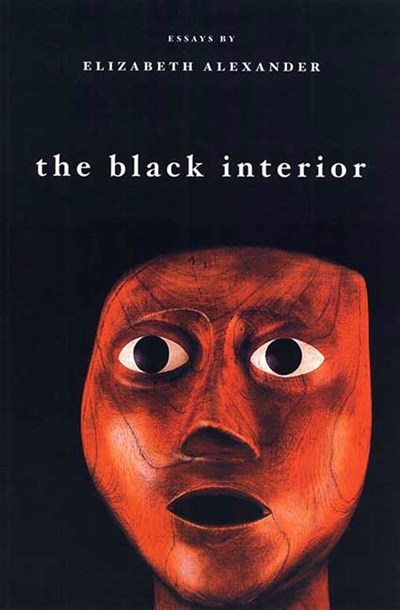
Black Interior: Essays
by Elizabeth Alexander
$15.00*Ships in 7-10 business days*
With a poet's precision and an intellectually adventurous spirit, Elizabeth Alexander explores a wide spectrum of contemporary African American artistic life through literature, paintings, popular media, and films, and discusses its place in current culture. In The Black Interior, she examines the vital roles of such heavyweight literary figures as Gwendolyn Brooks, Langston Hughes, and Rita Dove, as well as lesser known, yet vibrant, new creative voices. She offers a reconsideration of "afro-outré" painter Jean-Michel Basquiat, the concept of "race-pride" in Jet magazine, and her take on Denzel Washington's career as a complex black male icon in a post-affirmative action era. Also available is Alexander's much heralded essay on Rodney King, Emmett Till, and the collective memory of racial violence.
Alexander, who has been a professor at the University of Chicago and Smith College, and recently at Yale University, has taught and lectured on African American art and culture across the country and abroad for nearly two decades. In The Black Interior, she directs her scrupulous poet's eye to the urgent cultural issues of the day. This lively collection is a crucial volume for understanding current thinking on race, art, and culture in America. -
Dance Theatre of Harlem: A History, A Movement, A Celebration
![Dance Theatre of Harlem: A History, A Movement, A Celebration]()
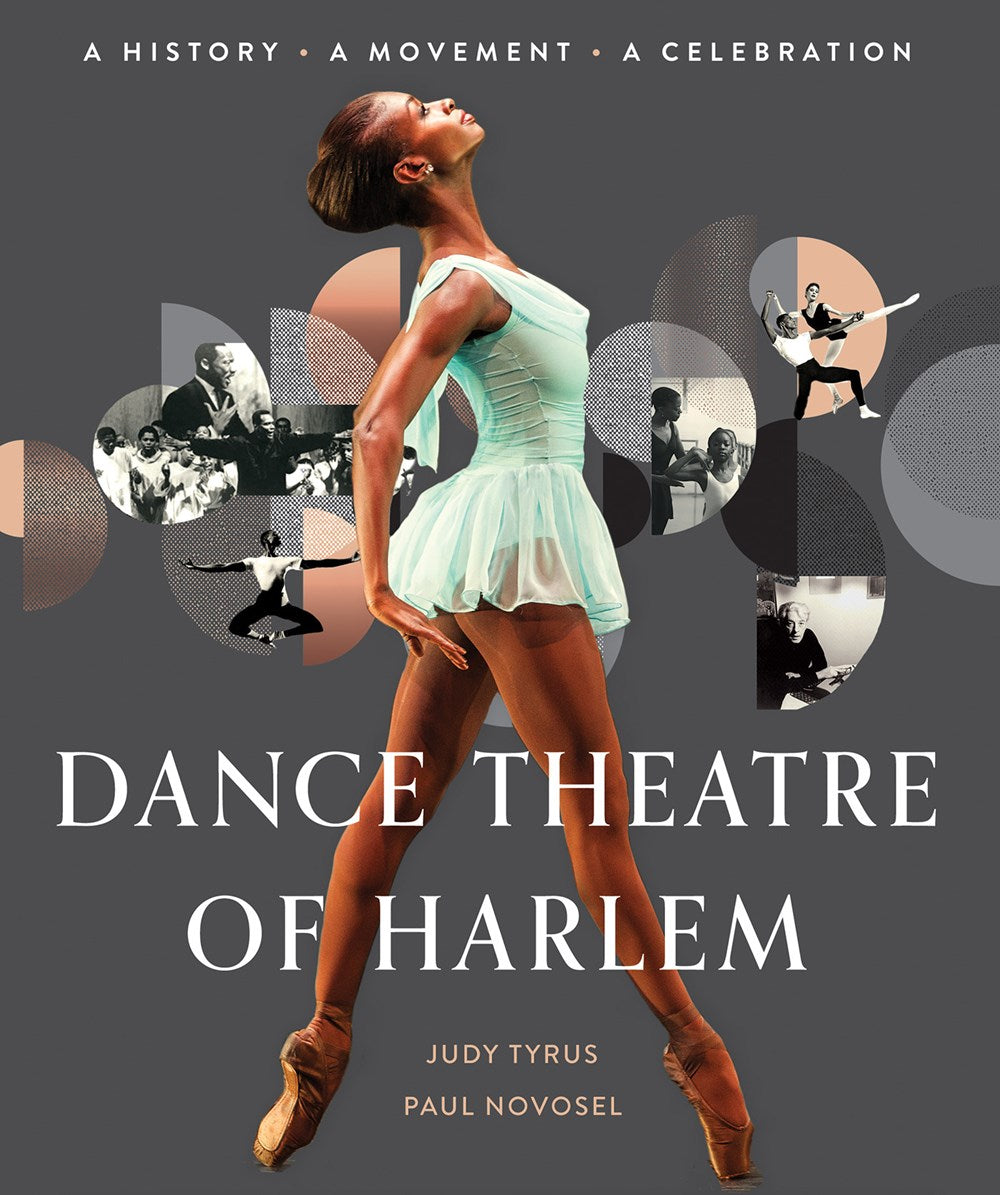
Dance Theatre of Harlem: A History, A Movement, A Celebration
by Judy Tyrus
$50.00*Ships in 7-10 Business Days*
With exclusive backstage stories from its legendary dancers and staff, and unprecedented access to its archives, Dance Theatre of Harlem is a striking chronicle of the company's amazing history, its fascinating daily workings, and the visionaries who made its legacy. Here you’ll discover how the company’s founders—African-American maestro Arthur Mitchell of George Balanchine’s New York City Ballet, and Nordic-American Karel Shook of The Dutch National Ballet--created timeless works that challenged Eurocentric mainstream ballet head-on—and used new techniques to examine ongoing issues of power, beauty, myth, and the ever-changing definition of art itself.
Gaining prominence in the 1970s and 80s with a succession of triumphs—including its spectacular season at the Metropolitan Opera House—the company also gained fans and supporters that included Nelson Mandela, Stevie Wonder, Cicely Tyson, Misty Copeland, Jessye Norman, and six American presidents. Dance Theatre of Harlem details this momentous era as well as the company's difficult years, its impressive recovery as it partnered with new media's most brilliant creators—and, in the wake of its 50th anniversary, amid a global pandemic, its evolution into a worldwide virtual performance space.
Alive with stunning photographs, including many from the legendary Marbeth, this incomparable book is a must-have for any lover of dance, art, culture, or history. -
Free Black Communities and the Underground Railroad: The Geography of Resistance
![Free Black Communities and the Underground Railroad: The Geography of Resistance cover image]()

Free Black Communities and the Underground Railroad: The Geography of Resistance
$32.00This enlightening study employs the tools of archaeology to uncover a new historical perspective on the Underground Railroad. Unlike previous histories of the Underground Railroad, which have focused on frightened fugitive slaves and their benevolent abolitionist accomplices, Cheryl LaRoche focuses instead on free African American communities, the crucial help they provided to individuals fleeing slavery, and the terrain where those flights to freedom occurred.
This study foregrounds several small, rural hamlets on the treacherous southern edge of the free North in Illinois, Indiana, and Ohio. LaRoche demonstrates how landscape features such as waterways, iron forges, and caves played a key role in the conduct and effectiveness of the Underground Railroad. Rich in oral histories, maps, memoirs, and archaeological investigations, this examination of the "geography of resistance" tells the new powerful and inspiring story of African Americans ensuring their own liberation in the midst of oppression. -
The Conjuring of America: Mojos, Mermaids, Medicine, and 400 Years of Black Women’s Magic
![The Conjuring of America: Mojos, Mermaids, Medicine, and 400 Years of Black Women’s Magic cover image]()

The Conjuring of America: Mojos, Mermaids, Medicine, and 400 Years of Black Women’s Magic
Lindsey Stewart
from $21.99The Conjuring of America tells the epic story of conjure women, who, through a mix of spiritual beliefs, herbal rituals, and therapeutic remedies gave rise to the rich tapestry of American culture we see today. Feminist philosopher, Lindsey Stewart, tells the stories of Negro Mammies of slavery; the Voodoo Queens and Blues Women of Reconstruction; and the Granny Midwives and textile weavers of the Jim Crow era. These women, in secrecy and subterfuge, courageously and devotedly continued their practices and worship for centuries and passed down their traditions.
Emerging first in the American South during slavery, these women were thrust into the heart of national conflicts over generations of African American life. They combined ancestral magic and hyperlocal resources to respond to Black struggles in real time, forging a secret well of health and power hidden to their oppressors. As a result, conjure informs our lives in ways remarkable and ordinary—from traditional medicines that informed the creation of Vicks VapoRub and the rise of Aunt Jemima’s Pancake Mix, to the original magic of Disney’s The Little Mermaid (2023), and the true origins of the all-American classic blue jean.
From the moment enslaved Africans first arrived on these shores, conjure was heavily regulated and even outlawed. Now, Stewart uncovers new contours of American history, sourcing letters from the enslaved, dispatches from the lore of Oshun and other African mystics. The Conjuring of America is a love letter to the real magic Black women used, their magic Black women, their herbs, food, textiles, song, and dance, used to sow rebellion, freedom, and hope. -
Black Landscapes Matter
![Black Landscapes Matter]()
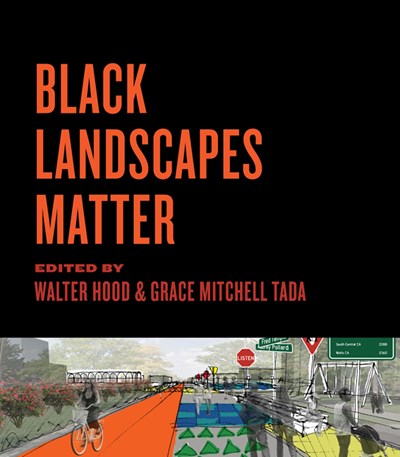
Black Landscapes Matter
edited by Walter Hood & Grace Mitchell Tada
$43.50The question "Do black landscapes matter?" cuts deep to the core of American history. From the plantations of slavery to contemporary segregated cities, from freedman villages to northern migrations for freedom, the nation’s landscape bears the detritus of diverse origins. Black landscapes matter because they tell the truth. In this vital new collection, acclaimed landscape designer and public artist Walter Hood assembles a group of notable landscape architecture and planning professionals and scholars to probe how race, memory, and meaning intersect in the American landscape.
Essayists examine a variety of U.S. places—ranging from New Orleans and Charlotte to Milwaukee and Detroit—exposing racism endemic in the built environment and acknowledging the widespread erasure of black geographies and cultural landscapes. Through a combination of case studies, critiques, and calls to action, contributors reveal the deficient, normative portrayals of landscape that affect communities of color and question how public design and preservation efforts can support people in these places. In a culture in which historical omissions and specious narratives routinely provoke disinvestment in minority communities, creative solutions by designers, planners, artists, and residents are necessary to activate them in novel ways. Black people have built and shaped the American landscape in ways that can never be fully known. Black Landscapes Matter is a timely and necessary reminder that without recognizing and reconciling these histories and spaces, America’s past and future cannot be understood.
-
Where Is Africa: Volume 1
![Where Is Africa: Volume 1]()
Where Is Africa: Volume 1
edited by Anita N. Bateman and Emanuel Admassu
$35.00A multidisciplinary illustrated reader unpacking imperialist representations of Africa by promoting dialogue, memory and everyday practice, and reimagining cultural institutions and the arts—from museums to academia, from architecture to art.
In 2017, curator and art historian Anita N. Bateman and architect and professor Emanuel Admassu initiated research on the traditional positioning and mispositioning of the arts across the African continent. Where Is Africa has been an extended set of exchanges with contemporary artists, curators, designers and academics who are actively engaged in representing the continent—both within and outside its geographic boundaries. By examining artist collectives, new currents in art history and the rise of contemporary art festivals in and about Africa from the past 10 years, the project unpacks the imperialist foundations of cultural institutions and their anthropological fascination with African objects, people and places.
The interviews in Where Is Africa examine African and African-diasporic identities and spaces through questions of positionality in relation to specific disciplinary, cultural and political contexts. The texts address Afro-diasporic aesthetic practices and the curatorial, museological and artistic matrices that confront epistemologies of dominance and exclusion. The commissioned essays and images offer concise methodologies that expand or complicate issues addressed by the interviewees.
Where Is Africa is a conceptual project that accompanies a conceptual place, driven by the desire to dislodge Africa from categorical fixity and the representational logics of nation-states. Africa can never be fully enclosed by the residue of colonial violence or the totalitarian gaze of neoliberalism; instead, it creates infinite malleability, where place and concept are untethered from each other.
Contributors include: Mikael Awake, Salome Asega, Tau Tavengwa, Anthony Bogues, Jay Simple, Eric Gottesman, Rebecca Corey, Aida Mulkozi, Rakeb Sile, Mesai Haileleul, Mpho Matsipa, Naiama Safia Sandy, Adama Delphine Fawundu, Rehema Chachage, Robel Temesgen, Valerie Amani, Meskerem Assegued, Elias Sime, Olalekan Jeyifous, Amanda Williams, Germane Barnes and Mario Gooden.
-
Power Button Tote Bag (Black)
![Power Button Tote Bag (Black)]()
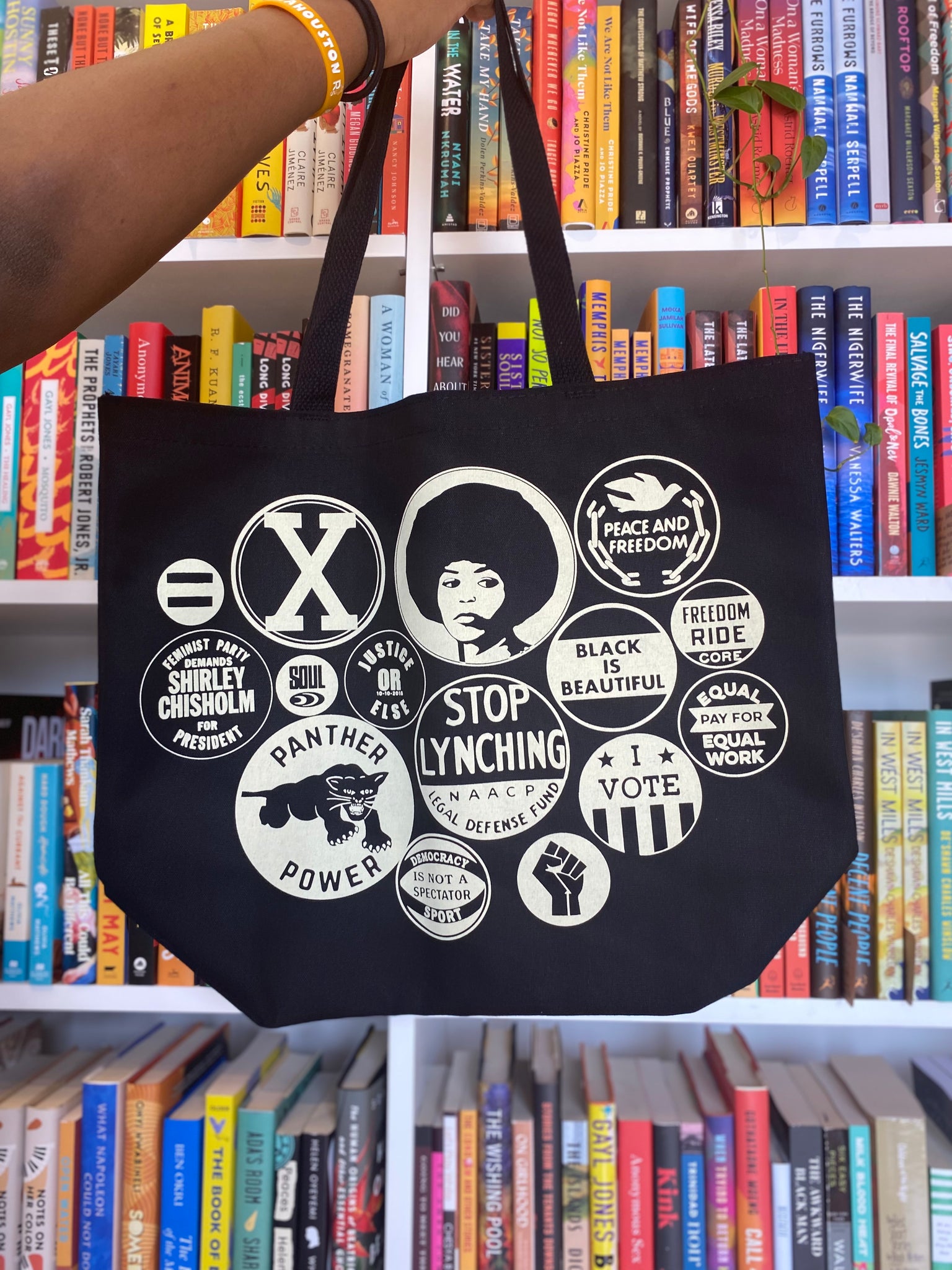
Power Button Tote Bag (Black)
$45.00Tote bag inspired by campaign and activist buttons in the archives of the National Museum of African American Culture and History. - 18" x 15" x 7" - 25" handle drop - Inside pocket - Heavyweight 16oz. Natural 100% Cotton Canvas - Made and printed in the USA - Designed in Washington DC - Limited edition


Stay Informed. We're building a community committed to celebrating Black authors + artisans. Subscribe to keep up with all things Kindred Stories.