
Search results: 147 results for “by Dr. Martin Luther King, Jr.”
Not finding what you're looking for? Check out our shop on bookshop.org to order and still support us ♥
147 results
-
A Dream Deferred: Jesse Jackson and the Fight for Black Political Power
![A Dream Deferred: Jesse Jackson and the Fight for Black Political Power cover image]()

A Dream Deferred: Jesse Jackson and the Fight for Black Political Power
Abby Phillip
from $19.99*Paperback Release Date - 10/27/2026*
CNN’s Abby Phillip, a triumphant new look at Jesse Jackson’s presidential campaigns of the 1980s and how they changed Black political power
“A joyful, rich, must-read biography of a politician whose flaws and gifts were in constant, intense competition.” ―Jake Tapper
Jesse Jackson, the civil rights leader, activist, raconteur, and political candidate, finally gets a book worthy of his stature courtesy of CNN anchor Abby Phillip.
Focusing on his presidential runs in 1984 and, especially, 1988, Phillip highlights how Jackson built an unlikely coalition that showed how Black political power could be consolidated. His experience working under Martin Luther King; his organizing the SLCC’s Operation Breadbasket in Chicago and beyond; and his roots in the deep South combined into two astonishingly impactful presidential campaigns. Appealing to the working people of urban enclaves like that of Chicago, young people on college campuses, and Black people across the South, he created the modern Democratic coalition―one that has been used by all major Democrats seeking national success from Obama to Biden to Harris.
With her expert reporting, natural storytelling skills, and a story so full of humanity, politics, and hope, Abby Phillip has written a rousing popular history that sheds new light on an American icon.
-
We Want to Do More Than Survive: Abolitionist Teaching and the Pursuit of Educational Freedom by Bettina L. Love
![We Want to Do More Than Survive: Abolitionist Teaching and the Pursuit of Educational Freedom by Bettina L. Love]()
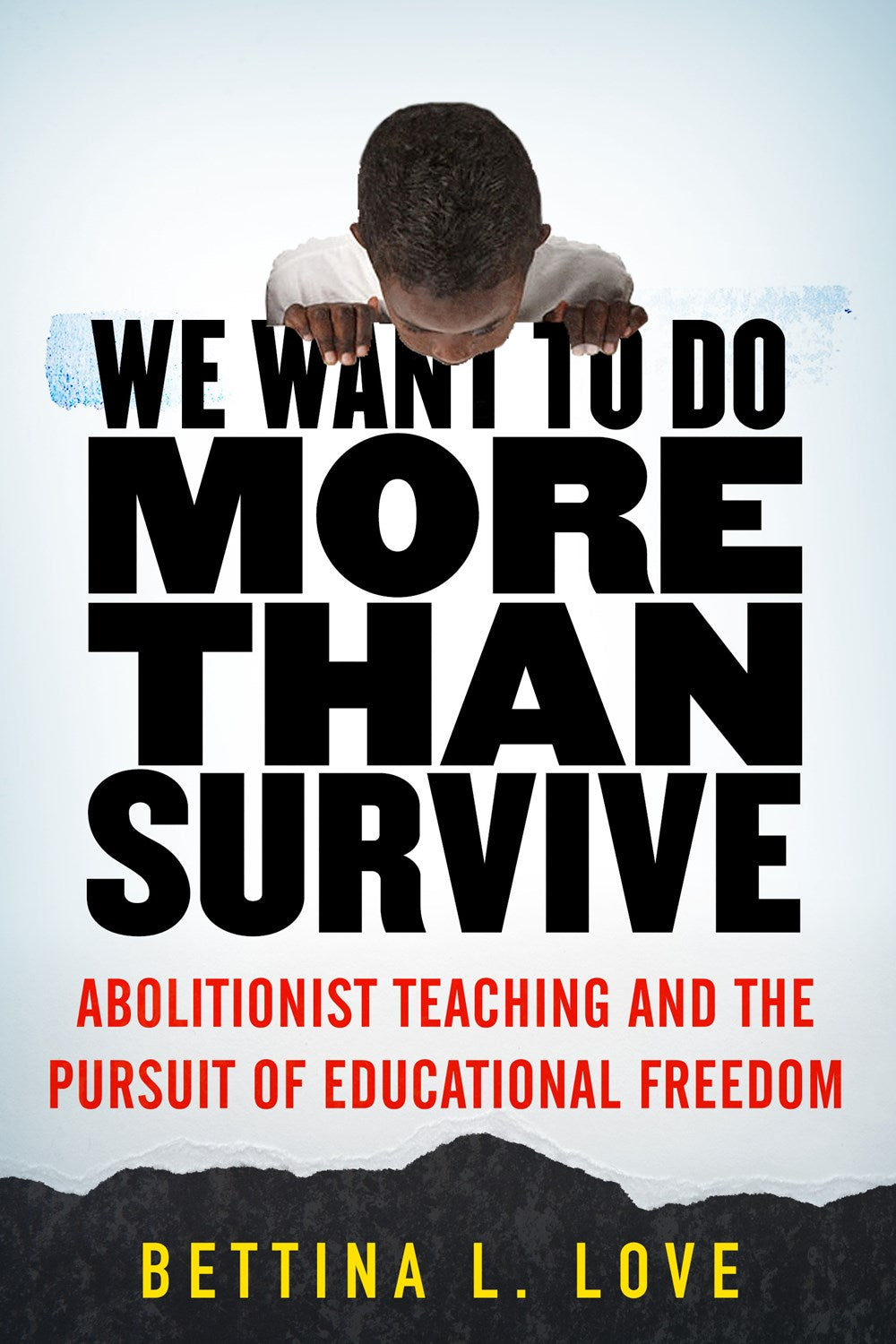
We Want to Do More Than Survive: Abolitionist Teaching and the Pursuit of Educational Freedom by Bettina L. Love
$17.95Drawing on personal stories, research, and historical events, an esteemed educator offers a vision of educational justice inspired by the rebellious spirit and methods of abolitionists.
Drawing on her life’s work of teaching and researching in urban schools, Bettina Love persuasively argues that educators must teach students about racial violence, oppression, and how to make sustainable change in their communities through radical civic initiatives and movements. She argues that the US educational system is maintained by and profits from the suffering of children of color. Instead of trying to repair a flawed system, educational reformers offer survival tactics in the forms of test-taking skills, acronyms, grit labs, and character education, which Love calls the educational survival complex.
To dismantle the educational survival complex and to achieve educational freedom—not merely reform—teachers, parents, and community leaders must approach education with the imagination, determination, boldness, and urgency of an abolitionist. Following in the tradition of activists like Ella Baker, Bayard Rustin, and Fannie Lou Hamer, We Want to Do More Than Survive introduces an alternative to traditional modes of educational reform and expands our ideas of civic engagement and intersectional justice. -
The South by Adolph L. Reed
![The South by Adolph L. Reed]()
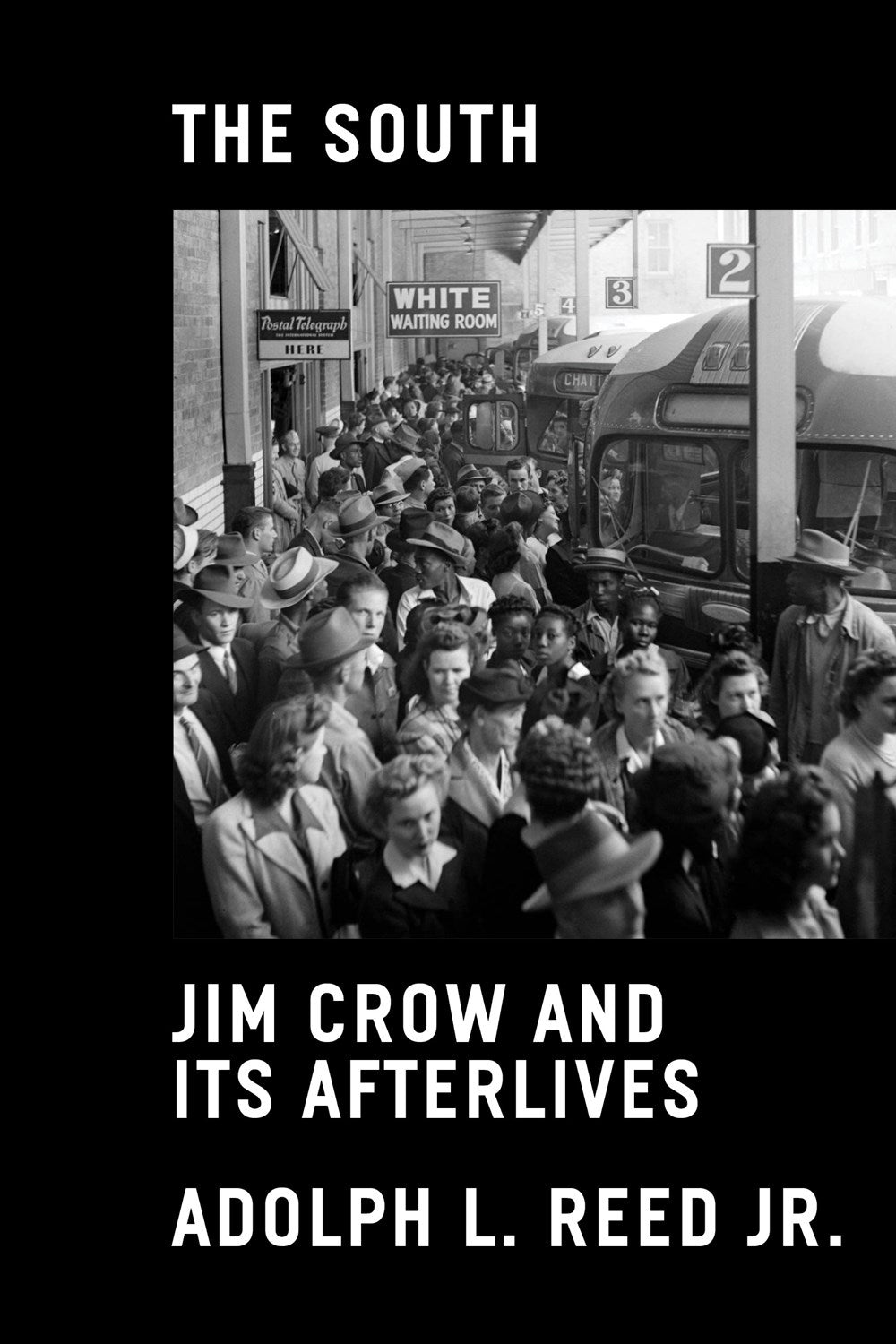
The South by Adolph L. Reed
$24.95A historical account of growing up Black in the Jim Crow South
The last generation of Americans with a living memory of Jim Crow will soon disappear. They leave behind a collective memory of segregation shaped increasingly by its horrors and heroic defeat but not a nuanced understanding of everyday life in Jim Crow America. In The South, Adolph L. Reed Jr. — New Orleanian, political scientist, and according to Cornel West, “the greatest democratic theorist of his generation” — takes up the urgent task of recounting the granular realities of life in the last decades of the Jim Crow South.
Reed illuminates the multifaceted structures of the segregationist order. Through his personal history and political acumen, we see America’s apartheid system from the ground up, not just its legal framework or systems of power, but the way these systems structured the day-to-day interactions, lives, and ambitions of ordinary working people.
The South unravels the personal and political dimensions of the Jim Crow order, revealing the sources and objectives of this unstable regime, its contradictions and precarity, and the social order that would replace it. -
Punished for Dreaming: How School Reform Harms Black Children and How We Heal
![Punished for Dreaming: How School Reform Harms Black Children and How We Heal cover image]()

Punished for Dreaming: How School Reform Harms Black Children and How We Heal
Bettina L. Love
$20.00In the tradition of Michelle Alexander, an unflinching reckoning with the impact of 40 years of racist public school policy on generations of Black lives
In Punished for Dreaming, Dr. Bettina Love argues that Reagan’s presidency ushered in a War on Black Children. New policies punished schools with policing, closure, and loss of funding in the name of reform, as white-savior egalitarian efforts increasingly allowed private interests to infiltrate the system. These changes implicated children of color, and Black children in particular, as low performing, making it all too easy to turn a blind eye to their disproportionate conviction and incarceration. This book examines how decades of racist education policies have paved the way for the current structural overhaul of American schools. In this prequel to Michelle Alexander’s The New Jim Crow, Dr. Love serves up a blistering account of four decades of educational reform through the lens of the people who lived it. Then with input from leading U.S. economists, Dr. Love offers a road map for repair, arguing for reparations with transformation for all children at its core.
-
My Grandmother's Hands: Racialized Trauma and the Pathway to Mending Our Hearts and Bodies
![My Grandmother's Hands: Racialized Trauma and the Pathway to Mending Our Hearts and Bodies]()
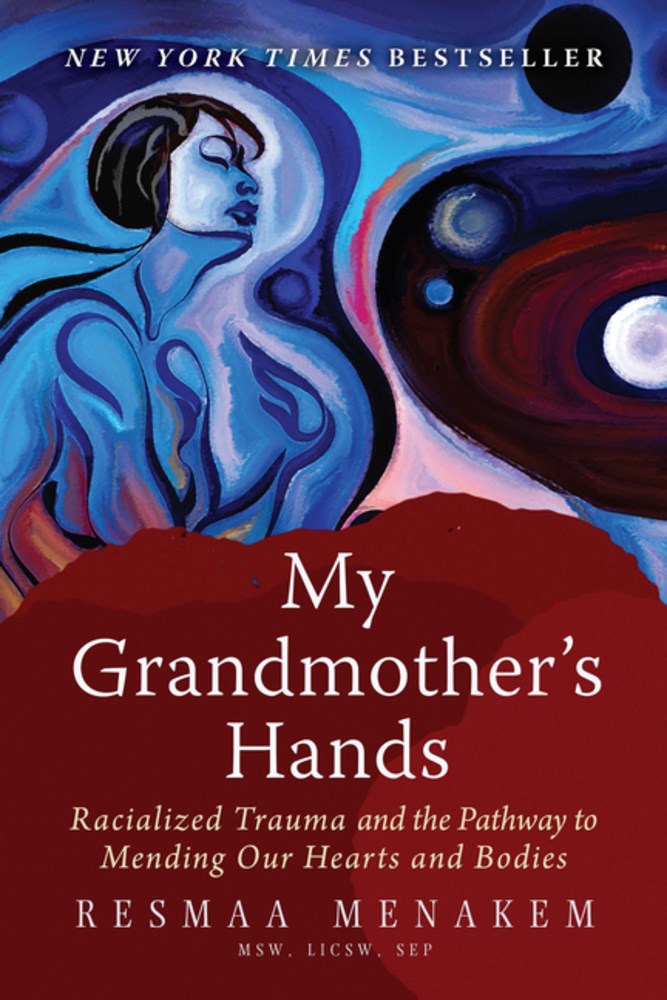
My Grandmother's Hands: Racialized Trauma and the Pathway to Mending Our Hearts and Bodies
by Resmaa Menakem
$17.95In this groundbreaking book, therapist Resmaa Menakem examines the damage caused by racism in America from the perspective of trauma and body-centered psychology.
The body is where our instincts reside and where we fight, flee, or freeze, and it endures the trauma inflicted by the ills that plague society. Menakem argues this destruction will continue until Americans learn to heal the generational anguish of white supremacy, which is deeply embedded in all our bodies. Our collective agony doesn't just affect African Americans. White Americans suffer their own secondary trauma as well. So do blue Americans—our police.
My Grandmother's Hands is a call to action for all of us to recognize that racism is not only about the head, but about the body, and introduces an alternative view of what we can do to grow beyond our entrenched racialized divide.
- Paves the way for a new, body-centered understanding of white supremacy—how it is literally in our blood and our nervous system.
- Offers a step-by-step healing process based on the latest neuroscience and somatic healing methods, in addition to incisive social commentary.
-
W.E.B. Du Bois: Black Reconstruction (LOA #350): An Essay Toward a History of the Part whichBlack Folk Played in the Attempt to ReconstructDemocracy in America, 1860–1880 (Library of America, 350)
![W.E.B. Du Bois: Black Reconstruction (LOA #350): An Essay Toward a History of the Part whichBlack Folk Played in the Attempt to ReconstructDemocracy in America, 1860–1880 (Library of America, 350) cover image]()

W.E.B. Du Bois: Black Reconstruction (LOA #350): An Essay Toward a History of the Part whichBlack Folk Played in the Attempt to ReconstructDemocracy in America, 1860–1880 (Library of America, 350)
W.E.B. Du Bois
$45.00A definitive edition of the landmark book that forever changed our understanding of the Civil War’s aftermath and the legacy of racism in America
Upon publication in 1935, W.E.B. Du Bois’s now classic Black Reconstruction offered a revelatory new assessment of Reconstruction—and of American democracy itself. One of the towering African American thinkers and activists of the twentieth century, Du Bois brought all his intellectual powers to bear on the nation’s post-Civil War era of political reorganization, a time when African American progress was met with a white supremacist backlash and ultimately yielded to the consolidation of the unjust social order of Jim Crow.
Black Reconstruction is a pioneering work of revisionist scholarship that, in the wake of the censorship of Du Bois’s characterization of Reconstruction by the Encyclopedia Britannica, was written to debunk influential historians whose racist ideas and emphases had disfigured the historical record. “The chief witness in Reconstruction, the emancipated slave himself,” Du Bois argued, “has been almost barred from court. His written Reconstruction record has been largely destroyed and nearly always neglected.” In setting the record straight Du Bois produced what co-editor Eric Foner has called an “indispensable book,” a magisterial work of detached scholarship that is also imbued with passionate outrage.
Presented in a handsome and authoritative hardcover edition prepared by Foner and co-editor Henry Louis Gates, Jr., Black Reconstruction is joined here for the first time with important writings that trace Du Bois’s thinking throughout his career about Reconstruction and its centrality in understanding the tortured course of democracy in America.
-
Want to Start A Revolution? Radical Women in the Black Freedom Struggle
![Want to Start A Revolution? Radical Women in the Black Freedom Struggle]()
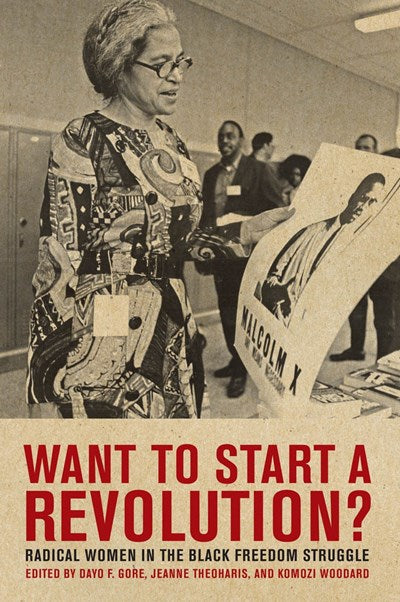
Want to Start A Revolution? Radical Women in the Black Freedom Struggle
by Dayo F. Gore, Jeanne Theoharis, and Komozi Woodard
$30.00*This item will ship or be ready for pick up in 7-10 business days
Uncovers the often overlooked stories of the women who shaped the black freedom struggle
The story of the black freedom struggle in America has been overwhelmingly male-centric, starring leaders like Martin Luther King, Jr., Malcolm X, and Huey Newton. With few exceptions, black women have been perceived as supporting actresses; as behind-the-scenes or peripheral activists, or rank and file party members. But what about Vicki Garvin, a Brooklyn-born activist who became a leader of the National Negro Labor Council and guide to Malcolm X on his travels through Africa? What about Shirley Chisholm, the first black Congresswoman?
From Rosa Parks and Esther Cooper Jackson, to Shirley Graham DuBois and Assata Shakur, a host of women demonstrated a lifelong commitment to radical change, embracing multiple roles to sustain the movement, founding numerous groups and mentoring younger activists. Helping to create the groundwork and continuity for the movement by operating as local organizers, international mobilizers, and charismatic leaders, the stories of the women profiled in Want to Start a Revolution? help shatter the pervasive and imbalanced image of women on the sidelines of the black freedom struggle.
Contributors: Margo Natalie Crawford, Prudence Cumberbatch, Johanna Fernández, Diane C. Fujino, Dayo F. Gore, Joshua Guild, Gerald Horne, Ericka Huggins, Angela D. LeBlanc-Ernest, Joy James, Erik McDuffie, Premilla Nadasen, Sherie M. Randolph, James Smethurst, Margaret Stevens, and Jeanne Theoharis. -
The Afterlife of Malcolm X: An Outcast Turned Icon's Enduring Impact on America
![The Afterlife of Malcolm X: An Outcast Turned Icon's Enduring Impact on America cover image]()

The Afterlife of Malcolm X: An Outcast Turned Icon's Enduring Impact on America
Mark Whitaker
from $21.00Published to coincide with the hundredth anniversary of his birth, the first major study of Malcolm X’s influence in the sixty years since his assassination, exploring his enduring impact on culture, politics, and civil rights.
Malcolm X has become as much of an American icon as Abraham Lincoln, John F. Kennedy, or Martin Luther King. But when he was murdered in 1965, he was still seen as a dangerous outsider. White America found him alienating, mainstream African Americans found him divisive, and even his admirers found him bravely radical. Although Ossie Davis famously eulogized Malcolm X as “our own Black shining prince,” he never received the mainstream acceptance toward which he seemed to be striving in his final year. It is more in death than his life that Malcolm’s influence has blossomed and come to leave a deep imprint on the cultural landscape of America.
With impeccable research and original reporting, Mark Whitaker tells the story of Malcolm X’s far-reaching posthumous legacy. It stretches from founders of the Black Power Movement such as Stokely Carmichael and Huey Newton to hip-hop pioneers such as Public Enemy and Tupac Shakur. Leaders of the Black Arts and Free Jazz movements from Amiri Baraka to Maya Angelou, August Wilson, and John Coltrane credited their political awakening to Malcolm, as did some of the most influential athletes of our time, from Muhammad Ali to Kareem Abdul-Jabbar and beyond. Spike’s movie biopic and the Black Lives Matter movement reintroduced Malcolm to subsequent generations. Across the political spectrum, he has been cited as a formative influence by both Barack Obama—who venerated Malcolm’s “unadorned insistence on respect”—and Clarence Thomas, who was drawn to Malcolm’s messages of self-improvement and economic self-help.
In compelling new detail, Whitaker also retraces the long road to exoneration for two men wrongfully convicted of Malcolm’s murder, making The Afterlife of Malcolm X essential reading for anyone interested in true crime, American politics, culture, and history.
-
The Man Who Cried I Am: A Novel
![The Man Who Cried I Am: A Novel]()
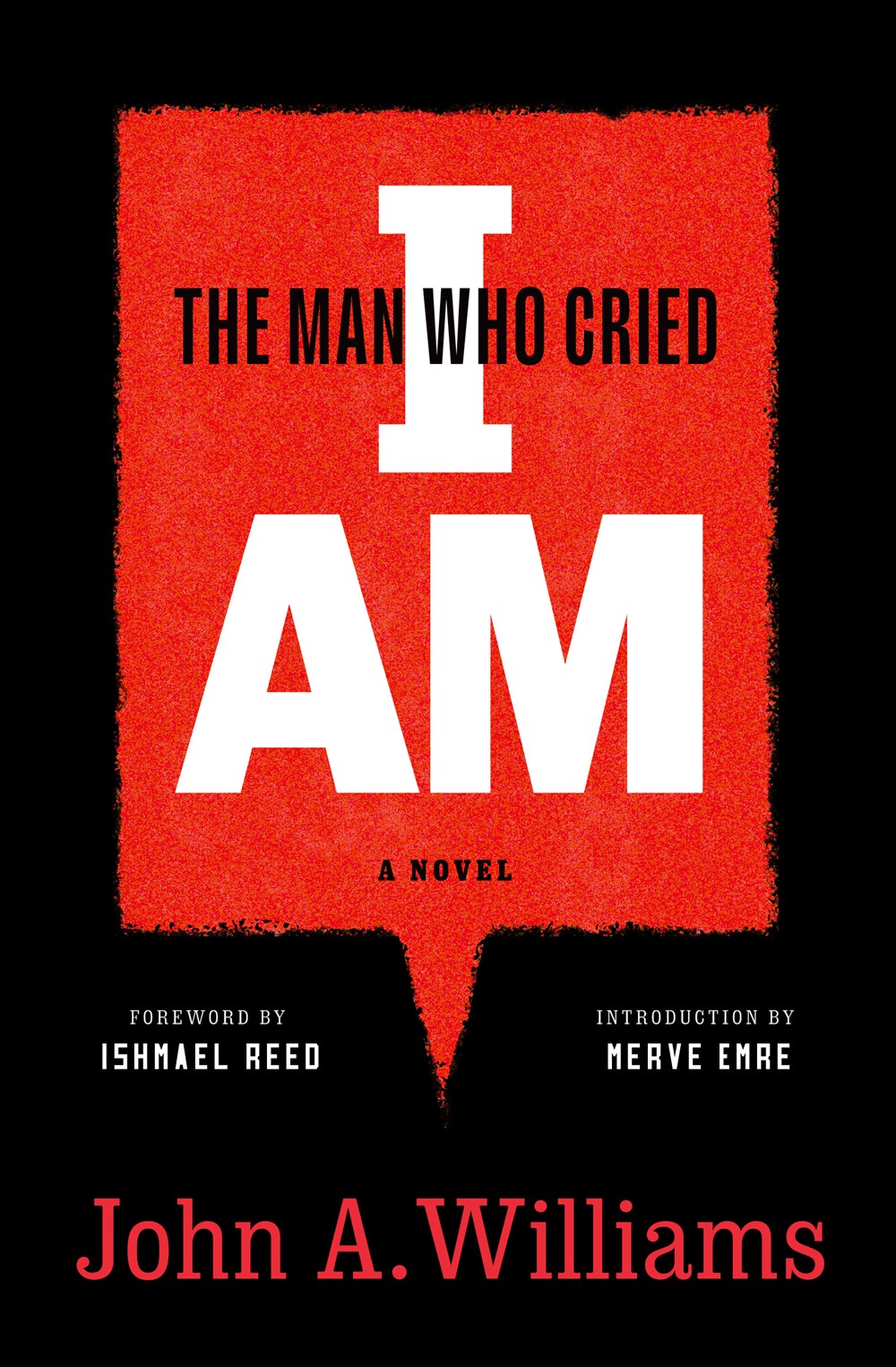
The Man Who Cried I Am: A Novel
by John A. Williams
$19.99Rediscover the sensational 1967 literary thriller that captures the bitter struggles of postwar Black intellectuals and artists
With a foreword by Ishmael Reed and a new introduction by Merve Emre about how this explosive novel laid bare America's racial fault lines
Max Reddick, a novelist, journalist, and presidential speechwriter, has spent his career struggling against the riptide of race in America. Now terminally ill, he has nothing left to lose. An expat for many years, Max returns to Europe one last time to settle an old debt with his estranged Dutch wife, Margrit, and to attend the Paris funeral of his friend, rival, and mentor Harry Ames, a character loosely modelled on Richard Wright.
In Amsterdam, among Harry’s papers, Max uncovers explosive secret government documents outlining “King Alfred,” a plan to be implemented in the event of widespread racial unrest and aiming “to terminate, once and for all, the Minority threat to the whole of the American society.” Realizing that Harry has been assassinated, Max must risk everything to get the documents to the one man who can help.
Greeted as a masterpiece when it was published in 1967, The Man Who Cried I Am stakes out a range of experience rarely seen in American fiction: from the life of a Black GI to the ferment of postcolonial Africa to an insider’s view of Washington politics in the era of segregation and the Civil Rights Movement, including fictionalized portraits of Martin Luther King, Jr., and Malcolm X. John A. Williams and his lost classic are overdue for rediscovery.
Few novels have so deliberately blurred the boundaries between fiction and reality as The Man Who Cried I Am (1967), and many of its early readers assumed the King Alfred plan was real. In her introduction, Merve Emre examines the gonzo marketing plan behind the novel that fueled this confusion and prompted an FBI investigation. This deluxe paperback also includes a new foreword by novelist Ishmael Reed. -
We Exist in the Whisper: Huelga School Verses
![We Exist in the Whisper: Huelga School Verses cover image]()

We Exist in the Whisper: Huelga School Verses
$17.95"One day all these classrooms / will no longer hold any of us. / Leave no evidence we were here. / We exist in the whisper...." Lupe Mendez's innovative new collection captures a unique time in Houston, Texas, "a sliver of a moment for Mexican-American and Mexican communities in the early 1970s," that explores Houston ISD's racist plan to integrate schools by sending Mexican-American children--labeled as white--to predominantly African-American schools, thereby satisfying federal desegregation laws. Incensed that its children would have to travel to schools that were no better than the ones they could walk to, the Chicano community resisted by instituting a walkout, or huelga, and creating its own schools in churches, homes and neighborhood centers. Weaving poetry and history, the book contains "found" poems created from newspaper articles about the strike; oral history interviews with teachers, principals and students; notes from visits the author made to the sites where classes were held more than 50 years ago; docupoems created from official Huelga School papers; and historical documents such as photographs, charts, fliers and letters. In his illuminating notes about the book, Mendez describes the methodology for creating this collection and includes a list of best practices for the "poethnographer." His research revealed the racism that existed in this era, perpetuated by the majority white population and between brown and black populations forced to compete for every resource. Ultimately, Mendez asserts the Huelga School strike had a critical impact on Houston, both in the development of Mexican-American leaders who got their start in these "freedom schools" and the nascent collaborations between diverse communities. This creative, thought-provoking volume is a must-read for anyone interested in education, history and Mexican Americans' fight for equality.
-
The Crooked Places Made Straight: Reflections on the Moral Meaning of America
![The Crooked Places Made Straight: Reflections on the Moral Meaning of America cover image]()

The Crooked Places Made Straight: Reflections on the Moral Meaning of America
$31.00Named a Most Anticipated Book of 2026 by The New York Times
From Senator Reverend Raphael G. Warnock, a sermon in the public square on the issues that plague us most
Senator Reverend Raphael G. Warnock is a transformational voice in Congress and the pastor of Martin Luther King, Jr.’s Ebenezer Baptist Church, and for the semiquincentennial of America, he exhorts us to reach for the highest and noblest aspects of our national character. Senator Warnock argues that we suffer not from a paucity of resources but from a poverty of moral imagination.
His sermon on the book of Isaiah draws from ideals resonant in his own faith and all the great faiths and other moral traditions, offering a bold vision of how to live and relate to one another in the land. A moral topography, he calls it, a geopolitics that centers love and justice, or as Dr. King would so often say, the beloved community. The Crooked Places Made Straight examines six crises at the center of American life: voting rights and voter suppression, gun violence, mass incarceration, the persistence of poverty, dark money in politics, and the climate emergency.
This is not a naive faith, either. As Senator Warnock writes: Isaiah is no stranger to frustration with institutional leadership. He knows well the perils of public corruption, sophisticated legalized bribery, and a political class more interested in preserving its own power than in serving the people. . . . He’s fed up with political leaders who are focused on their own gain at the expense of the people. “Your princes are rebels and companions of thieves,” he says.
For Senator Warnock, democracy is the political enactment of a spiritual idea. A vote is a kind of prayer. The Crooked Places Made Straight is his inspiring vision for a more just and equitable America where communities thrive with hope and possibility and every child has a chance.
-
The Negro in the Making of America by Benjamin Quarles
![The Negro in the Making of America by Benjamin Quarles]()
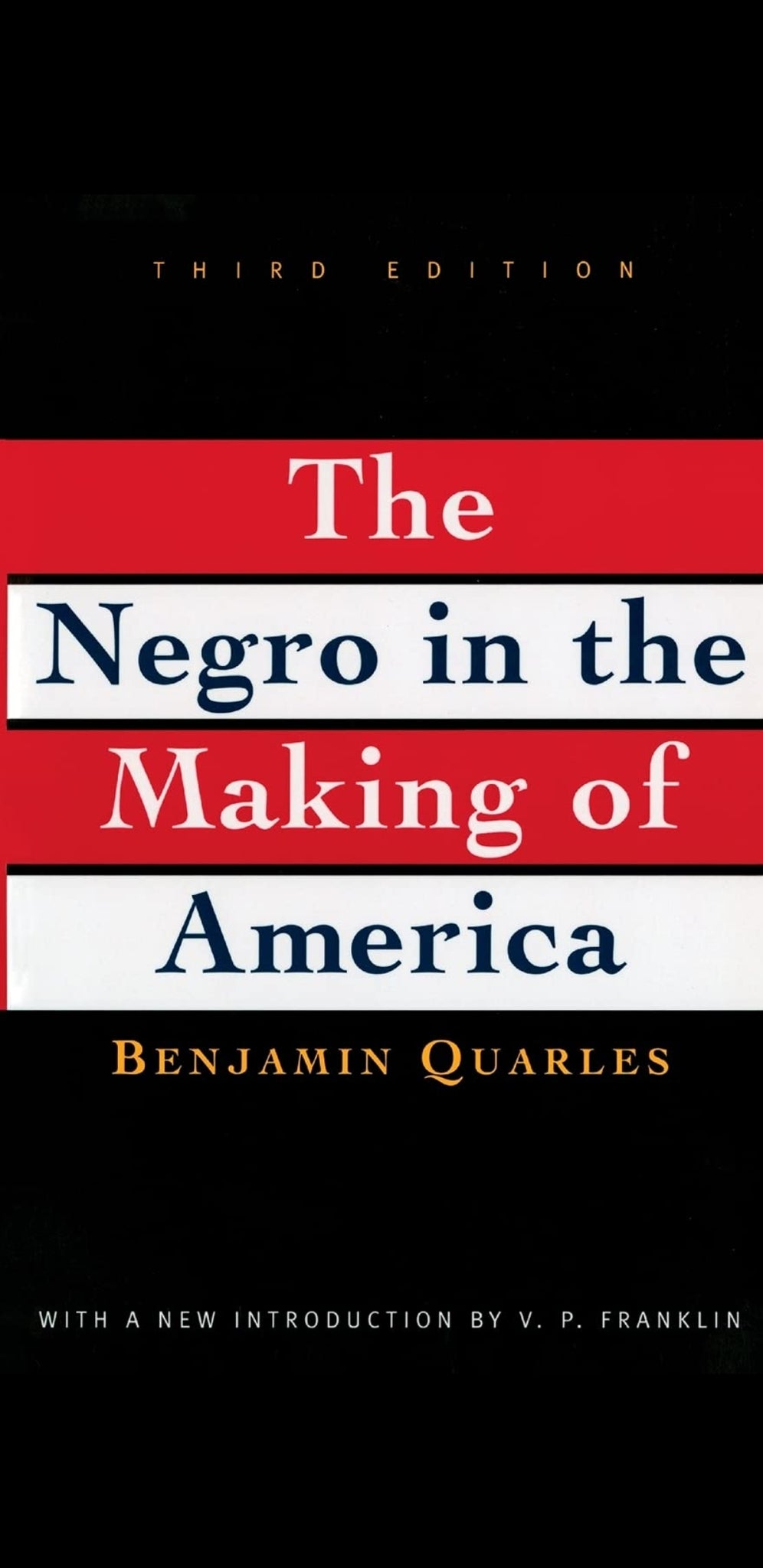
The Negro in the Making of America by Benjamin Quarles
$24.99The bestselling, definitive study of African Americans throughout American history, now with a new introduction by noted scholar V. P. Franklin.
In The Negro in the Making of America, eminent historian Benjamin Quarles provides one of the most comprehensive and readable accounts ever gathered in one volume of the role that African Americans have played in shaping the destiny of America. Starting with the arrival of the slave ships in the early 1600s and moving through the Colonial period, the Revolutionary and Civil Wars, and into the last half of the twentieth century, Quarles chronicles the sweep of events that have brought blacks and their struggle for social and economic equality to the forefront of American life.
Through compelling portraits of central political, historical, and artistic figures such as Nat Turner, Frederick Douglass, Duke Ellington, Malcolm X, and the Reverend Martin Luther King, Jr., Quarles illuminates the African American contributions that have enriched the cultural heritage of America. This classic history also covers black participation in politics, the rise of a black business class, and the forms of discrimination experienced by blacks in housing, employment, and the media.
Quarles's groundbreaking work not only surveys the role of black Americans as they engaged in the dual, simultaneous processes of assimilating into and transforming the culture of their country, but also, in a portrait of the white response to blacks, holds a mirror up to the deeper moral complexion of our nation's history. The restoration of this history holds a redemptive quality—one that can be used, in the author's words, as a "vehicle for present enlightenment, guidance, and enrichment."


Stay Informed. We're building a community committed to celebrating Black authors + artisans. Subscribe to keep up with all things Kindred Stories.