
Search results: 55 results for “langston hughes”
Not finding what you're looking for? Check out our shop on bookshop.org to order and still support us ♥
55 results
-
Blues Poems (Everyman's Library Pocket Poets Series)
![Blues Poems (Everyman's Library Pocket Poets Series) cover image]()

Blues Poems (Everyman's Library Pocket Poets Series)
$20.00In this gorgeous hardcover anthology—the first devoted exclusively to blues poems—a wide array of poets pay tribute to the form of the blues and offer testimony to its lasting power. Edited by award–winning poet Kevin Young.
Born in African American work songs, field hollers, and the powerful legacy of the spirituals, the blues traveled the country from the Mississippi delta to “Sweet Home Chicago,” forming the backbone of American music.
The blues have left an indelible mark on the work of a diverse range of poets: from “The Weary Blues” by Langston Hughes and “Funeral Blues” by W. H. Auden, to “Blues on Yellow” by Marilyn Chin and “Reservation Blues” by Sherman Alexie. Here are blues-influenced and blues-inflected poems from, among others, Gwendolyn Brooks, Allen Ginsberg, June Jordan, Richard Wright, Nikki Giovanni, Charles Wright, Yusef Komunyakaa, and Cornelius Eady. And here, too, are classic song lyrics—poems in their own right—from Bessie Smith, Robert Johnson, Ma Rainey, and Muddy Waters.
The rich emotional palette of the blues is fully represented here in verse that pays tribute to the heart and humor of the music, and in poems that swing with its history and hard-bitten hope.
Everyman's Library pursues the highest production standards, printing on acid-free cream-colored paper, with full-cloth cases with two-color foil stamping, decorative endpapers, silk ribbon markers, European-style half-round spines, and a full-color illustrated jacket.
-
The New Negro: A History in Documents, 1887–1937
![The New Negro: A History in Documents, 1887–1937 cover image]()

The New Negro: A History in Documents, 1887–1937
Martha H. Patterson
$39.95An authoritative anthology tracing the history of one of the most important concepts Black people drew on to challenge the brutal, totalizing system of Jim Crow racism
This book brings together a wealth of readings on the metaphor of the “New Negro,” charting how generations of thinkers debated its meaning and seized on its potency to stake out an astonishingly broad and sometimes contradictory range of ideological positions. It features dozens of newly unearthed pieces by major figures such as W. E. B. Du Bois, Charles S. Johnson, and Drusilla Dunjee Houston as well as writings from Cuba, the US Virgin Islands, Dominica, France, Sierra Leone, South Africa, colonial Zimbabwe, and the United States. Demonstrating how this evocative and supremely protean concept predates its popularization in Alain Locke’s 1925 anthology of the same name, The New Negro takes readers from its beginnings as a response to Henry Grady’s famous “New South” address in 1886 through the Harlem Renaissance and the New Deal.
Opening a fascinating window into a largely unexplored chapter in African American, Afro-Latin American, and African intellectual history, this groundbreaking anthology includes writings by Gwendolyn Bennett, Marita Bonner, John Edward Bruce (“Bruce Grit”), Nannie Helen Burroughs, Charles W. Chesnutt, James Bertram Clarke (“José Clarana,” “Jaime Gil”), Anna Julia Cooper, Alexander Crummell, Countee Cullen, Alice Dunbar-Nelson, Marcus Garvey, Hubert Harrison, Langston Hughes, Zora Neale Hurston, D. Hamilton Jackson, Fenton Johnson, Claude McKay, Oscar Micheaux, Jeanne “Jane” Nardal, Jean Toomer, Gustavo Urrutia, Booker T. Washington, Dorothy West, Ruth Whitehead Whaley, Fannie Barrier Williams, Carter G. Woodson, and a host of others.
-
Black-Owned: The Revolutionary Life of the Black Bookstore
![Black-Owned: The Revolutionary Life of the Black Bookstore cover image]()

Black-Owned: The Revolutionary Life of the Black Bookstore
Char Adams
$32.00Longtime NBC News reporter Char Adams writes a deeply compelling and rigorously reported history of Black political movements told through the lens of Black-owned bookstores, which have been centers for organizing from abolition to the Civil Rights Movement to Black Lives Matter.
In Black-Owned, Char Adams celebrates the living history of Black bookstores. Packed with stories of activism, espionage, violence, community, and perseverance, Black-Owned starts with the first Black-owned bookstore, which an abolitionist opened in New York in 1834, and after the bookshop’s violent demise, Black book-lovers carried on its cause. In the twentieth century, civil rights and Black Power activists started a Black bookstore boom nationwide. Malcolm X gave speeches in front of the National Memorial African Book Store in Harlem—a place dubbed “Speakers’ Corner”—and later, Black bookstores became targets of FBI agents, police, and racist vigilantes. Still, stores continued to fuel Black political movements.
Amid these struggles, bookshops were also places of celebration: Eartha Kitt and Langston Hughes held autograph parties at their local Black-owned bookstores. Maya Angelou became the face of National Black Bookstore Week. And today a new generation of Black activists is joining the radical bookstore tradition, with rapper Noname opening her Radical Hood Library in Los Angeles and several stores making national headlines when they were overwhelmed with demand in the Black Lives Matter era. As Adams makes clear, in an time of increasing repression, Black bookstores are needed now more than ever.
Full of vibrant characters and written with cinematic flair, Black-Owned is an enlightening story of community, resistance, and joy.
-
With Love from Harlem: A Novel of Hazel Scott
![With Love from Harlem: A Novel of Hazel Scott cover image]()

With Love from Harlem: A Novel of Hazel Scott
$19.99From The Queen of Sugar Hill author ReShonda Tate—a new novel inspired by beloved Harlem jazz performer Hazel Scott and the equal parts exhilarating and tumultuous relationship that changed the course of her life.
Harlem, 1943. At just twenty-three, Hazel Scott is a woman on fire. A jazz prodigy, a glamorous film star, and a fierce advocate for civil rights, she’s breaking barriers and refusing to play by the rules. Then Adam Clayton Powell Jr. walks into her life. Harlem’s most electrifying preacher-turned-politician, Adam is as bold and unyielding as Hazel—charismatic, powerful…and married.
This kicks off a decades-long relationship that propels them into the center of a political and cultural revolution. As Hazel’s star rises, Adam takes the national stage in Congress and the couple becomes the toast of the country. But when their affair turns into a marriage, behind the glamorous façade is a battlefield of ego, ambition, and sacrifice. Forced to choose between her music and her family, Hazel must decide what she’s willing to lose—and what she refuses to give up.
Set against the pulsing backdrop of twentieth-century Harlem and featuring icons like Billie Holiday, Langston Hughes, and James Baldwin, With Love from Harlem is a sweeping, emotionally charged romantic drama, rich with historical detail. ReShonda Tate delivers a powerful portrait of love, art, and the price of being unforgettable.
-
Welcome 2 Houston: Hip Hop Heritage in Hustle Town
![Welcome 2 Houston: Hip Hop Heritage in Hustle Town]()
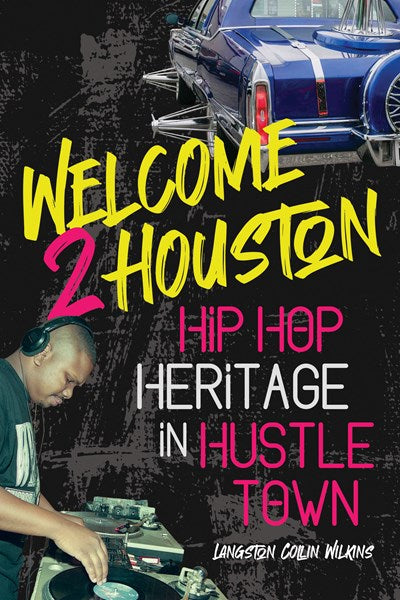
Welcome 2 Houston: Hip Hop Heritage in Hustle Town
by Langston Collin Wilkins
$24.95Langston Collin Wilkins returns to the city where he grew up to illuminate the complex relationship between place, identity, and music in Houston’s hip hop culture. Interviews with local rap artists, producers, and managers inform an exploration of how artists, audiences, music, and place interact to create a heritage that musicians negotiate in a variety of ways. Street-based musicians, avant-garde underground rappers, and Christian artists offer candid views of the scene while Wilkins delves into related aspects like slab, the area’s hip hop-related car culture. What emerges is a portrait of a dynamic reciprocal process where an artist, having identified with and embodied a social space, reproduces that space in a performance even as the performance reconstructs the social space.
A vivid journey through a southern hip hop bastion, Welcome 2 Houston offers readers an inside look at a unique musical culture.
-
Zora Neale Hurston: A Life in Letters
![Zora Neale Hurston: A Life in Letters cover image]()

Zora Neale Hurston: A Life in Letters
Carla Kaplan
$21.00“ I mean to live and die by my own mind,” Zora Neale Hurston told the writer Countee Cullen. Arriving in Harlem in 1925 with little more than a dollar to her name, Hurston rose to become one of the central figures of the Harlem Renaissance, only to die in obscurity. Not until the 1970s was she rediscovered by Alice Walker and other admirers. Although Hurston has entered the pantheon as one of the most influential American writers of the 20th century, the true nature of her personality has proven elusive.
Now, a brilliant, complicated and utterly arresting woman emerges from this landmark book. Carla Kaplan, a noted Hurston scholar, has found hundreds of revealing, previously unpublished letters for this definitive collection; she also provides extensive and illuminating commentary on Hurston’s life and work, as well as an annotated glossary of the organizations and personalities that were important to it.
From her enrollment at Baltimore’s Morgan Academy in 1917, to correspondence with Marjorie Kinnan Rawlings, Langston Hughes, Dorothy West and Alain Locke, to a final query letter to her publishers in 1959, Hurston’s spirited correspondence offers an invaluable portrait of a remarkable, irrepressible talent.
-
Looking For Lorraine
![Looking For Lorraine]()
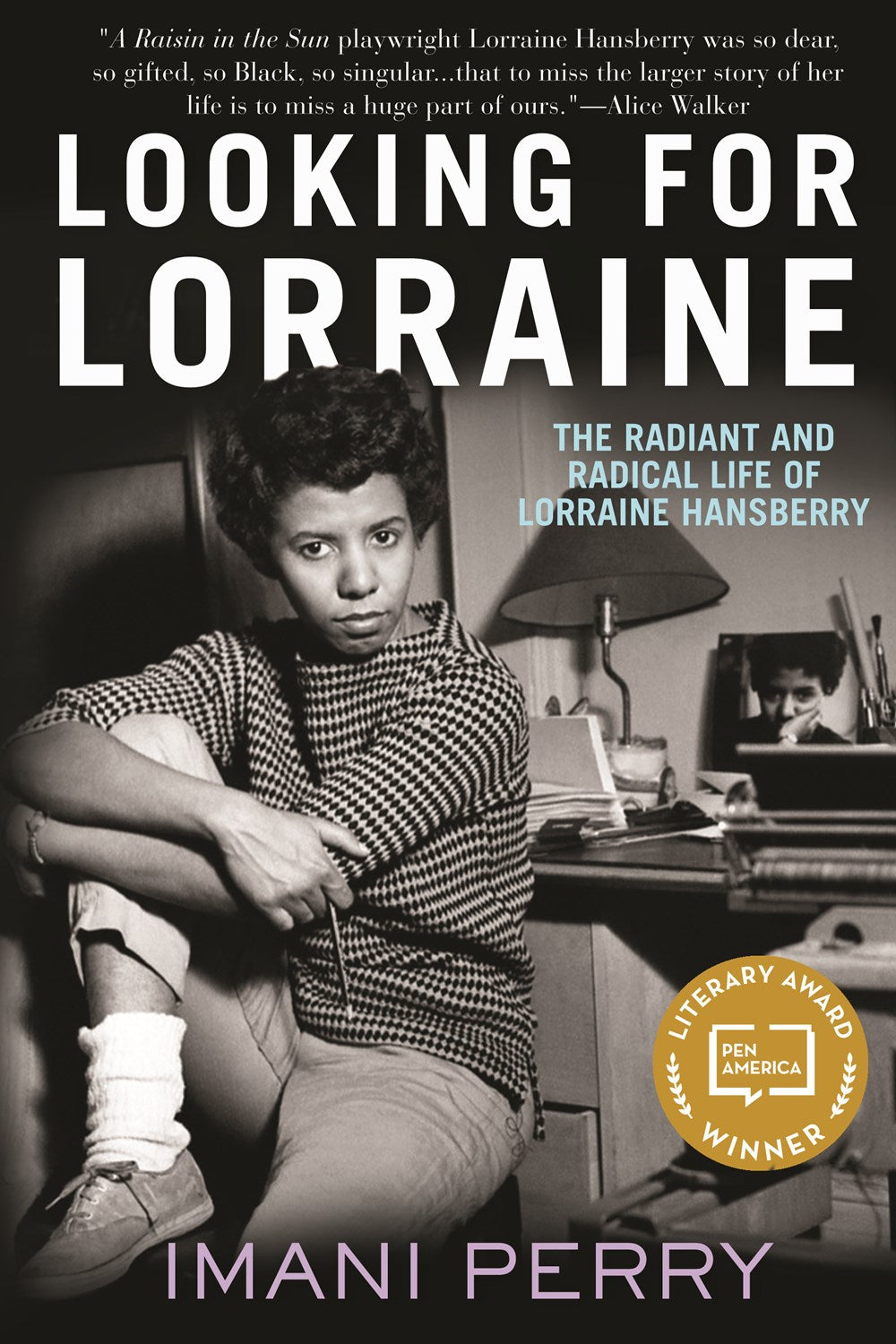
Looking For Lorraine
by Imani Perry
$18.95A revealing portrait of one of the most gifted and charismatic, yet least understood, Black artists and intellectuals of the twentieth century.
Lorraine Hansberry, who died at thirty-four, was by all accounts a force of nature. Although best-known for her work A Raisin in the Sun, her short life was full of extraordinary experiences and achievements, and she had an unflinching commitment to social justice, which brought her under FBI surveillance when she was barely in her twenties. While her close friends and contemporaries, like James Baldwin and Nina Simone, have been rightly celebrated, her story has been diminished and relegated to one work—until now. In 2018, Hansberry will get the recognition she deserves with the PBS American Masters documentary “Lorraine Hansberry: Sighted Eyes/Feeling Heart” and Imani Perry’s multi-dimensional, illuminating biography, Looking for Lorraine.
After the success of A Raisin in the Sun, Hansberry used her prominence in myriad ways: challenging President Kennedy and his brother to take bolder stances on Civil Rights, supporting African anti-colonial leaders, and confronting the romantic racism of the Beat poets and Village hipsters. Though she married a man, she identified as lesbian and, risking censure and the prospect of being outed, joined one of the nation’s first lesbian organizations. Hansberry associated with many activists, writers, and musicians, including Malcolm X, Langston Hughes, Duke Ellington, Paul Robeson, W.E.B. Du Bois, among others. Looking for Lorraine is a powerful insight into Hansberry’s extraordinary life—a life that was tragically cut far too short.
A Black Caucus of the American Library Association Honor Book for Nonfiction
A 2019 Pauli Murray Book Prize Finalist -
Cane
![Cane]()

Cane
Jean Toomer
$15.00Jean Toomer’s Cane is one of the most significant works to come out of the Harlem Renaissance, and is considered to be a masterpiece in American modernist literature because of its distinct structure and style.
First published in 1923 and told through a series of vignettes, Cane uses poetry, prose, and play-like dialogue to create a window into the varied lives of African Americans living in the rural South and urban North during a time when Jim Crow laws pervaded and racism reigned. While critically acclaimed and known today as a pioneering text of the Harlem Renaissance, the book did not gain as much popularity as other works written during the period. Fellow Harlem Renaissance writer Langston Hughes believed Cane’s lack of a wider readership was because it didn’t reinforce the stereotypes often associated with African Americans during the time, but portrayed them in an accurate and entirely human way, breaking the mold and laying the groundwork for how African Americans are depicted in literature.
For the first time in Penguin Classics, this edition of Cane features a new introduction, suggestions for further reading, and notes by scholar George Hutchinson, and National Book Award Foundation 5 Under 35 novelist Zinzi Clemmons contributes a foreword. -
Joy Goddess: A'Lelia Walker and the Harlem Renaissance
![Joy Goddess: A'Lelia Walker and the Harlem Renaissance cover image]()

Joy Goddess: A'Lelia Walker and the Harlem Renaissance
A'Lelia Bundles
$29.99A vibrant, deeply researched biography of A’Lelia Walker—daughter of Madam C.J. Walker and herself a central figure of the Harlem Renaissance—written by her great-granddaughter.
Dubbed the “joy goddess of Harlem’s 1920s” by poet Langston Hughes, A’Lelia Walker, daughter of millionaire entrepreneur Madam C.J. Walker and the author’s great-grandmother and namesake, is a fascinating figure whose legendary parties and Dark Tower salon helped define the Harlem Renaissance.
After inheriting her mother’s hair care enterprise, A’Lelia would become America’s first high profile black heiress and a prominent patron of the arts. Joy Goddess takes readers inside her three New York homes—a mansion, a townhouse, and a pied-a-terre—where she entertained Langston Hughes, Zora Neale Hurston, Paul Robeson, Florence Mills, James Weldon Johnson, Carl Van Vechten, W.E.B. DuBois, and other cultural, social and intellectual luminaries of the Roaring Twenties.
Now, based on extensive research and Walker’s personal correspondence, her great-granddaughter creates a meticulous, nuanced portrait of a charismatic woman struggling to define herself as a wife, mother, and businesswoman outside her famous mother’s sphere. In Joy Goddess, A’Lelia’s radiant personality and impresario instincts—at the center of a vast, artistic social world where she flourished as a fashion trendsetter and international traveler—are brought to vivid and unforgettable life.
-
Blues People: Negro Music in White America
![Blues People: Negro Music in White America cover image]()

Blues People: Negro Music in White America
Leroi Jones
$16.99"A must for all who would more knowledgeably appreciate and better comprehend America's most popular music." — Langston Hughes
"The path the slave took to 'citizenship' is what I want to look at. And I make my analogy through the slave citizen's music—through the music that is most closely associated with him: blues and a later, but parallel development, jazz... [If] the Negro represents, or is symbolic of, something in and about the nature of American culture, this certainly should be revealed by his characteristic music."
So says Amiri Baraka (previously known as LeRoi Jones) in the Introduction to Blues People, his classic work on the place of jazz and blues in American social, musical, economic, and cultural history. From the music of African slaves in the United States through the music scene of the 1960's, Baraka traces the influence of what he calls "negro music" on white America—not only in the context of music and pop culture but also in terms of the values and perspectives passed on through the music. In tracing the music, he brilliantly illuminates the influence of African Americans on American culture and history.
-
Super Sad Black Girl by Diamond Sharp
![Super Sad Black Girl by Diamond Sharp]()
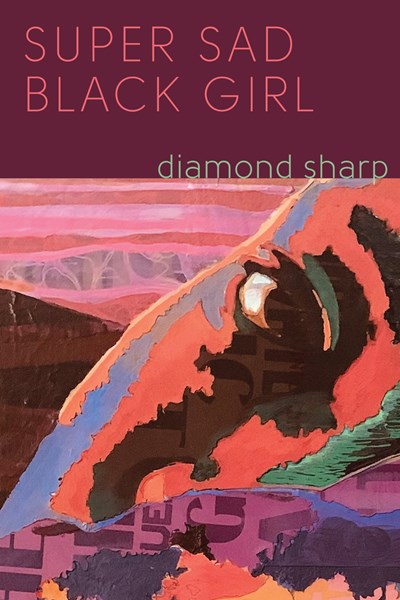
Super Sad Black Girl by Diamond Sharp
$17.00Ships in 7-10 business days
In her brilliant debut collection of poetry, Diamond Sharp navigates questions of mental health, grief, and joy through her speaker’s sardonic and playful imagination.
Diamond Sharp’s Super Sad Black Girl is a love letter to her hometown of Chicago, where the speaker finds solace and community with her literary idols in hopes of answering the question: What does it look like when Black women are free?
Lorraine Hansberry and Gwendolyn Brooks appear throughout these poems, counseling the speaker as she navigates her own depression and exploratory questions about the “Other Side,” as do Sandra Bland, Rekia Boyd, and other Black women who have been murdered by police.
Sharp’s poetry is self-assured, playful, and imaginative, reminiscent of Langston Hughes with its precision and brevity. The book explores purgatorial, in-between spaces that the speaker occupies as she struggles to find a place and time where she can live safely and freely. With her skillful use of repetition, particularly in her series of concrete poems, lines and voices echo across the book so the reader, too, feels suspended within Sharp’s lyric moments. Super Sad Black Girl is a compassionate and ethereal depiction of mental illness from a promising and powerful poet. -
A Century of Poetry in The New Yorker: 1925-2025
![A Century of Poetry in The New Yorker: 1925-2025 cover image]()

A Century of Poetry in The New Yorker: 1925-2025
Kevin Young
$50.00Edited by the magazine’s poetry editor, Kevin Young, a celebratory selection from one hundred years of influential, entertaining, and taste-making verse in The New Yorker
Seamus Heaney, Dorothy Parker, Louise Bogan, Louise Glück, Randall Jarrell, Langston Hughes, Derek Walcott, Sylvia Plath, W. S. Merwin, Czesław Miłosz, Tracy K. Smith, Mark Strand, E. E. Cummings, Sharon Olds, Franz Wright, John Ashbery, Sandra Cisneros, Amanda Gorman, Maggie Smith, Kaveh Akbar: these stellar names make up just a fraction of the wonderfulness that is present in this essential anthology.
The book is organized into sections honoring times of day (“Morning Bell,” “Lunch Break,” “After-Work Drinks,” “Night Shift”), allowing poets from different eras to talk back to one another in the same space, intertwined with chronological groupings from the decades as they march by: the frothy 1920s and 1930s (“despite the depression,” Young notes), the more serious ’40s and ’50s (introducing us to the early greats of our contemporary poetry, like Elizabeth Bishop, W. S. Merwin, and Adrienne Rich), the political ’60s and ’70s, the lyrical ’80s and ’90s, and then the 2000s’ with their explosion of greater diversity in the magazine, greater depth and breadth. Inevitably, we see the high points when poems spoke directly into, about, or against the crises of their times—the war poetry of W. H. Auden and Karl Shapiro; the remarkable outpouring of verse after 9/11 (who can forget Adam Zagajewski’s “Try to Praise the Mutilated World”?); and more recently, stunning poems in response to the cataclysmic events of COVID and the murder of George Floyd.
The magazine’s poetic influence resides not just in this historical and cultural relevance but in sheer human connection, exemplified by the passing verses that became what Young calls “refrigerator poems”: the ones you tear out and affix to the fridge to read again and again over months and years. Our love for that singular Billy Collins or Ada Limón poem—or lines by a new writer you’ve never heard of but will hear much more from in the future—is what has made The New Yorker a great organ for poetry, a mouthpiece for our changing culture and way of life, even a mirror of our collective soul.


Stay Informed. We're building a community committed to celebrating Black authors + artisans. Subscribe to keep up with all things Kindred Stories.