
Search results: 30 results for “Liza Black”
Not finding what you're looking for? Check out our shop on bookshop.org to order and still support us ♥
30 results
-
Black Life Matter: Blackness, Religion, and the Subject
![Black Life Matter: Blackness, Religion, and the Subject]()
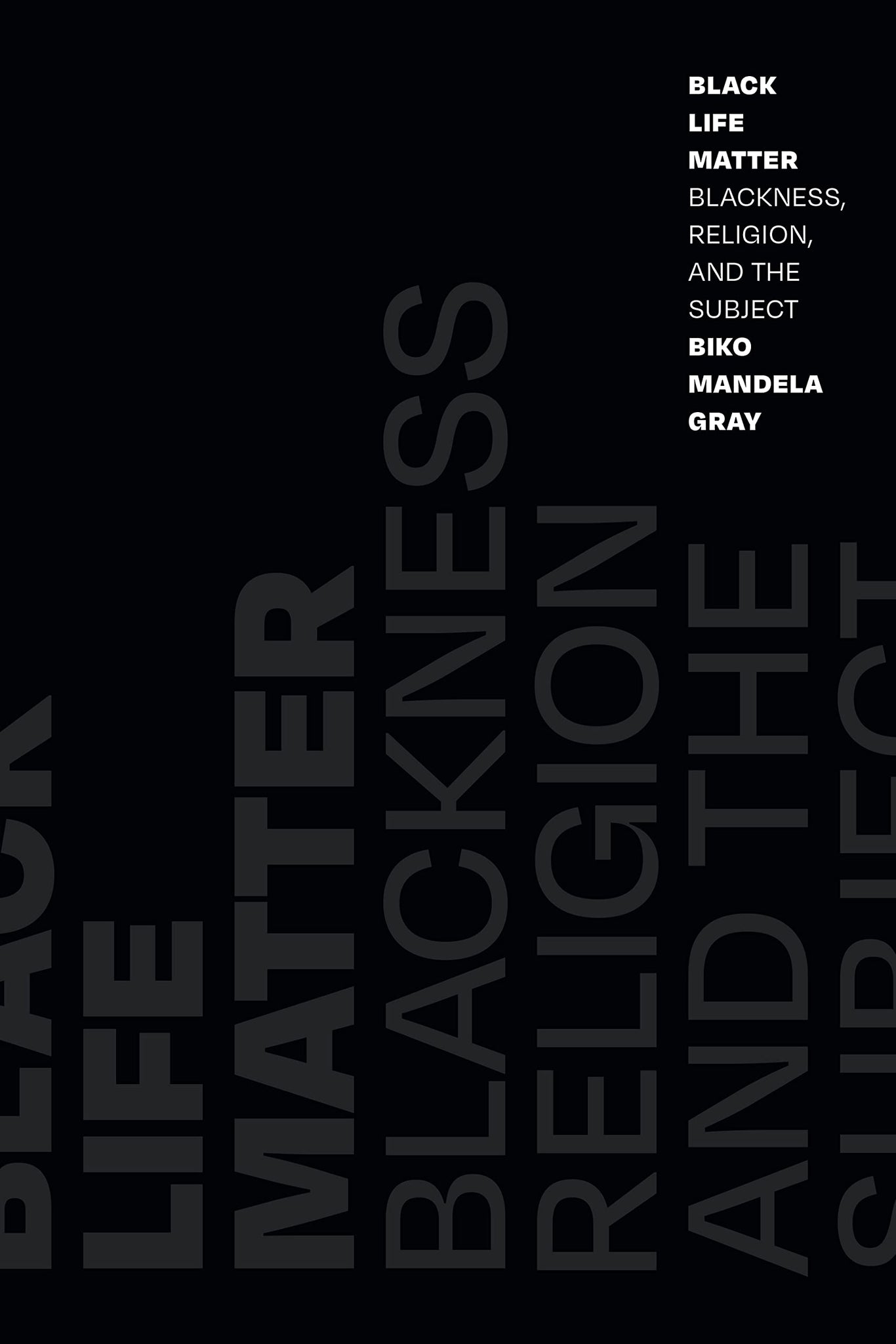
Black Life Matter: Blackness, Religion, and the Subject
by Biko Mandela Gray
$24.95In Black Life Matter, Biko Mandela Gray offers a philosophical eulogy for Aiyana Stanley-Jones, Tamir Rice, Alton Sterling, and Sandra Bland that attests to their irreducible significance in the face of unremitting police brutality. Gray employs a theoretical method he calls “sitting with”—a philosophical practice of care that seeks to defend the dead and the living. He shows that the police that killed Stanley-Jones and Rice reduced them to their bodies in ways that turn black lives into tools that the state uses to justify its violence and existence. He outlines how Bland’s arrest and death reveal the affective resonances of blackness, and he contends that Sterling’s physical movement and speech before he was killed point to black flesh as unruly living matter that exceeds the constraints of the black body. These four black lives, Gray demonstrates, were more than the brutal violence enacted against them; they speak to a mode of life that cannot be fully captured by the brutal logics of antiblackness.
Review
"Black Life Matter is a powerful and moving book, a challenge and a rejoinder to white western philosophy, a deep thinking from black and flesh. This book becomes more urgent and more necessary with each passing day." -- Christina Sharpe, author of ― In the Wake: On Blackness and Being
"Over the last three decades, there has been a kind of unspoken rift between black religion and black studies. In this powerful book, Biko Mandela Gray strongly contributes to bridging that gap, exemplifying recent interest in Black Lives Matter and black religion. Black Life Matter is timely and thought provoking." -- Joseph R. Winters, author of ― Hope Draped in Black: Race, Melancholy, and the Agony of ProgressAbout the Author
Biko Mandela Gray is Assistant Professor of Religion at Syracuse University and coeditor of The Religion of White Rage: White Workers, Religious Fervor, and the Myth of Black Racial Progress. -
Killing the Black Body: Race, Reproduction, and the Meaning of Liberty
![Killing the Black Body: Race, Reproduction, and the Meaning of Liberty]()
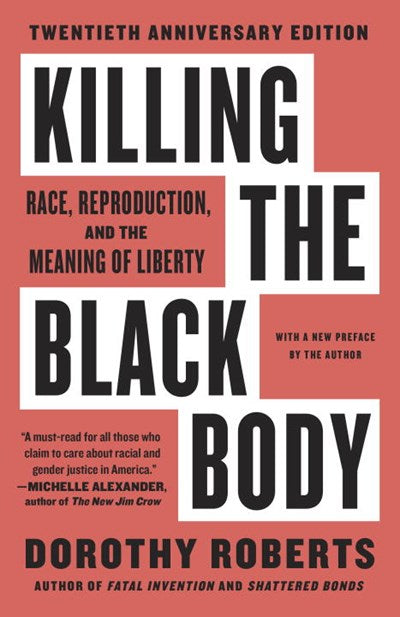
Killing the Black Body: Race, Reproduction, and the Meaning of Liberty
by Dorothy Roberts
$18.00*ships in 7-10 business days*
In 1997, the image of the “Welfare Queen” dominated white America’s perceptions of Black women. Legislation was being proposed to deny benefits to children born to welfare mothers and to require insertion of birth-control implants as a condition of receiving aid. Meanwhile, a booming fertility industry was catering primarily to infertile white couples.
Dorothy Roberts’s landmark book, Killing the Black Body, made a powerful entrance into the national conversation of the era, exposing America’s systemic abuse of Black women’s bodies, from slave masters’ economic stake in bonded women’s fertility to government programs that coerced thousands of poor Black women into being sterilized as late as the 1970s. These abuses point not only to the degradation of Black motherhood, but to the exclusion of Black women’s reproductive needs from the feminist agenda. Killing the Black Body turns twenty next year and is as relevant today as it was upon publication. In our current moment of Black Lives Matter, Between the World and Me, and authors like Chimamanda Ngozi Adichie and Roxane Gay speaking out about feminism and race, Killing the Black Body offers a vision of reproductive freedom that respects each and every American. -
How Settlers Get Away with Murder: The Killing of Indigenous Women and Two-Spirit People in the Americas
![How Settlers Get Away with Murder: The Killing of Indigenous Women and Two-Spirit People in the Americas cover image]()

How Settlers Get Away with Murder: The Killing of Indigenous Women and Two-Spirit People in the Americas
Sold outA forensic history of the missing and murdered Indigenous women and Two-Spirit people crisis that unmasks the Americas’ oldest and most relentless crime: Native genocide
“A phenomenal contribution to our understanding of the ongoing violence throughout the Americas against [MMIW2S].” — Professor Randall Akee, Harvard Kennedy School
Since the arrival of Columbus, thousands of perpetrators have gotten away with murder, burying evidence of their crimes in police reports and court testimony. How Settlers Get Away with Murder unearths that hidden evidence to expose the ongoing crisis of missing and murdered Indigenous women and Two-Spirit people (MMIW2S).
Historian and citizen of Cherokee Nation Liza Black examines 5 cases in Canada, the US, and Mexico, from 1908 to 2017. Rejecting narratives that blame victims’ poverty or trauma, Black dissects police files, coroners’ reports, and court records to uncover a harsh historical reality: The evidence of settler violence has been hiding in plain sight.
This landmark work delivers a damning verdict: The same systems of law and policing that have targeted Native people for centuries have also shielded their killers. Through meticulous archival interrogation, Black demonstrates how police, courts, and coroners have functioned not as instruments of justice but as pillars of a system designed to protect settler violence.
-
IRL AUTHOR TALK:The World Before Racism with Lisa Farrington - March 28 @ 2PM
![IRL AUTHOR TALK:The World Before Racism with Lisa Farrington - March 28 @ 2PM]()

IRL AUTHOR TALK:The World Before Racism with Lisa Farrington - March 28 @ 2PM
Sold outCelebrate the release of The World Before Racism: An Art Story with Lisa Farrington! This special author talk is sponsored by Houston Museum of African American Culture.
EVENT DEETS
When: Saturday, March 28 @ 2PM
Where: Kindred Stories (2310 Elgin St, Houston, TX 77004)
How: RSVP ONLY to reserve your seat or RSVP WITH BOOK to support the author and our store programming.
*Please note outside copies of The World Before Racism will not be allowed in the bookstore and you will not be eligible for the signing/photo line. You must buy a book from Kindred Stories.
ABOUT THE BOOK
he World Before Racism: An Art Story is a gripping history of anti-black racism, told through works of art as truth-sayers. Utilizing empirical evidence that is difficult, if not impossible to refute, (western art and literature from ancient Greece to the 21st century; and Darwin's original writings) this research conclusively answers the questions: Who invented racism? When? And why?The term racism is understood to mean that race is the principal determinant of specific human traits and capacities and that due to racial differences, one race is inherently superior to all others. Over time, racism has commonly referenced the notion that the White race is superior to all others, fostering prejudice and discrimination. In The Artist Book Foundation’s forthcoming publication, The World Before Racism: An Art Story, author and art historian Lisa Farrington meticulously examines the intersection of art, history, and race, using original works of art as primary source materials to support her premise that racism is a construct, invented in the mid-1700s, to support the financial, political, and religious structures of European colonialism.
Using art from ancient Egypt, classical Greece, and the Roman Empire, through Medieval Europe and the colonization of the New World, to the art of the present day—sources that cannot be easily altered, edited, or selectively trans¬lated—Farrington expertly examines the intricate interplay between the Black and White races, how they saw and understood each other over the centuries. The artworks serve as powerful voices, precisely conveying the artist’s intended messages. The goal of The World Before Racism is to present irrefutable evi¬dence that the ideology of racism is unfounded, unsupported, unjustified, and destined to fade away like so many other archaic and erroneous ideas.
ABOUT THE AUTHOR
Lisa Farrington is an award-winning author and art historian. She is Distinguished Professor Emerita, City University of New York, past Associate Dean of Fine Arts, Howard University, and past Associate Professor of Art History, Parsons School of Design, New York and Paris. Her books include "Creating Their Own Image: The History of African American Women Artists," "African American Art: A Visual and Cultural History," both for Oxford University Press (2006 and 2016), "The World Before Racism: An Art Story" (Artist Book Foundation 2026), "Black Artists in Their Own Words" (University of California Press 2025), among many others, as well as dozens of scholarly articles. She has appeared in numerous documentary films in the U.S., the U.K., and France, and is featured on television and radio. Currently, Dr. Farrington offers riveting lectures in the U.S. and abroad.
-
Fraternal Light: On Painting While Black
![Fraternal Light: On Painting While Black]()

Fraternal Light: On Painting While Black
by Arlene Keizer
Sold outWinner of the 2022 Stan and Tom Wick Poetry Prize
Fraternal Light: On Painting While Black is a lyric evocation of the life and work of the great African American artist Beauford Delaney. These poems pay homage to Delaney’s resilience and ingenuity in the face of profound adversity. Although his work never garnered the acclaim it deserves—and is finally receiving—Delaney was well known and highly respected in African American cultural circles, among bohemian writers and artists based in Greenwich Village from the 1930s to the early 1950s, and in Parisian avant-garde and expatriate enclaves from the mid-1950s to the mid-1970s.
Drawn to Delaney’s painting and personal history through her emotional response to his work, especially his portraits, Arlene Keizer has crafted a diasporic ceremony of remembrance for this Black, gay male visionary. Fraternal Light offers back an answering complexity to Delaney’s life and work. One form of art calls out; another answers.
Keizer’s poems make the contours and challenges of Delaney’s life visible, which is especially urgent in a world still frequently hostile or indifferent to Black creative brilliance.
-
Gordon Parks: Stokely Carmichael and Black Power
![Gordon Parks: Stokely Carmichael and Black Power]()
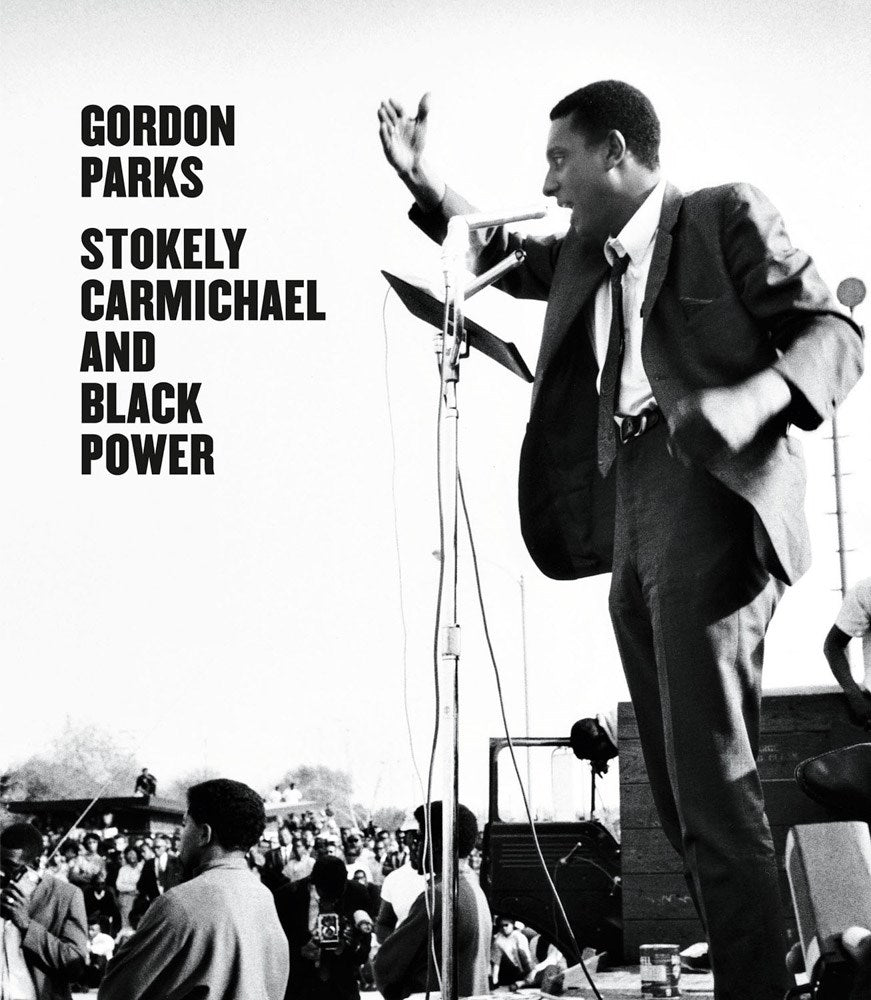
Gordon Parks: Stokely Carmichael and Black Power
Sold outA nuanced profile, in image and text, of the great Black Power leader at the exhilarating moment of the movement’s ascendancy
Gordon Parks’ 1967 Life magazine essay “Whip of Black Power” is a nuanced profile of the young, controversial civil rights leader Stokely Carmichael. As chairman of the Student Nonviolent Coordinating Committee, Carmichael gained national attention and inspired media backlash when he issued the call for Black Power in Greenwood, Mississippi, in June 1966. Parks shadowed him from the fall of 1966 to the spring of 1967, as Carmichael gave speeches, headed meetings and promoted the growing Black Power movement. Parks’ photos and writing addressed Carmichael’s intelligence and humor, presenting the whole man behind the headline-making speeches and revealing his own advocacy of Black Power and its message of self-determination and love.
Stokely Carmichael and Black Power delves into Parks’ groundbreaking presentation of Carmichael, with analysis of his images and accompanying text about the charismatic leader. Lisa Volpe explores Parks’ complex understanding of the movement and its leader, and Cedric Johnson frames Black Power within the heightened political moment of the late 1960s. Carmichael’s own voice is represented through a reprint of his important 1966 essay “What We Want.”
Gordon Parks (1912–2006) was a photographer, filmmaker, musician and author whose 50-year career focused on American culture, social justice, the civil rights movement and the Black American experience. Born into poverty and segregation in Fort Scott, Kansas, Parks was awarded the Julius Rosenwald Fellowship in 1942, which led to a position with the Farm Security Administration. In 1969 he became the first Black American to write and direct a major feature film, The Learning Tree, and his next directorial endeavor, Shaft (1971), helped define a film genre.


- ← Previous
- page 1
- page 2
- page 3
Stay Informed. We're building a community committed to celebrating Black authors + artisans. Subscribe to keep up with all things Kindred Stories.