
Search results: 20 results for “gordon parks”
Not finding what you're looking for? Check out our shop on bookshop.org to order and still support us ♥
20 results
-
PRE-ORDER: Sunday Best: The Power and the Glory of Black Style
![Sunday Best: The Power and the Glory of Black Style cover image]()

PRE-ORDER: Sunday Best: The Power and the Glory of Black Style
$60.00From high fashion to everyday clothes, this book looks at the personal and political importance of Black style from the 1880s to the present.
Both during and after slavery in North America, “Sunday best” referred to clothes reserved for church or special occasions. Dressing in one’s Sunday best conveyed a sense of dignity and self-worth. Sunday best styling evolved after emancipation into the twentieth century, reflecting subsequent periods of Black cultural liberation, empowerment, and upward mobility. It is emblematic of the ways that self-fashioning in African-diasporic communities affirms humanity and communicates identity.
With examples from Canada, the Caribbean, the United States, and the United Kingdom, Sunday Best features archival and contemporary fashion alongside photography, painting, sculpture, and time-based media, looking at the significance of Black style. Essays by an interdisciplinary group of curators, designers, and scholars consider how communities throughout the African diaspora have used style as a reminder of one’s value, visibility, and agency, and the enduring influence of Sunday best dressing on artistic expression.
This richly illustrated volume is organized around the following themes:
• Origins, featuring fashion design by Christopher John Rogers and photography by James Van Der Zee
• Black church, with art by Coreen Simpson, Gordon Parks, and Laura Wheeler Waring
• Migration, through designers such as Foday Dumbuya
• Liberation, with fashion design by Spencer Badu and photography by Chantal Regnault
• Call and response, including fashion design by Patrick Kelly and photography by Melodie McDanielPublished in association with the Art Gallery of Ontario and the Philadelphia Museum of Art
Exhibition Schedule
Art Gallery of Ontario
(October 6, 2026–February 28, 2027)Philadelphia Museum of Art
(May 1, 2027–August 8, 2027) -
My Government Means to Kill Me
![My Government Means to Kill Me cover image]()

My Government Means to Kill Me
$18.99A NEW YORK TIMES NOTABLE BOOK · A NEW YORK TIMES BOOK REVIEW EDITOR'S CHOICE · 2022 LAMBDA LITERARY PRIZE FOR GAY FICTION FINALIST
The debut novel from television WRITER/PRODUCER OF THE CHI, NARCOS, and BEL-AIR tells a fierce and riveting queer coming-of-age story following the personal and political awakening of a young, gay, Black man in 1980s New York City.
"Consistently engrossing." ―New York Times Book Review
“Full of joy and righteous anger, sex and straight talk, brilliant storytelling and humor... A spectacularly researched Dickensian tale with vibrant characters and dozens of famous cameos, it is precisely the book we’ve needed for a long time.” ―Andrew Sean Greer, Pulitzer Prize-winning author of Less
Earl "Trey" Singleton III arrives in New York City with only a few dollars in his pocket. Born into a wealthy Black Indianapolis family, at 17, he is ready to leave his overbearing parents and their expectations behind.
In the city, Trey meets up with a cast of characters that changes his life forever. He volunteers at a renegade home hospice for AIDS patients, and after being put to the test by gay rights activists, becomes a member of the AIDS Coalition to Unleash Power (ACT UP). Along the way Trey attempts to navigate past traumas and searches for ways to maintain familial relationships―all while seeking the meaning of life amid so much death.
Vibrant, humorous, and fraught with entanglements, Rasheed Newson’s My Government Means to Kill Me is an exhilarating, fast-paced coming-of-age story that lends itself to a larger discussion about what it means for a young gay Black man in the mid-1980s to come to terms with his role in the midst of a political and social reckoning.
-
Gordon Parks: Segregation Story
![Gordon Parks: Segregation Story]()
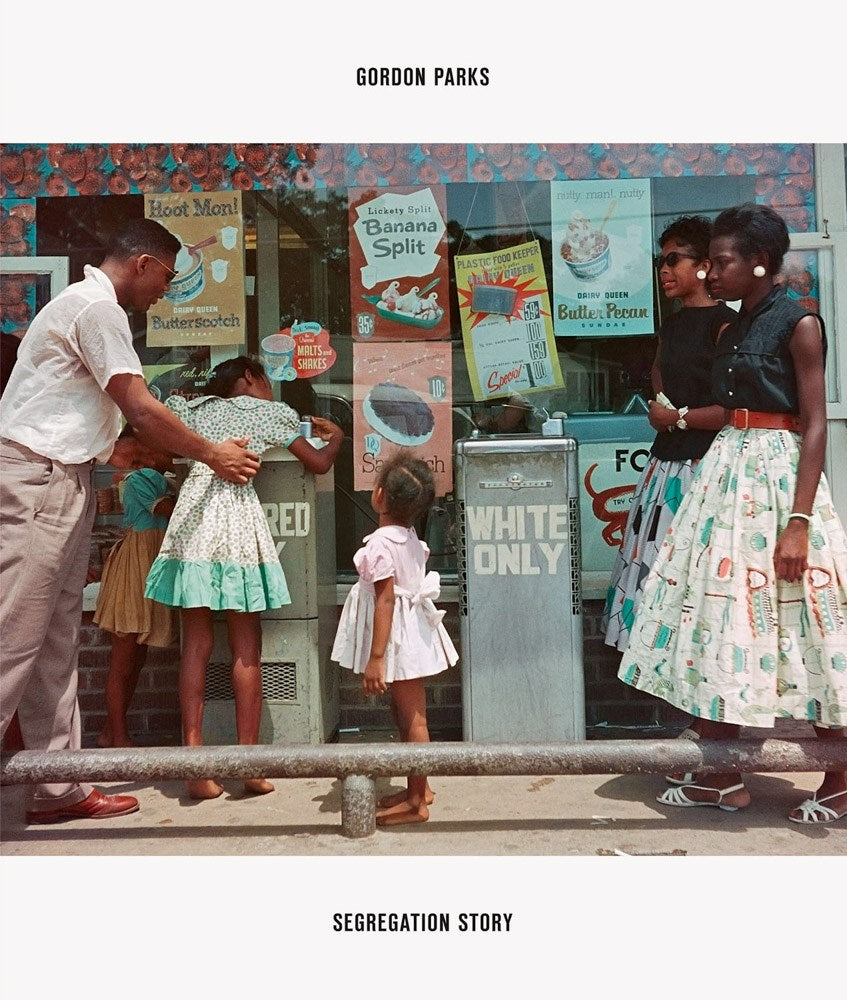
Gordon Parks: Segregation Story
Sold outAn expanded edition of Parks’ classic account of race relations in America, with previously unpublished images and texts
This expanded edition of Gordon Parks: Segregation Story includes around 30 previously unpublished photographs, as well as enhanced reproductions created from Parks’ original color transparencies; newly discovered descriptions Parks wrote for the photographs; a manuscript of film-developing instructions and captions Parks authored with Samuel F. Yette; previously published texts by the late art historian Maurice Berger and the esteemed journalist and civil rights activist Charlayne Hunter-Gault; and a new essay by artist Dawoud Bey.
After the photographs were first presented in a 1956 issue of Life magazine, the bulk of Parks’ assignment was thought to be lost. In 2011, five years after Parks’ death, the Gordon Parks Foundation found more than 200 color transparencies belonging to the series. In 2014 the series was first published as a book, and since then new photographs have been uncovered.
In the summer of 1956, Life magazine sent Gordon Parks to Alabama to document the daily realities of African Americans living under Jim Crow laws in the rural South. The resulting color photographs are among Parks’ most powerful images, and, in the decades since, have become emblematic representations of race relations in America. Pursued at grave danger to the photographer himself, the project was an important chapter in Parks’ career-long endeavor to use the camera as a weapon for social change.
Gordon Parks (1912–2006) was born into poverty and segregation in Fort Scott, Kansas, in 1912. An itinerant laborer, he worked as a brothel pianist and railcar porter, among other jobs, before buying a camera at a pawnshop, training himself and becoming a photographer. He evolved into a modern-day Renaissance man, finding success as a film director, writer and composer. The first African American director to helm a major motion picture, he helped launch the blaxploitation genre with his film Shaft (1971). Parks died in 2006. -
Gordon Parks: Stokely Carmichael and Black Power
![Gordon Parks: Stokely Carmichael and Black Power]()
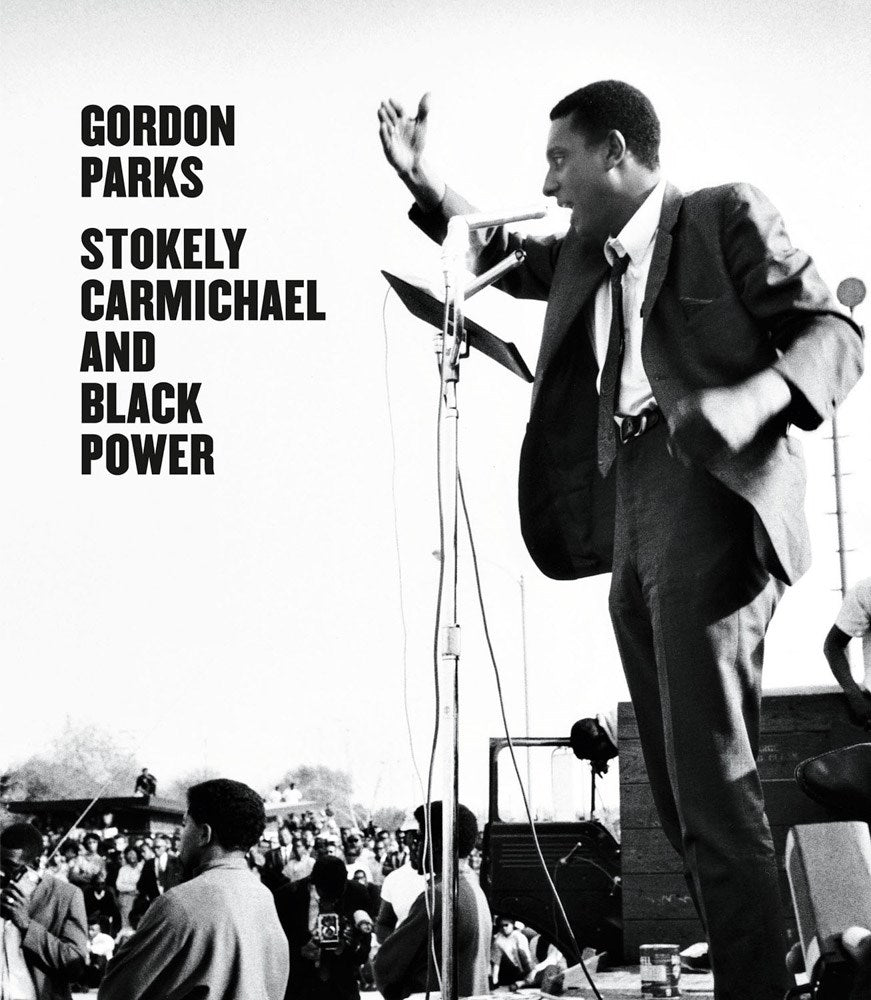
Gordon Parks: Stokely Carmichael and Black Power
Sold outA nuanced profile, in image and text, of the great Black Power leader at the exhilarating moment of the movement’s ascendancy
Gordon Parks’ 1967 Life magazine essay “Whip of Black Power” is a nuanced profile of the young, controversial civil rights leader Stokely Carmichael. As chairman of the Student Nonviolent Coordinating Committee, Carmichael gained national attention and inspired media backlash when he issued the call for Black Power in Greenwood, Mississippi, in June 1966. Parks shadowed him from the fall of 1966 to the spring of 1967, as Carmichael gave speeches, headed meetings and promoted the growing Black Power movement. Parks’ photos and writing addressed Carmichael’s intelligence and humor, presenting the whole man behind the headline-making speeches and revealing his own advocacy of Black Power and its message of self-determination and love.
Stokely Carmichael and Black Power delves into Parks’ groundbreaking presentation of Carmichael, with analysis of his images and accompanying text about the charismatic leader. Lisa Volpe explores Parks’ complex understanding of the movement and its leader, and Cedric Johnson frames Black Power within the heightened political moment of the late 1960s. Carmichael’s own voice is represented through a reprint of his important 1966 essay “What We Want.”
Gordon Parks (1912–2006) was a photographer, filmmaker, musician and author whose 50-year career focused on American culture, social justice, the civil rights movement and the Black American experience. Born into poverty and segregation in Fort Scott, Kansas, Parks was awarded the Julius Rosenwald Fellowship in 1942, which led to a position with the Farm Security Administration. In 1969 he became the first Black American to write and direct a major feature film, The Learning Tree, and his next directorial endeavor, Shaft (1971), helped define a film genre. -
Jamel Shabazz: Albums
![Jamel Shabazz: Albums]()

Jamel Shabazz: Albums
Sold outPhoto albums from the archives of the iconic chronicler of New York's 1980s rap, hip-hop and Black culture
The influential Brooklyn-based photographer Jamel Shabazz has been making portraits of New Yorkers for more than 40 years, creating an archive of cultural shifts and struggles across the city. His portraits of different communities underscore the street as a space for self-presentation, whether through fashion or pose. In every instance Shabazz aims, in his words, to represent individuals and communities with “honor and dignity.” This book—awarded the Gordon Parks Foundation/Steidl Book Prize—presents, for the first time, Shabazz’s work from the 1970s to ’90s as it exists in his archive: small prints thematically grouped and sequenced in traditional family photo albums that function as portable portfolios.
Shabazz began making portraits in the mid-1970s in Brooklyn, Queens, the West Village and Harlem. His camera was also at his side while working as an officer at Rikers Island in the 1980s, where he took portraits of inmates. This book features selections from over a dozen albums, many previously unseen, and includes his earliest photographs as well as images taken inside Rikers Island, all accompanied by essays that situate Shabazz’s work within the broader history of photography.
Born and raised in Brooklyn, Jamel Shabazz (born 1960) picked up his first camera at the age of 15 and began documenting his communities, inspired by photographers such as Leonard Freed, James Van Der Zee and Gordon Parks. His work has been featured in numerous solo and group exhibitions, including those at the Brooklyn Museum, the Studio Museum in Harlem, the J. Paul Getty Museum and the Victoria and Albert Museum. Shabazz is the author of Back in the Days (2001) and Sights in the City (2017). -
Virtual Author Talk: Who Are Your People? with Bakari Sellers - Jan 19 @ 6:00 PM CST
![Virtual Author Talk: Who Are Your People? with Bakari Sellers - Jan 19 @ 6:00 PM CST]()

Virtual Author Talk: Who Are Your People? with Bakari Sellers - Jan 19 @ 6:00 PM CST
Sold outOrder copies of Who Are Your People an exclusive signed book plate here!
WHO ARE YOUR PEOPLE? is a tribute to community—it takes a village to raise a child, and we stand on the shoulders of those who came before. Sellers, New York Times bestselling author of My Vanishing Country, takes readers on a journey from cotton fields to sit-ins to the present day through the eyes of a young father and his children in this powerful picture book with illustrations from Reggie Brown.
This event is presented in partnership with the Emancipation Park Conservancy.
Event Deets:
When: Wednesday, January 19 at 6 pm CT/ 7 pm ET
Where: Virtual (watch link will be sent no more than 24 hours prior to the start of the event)
How: Registration is required. You have the option to get a free ticket or a ticket that includes one signed copy of the book.
We hope you can join us!
About the Author:
ABOUT BAKARI SELLERS:
Bakari Sellers made history in 2006 when, at just 22 years old, he defeated a 26-year incumbent state representative to become the youngest member of the South Carolina state legislature and the youngest African American elected official in the nation. In 2010 he was named to TIME’s 40 Under 40 list. In 2014 and 2015 he was named to The Root’s 100 Most Influential African Americans list. Sellers is the author of the New York Times bestseller My Vanishing Country and recently expanded his audience with the Bakari Sellers Podcast in collaboration with The Ringer and Spotify. He practices law with the Strom Law Firm, LLC, in Columbia, SC, and is a political commentator at CNN.
About The Emancipation Park Conservancy:
Emancipation Park Conservancy is a non-profit 501 c3 charitable corporation established in 2014 to restore, manage, and enhance Emancipation Park. Its purpose is to create an open space of environmental and community excellence while continuing to preserve the integrity and historical roots of the park. Its goal is to transform the park into one of the nation's premier landmark parks and international destinations through capital initiatives, operational improvements, strategic partnerships, programming and events.
-
Soil: The Story of a Black Mother's Garden
![Soil: The Story of a Black Mother's Garden cover image]()

Soil: The Story of a Black Mother's Garden
Sold outA seminal work that expands how we talk about the natural world and the environment as National Book Critics Circle Criticism finalist Camille T. Dungy diversifies her garden to reflect her heritage.
In Soil: The Story of a Black Mother’s Garden, poet and scholar Camille T. Dungy recounts the seven-year odyssey to diversify her garden in the predominately white community of Fort Collins, Colorado. When she moved there in 2013, with her husband and daughter, the community held strict restrictions about what residents could and could not plant in their gardens.
In resistance to the homogenous policies that limited the possibility and wonder that grows from the earth, Dungy employs the various plants, herbs, vegetables, and flowers she grows in her garden as metaphor and treatise for how homogeneity threatens the future of our planet, and why cultivating diverse and intersectional language in our national discourse about the environment is the best means of protecting it.
Definitive and singular, Soil functions at the nexus of nature writing, environmental justice, and prose to encourage you to recognize the relationship between the peoples of the African diaspora and the land on which they live, and to understand that wherever soil rests beneath their feet is home.
-
Early Sunday Morning
![Early Sunday Morning cover image]()

Early Sunday Morning
Sold outIn this heartwarming story of love and family, a community comes together to help a young girl find the courage to lift her mighty voice.
Sundays are June’s favorite days because she gets to spend it with Mommy, Daddy, and her brother, Troy. Next Sunday is more special than most, because she will be leading the youth choir in front of her entire church.
June loves to sing. She sings loud, silly songs with Daddy, she sings to herself in front of the bedroom mirror, but performing in front of the entire congregation is another thing altogether. As her special moment approaches, June leans on the support of her whole community to conquer her fear of singing in front of the congregation.


- ← Previous
- page 1
- page 2
Stay Informed. We're building a community committed to celebrating Black authors + artisans. Subscribe to keep up with all things Kindred Stories.