
Search results: 214 results for “by Dr. Martin Luther King Jr.”
Not finding what you're looking for? Check out our shop on bookshop.org to order and still support us ♥
214 results
-
We Refuse: A Forceful History of Black Resistance
![Book cover image]()

We Refuse: A Forceful History of Black Resistance
by Kellie Carter Jackson
$18.99A radical reframing of the past and present of Black resistance—both nonviolent and violent—to white supremacy
Black resistance to white supremacy is often reduced to a simple binary, between Dr. Martin Luther King Jr.’s nonviolence and Malcolm X’s “by any means necessary.” In We Refuse, historian Kellie Carter Jackson urges us to move past this false choice, offering an unflinching examination of the breadth of Black responses to white oppression, particularly those pioneered by Black women.
The dismissal of “Black violence” as an illegitimate form of resistance is itself a manifestation of white supremacy, a distraction from the insidious, unrelenting violence of structural racism. Force—from work stoppages and property destruction to armed revolt—has played a pivotal part in securing freedom and justice for Black people since the days of the American and Haitian Revolutions. But violence is only one tool among many. Carter Jackson examines other, no less vital tactics that have shaped the Black struggle, from the restorative power of finding joy in the face of suffering to the quiet strength of simply walking away.
Clear-eyed, impassioned, and ultimately hopeful, We Refuse offers a fundamental corrective to the historical record, a love letter to Black resilience, and a path toward liberation. -
Dear Martin
![Dear Martin]()

Dear Martin
by Nic Stone
$10.99*Ships in 7-10 business days*
Justyce McAllister is a good kid, an honor student, and always there to help a friend—but none of that matters to the police officer who just put him in handcuffs. Despite leaving his rough neighborhood behind, he can't escape the scorn of his former peers or the ridicule of his new classmates.
Justyce looks to the teachings of Dr. Martin Luther King Jr. for answers. But do they hold up anymore? He starts a journal to Dr. King to find out.
Then comes the day Justyce goes driving with his best friend, Manny, windows rolled down, music turned up—way up, sparking the fury of a white off-duty cop beside them. Words fly. Shots are fired. Justyce and Manny are caught in the crosshairs. In the media fallout, it's Justyce who is under attack. -
Jesus and the Disinherited
![Jesus and the Disinherited cover image]()

Jesus and the Disinherited
Howard Thurman
$16.00Famously known as the text that Martin Luther King Jr. sought inspiration from in the days leading up to the Montgomery bus boycott, Howard Thurman’s Jesus and the Disinherited helped shape the civil rights movement and changed our nation’s history forever.
In this classic theological treatise, the acclaimed theologian and religious leader Howard Thurman (1900-1981) demonstrates how the gospel may be read as a manual of resistance for the poor and disenfranchised. Jesus is a partner in the pain of the oppressed and the example of His life offers a solution to ending the descent into moral nihilism. Hatred does not empower--it decays. Only through self-love and love of one another can God's justice prevail.
-
The Divided Mind of the Black Church: Theology, Piety, and Public Witness (Religion, Race, and Ethnicity)
![The Divided Mind of the Black Church: Theology, Piety, and Public Witness (Religion, Race, and Ethnicity) cover image]()

The Divided Mind of the Black Church: Theology, Piety, and Public Witness (Religion, Race, and Ethnicity)
$26.00A revealing look at the identity and mission of the Black church
What is the true nature and mission of the church? Is its proper Christian purpose to save souls, or to transform the social order? This question is especially fraught when the church is one built by an enslaved people and formed, from its beginning, at the center of an oppressed community’s fight for personhood and freedom. Such is the central tension in the identity and mission of the Black church in the United States.
For decades the Black church and Black theology have held each other at arm’s length. Black theology has emphasized the role of Christian faith in addressing racism and other forms of oppression, arguing that Jesus urged his disciples to seek the freedom of all peoples. Meanwhile, the Black church, even when focused on social concerns, has often emphasized personal piety rather than social protest. With the rising influence of white evangelicalism, biblical fundamentalism, and the prosperity gospel, the divide has become even more pronounced.
In The Divided Mind of the Black Church, Raphael G. Warnock, Senior Pastor of the historic Ebenezer Baptist Church, the spiritual home of the Rev. Dr. Martin Luther King, Jr., traces the historical significance of the rise and development of Black theology as an important conversation partner for the Black church. Calling for honest dialogue between Black and womanist theologians and Black pastors, this fresh theological treatment demands a new look at the church’s essential mission.
-
Black Power and Palestine: Transnational Countries of Color (Stanford Studies in Comparative Race and Ethnicity)
![Book cover image]()
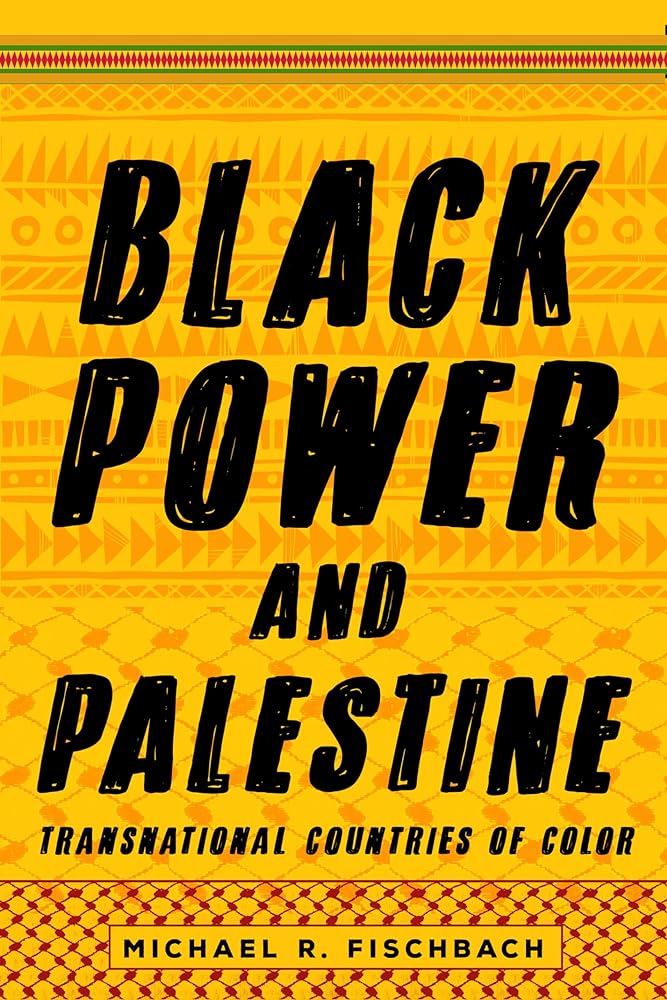
Black Power and Palestine: Transnational Countries of Color (Stanford Studies in Comparative Race and Ethnicity)
Michael R. Fischbach
$28.00*This book is not currently on our shelves and will ship in 5-10 business days. Please see FAQs for more information.
The 1967 Arab–Israeli War rocketed the question of Israel and Palestine onto the front pages of American newspapers. Black Power activists saw Palestinians as a kindred people of color, waging the same struggle for freedom and justice as themselves. Soon concerns over the Arab–Israeli conflict spread across mainstream black politics and into the heart of the civil rights movement itself. Black Power and Palestine uncovers why so many African Americans―notably Martin Luther King, Jr., Malcolm X, and Muhammad Ali, among others―came to support the Palestinians or felt the need to respond to those who did.
Americans first heard pro-Palestinian sentiments in public through the black freedom struggle of the 1960s and 1970s. Michael R. Fischbach uncovers this hidden history of the Arab–Israeli conflict's role in African American activism and the ways that distant struggle shaped the domestic fight for racial equality. Black Power's transnational connections between African Americans and Palestinians deeply affected U.S. black politics, animating black visions of identity well into the late 1970s. Black Power and Palestine allows those black voices to be heard again today.
In chronicling this story, Fischbach reveals much about how American peoples of color create political strategies, a sense of self, and a place within U.S. and global communities. The shadow cast by events of the 1960s and 1970s continues to affect the United States in deep, structural ways. This is the first book to explore how conflict in the Middle East shaped the American civil rights movement.
-
We Are the Leaders We Have Been Looking For (The W. E. B. Du Bois Lectures)
![Book cover image]()
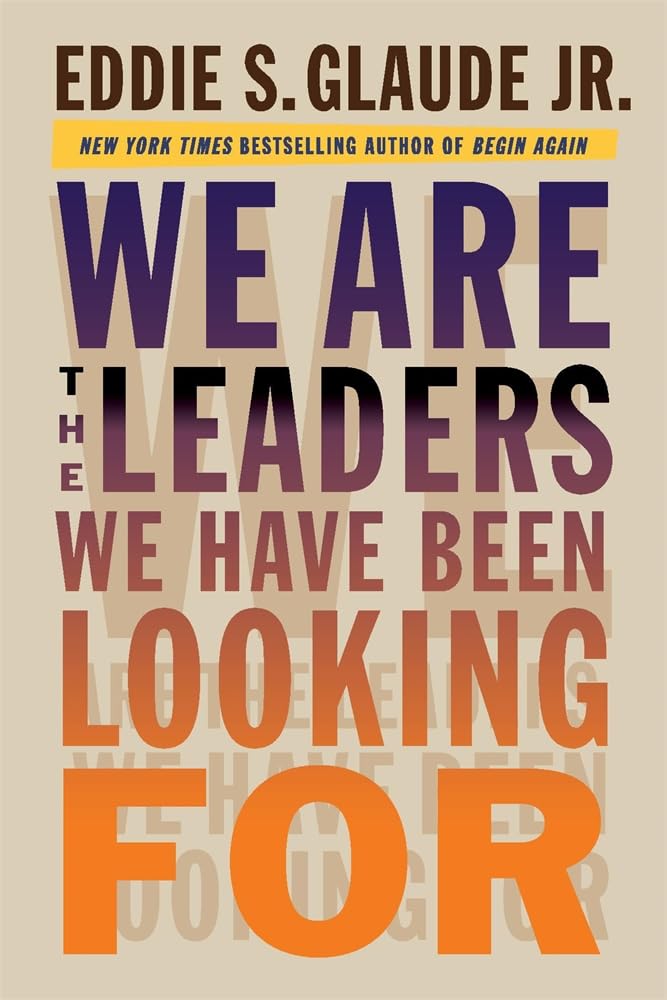
We Are the Leaders We Have Been Looking For (The W. E. B. Du Bois Lectures)
from $18.95From the author of the New York Times bestseller Begin Again, a politically astute, lyrical meditation on how ordinary people can shake off their reliance on a small group of professional politicians and assume responsibility for what it takes to achieve a more just and perfect democracy.
“Like attending a jazz concert with all of one’s favorite musicians…James Baldwin, Martin Luther King, Jr., Malcolm X, Ella Baker, Toni Morrison, and more…Glaude brilliantly takes us on an epic tour through their lives and work.”
―Henry Louis Gates, Jr., author of The Black Box: Writing the RaceWe are more than the circumstances of our lives, and what we do matters. In We Are the Leaders We Have Been Looking For, one of the nation’s preeminent scholars and a New York Times bestselling author, Eddie S. Glaude Jr., makes the case that the hard work of becoming a better person should be a critical feature of Black politics. Through virtuoso interpretations of Martin Luther King, Jr., Malcolm X, and Ella Baker, Glaude shows how we have the power to be the heroes that our democracy so desperately requires.
Based on the Du Bois Lectures delivered at Harvard University, the book begins with Glaude’s unease with the Obama years. He felt then, and does even more urgently now, that the excitement around the Obama presidency constrained our politics as we turned to yet another prophet-like figure. He examines his personal history and the traditions that both shape and overwhelm his own voice.
Glaude weaves anecdotes about his evolving views on Black politics together with the writings of Ralph Waldo Emerson, John Dewey, Toni Morrison, James Baldwin, and Ralph Ellison, encouraging us to reflect on the lessons of these great thinkers and address imaginatively the challenges of our day in voices uniquely our own.
Narrated with passion and philosophical intensity, this book is a powerful reminder that if American democracy is to survive, we must step out from under the shadows of past giants to build a better society―one that derives its strength from the pew, not the pulpit.
-
Mahalia Jackson, Moving On Up a Little Higher: The Story of an American Civil Rights Pioneer
![Mahalia Jackson, Moving On Up a Little Higher: The Story of an American Civil Rights Pioneer cover image]()

Mahalia Jackson, Moving On Up a Little Higher: The Story of an American Civil Rights Pioneer
$28.99“Mahalia Jackson was the greatest gospel singer of her time and an overlooked leader in the Civil Rights Movement. Her voice seemed born of heaven.” ?Henry Louis Gates Jr.
If Americans today still recognize the name Mahalia Jackson, they might recall that she was perhaps the greatest gospel singer who ever lived. But for many people, there is no awareness at all, not even for an entertainer whose “Move On Up a Little Higher” sold eight million copies, who headlined two Newport Jazz Festivals and performed before four United States presidents.
While this rich musical legacy is admired by those in the know, virtually no one recognizes Jackson’s astonishing role in American civil rights history. In this startling new depiction of the renowned gospel singer, New York Times best-selling author Timothy B. Tyson and Mary D. Williams, an acclaimed gospel singer herself, bring Jackson back to soaring life by positioning her as the major civil rights figure she, in fact, was.
Mahlia Jackson, Moving On Up a Little Higher then traces Jackson’s career from abject poverty in New Orleans to global superstardom, revealing how even after meteoric success, Jackson maintained an unwavering devotion to Black freedom. In the 1930s in Chicago, even before the Civil Rights Movement took its modern shape, she used her rapturous voice to support independent Black political power. Her work only intensified in the 1940s and beyond when she campaigned first for Franklin D. Roosevelt, and later for Harry Truman, John F. Kennedy, and Lyndon B. Johnson; headlined in Montgomery for the 1955–56 bus boycott; sang for the Birmingham campaign and on the Selma March; and performed at the iconic 1963 March on Washington, where she urged Martin Luther King Jr. to “Tell ’em about the dream.” In retrospect what becomes historically significant is that Mahalia Jackson was present at so many civil rights events, even singing a divine rendition of “Precious Lord, Take My Hand,” at Dr. King’s funeral in 1968. Weakened and worn, she succumbed to heart failure four years later at the age of sixty.
Weaving together Mahalia Jackson’s inspiring life journey with her soulful music into a transcendent text, this biography ultimately casts Mahalia Jackson as we’ve never seen her before, as a guiding light for the Civil Rights Movement, whose message still speaks to our struggles today.
5 illustrations
-
Historically Black Colleges and Universities' Guide to Excellence
![Historically Black Colleges and Universities' Guide to Excellence]()

Historically Black Colleges and Universities' Guide to Excellence
by William R. Harvey
$17.99*Ships in 7-10 business days*
From the esteemed President of Hampton University, an insider account that reveals the secret to HBCU graduates’ remarkable success—a distinguished honor roll which includes Vice President Kamala Harris, Dr. Martin Luther King Jr., Oprah Winfrey, Zora Neale Hurston, Toni Morrison, Ruth Carter, Ta-Nehisi Coates, and many others.
In his more-than-four-decade tenure as the President of Hampton University—one of 107 Historically Black Colleges and Universities in America—Dr. William R. Harvey has been a champion of the cultural impact and value of HBCUs, demonstrated by the achievements of their numerous notable alumni. Their success is no coincidence. It is the result of a faultless formula that sets HBCUs apart and helps their students thrive—a formula built on core tenets, including displaying moral and wholesome values at all times, continuously pursuing character growth, and embracing communal responsibilities whenever possible.
The mission of Dr. Harvey is to represent Blackness to its highest degree at every opportunity. He is a passionate believer in the remarkability of the Black diaspora in all its complexity and beauty. That conviction drives the timeless lessons he’s adhered to and has instilled in his students: the power of dress to establish respect; the importance of integrity; financial accountability; reverence for elders. It is these tried-and-true lessons and others that have uniquely prepared and propelled HBCU students to success for generations.
The Historically Black Colleges and Universities' Guide to Excellence is a thoughtful and knowledgeable account of what it truly takes to successfully navigate a white world as a Black person while retaining one’s core Blackness. Practical and proven, it lays the groundwork for individual and communal Black prosperity.
-
African American Fraternities and Sororities: The Legacy and the Vision
![African American Fraternities and Sororities: The Legacy and the Vision]()
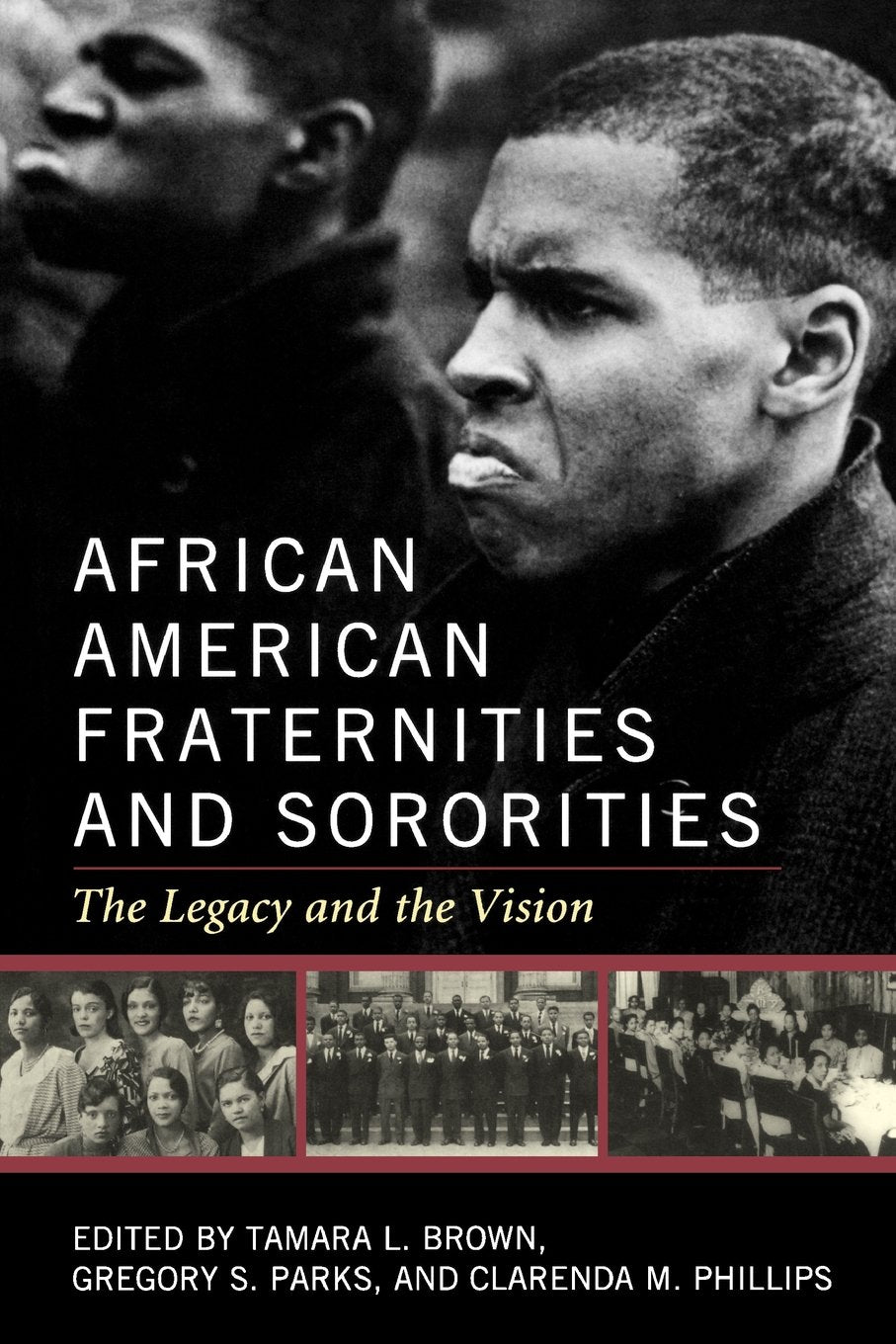
African American Fraternities and Sororities: The Legacy and the Vision
by Tamara L. Brown
$29.95*This book is not currently on our shelves and will ship in 5-10 business days. Please see FAQs for more information.
African American Fraternities and Sororities: The Legacy and the Vision explores the rich past and bright future of the nine Black Greek-Letter organizations that make up the National Pan-Hellenic Council. In the long tradition of African American benevolent and secret societies, intercollegiate African American fraternities and sororities have strong traditions of fostering brotherhood and sisterhood among their members, exerting considerable influence in the African American community, and being on the forefront of civic action, community service, and philanthropy. Dr. Martin Luther King Jr., Toni Morrison, Arthur Ashe, Carol Moseley Braun, Bill Cosby, Sarah Vaughan, George Washington Carver, Hattie McDaniel , and Bobby Rush are among the many trailblazing members of these organizations. The rolls of African American fraternities and sororities serve as a veritable who's who among African American leadership in the United States and abroad. African American Fraternities and Sororities places the history of these organizations in context, linking them to other movements and organizations that predated them and tying their history to one of the most important eras of United States history―the Civil Rights struggle. African American Fraternities and Sororities explores various cultural aspects of these organizations such as auxilliary groups, branding, calls, stepping, and the unique role of African American sororities. It also explores such contemporary issues as sexual aggression and alcohol use, college adjustment, and pledging, and provides a critique of Spike Lee's film School Daze, the only major motion picture to portray African American fraternities and sororities as a central theme. The year 2006 will mark the centennial anniversary of the intercollegiate African American fraternity and sorority movement. Yet, to date, little scholarly attention has been paid to these organizations and the men and women who founded and perpetuated them. African American Fraternities and Sororities reveals the vital social and political functions of these organizations and places them within the history of not only the African American community but the nation as a whole.
-
John Wilson: Witnessing Humanity
![John Wilson: Witnessing Humanity cover image]()

John Wilson: Witnessing Humanity
Jennifer Farrell
$55.00Use discount code: SALE to receive 30% off.
Through paintings, sculptures, drawings and more, John Wilson's work foregrounds the human experience and refuses invisibility
American artist John Wilson was not only a master draftsman, printmaker, painter and sculptor active for over seven decades, but he was also a keen observer and social activist. In his representations of Black Americans in particular, he sought to pay homage to the beauty and truths of ordinary Black people in such a way that all viewers, across race and culture, might see themselves reflected. His multidisciplinary works include unflinching representations of racial violence and war, tender family portraits, monumental bronze heads and landmark commissions such as the bust of Martin Luther King, Jr., which stands in the United States Capitol.
The first major retrospective of the artist’s work, Witnessing Humanity sheds light on Wilson’s life and artistic evolution. Reproductions of artworks and photographs accompany critical essays and personal reflections, including analyses by art historians, interviews with Wilson’s peers, remembrances from fellow Black creatives and a full chronology by the late artist’s gallerist. The varied voices which resonate through this catalog illustrate that it is long past time to recognize Wilson’s art―to celebrate his lifelong dedication to depicting what he described as the "reality of being Black in this impossible world."
John Woodrow Wilson (1922–2015) was born in Roxbury, Massachusetts, and studied at the School of the Museum of Fine Arts, Boston, and Tufts University. He lived in Mexico for five years and became a friend and colleague of artist Elizabeth Catlett. Wilson taught fine art at Boston University from 1964 until 1986. -
A Song for the Unsung: Bayard Rustin, the Man Behind the 1963 March on Washington
![A Song for the Unsung: Bayard Rustin, the Man Behind the 1963 March on Washington]()

A Song for the Unsung: Bayard Rustin, the Man Behind the 1963 March on Washington
by Courtney Ahn
$19.99*ships/available for pickup in 7-10 business days
The author of Moses: When Harriet Tubman Led Her People to Freedom and the author of Pride: The Story of Harvey Milk and the Rainbow Flag combine their tremendous talents for a singular picture book biography of Bayard Rustin, the gay Black man behind the March on Washington of 1963.
On August 28, 1963, a quarter of a million activists and demonstrators from every corner of America convened for the March on Washington for Jobs and Freedom. It was there and then that they raised their voices in unison for racial and economic justice for all Black Americans, to call out inequities, and, ultimately, to advance the Civil Rights Movement.
Every movement has its unsung heroes. Individuals in the background who work without praise and accolades, who toil and struggle without notice. One of those unsung heroes was at the center of some of the most important decisions and events of the Civil Rights Movement.
Credited with introducing Dr. Martin Luther King, Jr. to the power of peaceful protest, for orchestrating the March on Washington, and for skillfully composing the program that placed Dr. King at the end of the list of speakers and musicians for what would become his historic “I Have a Dream” speech, this unsung hero will be celebrated for the first time in a picture book.
The unsung hero behind the movement was a quiet man. A gay, African American man. He was Bayard Rustin. On the heels of the sixtieth anniversary of this historic moment, two acclaimed picture book authors tell Bayard's inspiring story in an innovative and timeless book. A Song for the Unsung is the rousing story of one of our nation's greatest calls to action by honoring one of the men who made it happen. -
March: Book One
![March: Book One]()

March: Book One
by John Lewis
$14.95*Ships in 7-10 Business Days*
Ages 13-16
March is a vivid first-hand account of John Lewis’ lifelong struggle for civil and human rights, meditating in the modern age on the distance traveled since the days of Jim Crow and segregation. Rooted in Lewis’ personal story, it also reflects on the highs and lows of the broader civil rights movement.
Book One spans John Lewis’ youth in rural Alabama, his life-changing meeting with Martin Luther King, Jr., the birth of the Nashville Student Movement, and their battle to tear down segregation through nonviolent lunch counter sit-ins, building to a stunning climax on the steps of City Hall.


Stay Informed. We're building a community committed to celebrating Black authors + artisans. Subscribe to keep up with all things Kindred Stories.