
Search results: 28 results for “E. Hughes”
Not finding what you're looking for? Check out our shop on bookshop.org to order and still support us ♥
28 results
-
Plum Bun: A Novel Without a Moral (Modern Library Torchbearers)
![Plum Bun: A Novel Without a Moral (Modern Library Torchbearers) cover image]()

Plum Bun: A Novel Without a Moral (Modern Library Torchbearers)
Jessie Redmon Fauset
$17.00A rediscovered classic from the Harlem Renaissance about a young Black woman’s journey passing as white in 1920s New York City and her quest for self-acceptance—with an introduction by Glory Edim, founder and author of Well-Read Black Girl.
Jessie Redmon Fauset is one of the literary titans and foremost tastemakers of the Harlem Renaissance—hired by W. E. B. Du Bois to edit The Crisis, she helped popularize writers like Nella Larsen, Claude McKay, Langston Hughes, amongst countless others. And yet, her own work has been largely underread in the twenty-first century. Written in 1929, at the height of the Harlem renaissance, Fauset’s celebrated second novel tells the story of Angela Murray.
Growing up in a Black middle-class Philadelphia neighborhood, Angela has always dreamed of becoming a painter. But the profession is largely reserved for white society. So when Angela’s parents prematurely pass away, she moves to roaring New York City, where she befriends elite artists and presents herself as a white woman. While her sister Virginia’s complexion resembles that of their father’s, Angela’s is lighter, like her mother’s, and passing, she believes, is the only way she’ll ever achieve success. Virginia, meanwhile, refuses to bow to racist pressures, and stays in Philadelphia to embrace her heritage with pride.
Each time Angela thinks she’s found artistic, professional, and romantic fulfillment, her ethnicity gets exposed and she finds herself stripped of everything she cares about. As she navigates a world of seduction, betrayal, lust, and heartbreak, she’s forced to consider: What does it mean to find genuine success in a society marred by injustice? Fauset’s “novel without morals” never passes judgement and stays teeming with tenderness. Full of moments that underline the joy of every day Black life, Plum Bun is a pertinent meditation on art, identity, and what it means to find community—as relevant today as ever before. -
Selected Poems of Langston Hughes
![Selected Poems of Langston Hughes]()
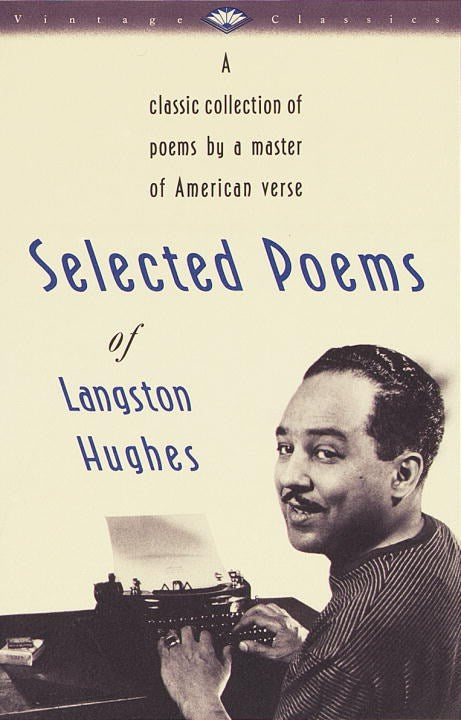
Selected Poems of Langston Hughes
$17.00*Ships in 7-10 Business Days*Langston Hughes electrified readers and launched a renaissance in Black writing in America—the poems in this collection were chosen by Hughes himself shortly before his death and represent stunning work from his entire career.
The poems Hughes wrote celebrated the experience of invisible men and women: of slaves who “rushed the boots of Washington”; of musicians on Lenox Avenue; of the poor and the lovesick; of losers in “the raffle of night.” They conveyed that experience in a voice that blended the spoken with the sung, that turned poetic lines into the phrases of jazz and blues, and that ripped through the curtain separating high from popular culture. They spanned the range from the lyric to the polemic, ringing out “wonder and pain and terror—and the marrow of the bone of life.”
The collection includes “The Negro Speaks of Rivers,” “The Weary Blues,” “Still Here,” “Song for a Dark Girl,” “Montage of a Dream Deferred,” and “Refugee in America.” It gives us a poet of extraordinary range, directness, and stylistic virtuosity. -
I Wonder as I Wander: An Autobiographical Journey (American Century Series)
![I Wonder as I Wander: An Autobiographical Journey (American Century Series) cover image]()

I Wonder as I Wander: An Autobiographical Journey (American Century Series)
Langston Hughes
$21.00In I Wonder as I Wander, Langston Hughes vividly recalls the most dramatic and intimate moments of his life in the turbulent 1930s.
His wanderlust leads him to Cuba, Haiti, Russia, Soviet Central Asia, Japan, Spain (during its Civil War), through dictatorships, wars, revolutions. He meets and brings to life the famous and the humble, from Arthur Koestler to Emma, the Black Mammy of Moscow. It is the continuously amusing, wise revelation of an American writer journeying around the often strange and always exciting world he loves.
-
A Century of Poetry in The New Yorker: 1925-2025
![A Century of Poetry in The New Yorker: 1925-2025 cover image]()

A Century of Poetry in The New Yorker: 1925-2025
Kevin Young
$50.00Edited by the magazine’s poetry editor, Kevin Young, a celebratory selection from one hundred years of influential, entertaining, and taste-making verse in The New Yorker
Seamus Heaney, Dorothy Parker, Louise Bogan, Louise Glück, Randall Jarrell, Langston Hughes, Derek Walcott, Sylvia Plath, W. S. Merwin, Czesław Miłosz, Tracy K. Smith, Mark Strand, E. E. Cummings, Sharon Olds, Franz Wright, John Ashbery, Sandra Cisneros, Amanda Gorman, Maggie Smith, Kaveh Akbar: these stellar names make up just a fraction of the wonderfulness that is present in this essential anthology.
The book is organized into sections honoring times of day (“Morning Bell,” “Lunch Break,” “After-Work Drinks,” “Night Shift”), allowing poets from different eras to talk back to one another in the same space, intertwined with chronological groupings from the decades as they march by: the frothy 1920s and 1930s (“despite the depression,” Young notes), the more serious ’40s and ’50s (introducing us to the early greats of our contemporary poetry, like Elizabeth Bishop, W. S. Merwin, and Adrienne Rich), the political ’60s and ’70s, the lyrical ’80s and ’90s, and then the 2000s’ with their explosion of greater diversity in the magazine, greater depth and breadth. Inevitably, we see the high points when poems spoke directly into, about, or against the crises of their times—the war poetry of W. H. Auden and Karl Shapiro; the remarkable outpouring of verse after 9/11 (who can forget Adam Zagajewski’s “Try to Praise the Mutilated World”?); and more recently, stunning poems in response to the cataclysmic events of COVID and the murder of George Floyd.
The magazine’s poetic influence resides not just in this historical and cultural relevance but in sheer human connection, exemplified by the passing verses that became what Young calls “refrigerator poems”: the ones you tear out and affix to the fridge to read again and again over months and years. Our love for that singular Billy Collins or Ada Limón poem—or lines by a new writer you’ve never heard of but will hear much more from in the future—is what has made The New Yorker a great organ for poetry, a mouthpiece for our changing culture and way of life, even a mirror of our collective soul.
-
Black Interior: Essays
![Black Interior: Essays]()
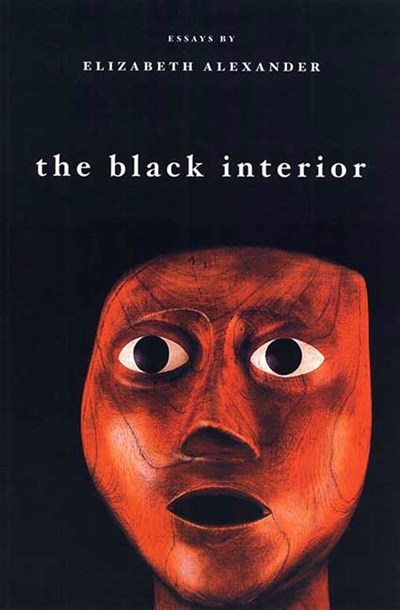
Black Interior: Essays
by Elizabeth Alexander
$15.00*Ships in 7-10 business days*
With a poet's precision and an intellectually adventurous spirit, Elizabeth Alexander explores a wide spectrum of contemporary African American artistic life through literature, paintings, popular media, and films, and discusses its place in current culture. In The Black Interior, she examines the vital roles of such heavyweight literary figures as Gwendolyn Brooks, Langston Hughes, and Rita Dove, as well as lesser known, yet vibrant, new creative voices. She offers a reconsideration of "afro-outré" painter Jean-Michel Basquiat, the concept of "race-pride" in Jet magazine, and her take on Denzel Washington's career as a complex black male icon in a post-affirmative action era. Also available is Alexander's much heralded essay on Rodney King, Emmett Till, and the collective memory of racial violence.
Alexander, who has been a professor at the University of Chicago and Smith College, and recently at Yale University, has taught and lectured on African American art and culture across the country and abroad for nearly two decades. In The Black Interior, she directs her scrupulous poet's eye to the urgent cultural issues of the day. This lively collection is a crucial volume for understanding current thinking on race, art, and culture in America. -
The Best Short Stories by Black Writers
![The Best Short Stories by Black Writers]()
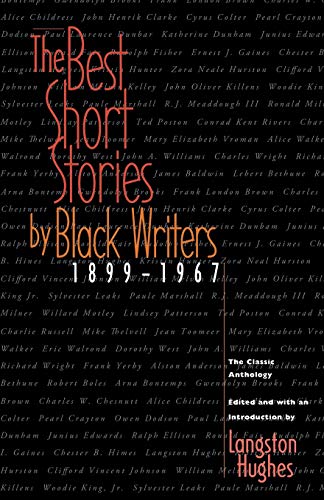
The Best Short Stories by Black Writers
edited by Langston Hughes
$25.99*Ships/ready for pick-up in 7-10 business days*
A classic anthology of short stories by Black writers including James Baldwin, Zora Neale Hurston, and Richard Wright -- edited and with an introduction by Langston Hughes.
Originally published in 1967, The Best Short Stories by Black Writers offers a timeless and unforgettable portrait of the tragedy, comedy, triumph, and suffering that were part of African American life from 1899 to 1967. -
The Afro-Latin@ Reader: History and Culture in the United States (a John Hope Franklin Center Book)
![The Afro-Latin@ Reader: History and Culture in the United States (a John Hope Franklin Center Book) cover image]()

The Afro-Latin@ Reader: History and Culture in the United States (a John Hope Franklin Center Book)
Miriam Jiménez Román
$35.95The Afro-Latin@ Reader focuses attention on a large, vibrant, yet oddly invisible community in the United States: people of African descent from Latin America and the Caribbean. The presence of Afro-Latin@s in the United States (and throughout the Americas) belies the notion that Blacks and Latin@s are two distinct categories or cultures. Afro-Latin@s are uniquely situated to bridge the widening social divide between Latin@s and African Americans; at the same time, their experiences reveal pervasive racism among Latin@s and ethnocentrism among African Americans. Offering insight into Afro-Latin@ life and new ways to understand culture, ethnicity, nation, identity, and antiracist politics, The Afro-Latin@ Reader presents a kaleidoscopic view of Black Latin@s in the United States. It addresses history, music, gender, class, and media representations in more than sixty selections, including scholarly essays, memoirs, newspaper and magazine articles, poetry, short stories, and interviews.
While the selections cover centuries of Afro-Latin@ history, since the arrival of Spanish-speaking Africans in North America in the mid-sixteenth-century, most of them focus on the past fifty years. The central question of how Afro-Latin@s relate to and experience U.S. and Latin American racial ideologies is engaged throughout, in first-person accounts of growing up Afro-Latin@, a classic essay by a leader of the Young Lords, and analyses of U.S. census data on race and ethnicity, as well as in pieces on gender and sexuality, major-league baseball, and religion. The contributions that Afro-Latin@s have made to U.S. culture are highlighted in essays on the illustrious Afro-Puerto Rican bibliophile Arturo Alfonso Schomburg and music and dance genres from salsa to mambo, and from boogaloo to hip hop. Taken together, these and many more selections help to bring Afro-Latin@s in the United States into critical view.
Contributors: Afro–Puerto Rican Testimonies Project, Josefina Baéz, Ejima Baker, Luis Barrios, Eduardo Bonilla-Silva, Adrian Burgos Jr., Ginetta E. B. Candelario, Adrián Castro, Jesús Colón, Marta I. Cruz-Janzen, William A. Darity Jr., Milca Esdaille, Sandra María Esteves, María Teresa Fernández (Mariposa), Carlos Flores, Juan Flores, Jack D. Forbes, David F. Garcia, Ruth Glasser, Virginia Meecham Gould, Susan D. Greenbaum, Evelio Grillo, Pablo “Yoruba” Guzmán, Gabriel Haslip-Viera, Tanya K. Hernández, Victor Hernández Cruz, Jesse Hoffnung-Garskof, Lisa Hoppenjans, Vielka Cecilia Hoy, Alan J. Hughes, María Rosario Jackson, James Jennings, Miriam Jiménez Román, Angela Jorge, David Lamb, Aida Lambert, Ana M. Lara, Evelyne Laurent-Perrault, Tato Laviera, John Logan, Antonio López, Felipe Luciano, Louis Pancho McFarland, Ryan Mann-Hamilton, Wayne Marshall, Marianela Medrano, Nancy Raquel Mirabal, Yvette Modestin, Ed Morales, Jairo Moreno, Marta Moreno Vega, Willie Perdomo, Graciela Pérez Gutiérrez, Sofia Quintero, Ted Richardson, Louis Reyes Rivera, Pedro R. Rivera , Raquel Z. Rivera, Yeidy Rivero, Mark Q. Sawyer, Piri Thomas, Silvio Torres-Saillant, Nilaja Sun, Sherezada “Chiqui” Vicioso, Peter H. Wood
-
Langston Lapel Pin
![Langston Lapel Pin]()

Langston Lapel Pin
$12.00A poet, novelist, playwright, and more, Langston Hughes changed history with his words. Hold fast to your dreams, and honor Mr. Hughes wherever you go with this iconic pin! 1.75 inches tall. Soft enamel with black metal plating. Pin comes with 2 rubber pin backs. -
Troubled Lands: Stories of Mexico and Cuba as Translated by Langston Hughes
![Troubled Lands: Stories of Mexico and Cuba as Translated by Langston Hughes cover image]()

Troubled Lands: Stories of Mexico and Cuba as Translated by Langston Hughes
Sold outA landmark book—the first complete publication of Langston Hughes’s translations of thirty-three stories by eighteen Mexican and Cuban writers
In late 1934, Langston Hughes, already established as a leading voice of literary Black America, traveled to Mexico City, where he stayed for more than five months and began translating short fiction by prominent Mexican and Cuban writers. These stories, as he wrote to a friend, explore “the revolutions and uprisings, sugar cane, Negroes, Indians, corrupt generals, [and] American imperialists,” and are “mostly all left stories, because practically all the writers down here are left these days.” But when Hughes proposed publishing the stories as a book, to be titled Troubled Lands, his agent discouraged him from further pursuing the project and it remained unpublished, until now, with only a handful of the translations making their way into contemporary magazines. This volume presents Hughes’s translations of these stories together for the first time as he originally envisioned. Edited by Ricardo Wilson, the book also features an introduction and brief biographies of the included writers.
Troubled Lands features thirty-three stories by eighteen writers, including Rafael Felipe Muñoz, Nellie Campobello, Lino Novás Calvo, Luis Felipe Rodríguez, Germán List Arzubide, Pablo de la Torriente-Brau, and Juan de la Cabada. The collection depicts Mexico in the wake of its revolution and Cuba in the years between the brutal regimes of Machado and Batista.
Hughes was a noted translator of poetry, but his commitment to translating fiction is less well known. Troubled Lands provides a window into this important dimension of his work and illuminates his deep interest in Mexico and Cuba.
-
The Ways of White Folks by Langston Hughes
![The Ways of White Folks by Langston Hughes]()
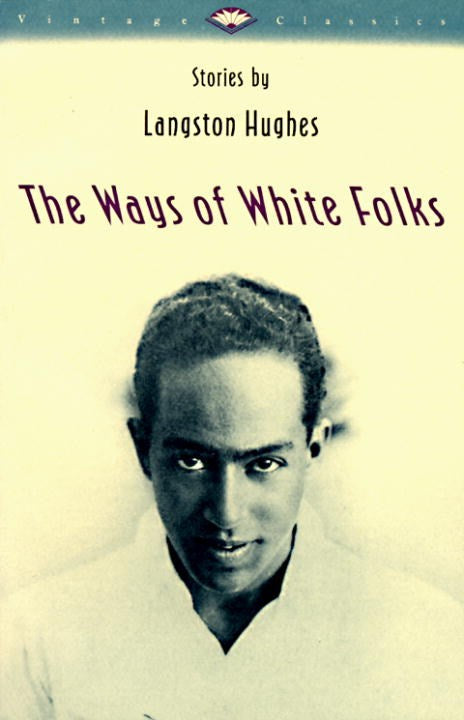
The Ways of White Folks by Langston Hughes
Sold outABOUT THE WAYS OF WHITE FOLKS
A collection of vibrant and incisive short stories depicting the sometimes humorous, but more often tragic interactions between Black people and white people in America in the 1920s and ‘30s.
One of the most important writers to emerge from the Harlem Renaissance, Langston Hughes may be best known as a poet, but these stories showcase his talent as a lively storyteller. His work blends elements of blues and jazz, speech and song, into a triumphant and wholly original idiom.
Stories included in this collection:
“Cora Unashamed”
“Slave on the Block”
“Home”
“Passing”
“A Good Job Gone”
“Rejuvenation Through Joy”
“The Blues I’m Playing”
“Red-Headed Baby”
“Poor Little Black Fellow”
“Little Dog”
“Berry”
“Mother and Child”
“One Christmas Eve”
“Father and Son” -
Jazz Poems (Everyman's Library Pocket Poets Series)
![Jazz Poems (Everyman's Library Pocket Poets Series) cover image]()

Jazz Poems (Everyman's Library Pocket Poets Series)
Sold outA vital and surprising hardcover collection of poems about, and inspired by, jazz music. AN EVERYMAN'S LIBRARY POCKET POET. Selected and Edited by Kevin Young.
Ever since its first flowering, jazz has had a powerful influence on American poetry; this scintillating anthology offers a treasury of poems that are as varied and as vital as the music that inspired them.
From the Harlem Renaissance to the beat movement, from the poets of the New York school to the contemporary poetry scene, the jazz aesthetic has been a compelling literary force—one that Jazz Poems makes palpable. We hear it in the poems of Langston Hughes, E. E. Cummings, William Carlos Williams, Frank O’Hara, and Gwendolyn Brooks, and in those of Yusef Komunyakaa, Charles Simic, Rita Dove, Ntozake Shange, Mark Doty, William Matthews, and C. D. Wright. Here are poems that pay tribute to jazz’s great voices, and poems that throb with the vivid rhythm and energy of the jazz tradition, ranging in tone from mournful elegy to sheer celebration.
Includes:
• “Jazz Band in a Parisian Cabaret” by Langston Hughes
• “God Bless the Child” by Billie Holiday and Arthur Herzog, Jr.
• “Jazz Fantasia” by Carl Sandburg
• “Ol’ Bunk’s Band” by William Carlos Williams
• “We Real Cool” by Gwendolyn Brooks
• “Chasing the Bird” by Robert Creeley
• “Victrola” by Robert Pinsky
• “Pres Spoke in a Language” by Amiri Baraka
• “The Day Lady Died” by Frank O’Hara
• “Art Pepper” by Edward Hirsch
• “Snow” by Billy Collins
Everyman's Library pursues the highest production standards, printing on acid-free cream-colored paper, with full-cloth cases with two-color foil stamping, decorative endpapers, silk ribbon markers, European-style half-round spines, and a full-color illustrated jacket. -
The Big Sea (American Century Series)
![The Big Sea (American Century Series) cover image]()

The Big Sea (American Century Series)
Langston Hughes
Sold out"This book is the chronicle of a bright and lively artistic ear that brought the African-American people full into the twentieth century. It is a wonderful book!” ―Amiri Baraka
In his incisive introduction to The Big Sea, an American classic, Arnold Rampersad writes: "This is American writing at its best--simpler than Hemingway; as simple and direct as that of another Missouri-born writer...Mark Twain."
Langston Hughes, born in 1902, came of age early in the 1920s. In The Big Sea he recounts those memorable years in the two great playgrounds of the decade--Harlem and Paris. In Paris he was a cook and waiter in nightclubs. He knew the musicians and dancers, the drunks and dope fiends. In Harlem he was a rising young poet--at the center of the "Harlem Renaissance."


- ← Previous
- page 1
- page 2
- page 3
- Next →
Stay Informed. We're building a community committed to celebrating Black authors + artisans. Subscribe to keep up with all things Kindred Stories.