
Search results: 115 results for “Daniel Black”
Not finding what you're looking for? Check out our shop on bookshop.org to order and still support us ♥
115 results
-
Dangerous Learning: The South's Long War on Black Literacy
![Dangerous Learning: The South's Long War on Black Literacy cover image]()

Dangerous Learning: The South's Long War on Black Literacy
$24.00The enduring legacy of the nineteenth-century struggle for Black literacy in the American South
Few have ever valued literacy as much as the enslaved Black people of the American South. For them, it was more than a means to a better life; it was a gateway to freedom and, in some instances, a tool for inspiring revolt. And few governments tried harder to suppress literacy than did those in the South. Everyone understood that knowledge was power: power to keep a person enslaved in mind and body, power to resist oppression. In the decades before the Civil War, Southern governments drove Black literacy underground, but it was too precious to be entirely stamped out.
This book describes the violent lengths to which southern leaders went to repress Black literacy and the extraordinary courage it took Black people to resist. Derek W. Black shows how, from the beginning of the nineteenth century to the end of Reconstruction, literacy evolved from a subversive gateway to freedom to a public program to extend citizenship and build democratic institutions—and how, once Reconstruction was abandoned, opposition to educating Black children depressed education throughout the South for Black and white students alike. He also reveals the deep imprint those events had on education and how this legacy is resurfacing today. -
Black Moses: A Saga of Ambition and the Fight for a Black State
![Black Moses: A Saga of Ambition and the Fight for a Black State cover image]()

Black Moses: A Saga of Ambition and the Fight for a Black State
Caleb Gayle
$33.00The remarkable story of Edward McCabe, a Black man who tried to establish a Black state within the United States.
In this paradigm-shattering work of American history, Caleb Gayle recounts the extraordinary tale of Edward McCabe, a Black man who championed the audacious idea to create a state within the Union governed by and for Black people — and the racism, politics, and greed that thwarted him.
As the sweeping changes and brief glimpses of hope brought by the Civil War and Reconstruction began to wither, anger at the opportunities available to newly freed Black people were on the rise. As a result, both Blacks and whites searched for new places to settle. That was when Edward McCabe, a Black businessman and a rising political star in the American West, set in motion his plans to found a state within the Union for Black people to live in and govern. His chosen site: Oklahoma, a place that the U.S. government had deeded to Indigenous people in the 1830s when it forced thousands of them to leave their homes under Indian Removal, which became known as the Trail of Tears.
McCabe lobbied politicians in Washington, D.C., Kansas, and elsewhere as he exhorted Black people to move to Oklahoma to achieve their dreams of self-determination and land ownership. His rising profile as a leader and spokesman for Black people as well as his willingness to confront white politicians led him to become known as Black Moses. And like his biblical counterpart, McCabe nearly made it to the promised land but was ultimately foiled by politics, business interests, and the growing ambitions of white settlers who also wanted the land.
In Black Moses, Gayle brings to vivid life the world of Edward McCabe: the Black people who believed in his dream of a Black state, the white politicians who didn't, and the larger challenges of confronting the racism and exclusion that bedeviled Black people's attempts to carve a place in America for themselves. Gayle draws from extraordinary research and reporting to reveal an America that almost was. -
The Black Family Who Built America: The McKissacks, Two Centuries of Daring Pioneers
![The Black Family Who Built America: The McKissacks, Two Centuries of Daring Pioneers cover image]()

The Black Family Who Built America: The McKissacks, Two Centuries of Daring Pioneers
Cheryl McKissack Daniel
from $20.00The riveting story of the McKissack family—the founders of the leading Black design and construction firm in the United States, from its beginnings in the mid-1800s to its thriving status today—in a moving celebration of resilience and innovation.
Captured in his native West Africa and enslaved on American shores by a North Carolina plantation owner, Moses McKissack I began to build his way to emancipation right from the start. Becoming an enslaved craftsman, he picked up the trade his family would become famous for in the earliest years of the 19th century, passing his learnings down to his children and seeing them off to freedom after the Civil War.
The family would settle in Tennessee, getting its bearings in the building trades despite rampant discrimination, establishing a foothold that now sees its latest generations working at the absolute peak of its industry.
The family’s fingerprints have been left all across the United States, spanning from Reconstruction to contemporary times, through projects like the Morris Memorial Building, Capers C.M.E. Church, John F. Kennedy International Airport, and Philadelphia’s Lincoln Financial Field.
Here, Cheryl McKissack Daniel, CEO and president of McKissack & McKissack, reveals the full fascinating story of her family. So much more than an exploration of architectural achievements, The Black Family Who Built America is also a compelling illustration of how history rhymes and reverberates, and a celebration of the human spirit’s ability to overcome adversity and drive change. From Moses’s humble beginnings to Cheryl’s current role as a trailblazer and champion of diversity, the family’s journey underscores the importance of perseverance, innovation, and strategic vision in shaping a legacy that continues to inspire and impact the construction industry.
-
Black American Short Stories (American Century Series)
![Black American Short Stories (American Century Series) cover image]()

Black American Short Stories (American Century Series)
$22.00The success of John Henrik Clarke's American Negro Short Stories, first published in 1966, affirmed the vitality and importance of black fiction. Now this expanded edition of that best-selling book, with a new title, offers the reader thirty-one stories included in the original―from Charles W. Chesnutt and Paul Laurence Dunbar in the late nineteenth century to the rich and productive work of the Harlem Renaissance: writers like Zora Neale Hurston, Langston Hughes, and Richard Wright; the World War II accomplishments of Chester Himes, Frank Yerby, and many others; and the later fiction of James Baldwin, Paule Marshall, and LeRoi Jones (Imamu Amiri Baraka). Seven additional contributions round out a century of great stories with the work of Maya Angelou, Toni Cade Bambara, Eugenia Collier, Jennifer Jordan, James Allan McPherson, Rosemarie Robotham, and Alice Walker. Dr. Clarke has included a new introduction to this 1993 edition, and a short biography of each contributor.
-
That's How They Get You: An Unruly Anthology of Black American Humor
![That's How They Get You: An Unruly Anthology of Black American Humor cover image]()

That's How They Get You: An Unruly Anthology of Black American Humor
Damon Young
from $18.00From the Thurber Prize-winning author of What Doesn’t Kill You Makes You Blacker comes a pioneering collection of Black humor from some of the most acclaimed writers and performers at work today
A critic explores the paradox of finding community in “the dozens” while grieving. A violent town ritual causes an all-too-familiar moral panic. An email thread between friends on why we need an updated Green Book but for public toilets. All across the nation, “Karens” become illegal overnight. These are just a few of the hilarious worlds contained in Damon Young’s groundbreaking anthology featuring the best, funniest, and Blackest essays, short stories, letters, and rants.
With words that roast, ignite, and burn while connecting to and coalescing around a singular thesis, That's How They Get You emphasizes how and why Black American humor is uniquely transfixing. This is a mixture of not just observational anxieties and stream-of-consciousness lucidities but also acute political clarity about America. Edited and with an introduction by Damon Young, the critically acclaimed author of What Doesn’t Kill You Makes You Blacker, the collection features new material from an all-star roster of contributors, including Hanif Abdurraqib, Mahogany L. Browne, Wyatt Cenac, Kiese Laymon, Deesha Philyaw, Roy Wood Jr., and Nicola Yoon.
-
Salvage: Readings from the Wreck
![Salvage: Readings from the Wreck cover image]()

Salvage: Readings from the Wreck
Dionne Brand
$19.00One of Literary Hub's most anticipated books of 2024. Winner of the 2025 OCM Bocas Prize for Caribbean Literature.
Dionne Brand explores English and American literature, and the colonial aesthetic that shaped her sense of self and the world, of what was possible and what was not.
In Salvage: Readings from the Wreck, Dionne Brand’s first major book of nonfiction since her classic A Map to the Door of No Return, the acclaimed poet and novelist offers a bracing look at the intersections of reading and life, and what remains in the wreck of empire. Blending literary criticism and autobiography-as-artifact, Brand reads Aphra Behn’s Oroonoko, Daniel Defoe’s Robinson Crusoe, and Jane Austen’s Mansfield Park, among other still widely studied works, to explore encounters with colonial, imperialist, and racist tropes from the seventeenth to the nineteenth centuries―tropes that continue in new forms today. Brand vividly shows how contemporary practices of reading and writing are shaped by the narrative structures of these and related works, and explores how, in the face of this, one writes a narrative of Black life that attends to its own consciousness and expression.
With the power and eloquence of a great poet coupled with the rigor of a deep and subtle thinker, Brand reveals how she learned to read the literature of two empires, British and American, in an anticolonial light―in order to survive, and in order to live.
This is the library, the wreck, and the potential for salvage she offers us now, in a brilliant, groundbreaking, and essential work.
-
The Black Yearbook [Portraits and Stories]
![Book cover image]()
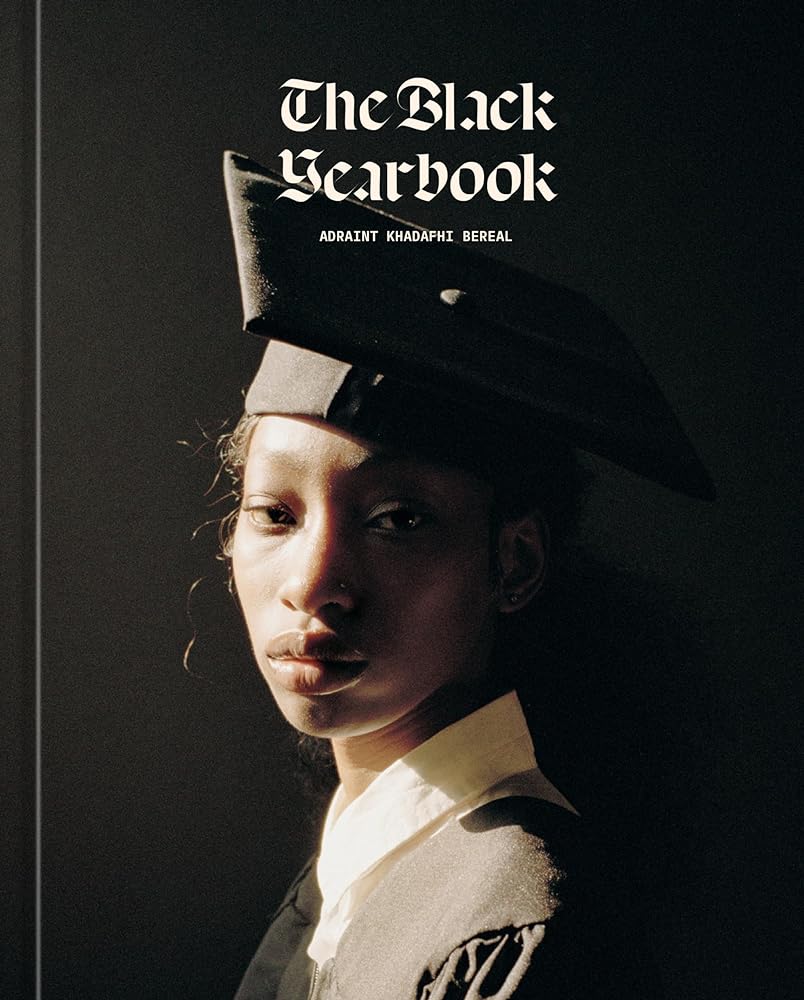
The Black Yearbook [Portraits and Stories]
by Adraint Khadafhi Bereal
$29.99A gripping exploration of the joys, hardships, and truths of Black students through intimate, honest dialogues and stunning photography, author of Heavy “A radical, reverential, and restorative document of community.”—Rebecca Bengal, author of Strange Hours: Photography, Memory, and the Lives of Artists When photographer Adraint Bereal graduated from the University of Texas, he self-published an impressive volume of portraits, personal statements, and interviews that explored UT's campus culture and offered an intimate look at the lives of Black students matriculating within a majority white space. Bereal's work was inspired by his first photo exhibition at the George Washington Carver Museum in Austin, entitled 1.7, that unearthed the experiences of the 925 Black men that made up just 1.7% of UT's total 52,000 student body. Now Bereal expands the scope of his original project and visits colleges nationwide, from Historically Black Colleges and Universities (HBCUs) to predominantly white institutions to trade schools and more. Rather than dwelling on the monolith of trauma often associated with Black narratives, Bereal is dedicated to using honest dialogue to share stories of true joy and triumph amidst the hardships, prejudices, and internal struggles. Using an exciting and eclectic design approach to accompany the portraits and stories, each individual profile effectively conveys the interviewee's unique voice, tone, and background. The Black Yearbook reframes society's stereotypical perception of higher education by representing and celebrating the wide range of Black experiences on campuses.
-
Pasifika Black: Oceania, Anti-colonialism, and the African World
![Pasifika Black: Oceania, Anti-colonialism, and the African World]()

Pasifika Black: Oceania, Anti-colonialism, and the African World
by Quito Swan
$27.00Oceania is a vast sea of islands, large scale political struggles and immensely significant historical phenomena. Pasifika Black is a compelling history of understudied anti-colonial movements in this region, exploring how indigenous Oceanic activists intentionally forged international connections with the African world in their fights for liberation.
Drawing from research conducted across Fiji, Australia, Vanuatu, Papua New Guinea, Britain, and the United States, Quito Swan shows how liberation struggles in Oceania actively engaged Black internationalism in their diverse battles against colonial rule. Pasifika Black features as its protagonists Oceania's many playwrights, organizers, religious leaders, scholars, Black Power advocates, musicians, environmental justice activists, feminists, and revolutionaries who carried the banners of Black liberation across the globe. It puts artists like Aboriginal poet Oodgeroo Noonuccal and her 1976 call for a Black Pacific into an extended conversation with Nigeria’s Wole Soyinka, the Nuclear Free and Independent Pacific’s Amelia Rokotuivuna, Samoa’s Albert Wendt, African American anthropologist Angela Gilliam, the NAACP’s Roy Wilkins, West Papua’s Ben Tanggahma, New Caledonia’s Déwé Gorodey, and Polynesian Panther Will ‘Ilolahia. In so doing, Swan displays the links Oceanic activists consciously and painstakingly formed in order to connect Black metropoles across the Atlantic, Pacific, and Indian Oceans. -
Black Scare / Red Scare: Theorizing Capitalist Racism in the United States
![Black Scare / Red Scare: Theorizing Capitalist Racism in the United States]()
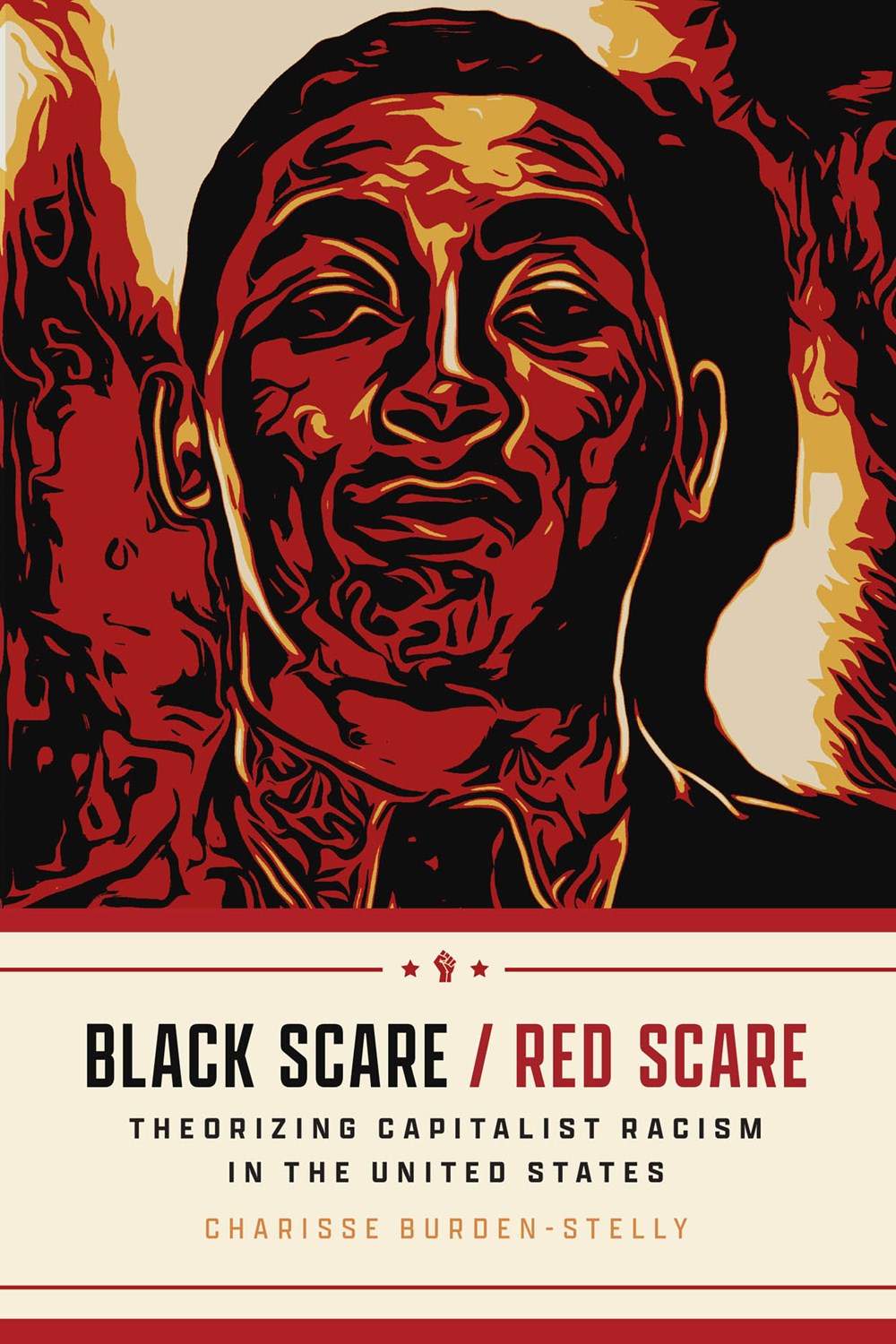
Black Scare / Red Scare: Theorizing Capitalist Racism in the United States
by Charisse Burden-Stelly
$26.00A radical explication of the ways anti-Black racial oppression has infused the US government’s anti-communist repression.
In the early twentieth century, two panics emerged in the United States. The Black Scare was rooted in white Americans’ fear of Black Nationalism and dread at what social, economic, and political equality of Black people might entail. The Red Scare, sparked by communist uprisings abroad and subversion at home, established anticapitalism as a force capable of infiltrating and disrupting the American order. In Black Scare / Red Scare, Charisse Burden-Stelly meticulously outlines the conjoined nature of these state-sanctioned panics, revealing how they unfolded together as the United States pursued capitalist domination. Antiradical repression, she shows, is inseparable from anti-Black oppression, and vice versa.
Beginning her account in 1917—the year of the Bolshevik Revolution, the East St. Louis Race Riot, and the Espionage Act—Burden-Stelly traces the long duration of these intertwined and mutually reinforcing phenomena. She theorizes two bases of the Black Scare / Red Scare: US Capitalist Racist Society, a racially hierarchical political economy built on exploitative labor relationships, and Wall Street Imperialism, the violent processes by which businesses and the US government structured domestic and foreign policies to consolidate capital and racial domination. In opposition, Radical Blackness embodied the government’s fear of both Black insurrection and Red instigation. The state’s actions and rhetoric therefore characterized Black anticapitalists as foreign, alien, and undesirable. This reactionary response led to an ideology that Burden-Stelly calls True Americanism, the belief that the best things about America were absolutely not Red and not Black, which were interchangeable threats.
Black Scare / Red Scare illuminates the anticommunist nature of the US and its governance, but also shines a light on a misunderstood tradition of struggle for Black liberation. Burden-Stelly highlights the Black anticapitalist organizers working within and alongside the international communist movement and analyzes the ways the Black Scare/Red Scare reverberates through ongoing suppression of Black radical activism today. Drawing on a range of administrative, legal, and archival sources, Burden-Stelly incorporates emancipatory ideas from several disciplines to uncover novel insights into Black political minorities and their legacy. -
American Dark Age: Racial Feudalism and the Rise of Black Liberalism
![Book cover image]()

American Dark Age: Racial Feudalism and the Rise of Black Liberalism
Keidrick Roy
$35.00How medieval-inspired racial feudalism reigned in early America and was challenged by Black liberal thinkers
Though the United States has been heralded as a beacon of democracy, many nineteenth-century Americans viewed their nation through the prism of the Old World. What they saw was a racially stratified country that reflected not the ideals of a modern republic but rather the remnants of feudalism. American Dark Age reveals how defenders of racial hierarchy embraced America’s resemblance to medieval Europe and tells the stories of the abolitionists who exposed it as a glaring blemish on the national conscience.
Against those seeking to maintain what Frederick Douglass called an “aristocracy of the skin,” Keidrick Roy shows how a group of Black thinkers, including Frances Ellen Watkins Harper, Hosea Easton, and Harriet Jacobs, challenged the medievalism in their midst—and transformed the nation’s founding liberal tradition. He demonstrates how they drew on spiritual insight, Enlightenment thought, and a homegrown political philosophy that gave expression to their experiences at the bottom of the American social order. Roy sheds new light on how Black abolitionist writers and activists worked to eradicate the pernicious ideology of racial feudalism from American liberalism and renew the country’s commitment to values such as individual liberty, social progress, and egalitarianism.
American Dark Age reveals how the antebellum Black liberal tradition holds vital lessons for us today as hate groups continue to align themselves with fantasies of a medieval past and openly call for a return of all-powerful monarchs, aristocrats, and nobles who rule by virtue of their race.
-
Code Noir: Afro-Caribbean Stories and Recipes
![Book cover image]()

Code Noir: Afro-Caribbean Stories and Recipes
by Lelani Lewis
$35.00"Informative and full of big flavors, this is a delicious and accessible introduction to Caribbean food for novices; will be a welcome addition to library shelves." —Library Journal
Through 80+ recipes, Code Noir tells the interesting and complex story of Caribbean cuisines that are not only incredibly rich in flavor but also in history.
Code Noir is a cookbook steeped in history. Not just because of the title, which hits on a seventeenth-century decree in which King Louis XIV recorded how enslaved Africans in the French colonies were to be treated, but also because it deals with the food and the people that, through the gruesome course of history, came together in the Caribbean.
Inside, chef and culinary activist Lelani Lewis goes back to her Caribbean roots with classics like jerk chicken, salted cod fritters, pepperpot stew, and Guinness punch. She also shares new creations with typically Caribbean ingredients like cassava, corn, coconut, lime, plantain, and chilies: plantain with peanut and lime salsa, sweet potato gratin with ginger cream, and crème anglaise of creamed corn and caramelized guava.
-
PRE-ORDER: If My Words Had Wings
![If My Words Had Wings cover image]()

PRE-ORDER: If My Words Had Wings
$12.99A life affirming story of rehabilitation and hope after prison. The third novel from multi-award-winning Danielle Jawando, perfect for fans of Angie Thomas and Elizabeth Acevedo.
‘Jawando’s writing is incredibly raw and real; I felt completely immersed’ Alice Oseman, author of the Heartstopper series
When fifteen-year-old Tyrell Forrester gets caught up in a high-profile armed robbery, he's sentenced to eighteen months in a young offenders’ prison. Now he’s getting out, and he’s determined to turn his life around. Despite his release, systemic discrimination makes it difficult for Ty to truly be free. Inspired by a visiting poet while inside, Ty discovers a whole new world through spoken word and is finally finding his voice. But will society ever see him as anything other than a criminal?Praise for And the Stars Were Burning Brightly:
'An outstanding and compassionate debut' Patrice Lawrence, author of Orangeboy
'One of the brightest up and coming stars of the YA world' Alex Wheatle, author of Crongton Knights
‘An utter page turner from a storming new talent. Passionate, committed and shines a ray of light into the darkest places - the YA novel of 2020!’ Melvin Burgess, author of Junk
Praise for When Our Worlds Collided:
'A raw, unflinching and powerful story that will stay with me for a long time’ Manjeet Mann, author of The Crossing
‘A beautiful ode to found family, and a compassionate look at the power of connection borne from the ashes of tragedy and apathy’ Christina Hammonds Reed, author of The Black Kids
‘Hard-hitting yet still hopeful, this is an emotional powerhouse of a book’ Alexandra Sheppard, author of Oh My GodsWarning - this novel contains themes that some readers may find upsetting, including suicide and self harm.


Stay Informed. We're building a community committed to celebrating Black authors + artisans. Subscribe to keep up with all things Kindred Stories.